Dr. Gymbro
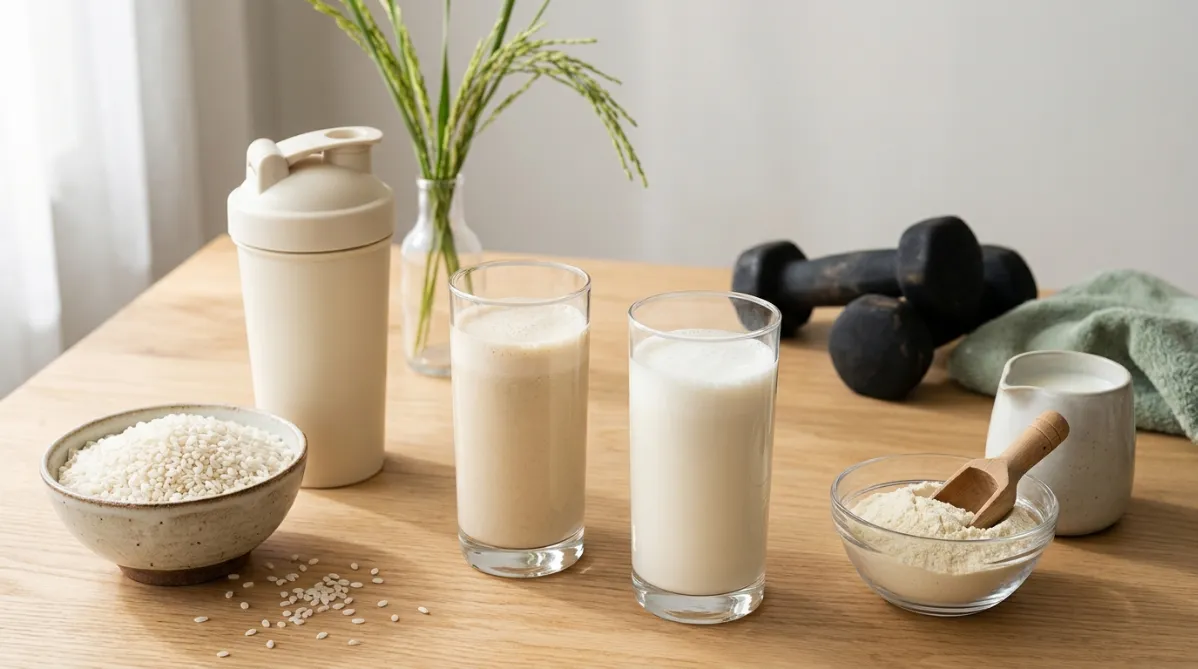
A bright, minimalist editorial still life on a pale oak table, shot from a slightly elevated three-quarter angle in soft natural window light. On the left sits a rustic ceramic bowl of uncooked short-grain white rice, with a few grains scattered across the wood. Beside it is a matte cream-colored shaker bottle. On the right is a small glass bowl of fine ivory whey powder with a wooden scoop resting in it, and a small pitcher of milk behind it. Two identical tall glasses of creamy, lightly frothed shake stand side by side in the center, one a touch warmer beige and the other a soft white. They suggest equal outcomes without any text or labels. A pair of worn black neoprene-coated dumbbells and a folded sage-green gym towel sit slightly out of focus in the background. A sprig of green rice stalks in a slim vase adds a fresh, natural accent.

The palette is warm neutrals: cream, oatmeal, soft sage, and muted terracotta, with gentle shadows and a shallow depth of field. The surface has subtle grain, and fine powder dust is caught in the light. The composition is clean and balanced, with generous negative space on the upper right for a headline overlay. The mood is calm, modern, and health-forward, like a contemporary nutrition magazine or wellness journal. Photorealistic, crisp detail, creamy bokeh, and a gentle matte film-like finish.
Nutrition

48 g Protein Gạo So Sánh Với Whey cho Cơ Bắp và Sức Mạnh trong 8 Tuần

Dr. Gymbro · · 5 min read

Nghiên cứu thách đố giả thuyết "Whey hay không"

Protein thực vật thường bị cho là thua kém whey. Whey giàu leucine, tiêu hoá nhanh và đã có một lịch sử dài trong các nghiên cứu xây dựng cơ bắp. Ngược lại, protein gạo thường được mô tả là lựa chọn yếu hơn, chủ yếu vì hàm lượng leucine thấp hơn và hồ sơ axit amin không thuận lợi.

Một thí nghiệm năm 2013 của Joy và cộng sự, đăng trên Nutrition Journal, đã kiểm tra giả thuyết này trong điều kiện tối ưu cho gạo. Kết quả: 48 g protein gạo cô đặc mang lại mức cải thiện về khối lượng nạc, độ dày cơ bắp, sức mạnh và công suất tương đương với 48 g whey cô đặc trong vòng tám tuần tập luyện.

Phương pháp nghiên cứu

Nhóm nghiên cứu tuyển 24 sinh viên nam, tập trung vào luyện tập sức mạnh, và ngẫu nhiên chia đều thành hai nhóm. Mỗi nhóm dùng 48 g protein gạo cô đặc hoặc whey cô đặc vào những ngày tập. Hai loại bột bổ sung được cân bằng về năng lượng và nitơ, vì vậy tổng calo và hàm lượng protein là giống nhau.

Chương trình tập được thiết kế dạng "daily undulating periodization" (điều chỉnh tuần tự), 3 buổi mỗi tuần trong 8 tuần. Người tham gia uống thực phẩm bổ sung ngay sau mỗi buổi tập.

Các nhà nghiên cứu đo:

  • Độ dày cơ bắp bằng siêu âm;
  • Thành phần cơ thể bằng DXA (dual‑energy X‑ray absorptiometry);
  • Sức mạnh phần trên và phần dưới bằng bench press và leg press;
  • Công suất;
  • Cảm giác hồi phục, đau cơ và sẵn sàng tập trong buổi tập đầu tiên.

Thành phần cơ thể, sức mạnh và độ dày cơ được đánh giá vào tuần 0, 4 và 8.

Kết quả thu được

Cả hai nhóm đều cải thiện đáng kỳ vọng theo thời gian. Khối lượng nạc, khối lượng cơ, sức mạnh và công suất tăng, trong khi khối lượng mỡ giảm. Điểm then chốt là không có tương tác nhóm‑thời gian nào xuất hiện, nghĩa là không nhóm nào vượt trội hơn. Đánh giá về hồi phục, đau cơ và sẵn sàng tập cũng tương đồng giữa hai nhóm.

Thiết kế này có giá trị vì nó loại bỏ nhiều yếu tố gây nhiễu. Khi năng lượng, nitơ, thời điểm uống và chương trình tập đều giống nhau, nguồn protein là biến độc lập duy nhất và nó không tạo ra sự khác biệt đo được.

Tại sao liều lượng lại quan trọng

Các tác giả đưa ra vấn đề dựa trên một "khoảng trống" trong các nghiên cứu trước. Những công trình cũ hơn cho thấy protein động vật có thể thắng protein thực vật ở liều vừa và nhỏ. Thí nghiệm này lại dùng liều lớn, có thể giải thích tại sao gạo lại đạt hiệu suất tốt.

Cơ chế khả dĩ là leucine – axit amin kích hoạt tổng hợp protein cơ bắp mạnh mẽ nhất. Whey chứa nhiều leucine hơn mỗi gram. Một khẩu phần đủ lớn của protein gạo có thể lấp đầy khoảng cách leucine bằng cách cung cấp đủ tổng leucine và các axit amin thiết yếu để vượt qua ngưỡng kích thích tổng hợp protein. Đây là giả thuyết hợp lý, chứ không phải kết luận đã được chứng minh. Đồng thời, 48 g cũng lớn hơn hầu hết người thường dùng sau buổi tập.

Những hạn chế thực tế

Trước khi đổi sang bột mới, hãy cân nhắc các lưu ý sau:

  • Mẫu nhỏ. Chỉ 24 người, 12 người mỗi nhóm, dễ bỏ lỡ những khác biệt nhỏ. "Không có sự khác biệt đáng kể" không đồng nghĩa với "đều giống hệt nhau".
  • Thời gian ngắn. Tám tuần đủ để thấy những thích nghi ban đầu, nhưng chưa phản ánh xu hướng dài hạn.
  • Chỉ có nam trẻ tuổi luyện tập. Kết quả có thể không áp dụng được cho phụ nữ, người lớn tuổi hoặc người mới tập.
  • Liên quan tới ngành công nghiệp. Các thử nghiệm thực phẩm bổ sung thường được tài trợ bởi các công ty bán sản phẩm được nghiên cứu. Hãy kiểm tra phần tiết lộ và nguồn tài trợ trong bài báo trước khi rút ra kết luận.
  • Liều lớn. Các liều gạo nhỏ hơn, như 20‑25 g, có thể không bằng whey vì cung cấp ít leucine hơn. Nghiên cứu này không kiểm tra mức liều đó.
  • Các yếu tố khác. Tổng lượng protein hàng ngày và chế độ ăn không phải là trọng tâm của nghiên cứu, vì vậy các ảnh hưởng dinh dưỡng khác không được kiểm soát hoàn toàn.

Bài học thực tiễn

Liều lượng: Nghiên cứu dùng 48 g protein gạo cô đặc vào ngày tập. Nếu bạn muốn sao chép kết quả, hãy hướng tới mức này, không phải một muỗng nhỏ.

Thời điểm: Người tham gia uống ngay sau buổi tập. Không có bằng chứng ở đây cho thấy thời điểm là yếu tố quyết định, vì tổng protein hằng ngày quan trọng hơn, nhưng đây là quy trình đã được áp dụng.

Đối tượng hưởng lợi: Thông tin này đặc biệt hữu ích cho người ăn chay, người không chịu được sữa hoặc dị ứng protein sữa, và bất kỳ ai ưa thích sản phẩm thực vật. Đối với họ, nghiên cứu cho thấy bỏ whey không đồng nghĩa với mất gains, miễn là liều đủ.

Nếu bạn dùng ít hơn: Hãy cân nhắc tăng khẩu phần, hoặc kết hợp protein gạo với các nguồn thực vật khác hoặc bổ sung leucine. Đây là suy luận hợp lý dựa trên lý thuyết leucine, không phải kết quả trực tiếp của thí nghiệm.

Nếu bạn vẫn dùng whey: Không có gì trong nghiên cứu này nói rằng gạo tốt hơn whey. Nghiên cứu chỉ cho thấy tính tương đương, vì vậy bạn có thể lựa chọn dựa trên tiêu hoá, giá cả, hương vị và sở thích cá nhân.

Kết luận

Thí nghiệm này cho thấy quan niệm "whey luôn thắng" không phải là tuyệt đối. Khi liều, calo và nitơ được cân bằng, và liều đủ lớn, protein gạo cô đặc hỗ trợ tăng khối lượng nạc, sức mạnh và công suất tương đương với whey ở những người nam luyện tập trong tám tuần. Dẫu mẫu nhỏ, thời gian ngắn và liều lớn hạn chế khả năng khái quát, nhưng đối với những người tập luyện dựa trên thực vật, đây là bằng chứng khích lệ rằng một ly shake gạo ở liều đúng vẫn đủ để đạt kết quả.

Tóm tắt nhanh:

  • 48 g protein gạo cô đặc đạt được kết quả tương đương 48 g whey cô đặc trong một thí nghiệm ngẫu nhiên với 24 nam luyện tập.
  • Khối lượng nạc, độ dày cơ bắp, sức mạnh và công suất đều cải thiện ở cả hai nhóm, không có sự khác biệt đáng kể.
  • Liều lớn có lẽ là yếu tố giúp gạo cạnh tranh; đừng cho rằng liều nhỏ sẽ cho cùng một hiệu quả.
  • Kiểm tra nguồn tài trợ và xem kết quả như một bằng chứng hứa hẹn, chưa phải kết luận cuối cùng.
Original study

Read the original research on pubmed.ncbi.nlm.nih.gov →

This article summarizes published research for general information. It is not medical advice.

DG

Written by

Dr. Gymbro

Dr. Gymbro writes for Dr. Gymbro: science-backed fitness, nutrition & performance.

Related Articles

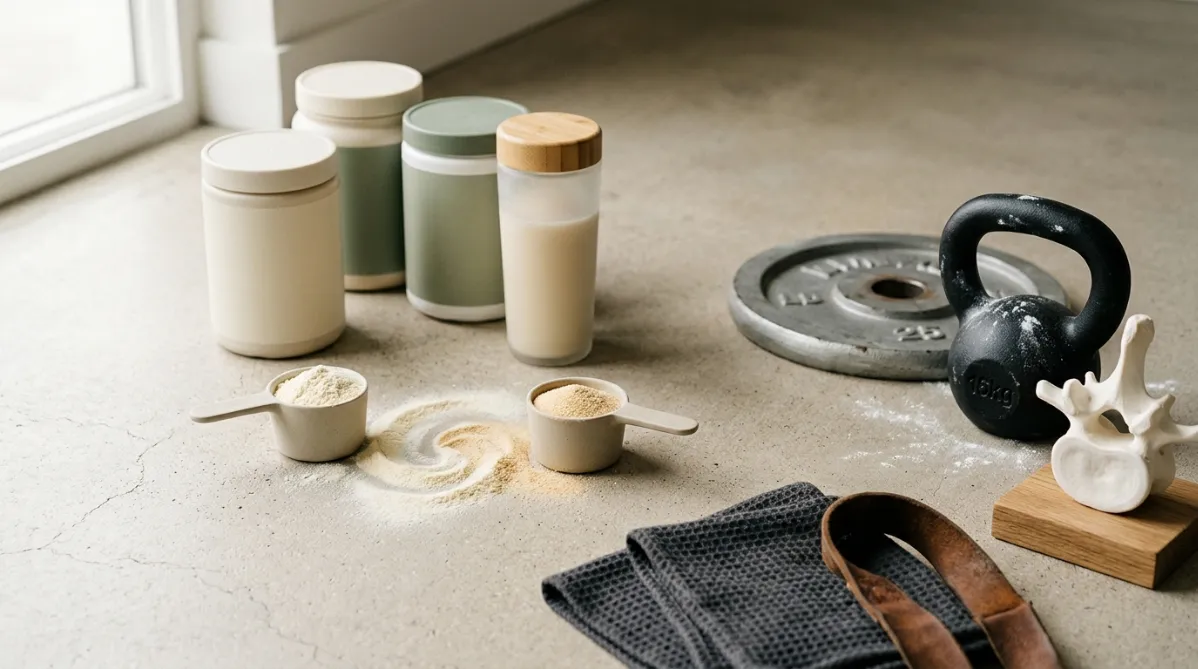
A wide, softly lit editorial still life on a pale warm-gray concrete surface, shot from a slightly elevated three-quarter angle. In the center-left, two matte ceramic scoops sit side by side. One holds fine ivory whey powder, the other holds slightly coarser, pale golden collagen peptide powder. A small, elegant dusting of both powders spills between them and blends into a soft swirl. Behind them, three minimalist cream and sage-green supplement tubs with no legible text stand in a staggered row, with a frosted glass shaker bottle of creamy liquid beside them.

On the right, a brushed-steel barbell plate and a compact chalk-dusted kettlebell rest slightly out of focus, suggesting resistance training. Pale wisps of chalk hang in the air. A folded charcoal gym towel and a pair of worn leather lifting straps lie in the foreground. A single cross-section of a clean white bone model, a stylized vertebra, rests on a small oak block at the far right. It subtly signals the bone-density theme without looking clinical.

Natural window light enters from the left, casting long, gentle shadows and a warm highlight on the powders. The palette is muted and modern: oatmeal, bone white, sage green, soft charcoal, and touches of warm amber. Shallow depth of field keeps the scoops tack-sharp and melts the background into creamy blur. Leave generous negative space in the upper right for headline overlay. The overall feel is a premium health and science journal cover: clean, tactile, minimalist, with fine film-like grain and a calm, editorial mood.
nutrition

Whey + Collagen Thắng Mọi Đối Thủ trong Giới Tập Luyện — Nhưng Còn Gì?

BY DR. GYMBRO ·

Khi kết hợp 30 g whey và 10 g collagen, kết quả trong một thử nghiệm kéo dài 8 tuần với nam giới tập sức mạnh cho thấy hiệu suất vượt trội so với việc dùng whey đơn lẻ, collagen đơn lẻ hoặc giả dược. Sự phối hợp này giúp tăng 2,66 kg cơ bắp (theo BIA), cải thiện mật độ khoáng xương ở vùng cột sống thắt lưng và nâng cao sức mạnh squat, bench cùng các chỉ số chuyển hoá xương. Collagen một mình chỉ ảnh hưởng tới xương, còn whey một mình chỉ ảnh hưởng tới cơ. Tuy nhiên, do mẫu chỉ 40 người, lượng protein không đồng đều và mức tăng BMD bất thường, nên có một số hạn chế cần lưu ý.

A wide, softly lit bedroom scene at dusk, styled like a modern editorial photograph. In the foreground, a rumpled bed with textured oatmeal linen sheets and a single dented pillow sits beside a light oak nightstand. On the nightstand is a tall glass of creamy, milky white protein shake, a small wooden scoop and a matte ceramic tub with no readable label, beside a minimalist analog alarm clock. The clock's hands show a late hour, and it casts a faint shadow on the wall. A pair of clean white running shoes rests on the floor by the bed. A folded gray athletic hoodie lies at the foot of the bed, suggesting an athlete's lifestyle.

Warm amber light from a bedside lamp mixes with cool blue-gray twilight from a tall window with sheer curtains. The glow lands on the glass and gives the milky surface a soft sheen. Through the window, a muted city skyline fades into evening haze.

The palette is calm and sophisticated: warm cream, soft sage green, dusty blue, and a touch of terracotta from a small ceramic vase holding dried pampas grass. The composition follows the rule of thirds, with the glass and clock in the right third and open negative space on the left for headline text. Shallow depth of field keeps the glass and clock crisp while the background blurs gently.

The mood is quiet, slightly restless, and thoughtful, hinting at a night that does not go as planned. A subtle detail, a half-drawn curtain letting in a thin stripe of light across the rumpled sheets, suggests interrupted sleep. The look is clean, contemporary, and magazine-quality, with fine film grain, natural tones, and soft shadows, like a lifestyle wellness journal cover. No people, no text, no futuristic elements.
recovery

‘Protein ngủ’ khiến người khó ngủ thức dậy nhiều hơn

BY DR. GYMBRO ·

Alpha‑lactalbumin được quảng cáo là “protein ngủ”, và các nghiên cứu ngắn hạn trước đây gợi ý rằng nó có thể giúp vận động viên ngủ tốt hơn và biểu diễn cao hơn. Một thử nghiệm ngẫu nhiên có chuyển giao đã kiểm tra nó trên 24 vận động viên thực sự gặp khó khăn trong giấc ngủ. Sau một tuần dùng 40 g trước khi đi ngủ, không có lợi ích nào về giấc ngủ, số lần thức dậy tăng nhẹ (11,01 so với 10,25) và chiều cao nhảy giảm (27,68 cm so với 28,58 cm). Điểm sáng duy nhất là tâm trạng tiêu cực vào buổi tối giảm đi.

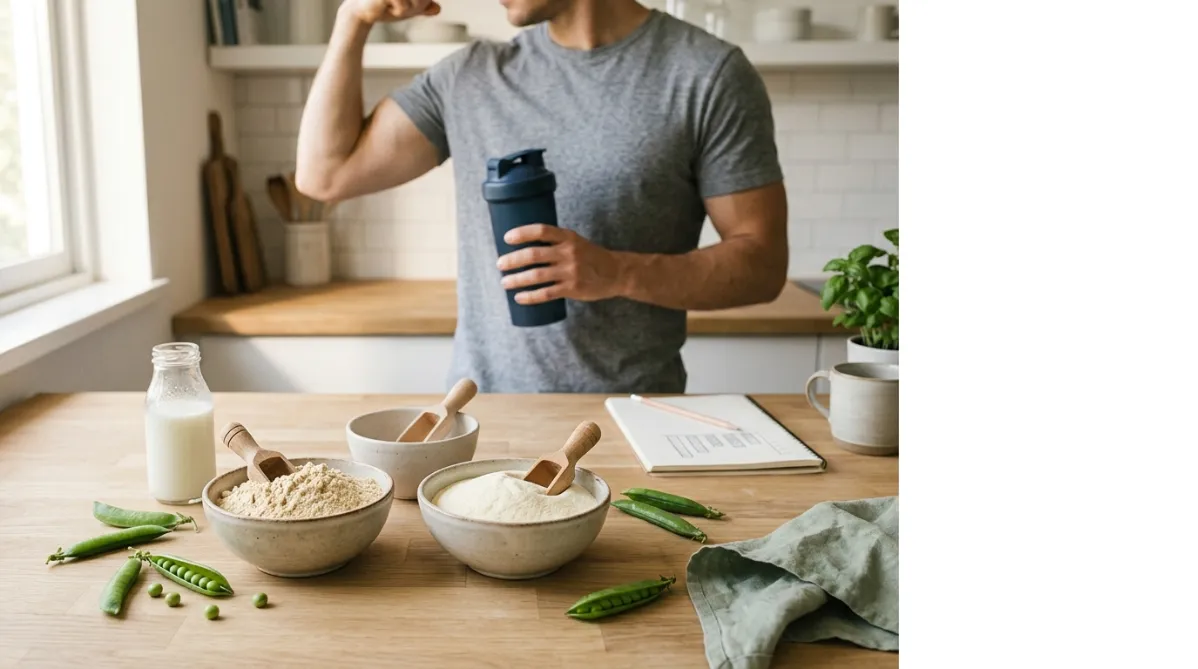
A bright, airy, minimalist kitchen counter in soft morning light, shot from a slightly elevated three-quarter angle in a wide landscape composition. Two matching ceramic bowls sit side by side on a pale oak butcher-block surface. The left bowl holds fine, creamy-beige pea protein powder with a small wooden scoop resting in it. The right bowl holds smooth, ivory-white whey powder with an identical scoop. Between and slightly behind them sits a third, smaller empty bowl with a plain scoop, hinting at the placebo. Scattered around the bowls are fresh green pea pods, some split open to reveal bright, round peas, and a small glass bottle of milk with delicate condensation. A sage-green linen napkin is folded loosely at the edge of the frame.

In the soft-focus background, a young man in a fitted heather-gray t-shirt is seen from the shoulders down, casually flexing one arm while holding a matte shaker bottle, the biceps subtly defined and the pose relaxed and natural. A minimalist notebook with a pencil and a simple hand-drawn bar chart lies open on the counter, suggesting analysis without legible text. A small potted herb plant and a ceramic mug add warmth.

The color palette is muted and editorial: warm cream, sage green, soft terracotta, pale wood, and touches of charcoal. Light streams in from a window on the left, casting gentle long shadows and a subtle golden glow across the powders so their textures look fine and tactile. Shallow depth of field keeps the bowls crisp while the background melts into a creamy blur. The look is modern lifestyle-magazine photography, clean and uncluttered, with generous negative space on the right third of the frame for headline overlay. It is natural, appetizing, and trustworthy, in the style of a contemporary wellness and nutrition journal.
nutrition

Protein Đậu Hà Lan vs Whey: Kết Quả Bất Ngờ cho Người Mới Bắt Đầu

BY DR. GYMBRO ·

Liệu protein thực vật có thực sự giúp tăng cơ như whey? Một thí nghiệm kéo dài 12 tuần với 161 nam giới so sánh protein đậu Hà Lan, whey và giả dược cho thấy kết quả bất ngờ: độ dày bắp tay tăng 20,2 % với protein đậu Hà Lan, trong khi giả dược chỉ tăng 8,6 %. Tuy nhiên sự khác biệt toàn nhóm chỉ là xu hướng, và phát hiện nổi bật đến từ phân tích nhóm con. Bài viết tóm tắt những gì nghiên cứu chứng minh, những gì chưa được khẳng định, và cách vận động viên thuần chay hoặc không dung nạp lactose có thể áp dụng.

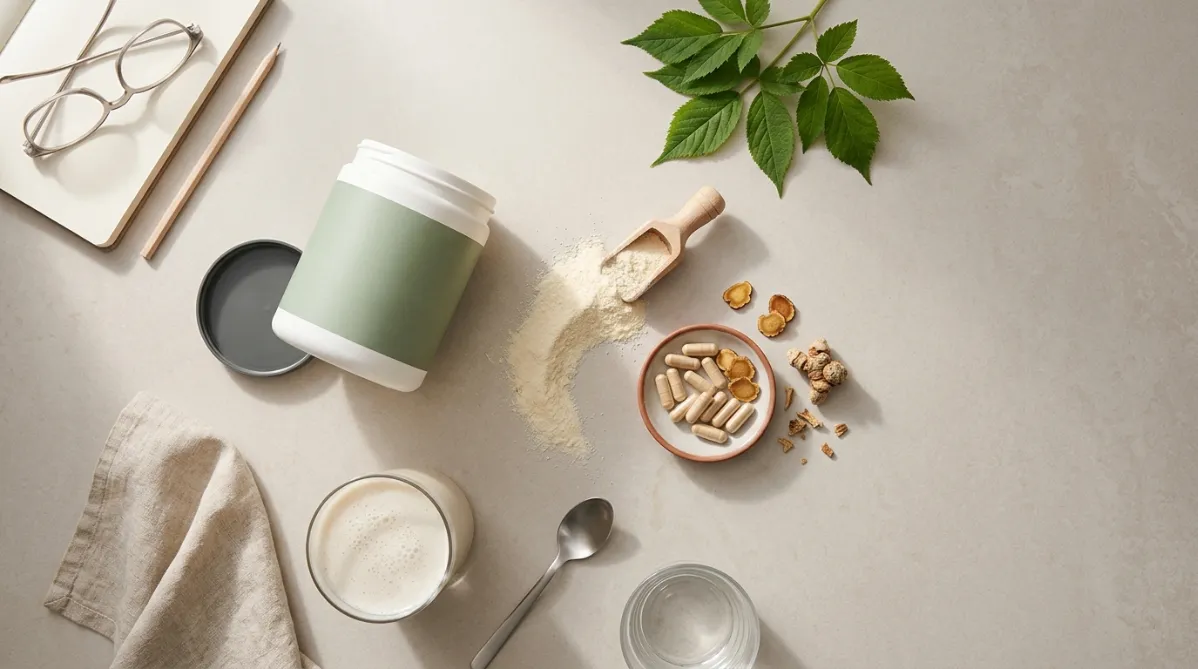
A clean, editorial flat-lay photograph shot from above on a pale warm-grey stone countertop, bathed in soft diffused morning light from the left. At the center sits a matte white supplement tub with a minimal sage-green label, its lid resting beside it. A small wooden scoop spills fine cream-colored whey powder in a gentle arc across the surface, creating delicate natural texture and soft shadows. Next to the powder, a small ceramic dish holds a handful of pale tan capsules and a few tiny golden-brown ginseng root slices and fragments of dried Panax notoginseng root, hinting at the botanical origin of the ingredient. A sprig of fresh green leaves with serrated edges adds a touch of organic color on the upper right.

In the foreground, a tall glass of milky shake with a subtle frothy surface, condensation beads on its sides, sits beside a folded linen napkin in oatmeal tone. A slim brushed-steel spoon and a minimal glass of water complete the arrangement. A pair of simple, elegant reading glasses and a closed notebook with a thin pencil rest at the upper left, suggesting a researcher's desk and a thoughtful review of data, with no legible text visible.

The palette is soft and modern: warm cream, sage green, muted terracotta, pale wood, and gentle off-white, with one small accent of deep amber from the ginseng slices. Composition follows the rule of thirds with generous negative space on the right side for title overlay. Shallow depth of field, crisp focus on the powder and capsules, with the edges gently softened. The mood is calm, trustworthy, and wellness-focused, evoking a contemporary health and science magazine aesthetic. High-resolution, natural color grading, subtle film grain, minimal and airy, 16:9 landscape.
nutrition

AstraGin: Thành phần ẩn trên nhãn đã tăng cường hấp thu whey

BY DR. GYMBRO ·

Trong nhiều nhãn pre‑workout bạn có thể đã bỏ qua một thành phần bé nhỏ tên AstraGin. Một thí nghiệm người mới cho thấy AstraGin có khả năng tăng hấp thu valine tới 14 %, leucine 8 % và tổng các axit amin thiết yếu gần 13 % ở người từ 60‑80 tuổi, đồng thời giảm 13 % nồng độ zonulin – chỉ số thấm rách ruột. Tuy nhiên, chênh lệch về sức mạnh và khối lượng cơ không đạt ý nghĩa thống kê và nghiên cứu chỉ có 30 người tham gia. Bài viết dưới đây sẽ phân tích dữ liệu thực tế và đánh giá hiệu quả của AstraGin.

This page is available in