Dr. Gymbro
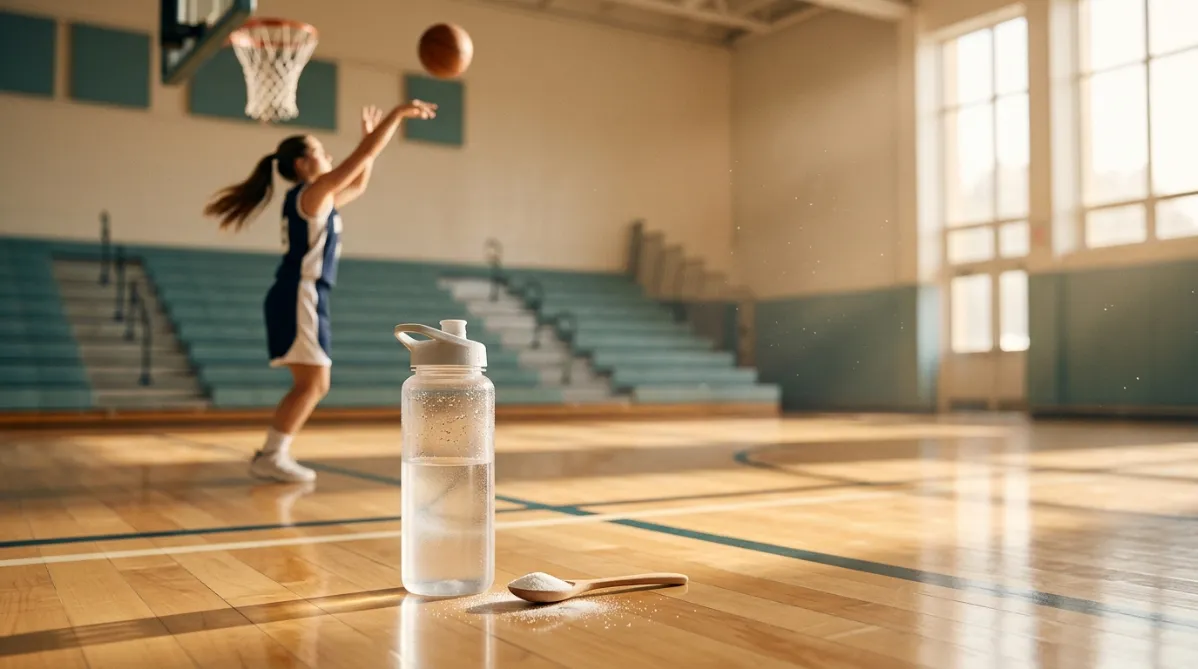
A wide, editorial-style photograph of a hardwood basketball court at golden hour, seen from a low angle near the baseline. In the foreground, slightly off-center to the left, sits a clear sports water bottle on a polished maple floor. It is half full, with tiny beads of condensation on the surface and a faint cloudy shimmer in the liquid. Beside it rests a small wooden spoon dusted with fine white powder, and a few loose grains are scattered on the wood. Warm amber light streams through tall gym windows on the right and casts long soft shadows across the court's painted lines.

In the mid-ground, slightly out of focus, a female basketball player in a navy and white uniform is caught mid-shot. Her arm is extended in a clean follow-through, her wrist relaxed, and the ball is just leaving her fingertips. Her ponytail swings behind her. Behind her, the net hangs crisp against a softly blurred bleacher background in muted teal and cream.

The palette is calm and modern: honey-toned wood, warm cream, deep navy, and soft teal accents. A shallow depth of field gives creamy bokeh in the background, with subtle dust motes floating in the light beams. The composition leaves generous negative space on the upper right for title text. The mood is fresh, athletic, and clean, like a contemporary health and performance journal. The photographic style is natural and film-like, with fine grain, soft contrast, and gentle highlights.
Nutrition

Dipeptide Glutamine Giúp Các Tay Bắn Chính Xác Khi Thiếu Nước

Dr. Gymbro · · 4 min read

Nước Thuần Không Đủ Để Giữ Độ Chính Xác Khi Bắn

Trong một nghiên cứu bóng rổ quy mô nhỏ, nước thuần không duy trì độ chính xác khi bắn tốt như khi được pha thêm L‑alanyl‑L‑glutamine (AG). Đáng ngạc nhiên, liều thấp lại cho kết quả tốt hơn liều cao.

Nghiên cứu tóm tắt

  • Nguồn: Journal of the International Society of Sports Nutrition (2012)
  • Nhóm nghiên cứu: Jay Hoffman và cộng sự, University of Central Florida
  • Thiết kế: Crossover, mỗi vận động viên trải qua bốn điều kiện
  • Số người tham gia: 10 nữ vận động viên bóng rổ NCAA Division I (tuổi trung bình 21,2 ± 1,6 năm, cân nặng 73,5 ± 8,0 kg)
  • Điều kiện thử nghiệm:
    1. Không bù nước (DHY)
    2. Chỉ nước (W)
    3. AG liều thấp 1 g/500 ml (AG1)
    4. AG liều cao 2 g/500 ml (AG2)
  • Phân tích: ANOVA lặp đo một chiều so sánh thay đổi trước‑sau.

L‑alanyl‑L‑glutamine là gì?

AG là một dipeptide, tức là glutamine được liên kết với alanine. Dạng này hoà tan nhanh trong nước, dễ pha vào đồ uống thể thao. Nghiên cứu muốn biết liệu việc thêm AG vào dung dịch bù nước có cải thiện kỹ năng và hiệu suất thể chất vào cuối trận so với chỉ nước thuần.

Cách xác định lượng chất lỏng

Trong trận đầu (không bù nước) các vận động viên không được uống gì. Lượng cân mất trung bình 1,72 ± 0,42 kg (~2,3 % tổng cân) được dùng để tính lượng nước cần cung cấp trong ba trận tiếp theo. Trong các trận bù nước, lượng tiêu thụ trung bình 1,55 ± 0,43 L, không có sự khác biệt giữa các điều kiện nước và AG. Do đó, bất kỳ chênh lệch hiệu suất nào cũng không phải do một nhóm nhận nhiều chất lỏng hơn.

Kết quả nổi bật: Độ chính xác khi bắn

  • AG1 vs. không bù nước: cải thiện 12,5 % (p = 0,016)
  • AG1 vs. chỉ nước: cải thiện 11,1 % (p = 0,029)

Nước thuần không có sự khác biệt đáng kể so với trận không bù nước. Ngược lại, AG liều thấp tách biệt được cả hai, cho thấy việc chỉ thay thế chất lỏng không đủ; việc thêm dipeptide tạo ra hiệu ứng tích cực.

Thời gian phản ứng và mệt mỏi

  • Thời gian phản ứng thị giác: giảm đáng kể sau AG1 so với không bù nước (p = 0,014).
  • Mệt mỏi (được đo bằng “player load”): không có xu hướng rõ ràng, ngoại trừ sự khác biệt nhẹ (p = 0,045) giữa AG2 và trận không bù nước. Như vậy, liều cao chỉ ảnh hưởng tới mệt mỏi, trong khi liều thấp ảnh hưởng tới độ chính xác và thời gian phản ứng.
  • Sức mạnh nhảy: không thay đổi trong bất kỳ điều kiện nào.

Tại sao liều thấp thắng liều cao?

Bài báo không đưa ra giải thích cụ thể. Với chỉ 10 người tham gia, việc suy đoán còn quá sơ bộ. Có thể mô hình đáp ứng liều không phải là đường thẳng tăng lên; “nhiều hơn không nhất thiết tốt hơn”. Cần nghiên cứu lớn hơn để làm sáng tỏ cơ chế.

Ý nghĩa thực tiễn

  • Liều lượng: 1 g AG/500 ml là liều hiệu quả trong nghiên cứu. Với mức tiêu thụ trung bình 1,55 L, tổng lượng AG tiêu thụ khoảng 3 g mỗi trận. Liều 2 g/500 ml không cải thiện độ chính xác hơn.
  • Thời điểm sử dụng: Uống trong các thời gian nghỉ có kiểm soát trong trận 40 phút, sao cho lượng chất lỏng bù khớp với cân nặng mất đi. Thực tế, bạn có thể trộn AG vào nước hoặc đồ uống thể thao và uống trong suốt trận đấu hoặc buổi tập dài.
  • Đối tượng hưởng lợi:
    • Vận động viên bóng rổ hoặc các môn thể thao tấn công‑phòng có trận đấu dài và cần độ chính xác cuối trận.
    • Người đổ mồ hôi đủ để mất vài phần trăm cân thể.
    • Huấn luyện viên muốn thử nghiệm thêm AG vào chiến lược hydrate.
  • Đối tượng nên tránh/hoãn:
    • Người mong muốn cải thiện sức mạnh nhảy hoặc công suất bùng nổ (không có lợi ích).
    • Người tập nhẹ, thời gian ngắn (không được kiểm tra).
    • Người có bệnh thận, gan hoặc đang dùng thuốc; cần tham khảo bác sĩ trước khi dùng bất kỳ bổ sung amino acid nào.
    • Ai kỳ vọng kết quả chắc chắn; bằng chứng hiện còn mỏng.

Những lưu ý quan trọng

  1. Mẫu rất nhỏ: Chỉ 10 vận động viên, nên kết quả nhạy cảm.
  2. Chỉ nữ, chỉ cấp cao: Không chắc áp dụng cho nam, người chơi giải trí, hay các môn thể thao khác.
  3. Trận không bù nước diễn ra trước: Có thể gây hiệu ứng thứ tự; bản tóm tắt không nêu rõ việc ngẫu nhiên hoá thứ tự các điều kiện còn lại.
  4. Nguồn tài trợ: Bản tóm tắt không đề cập tới tài trợ hay xung đột lợi ích; nên xem toàn văn (PMC3316133) để biết chi tiết.
  5. Nghiên cứu đơn lẻ: Chưa được lặp lại; cần thêm nghiên cứu để khẳng định.

Kết luận

Trong một thử nghiệm crossover nhỏ, việc thêm 1 g AG/500 ml vào dung dịch bù nước giúp duy trì độ chính xác bắn khoảng 11 % so với chỉ nước và khoảng 12,5 % so với không bù nước, đồng thời cải thiện thời gian phản ứng thị giác. Công suất nhảy không thay đổi và liều cao không vượt trội hơn liều thấp. Đây là một gợi ý thú vị cho chiến lược hydrate trong các trận dài, nhưng vẫn chỉ là gợi ý, chưa phải là chuẩn mực đã được xác thực.
Original study

Read the original research on pubmed.ncbi.nlm.nih.gov →

This article summarizes published research for general information. It is not medical advice.

DG

Written by

Dr. Gymbro

Dr. Gymbro writes for Dr. Gymbro: science-backed fitness, nutrition & performance.

Related Articles

A wide, editorial-style flat lay photographed from above on a pale warm-gray linen surface in soft natural window light. At the center, a small open amber glass jar tips gently onto its side, spilling a few cream-colored capsules across the fabric. Next to the jar sits a loose arrangement of fresh mushrooms: a cluster of golden-tan reishi with glossy, lacquered caps, a few slender white enoki stems, a halved shiitake showing its pale gills, and a curl of turkey tail with concentric bands of rust, cream, and charcoal. A small wooden scoop holds a pile of fine beige mushroom powder.

On the left third of the frame, a matte black sports watch with a minimal face lies beside a folded sage-green running shirt and a pair of lightweight off-white running shoes, hinting at athletic training without showing a person. A slim white notebook with a single pencil rests nearby, open to a blank page with a faint hand-drawn line graph trending upward, in thin graphite strokes.

On the right side, a pair of clear glass beakers and a single small petri dish with a soft amber-tinted liquid add a subtle laboratory note, kept calm and organic. A single sprig of dried herbs and a few scattered oat-colored grains add texture.

The palette is earthy and refined: oatmeal, soft sage, terracotta, warm amber, and charcoal accents against the muted neutral background. Shadows are soft and diffused, with a gentle highlight on the glass and the glossy reishi cap. The composition leaves generous negative space in the upper right for a headline overlay. Shallow depth of field blurs the edges slightly, while the central mushrooms and capsules stay crisp. The overall feel is modern, clean, and trendy, like a wellness and science magazine cover, with tactile natural textures, minimal styling, and a quiet sense of curiosity and skepticism.
science research

Viên Nang Nấm Tăng VO2max 14,8 % — Nhưng Có Một Điều Rất Lớn

BY DR. GYMBRO ·

Một viên nang nấm, dùng 40 ngày, mang lại mức tăng 14,8 % VO2max – nghe như quá tốt để là thật. Trong bài báo mới trên *Antioxidants*, 50 vận động viên nam trẻ tuổi được cho 320 mg/ngày chiết xuất đa nấm giàu beta‑glucan đã nâng VO2max từ 46,26 lên 53,12 mL·kg⁻¹·phút⁻¹. Tuy nhiên, nghiên cứu không có nhóm giả dược, không random hoá và không double‑blind, đồng thời các vận động viên vẫn tiếp tục tập luyện. Các thí nghiệm tế bào trên tim chuột gợi ý một cơ chế liên quan đến thiếu oxy, nhưng chỉ thử các hợp chất riêng lẻ, không phải chiết xuất toàn phần. Bài viết sẽ tóm tắt phát hiện, giới hạn và ai nên cân nhắc trước khi dùng.

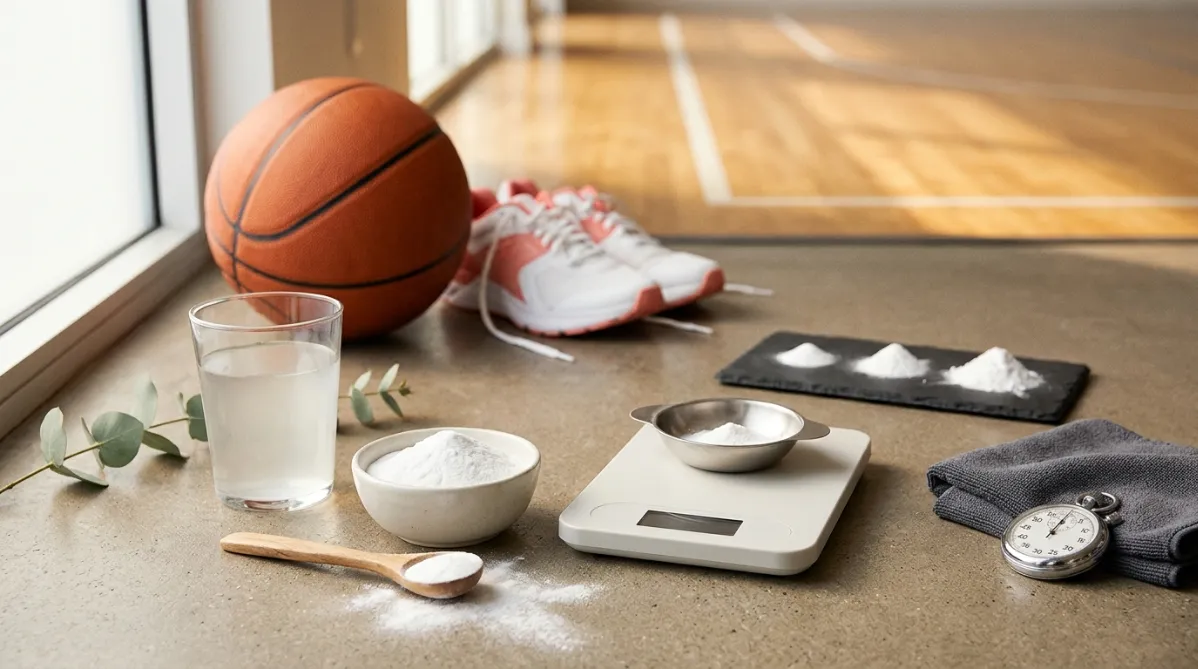
A wide, editorial-style still life shot from a slightly elevated angle on a pale, warm-gray concrete surface lit by soft natural window light from the left. In the center foreground, a clear glass of cloudy water sits beside a small white ceramic bowl heaping with fine white baking soda powder, a wooden measuring spoon resting beside it with a light dusting of powder spilling across the surface in a graceful arc. Next to them, a minimalist digital kitchen scale in matte white shows a small portion of powder in a shallow dish. Slightly behind, an orange basketball is partially in frame, its pebbled texture catching the light, resting beside a pair of clean white and coral athletic sneakers with the laces loosely undone. A folded charcoal gray towel and a stainless steel stopwatch lie to the right, the stopwatch face crisp and legible. Three small, neatly arranged piles of white powder on a slate tile in the midground, in ascending sizes, hint at different doses without any text or labels. In the soft-focus background, the faint outline of an indoor basketball court with warm honey-colored hardwood floor and blurred lane lines stretches across the frame, glowing with golden-hour light. The color palette is restrained and modern: warm off-white, soft gray, burnt orange, and touches of sage green from a single sprig of mint or eucalyptus laid near the glass. Shallow depth of field, crisp textures on powder grains and the ball's surface, gentle shadows, subtle film-like grain. Clean negative space in the upper right for headline overlay. The mood is calm, sleek, and contemporary, like a premium health and sports science magazine cover, with a fresh, minimalist composition and no people, no text, and no futuristic elements.
nutrition

Baking Soda + Sprint: Liều Dùng Đánh Bại Placebo trong Tất Cả Các Kiểm Tra

BY DR. GYMBRO ·

Một thử nghiệm ngẫu nhiên mới trên các vận động viên bóng rổ cho thấy việc bổ sung sodium bicarbonate (baking soda) trong bốn tuần luyện tập sprint interval đã vượt trội hơn placebo về nhảy cao, chạy nhanh, khả năng linh hoạt, khoảng cách Yo‑Yo và công suất Wingate. Liều 0,45 g/kg cho kết quả tốt hơn liều 0,30 g/kg ở mọi chỉ số đo được. Đây là lựa chọn rẻ tiền, hấp dẫn cho các vận động viên thể thao đồng đội, nhưng vấn đề tiêu hoá là rào cản và nghiên cứu còn hạn chế về mẫu, thời gian và chỉ bao gồm nam giới. Bài viết cung cấp công thức liều dùng, cách giảm khó chịu tiêu hoá và đối tượng phù hợp.

A landscape editorial photograph with a modern, clean magazine feel, shot on a pale warm-gray concrete surface in soft natural window light from the left. In the foreground, two matte white ceramic espresso cups sit side by side. The left cup holds a small amount of dark espresso with golden crema. The right cup is filled twice as high. Beside them, two small stainless steel scoops hold fine coffee-colored powder, one half full and one heaped, suggesting a dose comparison without any text or labels. A pair of worn red leather boxing gloves rests slightly out of focus behind the cups, laces loosely draped, with a white hand wrap rolled neatly beside them. A minimalist digital kitchen scale in matte black sits at the edge of the frame, with a few roasted coffee beans scattered across the surface. In the soft-focus background, a boxing gym corner appears: a hanging heavy bag in muted charcoal, pale wood plank flooring, and a tall window with diffused morning light. The palette is warm cream, espresso brown, brick red, and soft slate gray, with gentle shadows and a shallow depth of field. The composition follows the rule of thirds, with the cups and scoops in the lower left third and open negative space on the right for headline overlay. The look is tactile and refined, like a high-end health and performance journal. It has natural grain, subtle contrast, and a calm, confident mood. There are no people, no text, no logos, and no futuristic elements.
nutrition

Tăng liều caffeine không mang lại lợi ích đáng kể cho võ sĩ – Những điểm cần lưu ý

BY DR. GYMBRO ·

Bạn có nghĩ rằng gấp đôi liều pre‑workout sẽ gấp đôi hiệu suất? Một nghiên cứu mới trên 15 võ sĩ thi đấu cho thấy điều này không hẳn đúng. Các nhà nghiên cứu so sánh 3 mg/kg và 6 mg/kg caffeine với giả dược và thấy cả hai liều đều cải thiện khả năng nhảy, nhưng liều cao hơn không luôn tốt hơn. Cả hai liều đều tăng chiều cao và công suất nhảy sau 60 phút, trong khi 6 mg/kg chỉ có ưu thế ở một vài chỉ số như sức mạnh đẩy tay và mô-men xoắn đầu gối. Lưu ý: nghiên cứu không kiểm tra trực tiếp hiệu suất đấm.

A modern editorial still life photographed from a slightly elevated angle on a pale, matte stone surface in soft natural window light. On the left, a heaping mound of fine white creatine monohydrate powder spills from a matte ceramic scoop, with a few crisp grains scattered across the surface. In the center, a small, minimalist amber glass capsule bottle sits tipped on its side, with a handful of off-white capsules spilling out. The label is blank and clean. On the right, a neat row of three clear glass lab-style vials rests on a slim oak tray. The vials hold different amounts of white powder: the first nearly empty, the second slightly fuller, the third filled almost to the brim. This quietly suggests the difference in dose and result. Beside the tray lies a simple stainless steel measuring spoon and a folded sheet of cream paper with soft, abstract bar-chart lines in muted sage green and terracotta. The lines are hand-drawn and unlabeled.

Behind the objects, slightly out of focus, a lean athletic forearm in a gray linen sleeve rests on the edge of the surface, one hand loosely holding a matte shaker bottle. This hints at a training context without showing a face. A single sprig of eucalyptus in the corner adds a soft organic touch.

The palette is warm neutral: bone white, oatmeal, soft sage, muted terracotta, and touches of amber. Shadows are gentle and long, with a shallow depth of field that gives creamy bokeh in the background. The mood is calm, clean, and trustworthy, like a premium health and science journal's feature spread, with generous negative space at the top and right for headline overlay. The composition is wide, balanced, and uncluttered, with subtle film-like grain and a natural, true-to-life color grade. No text, no logos, no futuristic elements.
nutrition

Liều đề nghị của Kre‑Alkalyn không làm tăng creatine trong cơ bắp, sinh thiết chứng minh

BY DR. GYMBRO ·

Creatine dạng nâng cao như Kre‑Alkalyn được quảng cáo hấp thu tốt hơn, liều thấp hơn và ít gây bồn bụng. Một thử nghiệm ngẫu nhiên mù đôi tại Texas A&M đã kiểm tra điều này bằng cách lấy mẫu mô cơ thực tế ở 36 vận động viên trong 28 ngày. Ở liều đề nghị 1,5 g/ngày, lượng creatine trong cơ hầu như không thay đổi, trong khi creatine monohydrate lại tăng rõ rệt. Các chỉ số sức mạnh, thành phần cơ thể và tác dụng phụ cũng không có ưu thế nào cho sản phẩm dạng nâng cao. Dưới đây là những con số thực tế và cách dùng creatine đúng cách.

This page is available in