Dr. Gymbro
A quiet bedside scene at dusk, shot in soft natural light with a shallow depth of field. A tall frosted glass of creamy, pale-white shake sits on a light oak nightstand, with a thin film of condensation on the glass and a faint milky residue near the rim. Beside it, a matte ceramic scoop rests on a small linen coaster. A minimalist tub of unbranded protein powder in muted sage green sits slightly out of focus in the background.

To the left, a neatly made bed with oatmeal-colored linen sheets and a rumpled cream duvet. A pair of worn lifting gloves and a folded gray gym towel sit on the edge of the bed, suggesting an evening workout just finished. A small analog alarm clock reads about 10:30 PM, its soft face glowing faintly. A sprig of dried eucalyptus in a small stoneware bud vase adds an organic touch.

Through a large window on the right, deep indigo twilight fades into a warm amber horizon, and the last light spills across the wall in long, gentle gradients. A sheer curtain moves slightly. The palette is warm neutrals (cream, oak, sand, soft terracotta) with a few muted blue-violet accents from the evening sky.

The composition uses the rule of thirds, with the glass at the left-center foreground and generous negative space on the right, where headline text could sit. The mood is calm, restorative, and editorial, like a modern wellness and nutrition journal. The lighting is gentle and diffused, with subtle film grain and slightly lifted shadows. The textures of linen, wood, glass, and ceramic are crisp. The image is clean and uncluttered, with no text, logos, or people, and no futuristic or sci-fi elements.
Nutrition

Ly tếc 40 g trước khi ngủ: Casein làm gì trong đêm?

Dr. Gymbro · · 5 min read

Kết quả: Cơ thể vẫn “làm việc” khi đang ngủ

Bạn tập tạ vào buổi tối, rồi phải nhịn ăn khoảng tám giờ. Câu hỏi đặt ra là: cơ thể sẽ phục hồi như thế nào trong thời gian này? Một nghiên cứu năm 2012 của Res và cộng sự, đăng trên Medicine & Science in Sports & Exercise, đã đưa ra câu trả lời. Mười sáu nam thanh niên khỏe mạnh tập vào buổi tối, sau đó uống 40 g protein casein 30 phút trước khi ngủ. Kết quả cho thấy protein đã được tiêu hoá và hấp thu trong khi ngủ, tổng hợp protein toàn thân tăng, và cân bằng protein ròng chuyển từ âm sang dương.

Đây là một kết quả ngắn gọn, dễ hiểu và hữu ích, nhưng cũng cần được đọc cẩn thận vì nghiên cứu có những hạn chế nhất định.

Cách thực hiện nghiên cứu

Tất cả người tham gia thực hiện một buổi tập kháng lực duy nhất vào lúc 20:00, sau một ngày ăn uống được chuẩn hoá. Lúc 21:00 họ nhận một bữa phục hồi chứa 20 g protein và 60 g carbohydrate. Sau đó, vào lúc 23:30 – khoảng 30 phút trước khi ngủ – họ uống 40 g casein hoặc một loại đồ uống giả.

Các nhà nghiên cứu gắn nhãn nội sinh (^[1‑C]phenylalanine) lên casein, đồng thời tiêm truyền liên tục các chất dấu vết qua tĩnh mạch, lấy mẫu máu và sinh thiết cơ để theo dõi chuyển động của protein trong suốt 7,5 giờ đêm. Việc theo dõi trực tiếp quá trình tiêu hoá, hấp thu và chuyển hoá protein là một điểm mạnh lớn, giải thích vì sao nghiên cứu này thường được trích dẫn.

Các số liệu chính

  • Tiêu hoá và hấp thu: Casein được tiêu hoá và hấp thu hiệu quả trong khi ngủ. Amino acid trong máu tăng nhanh và duy trì mức cao suốt phần còn lại của đêm.
  • Tổng hợp protein toàn thân: 311 ± 8 µmol/kg trong 7,5 giờ với casein, so với 246 ± 9 µmol/kg ở nhóm giả (P < 0.01).
  • Cân bằng protein ròng: +61 ± 5 µmol/kg với casein, so với –11 ± 6 µmol/kg ở nhóm giả (P < 0.01). Nói cách khác, đêm dùng giả có cân bằng nhẹ âm, trong khi đêm dùng casein thì rõ ràng dương.
  • Tổng hợp protein cơ bắp: Tăng khoảng 22 % với casein (0,059 %/h so với 0,048 %/h). Kết quả này chỉ đạt mức ý nghĩa biên giới (P = 0,05).

Các chỉ số toàn thân rất chắc chắn; chỉ số cơ bắp thì còn mang tính gợi ý và không nên được diễn giải như một bằng chứng quyết định.

Tại sao lại chọn casein?

Casein tạo thành một gel trong dạ dày, làm chậm giải phóng và cung cấp một dòng amino acid kéo dài. Vì vậy nó phù hợp hơn với thời gian nhịn ăn qua đêm so với protein tiêu hoá nhanh, vốn tạo ra một đỉnh cao ngắn ngủi rồi giảm nhanh. Nghiên cứu này hỗ trợ quan điểm thực tiễn: giấc ngủ không làm tiêu hoá ngừng lại, protein vẫn được hấp thu và duy trì sẵn có suốt đêm.

Những hạn chế cần nêu ra rõ ràng

  • Mẫu nhỏ: Chỉ 16 nam thanh niên khỏe mạnh. Kết quả có thể không áp dụng cho phụ nữ, người cao tuổi hoặc những người có lịch sử tập luyện khác.
  • Một đêm duy nhất: Các chỉ số đo là cấp tính. Tăng tổng hợp protein trong một đêm không đồng nghĩa với tăng trưởng cơ bắp trong vài tháng.
  • Chỉ là chỉ dấu cơ chế: Tổng hợp protein và cân bằng protein là các chỉ số sinh lý, không phản ánh trực tiếp kích thước cơ hay sức mạnh.
  • Biên giới thống kê: Sự tăng ~22 % trong tổng hợp protein cơ bắp chỉ đạt mức ý nghĩa thống kê, nên cần thận trọng khi rút ra kết luận.
  • Bối cảnh thực nghiệm: Người tham gia đã ăn một bữa phục hồi sau tập, vì vậy ly casein chỉ là bổ sung, không phải thay thế bữa ăn.

Các nghiên cứu dài hạn đã xem xét xem hiện tượng này có dịch sang tăng trưởng thực tế hay không; công trình của Res và cộng sự chỉ chứng minh tính khả thi sinh lý: protein vẫn hoạt động trong suốt đêm.

Bài học thực tiễn

  • Liều lượng: Nghiên cứu dùng 40 g casein – một khẩu phần khá lớn. Hãy điều chỉnh dựa trên tổng lượng protein hằng ngày, không coi đây là “con số ma thuật”.
  • Lựa chọn thực phẩm: Bột casein là cách tiện lợi nhất để bổ sung. Phô mai cottage, sữa chua Hy Lạp và một số loại phô mai cũng chứa nhiều casein. Kiểm tra nhãn để ước tính lượng protein mỗi khẩu phần.
  • Thời điểm: Uống khoảng 30 phút trước khi ngủ, sau một bữa ăn phục hồi sớm hơn.
  • Ai hưởng lợi nhất:
    • Những người tập vào buổi tối và ngủ gần thời gian tập, vì họ có khoảng cách dài trước bữa ăn tiếp theo.
    • Người gặp khó khăn trong việc đạt mục tiêu protein hằng ngày; một ly casein trước khi ngủ giúp dễ dàng bổ sung 30‑40 g protein.
    • Những ai đã đủ protein và ngủ tốt không nên mong đợi thay đổi đáng kể; tổng lượng protein hằng ngày và chế độ tập luyện nhất quán vẫn là nền tảng.

Kết luận

Ly tếc 40 g trước khi ngủ là một giải pháp ít công sức, dựa trên bằng chứng cho thấy amino acid vẫn có sẵn trong thời gian nhịn ăn dài nhất trong ngày. Res và cộng sự đã chứng minh rằng casein trước khi ngủ được tiêu hoá, hấp thu và làm thay đổi cân bằng protein qua đêm từ slightly negative sang rõ ràng positive. Họ không chứng minh rằng điều này sẽ mang lại tăng trưởng cơ bắp lâu dài. Hãy coi nó như một công cụ tiện lợi để lấp đầy khoảng trống protein và hỗ trợ phục hồi qua đêm, chứ không phải là thay thế cho một chế độ ăn hợp lý và chương trình tập luyện vững chắc.
Original study

Read the original research on pubmed.ncbi.nlm.nih.gov →

This article summarizes published research for general information. It is not medical advice.

DG

Written by

Dr. Gymbro

Dr. Gymbro writes for Dr. Gymbro: science-backed fitness, nutrition & performance.

Related Articles

A softly lit bedside table in a calm, modern bedroom at dusk, photographed in wide landscape format with shallow depth of field. In the foreground, a matte white shaker bottle sits beside a tall frosted glass of creamy, pale vanilla-colored protein shake, with a few condensation droplets catching warm light. Next to the glass rests a slim fitness band on a dark charcoal fabric strap, its small LED glowing a gentle green, lying casually on a light oak wooden surface. A small scoop of fine white protein powder rests on a ceramic dish nearby, with a light dusting of powder on the wood.

In the soft-focus background, a neatly made bed with oatmeal-colored linen bedding and a textured knit throw blanket. A sheer curtain filters the last peach and lavender light of evening from a large window. A small potted olive branch in a terracotta vase and a closed paperback book add a quiet editorial touch. A bedside lamp with a warm, cream-colored shade casts a golden glow across the scene and creates gentle highlights on the glass.

The palette is muted and harmonious: warm cream, soft sand, oatmeal beige, faint sage green accents, and touches of dusty lavender in the window light. The mood is peaceful, reassuring, and clean, like a contemporary wellness magazine or a trendy health journal feature. Lighting is natural and cinematic, with soft shadows and a subtle film-like grain. The composition follows the rule of thirds, with the shake and band on the left third and open negative space on the right for headline overlay. Minimalist, Scandinavian-inspired styling, high-end lifestyle photography, crisp details, and a tranquil, premium editorial feel.
recovery

Protein casein trước khi ngủ không phá hỏng giấc ngủ: dữ liệu WHOOP cho thấy

BY DR. GYMBRO ·

Liệu ly sinh tố casein 40 g trước khi ngủ có lén lút phá hỏng giấc ngủ của bạn? Một thử nghiệm ngẫu nhiên, mù đôi, giao thoa trên 21 vận động viên nữ NCAA Division I đã theo dõi giấc ngủ bằng vòng đeo WHOOP 4.0 và không phát hiện giảm thời gian ngủ, hiệu suất, nhịp tim nghỉ hay HRV. Alpha‑lactalbumin và carbohydrate cho kết quả tương tự. Tuy nhiên, không một loại nào trong số chúng cải thiện giấc ngủ. Bài viết trình bày dữ liệu, những hạn chế và đối tượng nên cân nhắc dùng ly sinh tố khuya.

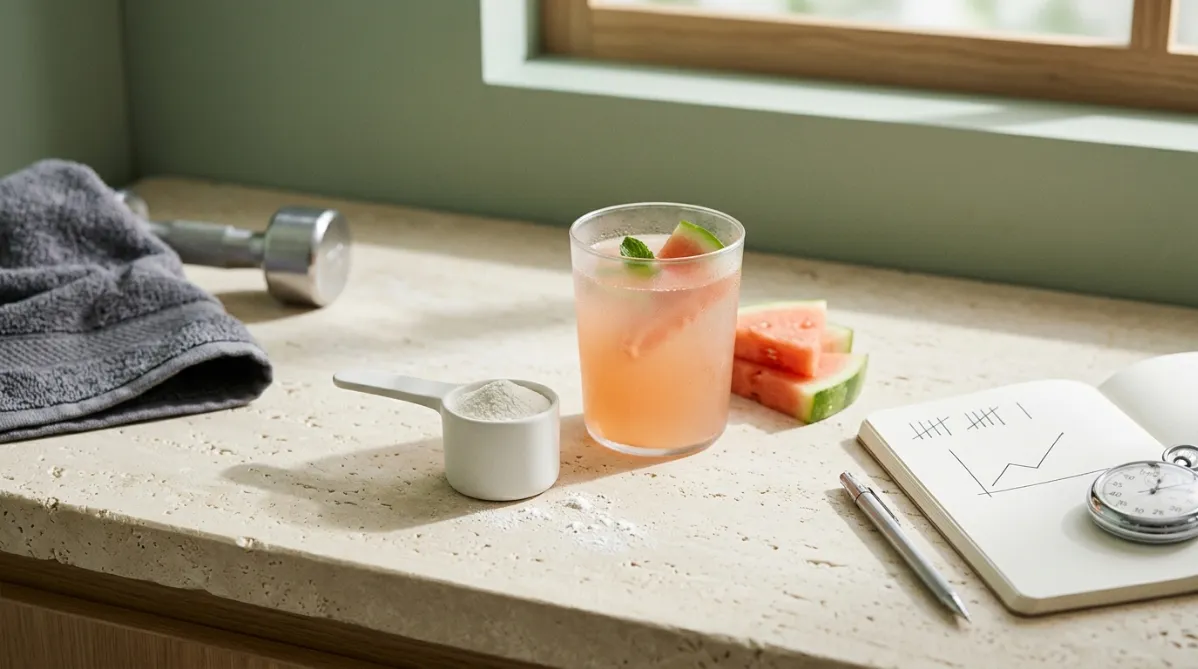
A wide, editorial-style still life photographed on a pale limestone countertop in soft morning window light. At the center sits a matte white scoop of fine white powder resting beside a frosted glass tumbler of cloudy, pale pink-orange water, with a few watermelon slices and a halved wedge showing glossy coral flesh and thin green rind, a nod to citrulline's natural source. To the left, a neatly folded charcoal gym towel and a brushed steel dumbbell rest at the edge of the frame, slightly out of focus. To the right, a minimalist open notebook with a few hand-drawn tally marks and a simple line graph sketched in black ink rises toward the right edge, next to a slim mechanical pencil and a small analog stopwatch with a clean white face. A few loose grains of powder are scattered across the stone, catching the light. Soft diagonal shadows fall across the surface from a nearby window, and a gentle sage-green wall in the background adds calm contrast. The palette is warm cream, watermelon coral, sage green, and soft graphite gray, with plenty of negative space on the upper left for headline overlay. Shallow depth of field, crisp focus on the powder scoop and watermelon, subtle film grain, natural tones, and a clean, modern wellness-journal aesthetic. Shot at eye level with a slight downward angle, like a contemporary health and science magazine cover. No text, no logos, no people.
nutrition

8 g Citrulline Malate: Tăng 53 % Số Lần Lặp và Giảm 40 % Đau Nhức? Nghiên Cứu Nói Gì

BY DR. GYMBRO ·

Một thí nghiệm giao thoa năm 2010 cho thấy liều 8 g citrulline malate giúp tăng khoảng 53 % số lần lặp bench press ở set cuối cùng và giảm khoảng 40 % mức độ đau nhức cơ sau 24‑48 giờ. Điều đáng chú ý là lợi ích này chỉ xuất hiện khi buổi tập đã gần đến mức kiệt sức. Bài viết sẽ giải thích nghiên cứu thực hiện gì, cách dùng liều và thời điểm hợp lý, ai sẽ được lợi, và tại sao tỷ lệ 14,63 % gây khó chịu dạ dày cần lưu ý.

A wide editorial still life on a pale, warm-gray stone surface lit by soft morning window light from the left. In the foreground, a rustic ceramic bowl in matte oatmeal glaze holds dried ashwagandha roots, pale tan and gnarled, with a few scattered beside it. A small wooden scoop dusted with fine golden-beige powder rests next to the bowl. Behind them, a few olive-green ashwagandha sprigs with small orange-red berries in papery husks arc across the frame, adding a quiet pop of color.

Midground right: a matte black chalk-dusted dumbbell handle and a single brushed-steel weight plate lean casually against a linen-textured backdrop in muted sage. A folded cream cotton towel and a slim notebook with a pencil suggest a training log. The notebook is open to blank, softly lined pages with no legible text.

The background fades into a gentle blur of neutral beige and soft terracotta tones, with a hint of a plant shadow cast across the wall in dappled light. Fine dust and powder particles float in the light beams, giving a tactile, organic feel.

The composition follows the rule of thirds: botanical elements on the left and center, gym elements on the right, and negative space in the upper right for headline overlay. Shallow depth of field, crisp focus on the roots and powder, creamy bokeh behind. Color palette: sage green, warm sand, terracotta, charcoal black, and a touch of burnt orange. The mood is calm, modern, and trustworthy, like a premium wellness and science magazine. Photographed on a 50mm lens, natural grain, subtle film-like contrast, clean minimalist styling, high-end editorial photography.
nutrition

Thảo Dược Cổ Xưa Đánh Bại Placebo Trong Thử Nghiệm 8 Tuần: Tăng Sức Mạnh, Thể tích Cơ và Testosterone

BY DR. GYMBRO ·

Liệu một loại rễ Ayurvedic đã tồn tại hàng thế kỷ có thực sự giúp người tập tạ vượt qua placebo? Trong một thử nghiệm ngẫu nhiên kéo dài 8 tuần với 57 người mới bắt đầu tập, những nam giới dùng 300 mg chiết xuất ashwagandha hai lần mỗi ngày đã cải thiện sức mạnh bench press, tăng kích thước cánh tay và ngực, đồng thời mức testosterone lên cao hơn so với nhóm dùng placebo. Họ còn giảm lượng mỡ cơ thể nhiều hơn. Tuy nhiên, nghiên cứu còn nhỏ, ngắn hạn và chỉ áp dụng cho nam giới mới tập. Bài viết dưới đây sẽ tóm tắt dữ liệu, liều dùng, đối tượng phù hợp và lý do bạn nên hoài nghi.

A wide, editorial flat-lay photograph shot from directly above on a pale warm-gray stone countertop, lit by soft natural morning window light with gentle diagonal shadows. On the left, a neatly arranged cluster of whole-food protein sources: two seared chicken breast slices with a golden crust, a small ceramic bowl of creamy Greek yogurt topped with blueberries, three halved soft-boiled eggs with jammy orange yolks, a handful of raw almonds, and a small pile of dried lentils scattered on a linen napkin. At the center, a matte white shaker bottle and a wooden scoop resting in a pile of fine vanilla-colored protein powder, a few grains dusted artfully across the surface. On the right, a minimalist kitchen scale in matte black displaying a portion of food, next to an open notebook with a hand-drawn curve that rises steeply and then flattens into a plateau, drawn in a deep terracotta ink pen, with a small dot marking the bend. A brass pen lies beside the notebook. A single dumbbell with a brushed steel finish sits partially in frame at the upper right corner, grounding the fitness theme without feeling gym-like. Color palette: warm cream, sage green, terracotta, soft charcoal, and butter yellow accents, with generous negative space along the top edge for title overlay. Shallow depth of field, crisp textures, subtle film grain, modern lifestyle magazine aesthetic, clean and calm composition, 16:9 landscape.
nutrition

Bao nhiêu protein thực sự tối ưu hoá cơ bắp? Giải thích mức “đỉnh” 1,6 g/kg

BY DR. GYMBRO ·

Bạn có nghĩ mình cần hơn 2 g protein cho mỗi pound để tăng cơ? Một siêu phân tích meta gồm 49 thử nghiệm và 1.863 người trưởng thành cho thấy lợi ích tối đa trong việc xây dựng cơ bắp đạt mức bão hoà khoảng 1,6 g/kg mỗi ngày. Giới hạn trên của khoảng tin cậy là khoảng 2,2 g/kg, đưa ra một dải nhu cầu thực tế cho người tập thay vì một liều “khổng lồ” ngẫu nhiên. Người đã có kinh nghiệm tập luyện thu được lợi ích lớn nhất từ việc bổ sung protein, trong khi lợi ích giảm dần theo tuổi tác. Dưới đây là những con số nghĩa là gì đối với đĩa ăn, bình shake và ngân sách của bạn.

This page is available in