Dr. Gymbro
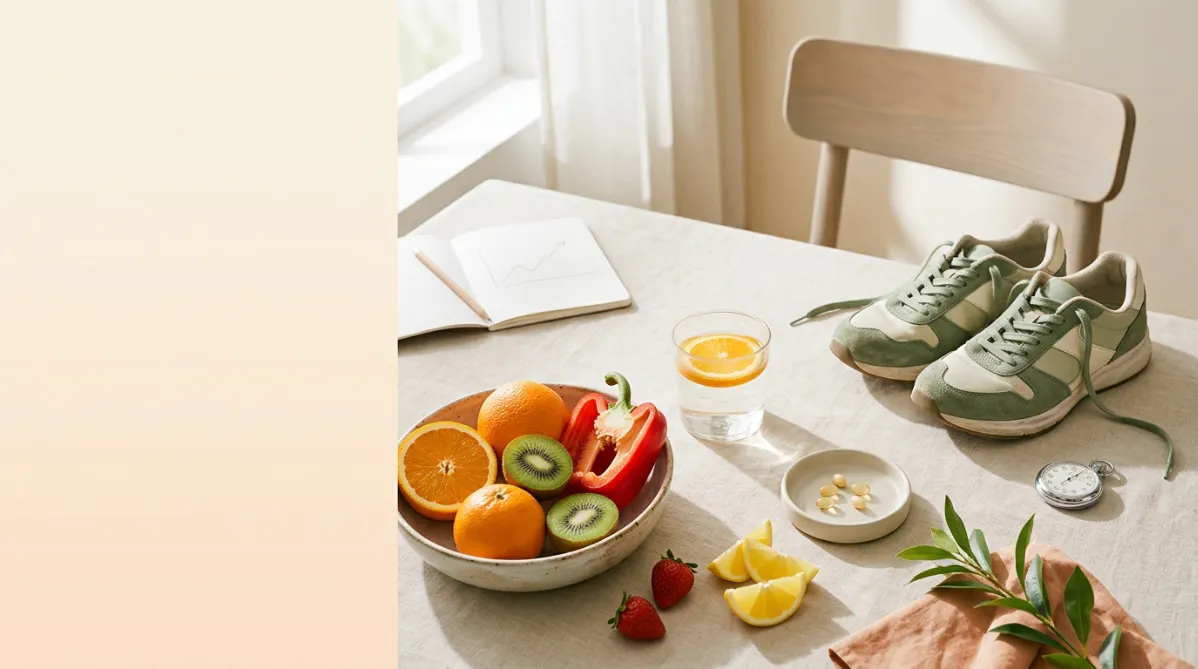
A bright, airy editorial still life photographed from slightly above on a pale oat-colored linen surface, in soft natural window light with gentle long shadows. In the foreground, a rustic ceramic bowl holds halved and whole oranges, glossy red bell pepper slices, and a few kiwi halves with emerald flesh. Beside it sit loose strawberries and a small pile of bright yellow lemon wedges. Their colors pop against the muted neutral palette. A single clear glass of water with a slice of orange rests nearby, catching the light.

On the right side of the frame, a pair of well-worn but clean walking sneakers in sage green and cream sits casually on the surface, with one lace loosely trailing. Behind them, a simple wooden chair with a light ash finish is partly visible and slightly out of focus, a quiet nod to the sit-to-stand test. A small stainless-steel stopwatch lies next to the shoes, with a subtle reflective glint.

A minimalist ceramic dish holds a few small, round, pale-yellow vitamin capsules, kept understated. A sprig of green leaves and a folded cotton napkin in soft terracotta add a warm accent. A small open notebook with a pencil rests in the upper left, its page blank except for faint, abstract pencil lines suggesting a simple rising graph, with no legible text.

The composition leaves generous negative space on the left third for title overlay, with a soft cream-to-peach gradient background. The mood is fresh, healthy, and contemplative, like a modern wellness magazine or a trendy online journal. The color palette is warm citrus orange, sunny yellow, sage green, and soft cream, with gentle terracotta accents. The depth of field is shallow, with crisp focus on the fruit and shoes and a creamy blur in the background. The overall look is clean, natural, and editorial, with fine film-like grain, true-to-life color, and a calm, optimistic tone. Landscape 16:9 framing.
Nutrition

Vitamin C Giá Rẻ Liên Quan Đến Đôi Chân Mạnh Hơn Khi Bạn Lớn Tuổi

Dr. Gymbro · · 6 min read

Vitamin C Giá Rẻ Liên Quan Đến Đôi Chân Mạnh Hơn Khi Bạn Lớn Tuổi

Mọi người thường nhắc tới protein và creatine để duy trì cơ bắp khi tuổi cao. Tuy nhiên, một nghiên cứu mới từ Vương quốc Anh lại chỉ ra một yếu tố rẻ hơn, ít hào nhoáng hơn: nồng độ vitamin C trong huyết tương. Trong hơn 5.000 người trung niên và cao tuổi, những người có mức "tối ưu" vitamin C trong máu di chuyển nhanh hơn và đứng lên khỏi ghế nhanh hơn so với những người có mức thấp. Đó là một mối liên hệ, chưa phải bằng chứng nhân quả, nhưng việc biết con số của mình vẫn có giá trị.

Những gì các nhà nghiên cứu thực sự đã làm

Bài báo, đăng trên Calcified Tissue International bởi Scott, Cameron, Yates và Welch, phân tích dữ liệu từ dự án EPIC‑Norfolk – một nghiên cứu dân số lớn tại Anh, bao gồm các thành phần từ 48‑92 tuổi. Thiết kế cắt ngang, nghĩa là chỉ thu thập một khoảnh khắc dữ liệu, không theo dõi theo thời gian để quan sát thay đổi.

Trước đây, hầu hết các nghiên cứu về vitamin C và cơ bắp đều dựa vào việc người tham gia tự khai báo khẩu phần ăn. Nghiên cứu này lại đo nồng độ vitamin C trong huyết tương, một chỉ số máu phản ánh thực trạng dinh dưỡng của cơ thể. Người tham gia được chia thành ba nhóm:

  • Thấp: < 25 µmol/L
  • Không tối ưu: 25 – < 50 µmol/L
  • Tối ưu: ≥ 50 µmol/L

Sau đó, các nhà nghiên cứu so sánh lực nắm tay (được chuẩn hoá theo chiều cao), tốc độ bước đi và thời gian thực hiện “năm lần đứng lên từ ghế”. Các mô hình đã điều chỉnh các yếu tố lối sống, sinh học, y tế và dinh dưỡng.

Những con số nổi bật

Phụ nữ có mức vitamin C tối ưu so với mức thấp:

  • Lực nắm tay được chuẩn hoá theo chiều cao cao hơn (+0.54 kg/m², p = 0.009)
  • Tốc độ bước đi nhanh hơn (+0.11 m/s, p < 0.001)
  • Thời gian đứng lên từ ghế ngắn hơn khoảng 1.03 giây (p = 0.028)

Nam giới có mức vitamin C tối ưu so với mức thấp:

  • Tốc độ bước đi nhanh hơn (+0.05 m/s, p = 0.01)
  • Thời gian đứng lên từ ghế ngắn hơn khoảng 0.71 giây (p = 0.026)

Đáng chú ý, ở nam giới không có mối liên hệ nào giữa nồng độ vitamin C trong huyết tương và lực nắm tay. Vì vậy, cách diễn đạt "đôi chân mạnh hơn" phù hợp hơn cho cả hai giới so với "cơ bắp mạnh hơn mọi chỗ".

Vitamin C từ thực phẩm thì sao?

Dữ liệu về khẩu phần ăn không gọn gàng lắm. Một số nhóm phụ nữ tiêu thụ vitamin C cao hơn đều có kết quả tốt hơn so với nhóm tiêu thụ thấp. Các nhóm quintile 2 và 5 có tốc độ bước đi nhanh hơn (+0.04 m/s), và các nhóm quintile 4 và 5 có thời gian đứng lên nhanh hơn (khoảng 0.67 và 0.57 giây). Tuy nhiên, xu hướng không tăng đều qua từng quintile. Ở nam giới, các nhà nghiên cứu không tìm thấy bất kỳ mối liên hệ nào giữa vitamin C từ thực phẩm và các chỉ số chức năng.

Khoảng trống giữa kết quả ăn uống và kết quả xét nghiệm máu rất quan trọng. Nồng độ vitamin C trong máu phản ánh những gì cơ thể thực sự đang có, trong khi bảng hỏi về thực phẩm chỉ là ước lượng. Các tác giả dùng sự khác biệt này để nhấn mạnh rằng cần xem xét trạng thái (status) hơn là chỉ lượng tiêu thụ.

Tại sao vitamin C có thể ảnh hưởng đến cơ bắp?

Vitamin C là yếu tố thiết yếu để tổng hợp collagen – thành phần chính của mô liên kết bọc quanh sợi cơ và gân. Nó cũng là một thành phần của hệ thống chống oxy hoá, rất liên quan tới sức khỏe cơ bắp ở người cao tuổi. Đây là nền tảng sinh học cho giả thuyết rằng thiếu vitamin C có thể góp phần vào sarcopenia – quá trình mất khối lượng và chức năng cơ theo tuổi tác. Nghiên cứu này không kiểm tra các cơ chế trên; nó chỉ mô tả mức vitamin C trong máu có liên quan như thế nào tới các chỉ số chức năng.

Những hạn chế bạn cần biết

Đây là lúc tiêu đề click‑bait dừng lại và sự thật bắt đầu:

  • Quan sát và cắt ngang. Nghiên cứu không thể khẳng định vitamin C gây ra cải thiện hiệu suất. Người khỏe mạnh có thể ăn nhiều trái cây và rau hơn, và mức vitamin C trong huyết tương chỉ là một chỉ báo cho lối sống lành mạnh. Các nhà nghiên cứu đã điều chỉnh nhiều biến số, nhưng việc điều chỉnh không bao giờ loại bỏ hoàn toàn các yếu tố gây nhiễu.
  • Hướng quan hệ chưa rõ. Người ít vận động hoặc cảm thấy yếu ớt có thể ăn ít trái cây, và ngược lại.
  • Không có thử nghiệm can thiệp. Chưa có nhóm nào được bổ sung vitamin C rồi mới đo hiệu quả.
  • Hiệu quả khiêm tốn và thay đổi theo giới tính cũng như chỉ số đo.

Các tác giả cho rằng kết quả cho thấy vitamin C huyết tương tối ưu "có thể quan trọng" đối với chức năng thể chất và kêu gọi các nghiên cứu dọc (longitudinal) và thử nghiệm ngẫu nhiên.

Những gợi ý thực tiễn

Mục tiêu: Trong nghiên cứu này, mức vitamin C huyết tương liên quan tới lợi ích là ≥ 50 µmol/L. Nếu muốn biết mình ở mức nào, hãy hỏi bác sĩ liệu xét nghiệm vitamin C huyết tương có phù hợp.

Liều: Nghiên cứu không thử nghiệm liều nào, vì vậy không có liều bổ sung dựa trên bằng chứng từ đây. Điều quan trọng là đạt được trạng thái máu tốt – có thể bằng cách ăn nhiều trái cây, rau quả hoặc dùng thực phẩm bổ sung, nhưng cần các thử nghiệm để chứng minh rằng việc tăng nồng độ thực sự cải thiện sức mạnh hoặc khả năng di chuyển.

Thời điểm: Chưa có dữ liệu. Không có bằng chứng nào ở đây cho thấy thời gian dùng vitamin C ảnh hưởng.

Đối tượng phù hợp nhất: Người trưởng thành trung niên và cao tuổi, đặc biệt là những người ít ăn trái cây, rau và lo lắng về tốc độ đi lại, khả năng đứng dậy khỏi ghế, hoặc sarcopenia.

Ai cần thận trọng: Bất kỳ ai định dùng liều cao vitamin C, đặc biệt là người có bệnh thận, tiền sử sỏi thận, hoặc đang dùng thuốc lâu dài. Những cảnh báo này dựa trên thực hành y tế chung, không phải từ bài báo này; vì vậy hãy tham khảo ý kiến bác sĩ trước khi bổ sung.

Điều gì không thể thay thế: Tập luyện sức đề kháng và đủ protein vẫn là các biện pháp đã được chứng minh để duy trì cơ bắp. Vitamin C, ở mức tốt, chỉ là một yếu tố hỗ trợ tiềm năng.

Kết luận

Kết quả đơn giản và khích lệ: trong một đoàn thể lớn ở Anh, người có mức vitamin C trong máu tối ưu có xu hướng di chuyển nhanh hơn. Việc kiểm tra mức này rất rẻ, và đối với hầu hết mọi người, cải thiện qua chế độ ăn cũng không tốn kém. Tuy nhiên, cho tới khi có các thử nghiệm ngẫu nhiên chứng minh rằng tăng vitamin C thực sự cải thiện chức năng cơ, hãy coi đây là một tín hiệu đáng chú ý, chứ không phải một chỉ định điều trị cụ thể.
Original study

Read the original research on pubmed.ncbi.nlm.nih.gov →

This article summarizes published research for general information. It is not medical advice.

DG

Written by

Dr. Gymbro

Dr. Gymbro writes for Dr. Gymbro: science-backed fitness, nutrition & performance.

Related Articles

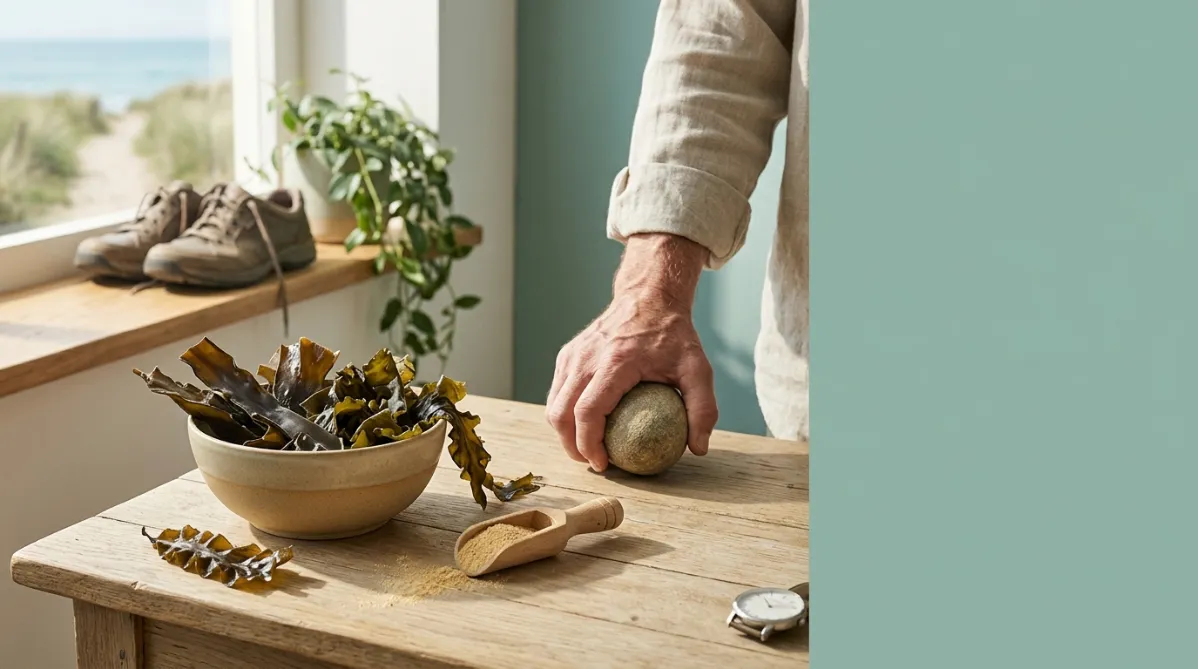
A wide, softly lit editorial photograph of a rustic light-oak table by a sunny window. On it, a handful of dried brown kelp and wakame seaweed fronds spill from a handmade matte ceramic bowl in warm sand tones, their glossy, ruffled edges catching the light. Beside the bowl sits a small wooden scoop holding fine golden-beige powder, with a little of it dusted across the table. In the middle ground, an older adult's weathered but strong hand grips a smooth, rounded river stone, with the knuckles and tendons subtly emphasized to suggest strength and vitality. Only the hand and part of a forearm in a soft oatmeal linen sleeve are visible.

In the background, slightly out of focus, a pair of worn leather walking shoes rests on a windowsill next to a trailing green plant. Beyond the window, a blurred coastal path winds through dune grass toward a pale blue sea, hinting at walking and an active daily life. A simple analog wristwatch lies on the table's edge, a quiet nod to the twelve-week timeline.

The palette is muted and natural: sage green, warm sand, soft ocean teal, and creamy off-white, with deep olive-brown accents from the seaweed. Morning light streams in from the left, casting long, gentle shadows and a faint golden glow. The depth of field is shallow, with crisp focus on the hand and seaweed and a creamy bokeh background. The composition follows the rule of thirds, with the hand and bowl on the left and generous negative space on the right for headline text. The mood is calm and hopeful, with a clean, contemporary wellness-magazine feel. The image is shot as if on a 50mm lens with subtle film grain and a natural, uncluttered, tactile look.
science research

Fucoidan Tảo Biển Tăng Sức Mạnh Cầm Tay Cho Người Trên 60 Tuổi Trong 12 Tuần

BY DR. GYMBRO ·

Mất sức mạnh khi già đi là vấn đề phổ biến nhưng ít được chú ý. Một thử nghiệm ngẫu nhiên kéo 12 tuần cho thấy việc dùng 1.650 mg fucoidan tảo biển có khối lượng phân tử thấp mỗi ngày có thể cải thiện đáng kể sức cầm tay và khả năng đi bộ trong sáu phút ở người trên 60 tuổi. Khối lượng cơ không thay đổi và việc bổ sung BCAA cùng vitamin D không mang lại lợi ích thêm. Nghiên cứu quy mô nhỏ, chỉ kiểm nghiệm một sản phẩm có thương hiệu, vì vậy đây là một gợi ý hứa hẹn chứ không phải kết luận cuối cùng.

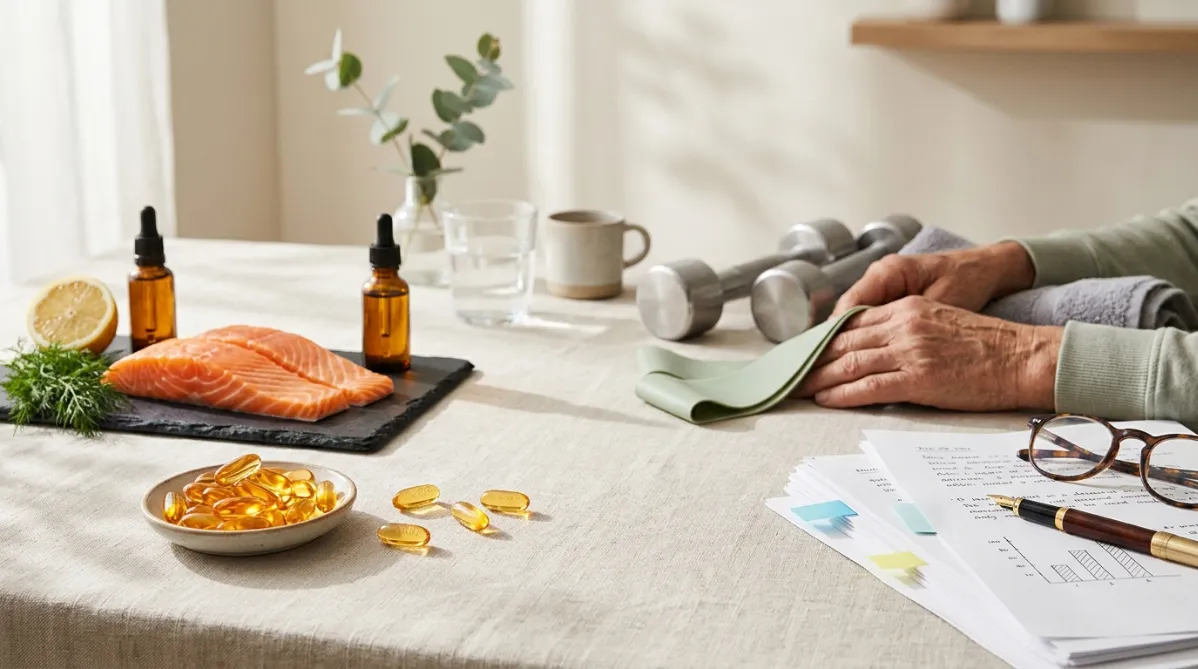
A softly lit editorial still life on a pale oatmeal-colored linen surface, shot from a slightly elevated three-quarter angle with a shallow depth of field. In the left foreground, a small ceramic dish holds several translucent golden-amber fish oil softgel capsules, glowing as if lit from within by warm morning window light. A few capsules are scattered casually beside it, catching crisp highlights. Just behind them, a sliced fresh salmon fillet with vivid coral-orange flesh rests on a matte slate board next to a sprig of dill, a halved lemon, and a small glass dropper bottle of golden oil.

In the soft-focus midground, a pair of weathered, capable older adult hands rests on the edge of the table, gently holding a pale sage-green resistance band, a hint of an active lifestyle. Beside them sits a modest set of brushed-steel dumbbells and a folded heather-gray towel. Subtle natural details add warmth: a glass of water, a small ceramic mug, and a sprig of eucalyptus in a bud vase.

On the right side, a tidy stack of printed research papers with a few pastel sticky tabs and a pair of thin tortoiseshell reading glasses sits on top, suggesting scholarly review. A fountain pen lies across the pages, with a few abstract handwritten notes and a simple hand-drawn bar chart visible but unreadable.

The palette is warm and calming: cream, soft sage, terracotta, honey gold, and coral accents against muted neutral tones. Window light enters from the left, producing long gentle shadows and a faint dappled leaf-shadow pattern across the linen. The background fades into a creamy blur of pale wall and a hint of a wooden shelf.

The composition leaves clean negative space across the upper right third for headline text overlay. The mood is trustworthy, health-forward, and modern, reminiscent of a contemporary wellness and science journal's photography. Fine film-like grain, natural color grading, high-resolution editorial photography, 16:9 landscape format.
nutrition

Dầu cá và cơ bắp lão hóa: 14 nghiên cứu thực tế tiết lộ gì

BY DR. GYMBRO ·

Dầu cá thường được quảng cáo như “lá chắn” cho cơ bắp lão hoá, nhưng bằng chứng thực tế cho thấy gì? Một tổng quan 2026 tổng hợp bảy thử nghiệm ngẫu nhiên có kiểm soát (RCT) và bảy siêu phân tích trên người trưởng thành từ 55 tuổi trở lên. Kết quả cho thấy có tăng nhẹ nhưng đo được về sức mạnh, đặc biệt rõ rệt ở sức mạnh và chức năng chi dưới. Các chỉ số như sức mạnh cầm nắm, tốc độ đi bộ và sức mạnh phần trên vẫn chưa chắc chắn, và sự trùng lặp giữa các nghiên cứu khiến bằng chứng không vững chắc như vẻ bề ngoài.

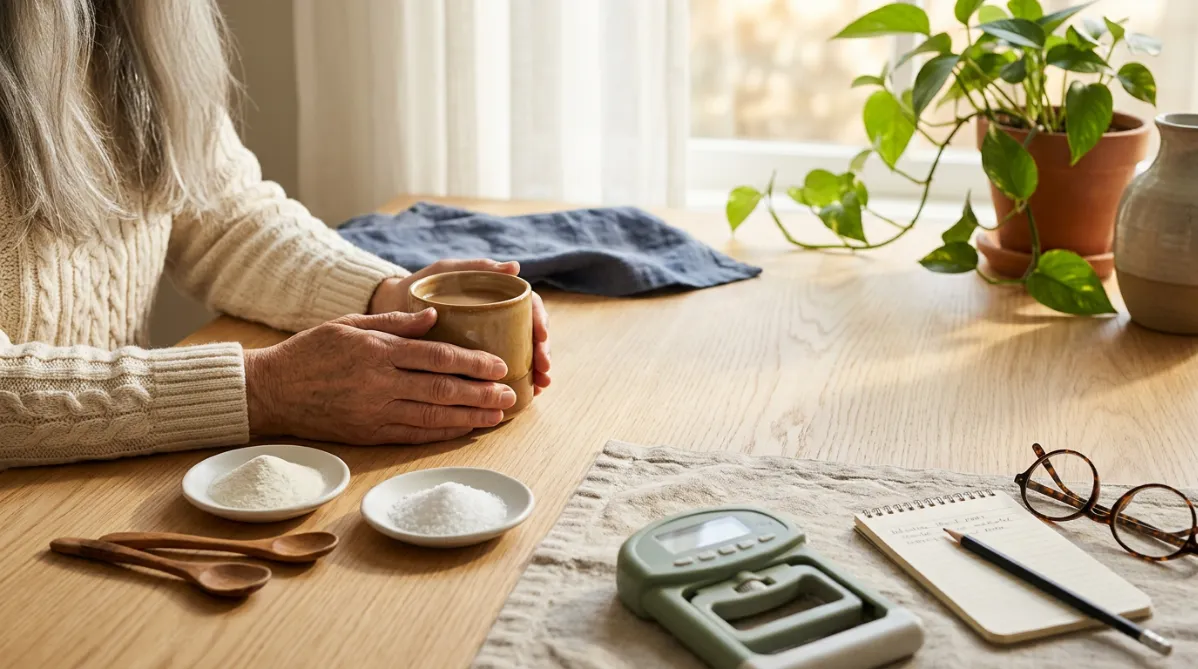
A landscape editorial photograph of a sunlit kitchen table in soft morning light. An older adult's hands, with silver hair and a cream knit sleeve just visible, rest around a ceramic mug. Beside the mug are two small matte white ceramic dishes. One holds a mound of fine white powder, and the other holds a slightly different crystalline white powder. Two wooden spoons lie next to them. A handheld hand-grip dynamometer in muted sage green sits on a linen placemat in the foreground, slightly out of focus. A small open notebook with a pencil and a pair of round tortoiseshell reading glasses sit nearby, with no legible text.

The tabletop is pale oak with a visible grain. Behind it, a window with sheer curtains lets in warm golden light, and the blurred shapes of a trailing green pothos plant and a pale terracotta vase show in the background. The color palette is warm cream, sage green, soft terracotta, and pale wood, with a touch of muted navy from a folded napkin. The mood is calm, thoughtful, and quietly scientific without any laboratory feel.

The composition follows the rule of thirds. The hands and dishes sit in the left-center, and generous negative space on the right is suitable for a title overlay. Shallow depth of field, 50mm lens look, gentle film grain, and soft shadows. Modern lifestyle-magazine and health-journal aesthetic, natural and unstaged, high-end editorial photography.
nutrition

Tiền chất Creatine cho kết quả vượt trội so với Creatine monohydrate trong việc tăng sức mạnh cầm tay ở người trên 65 tuổi

BY DR. GYMBRO ·

Một thử nghiệm nhỏ ở người trên 65 tuổi cho thấy axit guanidinoacetic (GAA), tiền chất trực tiếp của creatine, cải thiện sức mạnh cầm tay tốt hơn creatine monohydrate. Tuy nhiên, nghiên cứu chỉ kéo dài 8 tuần, chỉ có 21 người hoàn thành, không có chương trình tập luyện và khoảng tin cậy gần như chạm tới 0. GAA còn gây ức chế myostatin mạnh hơn và tăng các chỉ số liên quan đến cơ được đo bằng BIA, dù một phần có thể do thay đổi độ hydrat hóa. Homocysteine là mối quan ngại về độ an toàn, vì GAA tiêu thụ nhóm methyl và đã làm tăng nó trong các nghiên cứu khác. Dưới đây là những gì nghiên cứu phát hiện, những gì nó không thể khẳng định, và lý do tại sao creatine monohydrate vẫn là lựa chọn đã được chứng minh.

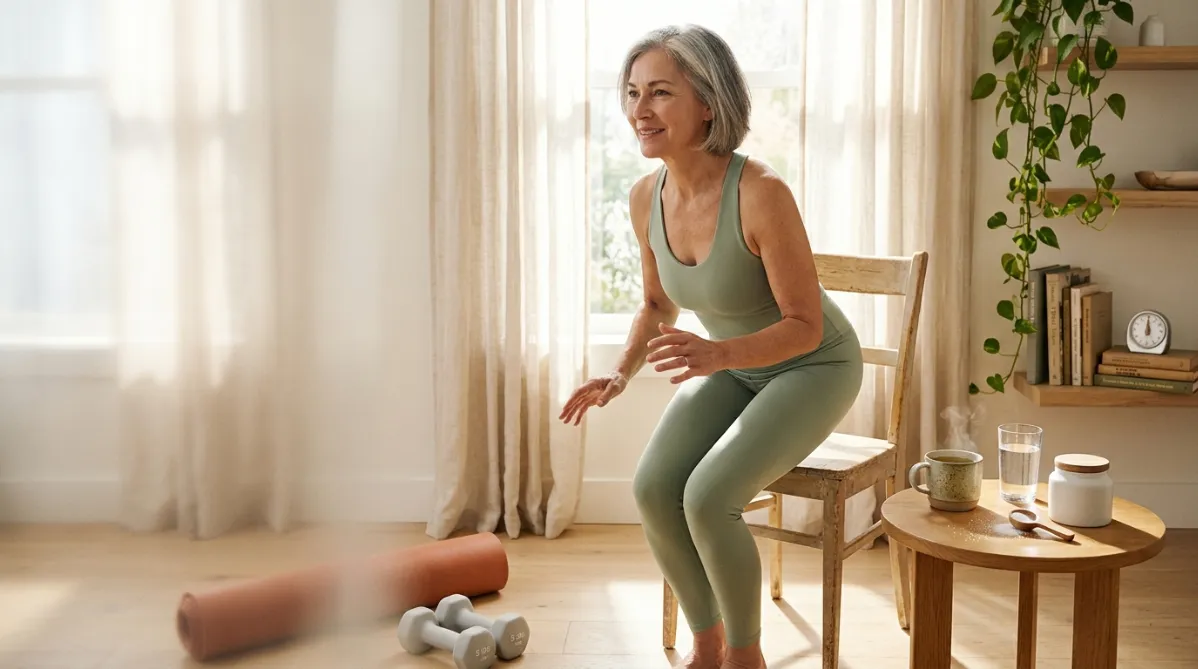
A wide landscape editorial photograph of a bright, airy sunlit living room with pale oak floors and a large window with sheer linen curtains. In the center, a woman in her late 50s with silver-streaked hair, wearing soft sage-green athletic wear, rises from a simple wooden chair, caught mid-motion with a calm, determined expression. Her hands are lightly extended forward for balance. Beside her on a small round oak side table sits a ceramic mug of tea, a glass of water, and a small matte white jar with a wooden scoop resting beside it, a few fine white crystalline grains scattered on the tabletop. In the soft-focus foreground, a pair of light-gray dumbbells and a rolled terracotta-colored yoga mat rest on the floor. A trailing green pothos plant spills from a shelf in the background, with a stack of books and a small analog kitchen timer nearby.

The color palette is warm and muted: cream, sage green, soft terracotta, natural wood, and gentle morning-gold light. Light streams diagonally across the scene, creating long soft shadows and a subtle glow on the woman's shoulders. Shallow depth of field blurs the background gently, while the woman and the table remain crisp. The composition follows the rule of thirds, with the woman on the right and generous negative space on the left, suited for headline overlay. The mood is hopeful, grounded, and modern, like a high-end wellness magazine or a trendy health journal. Natural film-like grain, soft contrast, and a slight matte finish give it a contemporary lifestyle photography feel. There are no futuristic elements, no digital overlays, and no text.
science research

Creatine Giúp Phụ Nữ Viêm Khớp Gối Cải Thiện Điểm Thắng Nhanh Hơn, Không Như Bạn Nghĩ

BY DR. GYMBRO ·

Creatine thường được quảng cáo cho các vận động viên trẻ, nhưng một thử nghiệm ngẫu nhiên, mù đôi đã kiểm tra nó ở phụ nữ mãn kinh bị viêm khớp gối. Sau 12 tuần tập luyện chân, điểm kiểm tra thời gian đứng lên của nhóm dùng creatine tăng từ 15,7 lên 18,1, trong khi nhóm giả dược hầu như không đổi (15,0 → 15,2). Creatine cũng cải thiện độ cứng, khối lượng cơ nạc và chất lượng cuộc sống. Tuy nhiên, giảm đau và sức mạnh tối đa ở máy leg‑press không có sự khác biệt so với giả dược. Dưới đây là các con số và ai thực sự có thể được lợi.

This page is available in