Dr. Gymbro
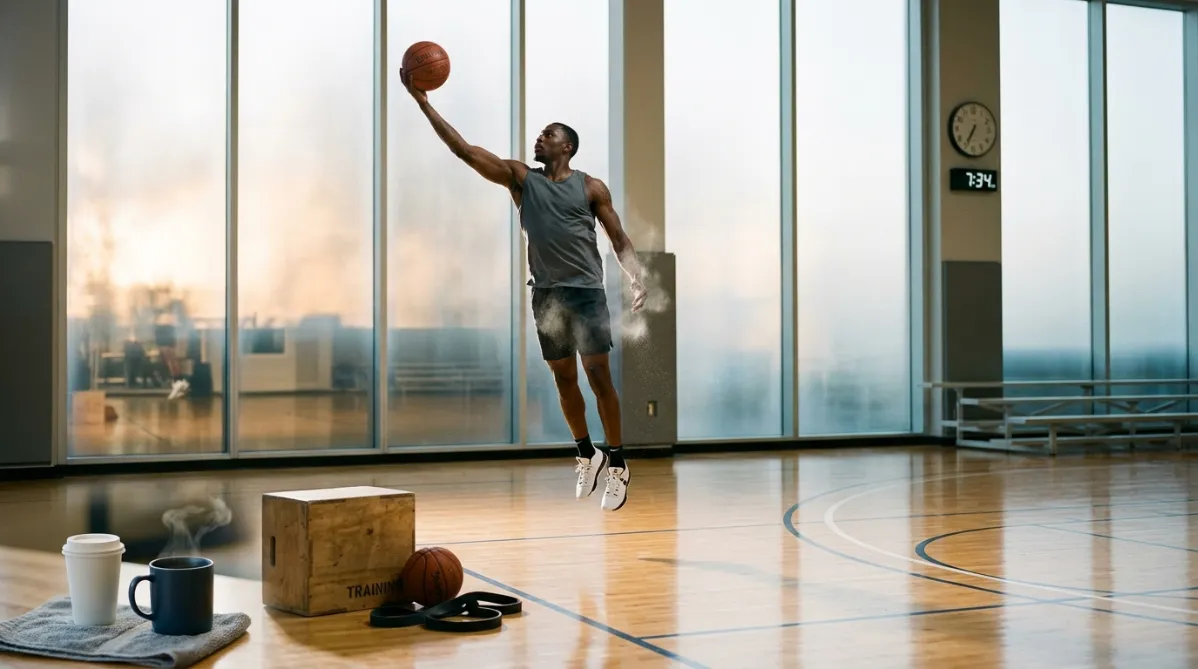
A wide, editorial-style photograph of a basketball player mid-air at the top of a vertical jump inside a sunlit indoor court, shot from a low angle so the athlete's silhouette rises against tall frosted windows glowing with soft morning light. The player wears a plain charcoal tank and white sneakers, with chalk dust drifting off their hands and catching the light. The polished honey-toned hardwood floor reflects the figure faintly, with crisp painted court lines leading the eye across the frame.

In the foreground at the lower left, slightly out of focus, a small wooden plyometric box sits on the floor beside a matte ceramic cup of black coffee and a plain white paper cup, placed neatly on a folded gray towel. Thin steam curls from the ceramic cup. They stand for the question of caffeine versus warm-up without any text or labels.

The color palette is calm and modern: warm amber wood, soft cream, muted slate blue shadows, and a touch of burnt orange from a basketball resting near the box. Light is natural and diffused, with gentle rim lighting on the athlete's shoulders and a shallow depth of field that blurs the background bleachers into creamy shapes. The composition has generous negative space on the right third, suited to a headline overlay, in a clean, contemporary magazine style with fine film grain, subtle contrast, and a quiet, focused mood. No text, no logos, no futuristic elements.
Science & Research

کافئین پیش از پرش‌ها هیچ افزودنی نداشت؛ گرم‌کردن کار را انجام داد

Dr. Gymbro · · 4 min read

شما کافئین مصرف کردید و پرش‌های افت (drop‑jump) انجام دادید. آیا قهوه باعث شد که بالاتر بپرید؟ در یک آزمایش جدید بر روی بازیکنان برتر بسکتبال، پاسخ نه بود؛ حداقل نه بیش از آنچه یک گرم‌کردن پرش‌افت مناسب می‌تواند بدهد.

مطالعه: کافئین در مقابل دارونما در پرش‌کنندگان سطح بالا

پژوهشگران در مقاله‌ای در Frontiers in Physiology (Li et al., 2026) یک آزمون تصادفی، دوسوکور، کنترل‌شده با دارونما و متقاطع انجام دادند. شرکت‌کنندگان ۲۱ بازیکن مرد بسکتبال در سطح ملی (Grade I) بودند که به‌عنوان ورزشکاران بسیار آموزش‌دیده شناخته می‌شوند. هر بازیکن دو جلسه انجام داد: در یکی کافئین ۳ مگ / کیلوگرم وزن بدن و در دیگری دارونما مصرف می‌کرد.

در هر دو جلسه همان روتین گرم‌کردن پرش‌افت شخصی‌سازی‌شده اجرا شد. ارتفاع پرش ضد‌حرکتی (CMJ) پس از گرم‌کردن و سپس در ۱۵ ثانیه، ۳، ۶، ۹ و ۱۲ دقیقه پس از conditioning اندازه‌گیری شد. PAPE به‌عنوان تغییر ارتفاع CMJ نسبت به پایهٔ پس از گرم‌کردن تعریف شد. طراحی متقاطع مهم است چراکه هر ورزشکار به‌عنوان کنترل خود عمل می‌کرد و مقایسه واضح‌تری می‌داد.

آنچه گرم‌کردن پرش‌افت واقعاً انجام داد

پیشنهاد عملکرد پس از‌فعال‌سازی (PAPE) به‌معنی افزایش کوتاه‌مدت خروجی انفجاری است که می‌تواند پس از یک «پرایمر» با شدت بالا رخ دهد. اینجا پرایمر پروتکل پرش‌افت بود که بر پایهٔ شاخص قدرت واکنشی (RSI) هر ورزشکار تنظیم شده بود. RSI رابطهٔ خروجی پرش را با زمان تماس با زمین پیوند می‌دهد و نشان می‌دهد فرد چقدر به‌سرعت نیرو را جذب و بازدهی می‌کند. تطبیق conditioning با این پروفایل بخش «فردی‌سازی‌شده» را تشکیل می‌دهد.

این روش مؤثر بود. عملکرد CMJ به‌طور معناداری در طول زمان پس از conditioning تغییر کرد (اثر زمان، p < 0.001) که نشانگر پاسخ موقت PAPE است. این بهبود واقعی بود اما موقت؛ در پنجرهٔ ۱۲ دقیقه‌ای نوسان داشت و ثابت نماند. این اصلی‌ترین یافته مثبت است: یک پرایمر پلیومتریک شخصی‌سازی‌شده توانست تغییر قابل‌سنجشی در عملکرد پرش ورزشکارانی که پیشاپیش بسیار خوب بودند، ایجاد کند.

چرا کافئین افزودنی نبود

گروه کافئین در هیچ یک از نتایج اصلی با دارونما تفاوتی نداشت. تعامل شرط × زمان معنادار نبود (p > 0.05)، بنابراین کافئین شکل منحنی PAPE را تغییر نداد. ارتفاع اوج CMJ، میزان اوج افزایشی، زمان رسیدن به اوج و مجموع PAPE نیز همه غیرمعنادار بودند (همه p > 0.05).

نویسندگان فرض می‌کنند conditioning شخصی‌سازی‌شده ممکن است قبلاً پاسخ PAPE را بهینه کرده باشد و فضای کمی برای افزودن کافئین باقی بگذارد. این یک فرضیه است، نه اثباتی. عوامل محتمل دیگر شامل اثر سقف در پرش‌کنندگان بسیار آموزش‌دیده، دوز متوسط، یا نویز اندازه‌گیری در نمونهٔ ۲۱ نفره است. این‌ها را می‌توان به‌عنوان سؤالات باز در نظر گرفت.

نتیجه همچنین محدود است. این نمی‌گوید که کافئین به‌طور کلی عملکرد را بهبود نمی‌بخشد؛ فقط می‌گوید که در این جمعیت و با این پروتکل، کافئین به‌علاوه یک گرم‌کردن پرش‌افت شخصی‌سازی‌شده، هیچ فایدهٔ متوسط اضافه‌ای برای پرش ایجاد نکرد.

چرخش پاسخ‌های فردی

یک متوسط «هیچ‌چیز» می‌تواند بسیاری از موارد را مخفی کند. تجزیه و تحلیل پاسخ‌های فردی پژوهشگران نشان داد تغییرات قابل‌توجهی در واکنش‌های مرتبط با کافئین وجود دارد. برخی ورزشکاران شاید کمی بهتر با کافئین پرش کردند، برخی دیگر نه یا حتی کمی بدتر. این نوسانات در آمار گروهی خنثی می‌شوند.

داده‌های متقاطع نمی‌توانند بگویند این تغییرات نشان‌دهندهٔ پاسخ‌های واقعی فردی است یا صرفاً نوسان روزانه عملکرد پرش. تجزیه و تحلیل حساسیت تأیید کرد که الگوی کلی زمان‌بندی پاسخ PAPE ثابت بود؛ بنابراین اثر گرم‌کردن مداوم بود، در حالی که اثر کافئین غیرقابل پیش‌بینی بود. یک ورزشکاری که به‌قوت کافئین اعتقاد دارد ممکن است یک پاسخ‌دهندهٔ واقعی باشد، اما این مطالعه نمی‌تواند آن را تأیید کند.

نکات عملی برای ورزشکاران پرش و سرعت

کسانی که این نکات برایشان کاربرد دارد: ورزشکاران ورزش‌های وابسته به پرش و سرعت مانند بسکتبال، والیبال و دو و میدانی، به‌ویژه آن‌هایی که پیشاپیش در سطح بالای تمرین قرار دارند.

  • در ابتدا گرم‌کردن را اولویت بدهید. شواهد این مطالعه بر یک پرایمر ساختاریافته، فردی‌سازی‌شدهٔ پرش‌افت به‌جای یک محرک شیمیایی به‌عنوان اهرم قابل‌اعتماد برای افزایش کوتاه‌مدت پرش تأکید دارد.
  • ارتفاع سقوط را شخصی‌سازی کنید. مطالعه conditioning را بر پایهٔ RSI هدایت کرد؛ یعنی چند ارتفاع سقوط مختلف را آزمایش کنید و آن‌که بهترین تعادل بین ارتفاع پرش و زمان کوتاه تماس زمین را می‌دهد، انتخاب کنید. مقاله جزئیات دقیق حجم پرش را نمی‌دهد، پس با یک مربی همکاری کنید تا دوز را محتاطانه تنظیم کنید و از خستگی جلوگیری کنید.
  • پنجرهٔ زمان را به‌کار ببندید. مطالعه CMJ را از ۱۵ ثانیه تا ۱۲ دقیقه پس از conditioning دنبال کرد و بهبود موقت بود. واکنش خود را در تمرین تست کنید چون بهترین فاصلهٔ استراحت بین افراد متفاوت است. بسیاری از ورزشکاران می‌بینند که سود پس از چند دقیقهٔ اولیه بهبود می‌یابد نه بلافاصله، اما این را به‌صورت فردی بررسی کنید.
  • دوز و زمان‌بندی در صورت مصرف کافئین. آزمون ۳ مگ / کیلوگرم بدن بود، یعنی حدود ۲۱۰ mg برای یک ورزشکار ۷۰ کیلوگرمی. کافئین معمولاً حدود ۶۰ دقیقه قبل از تمرین گرفته می‌شود تا به اوج غلظت خون برسد، هرچند زمان دقیق آزمون در مقاله ذکر نشده. فرض نکنید که بیشتر بهتر است.
  • خودتان آزمایش کنید. چون واکنش‌ها متفاوت بودند، قبل از اعتماد به کافئین در روز مسابقه، یک مقایسهٔ کور یا حداقل تکراری در تمرینات انجام دهید.

جمع‌بندی

سرخط این نیست که کافئین بی‌فایده است. شواهد دیگری دربارهٔ اثرات کافئین در زمینه‌های دیگر وجود دارد. در این آزمون، گرم‌کردن پرش‌افت شخصی‌سازی‌شده کار را انجام داد و ۳ مگ / کیلوگرم کافئین به‌طور متوسط هیچ بهبود قابل‌سنجی‌ای نداشت. برای ورزشکاران و مربیان این یادآوری است که پیش از استفاده از مکمل، فرآیند اصلی را تکمیل کنند. هنوز محدودیت‌هایی وجود دارد: ۲۱ بازیکن مرد بسکتبال، یک دوز، یک تست پرش و یک پروتکل conditioning. زنان، ورزش‌های دیگر و دوزهای متفاوت همچنان سؤال‌برانگیز باقی مانده‌اند.

Original study

Read the original research on pubmed.ncbi.nlm.nih.gov →

This article summarizes published research for general information. It is not medical advice.

DG

Written by

Dr. Gymbro

Dr. Gymbro writes for Dr. Gymbro: science-backed fitness, nutrition & performance.

Related Articles

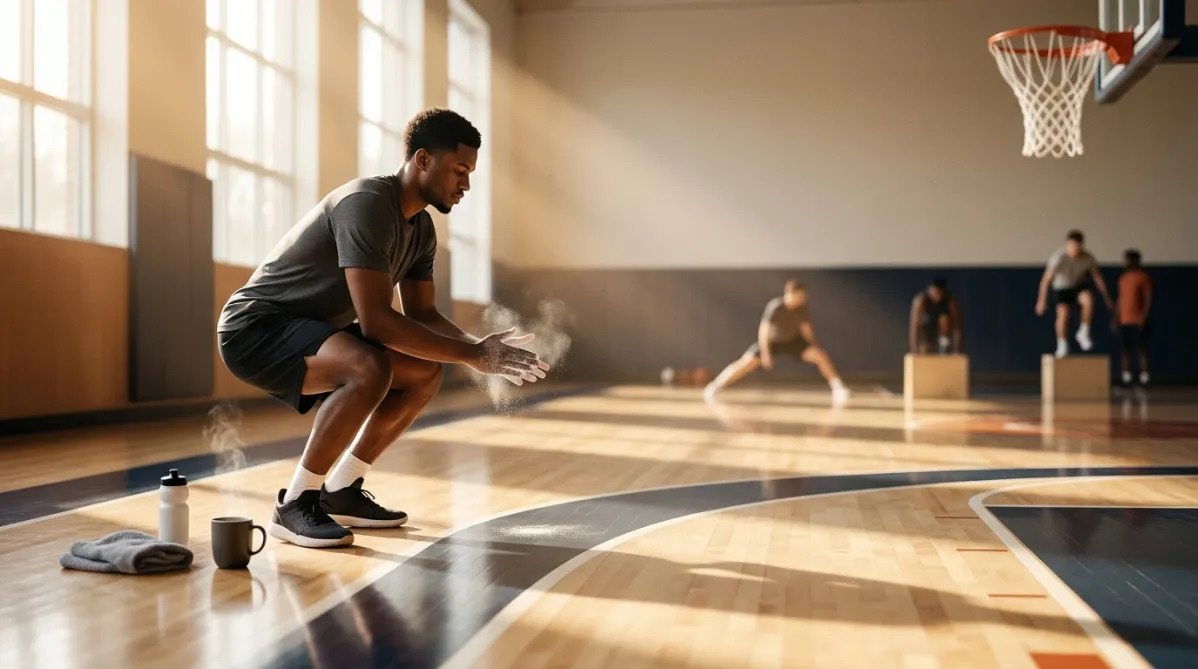
A wide, editorial-style photograph of an indoor basketball court at early morning, shot from a low angle near the baseline. In the foreground, a male collegiate basketball player in a charcoal athletic tee and black shorts is captured mid-crouch, just before a plyometric jump, with chalk dust lifting off his hands and fingers. His expression is focused and calm. Beside him on the polished maple floor sits a matte ceramic cup of black coffee with a thin curl of steam, next to a small white water bottle and a folded gray towel, placed slightly out of focus as a quiet visual hint at the caffeine theme.

Soft golden sunlight pours through tall high windows on the left, casting long, warm diagonal beams across the hardwood and creating subtle reflections on the glossy surface. The painted court lines in deep navy and cream curve gracefully through the frame, leading the eye toward the background, where a few teammates blur softly, stretching and doing box jumps over low plyometric boxes. A basketball hoop with a clean white net is visible in the upper right, gently out of focus.

The color palette is warm and refined: honey-toned wood, espresso brown, cream, muted navy, and touches of terracotta orange. Use shallow depth of field with a creamy bokeh, fine film-like grain, and gentle contrast, giving the image the feel of a modern lifestyle and science journal cover, like a contemporary wellness or sports magazine. Composition follows the rule of thirds, with the athlete on the left third and generous negative space on the right, filled with soft light and blurred court, which is ideal for overlaid headline text. No text, logos, or graphics appear in the image. The mood is energized, intentional, and quietly scientific, evoking preparation, rhythm, and peak performance, with natural realism and no futuristic elements.
science research

کافئین + این روش گرم‌کردن توان ویگنیت را در بازیکنان بسکتبال افزایش داد

BY DR. GYMBRO ·

اگر گرم‌کردن و کافئین‌تان به‌صورت مخفی با هم کار کنند؟ یک آزمایش تصادفی با ۲۴ بازیکن بسکتبال دانشگاهی نشان داد که گرم‌کردن پِی‌آی‌پی‌ای (PAPE) به‌تنهایی بهتر از گرم‌کردن معمولی بود و افزودن ۵ میلی‌گرم بر کیلوگرم کافئین، توان اوج، توان متوسط و کل کار را حتی بیشتر کرد. احساس زحمت نیز کمتر شد، اما شاخص خستگی تغییری نداشت. در ادامه دوز، پروتکل، افراد هدف و محدودیت‌های مهم این مطالعه را بررسی می‌کنیم.

A landscape editorial photograph in a bright, modern gym studio with soft natural light pouring through tall windows. In the foreground, a matte ceramic cup and a small glass jar of plain white powder sit on a light oak bench, with a wooden scoop resting beside them and a few loose grains dusted across the wood. The jar has no label, which hints at mystery without being heavy-handed. Slightly out of focus behind them, a female athlete in a sage green athletic set stands at a barbell, chalked hands gripping the bar, her expression calm and focused. A male cyclist on a stationary bike is blurred in the far background. The palette is warm neutrals: cream, soft sand, pale oak, muted sage, and a touch of terracotta, with gentle golden-hour highlights and soft shadows. The composition follows the rule of thirds, with the cup and jar in the lower left, the athlete on the right, and open negative space in the upper area for headline text. The depth of field is shallow, with a creamy bokeh background. The mood is contemplative, curious, and trendy, like a contemporary health and science magazine cover. Fine film grain, subtle matte finish, clean minimalist styling, and no text or logos.
science research

کافئین تقلبی همچنان ورزشکاران را قوی‌تر و سریع‌تر می‌کند

BY DR. GYMBRO ·

اگر بخشی از انرژی پیش‌ورزشیتان از ذهن‌تان می‌آید نه از یک قاشق کافئین، چه می‌شود؟ یک متاآنالیز ۲۰۲۶ شامل ۱۷ مطالعه نشان داد که حتی وقتی ورزشکاران فکر می‌کردند دارویی که دریافت کرده‌اند کافئین است، عملکرد ورزشی آن‌ها بهتر شد (d = 0.49). این اثر در تست‌های پرس سینه، مسابقات دوچرخه‌سواری زمان‌محور و شتاب‌گیری‌های تکراری مشاهده شد. اثرات بیشتر زمانی بود که پژوهشگران کور بودند و در مطالعاتی با حضور بیشتر زنان. شواهد با اطمینان پایین و ریسک بالای سوگیری همراه است. این نتایج به این معنی نیست که مصرف کافئین واقعی ۳‑۶ mg/kg را کنار بگذارید، بلکه یادآوری می‌کند که انتظارات نیز یک متغیر عملکردی هستند.

A wide, editorial-style photograph of a single slim silver and blue energy drink can standing upright at center on a polished light-oak gym bench, shot in soft natural window light. The can is unbranded, with a clean, minimal design and a few beads of condensation. Behind it, the softly blurred interior of a bright modern indoor volleyball court stretches into the background, with a pale hardwood floor, a net, and a few volleyballs resting in a mesh cart. Warm morning sunlight enters through tall windows on the left and casts long, gentle shadows across the bench. Beside the can sit a small white towel folded neatly, a simple stopwatch, and a pair of white wireless earbuds. On the right, a small paper cup of white powder and a wooden scoop hint at measured dosing. They are placed deliberately, like a styled still life.

At the very edge of the frame, a pair of delicate white paper wings, origami-like and slightly crumpled, lie flat and unused on the bench, a subtle visual joke about the "wings" slogan. The wings are understated and tactile, not magical or glowing.

The color palette is muted and fresh: warm honey wood, soft cream, pale sky blue, and touches of silver, with a single accent of coral red from a volleyball panel in the background. The depth of field is shallow, with crisp focus on the can and the paper wings and a creamy bokeh background. The composition follows the rule of thirds, with the can slightly left of center and generous negative space on the right for a headline overlay. The mood is calm, clean, and contemporary, like a lifestyle and science magazine cover, with fine film grain and natural contrast. The camera angle is slightly low, at bench level, with a 50mm lens look.
nutrition

آیا رد بول پرواز می‌دهد؟ ۱۳ آزمون ورزشی هیچ‌گونه بهبودی نشان نداد

BY DR. GYMBRO ·

شعار رد بول می‌گوید پروازی به تو می‌دهد، اما مطالعه‌ای جدید بر روی بازیکنان والیبال زن نشان داد که این پرواز رخ نمی‌دهد. یک قوطی استاندارد رد بول هیچ‌یک از ۱۳ معیار تست‌های وینگیت، پرش و قدرت دست را نسبت به دارونما بهبود نداد. هشت نفر از ۱۵ ورزشکار پس از مصرف، تهوع خفیفی گزارش کردند؛ احتمالاً به این دلیل که قوطی تنها حدود ۱٫۱ میلی‌گرم کافئین به ازای هر کیلوگرم وزن بدن فراهم می‌کند، که بسیار کمتر از ۳ تا ۶ میلی‌گرم/کیلوگرم توصیه‌شده است. در ادامه می‌بینید این مطالعه چه نتایجی داشته، محدودیت‌های آن چیست و چگونه باید دوز کافئین را تنظیم کرد.

A landscape editorial still life on a pale warm-gray concrete surface, shot from a slightly elevated three-quarter angle in soft diffused morning window light. In the foreground left, a small open foil blister pack of mint-green caffeine gum sits beside two neatly arranged piles of gum pieces, one with three pieces and one with six, each on a small matte ceramic dish in oat and sage tones. The pieces are slightly glossy, rounded rectangles with crisp shadows. In the center-right, a worn leather basketball rests on the surface with deep amber-orange tones and visible pebbled texture. Next to it is a loosely chalked barbell collar and a single steel weight plate edge, partly out of focus. A minimalist analog stopwatch with a matte white face and a thin black hand lies at the lower right, and a slim notebook with a pencil rests nearby. The page shows a simple hand-drawn bar graph of two equal bars, with no legible text. In the soft-focus background, a blurred indoor basketball court with warm honey-colored hardwood and distant hoop lines fades into creamy bokeh. A narrow band of sunlight crosses the scene diagonally and picks out chalk dust particles in the air. The palette is muted and modern: sage green, warm oat, terracotta orange, charcoal, and cream. The composition leaves open negative space on the upper left for title overlay. Shallow depth of field, fine film grain, and a calm, clean magazine aesthetic like a contemporary health and science journal. No people, no text, no futuristic elements.
science research

آب‌نبات گومای کافئین و عملکرد در همان روز: چرا ۳ mg/kg معادل ۶ بود

BY DR. GYMBRO ·

یک آزمایش متقاطع نوین در بازیکنان بسکتبال نشان داد که گومای کافئین با دوز ۳ mg/kg همان روز می‌تواند قدرت، توان انفجاری، سرعت دو و چابکی واکنشی را به همان‌حدی که دوز دو برابر (۶ mg/kg) می‌داد، بهبود بخشد. هر دو دوز سرعت میله‌بار را در اسکوآت‌های سنگین افزایش دادند، اما پس از ۲۴ تا ۴۸ ساعت هیچ‌گونه مزیتی باقی نماند. به‌دلیل نبود گروه پایه و گروه تنها کافئین، نتایج باید با احتیاط تفسیر شوند؛ اما نشان می‌دهد که دوز متوسط کافی است و مصرف بیش از حد می‌تواند عوارض جانبی ایجاد کند.

This page is available in