Dr. Gymbro
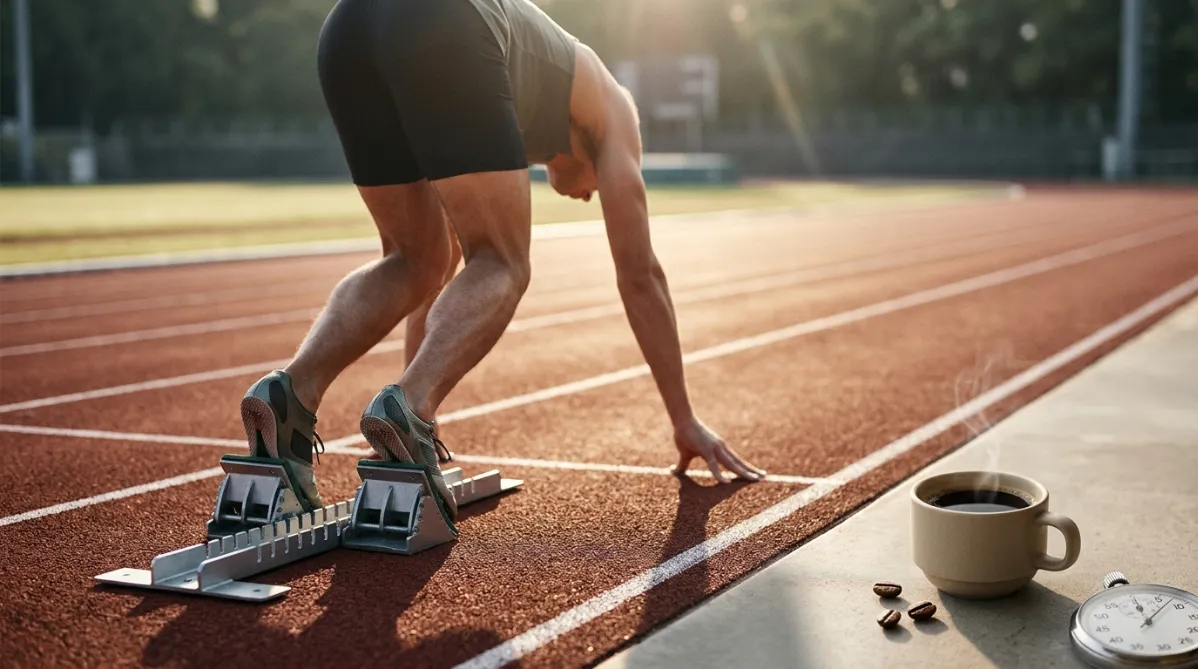
A wide, editorial-style photograph of a sprinter crouched in starting blocks on a deep terracotta-red running track, shot from a low angle at the side as the first morning light rakes across the lanes. The athlete is mid-set, hips lifted, hands poised behind crisp white lane lines, with a soft focus on their muscular calves and spiked shoes in the foreground. Warm golden sunlight creates long, elegant shadows and subtle lens flare, while the distant lanes fade into a creamy bokeh.

In the lower right foreground, slightly out of focus, sits a minimalist still life on a matte concrete ledge beside the track: a small ceramic cup of black coffee with a thin wisp of steam, two loose roasted coffee beans, and a simple stopwatch with a clean white face. The ceramic is a muted sand color, adding a refined, modern lifestyle touch.

The color palette is restrained and trendy: terracotta, warm cream, soft charcoal, and a hint of sage green from trees blurred in the far background. The composition uses generous negative space across the upper left, ideal for headline text overlay. The look is similar to a contemporary health and sports science magazine: natural film-like grain, gentle contrast, shallow depth of field, and a calm, focused mood. No text, no logos, no graphics, and no futuristic elements, just a realistic, tactile, sunlit scene that suggests precision, preparation, and explosive speed.
Science & Research

دوز دو برابر کافئین، سرعت بیشتر؟ چه مقدار ۶ mg/kg واقعا افزایشی دارد

Dr. Gymbro · · 5 min read

خلاصهٔ نتایج

دوز ۶ mg/kg نسبت به ۳ mg/kg برتری بیشتری نشان داد، اما این برتری فقط در برخی فازهای دو‑دوری احساس می‌شد. یک آزمون تصادفی جدید بر روی دوندگان ۱۰۰‑متری آموزش‌دیده نشان داد که دو برابر کردن دوز کافئین باعث افزایش سرعت در اولین ۳۰ و ۶۰ متر می‌شود، اما تأثیری بر زمان واکنش، احساس خستگی یا توان اوج در تست ویندگیت ندارد. اگر فرض کنیم مقدار بیشتر کافئین به معنای بهبود همهٔ پارامترهاست، این الگو شایستگی بررسی دقیق‌تری را دارد.

روش تحقیق

این مطالعه که در سال ۲۰۲۶ در PLoS One توسط می، لی و یانگ منتشر شد، به‌صورت تصادفی، دوسوکور، دارونما‑کنترل و متقابل (crossover) انجام شد. بیست و یک دوندهٔ مرد ۱۰۰‑متری با سطح آمادگی جسمانی بالا، سه وضعیت مختلف را تجربه کردند: دارونما، ۳ mg/kg کافئین و ۶ mg/kg کافئین. هر دو جلسهٔ آزمایشی حداقل هفت روز از یکدیگر فاصله داشتند. شصت دقیقه پس از مصرف، هر ورزشکار دو بار دویدن حداکثری ۶۰‑متری را انجام داد، سپس یک پرش مقابل‑حرکتی (CMJ)، یک پرش اسکات و یک تست ویندگیت ۱۰ ثانیه‌ای را انجام داد.

در این مطالعه زمان‌های تقسیم‌شده، زمان واکنش در شروع، نرخ توسعهٔ نیرو در بلوک شروع (RFD)، پارامترهای گام‌برداری و احساس خستگی نیز ثبت شد. تحلیل‌ها با مدل‌های ترکیبی خطی (linear mixed‑effects) انجام شد و برای دورهٔ درمان و ترتیب تصادفی تنظیم گردید. این کارآزمایی در سامانهٔ ثبت‌نام بالینی چین (ChiCTR2600128594) ثبت شده است.

نتایج زمان دو‑دوری: کجا ۶ mg/kg پیشی گرفت؟

هر دو دوز نسبت به دارونما زمان‌های مجموع ۱۰، ۳۰ و ۶۰ متری را به‌صورت معنی‌دار کاهش دادند (p < 0.001). به‌طور دقیق‌تر، بهبود نسبت به دارونما به این شکل بود:

  • ۳ mg/kg: ۰٫۰۵۶ ثانیه (۱۰ m)، ۰٫۰۸۳ ثانیه (۳۰ m)، ۰٫۱۲۳ ثانیه (۶۰ m)
  • ۶ mg/kg: ۰٫۰۷۵ ثانیه (۱۰ m)، ۰٫۱۱۵ ثانیه (۳۰ m)، ۰٫۱۷۵ ثانیه (۶۰ m)

اختلاف بین دو دوز به فاز دو‑دوری وابسته بود. در اولین ۱۰ m، اختلاف ۰٫۰۱۹ ثانیهٔ اضافه با ۶ mg/kg از نظر آماری معنی‌دار نبود. اما در ۳۰ m و ۶۰ m، دوز بالاتر به ترتیب ۰٫۰۳۲ ثانیه و ۰٫۰۵۲ ثانیه بهتر از دوز پایین‌تر بود. به‌عبارت دیگر، در ۱۰ m دو دوز تقریباً مشابه بودند و مزیت اضافه ۶ mg/kg فقط با پیشرفت دو‑دوری آشکار شد.

نکته: ورزشکاران ۶۰ m دویدند، نه ۱۰۰ m. عنوان مقاله به دلیل گروه هدف (دوندگان ۱۰۰ m) انتخاب شده است، نه به‌دلیل مسافت آزمون.

فراتر از زمان‌سنج

هر دو دوز زمان واکنش، احساس خستگی، ارتفاع پرش، توان اوج و میانگین ویندگیت و RFD بلوک شروع را نسبت به دارونما بهبود دادند. مزیت اضافه ۶ mg/kg به‌صورت انتخابی بود:

  • بهبود اضافه با ۶ mg/kg: ارتفاع پرش و RFD بلوک شروع.
  • بدون بهبود اضافه نسبت به ۳ mg/kg: زمان واکنش، احساس خستگی و توان میانگین ویندگیت.
  • توان اوج ویندگیت: با دوز بالاتر بهبود نیافت.

طول گام و فرکانس گام تحت هیچ‌یک از دو دوز تغییر نکردند. نویسندگان نتیجه می‌گیرند که ۳ mg/kg اثرات مثبت متعددی دارد، در حالی که ۶ mg/kg به‌طور مداوم برای ارتفاع پرش، RFD بلوک و عملکرد تجمعی در ۶۰ m اول مفیدتر است. دلیل این که سرعت بدون تغییر مکانیک گام بهبود یافت، در چکیده توضیح داده نشده و همچنان سؤال‌برانگیز است.

معادل میلی‌گرمی دوزها

کافئین بر حسب وزن بدن تجویز می‌شود، بنابراین مقدار واقعی برای هر ورزشکار متفاوت است:

وزن بدن ۳ mg/kg ۶ mg/kg
۷۰ kg ۲۱۰ mg ۴۲۰ mg
۷۵ kg ۲۲۵ mg ۴۵۰ mg
۸۰ kg ۲۴۰ mg ۴۸۰ mg

این اختلاف زیاد است. دوز کم تقریباً معادل دو فنجان قهوهٔ قوی یا یک مکمل متمرکز است؛ دوز بالا مقدار قابل‌توجهی است که برای اکثر افراد تنها با قهوه به‌دست نمی‌آید. برچسب مکمل‌های کافئین را بررسی کنید چون محتوا می‌تواند متفاوت باشد.

زمان مصرف

در این مطالعه، کافئین ۶۰ دقیقه پیش از آغاز آزمون مصرف شد. این تنها بازهٔ زمانی آزمون شده بود و بنابراین شواهد موجود تنها این زمان‌بندی را توصیه می‌کند. برای تکرار پروتکل در تمرین، دوز را حدود یک ساعت قبل از کار سرعتی خود مصرف کنید. مطالعه بازه‌های دیگر (مثلاً ۴۵ یا ۹۰ دقیقه) را مقایسه نکرده، لذا نمی‌توان گفت کدام بهتر است.

مخاطبان هدف

شرکت‌کنندگان، دوندگان مرد ۱۰۰‑متری با سطح آمادگی بالا بودند. نتایج مستقیماً برای زنان، دونده‌های تفننی، نوجوانان یا ورزشکاران دیگر قابل تعمیم نیست. دوندگان سرعتی و شاید پرش‌ورزان و دیگر ورزشکارانی که به شروع‌های انفجاری وابسته‌اند، نزدیک‌ترین گروه‌ها هستند. چکیده مصرف روزانهٔ کافئین شرکت‌کنندگان را گزارش نکرده، بنابراین نمی‌توان گفت مصرف‌کنندگان منظم نسبت به افراد کم‌مصرف چه واکنشی نشان می‌دهند.

عوارض جانبی

چکیده عوارض یا رویدادهای ناخواسته را گزارش نکرده؛ بنابراین این مقاله پاسخی قطعی دربارهٔ زیان‌های ۶ mg/kg نمی‌دهد. به‌عنوان زمینهٔ عمومی، دوزهای بالاتر کافئین می‌توانند باعث اضطراب، ناراحتی معده، افزایش ضربان قلب و اختلال خواب شوند، به‌ویژه در افرادی که به‌ندرت کافئین می‌خورند. پس مزیت ۰٫۰۳‑۰٫۰۵۲ ثانیه‌ای بر روی ۳۰‑60 m باید در مقابل تحمل فردی شما از ۴۲۰‑۴۸۰ mg وزن‌گیری شود. افرادی که مشکل قلب، اضطراب یا خواب ناآرام دارند، پیش از مصرف دوزهای بالا باید با پزشک مشورت کنند.

محدودیت‌های مطالعه

  • نمونهٔ کوچک: ۲۱ ورزشکار، همه مرد.
  • اثر حاد: یک بار مصرف، یک جلسه؛ داده‌ای دربارهٔ استفادهٔ مکرر یا تحمل طولانی‑مدت وجود ندارد.
  • محیط آزمایشگاهی: دو‑دوری‌های ۶۰ m و پرش‌ها در شرایط آزمایشگاهی انجام شد، نه در مسابقات واقعی ۱۰۰ m.
  • نواهای آماری: اختلاف ۱۰ m بین دو دوز معنی‌دار نبود؛ پس نباید بیش از حد به آن پرداخته شود.
  • تنوع فردی: میانگین‌ها ممکن است پاسخ‌دهندگان قوی یا ضعیف را مخفی کنند.

نکات عملی

  1. با ۳ mg/kg شروع کنید. برای دوندهٔ ۷۰‑۸۰ kg برابر با ۲۱۰‑۲۴۰ mg است و نسبت به دارونما زمان واکنش، ارتفاع پرش، توان ویندگیت، احساس خستگی و زمان دو‑دوری را بهبود می‌بخشد.
  2. در صورت نیاز به پیشرفت خاص، ۶ mg/kg را در نظر بگیرید (۴۲۰‑۴۸۰ mg)؛ این دوز فقط در ارتفاع پرش، RFD بلوک و زمان ۳۰‑60 m بهبود می‌آورد و برای کسانی که تحمل این مقدار را دارند مناسب است.
  3. حدود ۶۰ دقیقه قبل از تمرین مصرف کنید تا با پروتکل مطالعه هم‌خوانی داشته باشد.
  4. ابتدا در تمرین امتحان کنید، نه در روز مسابقه برای اولین بار.
  5. از تغییر مکانیک گام انتظار نداشته باشید؛ طول گام و فرکانس گام تحت تأثیر دوزها تغییر نکردند.

نتیجه‌گیری

دوسازی کافئین به‌معنی بهتر شدن تمام پارامترها نیست. دوز بالاتر فقط مزیت مختصری برای ۶۰ m اول به‌دست می‌آورد؛ بنابراین انتخاب دوز باید بر پایهٔ مزیت مورد انتظار و تحمل شخصی باشد.

Original study

Read the original research on pubmed.ncbi.nlm.nih.gov →

This article summarizes published research for general information. It is not medical advice.

DG

Written by

Dr. Gymbro

Dr. Gymbro writes for Dr. Gymbro: science-backed fitness, nutrition & performance.

Related Articles

A landscape editorial photograph in a bright, modern gym studio with soft natural light pouring through tall windows. In the foreground, a matte ceramic cup and a small glass jar of plain white powder sit on a light oak bench, with a wooden scoop resting beside them and a few loose grains dusted across the wood. The jar has no label, which hints at mystery without being heavy-handed. Slightly out of focus behind them, a female athlete in a sage green athletic set stands at a barbell, chalked hands gripping the bar, her expression calm and focused. A male cyclist on a stationary bike is blurred in the far background. The palette is warm neutrals: cream, soft sand, pale oak, muted sage, and a touch of terracotta, with gentle golden-hour highlights and soft shadows. The composition follows the rule of thirds, with the cup and jar in the lower left, the athlete on the right, and open negative space in the upper area for headline text. The depth of field is shallow, with a creamy bokeh background. The mood is contemplative, curious, and trendy, like a contemporary health and science magazine cover. Fine film grain, subtle matte finish, clean minimalist styling, and no text or logos.
science research

کافئین تقلبی همچنان ورزشکاران را قوی‌تر و سریع‌تر می‌کند

BY DR. GYMBRO ·

اگر بخشی از انرژی پیش‌ورزشیتان از ذهن‌تان می‌آید نه از یک قاشق کافئین، چه می‌شود؟ یک متاآنالیز ۲۰۲۶ شامل ۱۷ مطالعه نشان داد که حتی وقتی ورزشکاران فکر می‌کردند دارویی که دریافت کرده‌اند کافئین است، عملکرد ورزشی آن‌ها بهتر شد (d = 0.49). این اثر در تست‌های پرس سینه، مسابقات دوچرخه‌سواری زمان‌محور و شتاب‌گیری‌های تکراری مشاهده شد. اثرات بیشتر زمانی بود که پژوهشگران کور بودند و در مطالعاتی با حضور بیشتر زنان. شواهد با اطمینان پایین و ریسک بالای سوگیری همراه است. این نتایج به این معنی نیست که مصرف کافئین واقعی ۳‑۶ mg/kg را کنار بگذارید، بلکه یادآوری می‌کند که انتظارات نیز یک متغیر عملکردی هستند.

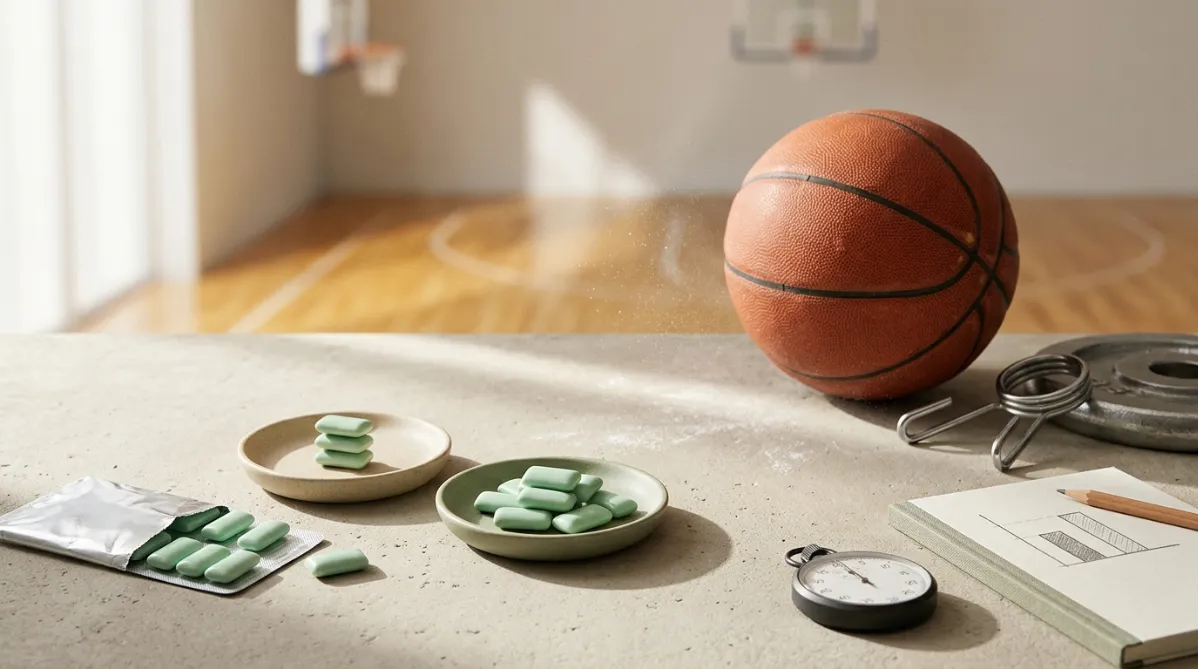
A landscape editorial still life on a pale warm-gray concrete surface, shot from a slightly elevated three-quarter angle in soft diffused morning window light. In the foreground left, a small open foil blister pack of mint-green caffeine gum sits beside two neatly arranged piles of gum pieces, one with three pieces and one with six, each on a small matte ceramic dish in oat and sage tones. The pieces are slightly glossy, rounded rectangles with crisp shadows. In the center-right, a worn leather basketball rests on the surface with deep amber-orange tones and visible pebbled texture. Next to it is a loosely chalked barbell collar and a single steel weight plate edge, partly out of focus. A minimalist analog stopwatch with a matte white face and a thin black hand lies at the lower right, and a slim notebook with a pencil rests nearby. The page shows a simple hand-drawn bar graph of two equal bars, with no legible text. In the soft-focus background, a blurred indoor basketball court with warm honey-colored hardwood and distant hoop lines fades into creamy bokeh. A narrow band of sunlight crosses the scene diagonally and picks out chalk dust particles in the air. The palette is muted and modern: sage green, warm oat, terracotta orange, charcoal, and cream. The composition leaves open negative space on the upper left for title overlay. Shallow depth of field, fine film grain, and a calm, clean magazine aesthetic like a contemporary health and science journal. No people, no text, no futuristic elements.
science research

آب‌نبات گومای کافئین و عملکرد در همان روز: چرا ۳ mg/kg معادل ۶ بود

BY DR. GYMBRO ·

یک آزمایش متقاطع نوین در بازیکنان بسکتبال نشان داد که گومای کافئین با دوز ۳ mg/kg همان روز می‌تواند قدرت، توان انفجاری، سرعت دو و چابکی واکنشی را به همان‌حدی که دوز دو برابر (۶ mg/kg) می‌داد، بهبود بخشد. هر دو دوز سرعت میله‌بار را در اسکوآت‌های سنگین افزایش دادند، اما پس از ۲۴ تا ۴۸ ساعت هیچ‌گونه مزیتی باقی نماند. به‌دلیل نبود گروه پایه و گروه تنها کافئین، نتایج باید با احتیاط تفسیر شوند؛ اما نشان می‌دهد که دوز متوسط کافی است و مصرف بیش از حد می‌تواند عوارض جانبی ایجاد کند.

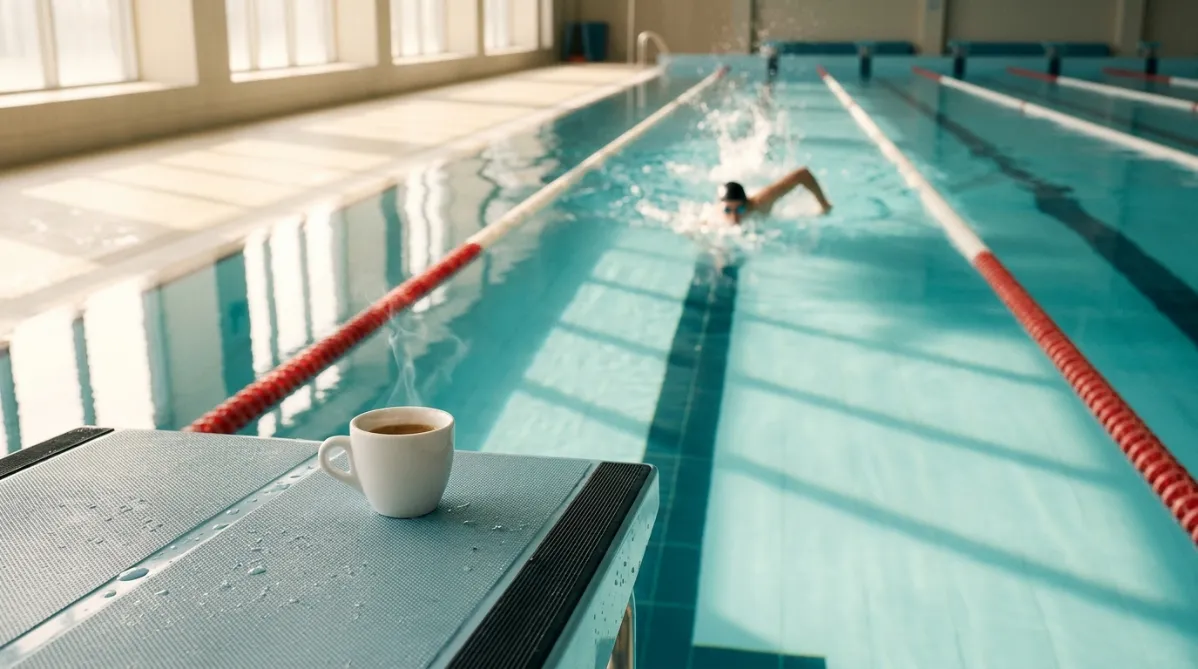
A wide, editorial-style photograph of a competition swimming pool lane seen from just above the water line at the starting end, in soft morning light. In the foreground, on the pool deck, a white ceramic espresso cup sits on the edge of a blue-gray starting block, a thin curl of steam rising from it. The cup is in crisp focus, with a few droplets of water on the textured non-slip deck around it. Behind it, the pool stretches into the distance as a series of calm lanes divided by red and white lane ropes. The turquoise water glints with gentle ripples and long, shimmering reflections. At the far end, a lone swimmer in a dark cap and goggles is mid-stroke, caught in a small burst of white splash, and slightly out of focus because of the shallow depth of field.

Large windows along the side wall let in pale golden sunlight, which throws soft diagonal light across the water and the deck. The palette is clean and modern: aqua, deep teal, warm cream and a small accent of coffee brown. The cup's warm tones stand out against the cool blues. The composition follows the rule of thirds, with the cup in the lower left third and open negative space of water and light on the right, leaving room for headline text. The look is minimal, airy and contemporary, like a high-end sports and science magazine, with subtle film grain, natural color grading, and a slightly desaturated, calm mood. Faint stopwatch-like details appear only as a thin black timing pad edge on the starting block, with no text or numbers visible. The overall feel is quiet anticipation just before a race, precise and fresh, with a sense of small margins and measured performance.
nutrition

کافئین شناوران را سریع‌تر می‌کند، اما کمتر از آنچه فکر می‌کنید

BY DR. GYMBRO ·

شناوران سال‌ها پیش از مسابقات قهوه می‌نوشند، اما آیا واقعاً سرعتشان را افزایش می‌دهد؟ یک متاآنالیز چندسطحی جدید بر پایه ۱۳ آزمایش متقابل نشان می‌دهد که افزایش حدود ۱٫۷٪ است—رقمتی قابل توجه در ورزشی که به صدم ثانیه‌ها می‌انجامد. واضح‌ترین اثر در دوزهای ۶ میلی‌گرم/کیلوگرم یا بیشتر مشاهده شد، در حالی که دوزهای پایین‌تر اثر قانع‌کننده‌ای نداشتند. همچنین کافئین لاکتات خون پس از مسابقه را افزایش می‌دهد؛ نتایج میان مطالعات به‌طور گسترده‌ای متفاوت بود.

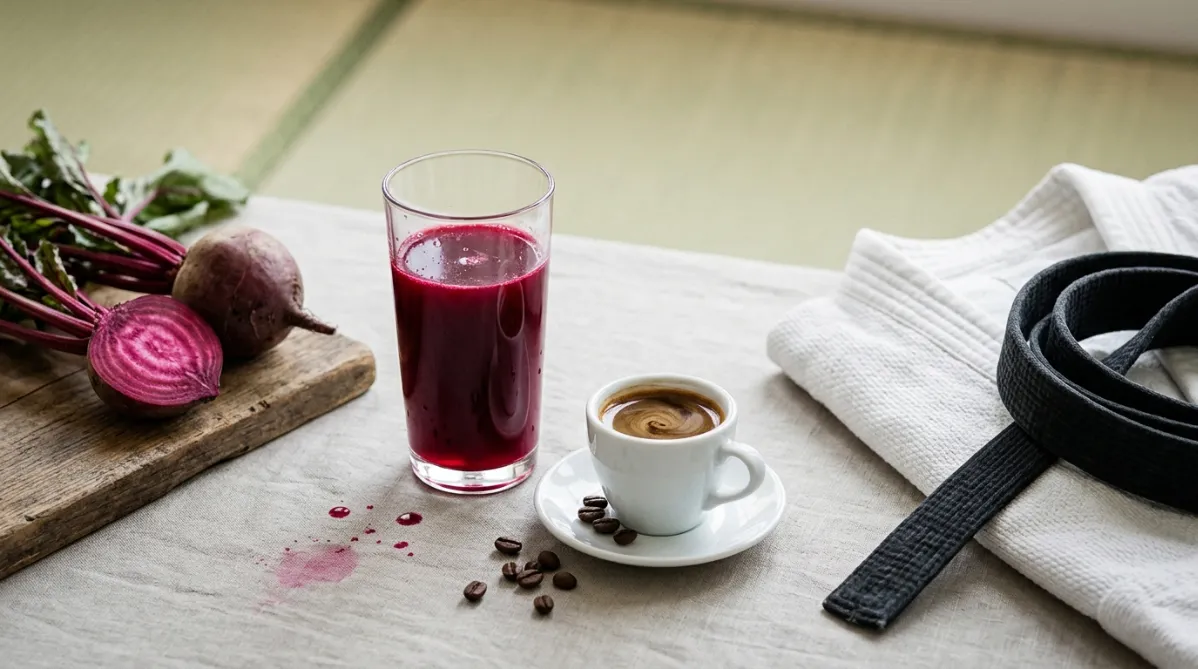
A wide landscape editorial still life on a pale warm-gray linen surface, shot from a slightly elevated three-quarter angle in soft diffused morning window light. At center-left, a tall clear glass filled with deep magenta-crimson beetroot juice catches the light, its edges glowing ruby with a few condensation droplets on the surface. Beside it sits a small white ceramic espresso cup with dark, glossy coffee and a delicate swirl of crema. A few roasted coffee beans are scattered casually near the cup's saucer. To the left, two whole raw beetroots with their leafy burgundy-veined greens still attached rest on a rustic wooden board, with one beet sliced in half to reveal concentric rings of vivid fuchsia and pale pink. A folded white judo gi sleeve with a worn black belt loosely coiled on top is draped along the right side of the frame, the cotton weave texture visible, hinting at the sport without any people. In the background, a soft-focus tatami mat texture in muted straw-green creates a subtle horizontal band, blurred into creamy bokeh. A small scattering of beet juice droplets and a faint magenta stain on the linen add an organic, lived-in touch. The palette is restrained and modern: magenta, espresso brown, off-white, muted sage, and warm beige. Composition leaves generous negative space on the upper right for headline overlay. The mood is clean, calm, and contemporary, like a premium health and science magazine cover, with shallow depth of field, crisp focus on the glass and cup, fine natural shadows, and subtle film-like grain.
nutrition

آب چغندر و کافئین: استراتژی جودویی که کافئین تک‌نفره را پشت سر می‌گذارد

BY DR. GYMBRO ·

یک آزمایش تصادفی بر روی ۳۵ ورزشکار جودو نشان داد که اثر کافئین در طول یک روز مسابقه شبیه‌سازی‌شده کاهش می‌یابد، در حالی که آب چغندر عملکرد را در راندهای انتهایی بهبود می‌بخشد. ترکیب هر دو مکمل، مزایای اولیه کافئین را حفظ کرده و در راند پنجم بهتر از کافئین تنها عمل می‌کند. در این مقاله به نتایج پژوهش، گروه‌های هدف، ملاحظات ایمنی و نکات عملی برای استفاده از این ترکیب می‌پردازیم.

This page is available in