Dr. Gymbro
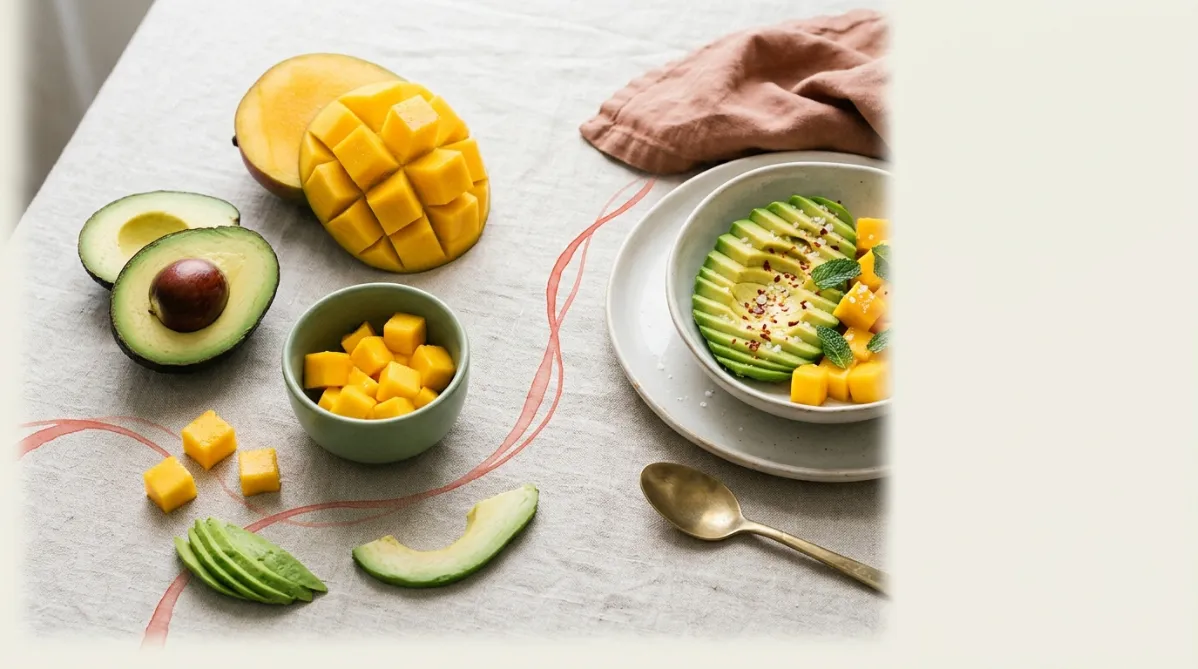
A wide, softly lit editorial still life photographed from slightly above on a pale oat-colored linen surface. On the left, a halved ripe Hass avocado with its glossy pit still nestled in one half, the flesh a buttery gradient from deep green at the skin to creamy yellow at the center. Beside it, a ripe mango is sliced into thick cheeks with a neat crosshatch pattern, the golden-orange flesh catching the light. A small ceramic bowl in matte sage green holds a cup of diced mango cubes. A few scattered mango cubes and a thin avocado slice fan out across the surface.

On the right, a minimalist ceramic plate holds a simple composed bowl: sliced avocado fanned over mango, with a sprinkle of flaky sea salt, a pinch of chili flakes, and a few torn mint leaves. A linen napkin in muted terracotta is draped casually at the edge of the frame. A single brushed-brass spoon rests nearby.

A subtle graphic touch ties in the artery theme: a thin, elegant line of warm coral red, like a hand-drawn ribbon or gentle wave, curves through the negative space on the surface, suggesting a blood vessel and flow without looking clinical. It passes softly beneath the fruit as if painted on the table in watercolor.

Natural morning window light enters from the upper left, creating soft long shadows and gentle highlights on the fruit's surface. The palette is warm and fresh: avocado greens, mango golds and oranges, cream, sage, and a hint of coral. Shallow depth of field blurs the background edges into creamy neutrals, leaving generous clean empty space on the right third for title text. Modern wellness magazine aesthetic, crisp but organic, high-end food photography, with a subtle film-like grain and calm, balanced composition.
Nutrition

毎日アボカドとマンゴー:動脈に変化した点と変わらなかった点

Dr. Gymbro · · 1 min read

8週間、毎日1個のアボカドと1カップのマンゴーを摂取した前糖尿病者の血管は反応しましたが、血糖値や炎症、その他の多くの指標は変わりませんでした。

この分かれ方こそが、Journal of the American Heart Association に掲載された新しいランダム化比較試験の全容です。結果は有用ですが、示すものを正しく読み取る必要があります。

研究者が実際に行ったこと

イリノイ工科大学(Illinois Institute of Technology)のチーム(Britt Burton‑Freeman 率いる)は、前糖尿病の成人 82 名を無作為に2群に割り付けました。平均年齢は約45歳、平均 BMI は約30。すべての参加者は部分的に管理された食事を摂り、毎週食材が提供されました。女性は1日 1,500 kcal、男性は1日 1,750 kcal が目安です。

介入群は、8 週間の間、毎日全粒のアボカド 1 個とマンゴー 1 カップを摂取しました。対照群は、エネルギー量を合わせた低脂肪・低繊維の食品に置き換えました。カロリーは等しいため、比較対象は「食の質と構成」であり、摂取量の増減ではありません。

主要アウトカムは血流依存性拡張(FMD)です。これは血流が増加したときに動脈がどれだけ拡がるかを超音波で測定する指標で、血管内皮機能の標準的な評価とされています。

見出しとなる結果:FMD が変動

介入群では FMD が約 1%上昇したのに対し、対照群では低下しました。群間差は約 2.1%(効果 -2.11 ± 0.77%、P = 0.008)で、対照食と果実食の差を示しています。

対照群の低下は、果実食の上昇と同程度に重要です。低繊維・低果実の食事が 2 か月で血管機能を逆方向に揺らした可能性があり、果実食がその流れを逆転させたと考えられます。総果実、食物繊維、ビタミン C、単不飽和脂肪酸の摂取量は、介入群で有意に増加しました。

血圧:男性にのみ見られたシグナル

拡張期血圧でも食事間の差が認められ、特に男性で効果が顕著でした。上腕拡張期血圧は P = 0.03、中心拡張期血圧は P = 0.07(傾向)でした。

この性別特異的な発見は今後の研究の手がかりとなりますが、サブグループ解析は規模が小さく過大解釈しやすい点に留意が必要です。本研究はなぜ男性がより反応したかを解明する設計にはなっていません。

変化しなかった指標

二次アウトカムのほとんどは有意差がありませんでした(P > 0.05)。血糖関連指標、炎症マーカー、代謝パネルの大半が含まれます。いくつかの脂質・腎機能指標はわずかに変化しましたが(P < 0.1)、臨床的に主張できるほどではありません。

したがって、これは血糖を下げるトリックでも炎症を抑える万能薬でもありません。高リスク群において、2 種類の全果実が血管指標を改善できるという証拠であり、血糖には目に見える変化がなくても効果があることを示しています。

細かい条件は?

本試験はハス・アボカド委員会と全米マンゴー委員会から部分的に資金提供を受け、著者らはその旨を開示しています。産業資金がデータを無効にするわけではありませんが、独立した再現性の検証が求められます。

デザイン上、アボカドとマンゴーを分離して評価できない点もあります。組み合わせで検証したため、どちらの果実が、あるいは繊維・ビタミン C・単不飽和脂肪酸・ポリフェノールのどれが血管効果をもたらしたかは不明です。FMD は代替指標であり、心筋梗塞や脳卒中そのものを示すものではなく、観察期間が 8 週間と短い点も考慮が必要です。

食事に取り入れる方法

カロリー計算が実務上の課題になります。中サイズのアボカドは約 240〜320 kcal、マンゴー 1 カップは約 100 kcal。合わせて約 350〜420 kcal が目安です。この試験では 1 日 1,500〜1,750 kcal のうち大きな割合を占め、他の提供食で調整されていました。

  • 減量中:カロリー密度が高いブロックとして扱い、他の脂肪(油、チーズ、ナッツ)や精製炭水化物と置き換える。半分のアボカド+半カップのマンゴーで約 175〜210 kcal に抑えられます。
  • 維持期:フルドーズはそのまま組み込めます。加工スナックやデザートを置き換えれば、1 日のカロリー変化はほとんどありません。
  • 増量期:余裕があるならそのまま加えても構いません。食事に余裕があれば簡単に取り入れられます。

最も恩恵を受けやすい人:前糖尿病や過体重の方、果実・食物繊維が不足しがちな食生活の人。すでに野菜や果物を十分に摂っている人は効果が小さくなる可能性があり、研究自体はその点を示していません。

簡単レシピ例

  • 全粒パンのアボカドトースト、サイドにマンゴー 1 カップ。
  • アボカド半分、マンゴー、ほうれん草、ギリシャヨーグルトで作るスムージー(たんぱく質補給)。
  • 鶏肉またはエビのボウルに、角切りマンゴー、スライスアボカド、黒豆、ライムを添える。
  • グリルした魚の上にマンゴー‑アボカドサルサをかける。
  • 夜のおやつに冷凍マンゴーを、昼食または夕食でアボカドを使う。

結論

前糖尿病の成人に対し、1 日 1 個のアボカドと 1 カップのマンゴーを 8 週間続けると、低脂肪・低繊維の対照食と比べて血流依存性拡張(FMD)が改善し、男性の拡張期血圧も低下しました。血糖やほとんどの他指標は変化がありませんでした。食べ物は薬ではなく、効果は控えめですが、低繊維の食品を全果実と健康的な脂肪に置き換えるだけでもリスクが低く、コストもかからず、血管が実験室の数値と違って反応することがあるという点は示されています。
Original study

Read the original research on pubmed.ncbi.nlm.nih.gov →

This article summarizes published research for general information. It is not medical advice.

DG

Written by

Dr. Gymbro

Dr. Gymbro writes for Dr. Gymbro: science-backed fitness, nutrition & performance.

Related Articles

A wide, softly lit editorial still life on a pale warm-gray stone surface. In the center, three small clear glass vials of differing liquid heights stand in a staggered row, filled with luminous citrus-orange liquid. The shortest vial holds a thin layer of liquid, the middle one is about half full, and the tallest is nearly full, subtly suggesting rising levels without any charts or text. Beside the vials, a halved blood orange and a halved lemon sit with glistening, dewy pulp, and a few loose orange segments scatter across the surface. In the foreground, a shallow ceramic dish holds a few translucent golden softgel capsules catching the light, and a single droplet of orange liquid rests on the stone with a delicate glossy highlight.

Behind the vials, a large, out-of-focus backdrop in muted peach and cream tones fades into a gentle gradient. Soft morning window light enters from the left and casts long, elegant shadows to the right. Thin sprigs of green citrus leaves add a fresh contrast in the upper corner. A few macro-scale glossy spheres, resembling tiny bubbles of oil or water, float on the surface near the vials, their rounded, shimmering skins hinting at encapsulation in a natural, organic way.

The palette is warm and restrained: apricot, tangerine, cream, soft sage, and pale stone gray. The composition follows the rule of thirds, with the vials slightly right of center and generous negative space on the left for a headline overlay. Shallow depth of field, crisp focus on the middle vial, fine film-like grain, and a clean, minimalist styling reminiscent of contemporary wellness and science magazine photography. No people, no text, no lab equipment, no futuristic elements. A calm, modern, trustworthy, editorial mood.
nutrition

リポソームビタミンC、血中濃度が6倍に。新形態でさらに2倍に

BY DR. GYMBRO ·

新しいクロスオーバー試験では、従来のリポソームビタミンCが通常のビタミンCに比べ約6倍の血中曝露を示し、二重カプセル化された新製品は約11倍に達したことが分かりました。この差は印象的ですが、参加者はわずか12名、投与は350 mgの1回、測定期間は8時間と限られています。また、研究資金は新製品の製造元が提供し、特許出願中です。以下で、実際の数値が示す意味、カプセル化が吸収に与える影響、そしてどのような人が恩恵を受け得るかを解説します。

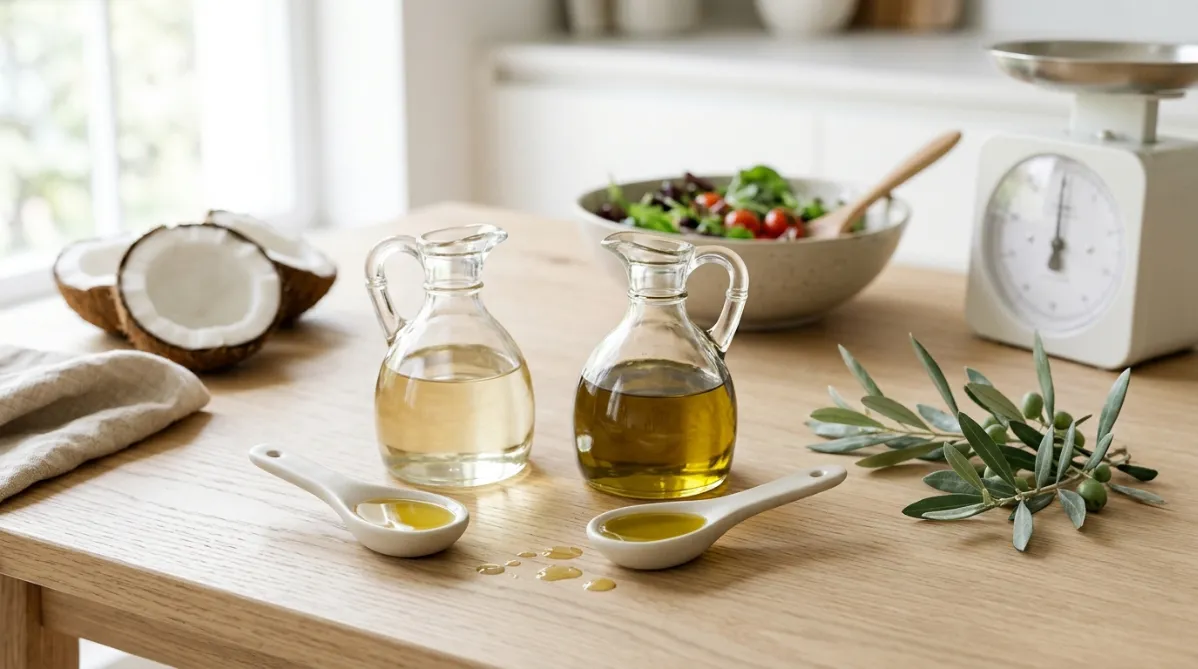
A calm, editorial-style still life shot from a slightly elevated angle, in a bright minimalist kitchen with soft natural window light coming from the left. On a pale oak wooden table sit two small glass cruets side by side: one filled with clear, pale golden MCT oil, the other with deeper green-gold extra virgin olive oil. Between and in front of them, two shallow ceramic spoons in matte off-white, each holding a glistening pour of its respective oil, with a few droplets catching the light on the table surface. A sprig of fresh olive branch with silvery-green leaves rests to the right, and a halved coconut with white flesh sits softly out of focus at the left edge, hinting at the source of MCTs. In the background, a blurred linen cloth in warm beige and a small bowl of mixed greens and cherry tomatoes suggest a healthy diet. A simple analog kitchen scale in brushed white metal sits subtly in the soft-focus background, a quiet nod to weight loss without being literal. Color palette: creamy whites, warm sand, soft sage green, and glowing golden amber highlights. Shallow depth of field, gentle shadows, delicate specular highlights on the oil, subtle film grain, clean negative space on the right third for headline overlay. Modern wellness magazine aesthetic, tactile, airy, and sophisticated, shot as if with an 85mm lens, 16:9 landscape composition.
nutrition

MCTオイルとオリーブオイルのダイエット比較:あるグループで1.7kgの減量に成功

BY DR. GYMBRO ·

16週間にわたるダイエット試験でMCTオイルとオリーブオイルを比較したところ、MCTオイルを摂取したグループは約1.7kg体重が減少しました。腹部脂肪も減少しましたが、差は統計的に有意とは言えませんでした。参加者の3分の1以上が脱落し、研究は2008年のものです。本記事では研究結果の実態、MCTが効果的と考えられるメカニズム、胃腸トラブルを防ぐ摂取法、そして使用を控えるべき人について解説します。

A bright, minimalist editorial still life on a soft warm-white surface, shot from a slightly elevated angle in natural morning light. In the center-left, a small matte ceramic dish holds a handful of pale cream capsules and tablets, a few spilling casually onto the surface. Beside it sits a sleek analog blood pressure cuff, softly coiled, in muted sage green fabric. Fresh potassium-rich foods are arranged in a loose, balanced composition around the pills: a halved ripe avocado with its pit, a peeled banana, a cut sweet potato with glowing orange flesh, a few leafy spinach stems, and a small cluster of white beans in a wooden bowl. A single slim pair of chrome dumbbell handles or a small chalked kettlebell rests discreetly at the right edge, hinting at the lifter audience without dominating the frame.

The palette is soft and modern: warm cream, sage green, terracotta orange, and buttery yellow, with subtle blush-pink shadows. The background is a smooth, out-of-focus pale oatmeal wall with a gentle diagonal shadow from a window, creating a calm, airy mood. The right third of the frame has generous negative space for headline text. A faint, delicate line of hand-drawn-style red accent, such as a small red ribbon or a thin red pencil resting near the pills, adds a quiet "caution" note without feeling alarming.

The overall look is clean, contemporary health-journal photography with shallow depth of field, crisp focus on the pills and produce, soft diffused highlights, and fine natural texture in the ceramic, linen, and food surfaces. Subtle film-like grain, editorial styling, and a calm, trustworthy, slightly cautionary tone. 16:9 landscape composition.
science research

カリウム錠で血圧が4週間で5mmHg下がる――しかし注意点あり

BY DR. GYMBRO ·

新しいメタアナリシスは、未治療の一次性高血圧患者803名を対象に、経口カリウムが約4週間で臨床血圧を5mmHg下げることを示しました。しかし、24時間血圧モニタリングでは効果は小さく、また副作用は12.8%と対照群の3.2%に比べ約4倍に増加しました。腎疾患やACE阻害薬・ARB、カリウム保持性利尿薬を使用している人は特に医師と相談が必要です。食事からのカリウム摂取が第一の選択肢であり、サプリは医療的判断のもとで利用すべきです。

A bright, airy editorial still life photographed from slightly above on a pale oat-colored linen surface, in soft natural window light with gentle long shadows. In the foreground, a rustic ceramic bowl holds halved and whole oranges, glossy red bell pepper slices, and a few kiwi halves with emerald flesh. Beside it sit loose strawberries and a small pile of bright yellow lemon wedges. Their colors pop against the muted neutral palette. A single clear glass of water with a slice of orange rests nearby, catching the light.

On the right side of the frame, a pair of well-worn but clean walking sneakers in sage green and cream sits casually on the surface, with one lace loosely trailing. Behind them, a simple wooden chair with a light ash finish is partly visible and slightly out of focus, a quiet nod to the sit-to-stand test. A small stainless-steel stopwatch lies next to the shoes, with a subtle reflective glint.

A minimalist ceramic dish holds a few small, round, pale-yellow vitamin capsules, kept understated. A sprig of green leaves and a folded cotton napkin in soft terracotta add a warm accent. A small open notebook with a pencil rests in the upper left, its page blank except for faint, abstract pencil lines suggesting a simple rising graph, with no legible text.

The composition leaves generous negative space on the left third for title overlay, with a soft cream-to-peach gradient background. The mood is fresh, healthy, and contemplative, like a modern wellness magazine or a trendy online journal. The color palette is warm citrus orange, sunny yellow, sage green, and soft cream, with gentle terracotta accents. The depth of field is shallow, with crisp focus on the fruit and shoes and a creamy blur in the background. The overall look is clean, natural, and editorial, with fine film-like grain, true-to-life color, and a calm, optimistic tone. Landscape 16:9 framing.
nutrition

年齢とともに脚が強くなる、手頃なビタミン

BY DR. GYMBRO ·

48歳~92歳の5,000人超の英国大型調査で、血中ビタミンCが最適レベル(50 µmol/L以上)の人は、低レベルの人に比べて歩行速度が速く、椅子から立ち上がるまでの時間が短いことが分かりました。女性は身長で調整した握力もやや強くなる傾向が見られましたが、男性では握力との関係は認められませんでした。食事からのビタミンC摂取は女性でのみ弱い関連が見られ、はっきりしたパターンは示されませんでした。本研究は横断的デザインで、ビタミンCが機能改善を直接もたらすことを証明するものではありませんが、血中ビタミンCを測定してみる価値はあるかもしれません。

This page is available in