Dr. Gymbro
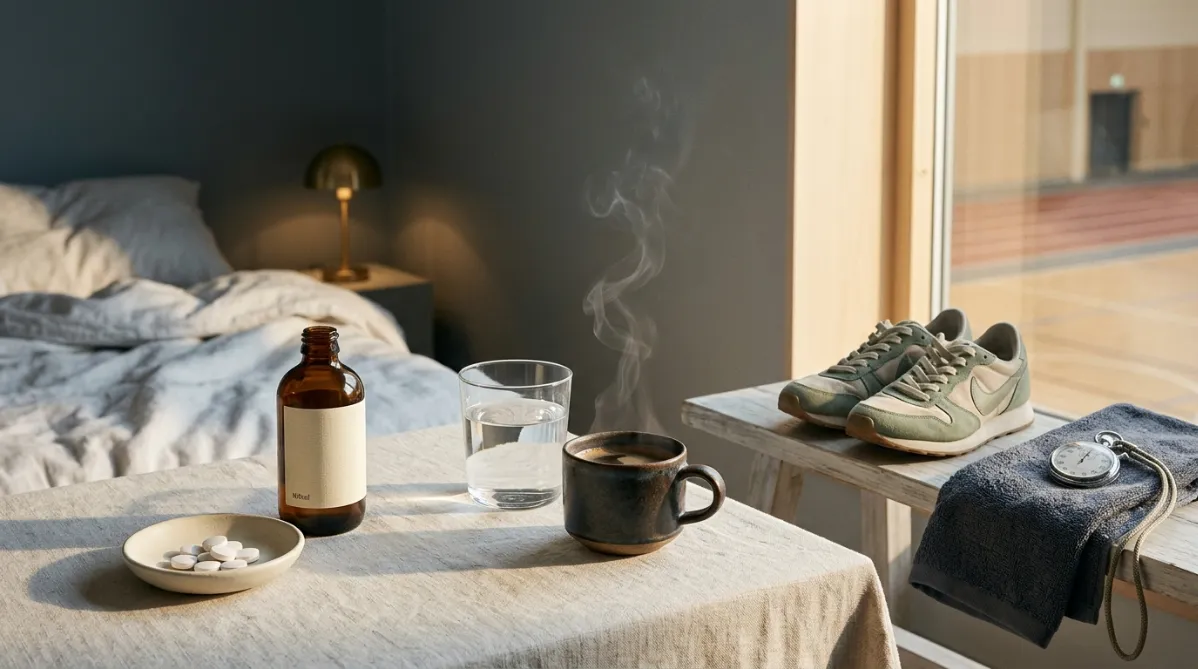
A quiet, sunlit editorial still life on a pale oatmeal linen surface, shot from a slightly elevated three-quarter angle with soft morning window light raking in from the left. On the left side, a small matte ceramic dish holds a few white round tablets, next to a minimalist amber glass bottle with a blank cream label. In the center, a slim glass of water sits beside a handmade stoneware espresso cup filled with dark coffee, with a thin ribbon of steam curling upward. On the right, a pair of worn but clean sage-green running shoes rests on a pale wooden bench, with a folded charcoal athletic towel and a stainless steel stopwatch beside them. The background is softly blurred: a calm bedroom-to-morning transition, with the left third of the frame in cool, dusky blue-gray tones suggesting night, with rumpled white bedding and a small bedside lamp glowing dimly. The tones then blend gradually across the frame into warm golden peach morning light on the right, where a blurred indoor court or track line is faintly visible through a tall window. The color palette is muted and modern: warm cream, soft sage, dusty blue, terracotta accents, and hints of amber. Delicate shadows, shallow depth of field, fine natural film grain, and generous negative space across the top of the frame for headline text. The mood is calm, precise, and thoughtful, in the style of a contemporary wellness and science journal photograph, clean and minimalist with tactile textures of linen, ceramic, glass, and wood.
Nutrition

メラトニンとカフェイン:併用したときだけ筋肉損傷マーカーが低下

Dr. Gymbro · · 1 min read

メラトニンとカフェイン:併用したときだけ筋肉損傷マーカーが低下

カフェインがトレーニング済み男性の走行距離を伸ばすことは既に知られていますが、今回のクロスオーバー試験で新たに示されたのは、夜にメラトニン、朝にカフェインを摂取する組み合わせだけが筋肉損傷と炎症のマーカーを低下させたという点です。カフェイン単独、メラトニン単独では同様の効果は見られませんでした。さらに、メラトニンが期待される睡眠改善効果も本研究では検出されませんでした。

併用プロトコルの概要

プロトコルは非常にシンプルです:就寝前に6 mgのメラトニン、翌朝に体重1 kgあたり3 mgのカフェインを摂取し、カフェイン摂取から1時間後に5 mシャトル走行テストを実施しました。2026年に Nutrition に掲載されたこの研究は、チュニジア、スペイン、ノルウェーの研究チームによるもので、アスリートが日常的に行っているかもしれない相互作用を検証したものです。多くの人がリラックス目的でメラトニンを、覚醒目的でカフェインを使用しますが、両者を同時に試す研究はほとんどありません。

研究デザイン

平均年齢22.4±2.9歳のトレーニング男性14名を対象に、ランダム化・二重盲検・プラセボ対照のクロスオーバーデザインで以下の4条件を実施しました:

  • PLA + PLA: 夜はプラセボ、朝はプラセボ
  • PLA + CAF: 夜はプラセボ、朝は3 mg/kgカフェイン
  • MEL + PLA: 夜は6 mgメラトニン、朝はプラセボ
  • MEL + CAF: 夜はメラトニン、朝はカフェイン

運動前後に血液サンプルを採取し、クレアチンキナーゼ、乳酸脱水素酵素、AST、ALT(筋肉損傷マーカー)とCRP(炎症マーカー)を測定しました。テスト中は最大心拍数とRPE(主観的運動強度)も記録し、睡眠はメラトニンまたはプラセボを摂取した翌夜に評価しました。

発見 1:カフェインはメラトニンの有無に関わらず走行距離を伸ばす

MEL + CAF と PLA + CAF の両条件で、シャトル走行の総距離はプラセボのみと比較して有意に増加しました。メラトニン単独では距離の伸長は認められませんでした。実務的には、パフォーマンス向上はカフェインの効果と同程度と考えられます。3 mg/kgという用量は中程度で、これまでの多くの研究でも高強度の反復運動をサポートすることが示されています。

発見 2:併用でのみ損傷・炎症マーカーが低下した

本研究の最大のポイントはここです。MEL + CAF は他の3条件(PLA + PLA、MEL + PLA、PLA + CAF)と比較して、筋肉損傷マーカーおよび炎症マーカーが有意に低下しました(p < 0.05)。単独投与ではこの低下は見られませんでした。メラトニンの抗酸化・抗炎症作用と、カフェインのパフォーマンス支援が相乗的に働く可能性が示唆されますが、因果関係は本研究だけでは解明できません。

発見 3:睡眠指標に変化は見られなかった

メラトニンは睡眠補助として市販されているため驚きかもしれませんが、条件間で睡眠パラメータに有意差はありませんでした(p > 0.05)。健康な若年男性はすでに睡眠の余地が少ない可能性があります。また、睡眠は投与翌夜だけ測定されたため、長期的な睡眠改善効果は評価できませんでした。今回見られた利益は、睡眠の変化によるものではありません。

実践的プロトコル(本研究で検証された範囲)

  • 夜: 就寝前に6 mgメラトニン
  • 朝: 体重1 kgあたり3 mgのカフェイン(例:70 kgのアスリートなら約210 mg)
  • タイミング: カフェイン摂取から1時間後に運動開始
  • 対象例: 朝のトレーニングや試合を行うアスリート、5 mシャトル走行が多い団体スポーツ選手

上記は実際に使用された条件であり、他の用量・タイミング・対象者については未検証です。カフェイン耐性は個人差が大きく、感受性が高い人は同様の効果が得られない可能性があります。メラトニンとカフェインはそれぞれ注意点を伴うサプリメントであり、持病がある人や服薬中の人は専門家に相談すべきです。

見落としがちな注意点

  • サンプルが小さい: 14名の若年男性という規模は限定的で、女性や高齢者、エリート選手への一般化は困難です。
  • テストが1回だけ: パフォーマンスは5 mシャトル走行1回で測定。著者自身も「特定の高強度アウトカムに限られる」旨を慎重に結論付けています。
  • 血液マーカーはパフォーマンスそのものではない: CKやCRPの低下は興味深いものの、回復が速くなる・怪我が減る・トレーニング適応が向上することを直接証明するものではありません。数日・数週間にわたる追跡は行われていません。
  • メラトニン単独でのパフォーマンス向上はなし: 距離面では併用がカフェイン単独を明確に上回ったとは報告されていません。
  • メカニズムは不明: 本試験は単一セッション内の相関を示すだけで、なぜ起きるかは解明されていません。

結論

すでに朝にカフェインを摂取しているのであれば、メラトニンが走行距離をさらに伸ばす根拠は本研究からは得られません。ただし、併用すると筋肉損傷・炎症マーカーが単独投与では見られない形で低下する可能性が示唆されました。これはより大規模・長期間・実際の回復感覚を測る研究で再現が必要です。現時点では、併用は「興味深い手がかり」として扱い、確立されたリカバリーハックとみなさない方が安全でしょう。
Original study

Read the original research on pubmed.ncbi.nlm.nih.gov →

This article summarizes published research for general information. It is not medical advice.

DG

Written by

Dr. Gymbro

Dr. Gymbro writes for Dr. Gymbro: science-backed fitness, nutrition & performance.

Related Articles

A wide, editorial-style photograph of a competition swimming pool lane seen from just above the water line at the starting end, in soft morning light. In the foreground, on the pool deck, a white ceramic espresso cup sits on the edge of a blue-gray starting block, a thin curl of steam rising from it. The cup is in crisp focus, with a few droplets of water on the textured non-slip deck around it. Behind it, the pool stretches into the distance as a series of calm lanes divided by red and white lane ropes. The turquoise water glints with gentle ripples and long, shimmering reflections. At the far end, a lone swimmer in a dark cap and goggles is mid-stroke, caught in a small burst of white splash, and slightly out of focus because of the shallow depth of field.

Large windows along the side wall let in pale golden sunlight, which throws soft diagonal light across the water and the deck. The palette is clean and modern: aqua, deep teal, warm cream and a small accent of coffee brown. The cup's warm tones stand out against the cool blues. The composition follows the rule of thirds, with the cup in the lower left third and open negative space of water and light on the right, leaving room for headline text. The look is minimal, airy and contemporary, like a high-end sports and science magazine, with subtle film grain, natural color grading, and a slightly desaturated, calm mood. Faint stopwatch-like details appear only as a thin black timing pad edge on the starting block, with no text or numbers visible. The overall feel is quiet anticipation just before a race, precise and fresh, with a sense of small margins and measured performance.
nutrition

カフェインは泳者の速度を上げるが、期待ほどではない

BY DR. GYMBRO ·

泳者は長年、レース前にコーヒーを飲んできましたが、実際にタイムが速くなるのでしょうか?13件のクロスオーバー試験を対象とした多層メタ解析では、平均的な向上率は約1.7%と示されました。これは0.01秒単位で勝敗が決まる競技において意味のある差です。興味深いのは、6 mg/kg以上の用量で最も効果が顕著だった点で、低用量では説得力のある効果は認められませんでした。

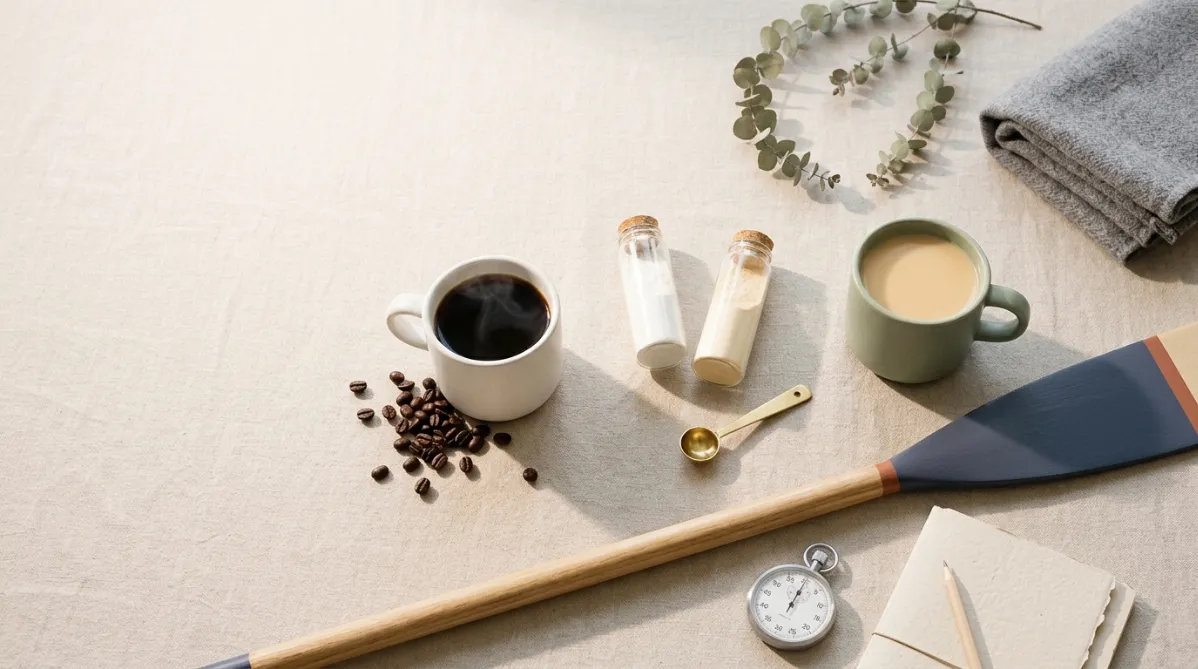
A wide, editorial-style flat lay photographed from above on a pale oat-colored linen surface in soft morning window light. On the left, a small matte white ceramic cup of black coffee with a delicate swirl of steam, beside a few scattered roasted coffee beans. On the right, a second matte sage-green ceramic cup holding a pale, creamy golden tea-like drink, mirroring the first. Between them, two small glass vials with cork stoppers sit side by side: one holding fine white powder, the other holding slightly warmer cream-colored powder, with a tiny brass measuring spoon resting nearby. In the lower foreground, a slim wooden rowing oar lies diagonally across the frame, its blade edge softly entering from the right, painted a muted navy with a thin terracotta stripe. A minimalist analog stopwatch with a brushed-steel case rests near the oar, and a folded cream notebook with a thin pencil suggests data-taking. In the upper corner, a crescent-shaped dried eucalyptus sprig and a small folded gray wool throw hint at sleep and calm without being literal. The palette is warm and restrained: oat, cream, sage, soft navy, terracotta, and espresso brown. Shadows are long and gentle, with shallow depth of field and subtle film grain, giving a refined, modern wellness-magazine feel. Generous negative space on the left third of the composition leaves room for a headline overlay. Clean, calm, tactile, and contemporary, with no text, logos, or futuristic elements.
science research

パラキサンチン vs カフェイン:勝者はどちらか、睡眠の救世主は?

BY DR. GYMBRO ·

パラキサンチンはカフェインの主な代謝産物です。本研究では14名の大学男子漕手を対象に、カフェイン単独・パラキサンチン単独・併用・プラセボの4条件で200 mgずつ投与し、2000 mエルゴメータタイムトライアルを実施しました。併用はプラセボよりも有意に速く(p = 0.044、Cohen's d = 0.30)なりましたが、効果サイズは小さめです。単独投与ではパフォーマンス向上は認められませんでした。一方、パラキサンチン単独は主観的睡眠評価が比較的良好でした。以下に詳細な数値と限界、そして実際に恩恵を受けられる人について解説します。

A wide, softly lit editorial flat-lay on a pale warm-gray stone countertop, shot from slightly above. On the left, a small rustic ceramic bowl in matte cream holds a handful of dried guarana seeds, dark glossy brown with pale cream arils, a few spilling onto the surface. Beside it sits a halved fresh guarana fruit in vivid red-orange, split open to show the white flesh and black seed inside, looking like a tiny eye. On the right, two open clear capsules rest side by side. One is filled with fine white caffeine powder, the other with a fine earthy brown guarana powder, and a little of each dusts the stone in delicate, deliberate lines. Between them, a minimalist matte-black espresso cup with a thin ribbon of steam rises on the right edge of the frame. A brushed-steel stopwatch and a slim dark-green linen notebook with a pencil sit in the upper background, slightly out of focus, to hint at performance testing without clutter. A few green leaves of a guarana vine curve in from the top-left corner, catching soft light.

The lighting is natural window light from the left, with gentle long shadows and a subtle warm highlight on the seeds. The palette is muted and modern: warm creams, terracotta red, deep espresso brown, sage green, and charcoal accents. The background is clean with generous negative space on the upper right for headline text. Shallow depth of field, crisp focus on the seeds and capsules, fine grain, and a calm premium magazine look like a contemporary wellness and sports-science journal. No people, no text, no logos, no futuristic elements.
science research

グアラナ vs カフェイン:同等用量でピークパワーを上げたのはグアラナだけ

BY DR. GYMBRO ·

同等のカフェイン量(約5 mg/kg)で摂取した場合、グアラナカプセルだけが統計的に有意なピークパワー向上を示しました。18名の活動的な若年男性を対象にしたランダム化クロスオーバー試験では、グアラナはプラセボに対しピーク出力を約4 %上昇させたのに対し、無水カフェインは有意差を示しませんでした。ただし、グアラナとカフェインの直接比較では有意差は認められず、差は記述的に留まります。本稿では数値の詳細、研究の限界、そしてカフェイン含有量でのグアラナ摂取方法について解説します。

A cyclist's legs mid-pedal on a stationary road bike, shot in a bright, airy, minimalist studio with a soft warm-grey backdrop. In the foreground on a pale oak table sits a small ceramic dish holding four deep coral-red softgel capsules, with a few translucent droplets of red-orange oil glistening beside them. Beside the dish is a sprig of dried red microalgae-toned seaweed and a halved wild salmon fillet, its coral flesh echoing the capsule color. Behind the table, slightly out of focus, a cyclist in a fitted charcoal jersey and matte black shorts rides a bike on an indoor trainer. Only the torso and legs are visible, with no face. A white towel hangs over the handlebars and a clear water bottle catches the light.

Soft diffused morning light streams from a large window on the left, creating long gentle shadows and a subtle golden-hour glow on the skin and the glossy capsules. The palette is restrained and editorial: warm cream, sand, soft grey and charcoal, with vivid coral-red as the single accent color. A minimalist analog stopwatch with a clean white face sits on the table, its hands near the 85-minute mark. A thin, elegant line-graph shape is subtly suggested by a curved strip of red ribbon lying on the table, rising from left to right to hint at the performance gain without any text.

The composition follows the rule of thirds, with the capsules and stopwatch in the lower left and the cyclist's motion-blurred legs sweeping across the right. Shallow depth of field, crisp macro detail on the capsules, and a fine film-like grain. The overall feel is a modern health and science magazine cover: clean, calm, sophisticated, and natural, with negative space in the upper area for a headline. There are no futuristic elements, no glowing effects, no laboratory equipment, and no text or logos. Landscape 16:9 format.
nutrition

4日間のアスタキサンチン投与でサイクリングの疲労限界時間が72分から85分に伸長―小規模試験の結果

BY DR. GYMBRO ·

28 mg/日を4日間摂取したところ、サイクリングの疲労限界時間が約72分から85分へと約18%伸びました。同じプロトコルでは、激しい75%VO2maxのライド後に筋肉損傷マーカー(CK・LDH)と脂質過酸化(MDA)の上昇が抑えられました。炎症マーカーやエネルギー利用は変化せず、メカニズムはまだ不明です。投与量は市販のソフトジェルが提供する量を上回っており、対象は10名の若年男性だけでした。以下に数値の詳細とエビデンスの限界を示します。

This page is available in