Dr. Gymbro
A wide, editorial-style still life shot from a slightly elevated angle on a pale oak gym bench, bathed in soft morning window light. In the center sits a matte ceramic cup of black coffee with delicate steam curling upward, flanked by a small white scoop of coffee beans and two identical glass vials, one filled with a few grains of fine powder and one empty, hinting at dose comparison. Next to the cup rests a pair of worn white boxing hand wraps, loosely coiled, and a slim black stopwatch with its face softly visible. In the foreground, a minimalist notebook lies open with blurred handwritten numbers and a simple pen sketch of a bar graph with bars of equal height, subtle and unreadable, suggesting a null result without any legible text. A small brass kitchen scale sits to the side with a few coffee beans on its tray.

In the soft-focus background, a boxing gym interior is visible: a hanging heavy bag in muted charcoal, exposed brick wall painted off-white, and tall windows casting long diagonal light across the floor. The color palette is warm and restrained: cream, sand, espresso brown, soft charcoal, with a single accent of muted terracotta orange in the hand wraps and a faint sage green in the notebook cover. Shallow depth of field with creamy bokeh, fine film grain, and gentle shadows give it a contemporary lifestyle-magazine and wellness-journal feel. The composition leaves generous negative space on the left third for headline overlay. Clean, calm, trendy, and tactile, with natural textures like wood grain, ceramic glaze, and cotton fabric. No people, no text, no futuristic elements.
Science & Research

低用量カフェインコーヒーはエリート格闘家のスプリントに何の効果ももたらさなかった

Dr. Gymbro · · 1 min read

はじめに

トレーニング前に飲むコーヒーがスプリントを劇的に強化すると考えていた方も多いでしょう。全国レベルの格闘家を対象にした最新のクロスオーバー試験では、1〜2杯分のカフェイン入りコーヒーが繰り返しスプリントパフォーマンスを向上させることは全く見られませんでした。エスプレッソマシンを捨てる前に、研究の詳細をしっかり確認しておきましょう。

ヘッドライン結果:何も変わらなかった

Birol ら(Scientific Reports、DOI: 10.1038/s41598-026-72577-w、臨床試験登録 NCT07596511)が実施した本研究は、低用量カフェインを普通のコーヒーで摂取した場合、繰り返しスプリントの成績やエネルギー系統への寄与に統計的な差が認められなかったことを示しました。具体的には、ピークパワー、平均パワー、疲労指数、主観的努力感、乳酸増加量、最高心拍数のいずれも p > 0.05 でした。さらに、酸化系、解糖系、クレアチンリン酸系といったエネルギー系統の推定寄与率も有意差はありませんでした。

研究の作り方

  • 参加者:全国レベルの男性格闘家 15 名(平均年齢 20.4 歳、体重 68.1 kg)
  • デザイン:二重盲検、プラセボ対照、ランダム化クロスオーバー
  • 実施回数:3 回(各セッション間は 48 時間)
  • 条件:カフェイン 1.5 mg/kg のコーヒー、カフェイン 3 mg/kg のコーヒー、デカフェ(プラセボ)
  • 測定:コーヒー摂取後 1 時間でサイクルエルゴメータを用いた繰り返しスプリントプロトコル

カプセル摂取は行わなかったため、コーヒー対カプセルの比較ではありません。「低用量カフェイン入りコーヒーはデカフェと比べて何が変わるか?」という狭い問いに答えた研究です。

用量計算:マグカップ 1 杯分がどれくらいか

平均体重 68.1 kg の選手を例にすると、投与量はおおよそ次の通りです。

  • 1.5 mg/kg ≈ 100 mg のカフェイン
  • 3 mg/kg ≈ 200 mg のカフェイン

これは、抽出の濃さにもよりますが、概ね「コーヒー 1〜2 杯」に相当します。つまり、日常の朝のルーティンやトレーニング前に摂取しやすい量であり、実験室的な高用量プロトコルとは対照的です。

他の研究と結果が違う理由

カフェインと運動パフォーマンスに関する多くの文献は、無水カフェインカプセル(3〜13 mg/kg)を使用しています。カプセルは正確で標準化された用量を提供できる一方で、コーヒーはカフェイン含有量が変動しやすいという特徴があります。今回の研究は、実際に選手が飲む「コーヒー」という形で 3 mg/kg 以下 の低用量がどのように働くかという未踏の領域を探ったものです。したがって、カプセル研究と矛盾しているわけではなく、投与形態の違いによるギャップを埋めようとした試みと言えます。

無差異結果の裏側にある数値

パフォーマンス変数の効果量は極めて小さく(部分エータ二乗 ≤ 0.01)、カフェインがスプリント結果の変動を説明できていないことを示しています。エネルギー系統の推定寄与は中〜大規模な効果量を示しましたが、有意差は得られませんでした。参加者が 15 名という小サンプル数のため、ノイズかもしれませんし、より大規模な研究で検出できる可能性もあります。実際の効果があると結論付けることはできません。

注意点:カフェインが全く効かない証拠ではない

  • サンプルサイズ:15 名では統計的パワーが低く、無差異結果は「効果が無い」ことの証明ではありません。
  • 対象者:若年男性の全国レベル格闘家のみ。女性や他の競技レベルへの一般化は慎重に行う必要があります。
  • テストプロトコル:サイクルエルゴメータ上の繰り返しスプリント1種、摂取後 1 時間という単一条件。
  • 用量範囲:3 mg/kg は、カプセル研究で効果が報告され始める下限に位置します。

実践への示唆

パフォーマンス向上を狙うなら

現在のエビデンスは、体重あたり 3〜6 mg/kg のカフェインを運動開始 30〜60 分前に摂取することでエルゴジェニック効果が得られるとしています。68 kg の選手であれば、200〜400 mg のカフェインに相当します。本研究の 3 mg/kg(約 200 mg)はこの範囲の下限に位置し、今回のサンプルでは効果が観測されませんでした。

  • 用量とタイミング
    • 「何杯」ではなく 体重ベース で計算することが重要です(コーヒーの濃さは大きく変わります)。
    • カフェイン含有量が明記されたカプセルや錠剤と比べ、コーヒーはばらつきが大きい点を覚えておきましょう。
    • 競技本番前に必ずトレーニングでテストし、身体の反応を確認してください。

どんな人に向いているか

  • エルゴジェニック効果を定量的に期待したい選手:体重ベースで正確に投与でき、カフェインに対する耐性が低い人。
  • コーヒーの覚醒効果やルーティンを楽しむ人:本研究は「スプリント性能」だけを測定しているため、注意力や集中力の向上については結論が出ていません。

注意すべき/避けた方が良い人

  • 常用量が多い人:日常的に大量のカフェインを摂取していると、今回のような低用量ではほぼ効果が感じられない可能性があります。
  • 夜間にトレーニングする人、あるいは 睡眠が浅い人:遅い時間帯のカフェインは睡眠の質を低下させ、回復や翌日のトレーニングに悪影響を与える恐れがあります。
  • 不安感や心拍数上昇に敏感な人:高用量カフェインは副作用リスクが高まりますので、用量管理を徹底してください。

結論

全国レベルのエリート格闘家 15 名を対象に、カフェイン 100 mg(約 1 杯)・200 mg(約 2 杯)のコーヒーを摂取させたところ、デカフェと比べて繰り返しスプリントの最高出力・平均出力・疲労指数・エネルギー系統の推定寄与いずれにも有意差は見られませんでした。これは「どんなコーヒーでもスプリントが伸びる」というイメージへの現実的なチェックポイントです。ただしサンプルが小さいこと、カフェインが全く無効だという結論ではないことに留意してください。真にエルゴジェニック効果を狙うなら、体重ベースで 3〜6 mg/kg、摂取は運動開始 30〜60 分前が現時点で最も信頼できる指針です。
Original study

Read the original research on doi.org →

This article summarizes published research for general information. It is not medical advice.

DG

Written by

Dr. Gymbro

Dr. Gymbro writes for Dr. Gymbro: science-backed fitness, nutrition & performance.

Related Articles

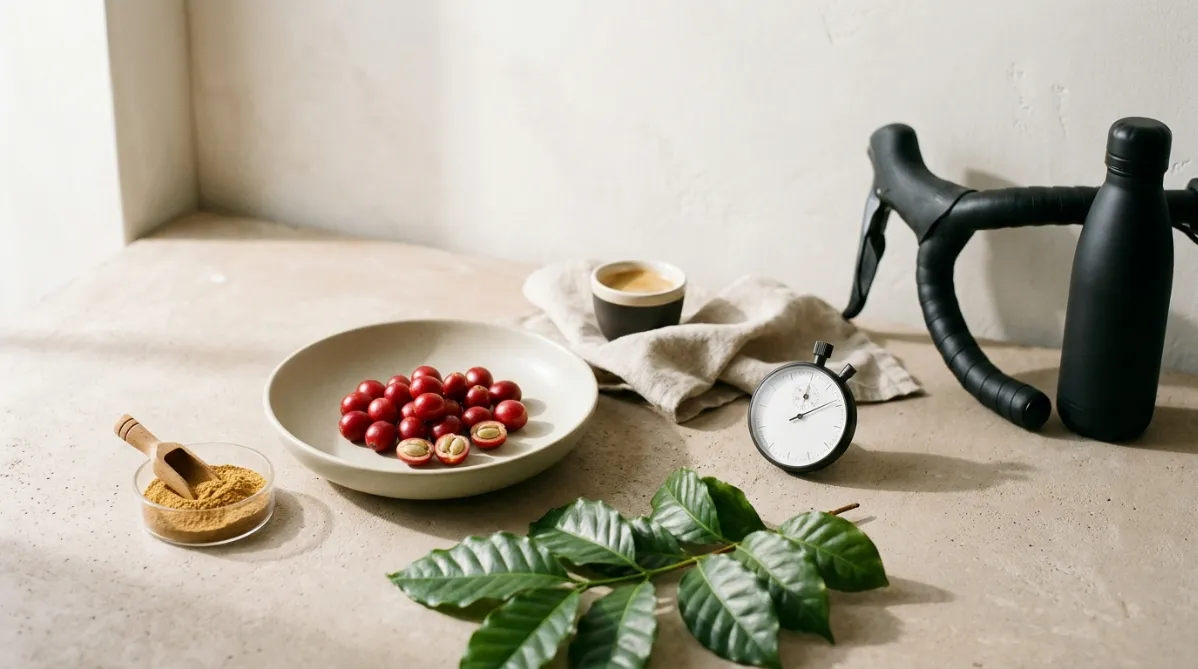
A wide editorial still life on a pale, warm-toned concrete surface in soft morning window light. In the center-left, a shallow matte ceramic bowl holds a small pile of bright red coffee cherries with glossy skins, a few sliced open to reveal pale mucilage and paired green-tan beans. Beside it, a small glass dish of fine, golden-brown powdered extract with a tiny wooden scoop resting on its edge. A sprig of coffee plant leaves, deep green and waxy, arcs across the foreground.

On the right side, slightly out of focus, a sleek road cyclist's handlebar and a matte black water bottle lean against a light plaster wall, suggesting athletic training without showing a person. A minimalist analog stopwatch with a clean white face and thin black hands sits in the mid-ground, angled toward the camera, its hands paused near the fifteen-minute mark. A folded linen cloth in oatmeal beige and a single small espresso cup with a thin crema ring add quiet texture.

The color palette is restrained and modern: cherry red, sage green, cream, soft terracotta, and charcoal accents. Light comes from the left, casting long, gentle shadows with a subtle warm glow and a hint of dust in the air. Shallow depth of field with crisp focus on the cherries and stopwatch, creamy bokeh in the background. Composition leaves open negative space in the upper right for a headline overlay. The overall feel is a clean, trendy health-and-science magazine cover: tactile, natural, minimal, and calm, shot in a 16:9 landscape frame with fine film-like grain and true-to-life tones.
nutrition

コーヒーチェリーエキス:200 mg カフェインでサイクリング出力が4.6%向上

BY DR. GYMBRO ·

全体のコーヒーチェリーエキスから得られる低用量200 mgのカフェインが、訓練されたサイクリストの15分タイムトライアルで作業量を4.6 %増加させました。しかし、グリコーゲン再合成を促進するという一般的な考えは裏付けられませんでした。このランダム化二重盲検クロスオーバー試験は12名のサイクリストを対象とし、業界から資金提供を受けましたが、純粋なカフェインとの比較群は設けられていませんでした。データが示すこと、示さないこと、そして誰が試すべきかをご紹介します。

A sleek aluminum energy drink can and a matte scoop of white pre-workout powder sit side by side on a pale concrete gym bench, lit by soft morning window light. The can is slim and minimalist, with a muted sage green label and no legible text. Beside it is a clear glass shaker half full of cloudy, lightly frothy liquid with condensation beading on its surface. A few fine grains of powder are scattered across the bench, catching the light. Behind them, slightly out of focus, a stainless steel barbell rests on a rack, and a folded charcoal gym towel sits at the edge of the frame.

The color palette is warm neutral: oatmeal, soft gray, and sage, with a single accent of pale citrus yellow from a halved lemon wedge placed near the glass. A thin, elegant shadow from the window blinds falls diagonally across the scene, giving it an editorial, magazine-style rhythm. The composition leaves generous negative space on the right third of the frame, a smooth blurred wall in warm off-white, suitable for headline text overlay.

The shot is a low-angle, shallow depth-of-field product-style photograph, as if taken with an 85mm lens at f/2. The foreground objects are tack sharp and the background melts into creamy blur. The mood is calm, clean, and modern, like a wellness or science journal feature. Subtle film grain and gentle contrast add a tactile, contemporary lifestyle feel. There are no people, no logos, and no futuristic or sci-fi elements, just a quiet, considered still life that suggests the choice between a canned drink and a scooped supplement.
nutrition

エナジードリンクはプレワークアウトのように働くのか――ただしひとつ注意点

BY DR. GYMBRO ·

カフェインとタウリンはエナジードリンクやプレワークアウトに共に配合されていますが、実際にパフォーマンスが向上するのでしょうか? 11件のランダム化比較試験(参加者234名)をまとめた新しいメタ分析では、ピークパワーと疲労までの時間が中程度に改善し、主観的な努力感も低下したことが示されました。心拍数に変化はなく、反応時間の結果は一貫性がなく信頼できませんでした。対象となった研究は規模が小さく、タウリンがカフェイン以上の効果を持つかは明らかにできませんでした。データが示すことと、注意が必要な人について見ていきましょう。

A landscape editorial photograph with a modern, clean magazine feel, shot on a pale warm-gray concrete surface in soft natural window light from the left. In the foreground, two matte white ceramic espresso cups sit side by side. The left cup holds a small amount of dark espresso with golden crema. The right cup is filled twice as high. Beside them, two small stainless steel scoops hold fine coffee-colored powder, one half full and one heaped, suggesting a dose comparison without any text or labels. A pair of worn red leather boxing gloves rests slightly out of focus behind the cups, laces loosely draped, with a white hand wrap rolled neatly beside them. A minimalist digital kitchen scale in matte black sits at the edge of the frame, with a few roasted coffee beans scattered across the surface. In the soft-focus background, a boxing gym corner appears: a hanging heavy bag in muted charcoal, pale wood plank flooring, and a tall window with diffused morning light. The palette is warm cream, espresso brown, brick red, and soft slate gray, with gentle shadows and a shallow depth of field. The composition follows the rule of thirds, with the cups and scoops in the lower left third and open negative space on the right for headline overlay. The look is tactile and refined, like a high-end health and performance journal. It has natural grain, subtle contrast, and a calm, confident mood. There are no people, no text, no logos, and no futuristic elements.
nutrition

カフェインを2倍にしてもボクサーのパフォーマンスはほとんど上がらなかった――実際に効いたのはこれだ

BY DR. GYMBRO ·

プレワークアウトを2杯飲めば効果が2倍になると考えていませんか?15人の競技ボクサーを対象に、体重1kgあたり3 mgと6 mgのカフェインを比較したクロスオーバー試験の結果、用量が多いほど必ずしも優れているわけではないことが分かりました。両用量とも摂取後60分でジャンプ高さとパワーが向上し、6 mg/kgは一部指標(バリスティック・プッシュアップのパワーや膝関節トルク)で僅かに上回っただけでした。以下では、体重あたりmg/kg換算の目安、推奨摂取タイミング、そして実際にはパンチは測定されていないという重要な注意点をまとめています。

A wide, editorial-style flat lay photographed from slightly above on a pale oak gym bench with a soft matte finish. On the left, a small white ceramic cup of black coffee sits on a matching saucer, with a thin curl of steam rising and catching warm window light. Beside it is a second, slightly larger handleless stoneware mug in muted sage green, also filled with coffee, so the pair suggests one to two cups. In the center-right foreground rests a sleek matte-black steel barbell plate, partly overlapping a brushed-steel dumbbell with fine knurling. A folded charcoal gym towel and a clean white chalk-dusted wrist strap lie casually to one side. A small scatter of whole roasted coffee beans spills across the bench in front of the cups, glossy and deep brown. Near the bottom edge, a minimalist analog kitchen scale in soft cream with a thin black needle hints at precise dosing, without any readable numbers or text.

Soft morning sunlight streams in from the upper left, creating long, gentle shadows and a warm golden glow against cool neutral tones. The background is a softly blurred, airy home gym or boutique training studio with out-of-focus squat rack uprights, pale concrete walls, and a leafy green plant in a terracotta pot adding a touch of organic color. The palette is restrained and modern: warm cream, espresso brown, charcoal, sage green, and hints of brushed silver. Shallow depth of field keeps the cups and beans tack sharp while the background melts into creamy bokeh. The composition leaves generous negative space on the right third for a title overlay, with a balanced, calm, premium magazine feel, like a contemporary wellness and sports science journal. High-resolution, natural color grading, subtle film grain, realistic textures on ceramic, steel, and coffee crema.
nutrition

リフティング前にどれだけカフェインを摂取すべきか?メタ分析が示す1〜2 mg/kgでも効果あり

BY DR. GYMBRO ·

リフティング前の標準的なカフェイン摂取目安は体重1kgあたり3〜6 mgで、数杯のコーヒーやプレワークアウトに相当します。2022年のメタ分析(12試験)では、0.9〜2 mg/kgでも筋力(d≈0.17)・筋持久力(d≈0.21)・平均バー速度(d≈0.56)が改善されました。実際にはコーヒー1〜2杯分の量です。効果は小さいものの、少量のカフェインでもパフォーマンス向上が期待できることを示唆しています。

This page is available in