Dr. Gymbro
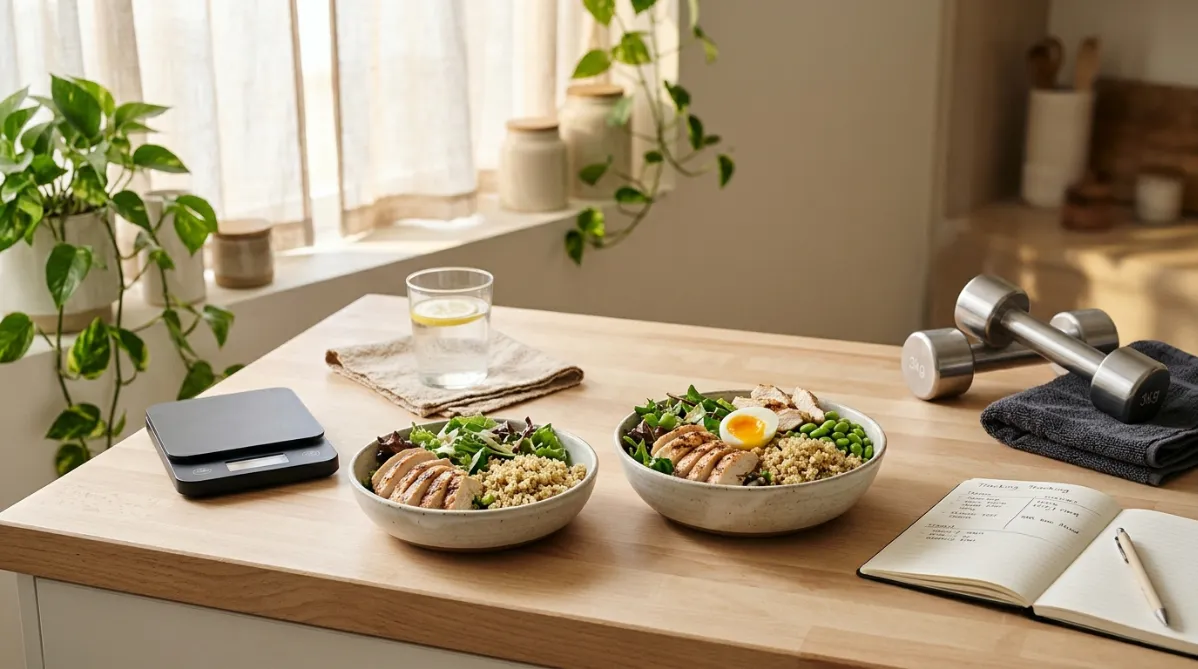
A wide landscape editorial photograph of a clean, sunlit kitchen counter in soft natural morning light, styled like a modern wellness journal cover. In the foreground, two matching ceramic bowls sit side by side on a pale oak butcher block. The left bowl holds a modest portion of sliced grilled chicken breast, quinoa, and greens. The right bowl holds a noticeably larger, double-sized portion of the same ingredients, with extra chicken, a soft-boiled egg, and edamame. The contrast in portion size is clear but elegant. Beside the bowls are a matte black digital kitchen scale, a tall glass of water with a lemon slice, and a small linen napkin in warm oatmeal tone. A pair of sleek brushed-steel dumbbells rests slightly out of focus on the counter's edge, and a folded charcoal gym towel sits next to them. In the soft-focus background, a large window with sheer curtains lets in diffused golden light, and a trailing green pothos plant adds an organic touch. A small, minimal notebook with a pen lies open to the side, suggesting careful tracking. The color palette is muted and cohesive: warm creams, sage green, soft terracotta, charcoal, and natural wood. Shallow depth of field, crisp focus on the bowls, gentle shadows, and subtle film-like grain. Composition follows the rule of thirds with generous negative space on the upper right for headline text. The mood is calm, thoughtful, and trustworthy, like a contemporary health and science magazine feature. There are no people, no text, and no futuristic elements.
Nutrition

16주 동안 3.2 g/kg 단백질 섭취: 근력운동가들의 신장은 손상될까?

Dr. Gymbro · · 3 min read

16주 동안 3.2 g/kg 단백질 섭취: 근력운동가들의 신장은 손상될까?

요약: 근육을 키우는 사람들은 단백질을 많이 먹으면 신장이 손상된다는 이야기를 들어본 적이 있나요? 16주 동안 44명의 저항운동 남성을 대상으로 3.2 g/kg 단백질과 1.6 g/kg 단백질을 비교한 무작위 시험 결과, 신장 지표에 통계적으로 유의한 차이는 없었습니다. 그러나 고단백군에서는 BUN과 시스타틴 C가 약간 상승하고 eGFR이 소폭 감소했습니다. 이 변화가 의미하는 바와 주의가 필요한 사람은 누구인지 살펴보세요.


헬스장 곳곳에 붙어 있는 경고문을 본 적이 있을 겁니다. “단백질을 과다 섭취하면 신장이 고생한다”는 문구죠. 저항 훈련을 하는 남성들을 대상으로 16주 동안 진행된 최신 무작위 시험에서는 표준 권장량의 두 배에 해당하는 단백질을 투여했습니다. 결과는 단순히 ‘예’ 혹은 ‘아니오’ 로 답하기엔 다소 복잡합니다. 고단백군은 중간 섭취량과 비교했을 때 신장 마커에서 통계적으로 유의한 차이를 보이지 않았지만, 일부 변화는 무시해서는 안 됩니다.

연구진이 실제로 테스트한 내용

Journal of the International Society of Sports Nutrition에 게재된 이 연구는 Reza Bagheri와 공동 연구진이 이끌었으며, 스포츠 영양학자 Richard Kreider도 저자 명단에 포함되었습니다. 저항 훈련을 하는 남성 48명을 (평균 연령 26 세, BMI 25.6) 2 × 2 요인 설계로 무작위 배정했습니다. 참가자들은 16주 동안 주 4회 저항 훈련(RT) 혹은 저항 + 유산소(CT) 병행 훈련을 진행했으며, 동시에 하루에 1.6 g/kg 또는 3.2 g/kg 단백질을 섭취했습니다.

  • 80 kg 남성 기준으로는 하루에 약 128 g vs 256 g 의 단백질에 해당합니다. 후자는 권장량(RDA) 0.8 g/kg의 네 배, 대부분의 스포츠 영양 가이드가 제시하는 상한선의 두 배 수준입니다.
  • 최종 분석에 포함된 사람은 44명이며, 전·후 데이터가 완전한 경우만 사용했습니다.

연구팀은 공복 시 혈중 요소 질소(BUN), BUN/크레아티닌 비율, 시스타틴 C, 그리고 추정 사구체 여과율(eGFR)을 측정했습니다. eGFR는 크레아티닌 기반 추정치와 시스타틴 C 기반 추정치를 모두 고려해 세 가지 방법으로 계산했습니다.

주요 결과: 유의한 상호작용 없음

핵심 통계 검정은 시간 × 단백질 혹은 시간 × 훈련 × 단백질 상호작용이 존재하는지를 살폈습니다. 어느 바이오마커나 eGFR 추정치에서도 p값이 0.182 이상으로 유의한 차이를 발견하지 못했습니다. 즉, 3.2 g/kg 섭취가 1.6 g/kg 섭취보다 신장 마커에 다른 영향을 미쳤다는 증거가 없다는 뜻입니다.

1.6 g/kg 그룹에서는 전반적으로 변화가 없었으며, 이는 대부분의 진지한 근력운동가가 실제로 섭취하는 양과 일치해 안심할 만한 결과라 할 수 있습니다.

클릭베이트가 지나치게 단순화한 점

두 고단백군 모두 BUN과 시스타틴 C가 상승(p ≤ 0.017)하고, eGFR 추정치는 감소(p ≤ 0.009)했습니다. BUN/크레아티닌 비율은 변하지 않았습니다. 저자들은 이를 ‘작은 증가/감소’라고 설명하며, 상호작용 검정이 유의하지 않았기 때문에 이러한 변화는 **기술적 결과(Descriptive)**에 불과하다고 강조했습니다.

따라서 “고단백은 해가 없다” 혹은 “고단백은 신장을 손상시킨다”는 어느 쪽도 정확한 해석이 아닙니다. BUN 상승은 단백질을 많이 섭취하면 자연스럽게 나타나는 현상이며, 시스타틴 C와 eGFR 변화는 신장에 물리적 부담이 늘어났음을 시사할 수도, 혹은 일시적인 적응 현상일 수도 있습니다. 현재 연구만으로는 어느 쪽이 맞는지 판단하기 어렵습니다.

알아두어야 할 제한점

  • 표본 크기: 분석에 포함된 남성은 44명에 불과합니다. 저자들은 이로 인해 임상적으로 의미 있는 차이를 배제하기 어렵다고 밝히고 있습니다.
  • 대상 제한: 건강하고 젊은 저항 훈련 남성만 포함했으므로, 여성·고령자·신장 기능이 저하된 사람·당뇨·고혈압 환자에게는 결과를 일반화할 수 없습니다.
  • 대리 마커: eGFR, BUN, 시스타틴 C는 신장 상태를 추정하는 지표일 뿐이며, 실제 신장 질환 진단과는 거리가 있습니다.
  • 기간: 16주라는 비교적 짧은 기간이므로 장기적인 영향을 파악하기 어렵습니다.
  • 탐색적 설계: 논문 자체가 분석을 ‘탐색적’이라고 명시하고 있어, 결과는 가설 생성 수준으로만 해석해야 합니다.

실질적인 시사점

  • 섭취량: 근육 증가를 위한 단백질 효율은 대체로 1.6 g/kg 이하에서 정점에 이릅니다. 이 연구는 근육량 변화를 측정하지 않았지만, 3.2 g/kg을 목표로 할 실질적 이유는 거의 없으며, 식량 비용과 섭취량만 늘어날 뿐입니다.
  • 시점: 단백질 섭취 시점을 테스트하지 않았으니, 총량이 많을 경우 여러 끼에 골고루 나눠 섭취하는 것이 일반적인 권장사항입니다.
  • 대상: 건강한 저항 훈련 성인이라면 하루 1.6 g/kg 정도의 고단백 식단을 유지해도 신장 지표에 큰 변화가 없음을 확인할 수 있습니다. 동시에 진행한 유산소 훈련(CT)도 결과에 영향을 주지 않았습니다.
  • 고단백을 피해야 할 사람: 기존에 신장 질환이 있거나 eGFR이 낮은 사람, 신장 문제 가족력이 있는 사람, 당뇨·고혈압 환자 등은 표준 권고량을 넘는 단백질 섭취 전 반드시 의료진과 상의해야 합니다. 또한 NSAIDs와 같이 신장을 자극하는 약물을 자주 복용하거나 크레아틴을 과다 섭취하는 경우에도 혈액 검사를 통해 상황을 점검하는 것이 좋습니다.
  • 현명한 대처: 아주 높은 단백질 섭취를 시도하려면, 시작 전과 후에 혈액검사(크레아티닌, 시스타틴 C, eGFR)를 받아 변화를 확인하고 충분한 수분을 섭취하는 것이 바람직합니다. (본 연구에서는 수분 섭취 여부를 별도로 조사하지 않았습니다.)

결론

16주 동안 3.2 g/kg 단백질을 섭취한 44명의 건강한 남성 그룹에서는 1.6 g/kg 섭취와 비교해 통계적으로 의미 있는 신장 지표 차이를 발견하지 못했습니다. 그러나 고단백군에서 BUN, 시스타틴 C, eGFR에 나타난 작은 변화는 더 큰 규모와 장기적인 연구에서 추가 검증이 필요합니다. 대부분의 근력운동가에게는 현재 근거 기반의 최적 섭취량이 극단적인 고단백 수준보다 훨씬 낮은 편이 안전하고 효율적이며, 더 나은 데이터가 나올 때까지 그 수준을 유지하는 것이 현명합니다.
Original study

Read the original research on pubmed.ncbi.nlm.nih.gov →

This article summarizes published research for general information. It is not medical advice.

DG

Written by

Dr. Gymbro

Dr. Gymbro writes for Dr. Gymbro: science-backed fitness, nutrition & performance.

Related Articles

A wide, editorial flat-lay photograph shot from directly above on a pale warm-gray stone countertop, lit by soft natural morning window light with gentle diagonal shadows. On the left, a neatly arranged cluster of whole-food protein sources: two seared chicken breast slices with a golden crust, a small ceramic bowl of creamy Greek yogurt topped with blueberries, three halved soft-boiled eggs with jammy orange yolks, a handful of raw almonds, and a small pile of dried lentils scattered on a linen napkin. At the center, a matte white shaker bottle and a wooden scoop resting in a pile of fine vanilla-colored protein powder, a few grains dusted artfully across the surface. On the right, a minimalist kitchen scale in matte black displaying a portion of food, next to an open notebook with a hand-drawn curve that rises steeply and then flattens into a plateau, drawn in a deep terracotta ink pen, with a small dot marking the bend. A brass pen lies beside the notebook. A single dumbbell with a brushed steel finish sits partially in frame at the upper right corner, grounding the fitness theme without feeling gym-like. Color palette: warm cream, sage green, terracotta, soft charcoal, and butter yellow accents, with generous negative space along the top edge for title overlay. Shallow depth of field, crisp textures, subtle film grain, modern lifestyle magazine aesthetic, clean and calm composition, 16:9 landscape.
nutrition

근육을 최대로 키우려면 단백질은 얼마나 필요할까? 1.6 g/kg 플래토 해설

BY DR. GYMBRO ·

단백질을 파운드당 2 g 이상 섭취해야 근육이 늘어난다는 주장은 오해입니다. 49개 연구와 1,863명의 성인을 분석한 메타‑분석 결과, 근육 성장 효과는 체중 1 kg당 약 1.6 g에서 정점에 이르는 것으로 나타났습니다. 95 % 신뢰구간 상한은 약 2.2 g/kg이며, 이는 무리한 과다 섭취가 아니라 실용적인 범위를 제시합니다. 훈련 경험이 풍부한 사람일수록 보충 효과가 크고, 연령이 높을수록 그 효과는 감소합니다.

nutrition

운동 중에 탄수화물 60g을 마시는 것이 근력을 늘릴까? 아직은 아니다

BY DR. GYMBRO ·

운동 중에 탄수화물 음료가 흔히 보이지만, 실제로 근력을 향상시킬까요? 15명의 저항 훈련자를 대상으로 한 무작위, 위약 대조, 교차 설계 파일럿 연구에서 60 g 말토덱스트린을 섭취하게 했습니다. 혈당은 약 19 mg/dL 상승했지만, 젖산, 반응성 힘, 그립 강도에는 유의한 변화가 없었습니다. 무릎 신전 반복 횟수는 약 2.5회 정도 늘었지만 10명만을 대상으로 한 결과이며 통계적으로 유의하지 않았습니다.

A bright, minimalist still life on a soft sage-green and warm cream backdrop, shot from a slightly elevated angle in natural morning window light. In the center sits a matte ceramic bowl of creamy vanilla protein shake with a wooden spoon resting beside it. Next to it, a small glass jar with a few off-white probiotic capsules spilling onto a pale linen napkin. Around them are fresh, gut-friendly foods arranged with editorial restraint: a halved ripe banana, a small bowl of plain yogurt with a swirl on top, a few stalks of leeks, a handful of oats scattered on the surface, and a sprig of fresh mint. A tall glass of water with a lemon slice catches the light and casts a delicate caustic shadow across the table.

In the background, slightly out of focus, a folded gray gym towel and a sleek stainless steel shaker bottle hint at an athletic lifestyle without dominating the scene. The surface is a pale oak tabletop with subtle grain. A soft diffused shadow falls to the left, giving gentle depth.

The palette is calm and modern: sage green, oatmeal, warm white, soft butter yellow, and touches of terracotta from a small clay dish holding a pinch of sea salt. The composition leaves generous negative space on the right third for headline overlay. The mood is clean, wellness-focused, and quietly editorial, like a feature in a contemporary health and science journal. Shallow depth of field, crisp focus on the capsules and bowl, subtle film grain, and natural color grading. No people, no text, no logos, no futuristic elements.
nutrition

단백질 방귀? 프로바이오틱 BB536, 악취는 줄어도 일부 사람에게만

BY DR. GYMBRO ·

고단백 식단으로 배가 부풀고 냄새가 심해졌나요? 최근 연구에 따르면 고단백을 섭취하는 운동선수에게 *Bifidobacterium longum* BB536이 메틸 메르캅탄·암모니아 같은 악취 물질을 감소시켰다고 합니다. 그러나 전체 그룹에서는 위약과 의미 있는 차이가 없었으며, 긍정적인 효과는 사후 분석으로 도출된 소규모 서브그룹에서만 나타났습니다. 연구 규모가 작고 제조사와 연계된 점도 감안해야 합니다. 따라서 먼저 단백질 원천과 식습관을 조정하고, 프로바이오틱은 개인 실험 정도로 접근하는 것이 바람직합니다.

A calm, modern editorial still life shot from a slightly elevated angle on a pale oak tabletop, bathed in soft natural window light from the left. At center sits a clear glass of water beside a small matte ceramic bowl holding a mound of fine white creatine powder, with a wooden scoop resting next to it and a few loose grains dusted across the surface. To the right, a neatly arranged printed lab report on cream paper, with blurred rows of numbers and a single line highlighted in soft coral pink marker, partially overlapped by a minimalist silver pen. A folded pair of thin-framed glasses sits at the edge of the paper. In the foreground, a small glass vial with a pale amber liquid sample and a second empty vial stand upright, suggesting blood and urine testing, with gentle refraction and soft caustic light on the wood. Behind them, a sprig of eucalyptus in a small stone vase adds a touch of green. The background is a softly blurred, warm off-white wall with a gentle gradient shadow and a hint of a window frame. The palette is muted and refined: warm creams, sage green, soft coral, pale amber, and light oak, with crisp whites in the powder. Shallow depth of field, with the powder bowl and highlighted lab line in sharp focus and the edges falling away into creamy blur. Generous negative space on the right third of the composition for text overlay. The overall feel is clean, trendy health-journal photography, tactile and editorial, with subtle film-like grain, natural shadows, and a quiet, reassuring mood. No people, no text legible, no futuristic elements.
supplements

크레아틴, 26개 임상시험에서 신장 지표 상승… 실제 손상은 아닐 가능성

BY DR. GYMBRO ·

크레아틴을 복용하고 혈액 검사를 하면 크레아티닌 수치가 상승하고 eGFR이 낮아 보일 수 있습니다. 2026년 메타‑분석(26개 무작위 시험, 총 1,036명)에서는 크레아티닌이 0.14 mg/dL 상승하고 크레아티닌 기반 eGFR이 약 10.75 mL/min 감소했지만, Cr‑EDTA로 측정한 실제 사구체 여과율은 변하지 않았습니다. 또한 요소, 알부민뇨, 단백뇨도 변동이 없었습니다. 이는 실험실 수치가 실제 신장 손상이 아니라 크레아틴 대사 변화에 의해 오해되는 사례임을 보여줍니다.

This page is available in