Dr. Gymbro
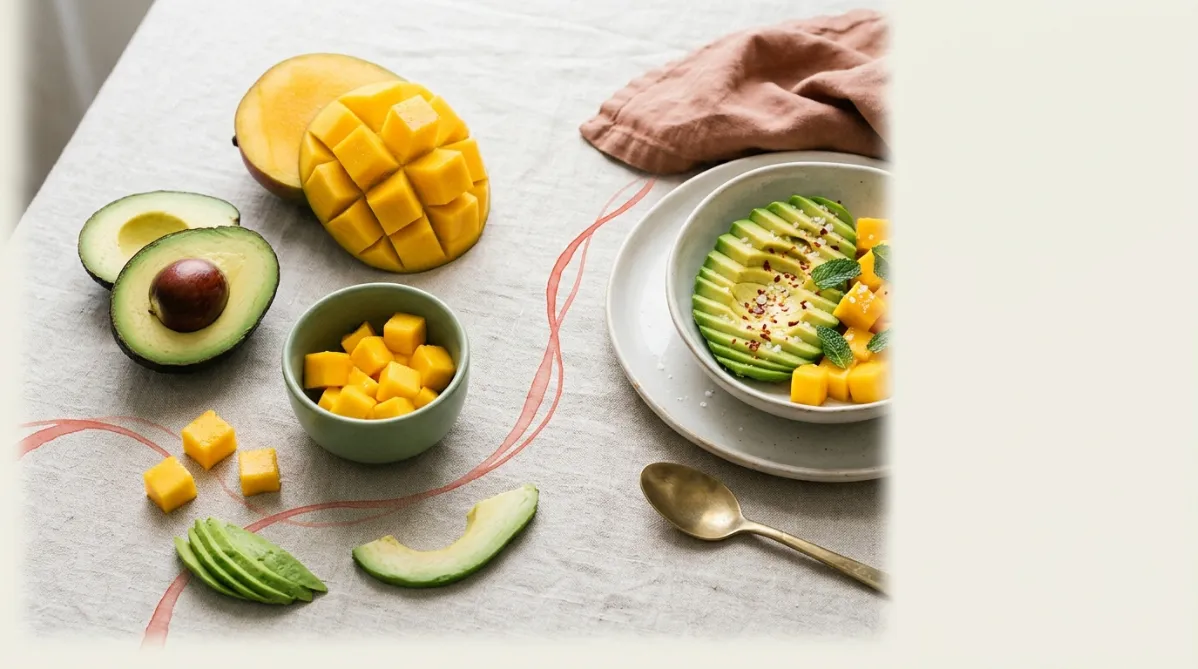
A wide, softly lit editorial still life photographed from slightly above on a pale oat-colored linen surface. On the left, a halved ripe Hass avocado with its glossy pit still nestled in one half, the flesh a buttery gradient from deep green at the skin to creamy yellow at the center. Beside it, a ripe mango is sliced into thick cheeks with a neat crosshatch pattern, the golden-orange flesh catching the light. A small ceramic bowl in matte sage green holds a cup of diced mango cubes. A few scattered mango cubes and a thin avocado slice fan out across the surface.

On the right, a minimalist ceramic plate holds a simple composed bowl: sliced avocado fanned over mango, with a sprinkle of flaky sea salt, a pinch of chili flakes, and a few torn mint leaves. A linen napkin in muted terracotta is draped casually at the edge of the frame. A single brushed-brass spoon rests nearby.

A subtle graphic touch ties in the artery theme: a thin, elegant line of warm coral red, like a hand-drawn ribbon or gentle wave, curves through the negative space on the surface, suggesting a blood vessel and flow without looking clinical. It passes softly beneath the fruit as if painted on the table in watercolor.

Natural morning window light enters from the upper left, creating soft long shadows and gentle highlights on the fruit's surface. The palette is warm and fresh: avocado greens, mango golds and oranges, cream, sage, and a hint of coral. Shallow depth of field blurs the background edges into creamy neutrals, leaving generous clean empty space on the right third for title text. Modern wellness magazine aesthetic, crisp but organic, high-end food photography, with a subtle film-like grain and calm, balanced composition.
Nutrition

Abacate + Manga Diariamente: O que mudou nas artérias (e o que não mudou)

Dr. Gymbro · · 4 min read

Oito semanas. Um abacate. Uma xícara de manga. Todos os dias. Os vasos sanguíneos de pessoas com pré-diabetes reagiram; glicemia, inflamação e a maioria dos outros marcadores permaneceram inalterados.

Essa é a história completa de um novo ensaio randomizado publicado no Journal of the American Heart Association. O resultado é útil, mas apenas se for interpretado pelo que realmente demonstra.

O que os pesquisadores realmente fizeram

Uma equipe do Illinois Institute of Technology, liderada por Britt Burton‑Freeman, randomizou 82 adultos com pré-diabetes. A idade média era de cerca de 45 anos e o IMC médio, de aproximadamente 30 kg/m². Todos seguiram uma dieta parcialmente controlada, com alimentos fornecidos semanalmente: 1.500 kcal/dia para mulheres e 1.750 kcal/dia para homens.

Um grupo recebeu, todos os dias durante 8 semanas, um abacate inteiro e uma xícara de manga. O grupo controle recebeu alimentos com o mesmo aporte calórico, porém pobres em gordura e fibra, em substituição às frutas. Como as calorias foram iguais, a comparação reflete diferenças na qualidade e na composição dos alimentos, e não um maior ou menor consumo energético.

O desfecho primário foi a dilatação mediada por fluxo (FMD), um teste de ultrassom que avalia o quanto uma artéria se dilata quando o fluxo sanguíneo aumenta, sendo um parâmetro padrão da função endotelial.

O resultado principal: FMD mudou

O FMD aumentou cerca de 1 ponto percentual na dieta de abacate‑manga e diminuiu no grupo controle, resultando numa diferença entre os grupos de aproximadamente 2,1 pontos percentuais (‑2,11 ± 0,77 %, P = 0,008), considerando o controle como referência.

A queda observada no grupo controle é tão relevante quanto o ganho no grupo fruta: uma dieta baixa em fibra e frutas pode ter prejudicado a função vascular ao longo de dois meses, enquanto a dieta rica em frutas reverteu essa tendência. O consumo total de fruta, fibra, vitamina C e gordura monoinsaturada aumentou significativamente no grupo abacate‑manga.

Pressão arterial: sinal só em homens

A pressão arterial diastólica também variou entre as dietas, e o efeito foi mais evidente nos homens. A pressão braquial diastólica apresentou P = 0,03; a pressão diastólica central, P = 0,07, indicando apenas uma tendência, não um resultado definitivo.

Esse achado específico por sexo deve ser visto como ponto de partida para pesquisas futuras. Efeitos em subgrupos de um estudo com apenas 82 participantes são fáceis de super‑interpretar, e o estudo não foi planejado para explicar por que os homens responderam mais.

O que não mudou

A maioria dos desfechos secundários não mostrou diferença significativa (P > 0,05). Isso inclui marcadores de glicose, inflamação e a maior parte do painel metabólico. Alguns marcadores lipídicos e renais foram marginalmente diferentes (P < 0,1), mas isso não basta para afirmar um efeito.

Portanto, não se trata de um truque para baixar a glicemia nem de uma solução anti‑inflamatória. É evidência de que duas frutas inteiras podem melhorar uma medida vascular importante em um grupo de alto risco, mesmo sem mudanças visíveis na glicose.

Leia a letra miúda

O ensaio foi financiado em parte pela Hass Avocado Board e pela National Mango Board, e os autores declararam esse apoio. Financiamento da indústria não invalida os dados, mas justifica a necessidade de replicação independente.

O desenho do estudo também não permite separar o efeito do abacate do da manga. Foi testada a combinação, de modo que não sabemos qual fruta – ou qual nutriente (fibra, vitamina C, gordura monoinsaturada, polifenóis) – foi responsável pelo efeito vascular. O FMD é um marcador substituto, não um infarto ou AVC, e oito semanas é um período curto.

Como encaixar na sua dieta

A conta calórica é a questão prática. Um abacate médio fornece entre 240 e 320 kcal, dependendo do tamanho, e uma xícara de cubos de manga tem cerca de 100 kcal. Portanto, a dupla representa entre 350 e 420 kcal. No estudo isso correspondeu a uma parcela considerável de um dia de 1.500 – 1.750 kcal, sendo compensado pelos demais alimentos fornecidos.

  • Corte: Considere a dupla como um bloco calórico denso e ajuste o restante da dieta. Substitua outras fontes de gordura (óleos, queijos, oleaginosas) e carboidratos refinados, ao invés de apenas acrescentar.
  • Manutenção: A dose completa cabe facilmente. Troque um lanche processado ou uma sobremesa por ela e o total calórico diário praticamente não muda.
  • Ganho de massa: Acrescente por cima, já que provavelmente há margem calórica disponível.

Quem pode se beneficiar mais: pessoas com pré-diabetes ou excesso de peso, e quem tem dieta baixa em fruta e fibra. Se você já consome abundante hortaliças e frutas, o ganho pode ser menor, e o estudo não responde a essa situação.

Ideias simples de refeições

  • Torrada integral com abacate amassado e uma xícara de manga ao lado.
  • Smoothie com metade de um abacate, manga, espinafre e iogurte grego para proteína.
  • Tigela de frango ou camarão com cubos de manga, fatias de abacate, feijão preto e limão.
  • Salsa de manga‑abacate sobre peixe grelhado.
  • Cubos de manga congelada como lanche noturno, usando o abacate no almoço ou jantar.

Conclusão

Em adultos com pré-diabetes, acrescentar um abacate e uma xícara de manga diariamente por 8 semanas melhorou a dilatação mediada por fluxo em relação a uma dieta controle pobre em fibra e gordura, e a pressão diastólica melhorou nos homens. A glicose e a maioria dos demais marcadores permaneceram estáveis. Alimento não é medicamento, e o efeito foi modesto. Ainda assim, trocar alimentos pobres em fibra por fruta inteira e gorduras saudáveis é uma mudança barata, de baixo risco, e as artérias podem responder mesmo quando os exames laboratoriais não revelam alterações.
Original study

Read the original research on pubmed.ncbi.nlm.nih.gov →

This article summarizes published research for general information. It is not medical advice.

DG

Written by

Dr. Gymbro

Dr. Gymbro writes for Dr. Gymbro: science-backed fitness, nutrition & performance.

Related Articles

A wide, softly lit editorial still life on a pale warm-gray stone surface. In the center, three small clear glass vials of differing liquid heights stand in a staggered row, filled with luminous citrus-orange liquid. The shortest vial holds a thin layer of liquid, the middle one is about half full, and the tallest is nearly full, subtly suggesting rising levels without any charts or text. Beside the vials, a halved blood orange and a halved lemon sit with glistening, dewy pulp, and a few loose orange segments scatter across the surface. In the foreground, a shallow ceramic dish holds a few translucent golden softgel capsules catching the light, and a single droplet of orange liquid rests on the stone with a delicate glossy highlight.

Behind the vials, a large, out-of-focus backdrop in muted peach and cream tones fades into a gentle gradient. Soft morning window light enters from the left and casts long, elegant shadows to the right. Thin sprigs of green citrus leaves add a fresh contrast in the upper corner. A few macro-scale glossy spheres, resembling tiny bubbles of oil or water, float on the surface near the vials, their rounded, shimmering skins hinting at encapsulation in a natural, organic way.

The palette is warm and restrained: apricot, tangerine, cream, soft sage, and pale stone gray. The composition follows the rule of thirds, with the vials slightly right of center and generous negative space on the left for a headline overlay. Shallow depth of field, crisp focus on the middle vial, fine film-like grain, and a clean, minimalist styling reminiscent of contemporary wellness and science magazine photography. No people, no text, no lab equipment, no futuristic elements. A calm, modern, trustworthy, editorial mood.
nutrition

Vitamina C Lipossomal Alcança Níveis Sanguíneos 6 Vezes Maior; Nova Fórmula Duplica Esse Valor

BY DR. GYMBRO ·

Um estudo crossover mostrou que a vitamina C lipossomal convencional elevou a exposição sanguínea em cerca de seis vezes em relação à vitamina C tradicional, enquanto uma nova formulação de dupla encapsulação chegou a cerca de 11 vezes. Os resultados são impressionantes, mas o experimento contou apenas com 12 participantes, dose única de 350 mg e observação de 8 horas, além de ter sido financiado pela empresa desenvolvedora da nova forma, que já tem patente em andamento. A seguir, explicamos o que esses números realmente indicam, por que a encapsulação altera a absorção e quem pode (ou não) se beneficiar.

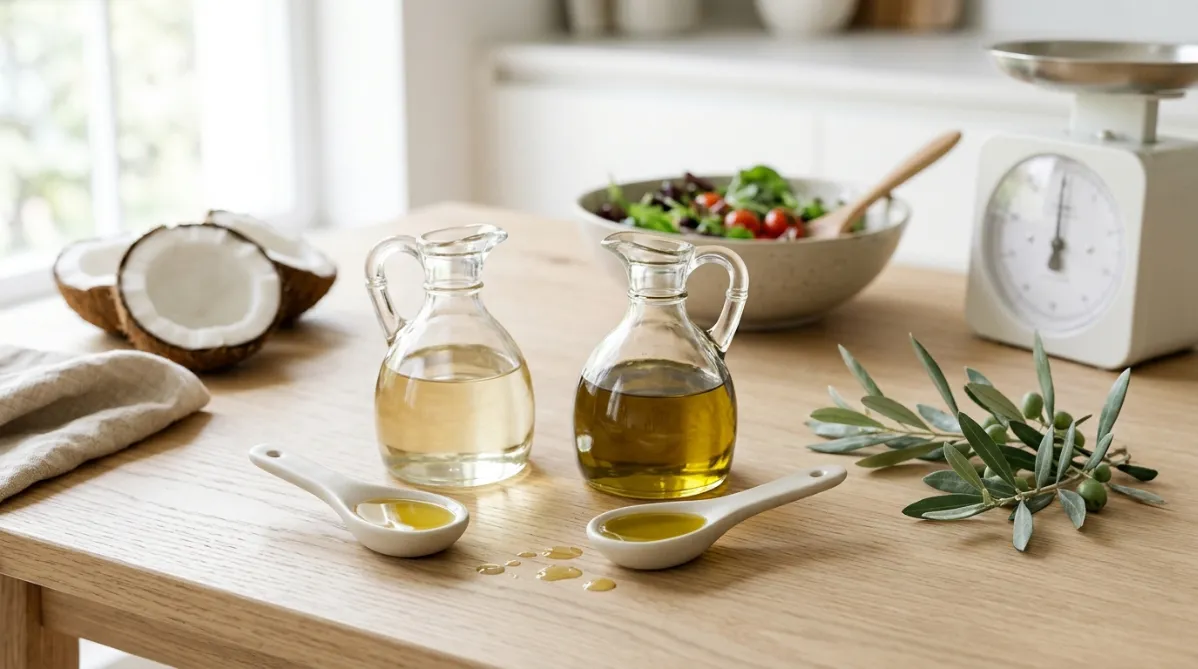
A calm, editorial-style still life shot from a slightly elevated angle, in a bright minimalist kitchen with soft natural window light coming from the left. On a pale oak wooden table sit two small glass cruets side by side: one filled with clear, pale golden MCT oil, the other with deeper green-gold extra virgin olive oil. Between and in front of them, two shallow ceramic spoons in matte off-white, each holding a glistening pour of its respective oil, with a few droplets catching the light on the table surface. A sprig of fresh olive branch with silvery-green leaves rests to the right, and a halved coconut with white flesh sits softly out of focus at the left edge, hinting at the source of MCTs. In the background, a blurred linen cloth in warm beige and a small bowl of mixed greens and cherry tomatoes suggest a healthy diet. A simple analog kitchen scale in brushed white metal sits subtly in the soft-focus background, a quiet nod to weight loss without being literal. Color palette: creamy whites, warm sand, soft sage green, and glowing golden amber highlights. Shallow depth of field, gentle shadows, delicate specular highlights on the oil, subtle film grain, clean negative space on the right third for headline overlay. Modern wellness magazine aesthetic, tactile, airy, and sophisticated, shot as if with an 85mm lens, 16:9 landscape composition.
nutrition

Óleo MCT vs Azeite em Dieta: Grupo Terminou 1,7 kg Mais Magro

BY DR. GYMBRO ·

Um estudo randomizado de 16 semanas comparou óleo MCT a azeite. O grupo que usou MCT terminou cerca de 1,7 kg mais magro e com menos gordura abdominal. As diferenças na perda de gordura foram apenas tendências, mais de um terço dos participantes abandonou o estudo e a pesquisa data de 2008. Veja o que os dados realmente mostram, por que os MCTs podem funcionar, como dosá‑los sem desconforto gastrointestinal e quem deve evitá‑los.

A bright, minimalist editorial still life on a soft warm-white surface, shot from a slightly elevated angle in natural morning light. In the center-left, a small matte ceramic dish holds a handful of pale cream capsules and tablets, a few spilling casually onto the surface. Beside it sits a sleek analog blood pressure cuff, softly coiled, in muted sage green fabric. Fresh potassium-rich foods are arranged in a loose, balanced composition around the pills: a halved ripe avocado with its pit, a peeled banana, a cut sweet potato with glowing orange flesh, a few leafy spinach stems, and a small cluster of white beans in a wooden bowl. A single slim pair of chrome dumbbell handles or a small chalked kettlebell rests discreetly at the right edge, hinting at the lifter audience without dominating the frame.

The palette is soft and modern: warm cream, sage green, terracotta orange, and buttery yellow, with subtle blush-pink shadows. The background is a smooth, out-of-focus pale oatmeal wall with a gentle diagonal shadow from a window, creating a calm, airy mood. The right third of the frame has generous negative space for headline text. A faint, delicate line of hand-drawn-style red accent, such as a small red ribbon or a thin red pencil resting near the pills, adds a quiet "caution" note without feeling alarming.

The overall look is clean, contemporary health-journal photography with shallow depth of field, crisp focus on the pills and produce, soft diffused highlights, and fine natural texture in the ceramic, linen, and food surfaces. Subtle film-like grain, editorial styling, and a calm, trustworthy, slightly cautionary tone. 16:9 landscape composition.
science research

Comprimidos de Potássio Reduzem Pressão Arterial em 5 mmHg em 4 Semanas, Mas Há um Problema

BY DR. GYMBRO ·

Uma meta‑análise recente de 19 ensaios randomizados mostrou que o potássio oral diminui a pressão sistólica clínica em cerca de 5 mmHg após quatro semanas. No entanto, as leituras ambulatoriais tiveram redução menor e os efeitos adversos ocorreram em 12,8 % dos participantes, contra 3,2 % nos grupos controle. Os achados aplicam‑se à hipertensão primária não tratada, e suplementos de potássio podem ser perigosos para quem tem doença renal ou faz uso de inibidores da ECA, ARBs ou diuréticos poupadores de potássio. A seguir, veja o que os dados revelam, o que ainda não sabem e como quem treina com dietas pobres em frutas e legumes deve encarar a questão.

A bright, airy editorial still life photographed from slightly above on a pale oat-colored linen surface, in soft natural window light with gentle long shadows. In the foreground, a rustic ceramic bowl holds halved and whole oranges, glossy red bell pepper slices, and a few kiwi halves with emerald flesh. Beside it sit loose strawberries and a small pile of bright yellow lemon wedges. Their colors pop against the muted neutral palette. A single clear glass of water with a slice of orange rests nearby, catching the light.

On the right side of the frame, a pair of well-worn but clean walking sneakers in sage green and cream sits casually on the surface, with one lace loosely trailing. Behind them, a simple wooden chair with a light ash finish is partly visible and slightly out of focus, a quiet nod to the sit-to-stand test. A small stainless-steel stopwatch lies next to the shoes, with a subtle reflective glint.

A minimalist ceramic dish holds a few small, round, pale-yellow vitamin capsules, kept understated. A sprig of green leaves and a folded cotton napkin in soft terracotta add a warm accent. A small open notebook with a pencil rests in the upper left, its page blank except for faint, abstract pencil lines suggesting a simple rising graph, with no legible text.

The composition leaves generous negative space on the left third for title overlay, with a soft cream-to-peach gradient background. The mood is fresh, healthy, and contemplative, like a modern wellness magazine or a trendy online journal. The color palette is warm citrus orange, sunny yellow, sage green, and soft cream, with gentle terracotta accents. The depth of field is shallow, with crisp focus on the fruit and shoes and a creamy blur in the background. The overall look is clean, natural, and editorial, with fine film-like grain, true-to-life color, and a calm, optimistic tone. Landscape 16:9 framing.
nutrition

Vitamina C barata associada a pernas mais fortes à medida que você envelhece

BY DR. GYMBRO ·

Um amplo estudo britânico com mais de 5 mil adultos entre 48 e 92 anos mostrou que quem tem níveis ótimos de vitamina C no sangue (≥ 50 µmol/L) caminha mais rápido e se levanta de uma cadeira com mais agilidade que quem apresenta níveis baixos. Nas mulheres, a força de preensão manual ajustada à altura também foi maior; nos homens, não houve essa associação. A ingestão de vitamina C pelos alimentos correlacionou-se apenas de forma irregular e somente nas mulheres. Como o desenho do estudo é transversal, não há evidência de causa‑efeito. Veja o que os números revelam, o que eles não mostram e por que pode valer a pena conferir seu nível sanguíneo.

This page is available in