Dr. Gymbro
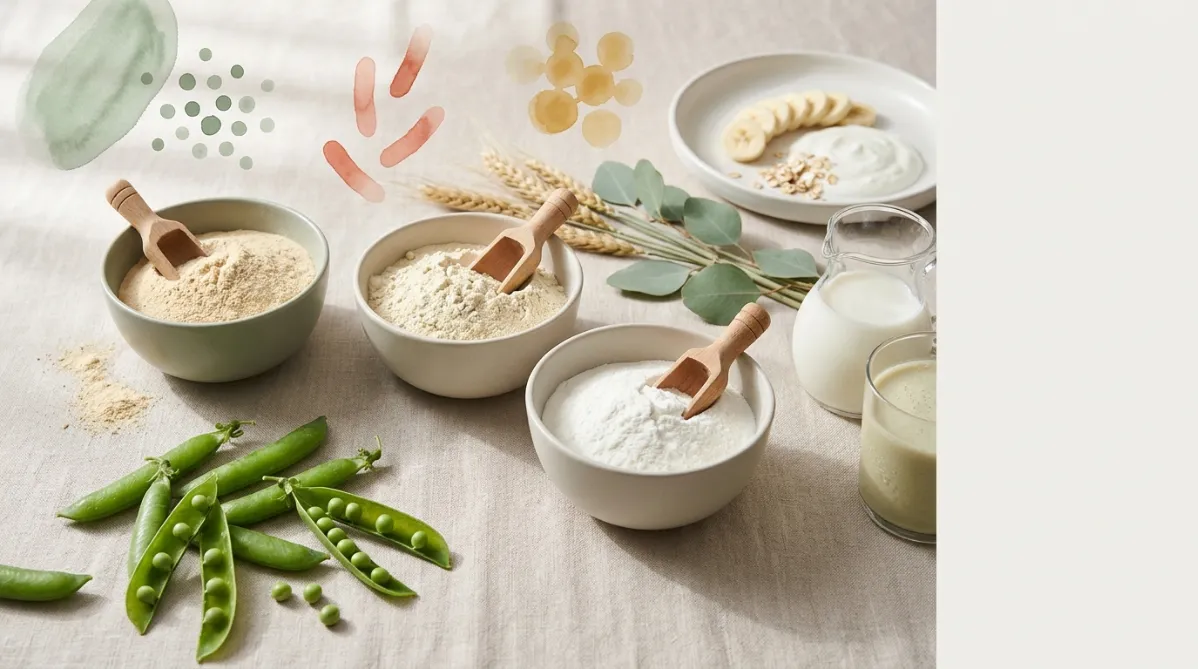
A wide, softly lit editorial flat-lay on a pale oat-colored linen surface, shot from slightly above. Three matte ceramic bowls sit in a loose diagonal across the frame. One holds fine, creamy beige pea protein concentrate, another holds paler, powdery pea protein isolate, and the third holds bright white whey protein isolate. Each bowl has a small wooden scoop resting beside it, with a few fine dustings of powder on the linen. Fresh green pea pods, split open to show round peas, spill naturally in the left foreground. A small glass pitcher of milk sits near the right edge, next to a half-full glass of a smooth, pale green-beige shake with condensation on the surface.

Behind the bowls, a few sprigs of dried wheat and soft eucalyptus leaves add organic texture. In the upper right, a shallow white ceramic plate holds a small arrangement of gut-friendly foods: sliced banana, a spoonful of plain yogurt, and a few oats. Delicate watercolor-style abstract shapes in sage green, warm coral, and soft mustard float subtly in the background. They suggest microscopic organisms, like loose dots, rods, and clustered circles, but stay painterly and minimal, not scientific or futuristic.

Natural window light enters from the left, casting long, gentle shadows and a warm, airy glow. The palette is muted and modern: sage green, cream, warm beige, blush, and touches of terracotta. The composition leaves generous clean negative space on the right third for a headline overlay. The depth of field is shallow, with the nearest pea pods and the front bowl crisp and the background softly blurred. The style is high-end wellness magazine photography with a subtle tactile, handmade feel, calm, fresh, and contemporary, in a 16:9 landscape format.
Science & Research

Qual pó de proteína redesenha seu intestino? A ervilha fez isso em quatro semanas

Dr. Gymbro · · 4 min read

Seu shake de proteína pode estar fazendo mais do que apenas nutrir seus músculos. Um novo ensaio sueco, randomizado, indica que o tipo de pó de proteína que você escolhe pode alterar a bactéria que habita seu intestino em apenas quatro semanas. Duas formas de proteína de ervilha conseguiram isso, e cada uma favoreceu diferentes microrganismos.

O Estudo: Três Pó, Uma Dose, Quatro Semanas

Pesquisadores da Universidade de Örebro publicaram um ensaio randomizado, duplo‑cego, com três braços paralelos, no European Journal of Nutrition. Adultos saudáveis receberam um dos três suplementos: concentrado de proteína de ervilha (PPC), isolado de proteína de ervilha (PPI) ou isolado de proteína whey (WPI). A dose foi de 0,5 g de proteína por kg de massa corporal por dia durante quatro semanas.

A composição da microbiota intestinal foi o desfecho principal. A equipe coletou amostras de fezes e questionários de estilo de vida semanalmente. Também foram colhidos sangue em jejum e urina de 24 h nos momentos basal, intermediário e final da intervenção para monitorar marcadores metabólicos. Trata‑se de pesquisa em humanos, não de estudo em ratos ou em placas de Petri. O ensaio foi registrado sob o número NCT05611138.

Os pesquisadores realizaram duas comparações: PPC versus PPI e PPI versus WPI. Isso permitiu analisar proteína vegetal versus animal, bem como duas proteínas vegetais com diferentes matrizes alimentares.

Resultado Principal: A Proteína de Ervilha Alterou a Diversidade

Ambos os pós de proteína de ervilha provocaram uma mudança mensurável. A suplementação com PPC e PPI reduziu significativamente a α-diversidade (variedade de espécies dentro do intestino de uma pessoa) e aumentou a β-diversidade (diferença da comunidade entre amostras). Os autores observam que esses efeitos foram parcialmente modulados pelo IMC.

Uma queda na α-diversidade pode parecer alarmante, já que maior diversidade costuma ser vista como um indicador de intestino saudável. O resumo não indica se essa mudança é benéfica, prejudicial ou neutra. Os autores apenas ressaltam que as alterações composicionais ainda precisam ser relacionadas à função, portanto não tire conclusões definitivas.

As Bactérias que Aumentaram

Os resultados em nível de espécie são onde os dois pós de ervilha divergem:

  • Concentrado de proteína de ervilha (PPC): Anaerobutyricum hallii e Bifidobacterium longum aumentaram significativamente.
  • Isolado de proteína de ervilha (PPI): Lactobacillus crispatus e Limosilactobacillus frumenti aumentaram significativamente.

Os autores classificam essas espécies como benéficas e concluem que diferentes proteínas dietéticas as modulam seletivamente. O resumo não informa quais espécies mudaram no grupo whey, portanto não podemos dizer, a partir desta fonte, como o whey se compara a nível de espécie. O contraste PPI versus WPI fazia parte do desenho, mas o resumo não traz detalhes a respeito.

O Que Este Estudo Não Mostra

  • Apenas adultos saudáveis. Os resultados não revelam o que ocorre em pessoas com condições digestivas.
  • Composição, não função. Os autores afirmam que são necessários estudos adicionais para verificar como essas alterações se traduzem em funcionalidade microbiana.
  • Marcadores metabólicos não constam no resumo. Sangue e urina foram coletados, mas o resumo não apresenta resultados.
  • Respostas individuais são relevantes. Os autores enfatizam a necessidade de investigar respostas individuais, e o IMC modulou parcialmente os efeitos na diversidade.
  • Quatro semanas é curto. Não sabemos se as alterações persistem, aumentam ou desaparecem.

Lições Práticas: Escolhendo Seu Pó

Dose. O ensaio utilizou 0,5 g/kg de massa corporal por dia. Para uma pessoa de 80 kg, isso corresponde a 40 g de proteína diária proveniente do suplemento. O resumo não especifica o horário de ingestão (pré‑treino, pós‑treino ou junto às refeições), portanto não há recomendação baseada em evidências sobre o timing.

Concentrado de proteína de ervilha. Neste estudo, o PPC esteve associado ao aumento de B. longum e A. hallii. Se o seu objetivo é um pó de origem vegetal e você tem curiosidade sobre os efeitos no intestino, este pode ser uma opção. Concentrados são geralmente menos processados que isolados, embora o resumo não tenha testado essa hipótese.

Isolado de proteína de ervilha. O PPI esteve associado ao aumento de L. crispatus e L. frumenti. É a forma mais purificada, que muitos praticantes de musculação preferem pela densidade protéica.

Isolado de proteína whey. O WPI serviu como comparador de origem animal. Nada neste resumo indica que o whey seja prejudicial. Simplesmente não há relato de ganhos bacterianos específicos ao whey, portanto não se pode alegar vantagem para o intestino a partir deste artigo.

Quem Deve Prestar Atenção

Praticantes de dietas vegetais obtêm o valor mais direto. Se você depende da proteína de ervilha para alcançar sua meta diária, este estudo indica que ela não é neutra para o intestino. Ela parece mudar espécies bacterianas específicas, e a forma escolhida pode ser relevante.

Pessoas com problemas gastrointestinais devem ter cautela. Os participantes eram saudáveis, portanto esses achados não podem ser extrapolados para condições como SII ou Doença Inflamatória Intestinal. Se o seu intestino já é sensível, experimente qualquer novo pó gradualmente e consulte um profissional de saúde ou nutricionista antes de fazer alterações.

Conclusão

Quatro semanas de proteína de ervilha, em qualquer das formas, remodelaram a comunidade microbiana intestinal de adultos saudáveis. O concentrado e o isolado impulsionaram diferentes espécies benéficas. A grande questão que permanece sem resposta é o que essas mudanças significam para a sua saúde, e este estudo deixa isso em aberto. Por enquanto, encare a escolha do pó de proteína como mais um fator que influencia o ecossistema do seu intestino, não apenas como uma questão de macronutrientes.
Original study

Read the original research on pubmed.ncbi.nlm.nih.gov →

This article summarizes published research for general information. It is not medical advice.

DG

Written by

Dr. Gymbro

Dr. Gymbro writes for Dr. Gymbro: science-backed fitness, nutrition & performance.

Related Articles

A bright, airy, minimalist kitchen counter in soft morning light, shot from a slightly elevated three-quarter angle in a wide landscape composition. Two matching ceramic bowls sit side by side on a pale oak butcher-block surface. The left bowl holds fine, creamy-beige pea protein powder with a small wooden scoop resting in it. The right bowl holds smooth, ivory-white whey powder with an identical scoop. Between and slightly behind them sits a third, smaller empty bowl with a plain scoop, hinting at the placebo. Scattered around the bowls are fresh green pea pods, some split open to reveal bright, round peas, and a small glass bottle of milk with delicate condensation. A sage-green linen napkin is folded loosely at the edge of the frame.

In the soft-focus background, a young man in a fitted heather-gray t-shirt is seen from the shoulders down, casually flexing one arm while holding a matte shaker bottle, the biceps subtly defined and the pose relaxed and natural. A minimalist notebook with a pencil and a simple hand-drawn bar chart lies open on the counter, suggesting analysis without legible text. A small potted herb plant and a ceramic mug add warmth.

The color palette is muted and editorial: warm cream, sage green, soft terracotta, pale wood, and touches of charcoal. Light streams in from a window on the left, casting gentle long shadows and a subtle golden glow across the powders so their textures look fine and tactile. Shallow depth of field keeps the bowls crisp while the background melts into a creamy blur. The look is modern lifestyle-magazine photography, clean and uncluttered, with generous negative space on the right third of the frame for headline overlay. It is natural, appetizing, and trustworthy, in the style of a contemporary wellness and nutrition journal.
nutrition

Proteína de Ervilha vs Whey: O Resultado Surpreendente em Iniciantes

BY DR. GYMBRO ·

A proteína vegetal pode realmente construir músculos como o whey? Um estudo de 12 semanas com 161 homens comparou proteína de ervilha, whey e placebo, e os resultados nos iniciantes chamaram atenção: aumento de 20,2 % na espessura do bíceps com a ervilha versus 8,6 % com o placebo. Contudo, a diferença no grupo total foi apenas uma tendência, e a descoberta mais marcante veio de uma análise de subgrupos. Veja o que o estudo revelou, o que ele não provou e como praticantes veganos ou intolerantes à lactose podem utilizá‑lo.

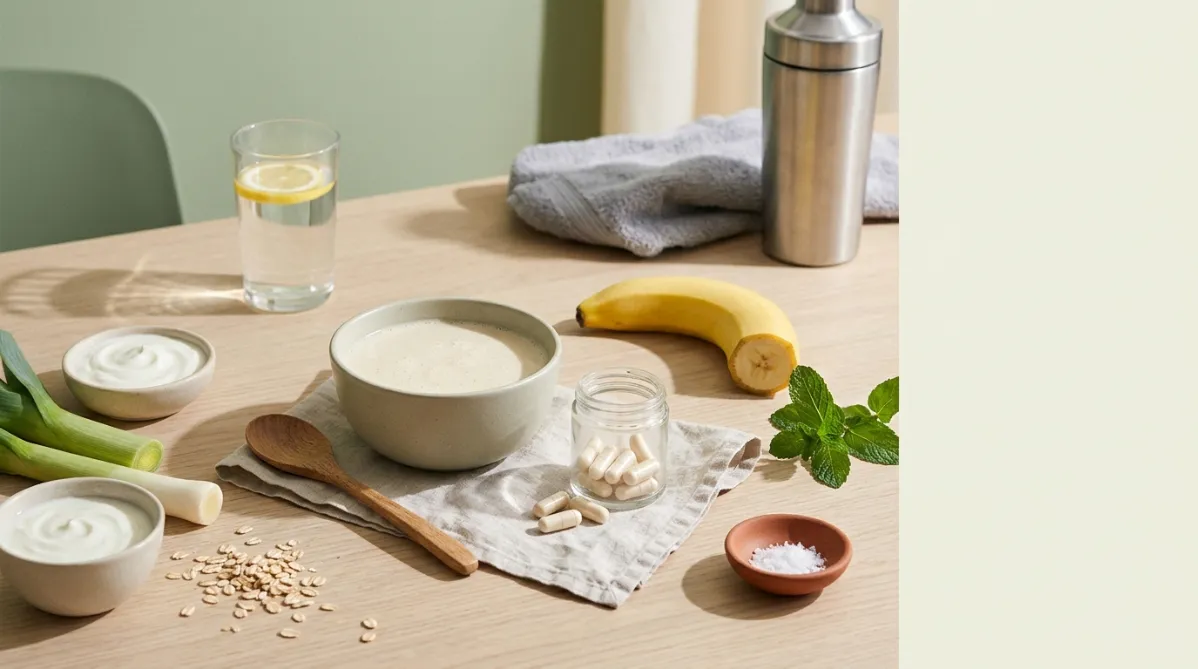
A bright, minimalist still life on a soft sage-green and warm cream backdrop, shot from a slightly elevated angle in natural morning window light. In the center sits a matte ceramic bowl of creamy vanilla protein shake with a wooden spoon resting beside it. Next to it, a small glass jar with a few off-white probiotic capsules spilling onto a pale linen napkin. Around them are fresh, gut-friendly foods arranged with editorial restraint: a halved ripe banana, a small bowl of plain yogurt with a swirl on top, a few stalks of leeks, a handful of oats scattered on the surface, and a sprig of fresh mint. A tall glass of water with a lemon slice catches the light and casts a delicate caustic shadow across the table.

In the background, slightly out of focus, a folded gray gym towel and a sleek stainless steel shaker bottle hint at an athletic lifestyle without dominating the scene. The surface is a pale oak tabletop with subtle grain. A soft diffused shadow falls to the left, giving gentle depth.

The palette is calm and modern: sage green, oatmeal, warm white, soft butter yellow, and touches of terracotta from a small clay dish holding a pinch of sea salt. The composition leaves generous negative space on the right third for headline overlay. The mood is clean, wellness-focused, and quietly editorial, like a feature in a contemporary health and science journal. Shallow depth of field, crisp focus on the capsules and bowl, subtle film grain, and natural color grading. No people, no text, no logos, no futuristic elements.
nutrition

Peidos de proteína? Probiótico BB536 reduz odor, mas só em alguns intestinos

BY DR. GYMBRO ·

Sente o estômago inchado e sente cheiro de proteína depois de tomar whey? Um estudo recente testou o probiótico *Bifidobacterium longum* BB536 em atletas que seguem dietas ricas em proteína e encontrou redução nos compostos odoríferos, como metil mercaptano e amônia. Contudo, o grupo inteiro não apresentou diferença significativa em relação ao placebo, e os efeitos positivos surgiram apenas em subgrupos analisados retrospectivamente. O estudo foi pequeno, exploratório e contou com financiamento da própria fabricante do probiótico. Veja o que é o BB536, por que seu microbioma basal pode determinar quem se beneficia e quais soluções mais baratas você pode experimentar primeiro.

A bright, minimalist editorial still life on a pale oat-colored linen surface, shot from a slightly elevated three-quarter angle in soft natural window light. On the left, a matte ceramic bowl of fine white collagen powder with a wooden scoop resting beside it, a light dusting of powder spilling across the linen. On the right, a matching bowl of creamy off-white whey powder with a brushed-steel scoop. Between them sits a small, neatly balanced stack of simple geometric wooden blocks and a single smooth gray stone, hinting at a scale or comparison without showing a literal scale. Behind them, a lightly blurred row of three clean amber glass supplement jars with plain cream labels, unbranded. A single rolled yoga towel and a pair of small chrome dumbbells sit softly out of focus in the background on a pale plaster shelf. Accents of muted sage green and warm terracotta appear in a ceramic cup and a folded napkin, giving the palette a calm, contemporary wellness-magazine feel. A thin, elegant sprig of dried eucalyptus lies at the edge of the frame. Shadows are long, gentle, and slightly cool, with a creamy shallow depth of field and fine grain. The composition leaves generous negative space across the upper third for title overlay, with a subtle gradient from warm ivory to pale gray-blue in the background wall. The styling is clean and modern like a trendy health journal website, with a refined, tactile, editorial photography look, balanced symmetry, and no text, no people, no futuristic or laboratory elements.
nutrition

Colágeno supera whey na força e massa muscular em análise de 78 ensaios

BY DR. GYMBRO ·

Uma meta‑análise de rede publicada em 2026, com 78 ensaios randomizados e 4.755 participantes, colocou o colágeno em primeiro lugar nos ganhos de força e massa magra obtidos com treinamento de resistência, à frente do whey. Ainda mais surpreendente: nenhum outro suplemento proteico superou o placebo. Como o colágeno é uma proteína incompleta e pobre em leucina, e os intervalos de confiança são amplos, vale a pena analisar o que os números realmente mostram, por que o resultado ainda precisa de confirmação direta e o que fazer com sua pilha de suplementos enquanto isso.

A wide, softly lit editorial still life on a pale oat-colored linen surface, shot from a slightly elevated three-quarter angle. On the left, a matte ceramic bowl in warm cream holds fine, pale golden-beige yeast protein powder, with a small wooden scoop resting beside it and a few loose dusty swirls on the linen. In the center, two tall frosted glass tumblers stand side by side. One holds a creamy, light tan shake with a delicate froth, and the other holds clear water with a faint ripple, creating a quiet visual contrast. On the right, a loosely folded charcoal gym towel, a brushed-steel shaker bottle, and a single small kettlebell in muted sage green sit slightly out of focus.

A few elements hint at the science without looking clinical. A minimalist matte-white notebook lies open with soft, blurred handwriting and a hand-drawn bar chart in thin pencil. Beside it rests a slim brass pen. A single sprig of dried wheat and a small dish of baker's yeast granules on a wooden board nod to the ingredient's fermentation origin.

Natural morning window light enters from the upper left, casting long, gentle shadows and a warm highlight along the glass rims. The palette is earthy and calm: oat, cream, soft terracotta, sage, and warm gray, with a subtle peachy glow in the background. The backdrop is a smooth plaster wall in muted putty tone, with a faint shadow of a window frame across it.

The composition leaves generous negative space in the upper third for a title overlay. Shallow depth of field keeps the glasses and bowl crisp while the gym props melt softly into the background. The overall mood is modern, wholesome, and trustworthy, with the feel of a contemporary health and nutrition magazine. The photograph has fine film-like grain and natural texture, and no text, logos, or labels appear anywhere.
recovery

Mistura de proteína de levedura rivaliza com whey na redução de dor muscular e CK — com uma pegadinha

BY DR. GYMBRO ·

A proteína de levedura vem ganhando espaço em suplementos como alternativa sustentável ao whey, mas será que ela realmente ajuda na recuperação? Um estudo randomizado publicado na *Nutrients* comparou uma mistura levedura‑whey com água após um treino excêntrico intenso. A combinação reduziu a creatina quinase e, nos homens, diminuiu a dor muscular, comportando‑se de maneira semelhante ao whey puro. Contudo, o controle foi apenas água, sem correspondência calórica, e várias conclusões foram exploratórias. Veja o que os dados realmente mostram, o que ainda é incerto e quem pode se interessar por essa opção.

This page is available in