Dr. Gymbro
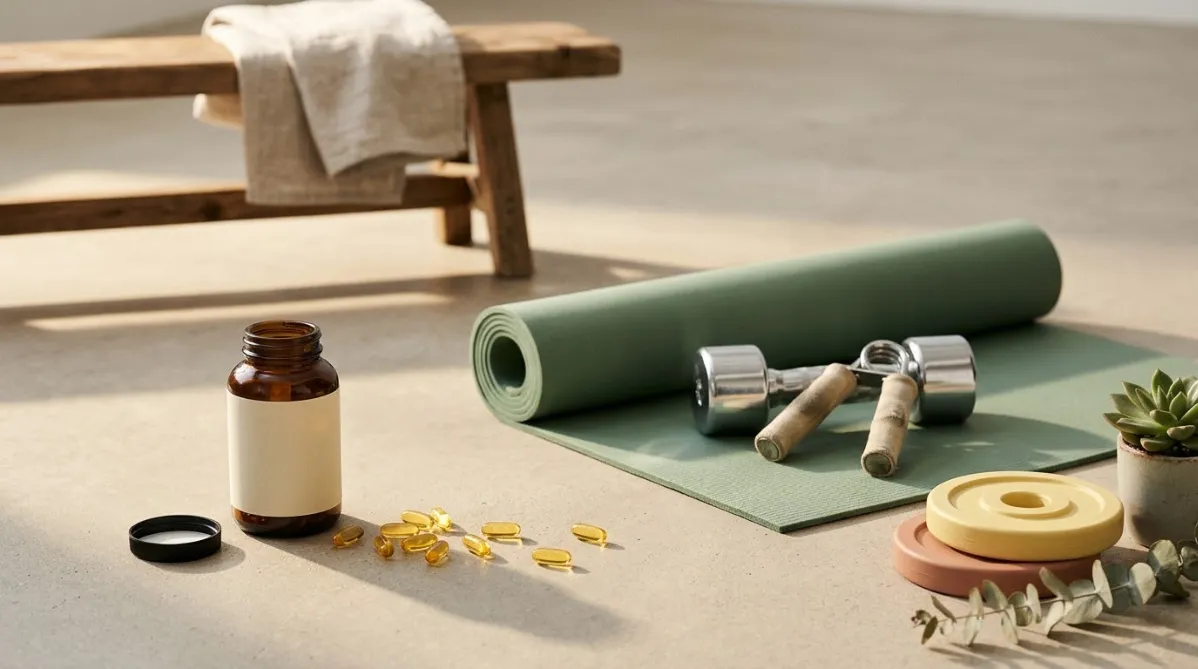
A soft-lit editorial still life on a pale warm-gray concrete surface, shot from a slightly elevated three-quarter angle in a wide landscape frame. On the left, a single amber glass supplement bottle with a minimalist cream label, its lid set beside it. A few golden-yellow softgel capsules are scattered in a loose arc across the surface, catching the light like small drops of honey. At the center-right, a matte sage-green yoga mat is partly unrolled, with a polished chrome dumbbell resting on it. Next to the dumbbell sits a worn canvas hand gripper, a nod to the handgrip finding. Behind them, a wooden gym bench is slightly out of focus, and a folded linen towel sits on top of it.

Warm morning sunlight enters from the upper left through a large window. It casts long, gentle diagonal shadows and a faint golden glow across the scene, a quiet reference to vitamin D and sunshine. A sprig of dried eucalyptus or a small potted succulent adds an organic touch near the bottom right. A small, neatly stacked pile of two or three matte pastel-toned weight plates in butter yellow and dusty terracotta adds color blocking.

The palette is muted and modern: butter yellow, sage, warm sand, soft terracotta, and off-white, with a single strong amber accent from the bottle. The depth of field is shallow, with crisp focus on the capsules and bottle and a creamy blur falling off toward the background. The negative space on the upper right is clean and uncluttered, which leaves room for a headline overlay. The overall feel is calm, minimalist, and contemporary, like a premium health and wellness magazine or a trendy online journal. The grain is subtle, the contrast gentle, and the textures tactile: brushed metal, frosted glass, linen, and concrete. There are no people, no text, and no futuristic elements.
Science & Research

Vitamina D não vai definir seu corpo nem construir músculos, exceto em um caso

Dr. Gymbro · · 4 min read

Se você tem usado vitamina D junto ao treino na esperança de conseguir abdômens mais definidos ou levantar mais peso, uma nova meta‑análise traz uma notícia direta: a vitamina D eleva de forma consistente os níveis sanguíneos, mas não torna as pessoas mais magras nem mais fortes, de modo geral. Há uma exceção que vale a pena conhecer, e ela se aplica principalmente a quem é mais velho ou tem deficiência da vitamina.

O estudo: 28 ensaios, 1.675 adultos

O artigo, publicado em Nutrition Reviews, é uma revisão sistemática e meta‑análise de dose‑resposta de ensaios controlados randomizados. Os autores buscaram no PubMed, Web of Science e Scopus até 1 de abril de 2024, selecionando estudos que compararam suplementação de vitamina D + exercício versus exercício isolado.

Essa comparação é o ponto crucial: a questão não era se o exercício funciona, mas se a adição de vitamina D traz algum ganho extra. Ao todo, 28 estudos com 1.675 participantes foram incluídos. Os desfechos analisados incluíram 25‑hidroxivitamina D [25(OH)D] no sangue, peso corporal, IMC, massa gorda, percentual de gordura, massa magra e força medida por preensão manual, leg press e extensão do joelho. Os autores ainda empregaram modelagem polinomial fracionária para investigar se a dose (UI por semana) e a duração da intervenção modulavam os resultados.

O que funcionou: níveis sanguíneos subiram

O suplemento cumpriu sua função básica. A combinação vitamina D + exercício elevou o 25(OH)D em 34,11 nmol/L, em comparação com o exercício sozinho (p = 0,001). O aumento ocorreu tanto em adultos saudáveis quanto em indivíduos com algum problema de saúde.

Isso indica que as cápsulas foram absorvidas e que os ensaios não falharam na entrega da vitamina. Contudo, elevar um parâmetro laboratorial não é sinônimo de melhorar a aparência ou o desempenho, e a análise demonstra claramente a diferença entre esses efeitos.

O que não funcionou: composição corporal

As esperanças de perda de gordura e ganho muscular não se confirmaram. Não houve efeito significativo em:

  • Peso corporal;
  • IMC;
  • Massa gorda;
  • Percentual de gordura corporal;
  • Massa magra.

Todos os resultados apresentaram p > 0,05. Os autores concluíram que vitamina D + exercício não melhora a composição corporal mais do que o exercício isolado. Se o objetivo é perder gordura ou ganhar massa magra, o treinamento e a dieta são os verdadeiros responsáveis. A vitamina D, ao menos nesses ensaios, não acrescentou nada.

Força: principalmente sem efeito, com uma exceção

Os resultados de força foram, em sua maioria, pouco impressionantes. A força no leg press não mostrou benefício significativo. Já a extensão do joelho apresentou um ganho modesto de 4,36 kg (p = 0,039). A preensão manual melhorou de forma significativa apenas em idosos e em indivíduos que receberam doses mais altas de vitamina D.

Essa exceção merece cautela. O aumento na extensão do joelho foi pequeno, e a conclusão geral dos autores foi de que a força muscular não foi significativamente afetada. O achado da preensão manual ficou restrito a subgrupos específicos: adultos mais velhos e regimes de doses elevadas. A preensão é uma medida simples, frequentemente usada como marcador de força geral no envelhecimento, mas o estudo não demonstra que a vitamina D eleva o desempenho de jovens saudáveis.

Quem pode realmente se beneficiar

Os indícios apontam para grupos específicos, não para toda a população:

  • Adultos mais velhos: foi nesse grupo que surgiram os ganhos de preensão manual.
  • Pessoas que recebem doses mais altas: doses elevadas foram associadas à melhoria da preensão, embora isso não signifique que megadoses sejam recomendáveis.
  • Indivíduos com deficiência de vitamina D: o aumento dos níveis sanguíneos comprova que a suplementação corrige a deficiência; quem está deficiente tem, portanto, a justificativa mais clara para suplementar.

Dicas práticas

  1. Não compre vitamina D como solução para composição corporal. Nos cinco desfechos de composição corporal analisados, não houve benefício adicional em relação ao exercício sozinho.
  2. Faça o teste antes de suplementar. Um exame de sangue de 25(OH)D revela se há deficiência a ser corrigida. Suplementar às cegas é a estratégia menos eficaz.
  3. Adultos mais velhos têm o argumento mais forte. Se você está na terceira idade e treina, os resultados de preensão são animadores; converse com um profissional de saúde.
  4. Mantenha expectativas realistas. Um ganho de 4,36 kg na extensão do joelho é modesto, e o leg press não mostrou efeito.
  5. Priorize o básico. Treinamento progressivo de resistência, ingestão adequada de proteína, controle calórico e sono de qualidade ainda são os fatores que realmente impulsionam os resultados que a vitamina D não conseguiu melhorar.

Limitações e contexto

Trata‑se de uma meta‑análise de ensaios randomizados, o que representa evidência robusta para a questão investigada. Ainda assim, os achados refletem as populações, doses e durações dos estudos incluídos. O resumo menciona que análises de subgrupos e de dose‑resposta foram realizadas, e os benefícios de força apareceram apenas em subconjuntos específicos. Esses resultados de subgrupos devem ser vistos como indícios para pesquisas futuras, não como garantias definitivas.

Conclusão

Vitamina D + exercício elevou os níveis sanguíneos em cerca de 34 nmol/L, mas não reduziu gordura, nem aumentou massa magra, nem melhorou a força no leg press além do que o treinamento sozinho oferece. Os ganhos modestos na extensão do joelho e na preensão manual, especialmente em adultos mais velhos e com doses altas, constituem a exceção. Corrija uma deficiência, se houver, mas não espere que a vitamina substitua o trabalho com pesos livres.

Original study

Read the original research on pubmed.ncbi.nlm.nih.gov →

This article summarizes published research for general information. It is not medical advice.

DG

Written by

Dr. Gymbro

Dr. Gymbro writes for Dr. Gymbro: science-backed fitness, nutrition & performance.

Related Articles

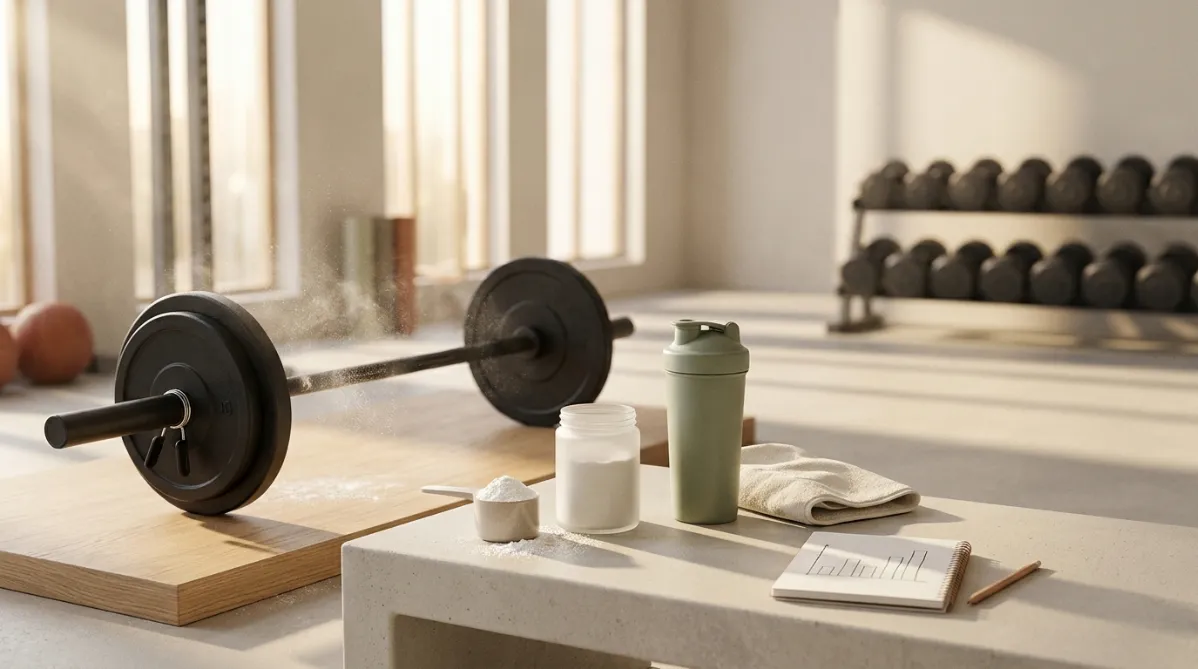
A softly lit, minimalist strength-training studio photographed in a modern editorial style. In the foreground, a matte black barbell loaded with weight plates rests on a light oak platform, with fine chalk dust floating in warm morning light. Beside it on a pale concrete bench sits a simple ceramic scoop of white creatine powder, with a small spill of fine crystals catching the light, next to a minimal frosted glass jar with no label. A matte sage-green shaker bottle and a folded cream towel sit nearby. In the soft-focus background, tall windows let in diffused golden sunlight, casting long, gentle shadows across the floor. A rack of neatly arranged dumbbells is blurred in muted charcoal tones.

The color palette is calm and sophisticated: warm off-white, sand, sage green, soft charcoal, and touches of terracotta. A small open notebook with a pencil lies on the bench, suggesting research and data tracking, with abstract hand-drawn bar graph lines faintly visible on the page but not legible. The composition follows the rule of thirds, with the barbell and powder on the left and generous negative space on the right for headline text. Shallow depth of field, crisp textures on the metal knurling and powder grains, subtle film grain, and a contemporary wellness-magazine look. Clean, airy, and editorial, with a grounded, scientific yet approachable mood. Landscape 16:9 composition.
science research

Creatina e Levantamento: Mais Força, sem Estratégia de Dosagem Vencedora

BY DR. GYMBRO ·

Uma meta‑análise de 63 estudos com 1.489 participantes investigou quanto a creatina acrescenta ao treinamento de resistência. O ganho de força foi moderado e consistente tanto na parte superior quanto na inferior do corpo, enquanto o aumento da massa magra foi menor e a massa de gordura não mudou significativamente. Surpreendentemente, a estratégia de dosagem, a dose diária e o protocolo não influenciaram os resultados. A idade foi o único indício exploratório, com efeitos de força maiores em participantes mais jovens. Veja o que o estudo realmente encontrou e o que ele não pode afirmar.

A wide, editorial-style still life photographed in soft natural window light on a pale oak gym bench. In the foreground, a small rustic ceramic bowl in warm sand tones holds a mound of fine golden-beige ashwagandha root powder, with a few dried gnarled ashwagandha roots and a sprig of green leaves with tiny orange-red berries resting beside it. A wooden scoop dusted with powder lies at an angle. Just behind, a matte black barbell with a single chalk-dusted steel plate sits slightly out of focus, a light haze of white chalk hanging in the air and catching the sunlight.

On the left side, a neat stack of printed research papers with a sharp black pen and a few muted sage-green sticky tabs. One page shows a simple, abstract forest-plot-style line graph with small squares and horizontal lines, subtly out of focus, hinting at statistics without legible text. A pair of minimal round reading glasses rests on the pages. A small linen gym towel is folded near the edge of the bench.

The palette is restrained and modern: warm cream, soft sage green, muted terracotta, charcoal black, and brushed steel highlights. The background is a softly blurred minimalist studio space with a pale plaster wall and a long soft shadow cast by a window frame, giving a calm, contemplative mood. Shallow depth of field, crisp detail on the powder and roots, gentle film-like grain, and generous negative space on the right third of the frame for a headline overlay. The overall look is a clean, trendy health-and-science journal cover, thoughtful and skeptical rather than promotional, balancing the natural herbal element against the discipline of strength training.
nutrition

Ashwagandha para Levantadores: Impulso de Força ou Miragem Estatística?

BY DR. GYMBRO ·

Ashwagandha é promovida como potenciador de força e volume para quem levanta pesos. Uma nova meta‑análise de ensaios clínicos de treinamento de resistência mostrou ganhos de 1RM em supino e agachamento que parecem impressionantes no papel. Contudo, apenas três estudos com 161 participantes puderam ser combinados e os efeitos perderam significância em testes mais rigorosos. A classificação GRADE apontou evidência de baixa a muito baixa, sem efeito confiável sobre a gordura corporal. Veja o que realmente os dados demonstram e quem ainda pode se interessar em experimentar.

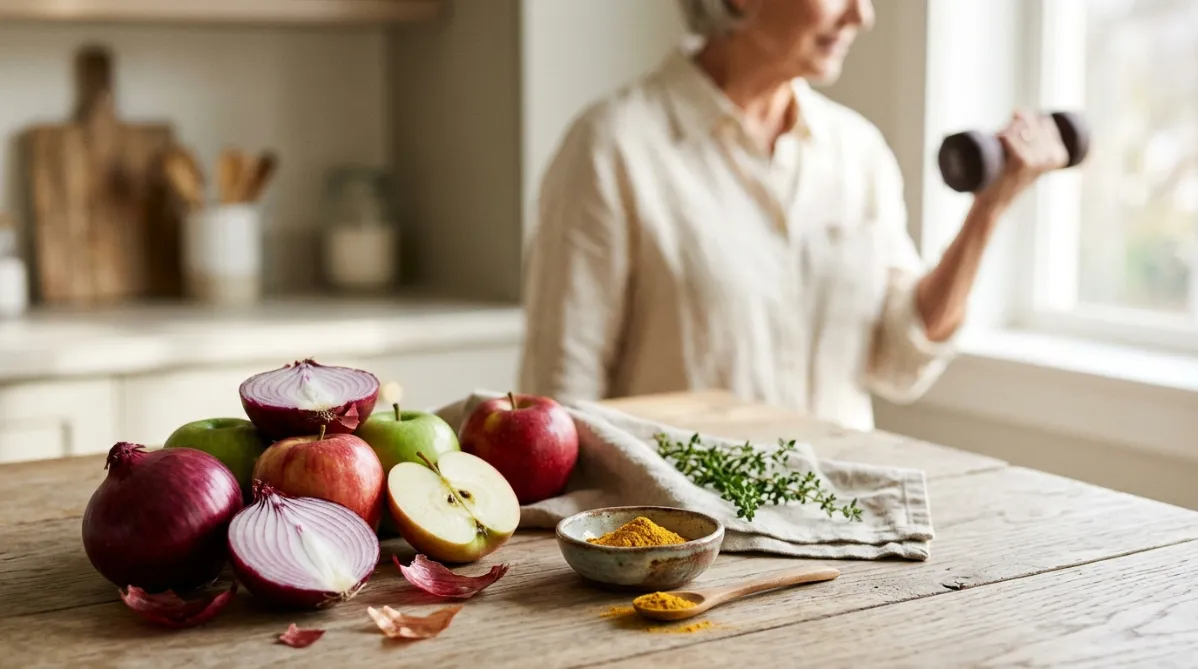
A landscape editorial photograph of a rustic kitchen table in soft morning window light. On a weathered light oak surface, a loose arrangement of fresh red onions, a few halved to show their purple-white rings, and crisp red and green apples, one sliced open to reveal pale flesh. A small ceramic bowl holds a pinch of golden-yellow quercetin powder, with a wooden spoon resting beside it. In the softly blurred background, an older woman in a cream linen shirt lifts a modest dumbbell near a sunlit window, her posture strong and relaxed. Her silhouette is out of focus, which keeps the produce as the main subject.

The palette is warm and natural: deep magenta onion skins, glossy apple reds, buttery yellow accents, and creamy neutrals. A gentle shallow depth of field gives creamy bokeh in the background. The light is diffused and golden, with delicate shadows and a few dried onion skin flakes scattered across the wood for texture. A folded linen napkin and a small sprig of thyme add a curated, modern lifestyle-magazine feel.

The composition follows the rule of thirds, with the produce at lower left and negative space on the right, where the blurred lifter and window glow provide balance. The overall look is clean, calm, and contemporary, like a premium health and wellness journal cover: natural, tactile, and optimistic, with fine film-like grain and true-to-life color.
nutrition

Quercetina Triplicou o Ganho de Força em Levantadores Mais Velhos — Sem Aumento de Massa Muscular

BY DR. GYMBRO ·

Um flavonoide barato encontrado em cebolas e maçãs pode impulsionar os ganhos de força em praticantes mais velhos muito além do que o treino sozinho oferece. Em um estudo randomizado e duplo‑cego, adultos mais velhos que consumiram 200 mg/dia de glicósidos de quercetina aumentaram a força de extensão do joelho em cerca de 15 % ao longo de seis semanas, enquanto o grupo placebo melhorou apenas 5 %. Curiosamente, a massa muscular não mudou em nenhum dos grupos. O benefício parece vir do sistema nervoso, com unidades motoras de limiar alto disparando mais rápido. A seguir, veja o que o estudo encontrou, como aplicar os resultados e por que a amostra pequena exige cautela.

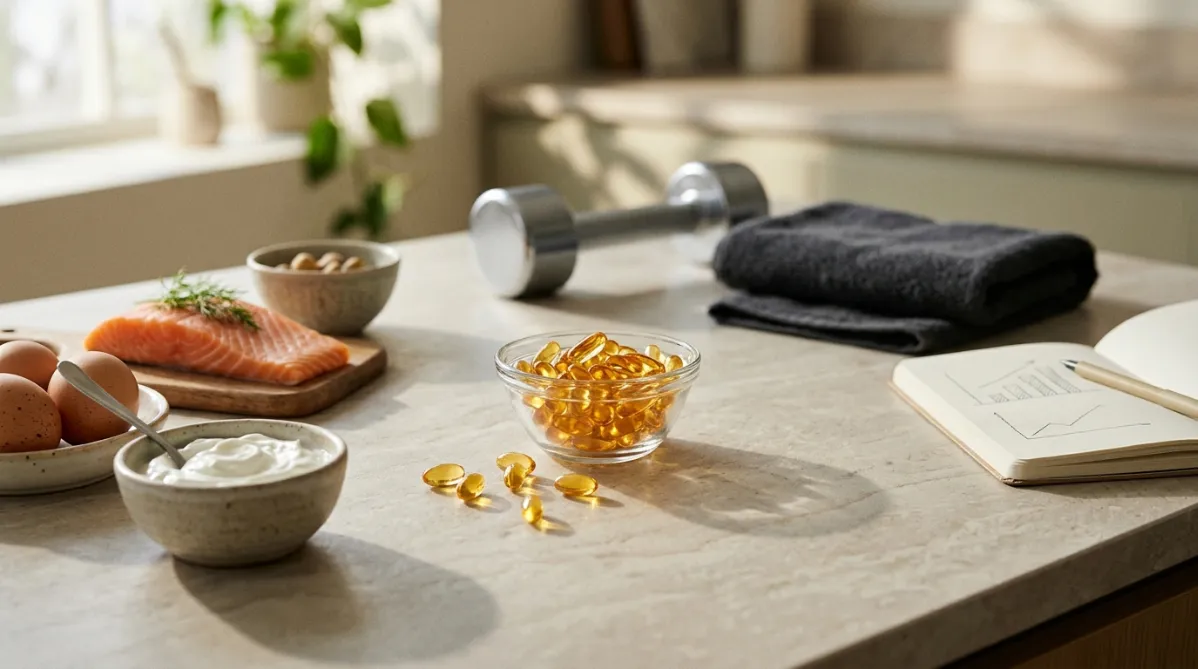
A bright, modern editorial still life shot from a slightly elevated angle on a pale warm-gray stone countertop, bathed in soft natural window light with gentle diffused shadows. In the center, a small glass bowl holds a scatter of translucent golden-amber fish oil softgel capsules, a few spilled casually onto the surface and catching the light like tiny glowing beads. Beside the bowl sits a single chrome dumbbell with a matte finish, slightly out of focus, and a neatly folded charcoal gym towel. To the left, a clean arrangement of alternative "better spent" items: a ceramic dish of raw eggs, a wedge of salmon fillet on a wooden board with a sprig of dill, and a small bowl of Greek yogurt with a spoon, all styled with restraint. A minimalist notebook with a thin pen lies at the right edge, with faint, abstract pencil-drawn bar charts and a flat horizontal line suggesting "no effect," legible only as soft shapes with no readable text. The color palette is muted and sophisticated: warm cream, soft sage green, sandy beige, and pops of golden amber from the capsules, with a single accent of coral from the salmon. Shallow depth of field keeps the capsules crisp while the background melts into a creamy blur of a sunlit kitchen with a hint of green plant leaves. The composition leaves generous negative space on the right third for title overlay, in a 16:9 landscape format. The mood is calm, thoughtful, and quietly skeptical, in the style of a contemporary health and science magazine, with a crisp editorial photography look, fine grain, and natural color grading. No people, no futuristic elements, and no text.
science research

Óleo de Peixe para Ganhos? 8 Estudos Dizem: Não Conte com Ele

BY DR. GYMBRO ·

O óleo de peixe tem sido divulgado como potencializador de recuperação e crescimento muscular, mas uma nova meta‑análise publicada em *Nutrition* demonstra que as evidências não sustentam essa promessa. Ao analisar quatro ensaios sobre massa magra e oito ensaios (22 efeitos) sobre força em adultos saudáveis não obesos, os pesquisadores não encontraram benefício claro em nenhum dos dois. O resultado para força ficou praticamente nulo, enquanto a estimativa para massa magra foi imprecisa demais para tirar conclusões. A certeza da evidência é muito baixa, o que não prova a ausência de efeito, mas também não justifica comprar óleo de peixe para ganhar músculo. Veja o que os números realmente significam e onde seu dinheiro rende melhor.

This page is available in