Dr. Gymbro
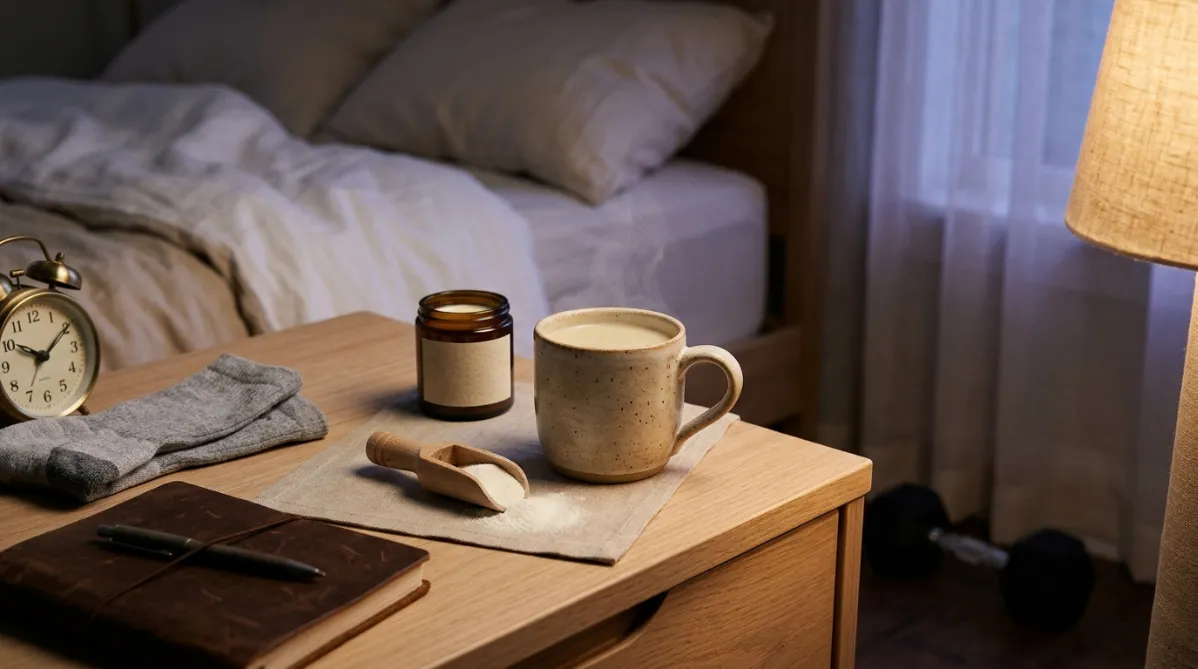
A softly lit bedroom nightstand scene in landscape format, photographed in a modern editorial lifestyle style. In the center of the frame sits a handmade ceramic mug in warm oatmeal tones, filled with a pale creamy drink. A thin wisp of steam rises from it. Beside the mug, a small wooden scoop rests on a matte linen-textured surface with a fine dusting of white collagen powder. A minimal amber glass jar with a cream label stands just behind, with no readable text. The nightstand is pale oak with subtle grain.

To the left, a neatly folded pair of gray cotton athletic socks and a worn leather-bound training journal with a pen on top hint at a lifter's routine. A small brass alarm clock reads about 9:30 and is slightly out of focus. On the right side, a sheer curtain filters the last blue-violet twilight from a window, while a warm bedside lamp with a linen shade casts a honey-colored glow across the scene. The glow contrasts gently with the cool dusk tones.

Behind the nightstand, the edge of a rumpled bed with soft white and sand-colored bedding is visible, with a dumbbell resting quietly on the floor in the soft-focus background to suggest recovery after training. The depth of field is shallow, with the mug and scoop in crisp focus and the background dissolving into creamy bokeh.

The palette is calm and earthy: warm beige, soft cream, muted terracotta, and dusk blue accents. The lighting is cinematic and low-key, with gentle highlights on the ceramic rim and a subtle rim light on the steam. The composition follows the rule of thirds, with the mug placed on the left third and generous negative space on the right for title overlay. The mood is serene, restorative, and quietly scientific without any clinical elements. The finish is clean, high-end, and magazine-worthy, with fine film grain and natural color grading, like a wellness feature in a contemporary online journal.
Recovery

Mánh khóe: Collagen 15 g trước giờ ngủ giảm 27 % số lần thức dậy ban đêm

Dr. Gymbro · · 6 min read

Bạn có thể hoàn thành mọi set, ăn đủ mọi bữa nhưng vẫn phá hỏng tiến bộ nếu đêm qua lại liên tục tỉnh dậy.

Giấc ngủ gián đoạn là “điểm rò rỉ” ẩn giấu trong quá trình hồi phục của nhiều người tập luyện. Một thử nghiệm nhỏ năm 2024 trên European Journal of Nutrition cho rằng một muỗng peptide collagen trước khi ngủ có thể khắc phục vấn đề này. Kết quả khá thú vị, nhưng cũng có nhiều lưu ý cần cân nhắc trước khi mua một hộp collagen.

Tại sao lại dùng collagen vào giờ ngủ? Đó là glycine

Collagen chứa hàm lượng glycine cao bất thường – khoảng một phần ba các amino acid của nó là glycine. Hầu hết các bột protein khác lại chứa rất ít glycine. Glycine đã được nghiên cứu lâu dài như một chất hỗ trợ giấc ngủ, và những thử nghiệm sơ bộ dùng khoảng 3 g trước khi ngủ đã báo cáo cải thiện chất lượng giấc ngủ theo cảm nhận. Peptide collagen là cách rẻ hơn, quen thuộc hơn để người tập luyện nạp glycine cùng với các amino acid khác.

Các nhà nghiên cứu từ Đại học Loughborough và các đối tác muốn biết liệu một loại thực phẩm chức năng giàu glycine – peptide collagen – có thể cải thiện giấc ngủ ở những người đàn ông hoạt động thể chất nhưng đang gặp khiếu nại về giấc ngủ hay không.

Nghiên cứu: Thực tế đã làm gì

Thiết kế nghiên cứu khá vững cho một thí nghiệm quy mô nhỏ:

  • Người tham gia: 13 nam thể thao, trung bình 24 tuổi, tập luyện khoảng 7 giờ/tuần.
  • Vấn đề giấc ngủ: điểm trung bình Athens Insomnia Scale là 9, cho thấy có khiếu nại thực sự về giấc ngủ.
  • Can thiệp: 15 g peptide collagen hoặc placebo, uống 1 giờ trước khi đi ngủ trong 7 đêm.
  • Phương pháp: ngẫu nhiên chuyển giao (crossover), mỗi người tham gia cả hai điều kiện, cách nhau ít nhất 7 ngày và có một giai đoạn làm quen 7 đêm trước đó.
  • Đo lường: nhật ký ngủ và actigraphy trong suốt 7 đêm, cộng thêm polysomnography (tiêu chuẩn vàng trong phòng thí nghiệm) và nhiệt độ cơ thể vào đêm thứ 7. Các chỉ số nhận thức, viêm và hormone cũng được đo vào đêm ấy và sáng hôm sau.

Cấu trúc crossover quan trọng vì mỗi vận động viên tự làm kiểm soát cho mình, giảm nhiễu trong mẫu rất nhỏ.

Những gì được cải thiện: Ít lần thức dậy hơn và buổi sáng tỉnh táo hơn

Ít lần thức dậy. Polysomnography ghi nhận trung bình 21,3 ± 9,7 lần thức dậy với collagen so với 29,3 ± 13,8 lần với placebo (P = 0,028). Nghĩa là giảm 8 lần mỗi đêm, tương đương giảm 27 %.

Nhật ký ngủ cũng cho cùng một xu hướng. Trong 7 ngày, số lần thức dậy tự báo cáo trung bình là 1,3 ± 1,5 với collagen so với 1,9 ± 0,6 với placebo (P = 0,023). Khi cả hai chỉ số khách quan và chủ quan đồng thuận, đó là dấu hiệu tốt.

Độ chính xác Stroop buổi sáng tốt hơn. Sáng hôm sau đêm thứ 7, người tham gia trả lời đúng tỉ lệ các bài Stroop cơ sở cao hơn với collagen (1,00 ± 0,00) so với placebo (0,97 ± 0,05; P = 0,009). Bài Stroop đo khả năng chú ý và kiểm soát phản ứng tự động. Điểm hoàn hảo so với 0,97 chỉ là chênh lệch nhỏ và có thể do hiệu ứng trần. Kết quả này khuyến khích nhưng không chứng minh lợi thế tinh thần to lớn.

Những gì không thay đổi: Kiểm tra thực tế

Ở đây là phần không có “click‑bait”. Collagen không thay đổi:

  • Tổng thời gian ngủ.
  • Thời gian ngủ (latency).
  • Hiệu suất ngủ.
  • Nhiệt độ cơ thể.
  • Hormone hoặc các chỉ số viêm.
  • Cảm giác buồn ngủ, mệt mỏi hoặc chất lượng giấc ngủ chung.
  • Các bài kiểm tra nhận thức khác.

Vì vậy collagen không phải là thuốc an thần, cũng không giúp bạn nhanh chóng chợp mắt hoặc ngủ dài hơn. Điều duy nhất thay đổi là tần suất giấc ngủ bị gián đoạn. Nếu vấn đề của bạn là nằm im mà không ngủ được một giờ, nghiên cứu này không mang lại giải pháp.

Những hạn chế cần biết

  • Mẫu rất nhỏ: chỉ 13 nam. Các thí nghiệm quy mô nhỏ thường phóng đại hiệu ứng và không thể khẳng định kết quả áp dụng cho phụ nữ, người lớn tuổi hoặc người không tập thể thao.
  • Thời gian ngắn: 7 đêm. Chúng ta không biết lợi ích này sẽ kéo dài, tăng lên hay giảm dần như thế nào.
  • Dữ liệu phòng thí nghiệm chỉ một đêm: polysomnography chỉ được ghi nhận vào đêm thứ 7, vì vậy con số “giảm 27 % lần thức dậy” dựa trên một đêm duy nhất cho mỗi điều kiện.
  • Sản phẩm do nhà sản xuất cung cấp: thực phẩm chức năng được cung cấp bởi Rousselot, và hai tác giả là nhân viên của công ty. Điều này không làm mất giá trị của nghiên cứu, nhưng một nghiên cứu độc lập sẽ có sức nặng hơn.
  • Nhiều chỉ số đo: rất nhiều chỉ số được kiểm tra, và chỉ có một vài đạt mức ý nghĩa thống kê, vì vậy một số phát hiện có thể là ngẫu nhiên.

Cách áp dụng: Những gợi ý thực tiễn

Quy trình được nghiên cứu: 15 g peptide collagen, khoảng 1 giờ trước khi đi ngủ.

Ai có thể phù hợp: vận động viên và người tập sức mạnh gặp khó khăn vì thường xuyên bị thức dậy giữa đêm, không phải những người gặp khó khăn khi chìm giấc. Nếu bạn theo dõi giấc ngủ và thấy mình bị gián đoạn nhiều lần, một thử nghiệm tự‑đánh giá trong 1–2 tuần có rủi ro thấp. Giữ mọi yếu tố khác không đổi và đánh giá dựa trên số lần bạn thức dậy và cảm giác buổi sáng.

Collagen vs. 3 g glycine: Glycine tinh khiết khoảng 3 g là lựa chọn đã được nghiên cứu sâu hơn cho giấc ngủ, rẻ và gọn gàng. Collagen cung cấp glycine cộng thêm các amino acid khác và dễ pha vào ly shake buổi tối, nhưng cần liều cao hơn và bằng chứng còn mỏng hơn. Collagen không phải là protein hoàn chỉnh, vì vậy không nên thay thế nguồn protein chính của bạn. Hãy coi nó là bổ sung, không phải thay thế. Nếu muốn con đường đơn giản, có bằng chứng mạnh nhất, glycine thuần túy là hợp lý. Nếu bạn đã dùng collagen, liều 15 g trước giờ ngủ là thử nghiệm hợp lý.

Kết luận

Giảm 27 % số lần thức dậy vào ban đêm là một kết quả thực tế, đo lường được, nhưng nó xuất phát từ 13 nam trong một tuần với sản phẩm do nhà sản xuất cung cấp. Peptide collagen trước khi ngủ có vẻ là một thí nghiệm tiềm năng, ít rủi ro cho những người gặp giấc ngủ gián đoạn, chứ không phải là thuốc chữa bệnh đã được chứng minh. Hãy thử, ghi chép trung thực và đồng thời duy trì các nguyên tắc cơ bản: giờ ngủ cố định, phòng tối mát, và cắt caffeine.

Nguồn: Thomas C, et al. Eur J Nutr. 2024;63(1):323‑335. doi: 10.1007/s00394-023-03267-w.
Original study

Read the original research on pubmed.ncbi.nlm.nih.gov →

This article summarizes published research for general information. It is not medical advice.

DG

Written by

Dr. Gymbro

Dr. Gymbro writes for Dr. Gymbro: science-backed fitness, nutrition & performance.

Related Articles

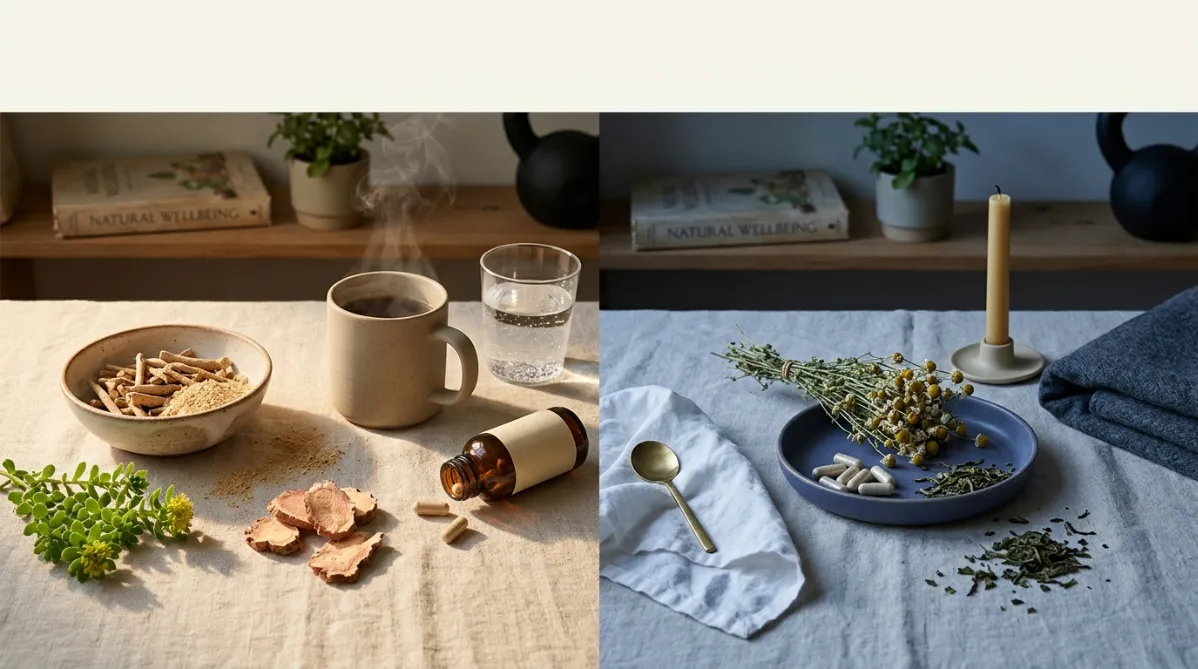
A landscape editorial still life shot from slightly above on a pale oat-colored linen surface, lit by soft morning window light with gentle long shadows. On the left, in warm golden sunlight, sits a small ceramic bowl of dried ashwagandha root pieces and a scatter of fine tan powder. Beside it are a few rough, rosy-gold slices of Rhodiola rosea root and a sprig of tiny succulent-like green leaves with yellow blossoms. A matte sand-colored stoneware mug of steaming tea and a simple glass of water stand nearby. A small amber glass bottle with a minimal unbranded label tips out two capsules.

The right side of the frame is cooler and bluer, as if dusk is arriving. It holds a muted indigo ceramic dish with a few pale capsules, a small bundle of dried chamomile flowers (the source of apigenin), and a few green tea leaves. A slim, unlit beeswax candle and a folded charcoal wool blanket suggest evening. The warm and cool halves meet softly in the center, where a rumpled white cotton napkin sits beneath a small brass spoon.

In the background, out of focus, a wooden shelf holds a worn paperback, a small potted plant, and the edge of a kettlebell in matte black, hinting at an active lifestyle. Subtle film grain, shallow depth of field, and a muted palette of cream, terracotta, sage green, and deep indigo give it a clean, modern wellness-magazine feel. Leave generous negative space in the upper third for a headline overlay. No text, no logos, no people.
recovery

Ashwagandha + Rhodiola: Có Thực Sự Hiệu Quả? Bộ Stack Ngủ Buổi Tối Nào?

BY DR. GYMBRO ·

Một thí nghiệm bốn nhóm mới đã gây bất ngờ trong cộng đồng mê xếp chồng thực phẩm bổ sung. Trong số 103 người trưởng thành khỏe mạnh, năng động, việc dùng ashwagandha 600 mg kết hợp Rhodiola rosea 300 mg vào buổi sáng giảm cảm giác căng thẳng, cải thiện chất lượng giấc ngủ và tăng cảm xúc tích cực. Ngược lại, bộ stack buổi tối gồm magnesium L‑threonate, L‑theanine và apigenin không mang lại lợi ích nào, và khi dùng đồng thời còn khiến cảm xúc tiêu cực tăng. Bài viết tóm tắt các phát hiện, lưu ý về hạn chế (thời gian chỉ hai tuần, mẫu nhỏ) và gợi ý cách áp dụng cho vận động viên.

A wide, softly lit editorial still life on a pale oatmeal-colored linen surface, shot from a slightly elevated three-quarter angle. In the center-left, a small matte ceramic dish holds a tiny pile of fine white powder, with a single minuscule measuring spoon resting beside it. To the right, a much larger wooden scoop is heaped high with the same pale powder, spilling gently onto the linen, creating a striking visual contrast of tiny versus large quantity. Behind them, a cream-colored supplement tub with a blank, minimalist label sits slightly out of focus, along with a few amber glass capsules scattered casually.

In the soft-focus background, a runner's well-worn sneaker and a chalk-dusted, wrapped knee sleeve rest on a light ash-wood bench, hinting at gym and road without showing a person. A thin brushed-steel stopwatch lies in the foreground, its hands paused, subtly suggesting timing and endurance. A sprig of dried eucalyptus and a folded sheet of paper with out-of-focus handwritten notes add a quiet, editorial research feel.

Natural morning light streams in from the left through a sheer curtain, casting long, gentle shadows and a warm, creamy glow. The palette is restrained and modern: warm ivory, sand, soft sage green, muted terracotta, and touches of brushed silver. Shallow depth of field with crisp detail on the powders and stopwatch, creamy bokeh in the background. The composition leaves open negative space on the right third for headline text. The overall mood is calm, trustworthy, and contemporary, like a premium health and wellness journal cover, with fine film-like grain and clean, minimalist styling.
recovery

Liều Collagen 40 mg Gấp Đôi Thời Gian Đau Đầu Gối – Những Điều Cần Lưu Ý

BY DR. GYMBRO ·

Đầu gối đau nhức khi tập tạ hay chạy bộ? Một thử nghiệm ngẫu nhiên cho thấy chỉ 40 mg mỗi ngày dạng collagen loại II chưa biến tính (UC‑II) có thể kéo dài thời gian xuất hiện đau đầu gối từ 1,4 lên 2,8 phút và cải thiện góc duỗi gối. Đây là liều khoảng 250 lần nhỏ hơn so với một thìa 10 g collagen thủy phân thường dùng và là một loại sản phẩm hoàn toàn khác. Tuy nhiên, nghiên cứu quy mô nhỏ, được tài trợ bởi nhà sản xuất và chỉ thực hiện trên người khỏe mạnh, không phải bệnh nhân viêm khớp. Bài viết sẽ trình bày dữ liệu, giải thích ngữ cảnh tiêu đề và hướng dẫn cách đọc nhãn sản phẩm.

A sunlit, minimalist home gym corner photographed in soft golden morning light, with a young athletic man seated on a wooden bench, leaning forward with his elbows resting on his knees, catching his breath after a hard leg session. He wears a muted sage-green t-shirt and charcoal shorts, his face turned slightly away from the camera, calm and focused. A matte ceramic dish in the foreground holds a few small, translucent golden softgel capsules, with a glass of water beside it catching the light and casting a soft caustic shadow across a pale oak floor. Behind him, a loaded barbell rests on a squat rack, slightly out of focus, and a tall window pours warm sunlight diagonally across the scene, creating long gentle shadows and a hazy glow. A small potted green plant sits on a shelf at the edge of the frame. The color palette is warm and editorial: cream, soft gold, sage green, pale wood, and charcoal accents. Shallow depth of field, with crisp focus on the capsules and glass in the lower third and a creamy bokeh background. The composition leaves generous negative space on the right side for a headline overlay. The mood is clean, modern, and aspirational, like a high-end wellness magazine or a trendy health journal feature. Shot on a 50mm lens, natural light, fine film grain, subtle matte finish, landscape 16:9 framing.
recovery

Vitamin D Tăng Cường Phục Hồi Sức Mạnh Ở Nam Khi Đã Đủ Vitamin D

BY DR. GYMBRO ·

Nam giới có mức vitamin D đủ đã phục hồi sức mạnh nhanh hơn sau buổi tập chân dữ dội khi dùng 4.000 IU vitamin D3 mỗi ngày. Trong một thử nghiệm ngẫu nhiên có kiểm soát giả dược với 28 người tham gia, lực isometric đỉnh tăng khoảng 8 % sau 24 giờ, trong khi các chỉ số tổn thương cơ ALT và AST giảm ít hơn. Tuy nhiên, cảm giác đau nhức không được cải thiện. Bài viết tóm tắt kết quả, các hạn chế và nhóm người có thể quan tâm.

A softly lit bedside table in a calm, modern bedroom at dusk, photographed in wide landscape format with shallow depth of field. In the foreground, a matte white shaker bottle sits beside a tall frosted glass of creamy, pale vanilla-colored protein shake, with a few condensation droplets catching warm light. Next to the glass rests a slim fitness band on a dark charcoal fabric strap, its small LED glowing a gentle green, lying casually on a light oak wooden surface. A small scoop of fine white protein powder rests on a ceramic dish nearby, with a light dusting of powder on the wood.

In the soft-focus background, a neatly made bed with oatmeal-colored linen bedding and a textured knit throw blanket. A sheer curtain filters the last peach and lavender light of evening from a large window. A small potted olive branch in a terracotta vase and a closed paperback book add a quiet editorial touch. A bedside lamp with a warm, cream-colored shade casts a golden glow across the scene and creates gentle highlights on the glass.

The palette is muted and harmonious: warm cream, soft sand, oatmeal beige, faint sage green accents, and touches of dusty lavender in the window light. The mood is peaceful, reassuring, and clean, like a contemporary wellness magazine or a trendy health journal feature. Lighting is natural and cinematic, with soft shadows and a subtle film-like grain. The composition follows the rule of thirds, with the shake and band on the left third and open negative space on the right for headline overlay. Minimalist, Scandinavian-inspired styling, high-end lifestyle photography, crisp details, and a tranquil, premium editorial feel.
recovery

Protein casein trước khi ngủ không phá hỏng giấc ngủ: dữ liệu WHOOP cho thấy

BY DR. GYMBRO ·

Liệu ly sinh tố casein 40 g trước khi ngủ có lén lút phá hỏng giấc ngủ của bạn? Một thử nghiệm ngẫu nhiên, mù đôi, giao thoa trên 21 vận động viên nữ NCAA Division I đã theo dõi giấc ngủ bằng vòng đeo WHOOP 4.0 và không phát hiện giảm thời gian ngủ, hiệu suất, nhịp tim nghỉ hay HRV. Alpha‑lactalbumin và carbohydrate cho kết quả tương tự. Tuy nhiên, không một loại nào trong số chúng cải thiện giấc ngủ. Bài viết trình bày dữ liệu, những hạn chế và đối tượng nên cân nhắc dùng ly sinh tố khuya.

This page is available in