Dr. Gymbro
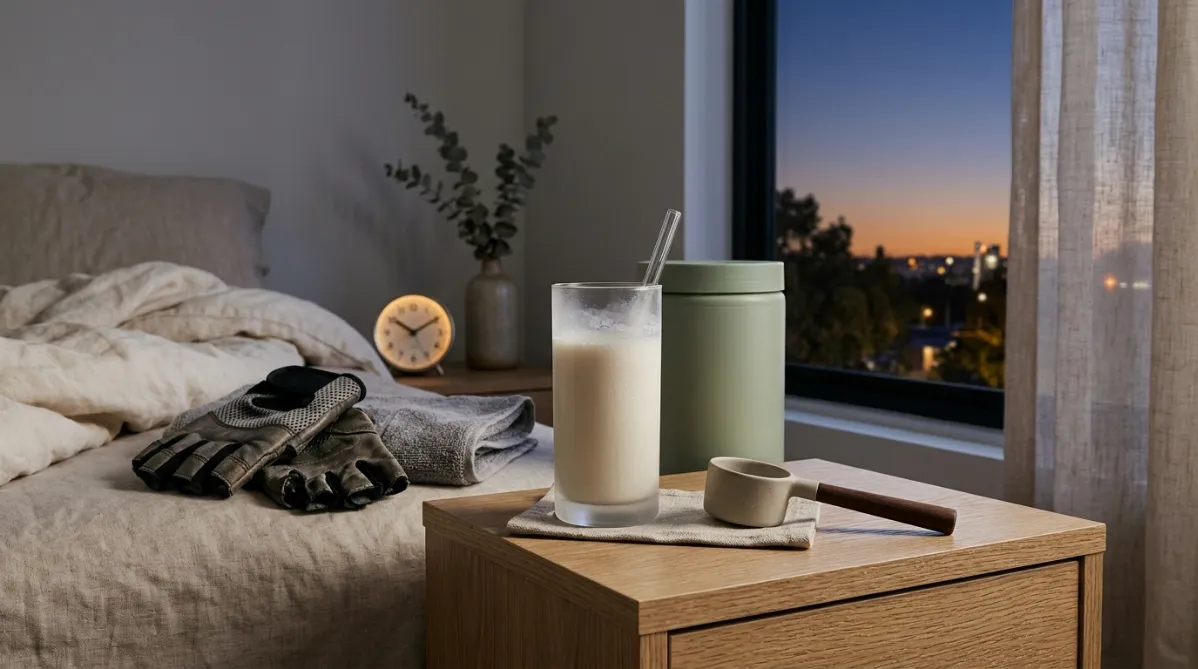
A quiet bedside scene at dusk, shot in soft natural light with a shallow depth of field. A tall frosted glass of creamy, pale-white shake sits on a light oak nightstand, with a thin film of condensation on the glass and a faint milky residue near the rim. Beside it, a matte ceramic scoop rests on a small linen coaster. A minimalist tub of unbranded protein powder in muted sage green sits slightly out of focus in the background.

To the left, a neatly made bed with oatmeal-colored linen sheets and a rumpled cream duvet. A pair of worn lifting gloves and a folded gray gym towel sit on the edge of the bed, suggesting an evening workout just finished. A small analog alarm clock reads about 10:30 PM, its soft face glowing faintly. A sprig of dried eucalyptus in a small stoneware bud vase adds an organic touch.

Through a large window on the right, deep indigo twilight fades into a warm amber horizon, and the last light spills across the wall in long, gentle gradients. A sheer curtain moves slightly. The palette is warm neutrals (cream, oak, sand, soft terracotta) with a few muted blue-violet accents from the evening sky.

The composition uses the rule of thirds, with the glass at the left-center foreground and generous negative space on the right, where headline text could sit. The mood is calm, restorative, and editorial, like a modern wellness and nutrition journal. The lighting is gentle and diffused, with subtle film grain and slightly lifted shadows. The textures of linen, wood, glass, and ceramic are crisp. The image is clean and uncluttered, with no text, logos, or people, and no futuristic or sci-fi elements.
Nutrition

40克睡前奶昔:酪蛋白在夜间的作用

Dr. Gymbro · · 1 min read

研究发现:睡眠时身体仍在工作

晚上举重会提出一个尴尬的问题:在约八个小时的禁食睡眠期,恢复会怎样?2012 年,Res 等人在《Medicine & Science in Sports & Exercise》上发表的研究给出了答案。16 名健康的年轻男子在晚上训练后,于睡前 30 分钟饮用了 40 克酪蛋白。该蛋白在整夜被消化吸收,整体蛋白质合成上升,净蛋白平衡也从负值转为正值。

这是一项简洁且有价值的结果,但也值得细读,因为该研究容易被过度解读。

研究是如何进行的

受试者在晚上 8 点进行一次阻力训练,前一天的饮食统一控制。训练结束后,晚上 9 点他们先摄入一份含 20 克蛋白质和 60 克碳水的恢复餐。随后在 11:30(即睡前约 30 分钟)饮用了 40 克酪蛋白或安慰剂饮料。

研究者使用了内源标记的酪蛋白([1‑C]苯丙氨酸),结合持续的静脉示踪剂输注、血样采集与肌肉活检,追踪了 7.5 小时夜间蛋白质的代谢走向。直接监测消化、吸收以及蛋白质周转是本研究的最大优势,也正因如此它被频繁引用。

关键数据

  • 消化与吸收:酪蛋白在睡眠期间被有效消化吸收,血氨基酸浓度迅速上升并保持在高水平直至清晨。
  • 全身蛋白合成:酪蛋白组 311 ± 8 µmol·kg⁻¹(7.5 h),安慰剂组 246 ± 9 µmol·kg⁻¹(P < 0.01)。
  • 净蛋白平衡:酪蛋白组 +61 ± 5 µmol·kg⁻¹,安慰剂组 –11 ± 6 µmol·kg⁻¹(P < 0.01),即酪蛋白夜明显为正,安慰剂夜则略为负。
  • 肌肉蛋白合成:酪蛋白组约高出 22%(0.059%/h 对 0.048%/h),仅达到边缘显著(P = 0.05)。

全身结果相当稳健,肌肉特异性的数据更像提示而非决定性,报道时应如此表述。

为什么选择酪蛋白?

酪蛋白在胃里形成凝胶,释放速度慢,能够提供持续的氨基酸供应。相较于快速消化的蛋白,它更适合整夜禁食的状态。研究证明,睡眠并不会让消化停摆,氨基酸能够整夜保持可利用状态。

诚实的局限性

这并不等同于说睡前奶昔就能让肌肉增长更快。需要牢记以下前提:

  • 样本量小:仅 16 位年轻、健康的男性。结果未必直接适用于女性、老年人或训练背景不同的人群。
  • 单夜测量:指标为急性反应。单夜合成提升不一定转化为数月后的肌肉肥大。
  • 替代性结局:蛋白合成与平衡是机制指标,而非肌肉体积或力量的直接表现。
  • 肌肉结果边缘:约 22% 的提升恰好处于显著性阈值上。
  • 情境因素:受试者在训练后已摄入一次恢复餐,奶昔是额外补充,而非替代。

更长期的试验曾尝试探讨这是否会转化为实际增肌,但本研究的核心价值在于验证生理可行性:蛋白质在夜间是可以被利用的。

实际建议

  • 剂量:研究使用了 40 克酪蛋白,这是一份相对大的剂量,实际使用时应结合每日总摄入量来调配,而不是盲目追随数字。
  • 食物选择:酪蛋白粉是最便捷的复制方式。干酪、希腊酸奶等全食物也是酪蛋白的丰富来源,需参考包装标签估算每份的蛋白质量。
  • 时间点:受试者在睡前约 30 分钟饮用,且之前已经吃过一次恢复餐。
  • 受益人群:
    • 晚上训练、随后进入长时间禁食的人;
    • 日常蛋白摄入不足、想利用睡前时间补足 30‑40 克的人。
    • 已经摄入足够蛋白且睡眠质量良好的人不应期望出现显著变化,整体每日蛋白摄入和坚持训练仍是基础。

结论

40 克的睡前奶昔是一种低成本、基于证据的方式,让氨基酸在一天中最长的禁食期仍保持可用。Res 等人的研究证明,睡前酪蛋白在夜间能够被消化吸收,并将蛋白质平衡从轻度负转为明显正向。但他们并未证明这会带来长期的肌肉增长。把它当作填补蛋白缺口、支持夜间恢复的便利工具,而不是代替均衡饮食和系统训练的灵药。
Original study

Read the original research on pubmed.ncbi.nlm.nih.gov →

This article summarizes published research for general information. It is not medical advice.

DG

Written by

Dr. Gymbro

Dr. Gymbro writes for Dr. Gymbro: science-backed fitness, nutrition & performance.

Related Articles

A softly lit bedside table in a calm, modern bedroom at dusk, photographed in wide landscape format with shallow depth of field. In the foreground, a matte white shaker bottle sits beside a tall frosted glass of creamy, pale vanilla-colored protein shake, with a few condensation droplets catching warm light. Next to the glass rests a slim fitness band on a dark charcoal fabric strap, its small LED glowing a gentle green, lying casually on a light oak wooden surface. A small scoop of fine white protein powder rests on a ceramic dish nearby, with a light dusting of powder on the wood.

In the soft-focus background, a neatly made bed with oatmeal-colored linen bedding and a textured knit throw blanket. A sheer curtain filters the last peach and lavender light of evening from a large window. A small potted olive branch in a terracotta vase and a closed paperback book add a quiet editorial touch. A bedside lamp with a warm, cream-colored shade casts a golden glow across the scene and creates gentle highlights on the glass.

The palette is muted and harmonious: warm cream, soft sand, oatmeal beige, faint sage green accents, and touches of dusty lavender in the window light. The mood is peaceful, reassuring, and clean, like a contemporary wellness magazine or a trendy health journal feature. Lighting is natural and cinematic, with soft shadows and a subtle film-like grain. The composition follows the rule of thirds, with the shake and band on the left third and open negative space on the right for headline overlay. Minimalist, Scandinavian-inspired styling, high-end lifestyle photography, crisp details, and a tranquil, premium editorial feel.
recovery

酪蛋白睡前不影响睡眠,WHOOP 数据显示

BY DR. GYMBRO ·

在睡前喝下一杯 40 克酪蛋白奶昔,真的会暗中破坏你的睡眠吗?一项针对 21 名 NCAA 一级女大学运动员的随机、双盲交叉试验使用 WHOOP 4.0 手环监测睡眠,结果显示睡眠时长、效率、静息心率和心率变异性均未受到影响。α‑乳白蛋白和碳水化合物的表现也大体相同。令人意外的是,这几种补剂并没有提升睡眠质量。下面我们将展示数据细节、研究的局限,以及哪些人仍应避免夜宵。

A wide, editorial-style still life photographed on a pale limestone countertop in soft morning window light. At the center sits a matte white scoop of fine white powder resting beside a frosted glass tumbler of cloudy, pale pink-orange water, with a few watermelon slices and a halved wedge showing glossy coral flesh and thin green rind, a nod to citrulline's natural source. To the left, a neatly folded charcoal gym towel and a brushed steel dumbbell rest at the edge of the frame, slightly out of focus. To the right, a minimalist open notebook with a few hand-drawn tally marks and a simple line graph sketched in black ink rises toward the right edge, next to a slim mechanical pencil and a small analog stopwatch with a clean white face. A few loose grains of powder are scattered across the stone, catching the light. Soft diagonal shadows fall across the surface from a nearby window, and a gentle sage-green wall in the background adds calm contrast. The palette is warm cream, watermelon coral, sage green, and soft graphite gray, with plenty of negative space on the upper left for headline overlay. Shallow depth of field, crisp focus on the powder scoop and watermelon, subtle film grain, natural tones, and a clean, modern wellness-journal aesthetic. Shot at eye level with a slight downward angle, like a contemporary health and science magazine cover. No text, no logos, no people.
nutrition

8克瓜氨酸苹果酸盐能让你多做53%重复次数、酸痛降低40%?研究揭示真相

BY DR. GYMBRO ·

一项2010年的交叉试验显示,单次摄入8克瓜氨酸苹果酸盐可使卧推次数在最后一组提升约53%,并在训练后24至48小时将肌肉酸痛降低约40%。这种效果主要出现在训练后期,当疲劳已积累时。研究仅涉及男性且只测试了卧推这一动作,约15%的受试者出现胃部不适。整体来看,它是高容量、短间歇训练的温和助力,但并非适用于所有人。使用前最好先自行评估是否会产生胃部不适。

A wide editorial still life on a pale, warm-gray stone surface lit by soft morning window light from the left. In the foreground, a rustic ceramic bowl in matte oatmeal glaze holds dried ashwagandha roots, pale tan and gnarled, with a few scattered beside it. A small wooden scoop dusted with fine golden-beige powder rests next to the bowl. Behind them, a few olive-green ashwagandha sprigs with small orange-red berries in papery husks arc across the frame, adding a quiet pop of color.

Midground right: a matte black chalk-dusted dumbbell handle and a single brushed-steel weight plate lean casually against a linen-textured backdrop in muted sage. A folded cream cotton towel and a slim notebook with a pencil suggest a training log. The notebook is open to blank, softly lined pages with no legible text.

The background fades into a gentle blur of neutral beige and soft terracotta tones, with a hint of a plant shadow cast across the wall in dappled light. Fine dust and powder particles float in the light beams, giving a tactile, organic feel.

The composition follows the rule of thirds: botanical elements on the left and center, gym elements on the right, and negative space in the upper right for headline overlay. Shallow depth of field, crisp focus on the roots and powder, creamy bokeh behind. Color palette: sage green, warm sand, terracotta, charcoal black, and a touch of burnt orange. The mood is calm, modern, and trustworthy, like a premium wellness and science magazine. Photographed on a 50mm lens, natural grain, subtle film-like contrast, clean minimalist styling, high-end editorial photography.
nutrition

古老草药在8周增肌试验中胜过安慰剂:提升力量、肌肉体积及睾酮水平

BY DR. GYMBRO ·

一项为期8周、涉及57名男性初学者的随机对照试验显示,每日两次服用300 mg阿育吠陀根提取物,可在卧推力量、手臂和胸围以及血清睾酮水平上显著优于安慰剂,同时还能降低体脂。但该研究样本量小、周期短,仅针对男性新手,需审慎解读。

A wide, editorial flat-lay photograph shot from directly above on a pale warm-gray stone countertop, lit by soft natural morning window light with gentle diagonal shadows. On the left, a neatly arranged cluster of whole-food protein sources: two seared chicken breast slices with a golden crust, a small ceramic bowl of creamy Greek yogurt topped with blueberries, three halved soft-boiled eggs with jammy orange yolks, a handful of raw almonds, and a small pile of dried lentils scattered on a linen napkin. At the center, a matte white shaker bottle and a wooden scoop resting in a pile of fine vanilla-colored protein powder, a few grains dusted artfully across the surface. On the right, a minimalist kitchen scale in matte black displaying a portion of food, next to an open notebook with a hand-drawn curve that rises steeply and then flattens into a plateau, drawn in a deep terracotta ink pen, with a small dot marking the bend. A brass pen lies beside the notebook. A single dumbbell with a brushed steel finish sits partially in frame at the upper right corner, grounding the fitness theme without feeling gym-like. Color palette: warm cream, sage green, terracotta, soft charcoal, and butter yellow accents, with generous negative space along the top edge for title overlay. Shallow depth of field, crisp textures, subtle film grain, modern lifestyle magazine aesthetic, clean and calm composition, 16:9 landscape.
nutrition

到底需要多少蛋白质才能最大化肌肉?——1.6 克/公斤平台阐释

BY DR. GYMBRO ·

你是否一直以为每磅体重需要摄入超过 2 克蛋白质才能增肌?对 49 项试验、1863 名成年人的荟萃分析显示,肌肉增益在每日约 1.6 克/公斤时出现平台期。其上限置信区间约为 2.2 克/公斤,为健身者提供了一个实用的范围,而不是随意的大剂量。经训练的举重者从补剂中获益最大,且随年龄增长效应会下降。下面看看这些数字对你的餐盘、摇杯和预算意味着什么。

This page is available in