Dr. Gymbro
A wide, editorial-style flat lay photographed from above on a pale warm-gray concrete surface, lit by soft natural window light with gentle long shadows. On the left, two matte ceramic bowls in muted sage green and cream sit side by side. One holds fine white crystalline powder, the other holds slightly coarser off-white powder. Between them, a small brass measuring scoop rests on the surface, dusted with powder. Behind the bowls, two simple amber glass jars with minimal cream labels and no legible text stand slightly out of focus.

On the right side, a pair of chalk-dusted black hex dumbbells and a worn leather lifting strap curve across the frame. A folded charcoal gym towel sits beneath them. A rumpled matte-black shaker bottle lies on its side near the top edge. A slice of watermelon, the natural source of citrulline, sits on a small white ceramic plate in the lower center. Its vivid coral-pink flesh and dark seeds add a saturated pop of color against the neutral palette. A few loose watermelon seeds and a scattering of white powder dust trail across the surface toward the dumbbells, tying the composition together.

In the lower left corner, an open notebook with blank cream pages holds a slim silver pen and a minimalist analog stopwatch. A thin line of hand-drawn tally marks suggests counted reps, with no readable words or numbers.

The palette is restrained and contemporary: warm grays, sage, cream, charcoal, and amber, with the watermelon's coral-pink as the single bright accent. The mood is calm, clean, and precise, like a modern wellness or science-journal feature. Shallow depth of field keeps the powder bowls and watermelon crisp while the background items soften slightly. Generous negative space across the upper center leaves room for a headline overlay. The photograph looks high-end and tactile, with a subtle film-grain finish.
Nutrition

L-瓜氨酸 vs 瓜氨酸苹果酸盐:上身耐力的关键差异

Dr. Gymbro · · 1 min read

你可能在补剂罐子里见过两种产品:纯 L-瓜氨酸 与 瓜氨酸苹果酸盐。前者每克瓜氨酸的成本更低,后者则因为加入了苹果酸而被宣传为更优。补剂营销常说形态很重要。最新的一项针对进行阻力训练男性的六周试验给出了比宣传更出乎意料、也更受限的答案。

研究概览

该研究发表于 2025 年《Journal of the International Society of Sports Nutrition》,采用双盲、安慰剂对照设计,由 Bayat、Azizi、Behpour 与 Tinsley 等人主导。33 名进行阻力训练的男性被随机分配到以下三种每日方案之一:

  • L-瓜氨酸 (LC): 每日 8 g
  • 瓜氨酸‑苹果酸盐 (CM): 每日 12 g
  • 安慰剂 (PL): 外观相同的对照剂

所有受试者执行相同的 6 周阻力训练计划。前后测量项目包括:

  • 力量指标: 深蹲和卧推的 1RM
  • 肌肉耐力: 深蹲、腿部伸展、卧推和上斜卧推的力竭重复次数
  • 主观用力感受 (RPE)
  • 血液指标: 乳酸、尿素和一氧化氮代谢物 (NOx)

引人注目的发现:上身重复次数

最抢眼的结果出现在上肢。研究者将卧推和上斜卧推的力竭重复次数相加,发现两组瓜氨酸均显著高于安慰剂:

  • LC vs. 安慰剂: p < 0.001
  • CM vs. 安慰剂: p = 0.026

下肢的结果则不够明确。对深蹲与腿部伸展的合计力竭次数,LC 对安慰剂仅呈趋势(p = 0.070),未达到统计显著性。

简而言之,瓜氨酸能帮助你在推举类动作上多完成几次,但对腿部的帮助仍不确定。

NOx 视角

NOx 是研究者用来间接评估体内一氧化氮供给的血液标记物。一氧化氮关系到血流以及举重爱好者追求的“泵感”。

数据表现为:

  • 时间效应显著:仅在 LC(p = 0.014)和 CM(p = 0.003)组出现,安慰剂组无变化。
  • 训练结束后 NOx:CM 组显著高于安慰剂(p = 0.009),LC 组则略高但未达显著(p = 0.057)。

作者因此得出结论:瓜氨酸似乎能提升上身耐力并在训练后提高 NOx,两种形态之间并无明显差异。

瓜氨酸没有做到的事

如果你买它是为了提升最大力量,这一点尤为重要。摘要中指出,除上述指标外,各组之间没有任何显著差异,具体包括:

  • 1RM 力量:深蹲和卧推均未出现组间优势。
  • RPE:无差异。
  • 乳酸与尿素:无差异。

换句话说,若你的唯一目标是单次最大重量,这项研究没有提供瓜氨酸能够实现的证据。收益局限于重复次数的提升。

形态真的重要吗?

作者指出,两种形态在上身耐力和训练后 NOx 上没有显著区别。但细节上仍有些微差别:

  • LC 组在上身重复次数上的统计信号更强(p < 0.001)相比 CM(p = 0.026),但文章并未宣称其优于 CM。
  • CM 组在训练后 NOx 与安慰剂的差异更为明确。
  • 剂量不同(8 g vs. 12 g),因此这并非一次完美匹配的分子对比。瓜氨酸苹果酸盐中的苹果酸占一定比例,12 g 的 CM 实际提供的纯瓜氨酸含量低于 12 g 的纯 L-瓜氨酸。

实际的建议是:不必在形态上纠结太久,只要查看标签上实际的瓜氨酸含量,并据此比较有效剂量与价格即可。

给训练者的实用建议

剂量:研究使用 8 g/天的 L-瓜氨酸或 12 g/天的瓜氨酸苹果酸盐,持续 6 周。此为本研究支持的剂量区间。

服用时机:摘要仅说明“每日补剂”,未明确是否必须在训练前服用。因此本研究无法判断围绕训练的特定时机是否重要。很多人习惯在训练前摄入,但这属于经验做法,而非本试验的结论。关键是保持 6 周的持续摄入。

适用人群:

  • 关注推举类动作重复表现的举重者、健美爱好者以及任何进行高次数训练的人
  • 与本研究相似的受阻训练男性
  • 想在训练期间提升一氧化氮标记物的使用者

需要降温期待的人:

  • 以提升 1RM 为主要目标的力量型训练者
  • 期待显著提升腿日表现的人——下肢结果仅呈趋势

需要注意的局限

在补货前,请记住以下限制:

  • 样本量小:仅 33 名受试者分三组,规模有限,小样本研究容易夸大或遗漏效应。
  • 仅限受阻训练男性:结果不一定适用于女性、训练新手或老年人。
  • 时长短:六周难以说明长期效果。
  • 剂量不匹配:8 g LC 与 12 g CM 的对比让形态之间的直接比较受限。
  • 血液标记并非肌肉本身:NOx 只是间接指标,论文未证明 NOx 上升直接导致更多重复次数。

结论

在本次试验中,8 g/天的 L-瓜氨酸和 12 g/天的瓜氨酸苹果酸盐都帮助进行阻力训练的男性在六周内多完成上身推举的重复次数,并提升了训练后 NOx,形态之间没有明显优劣。它们并未提升最大力量、RPE、乳酸或尿素水平。对肌肉耐力而言是个有前景的信号,但单一小样本研究仍不足以下定论。后续更大规模、更具多样性的重复实验才能验证这些发现的稳健性。
Original study

Read the original research on pubmed.ncbi.nlm.nih.gov →

This article summarizes published research for general information. It is not medical advice.

DG

Written by

Dr. Gymbro

Dr. Gymbro writes for Dr. Gymbro: science-backed fitness, nutrition & performance.

Related Articles

A bright, minimalist editorial still life shot from a slightly elevated three-quarter angle on a pale oat-colored stone countertop, bathed in soft natural window light with gentle long shadows. In the center sit two matching matte white supplement scoops, side by side. One is heaped with fine white crystalline powder, the other holds an almost identical pile, so the viewer is invited to compare them. Beside them are two simple frosted glass tumblers of cloudy water, each with a small whisper of powder swirling at the bottom. A third glass of clear water sits slightly apart, as a quiet nod to the placebo.

Scattered around the scene are fresh, sliced watermelon wedges with vivid coral-pink flesh and pale green rinds, and a few sliced green apples with crisp white interiors, hinting at the natural sources of citrulline and malic acid. A small brushed-brass measuring spoon and a minimalist matte sage-green shaker bottle rest at the edge of the frame. Off to one side, a clean ceramic dish holds a few loose grains of powder, and a slim linen notebook with a pencil lies open to a blank page, suggesting data and study notes without any legible text.

The color palette is soft and modern: warm cream, blush coral, sage green, and touches of brass, with a faintly blurred background of a sunlit kitchen or studio with a pale plaster wall. Shallow depth of field keeps the scoops tack sharp while the background melts into a creamy bokeh. The composition leaves generous negative space on the left third of the frame for a title overlay. The overall mood is calm, trustworthy, and trendy, like a contemporary wellness and science journal cover, with crisp detail, subtle film-like grain, and a clean, airy, balanced feel.
science research

瓜氨酸苹果酸盐 vs L-瓜氨酸:苹果酸真的有作用吗?

BY DR. GYMBRO ·

瓜氨酸苹果酸盐和单纯的 L-瓜氨酸,哪一种更值得买?一项针对 43 名受训成年人的随机、双盲、安慰剂对照交叉试验发现,两者在力量、功率、跳跃表现、重复次数以及主观用力感受上均未超越安慰剂,且在柠檬酸含量相同的情况下,苹果酸并未带来额外收益。下面我们来看一下研究测量了哪些指标、使用的剂量是多少,以及有哪些限制因素需要注意。如果你正犹豫该把哪种粉末加入摇杯,这篇文章可以帮你先弄清楚。

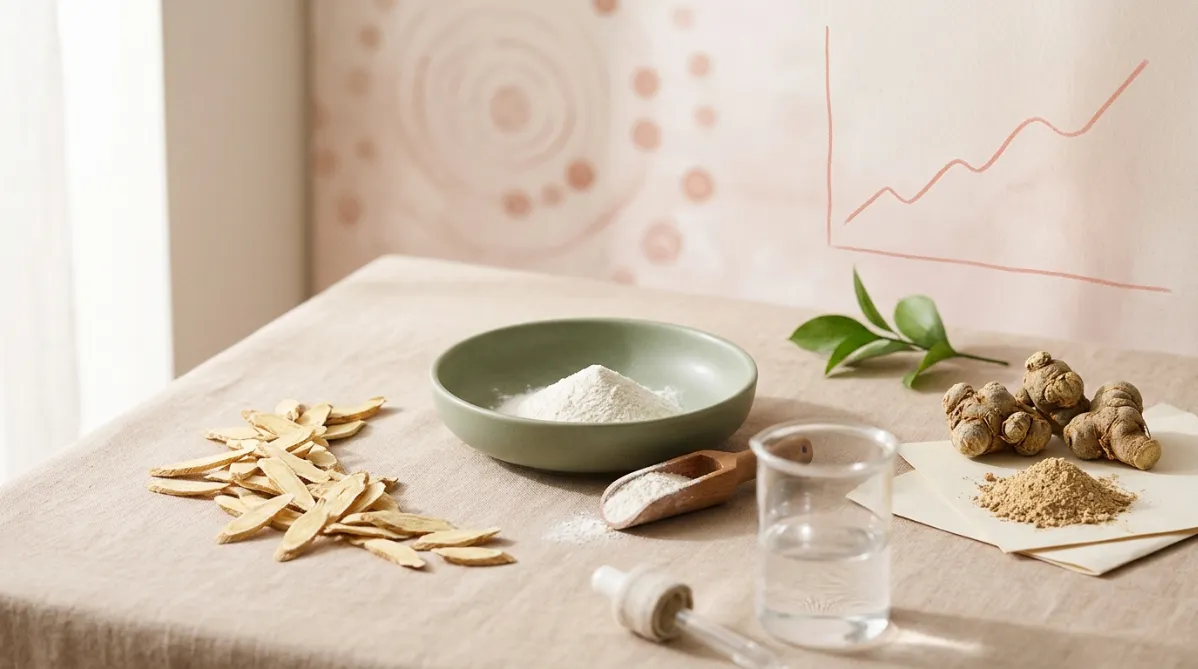
A landscape editorial still life on a soft, warm oat-colored linen surface, lit by diffused natural window light from the left. In the center sits a shallow matte ceramic bowl in muted sage green holding a small mound of fine white arginine powder. Beside it rests a wooden scoop dusted with powder. To the left, a loose arrangement of dried Astragalus root slices, pale golden and delicate, fans out in a graceful curve. To the right, a few whole Panax notoginseng roots, knobbly and earthy brown, sit next to a small pile of finely ground tan powder on a folded cream paper. A single sprig of fresh green leaf adds a gentle accent in the background.

In the foreground, a minimalist glass beaker with clear water and a thin linen-wrapped glass dropper sit slightly out of focus. Behind the objects, a softly blurred backdrop in pale blush and sand tones carries a faint, abstract pattern of soft circular shapes, like ripples or molecular dots drawn in subtle terracotta ink. A thin hand-drawn line graph in dusty coral rises gently across the upper right of the background, as if sketched on textured paper, with no readable text.

The composition uses generous negative space on the upper left, which leaves room for a headline overlay. The palette is earthy and calm: sage, cream, terracotta, honey gold, and soft blush. The shallow depth of field gives creamy bokeh. Gentle shadows fall to the right. The overall feel is clean and contemporary, like a wellness and science journal cover, with subtle film grain, high-end editorial photography, and tactile natural textures.
nutrition

小规模试验发现一种可提升精氨酸吸收 17% 的添加剂

BY DR. GYMBRO ·

2023 年的一项交叉试验表明,5 克精氨酸与黄芪‑三七皂苷(APS)共同服用,可使精氨酸吸收提升 17.3%,精氨酸‑ADMA 比值升高 167.1%,尿硝酸盐及 cGMP(两种一氧化氮的下游标志物)也同步上升。但研究仅包含 24 名受试者,且未评估任何训练表现。下面我们来梳理数据真正说明了什么、未说明什么,以及哪些人需要审慎使用。

A wide, editorial-style still life photographed on a pale limestone countertop in soft morning window light. At the center sits a matte white scoop of fine white powder resting beside a frosted glass tumbler of cloudy, pale pink-orange water, with a few watermelon slices and a halved wedge showing glossy coral flesh and thin green rind, a nod to citrulline's natural source. To the left, a neatly folded charcoal gym towel and a brushed steel dumbbell rest at the edge of the frame, slightly out of focus. To the right, a minimalist open notebook with a few hand-drawn tally marks and a simple line graph sketched in black ink rises toward the right edge, next to a slim mechanical pencil and a small analog stopwatch with a clean white face. A few loose grains of powder are scattered across the stone, catching the light. Soft diagonal shadows fall across the surface from a nearby window, and a gentle sage-green wall in the background adds calm contrast. The palette is warm cream, watermelon coral, sage green, and soft graphite gray, with plenty of negative space on the upper left for headline overlay. Shallow depth of field, crisp focus on the powder scoop and watermelon, subtle film grain, natural tones, and a clean, modern wellness-journal aesthetic. Shot at eye level with a slight downward angle, like a contemporary health and science magazine cover. No text, no logos, no people.
nutrition

8克瓜氨酸苹果酸盐能让你多做53%重复次数、酸痛降低40%?研究揭示真相

BY DR. GYMBRO ·

一项2010年的交叉试验显示,单次摄入8克瓜氨酸苹果酸盐可使卧推次数在最后一组提升约53%,并在训练后24至48小时将肌肉酸痛降低约40%。这种效果主要出现在训练后期,当疲劳已积累时。研究仅涉及男性且只测试了卧推这一动作,约15%的受试者出现胃部不适。整体来看,它是高容量、短间歇训练的温和助力,但并非适用于所有人。使用前最好先自行评估是否会产生胃部不适。

A wide, softly lit editorial still life on a pale warm-gray concrete surface, shot from a slightly elevated three-quarter angle. In the center-left, two matte ceramic scoops sit side by side. One holds fine ivory whey powder, the other holds slightly coarser, pale golden collagen peptide powder. A small, elegant dusting of both powders spills between them and blends into a soft swirl. Behind them, three minimalist cream and sage-green supplement tubs with no legible text stand in a staggered row, with a frosted glass shaker bottle of creamy liquid beside them.

On the right, a brushed-steel barbell plate and a compact chalk-dusted kettlebell rest slightly out of focus, suggesting resistance training. Pale wisps of chalk hang in the air. A folded charcoal gym towel and a pair of worn leather lifting straps lie in the foreground. A single cross-section of a clean white bone model, a stylized vertebra, rests on a small oak block at the far right. It subtly signals the bone-density theme without looking clinical.

Natural window light enters from the left, casting long, gentle shadows and a warm highlight on the powders. The palette is muted and modern: oatmeal, bone white, sage green, soft charcoal, and touches of warm amber. Shallow depth of field keeps the scoops tack-sharp and melts the background into creamy blur. Leave generous negative space in the upper right for headline overlay. The overall feel is a premium health and science journal cover: clean, tactile, minimalist, with fine film-like grain and a calm, editorial mood.
nutrition

乳清+胶原在举重者中优于单独使用——但有一个陷阱

BY DR. GYMBRO ·

一项为期8周、针对阻力训练男性的随机对照试验显示,混合30克乳清蛋白和10克胶原蛋白的组合在所有测量指标上均优于单独使用乳清、胶原或安慰剂。该组合使受试者的肌肉质量(BIA)增加了2.66 kg,腰椎骨密度显著提升,深蹲、卧推成绩以及骨代谢标志物也都有所改善。单独的胶原仅对骨骼有作用,单独的乳清仅对肌肉有帮助。但由于样本仅40人、蛋白质摄入总量不等以及骨密度异常大幅提升等因素,这项研究仍存在不少局限。

This page is available in