Dr. Gymbro
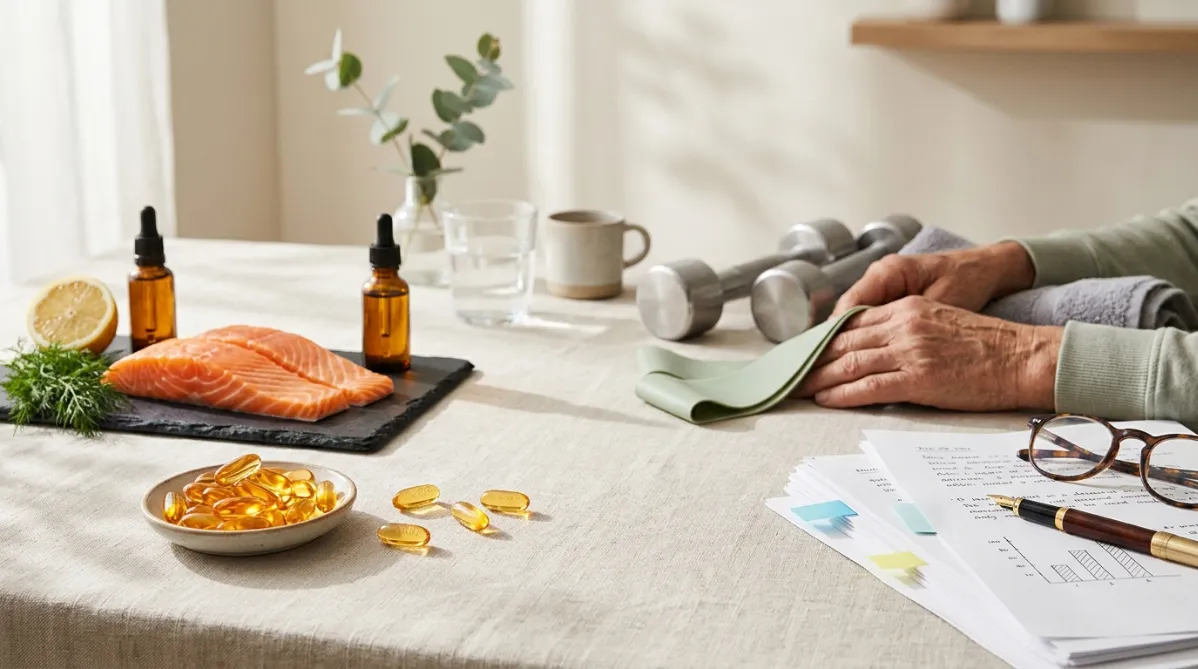
A bright, airy editorial still life photographed from slightly above on a pale oat-colored linen surface, in soft natural window light with gentle long shadows. In the foreground, a rustic ceramic bowl holds halved and whole oranges, glossy red bell pepper slices, and a few kiwi halves with emerald flesh. Beside it sit loose strawberries and a small pile of bright yellow lemon wedges. Their colors pop against the muted neutral palette. A single clear glass of water with a slice of orange rests nearby, catching the light.

On the right side of the frame, a pair of well-worn but clean walking sneakers in sage green and cream sits casually on the surface, with one lace loosely trailing. Behind them, a simple wooden chair with a light ash finish is partly visible and slightly out of focus, a quiet nod to the sit-to-stand test. A small stainless-steel stopwatch lies next to the shoes, with a subtle reflective glint.

A minimalist ceramic dish holds a few small, round, pale-yellow vitamin capsules, kept understated. A sprig of green leaves and a folded cotton napkin in soft terracotta add a warm accent. A small open notebook with a pencil rests in the upper left, its page blank except for faint, abstract pencil lines suggesting a simple rising graph, with no legible text.

The composition leaves generous negative space on the left third for title overlay, with a soft cream-to-peach gradient background. The mood is fresh, healthy, and contemplative, like a modern wellness magazine or a trendy online journal. The color palette is warm citrus orange, sunny yellow, sage green, and soft cream, with gentle terracotta accents. The depth of field is shallow, with crisp focus on the fruit and shoes and a creamy blur in the background. The overall look is clean, natural, and editorial, with fine film-like grain, true-to-life color, and a calm, optimistic tone. Landscape 16:9 framing.
Nutrition

廉价的维生素 C助力老年人腿部更强壮

Dr. Gymbro · · 1 min read

大家常聊蛋白质和肌酸来对抗衰老肌肉,但英国这项新研究指向一种更便宜、更不耀眼的东西:血液中的维生素 C

在超过 5,000 名中老年人中,血浆维生素 C 达到“最佳”水平的人走路更快、从椅子上站起来的时间更短。虽然这只是关联而非因果,但了解自己的数值仍然很有价值。

研究到底做了什么

这篇发表在 Calcified Tissue International 的论文(作者 Scott、Cameron、Yates 与 Welch)使用了 EPIC‑Norfolk 队列的数据。该队列是一项覆盖 48‑92 岁成年人的大型英国人口研究。研究设计为 横断面,即一次性拍摄的快照,并未随访观察谁会出现肌肉衰退。

与以往大多数依赖自报饮食的维生素 C 研究不同,团队使用了 血浆维生素 C——一种直接反映体内实际状态的血液指标,并将受试者分为三组:

  • 低水平:< 25 µmol/L
  • 亚最佳:25 至 < 50 µmol/L
  • 最佳水平:≥ 50 µmol/L

随后对比了身高校正后的握力、步速以及完成五次坐立的时间,并在模型中加入了生活方式、生物学、疾病和饮食等多重因素进行调整。

关键数字

女性在最佳 vs. 低血浆维生素 C 组的表现为:

  • 身高校正握力提升 0.54 kg/m²(p = 0.009)
  • 步速提升 0.11 m/s(p < 0.001)
  • 五次坐立时间缩短约 1.03 秒(p = 0.028)

男性在最佳 vs. 低血浆维生素 C 组的表现为:

  • 步速提升 0.05 m/s(p = 0.01)
  • 五次坐立时间缩短约 0.71 秒(p = 0.026)

值得注意的是,男性在血浆分析中没有出现握力关联。因此,用“更强的腿”来概括两性比单纯的“更强的全身”更贴切。

食物中的维生素 C 呢?

饮食数据的关联则显得零散。女性在某些摄入较高的五分位组表现优于最低摄入组:第 2、5 分位的步速提升 0.04 m/s,第 4、5 分位的坐立时间分别快 0.67 与 0.57 秒。但这种递进并不规则。男性则 没有任何关联。

血液水平直接反映体内实际储备,而食物问卷只能提供估计。作者把这种差异解释为:仅靠摄入量可能不足以判断体内状态,血液检测更为可靠。

维生素 C 为何可能影响肌肉?

维生素 C 是合成胶原蛋白的必需因子,而胶原蛋白构成了包裹肌纤维和肌腱的结缔组织支架。它也是体内抗氧化体系的重要组成,对老年肌肉的健康尤为关键。这为“维生素 C 低下可能加速老年性肌肉减少(sarcopenia)”提供了生物学依据。不过本研究并未直接检验这些机制,只是观察血液水平与功能测评的对应关系。

必须知道的局限性

这里摒弃标题党,直面事实:

  • 观察性、横断面:只能说明关联,不能证明维生素 C 导致更好表现。更活跃的人往往摄入更多水果蔬菜,血浆维生素 C 可能只是健康生活方式的标志。即便已做大量调节,仍难以排除所有混杂因素。
  • 因果方向不明:活动少或感到虚弱的人可能会减少水果摄入,导致血浆维生素 C 下降,因果箭头可能相反。
  • 未涉及补充实验:没有人接受维生素 C 补剂干预后再评估功能。
  • 效应幅度有限且因性别、指标不同而异。

作者认为,这些发现提示最佳血浆维生素 C “可能对身体功能重要”,并呼吁开展纵向及干预性研究。

实用建议

  • 目标值:本研究中显示益处的血浆维生素 C 为 ≥ 50 µmol/L。想了解自己的水平,可向医生咨询是否需要进行血浆维生素 C 检测。
  • 剂量:研究未测试具体剂量,无法给出基于此的补剂用量建议。它支持的是“血液状态”比单纯摄入更关键的观念。通过多吃水果蔬菜或补剂提升水平皆可,但仍需随机对照试验确认提升低水平真的能改善力量或移动能力。
  • 服用时间:研究未涉及,暂无证据表明何时摄入更有利。
  • 最适人群:中老年成年人,尤其是水果蔬菜摄入不足、担心步速下降、起身困难或肌肉萎缩风险的人。
  • 需谨慎人群:考虑高剂量补剂的朋友,尤其是有肾功能问题、肾结石史或正在服用长期药物者。此类警示源自一般医学常识,而非本研究本身,使用前请咨询医师。
  • 不能取代的:阻力训练和足够的蛋白质摄入仍是保持肌肉的经验证据。维生素 C 状态充其量是可能的辅助因素。

结论

简而言之:在一项大型英国队列中,血浆维生素 C 达到最佳水平的成年人大多走得更快。检测血液成本低,改善途径(多吃水果蔬菜)也相对廉价。但在随机对照试验证实提升维生素 C 能真正提升肌肉功能之前,这一发现更像是一个值得关注的信号,而不是处方。
Original study

Read the original research on pubmed.ncbi.nlm.nih.gov →

This article summarizes published research for general information. It is not medical advice.

DG

Written by

Dr. Gymbro

Dr. Gymbro writes for Dr. Gymbro: science-backed fitness, nutrition & performance.

Related Articles

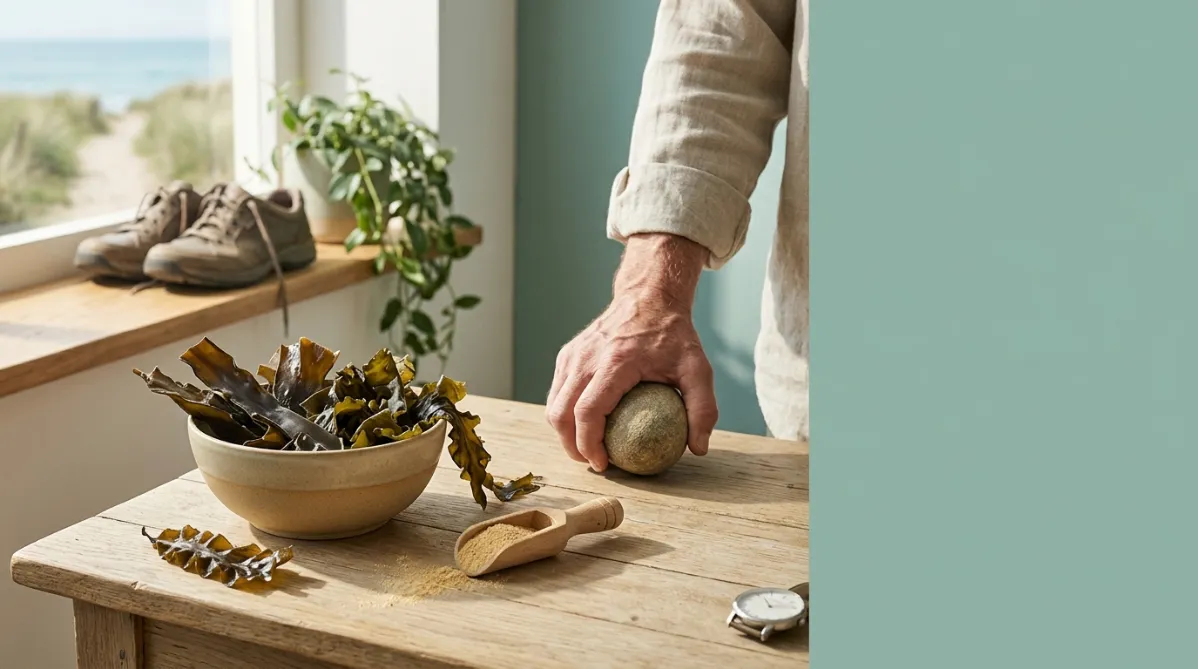
A wide, softly lit editorial photograph of a rustic light-oak table by a sunny window. On it, a handful of dried brown kelp and wakame seaweed fronds spill from a handmade matte ceramic bowl in warm sand tones, their glossy, ruffled edges catching the light. Beside the bowl sits a small wooden scoop holding fine golden-beige powder, with a little of it dusted across the table. In the middle ground, an older adult's weathered but strong hand grips a smooth, rounded river stone, with the knuckles and tendons subtly emphasized to suggest strength and vitality. Only the hand and part of a forearm in a soft oatmeal linen sleeve are visible.

In the background, slightly out of focus, a pair of worn leather walking shoes rests on a windowsill next to a trailing green plant. Beyond the window, a blurred coastal path winds through dune grass toward a pale blue sea, hinting at walking and an active daily life. A simple analog wristwatch lies on the table's edge, a quiet nod to the twelve-week timeline.

The palette is muted and natural: sage green, warm sand, soft ocean teal, and creamy off-white, with deep olive-brown accents from the seaweed. Morning light streams in from the left, casting long, gentle shadows and a faint golden glow. The depth of field is shallow, with crisp focus on the hand and seaweed and a creamy bokeh background. The composition follows the rule of thirds, with the hand and bowl on the left and generous negative space on the right for headline text. The mood is calm and hopeful, with a clean, contemporary wellness-magazine feel. The image is shot as if on a 50mm lens with subtle film grain and a natural, uncluttered, tactile look.
science research

海藻岩藻糖胶在60岁以上人群中,12周提升握力

BY DR. GYMBRO ·

随着年龄增长,力量流失是老年人最常见却少被讨论的问题,且阻力训练并非所有人都能进行。最新的一项为期12周、随机对照的试验显示,每日摄入1650 mg低分子量海藻岩藻糖胶,可显著提升60岁以上成年人握力和六分钟步行表现。令人惊讶的是,肌肉量并未增加,且添加支链氨基酸和维生素 D 并未带来额外益处。该试验样本量较小且仅测试了单一品牌产品,因而更像是一个有前景的线索而非最终结论。下面是研究的主要发现以及它在实际中的意义。

A softly lit editorial still life on a pale oatmeal-colored linen surface, shot from a slightly elevated three-quarter angle with a shallow depth of field. In the left foreground, a small ceramic dish holds several translucent golden-amber fish oil softgel capsules, glowing as if lit from within by warm morning window light. A few capsules are scattered casually beside it, catching crisp highlights. Just behind them, a sliced fresh salmon fillet with vivid coral-orange flesh rests on a matte slate board next to a sprig of dill, a halved lemon, and a small glass dropper bottle of golden oil.

In the soft-focus midground, a pair of weathered, capable older adult hands rests on the edge of the table, gently holding a pale sage-green resistance band, a hint of an active lifestyle. Beside them sits a modest set of brushed-steel dumbbells and a folded heather-gray towel. Subtle natural details add warmth: a glass of water, a small ceramic mug, and a sprig of eucalyptus in a bud vase.

On the right side, a tidy stack of printed research papers with a few pastel sticky tabs and a pair of thin tortoiseshell reading glasses sits on top, suggesting scholarly review. A fountain pen lies across the pages, with a few abstract handwritten notes and a simple hand-drawn bar chart visible but unreadable.

The palette is warm and calming: cream, soft sage, terracotta, honey gold, and coral accents against muted neutral tones. Window light enters from the left, producing long gentle shadows and a faint dappled leaf-shadow pattern across the linen. The background fades into a creamy blur of pale wall and a hint of a wooden shelf.

The composition leaves clean negative space across the upper right third for headline text overlay. The mood is trustworthy, health-forward, and modern, reminiscent of a contemporary wellness and science journal's photography. Fine film-like grain, natural color grading, high-resolution editorial photography, 16:9 landscape format.
nutrition

鱼油与老年肌肉:14 项研究到底揭示了什么

BY DR. GYMBRO ·

鱼油常被包装成抵御肌少症的“盔甲”,但真实的证据到底说了什么?2026 年的一项 umbrella review 汇总了 55 岁以上成年人中 7 项随机对照试验和 7 项荟萃分析。结果显示,鱼油可让肌肉力量出现轻微但可测量的提升,尤其是下肢力量和功能的信号最为明显;而握力、步速以及上肢力量的证据则十分不确定,且研究之间高度重叠,使得整体结论看起来比实际更为稳固。下面我们一起解读这些发现的含义、适合人群以及何时需要先咨询医生。

A landscape editorial photograph of a sunlit kitchen table in soft morning light. An older adult's hands, with silver hair and a cream knit sleeve just visible, rest around a ceramic mug. Beside the mug are two small matte white ceramic dishes. One holds a mound of fine white powder, and the other holds a slightly different crystalline white powder. Two wooden spoons lie next to them. A handheld hand-grip dynamometer in muted sage green sits on a linen placemat in the foreground, slightly out of focus. A small open notebook with a pencil and a pair of round tortoiseshell reading glasses sit nearby, with no legible text.

The tabletop is pale oak with a visible grain. Behind it, a window with sheer curtains lets in warm golden light, and the blurred shapes of a trailing green pothos plant and a pale terracotta vase show in the background. The color palette is warm cream, sage green, soft terracotta, and pale wood, with a touch of muted navy from a folded napkin. The mood is calm, thoughtful, and quietly scientific without any laboratory feel.

The composition follows the rule of thirds. The hands and dishes sit in the left-center, and generous negative space on the right is suitable for a title overlay. Shallow depth of field, 50mm lens look, gentle film grain, and soft shadows. Modern lifestyle-magazine and health-journal aesthetic, natural and unstaged, high-end editorial photography.
nutrition

肌酸前体提升65岁以上老人握力,优于肌酸单水合物

BY DR. GYMBRO ·

一项针对65岁以上成年人的小规模试验发现,肌酸的直接前体瓜氨酸(GAA)在提升握力方面优于肌酸单水合物。该研究为期8周的先导试验,仅有21名完成者,且未配合任何运动方案,置信区间恰好跨过零点。GAA还能更显著抑制肌肉抑制因子myostatin,并在生物电阻抗法测得的肌肉相关指标上表现更佳,尽管这些读数可能部分来源于水分变化。安全性方面需关注同型半胱氨酸的升高,因为GAA在体内消耗甲基,已有研究报告过此类问题。下面我们一起看看研究的具体发现、局限以及为何肌酸单水合物仍是首选。

A wide landscape editorial photograph of a bright, airy sunlit living room with pale oak floors and a large window with sheer linen curtains. In the center, a woman in her late 50s with silver-streaked hair, wearing soft sage-green athletic wear, rises from a simple wooden chair, caught mid-motion with a calm, determined expression. Her hands are lightly extended forward for balance. Beside her on a small round oak side table sits a ceramic mug of tea, a glass of water, and a small matte white jar with a wooden scoop resting beside it, a few fine white crystalline grains scattered on the tabletop. In the soft-focus foreground, a pair of light-gray dumbbells and a rolled terracotta-colored yoga mat rest on the floor. A trailing green pothos plant spills from a shelf in the background, with a stack of books and a small analog kitchen timer nearby.

The color palette is warm and muted: cream, sage green, soft terracotta, natural wood, and gentle morning-gold light. Light streams diagonally across the scene, creating long soft shadows and a subtle glow on the woman's shoulders. Shallow depth of field blurs the background gently, while the woman and the table remain crisp. The composition follows the rule of thirds, with the woman on the right and generous negative space on the left, suited for headline overlay. The mood is hopeful, grounded, and modern, like a high-end wellness magazine or a trendy health journal. Natural film-like grain, soft contrast, and a slight matte finish give it a contemporary lifestyle photography feel. There are no futuristic elements, no digital overlays, and no text.
science research

肌酸帮助更年期后膝 OA 女性更容易站起——并非你想的那样

BY DR. GYMBRO ·

肌酸常被宣传给年轻的举重爱好者,但一项随机、双盲的临床试验把它的受试人群换成了更年期后女性的膝关节炎患者。经过 12 周的下肢阻力训练,服用肌酸的组在站起测试中的得分从 15.7 提升到 18.1,而安慰剂组几乎没有变化。肌酸还能改善僵硬感、下肢瘦体重以及生活质量,但在止痛和腿部推举最大力量方面并不优于安慰剂。这说明了什么,适合哪些人使用?

This page is available in