Dr. Gymbro
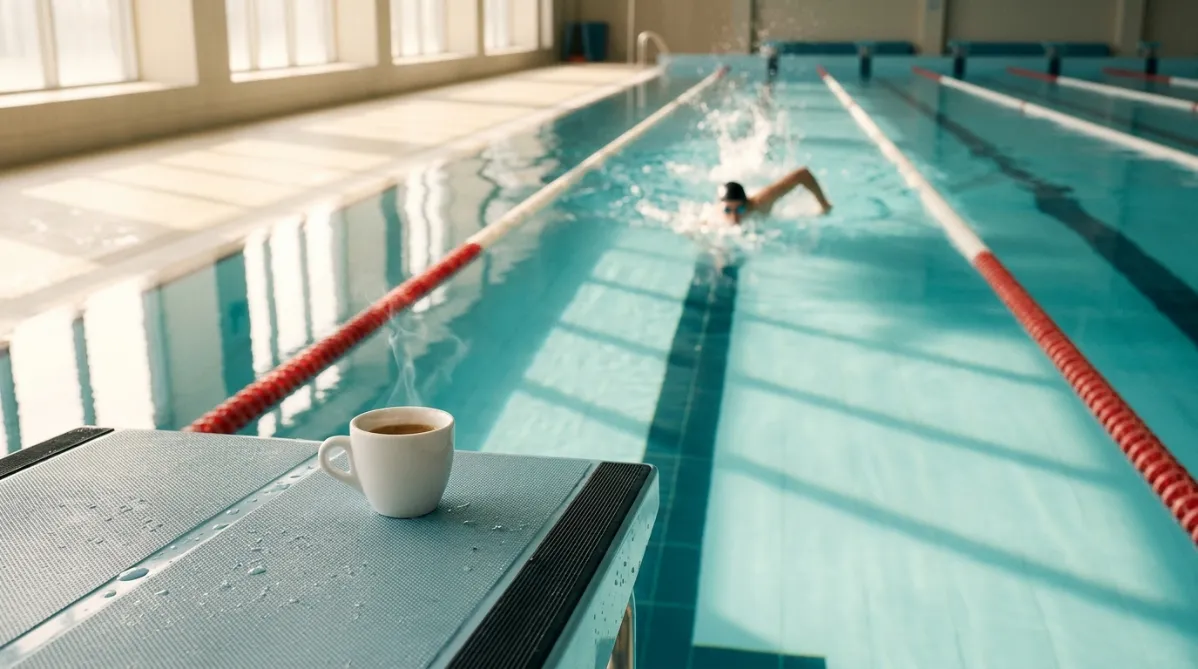
A wide, editorial-style photograph of a competition swimming pool lane seen from just above the water line at the starting end, in soft morning light. In the foreground, on the pool deck, a white ceramic espresso cup sits on the edge of a blue-gray starting block, a thin curl of steam rising from it. The cup is in crisp focus, with a few droplets of water on the textured non-slip deck around it. Behind it, the pool stretches into the distance as a series of calm lanes divided by red and white lane ropes. The turquoise water glints with gentle ripples and long, shimmering reflections. At the far end, a lone swimmer in a dark cap and goggles is mid-stroke, caught in a small burst of white splash, and slightly out of focus because of the shallow depth of field.

Large windows along the side wall let in pale golden sunlight, which throws soft diagonal light across the water and the deck. The palette is clean and modern: aqua, deep teal, warm cream and a small accent of coffee brown. The cup's warm tones stand out against the cool blues. The composition follows the rule of thirds, with the cup in the lower left third and open negative space of water and light on the right, leaving room for headline text. The look is minimal, airy and contemporary, like a high-end sports and science magazine, with subtle film grain, natural color grading, and a slightly desaturated, calm mood. Faint stopwatch-like details appear only as a thin black timing pad edge on the starting block, with no text or numbers visible. The overall feel is quiet anticipation just before a race, precise and fresh, with a sense of small margins and measured performance.
Nutrition

الكافيين يجعل السباحين أسرع، لكن بأقل مما تتوقع

Dr. Gymbro · · 4 min read

تتناول السباحة موضوعًا قديمًا: شرب القهوة قبل السباقات. رغم أن الرياضيين يتبعون هذه العادة منذ عقود، إلا أن الأدلة العلمية حول فعاليتها كانت متباينة. تحليل تلوي حديث نُشر في Journal of the International Society of Sports Nutrition سعى لتوضيح الصورة.

ما فعله الباحثون

قاد الدراسة وانغ بالتعاون مع باحثين مشهورين في مجال الكافيين، جوزو غريجيتش وجوان ديل كوسو. بحثوا في خمسة قواعد بيانات عن تجارب عشوائية مزدوجة التعمية ومقابلة أجريت على سباحين تنافسيين. استوفت 13 دراسة المعايير المطلوبة، وشملت 144 رجلاً و48 امرأة، ما أتاح حساب 28 حجم تأثير للأداء.

نظرًا لأن العديد من الدراسات أبلغت عن نتائج متعددة لكل تجربة، استخدم المؤلفون نماذج عشوائية ثلاثية المستويات لتجنب عدّ السباحين مرتين. كما فحصوا خطر الانحياز باستخدام أداة RoB 2 وقيموا درجة اليقين عبر نظام GRADE. بالإضافة إلى تأثير المعيار الموحد، حسبوا نسبة اللوغاريتم للمتوسطات لتعبير النتيجة كنسبة مئوية مباشرة.

النتيجة الرئيسية: نحو 1.7٪

حسّن الكافيين من أداء السباحة بمتوسط موحد قدره 0.57 (فاصل ثقة 95٪: 0.20 إلى 0.94؛ p = 0.005)، وهو تأثير متوسط. النسخة النسبية أسهل للتصور: تحسّن بنسبة 1.71٪ (فاصل ثقة 95٪: +1.01٪ إلى +2.41٪؛ p < 0.001).

قد يبدو ذلك ضئيلًا، لكن السباحة تُقاس بأجزاء من الثانية. على سبيل المثال، تحسّن بنسبة 1.7٪ في سباحة تستغرق 60 ثانية يعادل تقريبًا ثانية واحدة – فرق كبير على مستوى النخبة. تجدر الإشارة إلى أن المتوسط يجمع أحداثًا ونتائج مختلفة، ولا يضمن تحسّنًا محددًا لكل سباح.

هل الجرعة الأكبر تجعل السباح أسرع؟

أبرز ما توصلت إليه التحليلات الاستكشافية هو أن الدراسات التي استخدمت جرعة 6 ملغ/كغ أو أكثر أظهرت تأثيرًا مجمعًا أعلى (SMD 0.95، فاصل ثقة 95٪: 0.52 إلى 1.38) مقارنةً بالدراسات التي استخدمت أقل من 6 ملغ/كغ (SMD 0.22، فاصل ثقة -0.15 إلى 0.60). الفارق بين المجموعتين كان ذا دلالة إحصائية (p = 0.017).

لاحظ أن فاصل الثقة للجرعات الأقل يمر عبر الصفر، ما يعني أننا لا نستطيع القول بثقة إن جرعات أقل من 6 ملغ/كغ تحسّن الأداء. يصف المؤلفون هذا النمط بأنه محتمل مرتبط بالجرعة، لأنه مستنتج من مقارنة دراسات مختلفة وليس من اختبار مباشر للجرعات على نفس السباحين.

ما لم يظهر له تأثير بحسب البيانات

فحص التحليل أيضًا توقيت الإعطاء، مسافة السباق، شكل الجرعة (علكة، كبسولة …)، نوع السباحة، الجنس ومستوى الرياضي. لم تُظهر أي من هذه المتغيرات فروقًا واضحة بين المجموعات. لا يعني ذلك عدم أهميتها؛ فمع وجود 13 دراسة فقط قد لا تكون الطاقة الإحصائية كافية لاكتشاف فروق حقيقية. ما يعنيه ذلك هو أن المراجعة لا تقدم قاعدة مستندة إلى الأدلة لتفضيل علكة على كبسولة، أو للفرق بين الرجال والنساء.

لمسة اللاكتات

ساهمت ثمان دراسات في تقديم 24 حجم تأثير لللاكتات في الدم. رفع الكافيين مستوى اللاكتات بعد الاختبار بمتوسط 0.85 مليمول/لتر (فاصل ثقة 95٪: 0.22 إلى 1.49؛ p = 0.016). وكانت التباينات عالية (I² = 76.5٪).

ارتفاع قراءة اللاكتات ليس بالضرورة علامة سلبية؛ قد يدل على أن السباحين بذلوا جهدًا أكبر أو استغلوا قدرة لاهوائية أعلى، وهو نمط يُلاحظ كثيرًا مع الكافيين. أشارت التحليلات الفرعية الاستكشافية إلى زيادات أكبر في سباقات السباحة الحرة والمسافات القصيرة، لكن الباحثين حذروا من الاعتماد على هذه النتائج لأنها حساسة لافتراضات النمذجة.

تحذير من التباين

كان التباين الكلي للأداء كبيرًا (I² الكلي = 64.7٪) وانبعث أساسًا من الاختلافات بين الدراسات. اختلفت البروتوكولات، عينات السباحين، الأحداث والأساليب، لذا فإن التأثير المتوسط يخفي تشتتًا حقيقيًا. بعض السباحين قد يلاحظون تحسّنًا أكبر من 1.7٪، وآخرون قد لا يشعرون بأي فرق. يصف المؤلفون النتائج الفرعية بأنها تولد فرضيات، ولا يمكنهم تحديد من هو المستجيب الأفضل.

خلاصة عملية للسباحين

  • توقع فائدة بسيطة ولكنها حقيقية. أفضل تقدير هو تحسين بنحو 1.7٪، مع نطاق محتمل يتراوح تقريبًا بين 1٪ و2.4٪.
  • الجرعة مهمة؛ والنطاق الشائع قد يكون على الحد الأدنى. تُستشهد إرشادات التغذية الرياضية عادة بجرعة 3 إلى 6 ملغ/كغ. في هذا التحليل، ظهرت الفائدة الواضحة عند 6 ملغ/كغ أو أكثر، بينما لم تُظهر الجرعات الأقل تأثيرًا مقنعًا. سباح يزن 70 كغ سيحتاج تقريبًا 420 ملغ عند جرعة 6 ملغ/كغ. الجرعات الأعلى قد تزيد من خطر الارتجاف، اضطراب المعدة، ومشكلات النوم، لذا يُفضَّل اختبارها خلال التدريبات وليس في يوم السباق.
  • التوقيت وشكل الجرعة ما زالا غير محسومين. لم تُظهر المراجعة فروقًا واضحة بحسب توقيت الإعطاء أو شكل الجرعة، لذا لا توجد قاعدة دقيقة تستند إلى هذا التحليل. كثير من الرياضيين يتبعون الممارسة العامة بأخذ الكافيين قبل المنافسة بساعة تقريبًا؛ هذا مستمد من الأدبيات الأوسع، لا من فروع هذه الورقة.
  • من هو المستهدف؟ الأدلة تنطبق على السباحين التنافسيين في تجارب حادة بجرعة واحدة وضابطة بالدواء الوهمي. من يتحمل الكافيين جيدًا ويشارك في أحداث يُقاس فيها الفارق بأجزاء من الثانية هو الأكثر استفادة. من يعاني من حساسية، أو مشاكل في النوم أو القلق، يجب أن يكون أكثر حذرًا.
  • توقع تغير في قراءات اللاكتات. إذا قمت بقياس اللاكتات، فإن ارتفاع القيمة بعد الكافيين شائع ولا يعني بالضرورة إشارة خطر.

الخلاصة

يظهر أن الكافيين يجعل السباحين أسرع، بنحو 1.7٪ في المتوسط، وهو فرق ذو معنى في رياضة تُحسم بأصغر الفروقات. إلا أن الفائدة تختلف بين الدراسات، وإشارة الجرعة التي تفضّل 6 ملغ/كغ أو أكثر تحتاج إلى تأكيد، ولا تزال معظم الأسئلة الأخرى مفتوحة. استخدم الكافيين كأداة لتجربتها شخصيًا، وليس كصيغة عامة للجميع.

Original study

Read the original research on pubmed.ncbi.nlm.nih.gov →

This article summarizes published research for general information. It is not medical advice.

DG

Written by

Dr. Gymbro

Dr. Gymbro writes for Dr. Gymbro: science-backed fitness, nutrition & performance.

Related Articles

A lone trail runner pauses on a high alpine ridge at dawn, holding a small enamel camp mug of steaming coffee, with thin ribbons of steam curling into crisp, cold air. She wears a fitted charcoal running vest and a muted sage windbreaker, and her breath is faintly visible. Behind her, layered mountain ranges fade into soft blue and lavender haze, and a sea of low clouds fills the valley below. Warm golden sunlight skims the ridgeline and rim-lights her profile, shoulders, and the rising steam. In the foreground, a scattering of dried alpine grasses and lichen-covered stones is in sharp focus, with a worn trail snaking toward the summit. Near the mug sits a small pair of trail running shoes with dusty soles and a simple analog wristwatch resting on a flat rock.

The composition follows a wide 16:9 editorial layout. The subject sits slightly right of center on the rule of thirds, leaving generous negative space in the pale peach-and-powder-blue sky on the left, where headline text could sit. The palette is restrained and modern: warm amber, soft cream, dusty sage, slate blue, and a touch of terracotta. The look is cinematic but natural, with shallow depth of field on the foreground details, gentle film grain, and a slightly matte finish. It evokes a high-end outdoor lifestyle magazine or a contemporary wellness journal. The mood is calm, focused, and quietly determined, capturing the contrast between thin, cold altitude air and the warmth of a coffee ritual. The image has no text, logos, or futuristic elements, and no gym equipment, only natural light, texture, and atmosphere.
nutrition

الكافيين في الهواء الرقيق: تعزيز التحمل الذي لا يستطيع نقص الأكسجة القضاء عليه

BY DR. GYMBRO ·

الهواء الرقيق يضعف القدرة على التحمل، لكن تحليل تلويٍّ جديد يشير إلى أن القهوة قد تستعيد بعض هذا الفقد. جمعت الدراسة تسع تجارب مزدوجة التعمية ذات تقاطع عشوائي شملت 117 مشاركاً، ولاحظت تحسيناً متوسطاً إلى كبير في الأداء تحت نقص الأكسجة (g = 0.76). لم يتغير تشبع الأكسجين أو الإحساس بالجهد، بينما ارتفعت معدلات ضربات القلب واللاكتات والتهوية. الأدلة ذات Certainty منخفضة، وكانت النساء فقط 19 مشاركة، لذا فإن النتيجة واعدة لكنها غير حاسمة.

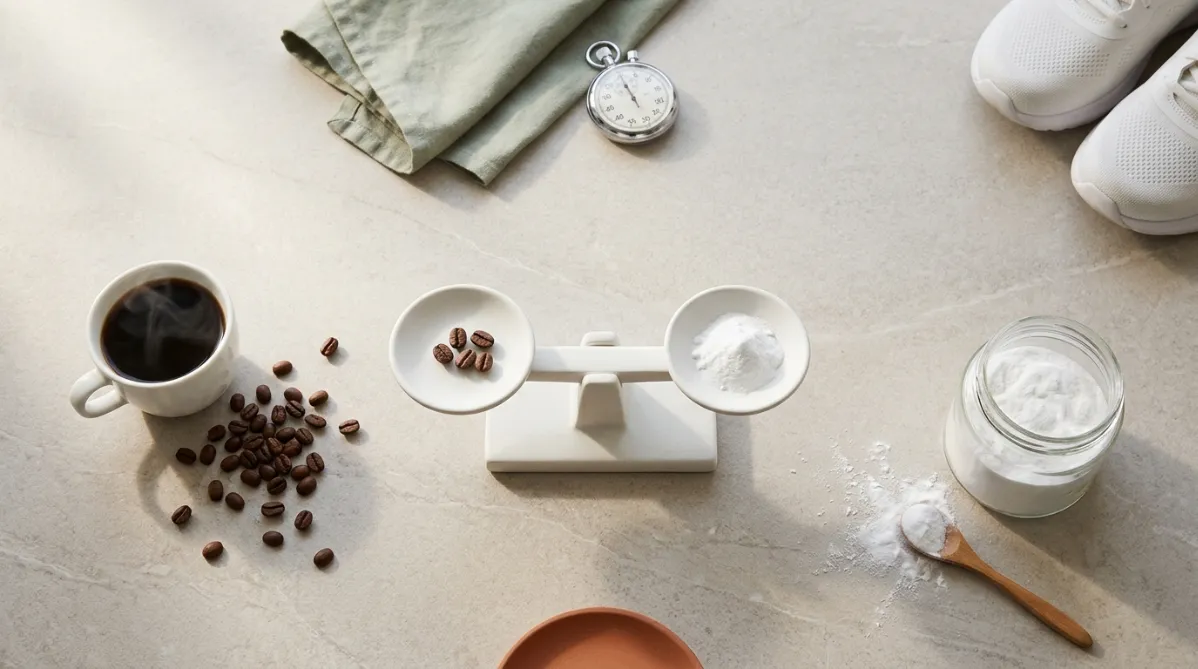
A calm, editorial-style flat lay photographed from above on a pale, warm-gray stone countertop in soft morning window light. On the left, a small white ceramic cup of black coffee with a delicate swirl of steam, beside a scattering of whole roasted coffee beans. On the right, a minimalist glass jar of fine white baking soda powder with a wooden spoon resting beside it, a few soft white grains dusted across the surface. In the center, a clean white scale-like balance made of matte ceramic with two small dishes: one holding a few coffee beans, the other a small mound of white powder, perfectly level to suggest the idea of equal outcomes. A folded sage-green linen napkin and a simple stainless steel stopwatch rest near the top edge, along with a pair of minimalist white running shoes partially visible in the corner. Subtle long shadows, gentle natural highlights, and a shallow depth of field give a tactile, premium feel. The color palette is muted and modern: cream, warm espresso brown, soft sage, and chalky white, with a single accent of pale terracotta in a small ceramic dish. Composition is balanced and uncluttered with generous negative space on the upper right for a title overlay. The overall mood is clean, contemporary, and quietly scientific, like a cover from a trendy health and performance journal. Wide landscape 16:9 framing, crisp detail, natural film-like grain.
nutrition

الكافيين + بيكربونات الصوديوم: هل يتفوق على كلٍ منهما منفردًا؟

BY DR. GYMBRO ·

دمج مكملين معروفين بزيادة الأداء قد يبدو كفوز مؤكد، لكن تحليل تلوي حديث ل13 تجربة مقاطعة يبيّن أن الأمور ليست بتلك السهولة. بالمقارنة مع الدواء الوهمي، أظهر مزيج الكافيين وبيكربونات الصوديوم زيادة متوسط القوة بنحو 8.4 واط وانخفاض زمن الأداء حوالي 1.6٪. ومع ذلك، اختفت هذه الفوائد عند إلغاء كل دراسة على حدة، ولم يتفوق المزيج على كل من الكافيين أو بيكربونات الصوديوم عند استعمالهما منفردين. إليكم ما تكشفه البيانات، الجرعات المتداولة، ومن قد يستفيد من الجمع.

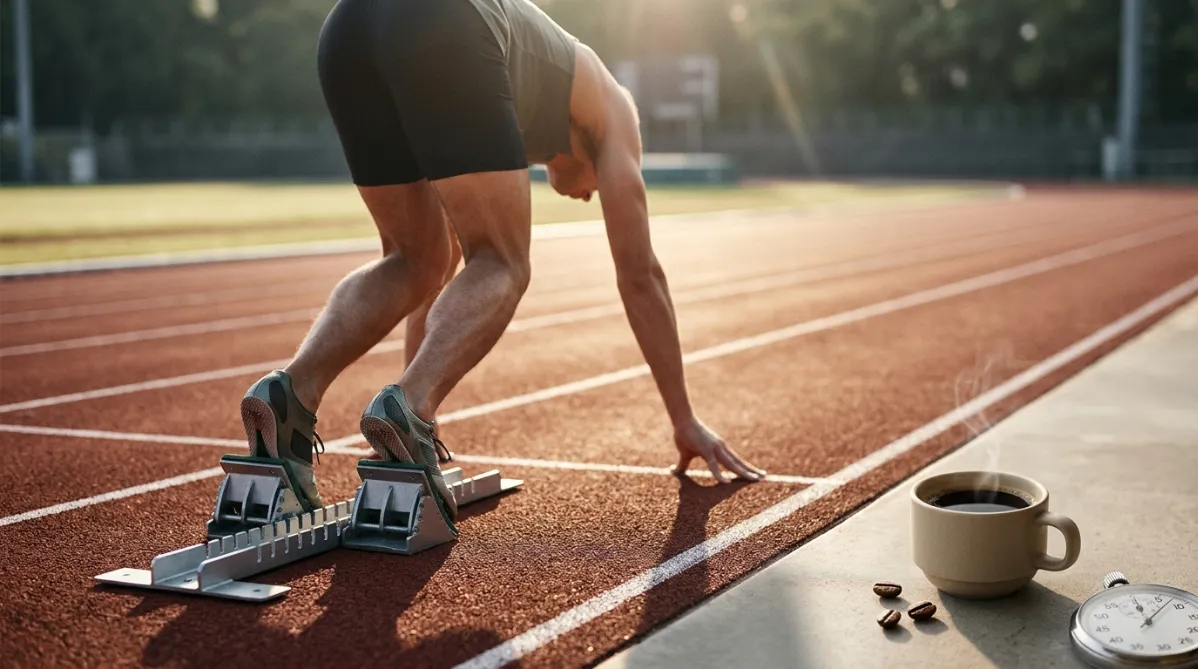
A wide, editorial-style photograph of a sprinter crouched in starting blocks on a deep terracotta-red running track, shot from a low angle at the side as the first morning light rakes across the lanes. The athlete is mid-set, hips lifted, hands poised behind crisp white lane lines, with a soft focus on their muscular calves and spiked shoes in the foreground. Warm golden sunlight creates long, elegant shadows and subtle lens flare, while the distant lanes fade into a creamy bokeh.

In the lower right foreground, slightly out of focus, sits a minimalist still life on a matte concrete ledge beside the track: a small ceramic cup of black coffee with a thin wisp of steam, two loose roasted coffee beans, and a simple stopwatch with a clean white face. The ceramic is a muted sand color, adding a refined, modern lifestyle touch.

The color palette is restrained and trendy: terracotta, warm cream, soft charcoal, and a hint of sage green from trees blurred in the far background. The composition uses generous negative space across the upper left, ideal for headline text overlay. The look is similar to a contemporary health and sports science magazine: natural film-like grain, gentle contrast, shallow depth of field, and a calm, focused mood. No text, no logos, no graphics, and no futuristic elements, just a realistic, tactile, sunlit scene that suggests precision, preparation, and explosive speed.
science research

مضاعفة الكافيين، إنطلاق أسرع؟ ما أضافته 6 ملغ/كغ فعليًا

BY DR. GYMBRO ·

أجرى الباحثون تجربة عشوائية مزدوجة التعمية متقابلة قارنوا فيها جرعة 3 ملغ/كغ مع جرعة 6 ملغ/كغ من الكافيين على 21 عدّاءً رجلاً مدرباً. تفوقت كلتا الجرعتين على الدواء الوهمي، لكن الجرعة الأعلى أضافت تحسينًا بسيطًا في السرعة خلال أولي 30 و60 متراً فقط، دون تأثير ملحوظ على أول 10 أمتار. كما زادت ارتفاع القفزة ومعدل تطور قوة الكتلة، دون تحسين إضافي في زمن الاستجابة أو أقصى طاقة في اختبار وينغيت. في ما يلي توضيح للجرعات بحسب وزن الرياضي (70‑80 كغ)، توقيت الاستهلاك، الفئات المستهدفة، وما لم تتناوله الدراسة من حيث الآثار الجانبية.

A landscape editorial photograph in a bright, modern gym studio with soft natural light pouring through tall windows. In the foreground, a matte ceramic cup and a small glass jar of plain white powder sit on a light oak bench, with a wooden scoop resting beside them and a few loose grains dusted across the wood. The jar has no label, which hints at mystery without being heavy-handed. Slightly out of focus behind them, a female athlete in a sage green athletic set stands at a barbell, chalked hands gripping the bar, her expression calm and focused. A male cyclist on a stationary bike is blurred in the far background. The palette is warm neutrals: cream, soft sand, pale oak, muted sage, and a touch of terracotta, with gentle golden-hour highlights and soft shadows. The composition follows the rule of thirds, with the cup and jar in the lower left, the athlete on the right, and open negative space in the upper area for headline text. The depth of field is shallow, with a creamy bokeh background. The mood is contemplative, curious, and trendy, like a contemporary health and science magazine cover. Fine film grain, subtle matte finish, clean minimalist styling, and no text or logos.
science research

الكافيين الوهمي لا يزال يجعل الرياضيين أقوى وأسرع

BY DR. GYMBRO ·

ماذا لو كان جزءٌ من جرعة ما قبل التمرين يأتي من عقلك وليس من مسحوق الكافيين؟ أظهر تحليل تلوي عام 2026 شمل 17 دراسة أن الرياضيين الذين ظنوا أن ما يتناولونه هو كافيين – وهو في الواقع حبة سكر – حسّنوا أدائهم (d = 0.49) في تمارين الضغط على البنش، وسباقات الدراجات، والاندفاعات المتتالية. كان التأثير أكبر عندما كان الباحثون غير مطلعين على نوع العلاج وكانت نسبة الإناث أعلى، رغم أن مستوى الثقة في الأدلة منخفض ومخاطر التحيز مرتفعة. لا يعني ذلك إلغاء الكافيين الحقيقي بجرعة 3‑6 ملغ/كغ، بل يذكّرنا بأن التوقع يُعدُّ عاملاً مؤثراً في الأداء. إليك ما تُظهره البيانات ومن ينبغي أن يكون حذراً.

This page is available in