Dr. Gymbro
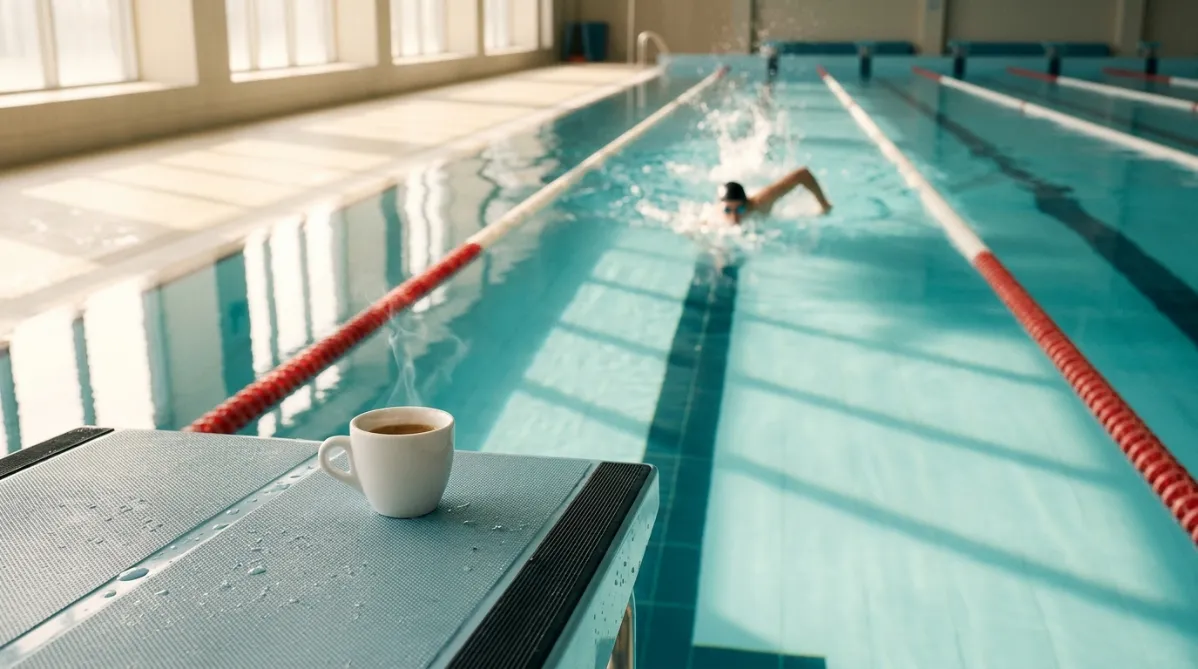
A wide, editorial-style photograph of a competition swimming pool lane seen from just above the water line at the starting end, in soft morning light. In the foreground, on the pool deck, a white ceramic espresso cup sits on the edge of a blue-gray starting block, a thin curl of steam rising from it. The cup is in crisp focus, with a few droplets of water on the textured non-slip deck around it. Behind it, the pool stretches into the distance as a series of calm lanes divided by red and white lane ropes. The turquoise water glints with gentle ripples and long, shimmering reflections. At the far end, a lone swimmer in a dark cap and goggles is mid-stroke, caught in a small burst of white splash, and slightly out of focus because of the shallow depth of field.

Large windows along the side wall let in pale golden sunlight, which throws soft diagonal light across the water and the deck. The palette is clean and modern: aqua, deep teal, warm cream and a small accent of coffee brown. The cup's warm tones stand out against the cool blues. The composition follows the rule of thirds, with the cup in the lower left third and open negative space of water and light on the right, leaving room for headline text. The look is minimal, airy and contemporary, like a high-end sports and science magazine, with subtle film grain, natural color grading, and a slightly desaturated, calm mood. Faint stopwatch-like details appear only as a thin black timing pad edge on the starting block, with no text or numbers visible. The overall feel is quiet anticipation just before a race, precise and fresh, with a sense of small margins and measured performance.
Nutrition

La caffeina rende i nuotatori più veloci, ma di meno di quanto pensi

Dr. Gymbro · · 4 min read

I nuotatori bevono caffè prima delle gare da decenni, ma la ricerca su quanto questo funzioni in piscina è stata finora confusa. Una nuova meta‑analisi multilivello pubblicata sul Journal of the International Society of Sports Nutrition cerca di dare una risposta definitiva. La risposta è sì: la caffeina aiuta, ma l'entità del beneficio e l'importanza della dose sono più sfumate di quanto la maggior parte delle routine pre‑gara immagini.

Cosa hanno fatto i ricercatori

Il team, guidato da Wang e co‑condotto da noti esperti di caffeina Jozo Grgic e Juan Del Coso, ha setacciato cinque banche dati alla ricerca di studi crossover randomizzati, controllati con placebo, su nuotatori competitivi. Tredici studi hanno soddisfatto i criteri, includendo 144 uomini e 48 donne e generando 28 misure di effetto sulle prestazioni.

Poiché molti studi hanno riportato più risultati, gli autori hanno impiegato modelli a tre livelli a effetti casuali per evitare di contare due volte gli stessi nuotatori. Hanno inoltre valutato il rischio di bias con RoB 2 e la certezza delle evidenze con GRADE. Oltre all’effetto standardizzato, hanno calcolato il log‑ratio delle medie, così da poter esprimere il risultato come percentuale semplice.

Il numero chiave: circa 1,7 %

La caffeina ha migliorato la performance nuotistica con una differenza media standardizzata di 0,57 (IC 95 % 0,20‑0,94; p = 0,005), un effetto moderato. La versione percentuale è più immediata: un miglioramento dell’1,71 % (IC 95 % +1,01 % a +2,41 %; p < 0,001).

Può sembrare poco, ma nello sport del nuoto le differenze si misurano in centesimi di secondo. Come esempio approssimativo, l’1,7 % di una gara di 60 secondi corrisponde a circa un secondo, un vantaggio enorme a livello élite, anche se la media aggregata nasconde variazioni tra diverse prove e atleti.

Una dose più alta rende i nuotatori più veloci?

Il risultato più interessante proviene dalle analisi esplorative dei moderatori. Gli studi che hanno usato 6 mg/kg o più hanno mostrato un effetto aggregato più grande (SMD 0,95, IC 95 % 0,52‑1,38) rispetto a quelli con meno di 6 mg/kg (SMD 0,22, IC 95 % ‑0,15‑0,60). La differenza è statisticamente significativa (p = 0,017).

È importante notare che l’intervallo di confidenza per le dosi basse attraversa lo zero, quindi con questi dati non possiamo affermare con certezza che dosi inferiori a 6 mg/kg migliorino la performance. Gli autori descrivono comunque questo come un possibile pattern dose‑dipendente, poiché deriva dal confronto tra studi e non da prove dirette su dosi confrontate nello stesso gruppo di nuotatori.

Cosa non ha avuto effetto, secondo i dati

L’analisi ha valutato anche timing, distanza della gara, forma di somministrazione, stile, genere e livello atletico. Nessuna di queste variabili ha mostrato differenze nette tra i sottogruppi. Ciò non prova che siano irrilevanti; con soli 13 studi, la potenza statistica potrebbe essere insufficiente per rilevare effetti reali. In pratica, la meta‑analisi non fornisce regole basate su evidenze per, ad esempio, gomma contro capsula, o per differenze tra donne e uomini.

Il colpo di lattato

Otto studi hanno fornito 24 misure di effetto sul lattato sanguigno. La caffeina ha aumentato il lattato post‑test di una media di 0,85 mmol/L (IC 95 % 0,22‑1,49; p = 0,016). L’eterogeneità era alta (I² = 76,5 %).

Un valore più alto di lattato non è necessariamente negativo. Può indicare che i nuotatori hanno spinto più forte o hanno sfruttato maggiormente la capacità anaerobica, un fenomeno spesso osservato con la caffeina. Analisi di sottogruppi esplorative suggeriscono incrementi più marcati nello stile libero e nelle gare brevi, ma gli autori avvertono che questi risultati sono sensibili alle assunzioni di modellazione e vanno interpretati con cautela.

L’avvertimento sull’eterogeneità

L’eterogeneità complessiva per le performance è stata sostanziale (I² totale = 64,7 %) e deriva principalmente dalle differenze tra gli studi. I protocolli, le popolazioni di nuotatori, le discipline e i metodi variavano, quindi la media nasconde una reale dispersione. Alcuni nuotatori e alcuni studi probabilmente hanno osservato guadagni molto superiori all’1,7 %, altri quasi nulli. Gli autori descrivono i risultati dei sottogruppi come generatori di ipotesi, senza poter indicare chi risponde meglio.

Consigli pratici per i nuotatori

  • Aspettati un vantaggio modesto ma reale. La migliore stima è circa un miglioramento dell’1,7 %, con un intervallo plausibile tra l’1 % e il 2,4 %.
  • La dose conta, e la soglia più comune può essere al limite. Le linee guida nutrizionali sportive citano spesso 3‑6 mg/kg. In questa analisi, il beneficio più chiaro appare a 6 mg/kg o più, mentre dosi più basse non hanno mostrato un effetto aggregato convincente. Un nuotatore di 70 kg dovrebbe puntare a circa 420 mg a 6 mg/kg. Dosi più alte aumentano il rischio di tremori, disturbi gastrici e sonno scarso, quindi è opportuno provarle in allenamento, non il giorno della gara.
  • Timing e forma rimangono incerti. La revisione non ha trovato differenze nette per il timing o la forma di assunzione, così non esiste una base meta‑analitica per un protocollo preciso. Molti atleti assumono la caffeina circa un’ora prima della competizione, ma questa pratica proviene dalla letteratura più ampia, non da analisi di sottogruppi di questo studio.
  • A chi è destinato. Le evidenze si riferiscono a nuotatori competitivi in contesti acuti, a dose singola, controllati con placebo. Chi tollera bene la caffeina e gareggia in discipline dove i margini sono minuti ha il maggior potenziale guadagno. Chi è sensibile, ha problemi di sonno o di ansia dovrebbe procedere con cautela.
  • Aspettati valori di lattato diversi. Se monitori il lattato, un valore più alto post‑gara dopo la caffeina è un risultato tipico, non necessariamente un segnale d’allarme.

Conclusione

La caffeina sembra davvero rendere i nuotatori più veloci, di circa l’1,7 % in media, un margine significativo in uno sport deciso da piccolissime differenze. Tuttavia il beneficio varia tra gli studi, il segnale di dose favorisce 6 mg/kg o più ma necessita di conferma, e molte altre domande restano aperte. Usa la caffeina come uno strumento da testare individualmente, non come una formula universale.
Original study

Read the original research on pubmed.ncbi.nlm.nih.gov →

This article summarizes published research for general information. It is not medical advice.

DG

Written by

Dr. Gymbro

Dr. Gymbro writes for Dr. Gymbro: science-backed fitness, nutrition & performance.

Related Articles

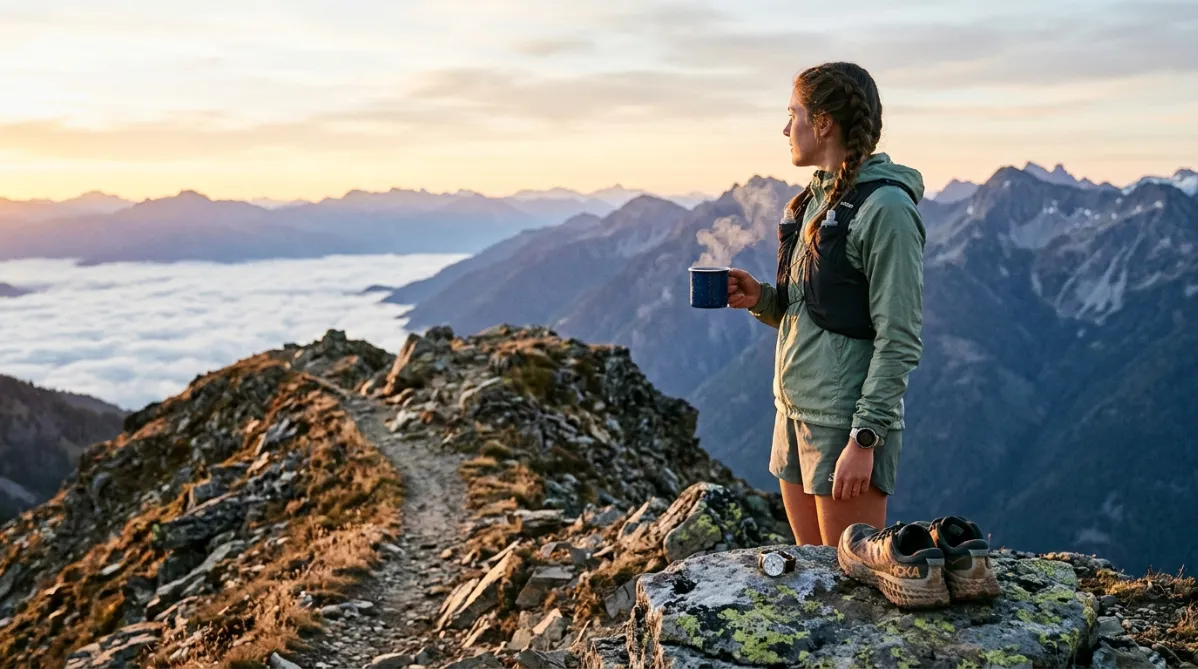
A lone trail runner pauses on a high alpine ridge at dawn, holding a small enamel camp mug of steaming coffee, with thin ribbons of steam curling into crisp, cold air. She wears a fitted charcoal running vest and a muted sage windbreaker, and her breath is faintly visible. Behind her, layered mountain ranges fade into soft blue and lavender haze, and a sea of low clouds fills the valley below. Warm golden sunlight skims the ridgeline and rim-lights her profile, shoulders, and the rising steam. In the foreground, a scattering of dried alpine grasses and lichen-covered stones is in sharp focus, with a worn trail snaking toward the summit. Near the mug sits a small pair of trail running shoes with dusty soles and a simple analog wristwatch resting on a flat rock.

The composition follows a wide 16:9 editorial layout. The subject sits slightly right of center on the rule of thirds, leaving generous negative space in the pale peach-and-powder-blue sky on the left, where headline text could sit. The palette is restrained and modern: warm amber, soft cream, dusty sage, slate blue, and a touch of terracotta. The look is cinematic but natural, with shallow depth of field on the foreground details, gentle film grain, and a slightly matte finish. It evokes a high-end outdoor lifestyle magazine or a contemporary wellness journal. The mood is calm, focused, and quietly determined, capturing the contrast between thin, cold altitude air and the warmth of a coffee ritual. The image has no text, logos, or futuristic elements, and no gym equipment, only natural light, texture, and atmosphere.
nutrition

Caffeina in Alta Quota: il boost di resistenza che l'ipossia non può cancellare

BY DR. GYMBRO ·

L'aria rarefatta penalizza la resistenza, ma una nuova meta‑analisi suggerisce che la caffeina può recuperare parte di quel deficit. Analizzando nove studi crossover controllati con placebo (117 partecipanti), gli autori hanno riscontrato un aumento delle prestazioni di medio‑grande entità in ipossia (g = 0,76). Sorprendentemente, la saturazione di ossigeno e la percezione dello sforzo non sono cambiate, mentre frequenza cardiaca, lattato e ventilazione sono aumentati. La prova è di bassa certezza e solo 19 partecipanti erano donne, perciò il risultato è promettente ma non definitivo.

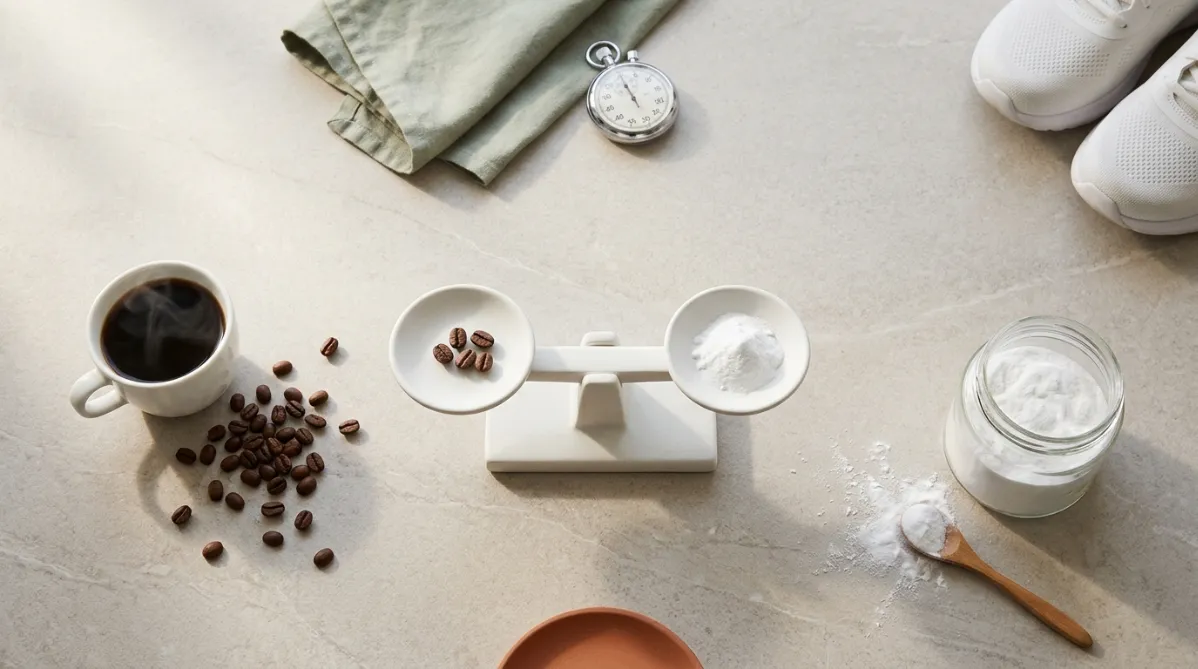
A calm, editorial-style flat lay photographed from above on a pale, warm-gray stone countertop in soft morning window light. On the left, a small white ceramic cup of black coffee with a delicate swirl of steam, beside a scattering of whole roasted coffee beans. On the right, a minimalist glass jar of fine white baking soda powder with a wooden spoon resting beside it, a few soft white grains dusted across the surface. In the center, a clean white scale-like balance made of matte ceramic with two small dishes: one holding a few coffee beans, the other a small mound of white powder, perfectly level to suggest the idea of equal outcomes. A folded sage-green linen napkin and a simple stainless steel stopwatch rest near the top edge, along with a pair of minimalist white running shoes partially visible in the corner. Subtle long shadows, gentle natural highlights, and a shallow depth of field give a tactile, premium feel. The color palette is muted and modern: cream, warm espresso brown, soft sage, and chalky white, with a single accent of pale terracotta in a small ceramic dish. Composition is balanced and uncluttered with generous negative space on the upper right for a title overlay. The overall mood is clean, contemporary, and quietly scientific, like a cover from a trendy health and performance journal. Wide landscape 16:9 framing, crisp detail, natural film-like grain.
nutrition

Caffeina + Bicarbonato di Sodio: batte ognuno da solo?

BY DR. GYMBRO ·

Combinare due aiuti ergogenici comprovati sembra una vittoria garantita, ma una nuova meta‑analisi su 13 studi crossover dimostra che i numeri non sono così semplici. Confrontato al placebo, caffeina più bicarbonato di sodio ha aumentato la potenza media di circa 8,4 W e ha ridotto i tempi dei test di circa l'1,6 %. Tuttavia, questi risultati crollano quando si escludono singoli studi, e la combinazione non ha superato né la caffeina né il bicarbonato da sole. Ecco cosa mostrano i dati, quali sono i dosaggi tipici e chi dovrebbe interessarsi a questa combinazione.

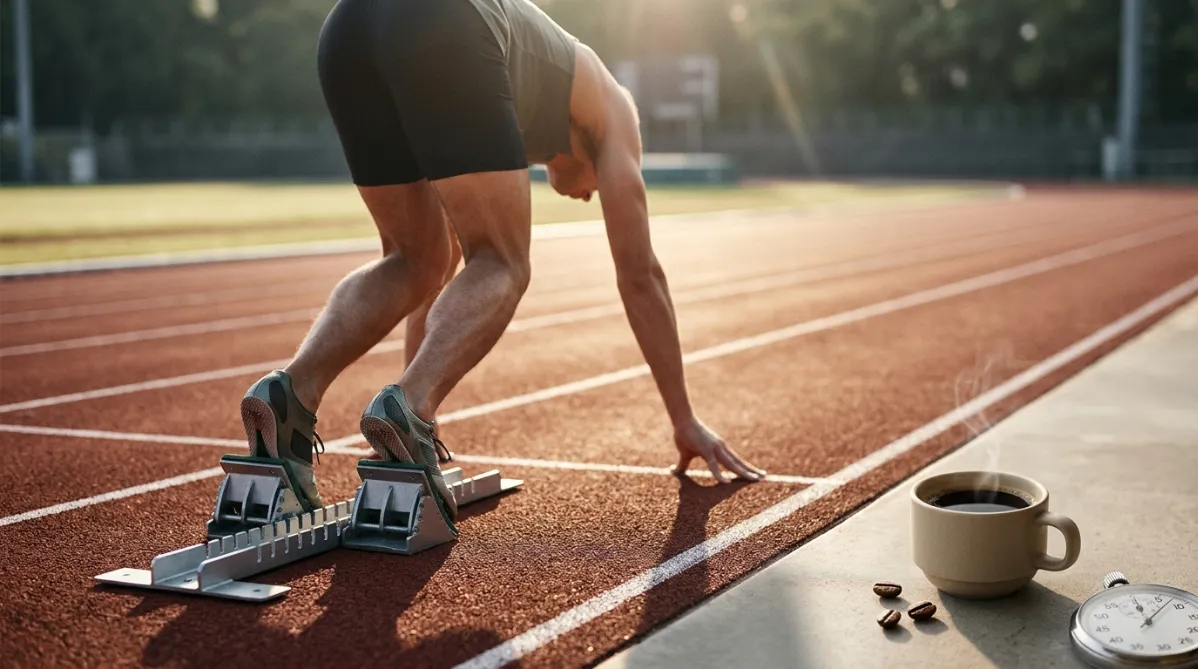
A wide, editorial-style photograph of a sprinter crouched in starting blocks on a deep terracotta-red running track, shot from a low angle at the side as the first morning light rakes across the lanes. The athlete is mid-set, hips lifted, hands poised behind crisp white lane lines, with a soft focus on their muscular calves and spiked shoes in the foreground. Warm golden sunlight creates long, elegant shadows and subtle lens flare, while the distant lanes fade into a creamy bokeh.

In the lower right foreground, slightly out of focus, sits a minimalist still life on a matte concrete ledge beside the track: a small ceramic cup of black coffee with a thin wisp of steam, two loose roasted coffee beans, and a simple stopwatch with a clean white face. The ceramic is a muted sand color, adding a refined, modern lifestyle touch.

The color palette is restrained and trendy: terracotta, warm cream, soft charcoal, and a hint of sage green from trees blurred in the far background. The composition uses generous negative space across the upper left, ideal for headline text overlay. The look is similar to a contemporary health and sports science magazine: natural film-like grain, gentle contrast, shallow depth of field, and a calm, focused mood. No text, no logos, no graphics, and no futuristic elements, just a realistic, tactile, sunlit scene that suggests precision, preparation, and explosive speed.
science research

Doppia caffeina, sprint più veloci? Cosa aggiunge davvero 6 mg/kg

BY DR. GYMBRO ·

Un nuovo studio randomizzato, in doppio cieco e crossover, ha confrontato 3 mg/kg contro 6 mg/kg di caffeina su 21 velocisti maschi allenati. Entrambe le dosi hanno superato il placebo, ma la dose più alta ha aggiunto velocità extra solo nei primi 30 e 60 m, non a 10 m. Ha inoltre migliorato l’altezza del salto e lo sviluppo della forza nei blocchi, senza ulteriori benefici su tempo di reazione o potenza di picco del test di Wingate. Ecco cosa significano le dosi in milligrammi per un atleta di 70‑80 kg, quando assumerle, a chi si applicano i risultati e cosa lo studio non rivela sugli effetti collaterali.

A landscape editorial photograph in a bright, modern gym studio with soft natural light pouring through tall windows. In the foreground, a matte ceramic cup and a small glass jar of plain white powder sit on a light oak bench, with a wooden scoop resting beside them and a few loose grains dusted across the wood. The jar has no label, which hints at mystery without being heavy-handed. Slightly out of focus behind them, a female athlete in a sage green athletic set stands at a barbell, chalked hands gripping the bar, her expression calm and focused. A male cyclist on a stationary bike is blurred in the far background. The palette is warm neutrals: cream, soft sand, pale oak, muted sage, and a touch of terracotta, with gentle golden-hour highlights and soft shadows. The composition follows the rule of thirds, with the cup and jar in the lower left, the athlete on the right, and open negative space in the upper area for headline text. The depth of field is shallow, with a creamy bokeh background. The mood is contemplative, curious, and trendy, like a contemporary health and science magazine cover. Fine film grain, subtle matte finish, clean minimalist styling, and no text or logos.
science research

La Caffeina Placebo Ha Reso gli Atleti più Forti e Veloci

BY DR. GYMBRO ·

E se parte della spinta pre‑allenamento provenisse dalla tua mente e non dalla dose? Una meta‑analisi del 2026 su 17 studi ha scoperto che, anche credendo di aver assunto caffeina, un placebo migliorava le prestazioni (d = 0,49) in bench press, test di ciclismo a cronometro e sprint ripetuti. L’effetto era più marcato quando i ricercatori erano ciechi e negli studi con una maggiore presenza di donne, sebbene la certezza delle evidenze sia bassa e il rischio di bias alto. Non è un invito a rinunciare alla vera caffeina (3‑6 mg/kg), ma ricorda che le aspettative rappresentano una variabile di performance. Ecco cosa dicono i dati e a chi conviene prestare attenzione.

This page is available in