Dr. Gymbro
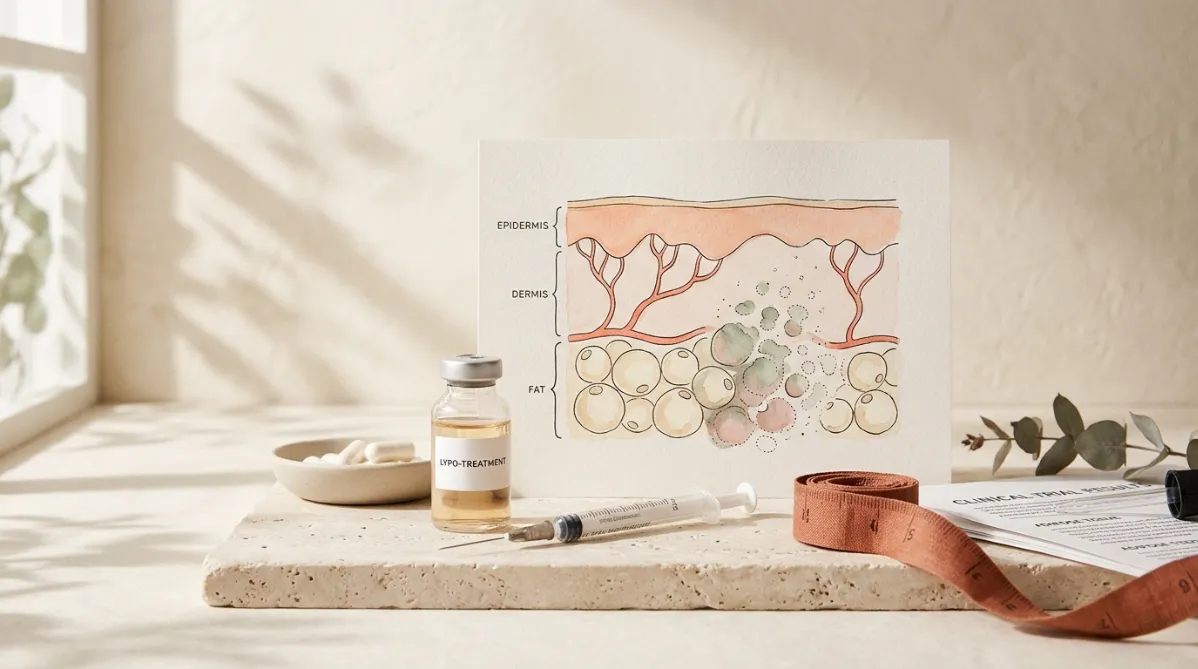
A softly lit, minimalist editorial still life on a warm off-white textured paper backdrop. In the center, a clean glass laboratory vial with a pale amber liquid sits beside a slim, sterile syringe with a fine needle, both placed on a pale travertine stone slab. Behind them, a large translucent cross-section illustration of skin layers is rendered as a delicate, hand-painted watercolor and ink diagram: soft peach epidermis, creamy yellow subcutaneous fat lobules shaped like clustered round cells, and thin coral capillary lines. A few of the fat cells in the diagram are gently fading, with dissolving edges and tiny dotted outlines to suggest cells quietly breaking down, painted in muted sage green and dusty rose.

On the left, a small ceramic dish holds a handful of matte white capsules, set aside and out of focus, hinting at what the treatment is not. On the right, a folded linen measuring tape in soft terracotta drapes across the stone, and a small stack of research papers with blurred text sits beneath a sprig of dried eucalyptus. Subtle botanical shadows from a window fall diagonally across the scene, creating a calm, natural-light atmosphere.

Color palette: warm cream, soft peach, sage green, muted terracotta, dusty rose, and touches of amber. The composition is balanced, with generous negative space on the upper left for title overlay. Shot as if with a 50mm lens, shallow depth of field, crisp focus on the vial and syringe, gentle film grain, and a refined, modern health-journal aesthetic. Contemporary, calm, trustworthy, and tactile. Landscape 16:9 format.
Science & Research

How does CBL-514 work? Here's the science

Dr. Gymbro · · 5 min read

How does CBL-514 work? Here's the science

If you are hoping CBL-514 is the next thermogenic, it isn't. It is not a stimulant, not a GLP-1, and not a pill or powder. (Note the spelling: it is CBL-514, sometimes mistyped as "CL-514.") It is an investigational small-molecule injectable from Caliway Biopharmaceuticals. The claim is local injection lipolysis: when it is injected into a specific patch of subcutaneous fat, it is proposed to push fat cells in that patch toward programmed cell death, or apoptosis. That is a very different idea from raising your metabolic rate or "melting" fat everywhere.

This article is a plain-language read of the proposed mechanism, based on the open-access Phase 2 paper and the earlier Phase 2a paper it cites. It is not a guide to using anything.

What the Phase 2 paper says CBL-514 is

The Phase 2 paper (Gold et al., Aesthetic Surgery Journal, 2025) describes CBL-514 as "a small-molecule injection lipolysis agent that promotes adipocyte apoptosis and targeted subcutaneous fat reduction in nonclinical studies." The same passage says it did so without skin necrosis, ulceration, nerve injury, or systemic side effects in those nonclinical reports.

Those safety-in-animals-and-cells statements are not new data in this paper. They are cited to unpublished, confidential Caliway reports plus the earlier Phase 2a paper. Treat them as the sponsor's account of its own preclinical work, not as independently verified findings.

The papers also do not disclose the chemical structure or exact identity of the molecule. So any claim about what it "is" in chemical terms, or about a receptor it hits, goes beyond what has been published.

The proposed mechanism: DYRK1b, caspase 3, and Bax/Bcl-2

The more detailed mechanism language comes from the earlier Phase 2a paper (Goodman et al., 2022), which was smaller and open-label, meaning not placebo-controlled. It reports that, in nonclinical studies, CBL-514:

  • inhibits the cell-survival kinase DYRK1b;
  • upregulates the apoptosis mediators caspase 3 and Bax/Bcl-2;
  • induces dose-dependent adipocyte apoptosis in vitro and in vivo.

The Phase 2a paper also reports lipolysis in vitro and reduced subcutaneous adiposity in targeted areas in animal studies. In plain terms, the idea is that the drug nudges fat cells to self-destruct rather than burning off their contents through a stress or stimulant pathway. The Phase 2a authors attribute these mechanism findings to unpublished confidential Caliway reports, so the primary data are not available for outside scrutiny.

Why it is not a thermogenic

Thermogenics and appetite drugs act on the whole body, either by raising energy expenditure or by reducing intake. CBL-514, as described, does neither. The proposed effect is local: fat cells in the injected region are targeted, and the rest of the body is not meant to be affected.

That is also why the clinical protocol looks nothing like a supplement routine. Investigators in the trial gave many subcutaneous injections across a mapped abdominal area. Each treatment involved 25 to 50 injections spaced 2.45 cm apart, and participants could receive up to four treatments at 4-week intervals. It was not a single shot, not oral, and not systemic.

Why the scale did not move

The Phase 2 data illustrate the local-versus-systemic distinction well. In the intention-to-treat analysis, the CBL-514 group's least-squares mean abdominal fat volume fell by 199.80 mL at 4 weeks and 209.46 mL at 8 weeks, measured by ultrasound. The placebo-adjusted differences were about 207 mL and 216 mL.

Mean body weight barely changed. The CBL-514 group was up 0.45 kg at the 4-week follow-up and up 0.02 kg at 8 weeks. The placebo group was down 0.76 kg and 0.26 kg. The paper reports no significant mean change in weight or BMI, and says local fat loss was seen even in some participants who gained more than 1 kg (data not shown).

So a pad of belly fat can shrink on ultrasound while the scale stays flat. That fits a local mechanism. It is not "weight loss from burning fat."

How it differs from deoxycholic acid

The papers describe deoxycholic acid (ATX-101, Kybella) as adipocytolytic and less tissue-selective. It is the only FDA-approved injectable for fat reduction mentioned, and only for submental (under-chin) fat. CBL-514 is proposed to work by apoptosis rather than by breaking cells open. But there is no proof here that it is safer than deoxycholic acid over the long term. It is not FDA-approved, and the evidence base is two early-phase trials.

What the human evidence does and does not show

The human mechanism evidence is indirect. The trial measured fat volume and thickness by ultrasound, plus 3D photos. It did not publish human biopsy data showing apoptosis in treated fat, and nothing in the source supports claims about human assays of DYRK1b or caspase activity. The apoptosis story rests on nonclinical work. The human data show that fat volume in the treated area fell, not how it fell.

There are other caveats:

  • The trial was single-blind: participants were blinded, but investigators, staff, and the sponsor were not.
  • Caliway was involved in study design, data collection, analysis, interpretation, and manuscript writing.
  • Of 75 treated participants, 38 completed the study, a non-completion rate of 49.3%.
  • The per-protocol population was only 30 people, and follow-up denominators shrank over time.
  • The sample was about 94% female in the CBL-514 group.

In the intention-to-treat analysis, 63.9% (23/36) of CBL-514 participants had at least 150 mL of fat-volume loss at 4 weeks, versus 17.4% (4/23) on placebo. At 8 weeks it was 69.6% (16/23) versus 0.0% (0/16). The authors say the primary and secondary endpoints were met, but the missing follow-up data and lack of multiplicity adjustment limit how firmly those numbers can be read.

Bottom line for lifters

CBL-514 is best understood as an experimental, clinic-administered, spot-treatment concept, not a fat burner. The proposed mechanism is fat-cell apoptosis via DYRK1b inhibition and caspase 3 and Bax/Bcl-2 upregulation, drawn from preclinical work reported by the sponsor. Human data so far suggest local ultrasound-measured fat reduction with essentially no mean weight change. That is interesting for body-contouring research, but it will not change your training, your nutrition, or your scale weight.

Sources

More from this CBL-514 series

This article is part of our CBL-514 series. For the full Phase 2 trial overview, start here: CBL-514 Fat-Loss Injections: The Phase 2 Trial Lifters Should Read.

Original study

Read the original research on pmc.ncbi.nlm.nih.gov →

This article summarizes published research for general information. It is not medical advice.

DG

Written by

Dr. Gymbro

Dr. Gymbro writes for Dr. Gymbro: science-backed fitness, nutrition & performance.

Related Articles

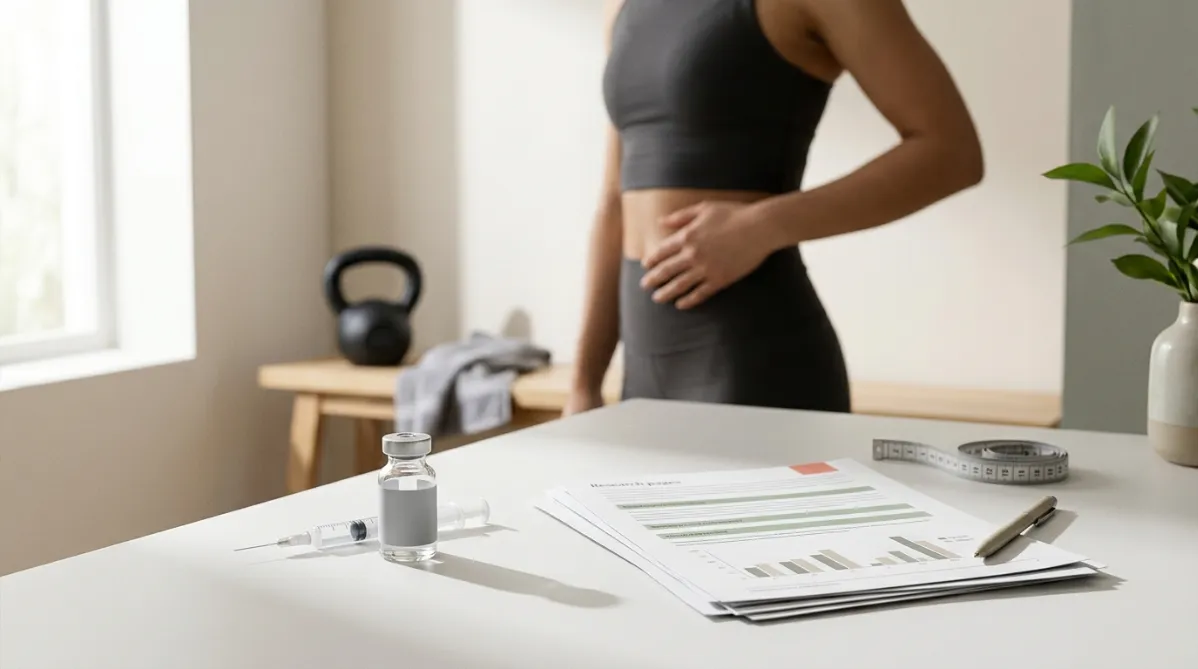
A wide, editorial-style photograph of a clean, bright clinical consultation space with a modern wellness-journal feel. In the foreground, a minimalist matte white tabletop holds a small glass vial with a soft gray label and a sterile syringe laid parallel beside it. Next to them sits a neatly folded stack of printed research pages, with a few subtle sage-green highlighted lines and a simple bar chart in muted tones. A slim stainless steel measuring tape curls loosely nearby, and a fine-point pen rests on the pages.

In the softly blurred midground, the torso of an athletic person in a fitted charcoal training top stands slightly out of focus. One hand rests lightly at the waist, which suggests body composition without showing a face. A weighted matte-black kettlebell and a folded gray gym towel sit on a pale oak bench to one side, a quiet reference to lifters and training.

The background is a calm wall in warm off-white and pale stone, with a tall window to the left. It lets in diffused morning daylight that casts long, gentle shadows across the table. A single green leafy plant in a ceramic pot adds a touch of organic color on the right edge.

The palette is restrained and contemporary: soft whites, warm beige, sage green, charcoal, and a small accent of muted coral. The composition follows the rule of thirds, with the vial and syringe on the left third and open negative space on the right, where headline text could sit. Use shallow depth of field, crisp focus on the vial's glass edges, and subtle highlights on the glass. The mood is thoughtful, credible, and analytical, in the style of a premium health and science magazine. Shoot it as if with a 50mm lens at f/2.8, with natural light, fine grain, and a clean, uncluttered finish.
science research

CBL-514 Fat-Loss Injections: The Phase 2 Trial Lifters Should Read

BY DR. GYMBRO ·

A placebo-controlled Phase 2 trial found that CBL-514 injections cut abdominal subcutaneous fat on ultrasound while body weight barely changed. At 8 weeks, 69.6% of the remaining treated participants reached at least 150 mL of fat loss, versus 0% on placebo. But the study was single-blind, nearly half of treated participants didn't finish, and follow-up was short. The drug is investigational, not a fat burner, and not approved. Here is what lifters on a cut should actually take from it.

A soft, editorial still life in a bright, minimalist clinical-meets-wellness setting, shot in landscape format with a shallow depth of field. In the foreground, a single sterile glass vial with a clear liquid and a slim silver-capped syringe rest on a matte, pale sage-green ceramic tray. Next to them is a neatly folded white linen cloth. The vial's label is blank and clean, with no readable text. Behind the tray, slightly out of focus, the torso of a person in a simple cream-colored fitted tank top is visible from the ribs to the hips. A gentle, hand-drawn-style dotted grid of tiny ink dots is marked on the lower abdomen, suggesting localized injection points in a contained patch, not the whole body. A soft hand in a light nitrile glove hovers near the area holding a fine pen.

The background is a warm, creamy off-white wall with a faint, diffused window light casting long, soft shadows across the scene. A small sprig of dried eucalyptus in a minimalist stone vase sits at the far right edge, adding organic texture. Color palette: muted sage green, warm ivory, soft peach skin tones, and brushed silver accents, with a subtle touch of terracotta in a small ceramic dish at the left.

Lighting is natural morning daylight, airy and diffused, with gentle highlights on the glass vial that catch tiny reflections. The composition follows the rule of thirds, with the vial and syringe on the left third and open negative space on the right, which would suit headline overlay. The overall feel is modern, calm, trustworthy, and sophisticated, like a contemporary health and science magazine cover, with fine film-like grain, crisp detail on the glass and a creamy bokeh backdrop. No text, no logos, no futuristic elements.
science research

What is CBL-514? Does it burn fat?

BY DR. GYMBRO ·

"Fat-burning injection" sounds like a cut-cycle shortcut or an Ozempic-style weight-loss shot, but CBL-514 is neither. It is an investigational small-molecule injection lipolysis drug tested as many shots into a patch of abdominal fat. A 2025 Phase 2 trial found it reduced ultrasound-measured fat volume versus placebo, while body weight barely changed. Here is what the data show, what the caveats are, and why this is local contouring, not systemic fat burning.

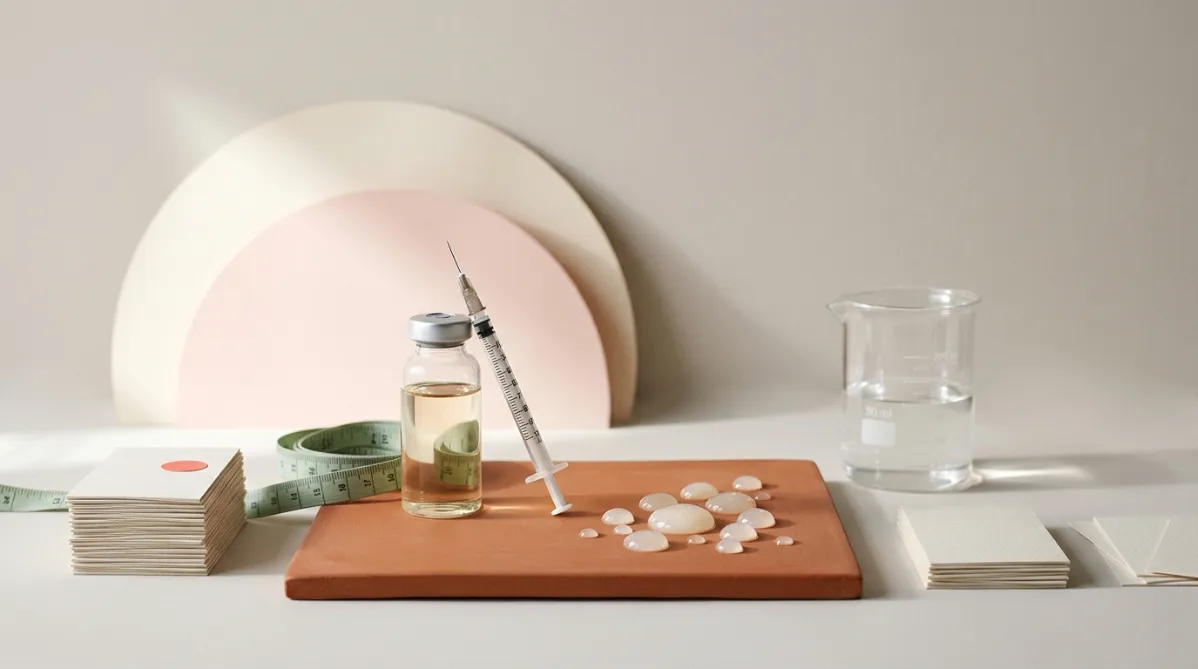
A soft-lit, minimalist editorial still life on a pale warm-gray seamless backdrop. In the center, a sterile glass vial with a clear, faintly golden liquid sits beside a slim syringe, both resting on a smooth matte terracotta ceramic slab. Beside them, a neat arrangement of translucent, pearly fat-like droplets in varying sizes, glistening like water beads, spills across the surface to suggest localized fat volume. Behind the objects, a large, softly blurred arc of cream and blush-pink paper forms a gentle curve suggesting an abdomen silhouette, without showing any human body. In the lower foreground, a slim measuring tape in muted sage green loops casually around the vial base, with legible tick marks hinting at volume reduction. To the right, a minimalist ceramic beaker with fine milliliter markings sits half-filled, catching a sliver of window light. Subtle data-inspired elements appear as flat, tasteful props: two thin stacks of off-white paper cards, one tall and one very short, symbolizing treatment versus placebo outcomes, with a few cards fading out toward the edge of frame to hint at participant dropout. A single small coral-red dot sticker on one card nods to injection-site reactions. Lighting is diffused natural morning light from the left, creating long, gentle shadows and soft highlights on glass and ceramic. The palette is restrained and modern: warm neutrals, soft sage, terracotta, blush, and touches of translucent gold. Shallow depth of field with crisp focus on the vial and syringe, background gently dissolving. Composition follows the rule of thirds with generous negative space on the right for headline overlay. The overall mood is calm, credible, and contemporary, like a premium health-science magazine cover, shot on a medium-format camera with fine grain and a clean, high-end editorial finish.
science research

Does CBL-514 really burn fat? Here's what we know

BY DR. GYMBRO ·

In a Phase 2 trial, 69.6% (16/23) of CBL-514 participants lost at least 150 mL of abdominal fat at 8 weeks, versus 0 of 16 on placebo. But the denominators shrank because nearly half of participants didn't finish, the study was single-blind, and follow-up lasted only 8 weeks. Body weight didn't budge, so this is local fat-volume reduction rather than fat burning. Injection-site reactions were near-universal, and severe pain hit 18.4% of treated participants. Here are the exact numbers, the caveats, and what they do and don't tell you.

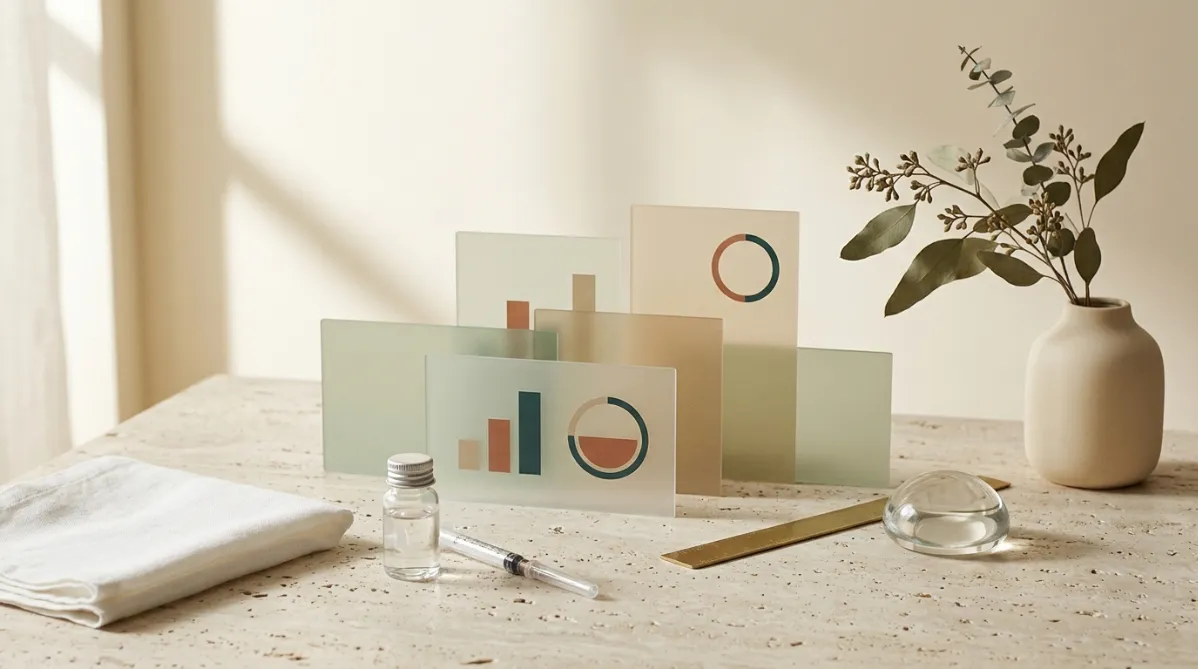
A calm, editorial-style still life photographed in soft natural window light on a pale travertine surface. In the foreground, a small clear glass vial with a silver cap and a slim, capped syringe rest beside a folded white linen cloth, their edges catching delicate highlights. Behind them is a minimalist arrangement of translucent frosted acrylic cards in pale sage green and warm sand, staggered like pages of a clinical report. A few of the cards carry abstract bar-chart shapes and simple circle diagrams in muted terracotta and deep teal. One circle is just under half filled, a quiet nod to the participants who did not finish the trial. A slim brass ruler and a rounded ultrasound-style glass paperweight lie diagonally across the middle ground, hinting at measurement without any machinery. On the right, a sprig of dried eucalyptus in a matte ceramic bud vase adds organic softness. The background is a smooth, softly blurred wall in warm cream, with long gentle shadows falling from the left. The palette is restrained: ivory, sage, sand, terracotta, and touches of teal and brass. The composition leaves generous negative space in the upper left for a headline overlay. The mood is thoughtful, trustworthy, and modern, like a contemporary health and science journal. Shot on a 50mm lens at shallow depth of field, with fine film-like grain and a clean, high-end magazine finish. There are no people, no text, no logos, and no futuristic elements.
science research

CBL-514 fat removal injections: What does the science say?

BY DR. GYMBRO ·

CBL-514 is an investigational fat removal injection with a real human Phase 2 randomized, placebo-controlled trial behind it. But the study was single-blind, the sponsor helped design, analyze and write it, and 37 of 75 treated participants (49.3%) did not finish. The treated group was also 94% women and 86% White. This breakdown covers who was enrolled, how the protocol and ultrasound measurements worked, and what the design can and cannot tell you. It is education only, not medical advice.

This page is available in