Dr. Gymbro
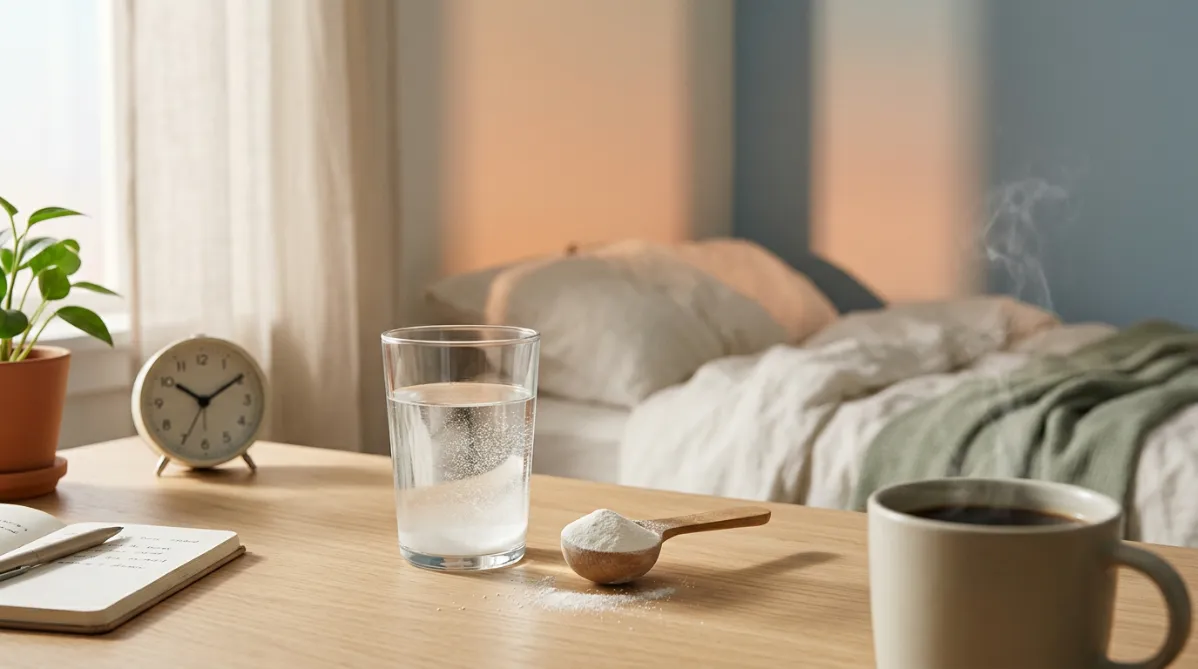
A wide, softly lit morning scene on a pale oak desk beside a window, shot from a slightly elevated three-quarter angle. In the foreground, a clear glass of water is half-filled with dissolved white creatine powder, tiny suspended particles catching the light. A wooden scoop heaped with fine white powder rests beside it, with a few grains scattered across the wood. A matte ceramic mug of black coffee sits slightly out of focus to the right, with a thin curl of steam. Behind them, a rumpled linen-white bed with a muted sage-green throw blanket suggests a sleepless night. Early dawn light spills through sheer curtains and creates long, gentle shadows and a warm peach-and-pale-blue gradient on the wall. On the desk, a minimalist analog alarm clock reads close to 6 a.m., and a small open notebook with a pen lies beside it, its handwriting blurred. A single green plant in a terracotta pot adds a fresh organic touch at the left edge. The color palette is calm and editorial: cream, soft sage, warm oak, dusty peach and muted slate blue. The depth of field is shallow, with crisp focus on the glass and scoop and a creamy bokeh background. The mood is quiet, restorative and contemplative, like a modern wellness magazine or a trendy health journal cover. The composition leaves open negative space in the upper left for title overlay. The image has a natural film-like texture, soft contrast and a clean, minimalist, lifestyle-photography look, with no text, logos or futuristic elements.
Nutrition

One 0.35 g/kg Creatine Dose Fought Sleep-Loss Brain Fog in Hours

Dr. Gymbro · · 5 min read

You've been awake since dawn. The night shift is dragging, the baby woke you three times, or you stayed up cramming for a deadline. Your brain feels like it's running on 2G. Now imagine a supplement already sitting in your cabinet might blunt that fog within hours, not weeks.

That's the provocative takeaway from a 2024 study on creatine, the most studied supplement in the gym. There is a catch, and it's a big one: the dose was roughly five times what lifters normally take. Here's what the research found, and what it doesn't tell you.

What the Study Did

The paper, "Single dose creatine improves cognitive performance and induces changes in cerebral high energy phosphates during sleep deprivation," was published in Scientific Reports in 2024 (14:4937) by Gordji-Nejad, Matusch, Kleedörfer, Patel, Drzezga, Elmenhorst, Binkofski, Bauer and colleagues. You can read the abstract on PubMed.

Participants went through sub-total sleep deprivation of 21 hours. They received either a single oral dose of creatine monohydrate at 0.35 g/kg body weight or a placebo. For a 70-80 kg person, that works out to about 25-28 g in one shot.

Researchers then tracked what happened in the brain and in performance. At an evening baseline, and again at 3, 5.5 and 7.5 hours after dosing, participants completed cognitive tests and underwent brain scans. The scans used phosphorus magnetic resonance spectroscopy (31P-MRS) and proton MRS (1H-MRS), which let scientists look at energy-related compounds in the brain without invasive procedures.

The Results: What Changed

According to the authors, a single high dose of creatine:

  • Shifted brain energy markers, including PCr/Pi, ATP and tCr/tNAA.
  • Prevented a drop in brain pH, which tends to fall under sleep-deprivation stress.
  • Improved cognitive performance and processing speed compared with placebo.

The authors concluded that a high single dose can partially reverse metabolic alterations and fatigue-related cognitive deterioration. "Partially" matters. This wasn't a magic reset button, and the abstract doesn't claim it was.

The bigger surprise is the timeline. Creatine is usually thought to need weeks of daily intake before it meaningfully changes brain levels. Previous work had only tested repeated dosing over weeks. Here, effects emerged within hours.

Why Might It Work?

Creatine is best known in muscle, where phosphocreatine helps regenerate ATP, the cell's energy currency. The brain runs on the same system, and it is energetically hungry. Sleep deprivation and creatine have what the authors describe as inverse effects on high-energy phosphates, neural creatine and cognitive performance. In other words, lack of sleep pushes these markers one way, and creatine pushes them the other.

The main obstacle has always been getting creatine into the central nervous system, because uptake from the bloodstream is limited. That's why standard supplementation has needed weeks to move the needle.

The researchers' hypothesis was that two things together might temporarily increase brain uptake: very high creatine availability outside cells, and increased energy consumption inside them (which is what happens when you're sleep-deprived and your brain is working overtime). The results are consistent with that idea, though a single study can't prove the mechanism.

Limitations You Need to Know

Before you start measuring out scoops at 3 a.m., read this part twice.

  • It was a small, lab-based study. Controlled conditions, scanners and cognitive tests are not the same as a chaotic night shift or a week with a newborn.
  • The dose is about 5x a normal daily serving. The standard maintenance dose is 3-5 g per day. Twenty-five grams or more at once is a different animal.
  • GI upset is a real risk. Large single doses of creatine are known to cause stomach discomfort in some people. Expect that possibility, not a guarantee of a smooth ride.
  • Long-term safety of repeated mega-dosing wasn't tested. The study looked at one dose in one sleep-deprivation session. Nothing here supports taking 25+ g regularly.
  • Improvement was partial. The authors say creatine partially reversed deficits. It did not make sleep optional.

One more note on transparency: the conflict-of-interest statement lists industry ties for one author related to imaging companies and pharma, not creatine manufacturers.

Who Might Care About This

The finding is intriguing for anyone who regularly performs under short sleep:

  • Lifters who train early after a rough night and want to understand creatine's broader role.
  • Shift workers dealing with disrupted sleep.
  • New parents running on fragments of rest.

"Intriguing" is the key word. This is a proof-of-concept result, not a clinical recommendation for any of these groups.

Practical Takeaways

For muscle and strength: stick with the evidence-backed standard, 3-5 g of creatine monohydrate per day, taken consistently. That's the routine for lifters, and nothing in this study changes it.

The 0.35 g/kg dose: treat it as an experimental protocol, not a daily routine or a hack. It's roughly 25-28 g for a 70-80 kg person, and it was studied once, under supervision, during a single bout of sleep deprivation.

Timing: in the study, cognitive and brain measurements were taken at 3, 5.5 and 7.5 hours after the dose. The paper doesn't give you a recommended real-world timing strategy, so don't invent one.

Who should skip it: anyone with kidney problems, anyone on medications that affect the kidneys, anyone with a sensitive stomach, and anyone pregnant or breastfeeding should talk to a doctor before experimenting with high doses. Honestly, if you're unsure, skip the mega-dose and use the standard one.

The best sleep-deprivation fix remains sleep. If this research holds up in larger trials, creatine might become a backup tool, not a replacement.

Bottom Line

Creatine may do more for your brain than anyone assumed, and faster. A single 0.35 g/kg dose shifted brain energy markers, held off a pH drop and improved cognitive performance and processing speed during 21 hours of sleep deprivation. But the study was small and controlled, the dose was about five times a normal serving, and nobody has tested what happens if you repeat it. Keep taking your 3-5 g a day, and watch for bigger trials before treating this as a playbook.

Source: Gordji-Nejad A, et al. Single dose creatine improves cognitive performance and induces changes in cerebral high energy phosphates during sleep deprivation. Sci Rep. 2024;14(1):4937. PubMed | DOI
Original study

Read the original research on pubmed.ncbi.nlm.nih.gov →

This article summarizes published research for general information. It is not medical advice.

DG

Written by

Dr. Gymbro

Dr. Gymbro writes for Dr. Gymbro: science-backed fitness, nutrition & performance.

Related Articles

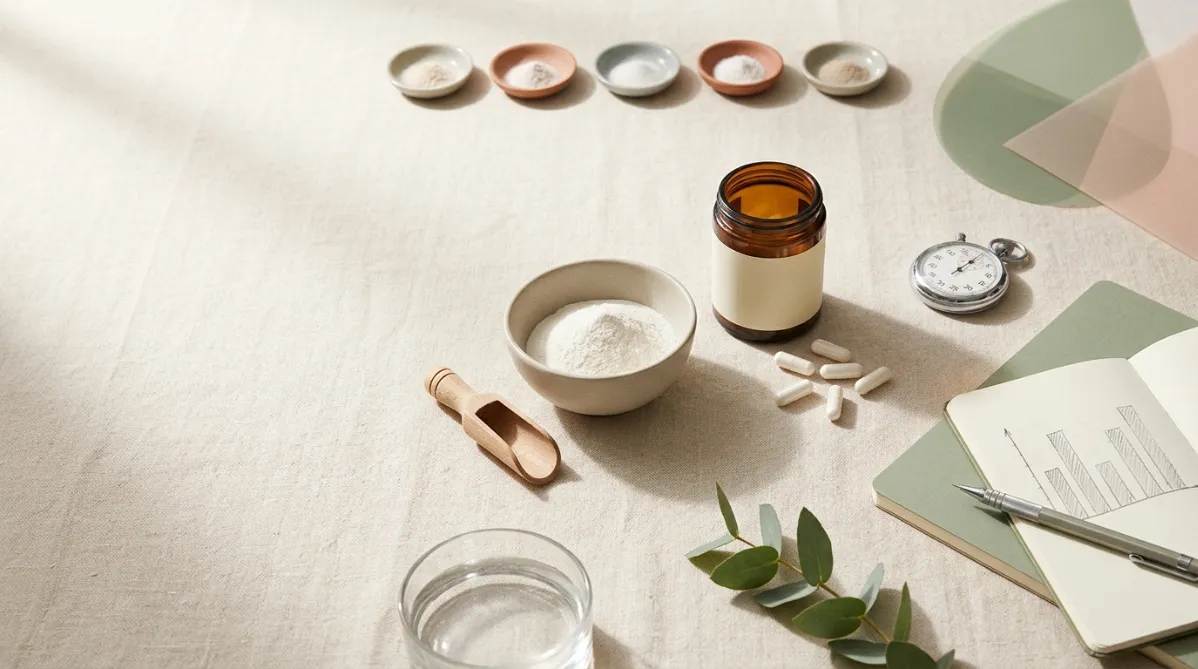
A wide, editorial-style still life photographed from slightly above on a pale oat-colored linen surface, lit by soft morning window light from the left. In the center sits a small matte ceramic bowl holding a mound of fine white powder, with a minimalist wooden scoop resting beside it. Next to the bowl is an open amber glass supplement jar with a plain cream label, and a few white capsules spill across the linen in a loose arc.

To the right, a neatly arranged cluster of analog "study" objects suggests careful measurement: a vintage stopwatch with a clean white face, a slim notebook with a sage-green cover open to a hand-drawn bar chart (blurred, no legible text), and a mechanical pencil lying across the page. A small row of six identical ceramic dishes, each holding a pinch of powder, is lined up along the top edge of the frame to hint at the six-week trial. One dish is slightly out of alignment, a subtle visual cue for ambiguity.

A shallow glass of water and a single sprig of green eucalyptus add a calm, organic note in the foreground. Soft, long shadows fall across the textured linen, and the palette stays restrained: warm cream, soft sage, muted terracotta, pale gray, and touches of amber from the glass jar. A few translucent paper cutouts in two tones (sage and blush) overlap in the upper right corner as a modern graphic accent, evoking overlapping data points without showing any numbers.

Depth of field is shallow, with the bowl and stopwatch in crisp focus and the edges gently softened. The composition leaves generous negative space on the left third for title text overlay. The overall mood is thoughtful, balanced, and quietly skeptical, in the style of a contemporary wellness and science magazine: clean, tactile, minimal, with a subtle film-like grain and natural color grading. No people, no futuristic or sci-fi elements, no readable text or logos.
nutrition

GAA Brain Booster? The 6-Week Trial Result Is Complicated

BY DR. GYMBRO ·

GAA, the creatine precursor sold as a brain booster, just got its first serious human test. In a six-week, double-blind trial of 58 healthy adults, it produced some faster reaction times and a scattering of mood and stress signals. Most cognitive tests, however, showed nothing, and many of the headline results were only trends. Safety markers looked fine, but the study was small, exploratory, and had no creatine-only comparison group. Here is what it really shows, who it might suit, and why the verdict is mixed.

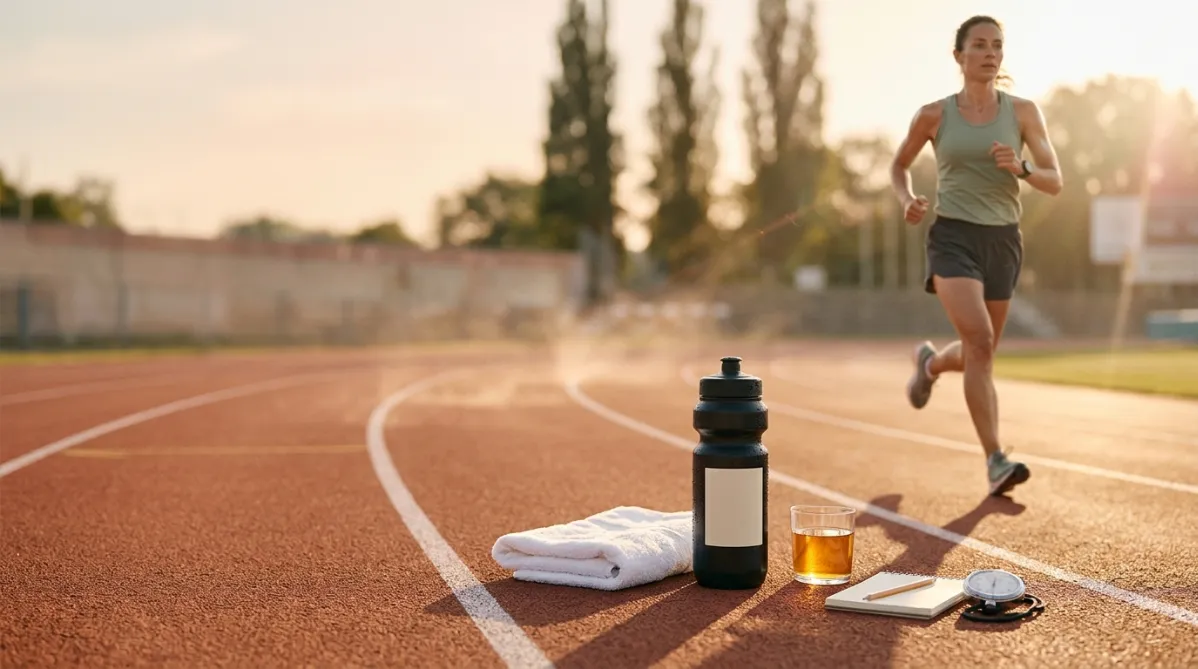
A sunlit outdoor running track in late afternoon, shot from a low angle with shallow depth of field. In the foreground, a matte black bottle with a minimal off-white label sits on the edge of a warm terracotta-colored track lane, beside a folded white towel and a small glass of amber liquid catching golden light. Condensation beads on the bottle. A faint heat shimmer rises from the track surface and softens the background.

In the midground, slightly out of focus, a lean athlete in a sage-green tank top and charcoal shorts runs on a treadmill-like stretch of track, a thin sheen of sweat on their shoulders, their expression focused and calm. Their motion is gently blurred, suggesting endurance and rhythm. Long soft shadows stretch across the lane lines.

The background fades into hazy peach, apricot, and pale yellow tones, with the suggestion of tall trees and a distant stadium wall. Warm sun flare enters from the upper right, creating a subtle glow and a few soft light streaks across the frame.

Subtle editorial touches: a small notebook with a pencil and a stopwatch rest beside the bottle, hinting at data and timing without any text legible. The color palette is warm and muted, with terracotta, cream, sage, and charcoal accents, and a fine film-like grain. The composition leaves open negative space on the left third for a headline overlay. The overall mood is clean, modern, and health-journal inspired, natural and aspirational, with a calm scientific curiosity rather than hype.
nutrition

Ketone Drinks in the Heat: Longer Endurance and Sharper Memory?

BY DR. GYMBRO ·

Ketone drinks are supposed to be for fat-burning biohackers, but a new heat-stress trial suggests they might also help you finish stronger. In 17 trained men, ketone monoester plus caffeine extended time to exhaustion to 8.9 minutes versus 7.0 with carbs plus caffeine, after 90 minutes of loaded treadmill work at 34 °C. Working-memory accuracy on the 1-back task improved too, while heart rate and core temperature didn't differ meaningfully. But 2-back, reaction time and the hit-and-avoid task showed no benefit, and the study was small, male-only and single-session. Here's what the data show, and what they don't.

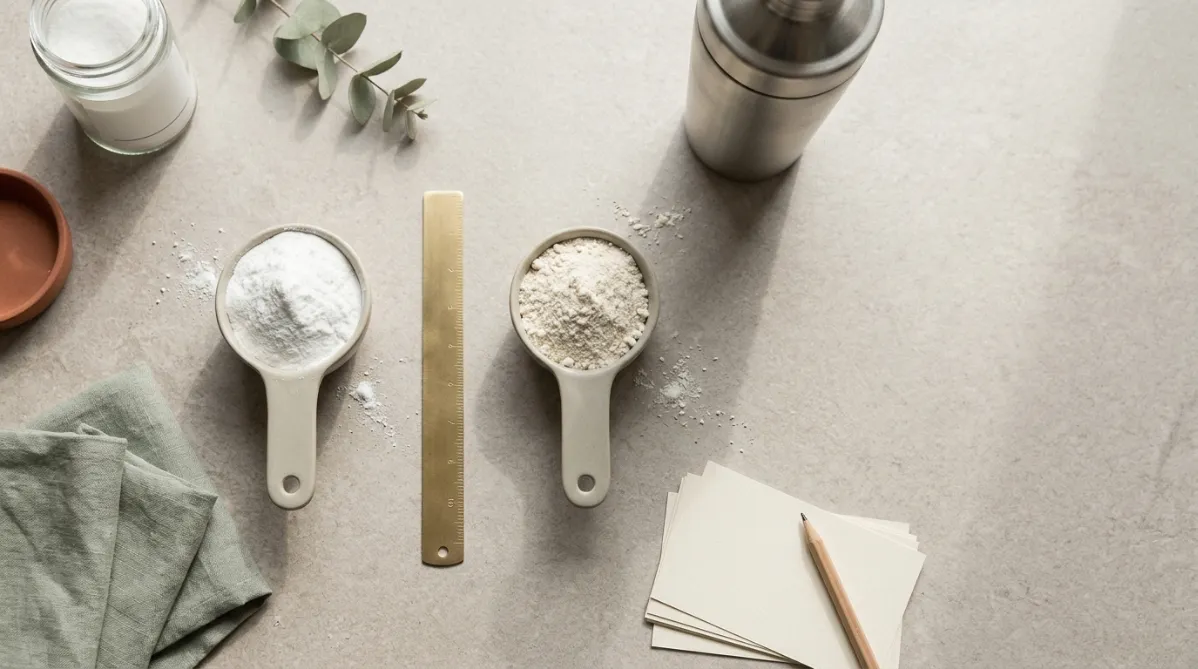
A bright, minimalist flat-lay photograph of two supplement scoops on a pale warm-gray stone surface, shot from directly above in soft natural window light. On the left, a matte ceramic scoop holds fine white creatine monohydrate powder, heaped in a clean mound. On the right, a second scoop of the same shape holds slightly coarser off-white beta-alanine powder, with a small, deliberate gap between the two. Each scoop sits in its own soft shadow, which suggests separation rather than combination. Between them, a thin brushed-brass ruler or a single slim line of fine powder runs across the surface and subtly divides the composition.

Around the scoops, a few restrained props in a muted editorial palette of sage green, cream, terracotta, and soft charcoal: a small glass jar with a minimalist label that has no readable text, a folded linen napkin, a single sprig of eucalyptus, and a stainless-steel shaker bottle softly out of focus in the upper corner. A few loose powder grains are scattered naturally across the stone. A small stack of blank cream index cards with a pencil rests in the lower right, hinting at research and note-taking without any legible writing.

The composition follows a clean rule-of-thirds layout, with generous negative space on the right third for headline overlay. The lighting is gentle and diffused, with long, soft shadows falling to the lower left. The color grading is calm and slightly desaturated, with creamy highlights and a subtle film-like grain. The overall look is a modern wellness and science journal cover, with an airy, trustworthy, contemporary editorial feel, shallow depth of field, and crisp detail on the powders.
nutrition

Creatine + Beta-Alanine: The Stack Bonus Researchers Couldn't Find

BY DR. GYMBRO ·

The creatine plus beta-alanine stack is marketed as a performance power couple, but a new network meta-analysis of 52 randomized trials found no synergy between them. Creatine alone significantly improved sprint, jump, repeated-sprint and upper-body endurance outcomes versus placebo. Beta-alanine's effects were non-significant or context-specific, and the combo added nothing beyond creatine. Here's what the study did, where it falls short, and what it means for your supplement budget.

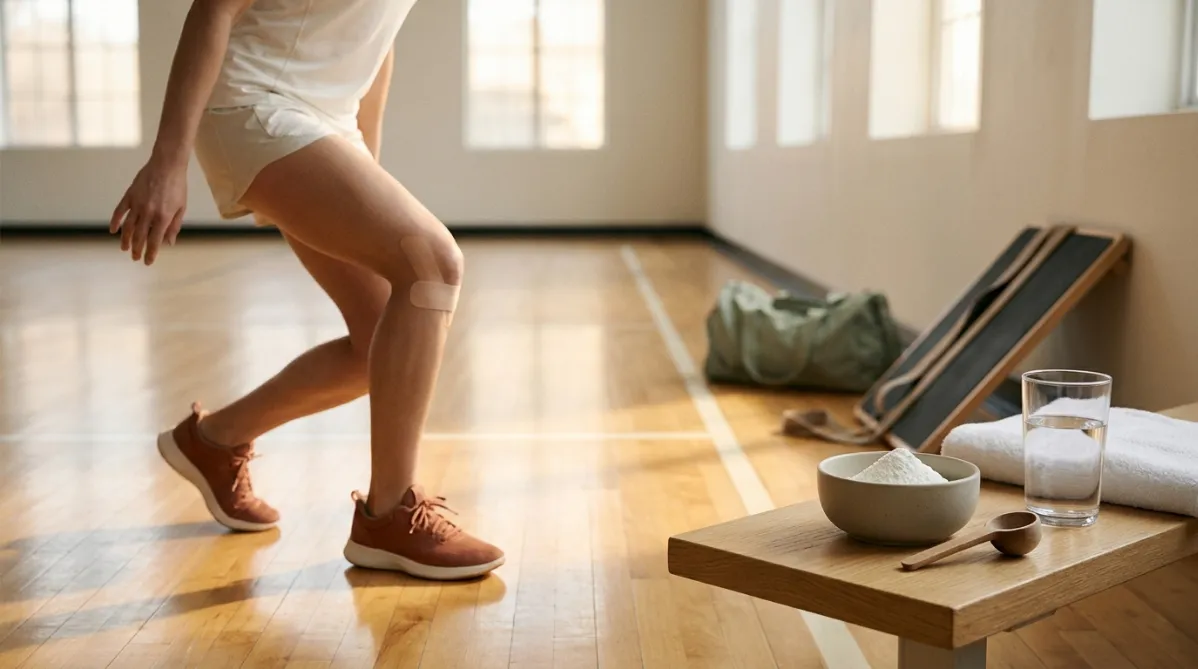
A wide, editorial-style photograph of a volleyball player mid-landing from a jump on a sunlit indoor court, captured from a low side angle. The athlete's knee is slightly bent and the patellar tendon area is in sharp focus, with soft natural muscle definition and a light strip of kinesiology tape just below the kneecap. The polished honey-toned hardwood floor reflects warm window light, and the background falls away into a creamy blur of pale court lines and tall windows.

In the lower right foreground, slightly out of focus, a matte ceramic bowl holds a small mound of fine white creatine powder. A wooden scoop rests beside it, next to a clear glass of water and a folded white towel. This sits on a light oak bench at the edge of the court. A resistance band and a slanted decline board, used for eccentric rehab, lean softly against the wall behind the bench.

The palette is warm and natural: cream, soft white, honey oak, muted sage green accents from a gym bag, and a touch of terracotta from the athlete's sneakers. Light is golden-hour and diffused, with gentle shadows and a subtle film-grain finish. The composition follows the rule of thirds, with the athlete on the left and the supplement still life on the right. Negative space in the upper portion leaves room for a headline overlay.

The overall mood is calm, modern, and health-focused, like a contemporary wellness or sports-science journal cover. Shallow depth of field, a clean minimalist aesthetic, and true-to-life color. No text, no logos, no futuristic or digital elements.
recovery

Creatine for Jumper's Knee? Pain Relief Showed Up by Week 4

BY DR. GYMBRO ·

Jumper's knee can sideline athletes for months, and a new trial asks whether creatine can speed things up. In 20 athletes doing eccentric rehab, only the creatine group had a significant pain and function (VISA-P) improvement at 4 weeks, along with gains in jump height. By week 8, however, both groups had improved similarly, and the between-group interaction only trended (p = 0.099). Here is what the study did, how creatine was taken, who might benefit, and why the small sample demands caution.

This page is available in