Dr. Gymbro
←

#heart health

1 article
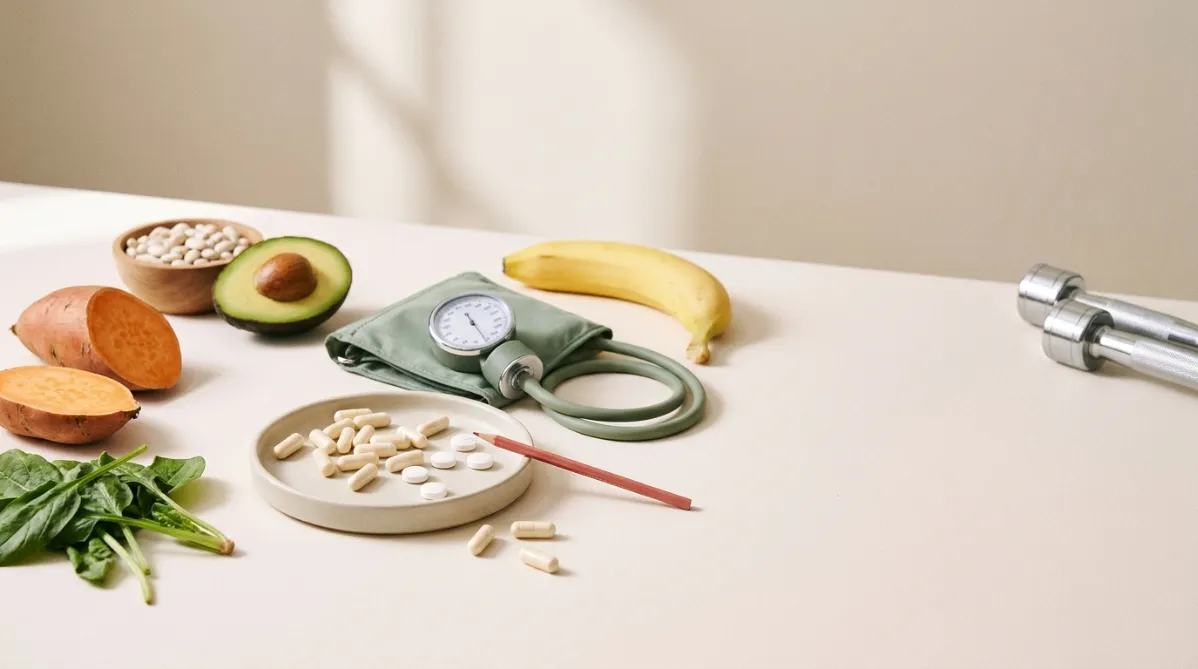
A bright, minimalist editorial still life on a soft warm-white surface, shot from a slightly elevated angle in natural morning light. In the center-left, a small matte ceramic dish holds a handful of pale cream capsules and tablets, a few spilling casually onto the surface. Beside it sits a sleek analog blood pressure cuff, softly coiled, in muted sage green fabric. Fresh potassium-rich foods are arranged in a loose, balanced composition around the pills: a halved ripe avocado with its pit, a peeled banana, a cut sweet potato with glowing orange flesh, a few leafy spinach stems, and a small cluster of white beans in a wooden bowl. A single slim pair of chrome dumbbell handles or a small chalked kettlebell rests discreetly at the right edge, hinting at the lifter audience without dominating the frame.

The palette is soft and modern: warm cream, sage green, terracotta orange, and buttery yellow, with subtle blush-pink shadows. The background is a smooth, out-of-focus pale oatmeal wall with a gentle diagonal shadow from a window, creating a calm, airy mood. The right third of the frame has generous negative space for headline text. A faint, delicate line of hand-drawn-style red accent, such as a small red ribbon or a thin red pencil resting near the pills, adds a quiet "caution" note without feeling alarming.

The overall look is clean, contemporary health-journal photography with shallow depth of field, crisp focus on the pills and produce, soft diffused highlights, and fine natural texture in the ceramic, linen, and food surfaces. Subtle film-like grain, editorial styling, and a calm, trustworthy, slightly cautionary tone. 16:9 landscape composition.
science research

Kalium‑Pillen senken den Blutdruck um 5 mmHg in vier Wochen – aber es gibt einen Haken

BY DR. GYMBRO ·

Eine neue Metaanalyse von 19 randomisierten Studien ergab, dass orales Kalium den systolischen Blutdruck in klinischer Umgebung um etwa 5 mmHg in rund vier Wochen senkt. Doch die Sache ist nicht so einfach: 24‑Stunden‑Messungen zeigen einen geringeren Effekt, und Nebenwirkungen traten bei 12,8 % der Teilnehmenden im Vergleich zu 3,2 % in den Kontrollgruppen auf. Die Ergebnisse beziehen sich auf unbehandelte primäre Hypertonie, und Kaliumpräparate können bei Patienten mit Nierenerkrankungen oder bei Einnahme von ACE‑Hemmern, ARBs oder kaliumsparenden Diuretika gefährlich sein. Im Folgenden wird dargestellt, was die Daten zeigen, was sie nicht zeigen und wie Kraftsportler mit einer obstarmen Ernährung damit umgehen sollten.

This page is available in