Dr. Gymbro
←

#melatonin

1 article
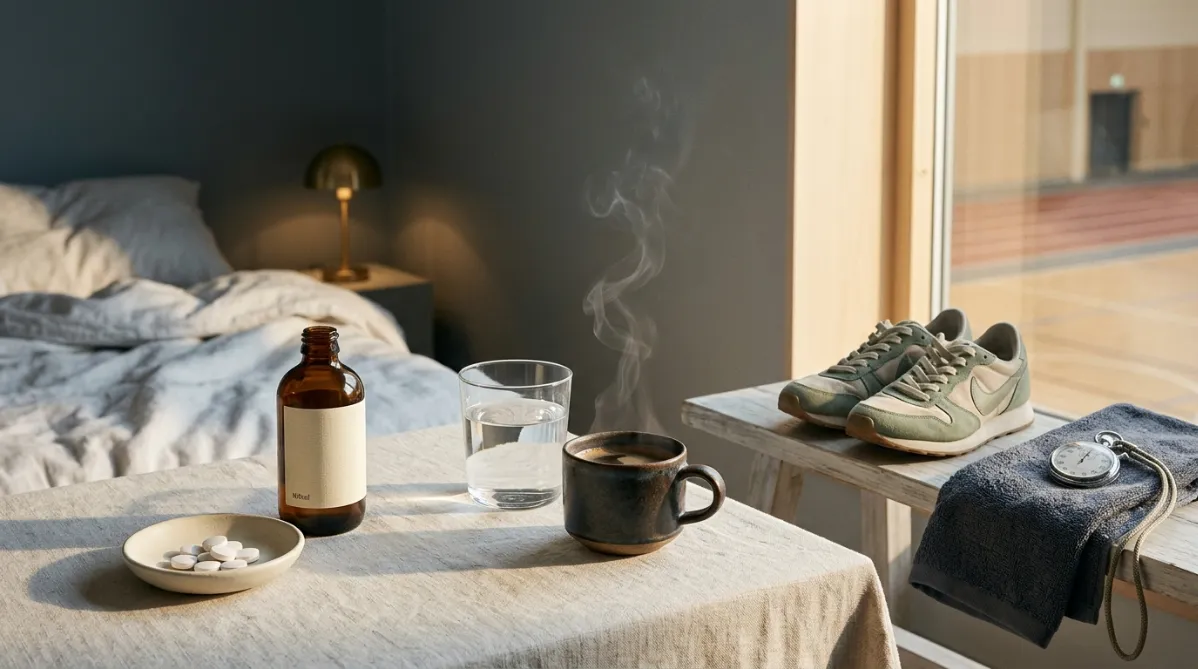
A quiet, sunlit editorial still life on a pale oatmeal linen surface, shot from a slightly elevated three-quarter angle with soft morning window light raking in from the left. On the left side, a small matte ceramic dish holds a few white round tablets, next to a minimalist amber glass bottle with a blank cream label. In the center, a slim glass of water sits beside a handmade stoneware espresso cup filled with dark coffee, with a thin ribbon of steam curling upward. On the right, a pair of worn but clean sage-green running shoes rests on a pale wooden bench, with a folded charcoal athletic towel and a stainless steel stopwatch beside them. The background is softly blurred: a calm bedroom-to-morning transition, with the left third of the frame in cool, dusky blue-gray tones suggesting night, with rumpled white bedding and a small bedside lamp glowing dimly. The tones then blend gradually across the frame into warm golden peach morning light on the right, where a blurred indoor court or track line is faintly visible through a tall window. The color palette is muted and modern: warm cream, soft sage, dusty blue, terracotta accents, and hints of amber. Delicate shadows, shallow depth of field, fine natural film grain, and generous negative space across the top of the frame for headline text. The mood is calm, precise, and thoughtful, in the style of a contemporary wellness and science journal photograph, clean and minimalist with tactile textures of linen, ceramic, glass, and wood.
nutrition

Melatonin zuerst, dann Koffein: Nur die Kombination senkt Muskel‑Schadensmarker

BY DR. GYMBRO ·

Koffein ließ trainierte Männer im Shuttle‑Test weiter laufen, aber nur die Kombination aus Melatonin am Abend und Koffein am Morgen senkte zudem Muskel‑Schadens‑ und Entzündungsmarker. Das Protokoll bestand aus 6 mg Melatonin vor dem Schlafengehen und 3 mg/kg Koffein eine Stunde vor dem Test. Melatonin veränderte den gemessenen Schlaf nicht, was das Ergebnis noch interessanter macht. Die Studie war ein kleiner Crossover‑Versuch mit 14 trainierten Männern und nur einem Leistungstest, sodass die Ergebnisse noch vorläufig sind. Hier wird erklärt, was getestet wurde, für wen es geeignet sein könnte und was es nicht beweist.

This page is available in