Dr. Gymbro
←

#protein supplementation

1 article
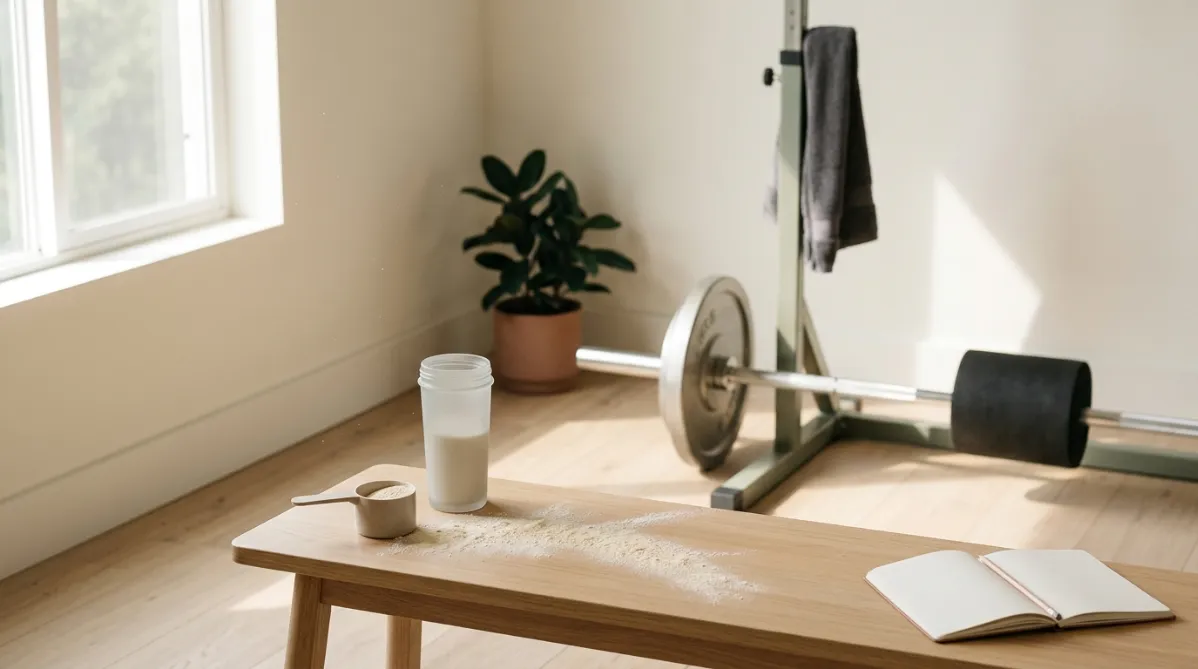
A wide, softly lit editorial photograph of a minimalist home gym corner with pale oak flooring and a warm off-white wall. In the foreground on a light wooden bench sits a matte ceramic scoop resting beside a simple frosted glass shaker bottle, with a delicate dusting of fine cream-colored protein powder spilled across the wood in a natural, casual arc. In the soft-focus midground, a loaded barbell rests on a squat rack with brushed steel plates, and a neatly folded charcoal towel hangs over the rack's upright. To the right, a small open notebook with a pencil lies on the bench, suggesting tracked training logs, with no legible text. Morning sunlight streams diagonally through a large window on the left, casting long gentle shadows and a warm golden glow across the scene, with subtle dust motes floating in the light. The color palette is muted and modern: sage green, warm sand, soft terracotta, and cream, with a single accent of deep forest green from a potted plant in the background corner. Shallow depth of field, crisp detail on the powder and scoop, creamy bokeh on the barbell. Shot as if with a 50mm lens at f/2, natural film-like grain, clean negative space on the upper right for headline overlay. The mood is calm, thoughtful, and science-minded, with a contemporary wellness magazine aesthetic, realistic and tactile, with no people, no logos, and no text.
nutrition

Erhöht Proteinpulver die Kraft? 23 Studien zum Ergebnis

BY DR. GYMBRO ·

Erhöht das Hinzufügen von Proteinpulver zu deinem Training wirklich die Kraft? Eine Meta‑Analyse aus dem Jahr 2026, die 23 randomisierte Studien mit 611 jungen Erwachsenen umfasste, zeigte im Schnitt einen Vorteil von 7,4 kg beim Kniebeugen und 2,6 kg beim Bankdrücken. Der Kniebeugen‑Vorteil trat vor allem bei Programmen von 12 Wochen oder weniger sowie in Studien auf, in denen Protein rund um das Training und vor dem Schlafengehen eingenommen wurde. Das Timing‑Signal war jedoch schwach, eine optimale Dosis wurde nicht ermittelt und die Autoren betonen, dass der Nutzen bedingt, nicht universell ist. Hier erfährst du, welche Erkenntnisse die Daten wirklich stützen und wo sie nicht weiterhelfen.

This page is available in