Dr. Gymbro
←

#vitamin b2

1 article
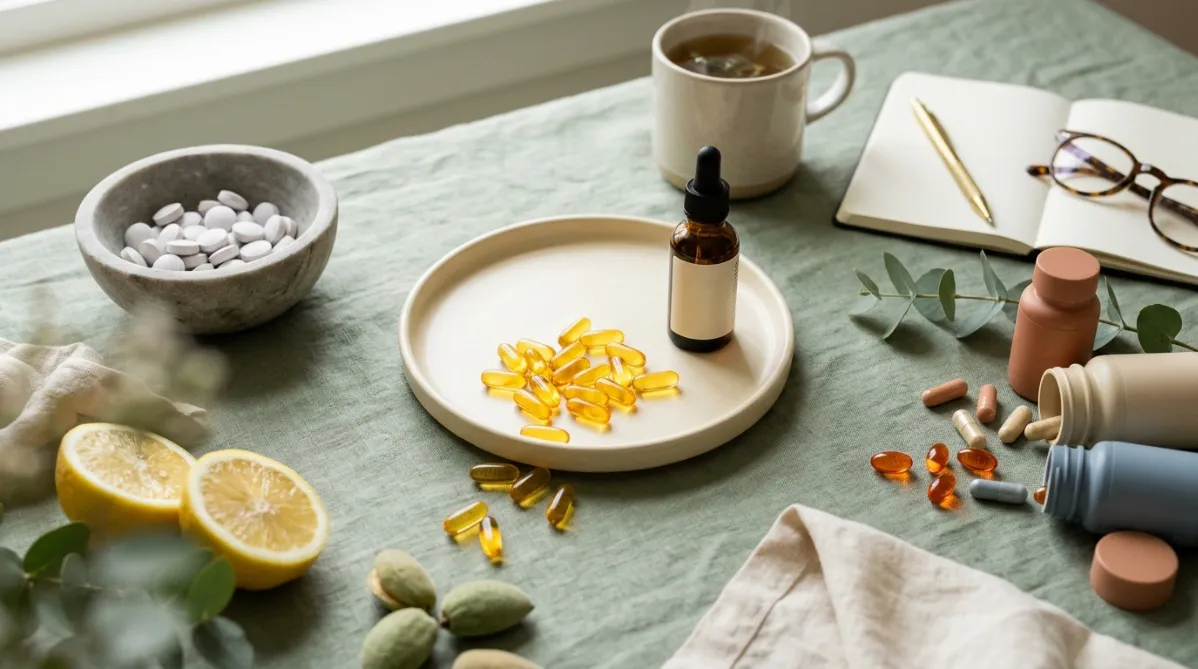
A bright, modern editorial still life shot from slightly above on a soft sage-green linen surface, in a wide landscape composition. At the center sits a small, elegant glass amber dropper bottle and a handful of vivid golden-yellow riboflavin capsules spilling from a minimalist ceramic dish, glowing warmly as the focal point. To the left, a scattering of pale, chalky white magnesium tablets rests in a muted gray stone bowl, pushed slightly out of focus and cooler in tone, suggesting they are less important. On the right, a few small, neatly arranged supplement bottles and capsules in soft terracotta, cream and dusty blue tones stand in a loose row, with a few orange CoQ10 softgels catching the light.

Around the supplements, fresh natural ingredients add texture: a halved lemon, a few green almonds, a sprig of eucalyptus, and a folded cream-colored linen napkin. A ceramic mug of herbal tea sits near the edge, with delicate steam. A small, open notebook with a pen and a pair of round tortoiseshell glasses sits in the upper corner, hinting at research and reading, with no legible text.

Lighting is soft, diffused natural window light from the upper left, creating gentle long shadows and a calm, airy mood. Color palette: warm butter yellow, sage green, soft cream, and muted terracotta, with a touch of cool gray. Shallow depth of field with crisp focus on the golden capsules and creamy blurred edges. The overall feel is clean, trendy wellness-journal photography, with generous negative space on the right side for headline overlay, minimalist, calm, and sophisticated, high resolution, 16:9.
science research

Magnesium zeigte keinen Nutzen; Riboflavin 400 mg senkt Migräne

BY DR. GYMBRO ·

Magnesium gilt als Standard‑Supplement bei Migräne, doch eine neue Netzwerk‑Meta‑Analyse von 20 doppelblinden Studien fand keinen Nutzen. Das Highlight war Riboflavin (Vitamin B2) mit 400 mg, das die Attacken um etwa 1,95 pro Monat reduzierte – basierend auf Evidenz mittlerer Sicherheit. Die Vitamine B12, B6 und D3 zeigten höhere Effektgrößen, basierten jedoch nur auf wenigen kleinen Studien und besitzen niedrige bis sehr niedrige Evidenz. CoQ10 wirkte vielversprechend hinsichtlich Attackendauer und Schmerzintensität, jedoch ebenfalls mit begrenzter Evidenz. Hier erfahren Sie, was die Studie ergab, wie vertrauenswürdig die Ergebnisse sind und was Sie daraus machen können.

This page is available in