Dr. Gymbro
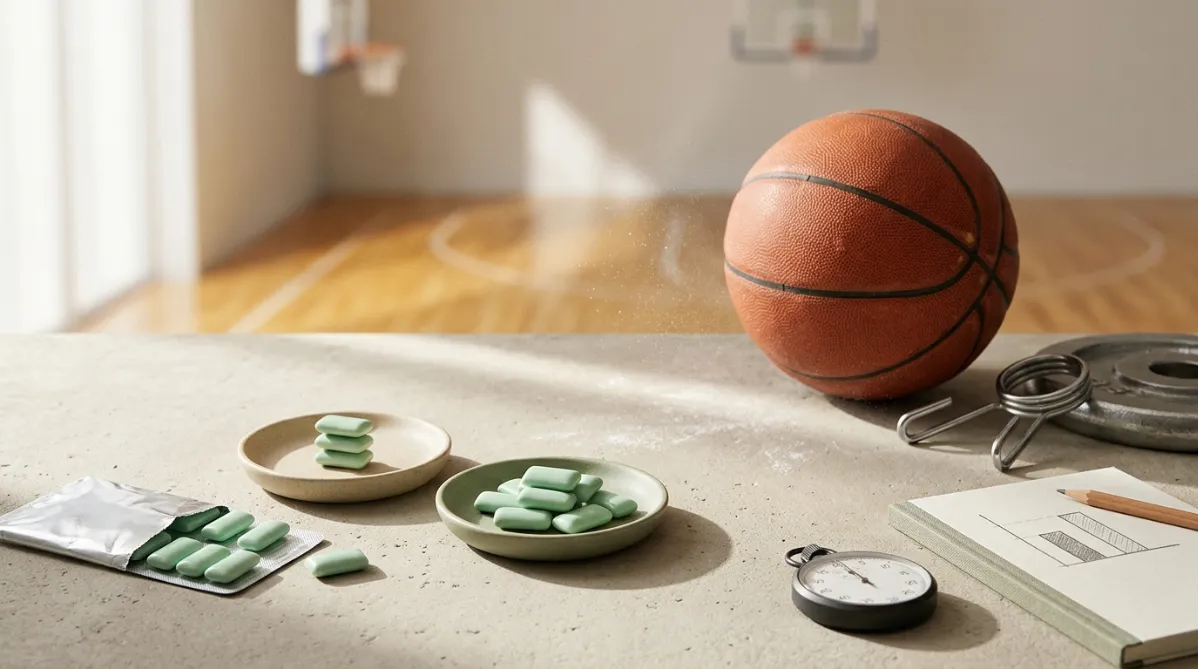
A landscape editorial still life on a pale warm-gray concrete surface, shot from a slightly elevated three-quarter angle in soft diffused morning window light. In the foreground left, a small open foil blister pack of mint-green caffeine gum sits beside two neatly arranged piles of gum pieces, one with three pieces and one with six, each on a small matte ceramic dish in oat and sage tones. The pieces are slightly glossy, rounded rectangles with crisp shadows. In the center-right, a worn leather basketball rests on the surface with deep amber-orange tones and visible pebbled texture. Next to it is a loosely chalked barbell collar and a single steel weight plate edge, partly out of focus. A minimalist analog stopwatch with a matte white face and a thin black hand lies at the lower right, and a slim notebook with a pencil rests nearby. The page shows a simple hand-drawn bar graph of two equal bars, with no legible text. In the soft-focus background, a blurred indoor basketball court with warm honey-colored hardwood and distant hoop lines fades into creamy bokeh. A narrow band of sunlight crosses the scene diagonally and picks out chalk dust particles in the air. The palette is muted and modern: sage green, warm oat, terracotta orange, charcoal, and cream. The composition leaves open negative space on the upper left for title overlay. Shallow depth of field, fine film grain, and a calm, clean magazine aesthetic like a contemporary health and science journal. No people, no text, no futuristic elements.
Science & Research

آب‌نبات گومای کافئین و عملکرد در همان روز: چرا ۳ mg/kg معادل ۶ بود

Dr. Gymbro · · 4 min read

آب‌نبات گومای کافئین و عملکرد در همان روز: چرا ۳ mg/kg معادل ۶ بود

یک آزمایش متقاطع جدید در مجله انجمن بین‌المللی تغذیه ورزشی به شواهدی اضافه می‌کند که مقدار بیشتر کافئین همیشه بهتر نیست. پژوهشگران دانشگاه ورزشی چنگدو گومای کافئین با دوزهای ۳ mg/kg و ۶ mg/kg را در برابر پلاسبو در بازیکنان مرد بسکتبال آزمایش کردند. دوز کمتر، عملکرد عصب‑عضلانی همان روز را تقریباً به همان اندازهٔ دوز دو برابر بهبود داد. این مطالعه محدودیت‌های طراحی دارد و اثرات ۲۴ تا ۴۸ ساعت پس از مصرف بی‌اثر باقی می‌مانند.

روش کار پژوهشگران

پانزده بازیکن مرد بسکتبال در یک طراحی تصادفی، دو‑دو‑سوکور، با کنترل پلاسبو شرکت کردند: پلاسبو، گومای کافئین ۳ mg/kg (CAF3) و گومای کافئین ۶ mg/kg (CAF6). در هر جلسه ورزشکاران گومای را به مدت ۱۵ دقیقه جویدند و سپس گرم‑آپ استاندارد انجام دادند. سپس یک پروتکل پیش‌باربرداری مقاومتی شامل سه ست اسکوآت با وزن ۸۵٪ از حداکثر یک‌بار (1‑RM) اجرا شد.

عملکرد در یک ساعت، ۲۴ ساعت و ۴۸ ساعت پس از مصرف ارزیابی شد. آزمایش‌ها شامل اندازه‌گیری نیروی حداکثری ایزومتریک وسط ران، نرخ توسعه نیرو در ۲۰۰ ms، ارتفاع پرش با حرکت متقابل، دو آزمون ۲۰ متر دو، تست چابکی واکنشی به شکل Y و تست Lane Agility بود. سرعت متوسط میله‌بار در طول اسکوآت‌ها نیز ثبت شد. داده‌ها با مدل‌های خطی اثرات ترکیبی تجزیه و تحلیل شدند که دورهٔ آزمایش و ترتیب اداری را در نظر می‌گرفتند تا اثرات ترتیب در طراحی متقاطع محدود شود.

نتیجه اصلی: دوز ۳ mg/kg کافی بود

در نقطهٔ یک ساعت، هر دو شرط کافئین نسبت به پلاسبو در قدرت ایزومتریک، توان انفجاری، عملکرد دو و چابکی واکنشی برتری نشان دادند. نکتهٔ مهم این است که پژوهشگران تفاوت معناداری بین دوزهای ۳ و ۶ mg/kg پیدا نکردند؛ دو برابر کردن کافئین هیچ مزیت قابل‌سنجشی نداشت.

سرعت میله‌بار در اسکوآت‌های پیش‌باربرداری نیز در هر دو شرط کافئین بالاتر از پلاسبو بود، به این معنا که کافئین به ورزشکاران اجازه داد همان بار ۸۵٪ را سریع‌تر ببینند و ممکن است کیفیت کار پیش‌باربرداری را ارتقاء دهد. تنها آزمونی که تعامل دوز‑زمان معنی‌داری نداشت، تست Lane Agility بود.

چرا دوز کمتر مهم است

ارزش عملی این موضوع در عوارض جانبی نهفته است. دوزهای بالاتر کافئین احتمال بروز اضطراب، سوء‌هاضمه، افزایش ضربان قلب و اختلال خواب را زیاد می‌کند که می‌توانند عملکرد رقابتی را تحت‌اللفظ قرار دهند. اگر ۳ mg/kg همان افزایش حاد را همانند ۶ mg/kg بدهد، دلیل کمی برای مصرف دوز بزرگتر وجود دارد. برای ورزشکاری وزن‌دار ۹۰ kg، ۳ mg/kg حدود ۲۷۰ mg و ۶ mg/kg حدود ۵۴۰ mg است؛ اختلاف قابل‌توجهی در مصرف کلی که به‌ویژه برای افرادی که هم‌زمان قهوه یا پیش‌تمرین مصرف می‌کنند، مهم است.

گوم نیز به عنوان یک روش تحویل جالب محسوب می‌شود؛ جویدن امکان جذب بخشی از کافئین از طریق پوشش دهان را فراهم می‌کند که می‌تواند کافئین را سریع‌تر به خون برساند نسبت به کپسول. این مطالعه مقایسه‌ای بین روش‌های تحویل انجام نداد، بنابراین این مزیت هنوز یک فرضیه محتمل است نه کشف قطعی.

نتایج ۲۴ تا ۴۸ ساعت، صریحاً

مطالعه همچنین بررسی کرد که آیا کافئین قبل از پیش‌باربرداری می‌تواند اثرات خود را به روزهای بعد منتقل کند. پاسخ منفی بود. در ۲۴ و ۴۸ ساعت هیچ دوز کافئین برتری نسبت به پلاسبو نشان نداد. بنابراین کسی که امید دارد یک دوز پیش‌جلسه‌ای کافئین بهبود ماندگار یا تسریع ریکاوری فراهم کند، در اینجا پاسخی نخواهد یافت؛ مزیت فقط به‌صورت حاد و محدود به همان روز استفاده است.

همچنین مهم است که این را به‌عنوان اثبات ضرر نخوانیم. کافئین عملکرد روز بعد را نسبت به پلاسبو مخدوش نکرد؛ نتیجه صرفاً خنثی بود.

محدودیت‌های طراحی که نباید نادیده بگیرید

نویسندگان دربارهٔ محدودیت‌ها صریح هستند و خوانندگان نیز باید همین طور باشند. در این مطالعه هیچ تست پایه‌ای پیش‌مداخله‌ای، هیچ شرط تنها کافئین و هیچ شرط کنترل بدون پیش‌باربرداری وجود نداشت. به همین دلیل، نمی‌توان گفت که کافئین، جلسه پیش‌باربرداری یا تعامل بین این دو باعث اثرات مشاهده‌شده شده‌اند. آنچه نشان می‌دهد تفاوت‌های مرتبط با کافئین در یک زمینهٔ پیش‌باربرداری است، نه اثر مستقل کافئین.

نمونه نیز کوچک است؛ ۱۵ بازیکن مرد بسکتبال، بنابراین نتایج ممکن است برای زنان، ورزش‌های دیگر یا افراد کم‌تمرین قابل تعمیم نباشد. واکنش به کافئین به‌سبب ژنتیک، مصرف عادت‌دار و تحمل فردی بسیار متفاوت است و یک آزمایش متقاطع کوچک نمی‌تواند این تنوع را به خوبی نشان دهد. پنجرهٔ تست یک ساعتی نیز فقط یک سناریوی خاص را بازتاب می‌دهد و نباید به‌عنوان نمایندهٔ تمام روز مسابقه یا تمرین گسترش یابد.

نکات عملی

  • دوز: حدود ۳ mg/kg شروع کنید. این مطالعه هیچ دلیلی برای رفتن به ۶ mg/kg برای عملکرد عصب‑عضلانی حاد نمی‌دهد.
  • زمان‌بندی: گوم را حدود ۱۵ دقیقه قبل از گرم‑آپ جوید، همان‌طور که پروتکل انجام داد، تا کافئین در زمان شروع کارهای سنگین یا انفجاری فعال باشد.
  • مناسب برای: ورزشکارانی در ورزش‌های قدرتی‑پرتکرار مانند بسکتبال و وزنه‌برداران که می‌خواهند در یک جلسهٔ کلیدی، روز مسابقه یا بلوک پیش‌باربرداری پر شدت، یک تقویت کیفیتی داشته باشند.
  • محتاط بودن: افرادی که به کافئین حساس هستند، مشکلات خواب، اضطراب یا نارسایی‌های ریتم قلب دارند و هر کسی که دیر در روز تمرین می‌کند. دوز را در تمرینات معمولی تست کنید، نه برای اولین بار در روز مسابقه.
  • انتظارات: به‌عنوان یک ابزار همان‌روزی در نظر بگیرید. انتظار نداشته باشید که بهبود ریکاوری یا عملکرد را تا ۲۴‑۴۸ ساعت بعد فراهم کند.

نتیجه‌گیری

این آزمایش از یک استراتژی ساده و هزینه‑مؤثر پشتیبانی می‌کند: یک دوز متوسط گومای کافئین قبل از گرم‑آپ می‌تواند کوتاه‌مدت قدرت، توان، سرعت دو و چابکی واکنشی را افزایش دهد و بیشتر بهتر نیست. با وجود نمونهٔ کوچک و عدم وجود گروه پایه یا فقط کافئین، این نقطهٔ داده‌ای مفید است نه پاسخی نهایی. مطالعات بزرگتر و کنترل‌شده‌تر برای جدا کردن اثر کافئین از اثر کار پیش‌باربرداری لازم خواهند بود.

Original study

Read the original research on pubmed.ncbi.nlm.nih.gov →

This article summarizes published research for general information. It is not medical advice.

DG

Written by

Dr. Gymbro

Dr. Gymbro writes for Dr. Gymbro: science-backed fitness, nutrition & performance.

Related Articles

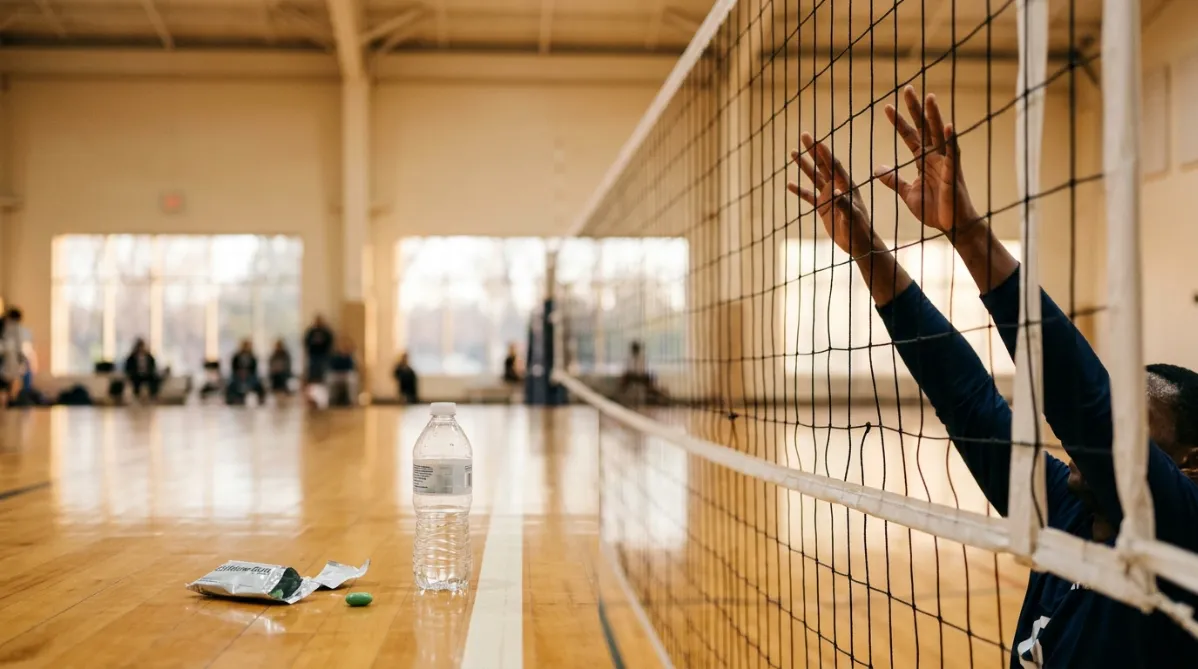
A landscape editorial photograph of a volleyball net in a softly lit indoor gym, shot from a low angle on the court. In the foreground, a pair of athletic hands in mid-block reach above the net, fingers spread, caught in crisp focus. The athlete's face is out of frame, so the attention stays on the hands and the net. In the lower left foreground, a small open foil pack of caffeine chewing gum sits on the polished maple floor, with two mint-green gum pieces beside it and a clear water bottle. The pack is unbranded and minimal.

The background is a warm blur of honey-toned hardwood, pale gym walls, and tall windows with diffused late-afternoon light streaming in. Dust motes glow in the light shafts. The palette is muted and modern: warm wood amber, soft cream, sage green, and a touch of deep navy from the athlete's jersey. Shallow depth of field and gentle film grain give the image a refined, magazine-like feel. The composition follows the rule of thirds, with the hands and net on the right and open negative space on the left, where headline text could sit.

The mood is calm, focused, and slightly cinematic, like a feature in a contemporary sports science journal. The lighting is soft and natural, with long gentle shadows across the court lines. No futuristic or digital elements, no charts, no text. The overall look is clean, tactile, and editorial.
nutrition

خستگی زمان واکنش‌ها را ۱۸٪ کند کرد؛ آدامس کافئین آن را به ۳٪ کاهش داد

BY DR. GYMBRO ·

در یک پروتکل خستگی تکراری و شدید برای بلاک، بازیکنان والیبال زن که دارونما مصرف کردند، زمان واکنش بلاک‌گیری خود را ۱۸٫۴٪ کندتر کردند. مصرف آدامس کافئین ۶ mg/kg فقط ۳٫۰٪ کاهش ایجاد کرد و دوز ۳ mg/kg کاهش ۶٫۴٪ داشت. قدرت پرش‑بلوک و سفتی پرش‑پایین نیز با کافئین بهتر حفظ شد؛ اما مطالعه تنها شامل ۱۵ ورزشکار بود، کورسازی کامل نبود، عوارض جانبی در دوز بالاتر بیشتر بود و دوز برتر مشخص نشد. در ادامه به معنی واقعی میلی‌گرم‌ها و افرادی که ممکن است از این روش سود ببرند می‌پردازیم.

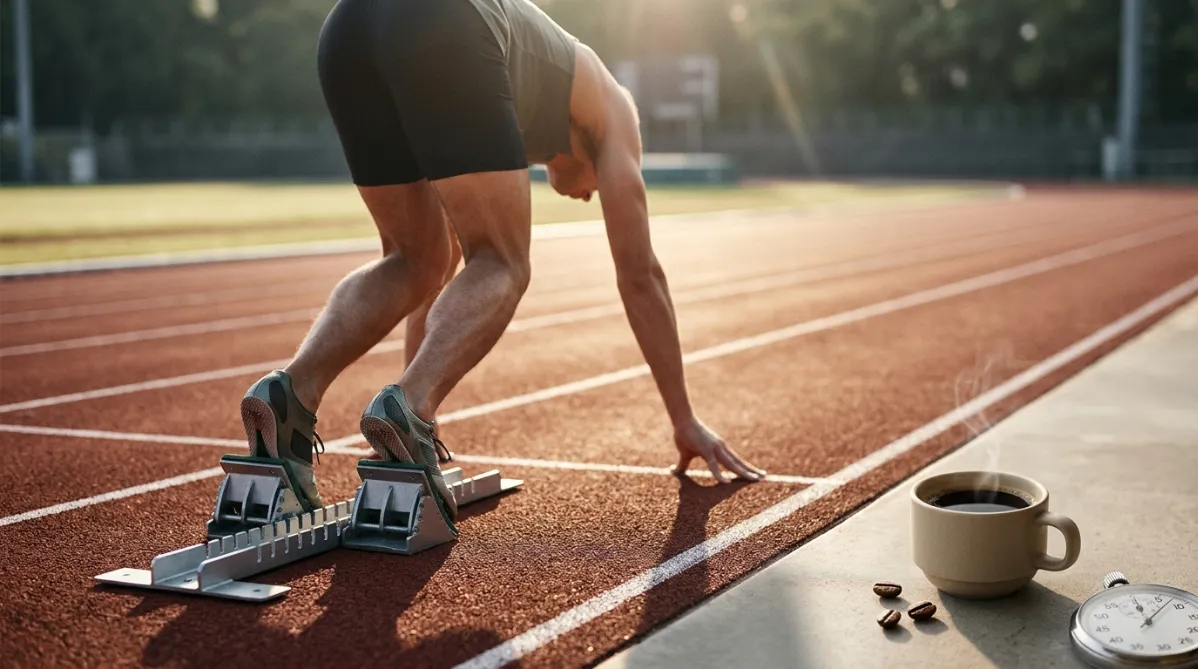
A wide, editorial-style photograph of a sprinter crouched in starting blocks on a deep terracotta-red running track, shot from a low angle at the side as the first morning light rakes across the lanes. The athlete is mid-set, hips lifted, hands poised behind crisp white lane lines, with a soft focus on their muscular calves and spiked shoes in the foreground. Warm golden sunlight creates long, elegant shadows and subtle lens flare, while the distant lanes fade into a creamy bokeh.

In the lower right foreground, slightly out of focus, sits a minimalist still life on a matte concrete ledge beside the track: a small ceramic cup of black coffee with a thin wisp of steam, two loose roasted coffee beans, and a simple stopwatch with a clean white face. The ceramic is a muted sand color, adding a refined, modern lifestyle touch.

The color palette is restrained and trendy: terracotta, warm cream, soft charcoal, and a hint of sage green from trees blurred in the far background. The composition uses generous negative space across the upper left, ideal for headline text overlay. The look is similar to a contemporary health and sports science magazine: natural film-like grain, gentle contrast, shallow depth of field, and a calm, focused mood. No text, no logos, no graphics, and no futuristic elements, just a realistic, tactile, sunlit scene that suggests precision, preparation, and explosive speed.
science research

دوز دو برابر کافئین، سرعت بیشتر؟ چه مقدار ۶ mg/kg واقعا افزایشی دارد

BY DR. GYMBRO ·

یک آزمون تصادفی، دو‌کودک و دو‌دو‌سوک در ۲۱ دونده مرد تمرین‌کرده مقایسهٔ ۳ mg/kg و ۶ mg/kg کافئین را انجام داد. هر دو دوز نسبت به دارونما بهتر بودند، ولی دوز بالاتر فقط در ۳۰ و ۶۰ متر اول سرعت اضافی می‌داد و در ۱۰ متر تغییری نداشت. علاوه بر این، ارتفاع پرش و نرخ توسعهٔ نیرو در بلوک شروع با ۶ mg/kg بهبود یافت، در حالی که زمان واکنش یا توان اوج ویندگیت تغییر نکرد. در اینجا مقدار این دوزها به میلی‌گرم برای ورزشکاران ۷۰ تا ۸۰ kg، زمان مصرف، گروه هدف و نکات مربوط به عوارض جانبی توضیح داده شده است.

A landscape editorial photograph in a bright, modern gym studio with soft natural light pouring through tall windows. In the foreground, a matte ceramic cup and a small glass jar of plain white powder sit on a light oak bench, with a wooden scoop resting beside them and a few loose grains dusted across the wood. The jar has no label, which hints at mystery without being heavy-handed. Slightly out of focus behind them, a female athlete in a sage green athletic set stands at a barbell, chalked hands gripping the bar, her expression calm and focused. A male cyclist on a stationary bike is blurred in the far background. The palette is warm neutrals: cream, soft sand, pale oak, muted sage, and a touch of terracotta, with gentle golden-hour highlights and soft shadows. The composition follows the rule of thirds, with the cup and jar in the lower left, the athlete on the right, and open negative space in the upper area for headline text. The depth of field is shallow, with a creamy bokeh background. The mood is contemplative, curious, and trendy, like a contemporary health and science magazine cover. Fine film grain, subtle matte finish, clean minimalist styling, and no text or logos.
science research

کافئین تقلبی همچنان ورزشکاران را قوی‌تر و سریع‌تر می‌کند

BY DR. GYMBRO ·

اگر بخشی از انرژی پیش‌ورزشیتان از ذهن‌تان می‌آید نه از یک قاشق کافئین، چه می‌شود؟ یک متاآنالیز ۲۰۲۶ شامل ۱۷ مطالعه نشان داد که حتی وقتی ورزشکاران فکر می‌کردند دارویی که دریافت کرده‌اند کافئین است، عملکرد ورزشی آن‌ها بهتر شد (d = 0.49). این اثر در تست‌های پرس سینه، مسابقات دوچرخه‌سواری زمان‌محور و شتاب‌گیری‌های تکراری مشاهده شد. اثرات بیشتر زمانی بود که پژوهشگران کور بودند و در مطالعاتی با حضور بیشتر زنان. شواهد با اطمینان پایین و ریسک بالای سوگیری همراه است. این نتایج به این معنی نیست که مصرف کافئین واقعی ۳‑۶ mg/kg را کنار بگذارید، بلکه یادآوری می‌کند که انتظارات نیز یک متغیر عملکردی هستند.

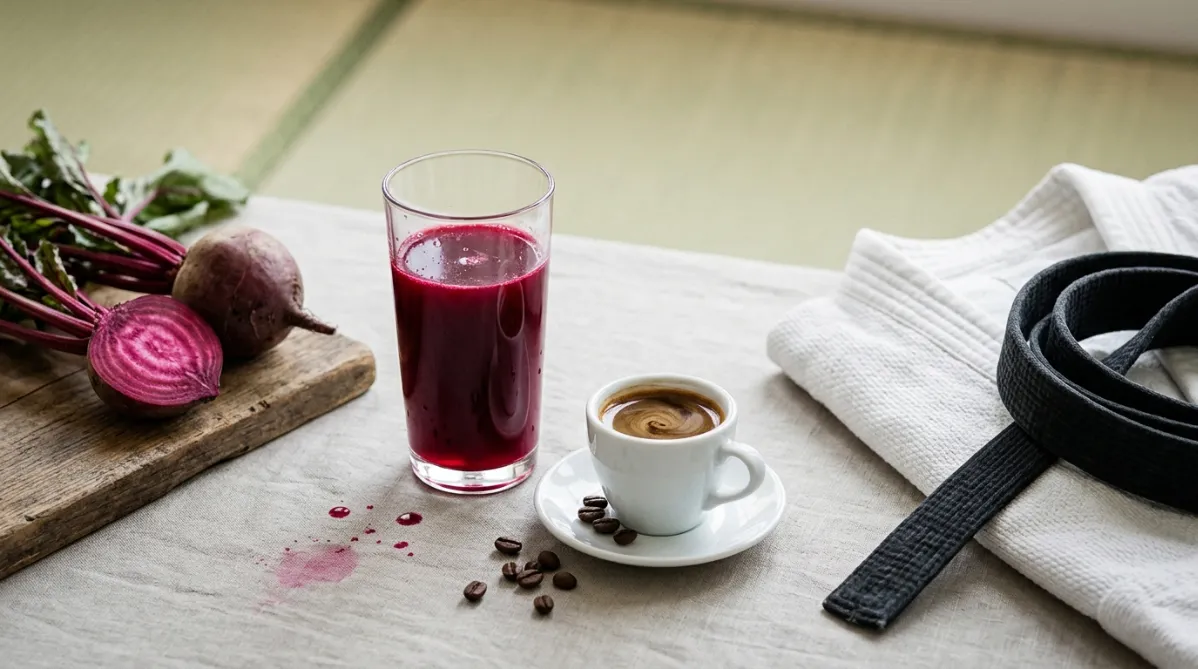
A wide landscape editorial still life on a pale warm-gray linen surface, shot from a slightly elevated three-quarter angle in soft diffused morning window light. At center-left, a tall clear glass filled with deep magenta-crimson beetroot juice catches the light, its edges glowing ruby with a few condensation droplets on the surface. Beside it sits a small white ceramic espresso cup with dark, glossy coffee and a delicate swirl of crema. A few roasted coffee beans are scattered casually near the cup's saucer. To the left, two whole raw beetroots with their leafy burgundy-veined greens still attached rest on a rustic wooden board, with one beet sliced in half to reveal concentric rings of vivid fuchsia and pale pink. A folded white judo gi sleeve with a worn black belt loosely coiled on top is draped along the right side of the frame, the cotton weave texture visible, hinting at the sport without any people. In the background, a soft-focus tatami mat texture in muted straw-green creates a subtle horizontal band, blurred into creamy bokeh. A small scattering of beet juice droplets and a faint magenta stain on the linen add an organic, lived-in touch. The palette is restrained and modern: magenta, espresso brown, off-white, muted sage, and warm beige. Composition leaves generous negative space on the upper right for headline overlay. The mood is clean, calm, and contemporary, like a premium health and science magazine cover, with shallow depth of field, crisp focus on the glass and cup, fine natural shadows, and subtle film-like grain.
nutrition

آب چغندر و کافئین: استراتژی جودویی که کافئین تک‌نفره را پشت سر می‌گذارد

BY DR. GYMBRO ·

یک آزمایش تصادفی بر روی ۳۵ ورزشکار جودو نشان داد که اثر کافئین در طول یک روز مسابقه شبیه‌سازی‌شده کاهش می‌یابد، در حالی که آب چغندر عملکرد را در راندهای انتهایی بهبود می‌بخشد. ترکیب هر دو مکمل، مزایای اولیه کافئین را حفظ کرده و در راند پنجم بهتر از کافئین تنها عمل می‌کند. در این مقاله به نتایج پژوهش، گروه‌های هدف، ملاحظات ایمنی و نکات عملی برای استفاده از این ترکیب می‌پردازیم.

This page is available in