Dr. Gymbro
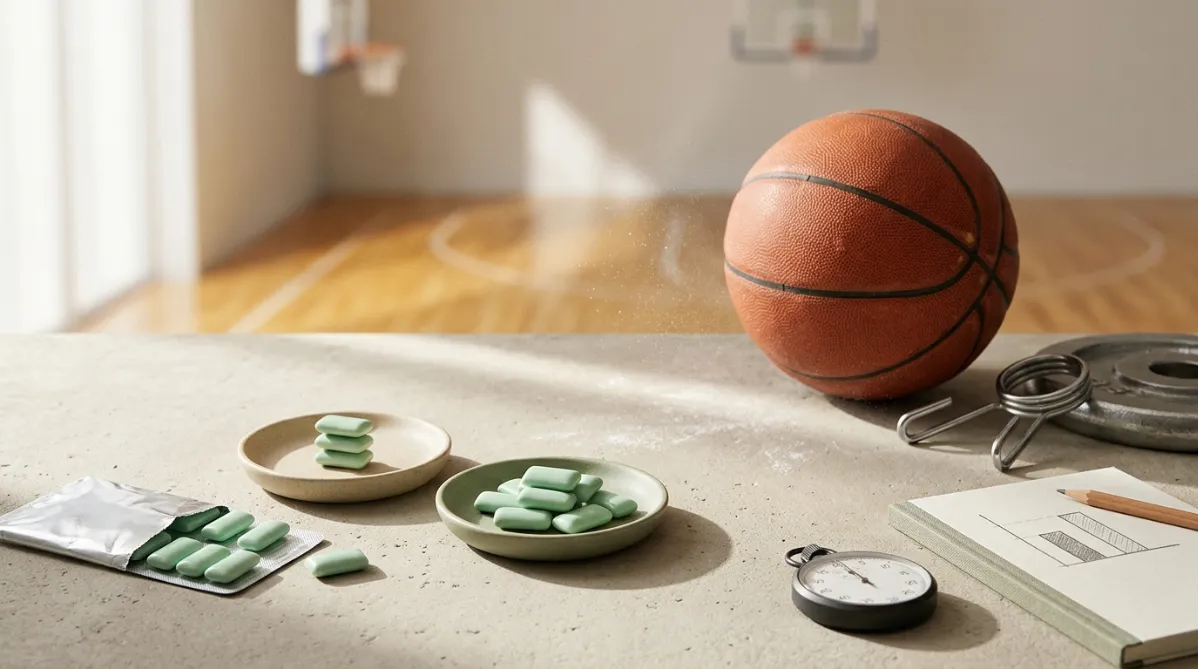
A landscape editorial still life on a pale warm-gray concrete surface, shot from a slightly elevated three-quarter angle in soft diffused morning window light. In the foreground left, a small open foil blister pack of mint-green caffeine gum sits beside two neatly arranged piles of gum pieces, one with three pieces and one with six, each on a small matte ceramic dish in oat and sage tones. The pieces are slightly glossy, rounded rectangles with crisp shadows. In the center-right, a worn leather basketball rests on the surface with deep amber-orange tones and visible pebbled texture. Next to it is a loosely chalked barbell collar and a single steel weight plate edge, partly out of focus. A minimalist analog stopwatch with a matte white face and a thin black hand lies at the lower right, and a slim notebook with a pencil rests nearby. The page shows a simple hand-drawn bar graph of two equal bars, with no legible text. In the soft-focus background, a blurred indoor basketball court with warm honey-colored hardwood and distant hoop lines fades into creamy bokeh. A narrow band of sunlight crosses the scene diagonally and picks out chalk dust particles in the air. The palette is muted and modern: sage green, warm oat, terracotta orange, charcoal, and cream. The composition leaves open negative space on the upper left for title overlay. Shallow depth of field, fine film grain, and a calm, clean magazine aesthetic like a contemporary health and science journal. No people, no text, no futuristic elements.
Science & Research

カフェインガムと当日のパフォーマンス:なぜ 3 mg/kg が 6 mg/kg と同等だったのか

Dr. Gymbro · · 1 min read

A new crossover trial in the Journal of the International Society of Sports Nutrition adds to the evidence that more caffeine is not always better. Researchers at Chengdu Sport University tested caffeine gum at 3 mg/kg and 6 mg/kg against placebo in male basketball players. The lower dose improved same-day neuromuscular performance about as well as double the amount. The study has real design limits, and the 24 to 48 hour results were flat.

研究の概要

15 名の男子バスケットボール選手を対象に、プラセボ、3 mg/kg カフェインガム(CAF3)、6 mg/kg カフェインガム(CAF6)の 3 条件をランダム化・二重盲検・プラセボ対照クロスオーバーで実施しました。各セッションで参加者はガムを 15 分間噛み、標準化されたウォームアップを行った後、85% 1RM のバックスクワットを 3 セット×3 回実施するレジスタンス・プライミングプロトコルに入りました。

パフォーマンスは、摂取後 1 時間、24 時間、48 時間で測定されました。測定項目は、等尺性中大腿引張(mid‑thigh pull)ピークフォース、200 ms の力発揮率(RFD)、カウンタームーブメントジャンプ高さ、20 m スプリント、Y 字形リアクティブアジリティテスト、Lane アジリティテスト、そしてスクワット中の平均コンセントリックバーベル速度です。データは、実験期間と投与順序を共変量とした線形混合効果モデルで解析し、クロスオーバーデザイン特有の順序効果を抑制しました。

見出し結果:3 mg/kg で十分

1 時間後の測定では、両カフェイン条件がプラセボを上回り、等尺性筋力、爆発的パワー、スプリント速度、リアクティブアジリティすべてで有意な向上が認められました。重要なのは、3 mg/kg と 6 mg/kg の間に有意差が見られなかったことです。用量を二倍にしても測定上の追加効果は得られませんでした。

プライミングスクワットにおけるバーベル速度も、両カフェイン条件でプラセボより高くなりました。これは、同じ 85% 1RM の負荷をカフェインがより速く動かせたことを示唆し、プライミング自体の質が向上した可能性があります。唯一、時間‑用量交互作用が有意でなかった項目は Lane アジリティテストでした。

なぜ低用量が重要なのか

実用的な価値は副作用にあります。高用量のカフェインは、ジッタ感、胃腸不調、心拍上昇、睡眠障害を引き起こしやすく、競技パフォーマンスを逆に損なうリスクがあります。3 mg/kg で 6 mg/kg と同等の急性効果が得られるので、余分なリスクを取る必要はありません。体重 90 kg の選手であれば、3 mg/kg は約 270 mg、6 mg/kg は約 540 mg となり、摂取量は大きく異なります。特にコーヒーやプレワークアウトサプリを併用しているアスリートにとっては重要です。

ガムという投与形態は興味深いです。噛むことで口腔粘膜からの吸収が促進され、カプセルよりも血中濃度が速く上昇すると考えられます。本研究では投与方法の比較は行っていないため、上記はあくまで「可能性の一つ」として留保すべきです。

24〜48 時間の結果は正直に言えば「なし」

本研究は、プライミング前のカフェインが翌日以降に残るかどうかも検証しましたが、結果は陰性でした。24 時間、48 時間の測定では、いずれのカフェイン用量もプラセボと比べて有意な優位性を示しませんでした。したがって、セッション前のカフェインが持続的なブーストや回復促進に繋がるという期待は、ここでは支持されません。逆に、カフェインが次の日のパフォーマンスを低下させた証拠もありません。結果は「中立的」であると解釈すべきです。

デザイン上の限界は見逃さないで

著者は限界を率直に述べており、読者も同様に注意が必要です。ベースラインテストが無く、カフェイン単独群やレジスタンスプライミングなしの対照群も設定されていません。そのため、効果がカフェイン、プライミング、あるいは両者の相互作用のいずれによるものかは解明できません。示されたのは「プライミング状況下でのカフェインに起因する差異」であり、カフェイン単体の効果ではありません。

サンプルサイズも 15 名の男性バスケットボール選手に限られ、女性や他種目、トレーニングレベルが低い人への一般化は慎重に行う必要があります。カフェイン反応は遺伝的要因、習慣的摂取量、耐性などで個人差が大きく、少人数のクロスオーバー試験ではその分散を捉えきれません。測定ウィンドウが 1 時間という限定的なシナリオである点も、ゲーム全体や長時間のトレーニング日に当てはめるのは無理があります。

実践的なポイント

  • 用量:まずは 3 mg/kg を目安に。急性の神経筋パフォーマンス向上のために、6 mg/kg に上げる根拠はありません。
  • タイミング:本プロトコルと同様に、ウォームアップ前に約 15 分間ガムを噛み、カフェインが効き始めた状態で重いまたは爆発的な作業に入ります。
  • 対象者:バスケットボールのようなパワーとインターミッテント性が要求される競技、またはコンペ当日のキープセッションやハイインテンシティプライミングを行うウェイトリフターに適しています。
  • 注意が必要な人:カフェインに感受性が高い人、睡眠障害・不安・心律不整を抱える人、夜間にトレーニングする人は用量を抑えるか、使用を控えてください。必ず実践練習でテストし、試合当日に初めて試すことは避けましょう。
  • 期待値:当日のツールとして捉える。他の日の回復やパフォーマンス向上には期待しないでください。

結論

この試験は「適度なカフェインガムをウォームアップ前に噛む」ことで、短時間で筋力・パワー・スプリント速度・リアクティブアジリティが鋭くなるというシンプルかつコスト効率の高い戦略を裏付けています。用量は増やすほど良いわけではありません。サンプルが小さく、ベースラインやカフェイン単独群が欠如している点から、カフェイン効果とプライミング効果を分離した最終的な答えとは言えません。今後はより大規模でコントロールが徹底された研究が求められます。
Original study

Read the original research on pubmed.ncbi.nlm.nih.gov →

This article summarizes published research for general information. It is not medical advice.

DG

Written by

Dr. Gymbro

Dr. Gymbro writes for Dr. Gymbro: science-backed fitness, nutrition & performance.

Related Articles

A landscape editorial photograph of a volleyball net in a softly lit indoor gym, shot from a low angle on the court. In the foreground, a pair of athletic hands in mid-block reach above the net, fingers spread, caught in crisp focus. The athlete's face is out of frame, so the attention stays on the hands and the net. In the lower left foreground, a small open foil pack of caffeine chewing gum sits on the polished maple floor, with two mint-green gum pieces beside it and a clear water bottle. The pack is unbranded and minimal.

The background is a warm blur of honey-toned hardwood, pale gym walls, and tall windows with diffused late-afternoon light streaming in. Dust motes glow in the light shafts. The palette is muted and modern: warm wood amber, soft cream, sage green, and a touch of deep navy from the athlete's jersey. Shallow depth of field and gentle film grain give the image a refined, magazine-like feel. The composition follows the rule of thirds, with the hands and net on the right and open negative space on the left, where headline text could sit.

The mood is calm, focused, and slightly cinematic, like a feature in a contemporary sports science journal. The lighting is soft and natural, with long gentle shadows across the court lines. No futuristic or digital elements, no charts, no text. The overall look is clean, tactile, and editorial.
nutrition

疲労で反応が18%遅くなる。カフェインガムで3%に抑制

BY DR. GYMBRO ·

過酷な連続ブロック疲労プロトコルの後、プラセボを摂取したエリートバレーボール選手の反応ブロックシーケンスは18.4%遅延した。6 mg/kgのカフェインガムを噛むと遅延はわずか3.0%に抑えられ、3 mg/kgでも6.4%に留まった。ブロックジャンプのパワーとドロージャンプの剛性もカフェインで維持されたが、対象は15名に限られ、盲検化が不完全で高用量での副作用が多く報告された。最適用量はまだ確定しておらず、実際のミリグラム換算は以下のとおりである。

A wide, editorial-style photograph of a sprinter crouched in starting blocks on a deep terracotta-red running track, shot from a low angle at the side as the first morning light rakes across the lanes. The athlete is mid-set, hips lifted, hands poised behind crisp white lane lines, with a soft focus on their muscular calves and spiked shoes in the foreground. Warm golden sunlight creates long, elegant shadows and subtle lens flare, while the distant lanes fade into a creamy bokeh.

In the lower right foreground, slightly out of focus, sits a minimalist still life on a matte concrete ledge beside the track: a small ceramic cup of black coffee with a thin wisp of steam, two loose roasted coffee beans, and a simple stopwatch with a clean white face. The ceramic is a muted sand color, adding a refined, modern lifestyle touch.

The color palette is restrained and trendy: terracotta, warm cream, soft charcoal, and a hint of sage green from trees blurred in the far background. The composition uses generous negative space across the upper left, ideal for headline text overlay. The look is similar to a contemporary health and sports science magazine: natural film-like grain, gentle contrast, shallow depth of field, and a calm, focused mood. No text, no logos, no graphics, and no futuristic elements, just a realistic, tactile, sunlit scene that suggests precision, preparation, and explosive speed.
science research

カフェイン量を倍にするとスプリントは速くなるか?6 mg/kgがもたらす効果

BY DR. GYMBRO ·

新しい無作為化二重盲検クロスオーバー試験で、3 mg/kgと6 mg/kgのカフェインを21名のトレーニングされた男性スプリンターに投与した。両方の投与量はプラセボよりもパフォーマンスが向上したが、6 mg/kgは10 mではなく、最初の30 mと60 mでのみ追加のスピード向上を示した。また、ジャンプ高さとブロックの力発達でも追加効果が見られたが、反応時間やWingateのピークパワーには変化がなかった。ここでは、70〜80 kgの選手に換算したミリグラム量、摂取タイミング、対象となる人、そして副作用に関して本研究が示さない点を解説する。

A landscape editorial photograph in a bright, modern gym studio with soft natural light pouring through tall windows. In the foreground, a matte ceramic cup and a small glass jar of plain white powder sit on a light oak bench, with a wooden scoop resting beside them and a few loose grains dusted across the wood. The jar has no label, which hints at mystery without being heavy-handed. Slightly out of focus behind them, a female athlete in a sage green athletic set stands at a barbell, chalked hands gripping the bar, her expression calm and focused. A male cyclist on a stationary bike is blurred in the far background. The palette is warm neutrals: cream, soft sand, pale oak, muted sage, and a touch of terracotta, with gentle golden-hour highlights and soft shadows. The composition follows the rule of thirds, with the cup and jar in the lower left, the athlete on the right, and open negative space in the upper area for headline text. The depth of field is shallow, with a creamy bokeh background. The mood is contemplative, curious, and trendy, like a contemporary health and science magazine cover. Fine film grain, subtle matte finish, clean minimalist styling, and no text or logos.
science research

偽カフェインでも選手はより強く、速くなる

BY DR. GYMBRO ·

トレーニング前の刺激が実は脳から来ていて、スプーンからではないとしたらどうでしょうか?2026年のメタ分析(17件)では、カフェインだと信じたプラセボでもスポーツパフォーマンスが向上した(d = 0.49)ことが示されました。ベンチプレス、サイクリング・タイムトライアル、反復スプリントで効果が見られ、研究者がブラインド化されていた場合や女性参加者が多い研究では効果が大きくなっていましたが、証拠の確実性は低く、バイアスリスクは高いです。実際のカフェイン(3〜6 mg/kg)をやめる根拠にはなりませんが、期待感がパフォーマンスに影響することを改めて示しています。以下にデータの概要と注意が必要な対象をまとめます。

A wide landscape editorial still life on a pale warm-gray linen surface, shot from a slightly elevated three-quarter angle in soft diffused morning window light. At center-left, a tall clear glass filled with deep magenta-crimson beetroot juice catches the light, its edges glowing ruby with a few condensation droplets on the surface. Beside it sits a small white ceramic espresso cup with dark, glossy coffee and a delicate swirl of crema. A few roasted coffee beans are scattered casually near the cup's saucer. To the left, two whole raw beetroots with their leafy burgundy-veined greens still attached rest on a rustic wooden board, with one beet sliced in half to reveal concentric rings of vivid fuchsia and pale pink. A folded white judo gi sleeve with a worn black belt loosely coiled on top is draped along the right side of the frame, the cotton weave texture visible, hinting at the sport without any people. In the background, a soft-focus tatami mat texture in muted straw-green creates a subtle horizontal band, blurred into creamy bokeh. A small scattering of beet juice droplets and a faint magenta stain on the linen add an organic, lived-in touch. The palette is restrained and modern: magenta, espresso brown, off-white, muted sage, and warm beige. Composition leaves generous negative space on the upper right for headline overlay. The mood is clean, calm, and contemporary, like a premium health and science magazine cover, with shallow depth of field, crisp focus on the glass and cup, fine natural shadows, and subtle film-like grain.
nutrition

ビートジュース+カフェイン:単独のカフェインを上回る柔道の秘策

BY DR. GYMBRO ·

カフェインは試合前の定番ブーストですが、35人の柔道選手を対象とした新しい無作為化試験では、シミュレーションされた大会の5試合目までにその効果が薄れることが示唆されました。一方、ビートルートジュースはむしろ試合の後半に効果が顕在化し、両者を併用すれば早い段階と遅い段階の両方のパフォーマンスをカバーできます。第5試合では、ビートジュース単独、あるいはビートジュースとカフェインの併用が、カフェイン単独よりも柔道特異的フィットネス、神経筋機能、認知機能で優れていました。本稿では研究結果の概要と対象選手、注意点、要旨だけでは分からないポイントを解説します。

This page is available in