Dr. Gymbro
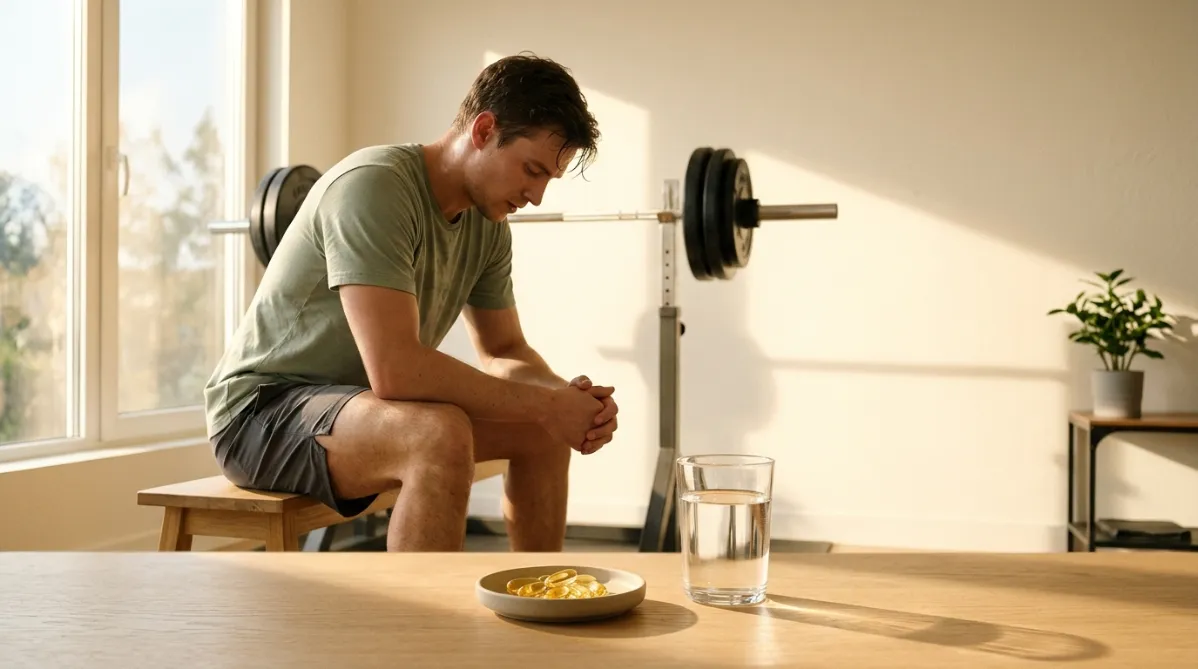
A sunlit, minimalist home gym corner photographed in soft golden morning light, with a young athletic man seated on a wooden bench, leaning forward with his elbows resting on his knees, catching his breath after a hard leg session. He wears a muted sage-green t-shirt and charcoal shorts, his face turned slightly away from the camera, calm and focused. A matte ceramic dish in the foreground holds a few small, translucent golden softgel capsules, with a glass of water beside it catching the light and casting a soft caustic shadow across a pale oak floor. Behind him, a loaded barbell rests on a squat rack, slightly out of focus, and a tall window pours warm sunlight diagonally across the scene, creating long gentle shadows and a hazy glow. A small potted green plant sits on a shelf at the edge of the frame. The color palette is warm and editorial: cream, soft gold, sage green, pale wood, and charcoal accents. Shallow depth of field, with crisp focus on the capsules and glass in the lower third and a creamy bokeh background. The composition leaves generous negative space on the right side for a headline overlay. The mood is clean, modern, and aspirational, like a high-end wellness magazine or a trendy health journal feature. Shot on a 50mm lens, natural light, fine film grain, subtle matte finish, landscape 16:9 framing.
Recovery

ویتامین دی سرعت‌بخش به بازیابی قدرت در مردانی که کمبود نداشتند

Dr. Gymbro · · 4 min read

اگر سطح ویتامین دی‌تان در محدودهٔ نرمال است، چرا مصرف بیشتر این ویتامین می‌تواند به بازیابی سریع‌تر نیرو پس از یک جلسهٔ شدید کمک کند؟

این سؤال در یک مطالعهٔ تصادفی و کنترل‌شدهٔ ۲۰۱۳ که در Nutrition & Metabolism منتشر شد، بررسی شد. در این تحقیق مردانی که پیشاپیش سطوح کافی ویتامین دی داشتند، پس از یک تمرین آسیب‌زا، قدرت خود را سریع‌تر بازگرداندند؛ در حالی که درد و سوزش عضلانیشان از تغییر قابل توجهی برخوردار نشد.

آنچه مطالعه واقعاً انجام داد

کارآزمایی توسط تایلر بارکر و همکارانش رهبری شد. در این کارآزمایی تصادفی، کنترل‌شده با دارونما، ۲۸ مرد سالم و نسبتاً فعال (سن متوسط حدود ۳۰ سال) مشارکت کردند. «فعّال به‌صورت متوسط» به این معنا بود که حداقل ۳۰ دقیقهٔ فعالیت مداوم در هفته، سه بار در هفته، داشته‌اند؛ این افراد نه ورزشکاران حرفه‌ای بودند و نه بدنسازان سطح بالا.

شرکت‌کنندگان به دو گروه تقسیم شدند:

  • دارونما (n = 13)
  • ۴,۰۰۰ IU کالسفیلول (ویتامین D3) (n = 15)

هر دو گروه به‌صورت روزانه به مدت ۳۵ روز مکمل دریافت کردند. سطح سرم ۲۵‑هیدروکسی‌ویتامین دی در هر دو گروه حدود ۳۰‑۳۱ ng/mL بود که معمولاً به‌عنوان کافی شناخته می‌شود؛ به‌عبارت دیگر این آزمایش بر روی افراد کمبوددار انجام نشده بود.

در روز ۲۸، یک پای هر شرکت‌کننده به‌صورت تصادفی برای انجام پروتکل آسیب‌زا انتخاب شد. این پروتکل شامل ۱۰ ست از ۱۰ پرش اگزنتریک‑کونسنتریک روی دستگاه پِلیو‑پرس افقی با وزن ۷۵ ٪ از وزن بدن و استراحت ۲۰ ثانیه‌ای بین ست‌ها بود. پس از جلسه، پژوهشگران علائم خونی، نیروی ایزومتریک حداکثری یک‌پایی و احساس درد را بلافاصله و در ساعت‌های ۲۴، ۴۸، ۷۲ و ۱۶۸ پس از تمرین اندازه‌گیری کردند؛ یک نمونهٔ خونی نیز در ساعت ۱ پس از تمرین گرفته شد.

یافتهٔ اصلی: بازگشت سریع‌تر نیرو

مکمل‌گذاری سطوح سرم ۲۵(OH)D را حدود ۷۰ ٪ افزایش داد. مهم‌تر این بود که گروه ویتامین دی، نیروی ایزومتریک حداکثری را در ساعت ۲۴ پس از آسیب بهتر بازگرداند؛ اختلاف حدود ۸ ٪ نسبت به گروه دارونما بود (P < 0.05).

به‌عبارت دیگر، افرادی که ویتامین دی دریافت می‌کردند، یک روز پس از یک جلسهٔ سخت، کاهش قدرت کمتری داشتند. برای ورزشکارانی که به‌طور مکرر همان‌عضلات را تمرین می‌کنند، این تفاوت می‌تواند اهمیت داشته باشد؛ هرچند مطالعه نشان نداد که این مزیت بهبود طولانی‌مدت عملکرد را به دنبال دارد.

کاهش نشانگرهای آسیب عضلانی

پژوهشگران همچنین آنزیم‌های آلانین آمینوترانسفراز (ALT) و آسپارتات آمینوترانسفراز (AST) را اندازه‌گیری کردند؛ این آنزیم‌ها هنگام فشار یا آسیب به بافت عضله به جریان خون می‌ریزند. ویتامین دی سطح این آنزیم‌ها را هم در زمان فوری و هم در ساعات بعدی (۴۸، ۷۲ یا ۱۶۸ ساعت) کاهش داد.

این نتایج نشان می‌دهد که فرآیند تعمیر یا پردازش آسیب عضلانی ممکن است سریع‌تر شود، اما چون ALT و AST نشانگرهای غیرمستقیم و همچنین مرتبط با عملکرد کبد هستند، باید به‌عنوان شواهد حمایتی و نه اثبات مکانیزم در نظر گرفته شوند.

نکتهٔ جالب: درد عضلانی ثابت ماند

در حالی که نیروی بازگردانده شده بهبود یافت، احساس درد یا سوزش عضلانی بین دو گروه تفاوت معنی‌داری نداشت (P > 0.05). شرکت‌کنندگانی که ویتامین دی دریافت می‌کردند، همان‌قدر درد داشتند که افراد دارونما، حتی اگر قدرتشان بهتر بازگردد.

این نتایج با الگوی شناخته‌شده‌ای در پژوهش‌های بازسازی سازگار است: درد و کاهش نیرو به‌صورت جزئی پدیده‌های جداگانه‌ای هستند. پس اگر هدف شما «کاهش درد» است، این مطالعه نشان نمی‌دهد که ویتامین دی مؤثر باشد؛ اما اگر هدف «بازگرداندن سریع‌تر توانایی تولید نیرو» باشد، این مکمل می‌تواند مفید باشد.

محدودیت‌های مهم

  • نمونهٔ کوچک: فقط ۲۸ مرد با تقسیم ۱۳ و ۱۵ نفره.
  • فقط مردان: نتایج به زنان تعمیم‌پذیر نیست.
  • مدل آزمایشگاهی آسیب: پروتکل پِلیو‑پرس یک‌پایی همان شرایط روز مسابقه یا تمرین واقعی را تقلید نمی‌کند.
  • نشانگرهای غیرمستقیم: ALT و AST اختصاصی به عضله نیستند.
  • دورهٔ کوتاه: ۳۵ روز مکمل و یک بار آسیب، بدون ارزیابی عملکرد یا هیپرتروفی طولانی‌مدت.
  • سطوح پایه کافی: مطالعه دربارهٔ افراد کمبوددار چیزی نمی‌گوید؛ بلکه بر افراد با سطوح کافی تمرکز دارد.

به‌دلیل این محدودیت‌ها، نتایج باید به‌عنوان سیگنالی امیدوارکننده نه توصیهٔ قطعی در نظر گرفته شوند.

نکات عملی

دوز: مطالعه از ۴,۰۰۰ IU (۱۰۰ µg) ویتامین D3 روزانه استفاده کرد. این مقدار نزدیک به حداکثر سطح تحمل‌پذیر برای بزرگسالان است؛ نه کاملاً فراوان و نه ناچیز.

زمان‌بندی: شرکت‌کنندگان این دوز را به‌صورت روزانه به مدت ۳۵ روز مصرف کردند؛ آسیب‌زا در روز ۲۸ اعمال شد. زمان خاصی از روز برای مصرف توصیه نشده، اما مصرف منظم روزانه تأکید شد. مصرف همراه با وعدهٔ غذایی حاوی چربی معمولاً توصیه می‌شود، گرچه در این تحقیق بررسی نشده است.

چه کسانی می‌توانند بهره‌مند شوند: مردان بالغ فعال با سطوح کافی ویتامین دی که به دنبال گزینه‌ای تکمیلی برای تسریع بازیابی قدرت پس از تمرینات بسیار سنگین و محور اگزنتریک هستند. افرادی که نور خورشید کافی ندارند یا سطوح ویتامین دی ناکافی دارند، می‌توانند ابتدا با آزمایش خون سطوح ۲۵‑هیدروکسی‌ویتامین د خود را بررسی کنند.

هشدارها و مشورت‌های پزشکی: افراد با بیماری‌های کلیوی، هیپرکلسمی، سارکوئیدوز، باردارها و کسانی که داروهای تعامل‌پذیر با ویتامین دی یا کلسیم می‌گیرند، باید پیش از شروع مصرف ۴,۰۰۰ IU روزانه حتماً با پزشک مشورت کنند و سطح ۲۵‑هیدروکسی‌ویتامین د را کنترل نمایند. اگر هدف اصلی‌تان کاهش درد است، این مطالعه نشان نمی‌دهد که ویتامین دی تأثیر خاصی داشته باشد؛ بنابراین ممکن است روش‌های دیگری مؤثرتر باشند.

جمع‌بندی

در این کارآزمایی تصادفی کوچک، مصرف ۴,۰۰۰ IU/روز ویتامین D3 به مدت ۳۵ روز سطح سرم ویتامین دی را حدود ۷۰ ٪ افزایش داد، نیروی ایزومتریک را در ۲۴ ساعت پس از آسیب حدود ۸ ٪ بهبود بخشید و افزایش ALT/AST را مهار کرد؛ اما درد عضلانی را تحت هیچ‌تأثیر نگذارد. این یافته جالب است و شایستگی بررسی‌های بزرگ‌تر، متنوع‌تر و طولانی‌مدت را دارد، اما در حال حاضر نمی‌تواند به‌عنوان «کد مخفی بازیابی» برای همه افراد شناخته شود.
Original study

Read the original research on pubmed.ncbi.nlm.nih.gov →

This article summarizes published research for general information. It is not medical advice.

DG

Written by

Dr. Gymbro

Dr. Gymbro writes for Dr. Gymbro: science-backed fitness, nutrition & performance.

Related Articles

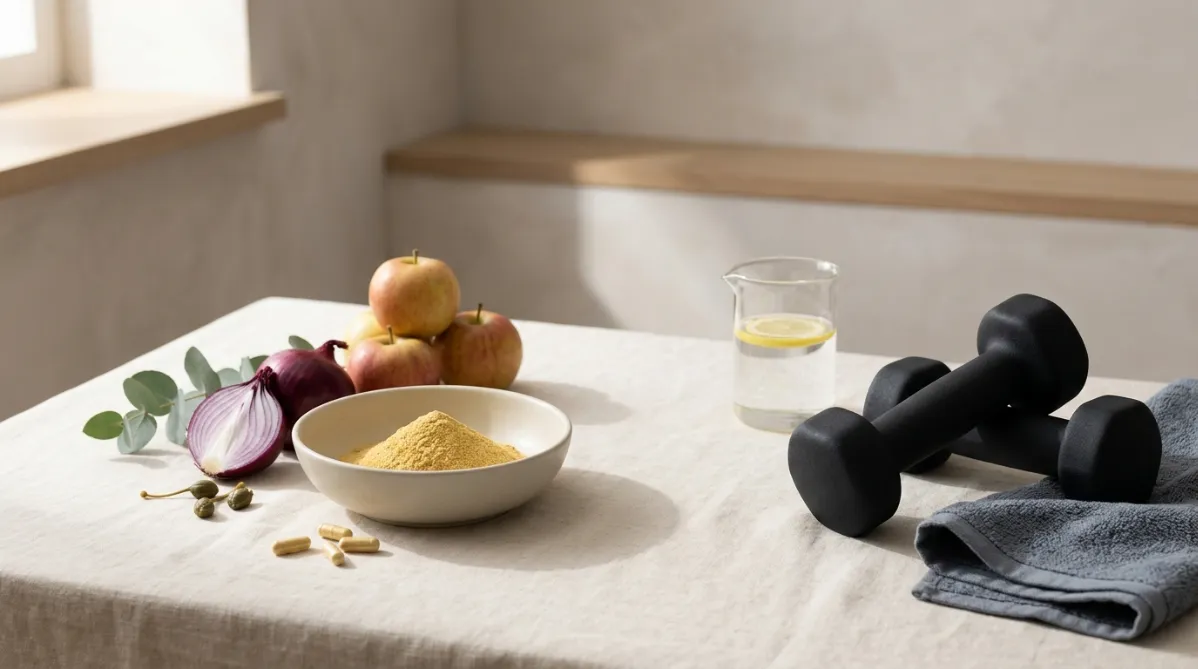
A wide, softly lit editorial still life on a warm off-white linen surface. At the center-left, a matte ceramic bowl holds a small mound of fine golden-yellow quercetin powder, with a few scattered capsules beside it. Next to the bowl sit fresh red onions (one halved to show its translucent purple layers), a few capers, and a small cluster of ripe apples with the skin on, all natural quercetin sources. On the right side of the frame, a sleek matte-black dumbbell rests at an angle beside a folded slate-gray gym towel. A minimalist glass beaker of water with a thin lemon slice sits just behind it.

Soft diffused morning window light enters from the upper left, casting gentle long shadows and subtle highlights on the powder and glossy onion skin. The color palette is muted and sophisticated: butter yellow, deep plum, warm cream, charcoal, with small touches of sage green from a single eucalyptus sprig. A subtle, out-of-focus background of pale plaster wall and a wooden shelf adds depth.

Shallow depth of field, shot from a slightly elevated three-quarter angle with a 50mm lens feel. Generous negative space in the upper right for a title overlay. The mood is clean, calm, and modern, like a premium wellness and science journal feature: tactile textures, natural materials, restrained composition, high-end editorial photography, and no text or logos.
science research

۱ گرم کوئرستین در روز قبل از تمرینات کششی انحنا‌دار: تغییر در IGF

BY DR. GYMBRO ·

چه اتفاقی می‌افتد وقتی به مدت ۱۴ روز پیش از یک جلسه سنگین کشش انحنا‌دار، روزانه ۱ گرم کوئرستین می‌خورید؟ در یک مطالعهٔ کوچک با طراحی متقاطع و کنترل دارونما، نشانگرهای آسیب عضلانی مانند CK، LDH و میوگلوبین کاهش یافتند و IL‑6 هم پایین آمد. جالب‌تر این شد که پاسخ IGF‑I قوی‌تر شد و قلهٔ IGF‑II چند روز زودتر از زمان معمول ظاهر شد. اگرچه تنها دوازده نفر شرکت کرده‌اند و هیچ داده‌ای دربارهٔ افزایش حجم عضله ارائه نشده؛ بنابراین این نتایج صرفاً یک علامت امیدبخش برای ریکاوری هستند، نه تضمینی برای رشد عضله.

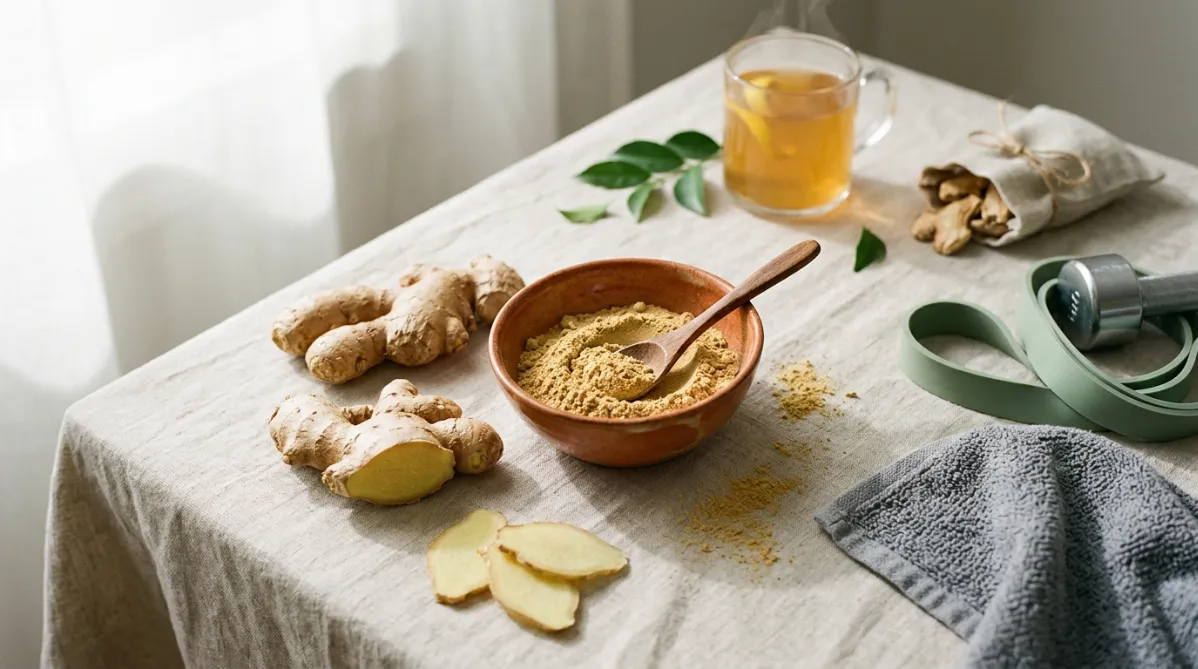
A wide, editorial-style still life photographed from slightly above on a pale oat-colored linen surface, lit by soft natural window light from the left. At the center sits a rustic ceramic bowl of finely ground golden-tan ginger powder, with a small wooden spoon resting in it and a light dusting of spice across the cloth. Beside it lie several whole ginger rhizomes, knobby and honey-brown. One is sliced open to show its pale yellow, fibrous interior, and a few paper-thin slices fan out in the foreground. On the right, a folded heather-gray gym towel, a matte sage-green resistance band coiled loosely, and a single brushed-steel dumbbell sit just inside the frame, softly out of focus. A glass of warm amber ginger tea steams faintly near the upper right, with a thin curl of lemon peel inside. A few fresh green leaves and a small linen pouch of dried ginger add texture. The palette is warm and muted: cream, soft gold, sage, terracotta, and charcoal accents. The shallow depth of field keeps the ginger bowl and sliced root crisp while the gym elements melt into a gentle blur. Shadows are long and soft, and the negative space on the upper left leaves room for a headline. The mood is calm, clean, and modern, like a contemporary wellness or science journal cover. It is a natural, tactile, high-resolution photograph with subtle film grain and no text, no people, and no futuristic elements.
recovery

۲ گرم زنجبیل در دو آزمایش درد عضلانی روز بعد را حدود ۲۵٪ کاهش می‌دهد

BY DR. GYMBRO ·

یک ادویهٔ خانگی در دو آزمایش دوسری مقایسه شد تا ببینیم آیا می‌تواند درد عضلانی که یک روز پس از تمرین شدید حس می‌شود را کاهش دهد یا نه. شرکت‌کنندگان که ۲ گرم زنجبیل را به‌صورت کپسول به‌مدت ۱۱ روز مصرف کردند، حدود ۲۵٪ درد کمتری را گزارش کردند. با این حال، زنجبیل تأثیری بر قدرت یا ورم نشان نداد و هیچکدام از این مطالعات زنجبیل را در مقابل ایبوپروفن مقایسه نکردند. این پژوهش‌ها چه چیزی نشان می‌دهند، چرا ممکن است اثر داشته باشد، کجاها شواهد ناقص هستند و چه کسانی می‌توانند از آزمون آن سود ببرند، در ادامه بیان می‌شود.

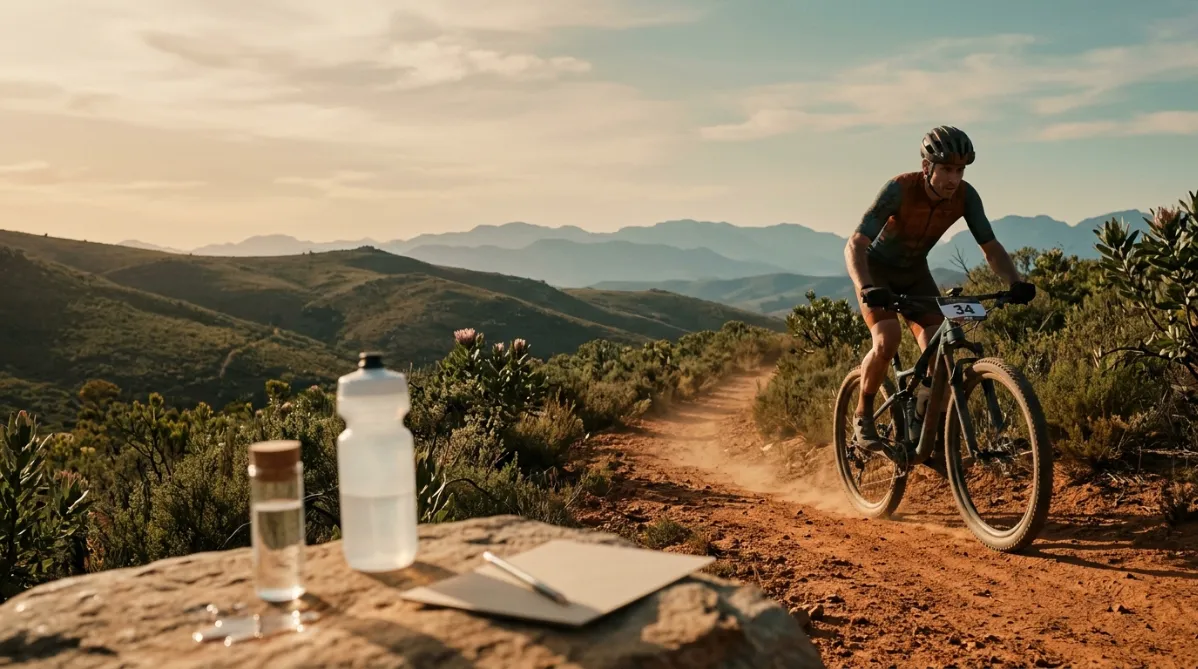
Wide landscape editorial photograph of a mountain biker mid-ride on a dusty red-orange singletrack trail in the South African Western Cape, golden hour light raking across the scene. The rider is in sharp focus on the right third of the frame, wearing a weathered cycling kit with a race number plate on the handlebars, dust kicking up from the rear tire. Behind them, rolling hills covered in fynbos shrubland and silhouetted protea plants fade into soft, hazy blue mountains. Warm amber sunlight creates long shadows and a soft rim light around the rider and bike.

In the lower left foreground, slightly out of focus, a small minimalist glass vial and a clear water bottle sit on a flat sun-bleached rock, with a few drops of liquid catching the light. Next to them, a simple matte paper notecard and a pencil suggest data collection, with no legible text. The vial and bottle are clean, understated, and modern, with no branding.

The color palette is earthy and refined: terracotta, ochre, sage green, dusty teal sky, and cream highlights. The composition uses shallow depth of field, a generous negative space in the upper left sky for headline overlay, and subtle film grain. The mood is contemplative, skeptical, and quietly sophisticated, like a feature photograph from a high-end outdoor sports and science magazine. Natural, candid, cinematic, shot on a 50mm lens with soft contrast and muted saturation. No futuristic elements, no glowing effects, no molecular graphics, no text.
science research

کتون آی‌کیو در مسابقه کِپ اپیک کتون‌ها را بالا برد اما تأثیری نداشت

BY DR. GYMBRO ·

در مسابقهٔ هشت روزهٔ کِپ اپیک، شرکت‌کنندگان روزانه دو بار نوشیدنی کتون آی‌کیو می‌نوشیدند و به حدود ۱ mM کتون در خون رسیدند، اما خستگی، ضربان قلب، سرعت واکنش و سرعت بهبودشان مشابه گروه دارونما بود. این آزمایش دو‑نهایت‌دار در شرایط واقعی مسابقه‌ای بر روی R‑1,3‑بوتان‌دیول انجام شد، نه در آزمایشگاه. نویسندگان نتیجه‌گیری کردند که کتوستازی ملایم اثر مثبتی نداشت و نباید بوتان‌دیول را با استرهای کتون اشتباه گرفت. با تنها ۱۸ شرکت‌کننده، مطالعه محدودیت‌های جدی دارد، اما برای کسانی که قصد خرید نوشیدنی گران‌قیمت کتون برای بهبود ریکاوری دارند، هشداردهنده است.

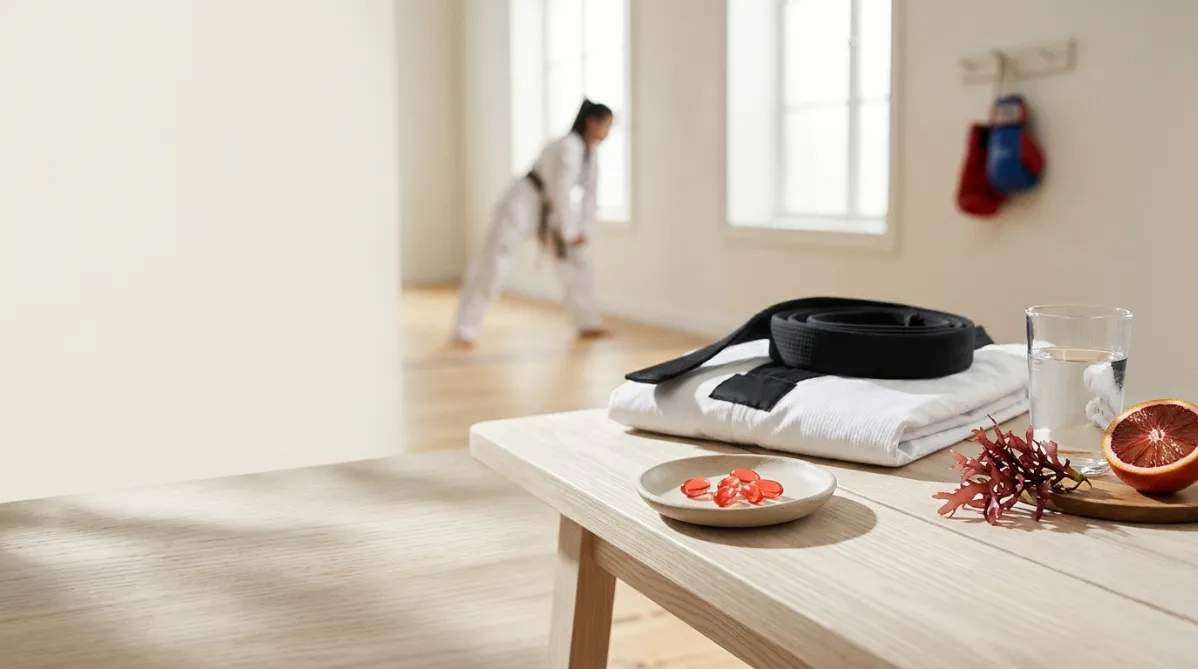
A wide editorial still life shot from a slightly elevated angle on a pale ash-wood bench in a bright, airy training hall. In the center sits a small matte ceramic dish holding a few translucent coral-red softgel capsules, their glossy surfaces catching soft window light. Beside the dish rests a folded white taekwondo dobok with a black belt loosely coiled on top. A sprig of fresh red microalgae-toned seaweed and a halved blood orange add natural color accents. A clean glass of water with subtle condensation stands to one side.

In the softly blurred background, the silhouette of a martial artist in a white uniform stretches near tall windows, with diffused morning light streaming across a sprung wooden floor. A pair of red and blue sparring gloves hangs on a minimal wall hook. Thin, elegant shadows stretch across the bench.

The palette is restrained and modern: warm off-white, soft sand, muted charcoal, with a vivid coral-red accent pulled from the capsules. Shallow depth of field, crisp focus on the capsules and dish, creamy bokeh behind. Natural, gentle lighting with a subtle film-like grain, reminiscent of a contemporary wellness and science magazine cover. Generous negative space on the left third of the frame for headline text. Calm, precise, and quietly athletic in mood, with no text, logos, or futuristic elements.
science research

12 میلی‌گرم آستاکسانتین به مدت ۲۸ روز: آسیب عضله و خستگی در ورزشکاران رزمی

BY DR. GYMBRO ·

یک آزمایش تصادفی جدید ۱۲ میلی‌گرم آستاکسانتین روزانه را در ورزشکاران جوان مرد تکواندو آزمون کرد. پس از ۲۸ روز، گروه مکمل نشان داد که مسیر کراتین‑کیناز متفاوتی نسبت به پلاسی‌بوی کنترل دارد، سطوح SOD بالاتر و نشانه‌های MDA و خستگی عاطفی‑فیزیکی کاهش یافته‌اند. با این حال، نتایج خستگی صرفاً اکتشافی بود و تعامل گروه×زمان برای هیچ زیرمقیاسی معنی‌دار نشد. این مطالعه کوچک بود و فقط نشانگرهای بیولوژیکی را اندازه‌گیری کرد، نه عملکرد. در ادامه می‌بینیم چه نتایجی به دست آمده، چه محدودیت‌هایی دارند و چه کسانی ممکن است به این موضوع علاقه‌مند باشند.

This page is available in