Dr. Gymbro
←

#women's health

2 articles
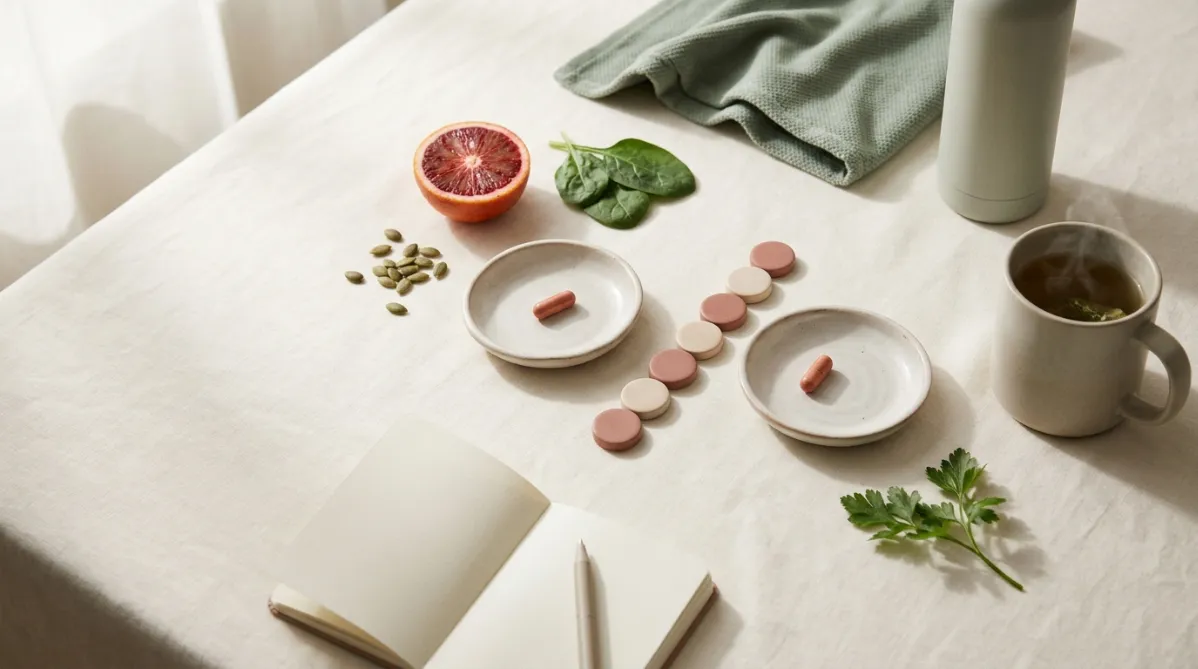
A bright, airy editorial flat-lay shot from slightly above, on a soft warm-white linen surface with gentle natural window light and long, soft shadows. Two small ceramic dishes sit side by side at the center. The left dish holds a single small capsule in muted terracotta. The right dish holds one small capsule in the same color, with a noticeable empty space beside it to suggest rhythm and spacing. Between them lies a minimalist wooden calendar block or a row of seven small round ceramic discs in alternating tones, dusty rose and cream, evoking an every-other-day pattern. Around the dishes are fresh, iron-rich foods arranged with restraint: a halved blood orange, a few deep green spinach leaves, a small scattering of pumpkin seeds, and a sprig of parsley. A folded sage-green athletic towel and a slim, modern water bottle sit at the upper edge, hinting at women who train. A matte ceramic mug of herbal tea sits at the right with a faint curl of steam. A small notebook with a pen lies open at the lower left, its pages blank, suggesting lab results and tracking without any legible text. The palette is soft and cohesive: warm cream, dusty rose, terracotta, sage green, with small accents of deep coral. The mood is calm, clean, and wellness-oriented, like a contemporary health and science journal feature. Shallow depth of field keeps the capsules sharp and softly blurs the edges of the frame. The composition leaves generous negative space on the left third for title overlay. The look is a high-end lifestyle photograph with subtle film grain, natural textures, and refined minimalism, with no people, no text, and no futuristic or laboratory elements.
nutrition

Moins de fer, tous les deux jours : mêmes gains de ferritine chez les femmes

BY DR. GYMBRO ·

L’hépcidine limite l’absorption du fer après chaque prise, ce qui explique souvent la mauvaise tolérance du fer oral. Un essai randomisé de 2026 portant sur 66 femmes carencées a comparé 21 mg de fer tous les 48 h à 30 mg par jour pendant 42 jours. La ferritine a augmenté de façon significative dans les deux groupes, sans différence notable, tandis que l’hémoglobine est restée stable et les effets gastro‑intestinaux étaient légers. L’étude était active‑contrôlée (pas de placebo) et les deux formes de fer étaient différentes, ce qui rend la comparaison prudente. Voici ce que cela signifie pour les sportives et pourquoi il faut mesurer la ferritine avant de se supplémenter.
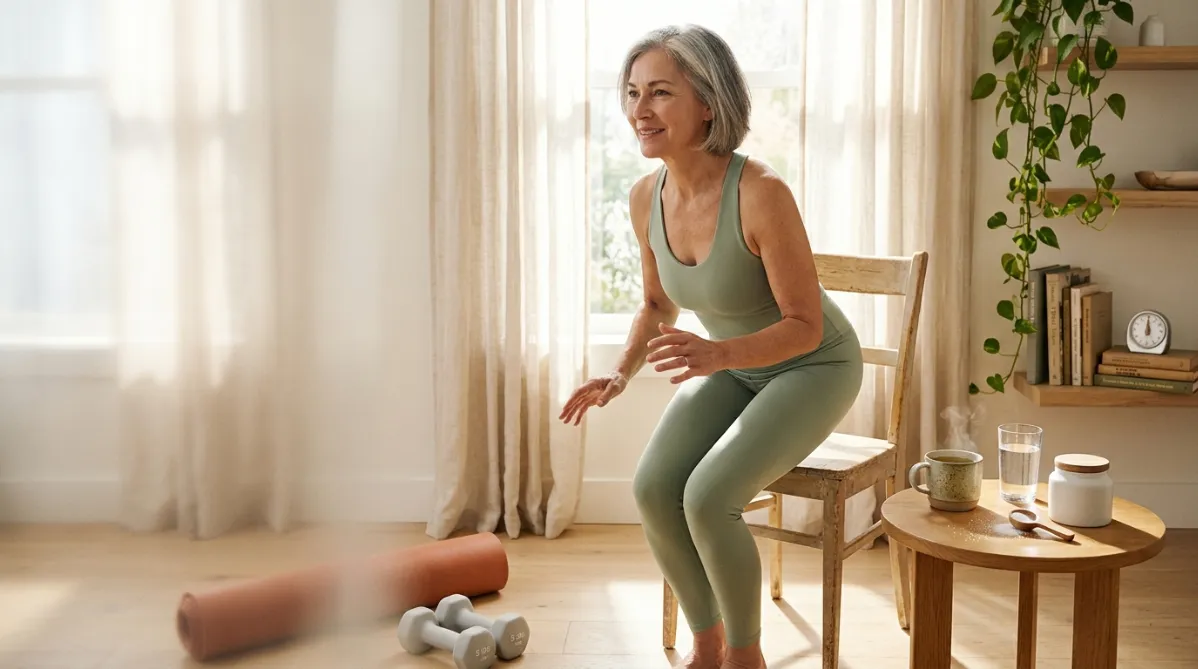
A wide landscape editorial photograph of a bright, airy sunlit living room with pale oak floors and a large window with sheer linen curtains. In the center, a woman in her late 50s with silver-streaked hair, wearing soft sage-green athletic wear, rises from a simple wooden chair, caught mid-motion with a calm, determined expression. Her hands are lightly extended forward for balance. Beside her on a small round oak side table sits a ceramic mug of tea, a glass of water, and a small matte white jar with a wooden scoop resting beside it, a few fine white crystalline grains scattered on the tabletop. In the soft-focus foreground, a pair of light-gray dumbbells and a rolled terracotta-colored yoga mat rest on the floor. A trailing green pothos plant spills from a shelf in the background, with a stack of books and a small analog kitchen timer nearby.

The color palette is warm and muted: cream, sage green, soft terracotta, natural wood, and gentle morning-gold light. Light streams diagonally across the scene, creating long soft shadows and a subtle glow on the woman's shoulders. Shallow depth of field blurs the background gently, while the woman and the table remain crisp. The composition follows the rule of thirds, with the woman on the right and generous negative space on the left, suited for headline overlay. The mood is hopeful, grounded, and modern, like a high-end wellness magazine or a trendy health journal. Natural film-like grain, soft contrast, and a slight matte finish give it a contemporary lifestyle photography feel. There are no futuristic elements, no digital overlays, and no text.
science research

La créatine aide les femmes souffrant de douleurs au genou à se lever plus facilement – mais pas pour les raisons que vous imaginez

BY DR. GYMBRO ·

La créatine est habituellement associée aux jeunes haltérophiles, mais une étude randomisée en double‑aveugle l’a testée chez des femmes ménopausées atteintes d’arthrose du genou. Après 12 semaines d’entraînement des jambes, le score au test timed‑stands du groupe créatine est passé de 15,7 à 18,1, tandis que celui du groupe placebo est resté quasi inchangé (15,0 à 15,2). La créatine a également amélioré la raideur, la masse maigre des membres inférieurs et la qualité de vie. En revanche, le soulagement de la douleur et la force maximale au leg‑press n’étaient pas supérieurs à ceux du placebo. Voici ce que montrent les chiffres et à qui cela pourrait réellement profiter.

This page is available in