Dr. Gymbro
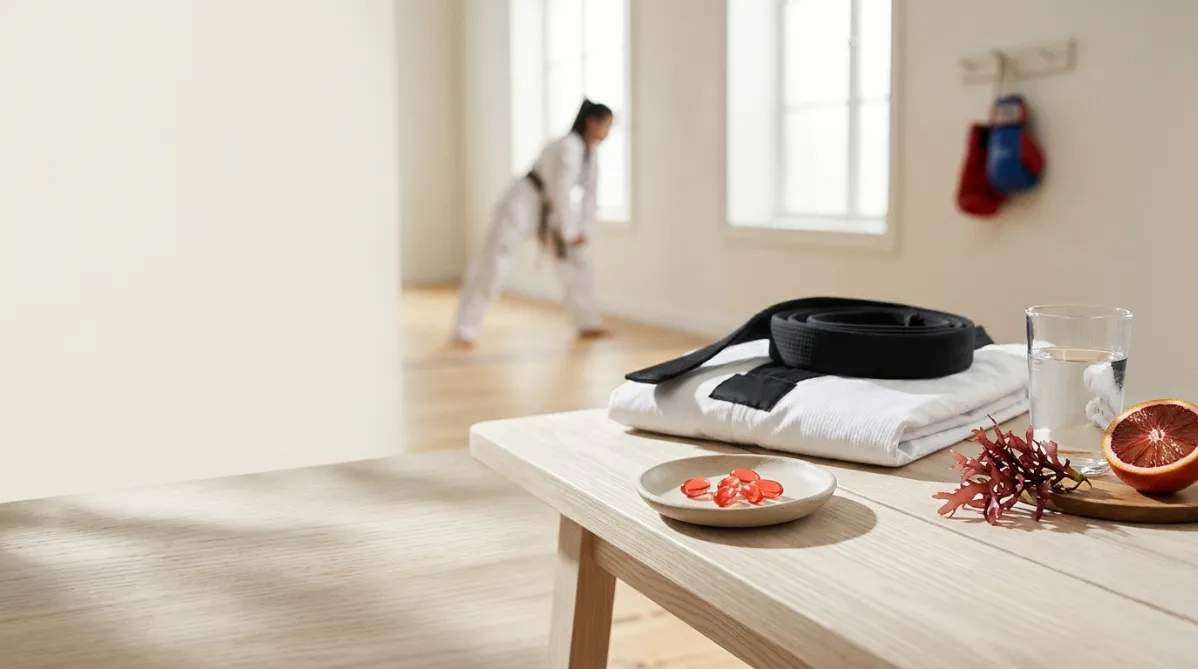
A wide editorial still life shot from a slightly elevated angle on a pale ash-wood bench in a bright, airy training hall. In the center sits a small matte ceramic dish holding a few translucent coral-red softgel capsules, their glossy surfaces catching soft window light. Beside the dish rests a folded white taekwondo dobok with a black belt loosely coiled on top. A sprig of fresh red microalgae-toned seaweed and a halved blood orange add natural color accents. A clean glass of water with subtle condensation stands to one side.

In the softly blurred background, the silhouette of a martial artist in a white uniform stretches near tall windows, with diffused morning light streaming across a sprung wooden floor. A pair of red and blue sparring gloves hangs on a minimal wall hook. Thin, elegant shadows stretch across the bench.

The palette is restrained and modern: warm off-white, soft sand, muted charcoal, with a vivid coral-red accent pulled from the capsules. Shallow depth of field, crisp focus on the capsules and dish, creamy bokeh behind. Natural, gentle lighting with a subtle film-like grain, reminiscent of a contemporary wellness and science magazine cover. Generous negative space on the left third of the frame for headline text. Calm, precise, and quietly athletic in mood, with no text, logos, or futuristic elements.
Science & Research

12 mg di astaxantina per 28 giorni: danno muscolare e burnout nei combattenti

Dr. Gymbro · · 4 min read

12 mg di astaxantina per 28 giorni: danno muscolare e burnout nei combattenti

L’astaxantina, il carotenoide rosso che colora il salmone e il krill, è stata pubblicizzata da anni come integratore per gli sport di endurance. Un nuovo studio randomizzato, pubblicato su Nutrition Journal (Shu et al., 2026), ha chiesto se possa avere effetti su un gruppo diverso: giovani atleti maschi di taekwondo, sottoposti a ripetuti sforzi ad alta intensità, impatti pesanti e forte pressione mentale. Il risultato è promettente, ma richiede una lettura attenta.

Cosa hanno fatto i ricercatori

Il team ha condotto una prova randomizzata, doppiamente in cieco e controllata con placebo, della durata di 28 giorni. I partecipanti hanno assunto, ogni giorno, oppure 12 mg di astaxantina, oppure un placebo. Durante il mese sono stati monitorati tre aspetti: marcatori di stress ossidativo, un indicatore di danno muscolare e lo stato psicologico tramite l’Athlete Burnout Questionnaire (ABQ).

Le misure comprendevano la creatina chinasi (CK) per il danno muscolare, la superossido dismutasi (SOD) come enzima antiossidante, la malondialdeide (MDA) come indicatore di perossidazione lipidica e le sottoscale dell’ABQ per il burnout. I dati sono stati analizzati con un’ANOVA a disegno misto, che verifica se i due gruppi cambiano in modo diverso nel tempo (interazione gruppo × tempo).

Risultato principale: creatina chinasi

Il risultato più solido riguarda la CK. L’analisi ha mostrato un’interazione gruppo × tempo significativa, cioè i gruppi astaxantina e placebo hanno seguito traiettorie diverse nelle quattro settimane. La CK è un indicatore, seppur non perfetto, del danno muscolare indotto dall’esercizio, poiché fuoriesce nel sangue quando le fibre muscolari sono stressate. Una traiettoria diversa suggerisce che l’astaxantina possa aver attenuato parte di quel danno durante l’allenamento.

Questo è il risultato che merita maggiore attenzione, perché deriva dal test di interazione pre‑specificato, il più robusto dal punto di vista statistico in uno studio del genere.

Marcatori antiossidanti: SOD in aumento, MDA esplorativo

La SOD ha mostrato effetti principali significativi sia per gruppo che per tempo. Confronti esplorativi hanno suggerito una maggiore attività della SOD nel gruppo astaxantina alle settimane 2 e 4. Questo è coerente con la reputazione dell’astaxantina come efficace “scavenger” dei radicali liberi e modulatore delle difese antiossidanti innate.

Il MDA è più complesso. Non è stata trovata un’interazione gruppo × tempo significativa. Solo nelle analisi esplorative il gruppo astaxantina ha mostrato concentrazioni più basse di MDA alla settimana 4. Si tratta di un indizio, non di una conferma, e va interpretato di conseguenza.

Burnout: un segnale restrittivo ed esplorativo

I risultati psicologici vanno trattati con la massima cautela. Tra le sottoscale dell’ABQ, solo l’esaurimento emotivo e fisico (ABQ‑a) differiva tra i gruppi alla settimana 4, e solo in analisi esplorativa. Nessuna sottoscala ha mostrato un’interazione gruppo × tempo significativa.

Gli autori concludono che gli effetti su altre dimensioni del burnout sembrano limitati. Letto alla lettera, l’astaxantina non ha modificato in modo evidente il burnout complessivo. Potrebbe aver leggermente ridotto la componente di esaurimento, ma le prove non sono abbastanza solide da definirla uno strumento di recupero mentale.

Limiti da tenere presente

  • Studio piccolo. Il numero di partecipanti limita la potenza statistica e rende i risultati fragili.
  • Biomarcatori, non performance. Lo studio ha misurato marcatori ematici e questionari, ma non risultati in gara, output di potenza, tassi di infortunio o velocità di recupero in palestra.
  • Popolazione ristretta. Solo giovani maschi di una disciplina sono stati studiati; i risultati potrebbero non valere per donne, atleti più anziani o altre discipline.
  • Durata breve. Quattro settimane forniscono poche informazioni sui benefici o sulla sicurezza a lungo termine.
  • Confronti esplorativi. Molti dei risultati più interessanti (MDA, ABQ‑a, SOD in settimane specifiche) provengono da test senza interazione significativa, aumentando il rischio di falsi positivi.

Indicazioni pratiche

Se sei curioso dell’astaxantina, ecco come tradurre lo studio nella pratica:

  • Dose: 12 mg al giorno, la quantità usata nello studio.
  • Durata: 28 giorni. I benefici a questa dose non sono stati dimostrati oltre questo periodo.
  • Assumila con il cibo. L’astaxantina è liposolubile, quindi è consigliabile prenderla con un pasto contenente grassi per favorirne l’assorbimento. Lo studio non specifica questo, ma è una raccomandazione valida per tutti i carotenoidi.
  • Chi potrebbe interessarsi: Atleti di sport da combattimento e altri praticanti di allenamenti ad alto volume e impatto, in cui danno muscolare e affaticamento cumulativo sono preoccupazioni costanti.
  • Chi non dovrebbe aspettarsi miracoli: Chi spera in una soluzione chiara per il burnout. Sonno, gestione del carico e supporto psicologico rimangono gli strumenti principali.

Conclusione

Questo studio fornisce una prova ragionevole, seppur preliminare, che 12 mg di astaxantina al giorno per quattro settimane possano modificare i pattern di danno muscolare in atleti di taekwondo, con segnali di supporto più deboli per lo stato antiossidante e l’esaurimento emotivo. Non dimostra miglioramenti di performance né una riduzione globale del burnout. Sarebbero necessari studi più ampi e più lunghi, includendo esiti di performance e atleti più eterogenei, per passare da “interessante” a “raccomandato”. Fino ad allora, considerala un esperimento a basso rischio da discutere con un dietista sportivo o un medico, non un sostituto delle basi dell’allenamento e del recupero.
Original study

Read the original research on pubmed.ncbi.nlm.nih.gov →

This article summarizes published research for general information. It is not medical advice.

DG

Written by

Dr. Gymbro

Dr. Gymbro writes for Dr. Gymbro: science-backed fitness, nutrition & performance.

Related Articles

A cyclist's legs mid-pedal on a stationary road bike, shot in a bright, airy, minimalist studio with a soft warm-grey backdrop. In the foreground on a pale oak table sits a small ceramic dish holding four deep coral-red softgel capsules, with a few translucent droplets of red-orange oil glistening beside them. Beside the dish is a sprig of dried red microalgae-toned seaweed and a halved wild salmon fillet, its coral flesh echoing the capsule color. Behind the table, slightly out of focus, a cyclist in a fitted charcoal jersey and matte black shorts rides a bike on an indoor trainer. Only the torso and legs are visible, with no face. A white towel hangs over the handlebars and a clear water bottle catches the light.

Soft diffused morning light streams from a large window on the left, creating long gentle shadows and a subtle golden-hour glow on the skin and the glossy capsules. The palette is restrained and editorial: warm cream, sand, soft grey and charcoal, with vivid coral-red as the single accent color. A minimalist analog stopwatch with a clean white face sits on the table, its hands near the 85-minute mark. A thin, elegant line-graph shape is subtly suggested by a curved strip of red ribbon lying on the table, rising from left to right to hint at the performance gain without any text.

The composition follows the rule of thirds, with the capsules and stopwatch in the lower left and the cyclist's motion-blurred legs sweeping across the right. Shallow depth of field, crisp macro detail on the capsules, and a fine film-like grain. The overall feel is a modern health and science magazine cover: clean, calm, sophisticated, and natural, with negative space in the upper area for a headline. There are no futuristic elements, no glowing effects, no laboratory equipment, and no text or logos. Landscape 16:9 format.
nutrition

Astaxantina per 4 giorni aumenta il tempo di esaurimento in bicicletta da 72 a 85 minuti in un piccolo studio

BY DR. GYMBRO ·

Quattro giorni di integrazione con astaxantina a 28 mg al giorno hanno prolungato il tempo di esaurimento su bici da circa 72 a 85 minuti in un piccolo studio randomizzato, corrispondente a un guadagno del 18 %. Lo stesso protocollo ha attenuato l’aumento dei marcatori di danno muscolare (CK e LDH) e della perossidazione lipidica (MDA) dopo una pedalata intensa al 75 % di VO₂max. I marcatori infiammatori e il consumo di carburante non sono cambiati, quindi il meccanismo resta incerto. La dose è molto superiore a quella contenuta nella maggior parte delle softgel, e lo studio ha coinvolto solo dieci giovani uomini. Ecco cosa mostrano i numeri e dove si fermano le evidenze.

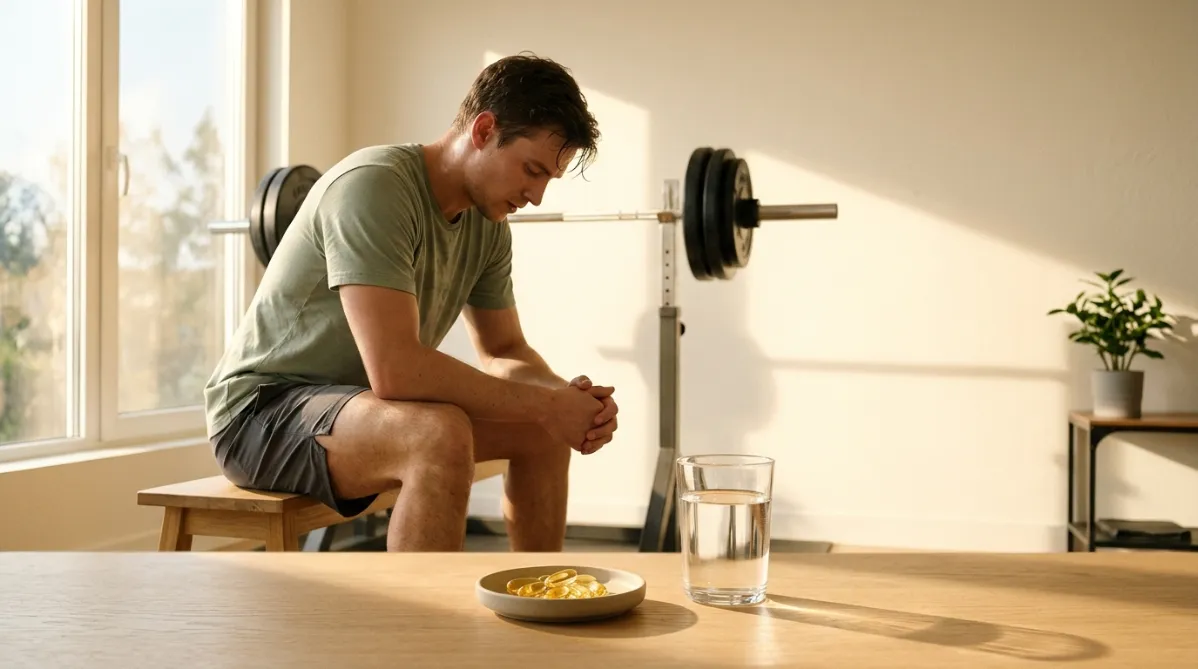
A sunlit, minimalist home gym corner photographed in soft golden morning light, with a young athletic man seated on a wooden bench, leaning forward with his elbows resting on his knees, catching his breath after a hard leg session. He wears a muted sage-green t-shirt and charcoal shorts, his face turned slightly away from the camera, calm and focused. A matte ceramic dish in the foreground holds a few small, translucent golden softgel capsules, with a glass of water beside it catching the light and casting a soft caustic shadow across a pale oak floor. Behind him, a loaded barbell rests on a squat rack, slightly out of focus, and a tall window pours warm sunlight diagonally across the scene, creating long gentle shadows and a hazy glow. A small potted green plant sits on a shelf at the edge of the frame. The color palette is warm and editorial: cream, soft gold, sage green, pale wood, and charcoal accents. Shallow depth of field, with crisp focus on the capsules and glass in the lower third and a creamy bokeh background. The composition leaves generous negative space on the right side for a headline overlay. The mood is clean, modern, and aspirational, like a high-end wellness magazine or a trendy health journal feature. Shot on a 50mm lens, natural light, fine film grain, subtle matte finish, landscape 16:9 framing.
recovery

Vitamina D favorisce il recupero della forza negli uomini con livelli sufficienti

BY DR. GYMBRO ·

Uomini con vitamina D nella norma hanno recuperato la forza più velocemente dopo un intenso allenamento delle gambe assumendo 4.000 UI al giorno. In uno studio randomizzato, controllato con placebo, su 28 soggetti attivi, la forza isometrica di picco è tornata circa l’8 % più alta a 24 h e i marcatori di danno muscolare (ALT, AST) sono aumentati meno. Tuttavia, l’indolenzimento non è migliorato. Scopri i risultati, i limiti dello studio e chi può trarne davvero beneficio.

A bright, airy editorial photograph shot from above at a slight angle, showing a tall clear glass of deep violet blueberry smoothie on a pale oak wooden table. The smoothie has a creamy, velvety texture with a few lighter swirls, and a small cluster of fresh blueberries with dusty blue skins rests on the rim of the glass. A matte white ceramic bowl of whole blueberries sits to the left, with a few berries scattered naturally across the tabletop. A folded linen napkin in soft oatmeal tones and a stainless steel straw add subtle texture.

In the softly blurred background, a rolled-up sage green yoga mat leans against a light wall next to a pair of clean white running shoes and a small pair of brushed-metal dumbbells. A sliver of warm morning sunlight enters from the left window, casting gentle diagonal shadows and a golden glow across the table, with soft highlights on the glass and the berries' surface bloom.

The color palette is fresh and modern: deep indigo and violet from the smoothie, balanced by cream, warm beige, soft sage green, and touches of white. The composition follows the rule of thirds, with the glass placed on the right third and generous negative space on the left, suitable for headline overlay. Shallow depth of field, crisp focus on the glass and berries, creamy bokeh in the background. The mood is calm, healthy, and aspirational, like a contemporary wellness magazine or a trendy health journal website. Natural, realistic, high-end food and lifestyle photography style, 16:9 landscape format, clean and uncluttered.
nutrition

Frullato di mirtilli: le gambe indolenzite recuperano la forza più velocemente

BY DR. GYMBRO ·

Dieci donne, 300 contrazioni eccentriche e un frullato di mirtilli. In uno studio randomizzato crossover, la bevanda a base di bacche ha accelerato il recupero della forza isometrica massima entro 60 ore (p = 0,047), mentre un placebo con potere antiossidante simile non ha mostrato effetti. Il risultato suggerisce che il beneficio non dipende esclusivamente dagli antiossidanti. Poiché è stato osservato un solo effetto significativo su un campione molto piccolo, le evidenze sono promettenti ma non definitive.

A wide, landscape editorial photograph with soft natural morning light. In the foreground, a rustic matte ceramic bowl rests on a pale oak wooden table, filled with vivid deep-green spirulina powder heaped in a gentle mound. A small wooden spoon dusted with the powder lies beside it, and a few scattered green flecks dust the surface. Next to the bowl sits a clear glass of water with a swirl of emerald green just blending in, catching sunlight and casting soft green-tinted shadows.

In the middle ground, slightly out of focus, a pair of worn running shoes in muted sage and cream tones sits on the edge of the table, laces loosely undone. A simple analog stopwatch with a clean white face lies beside them, its hands frozen at a moment suggesting a close finish. A folded linen towel in warm oatmeal tone drapes casually nearby.

The background is a softly blurred outdoor setting seen through a large window: a quiet tree-lined running path at dawn, with golden-hazy light, dewy greenery, and a faint mist. The color palette is calm and modern: deep emerald, sage, cream, warm wood, and touches of soft gold. The composition leaves generous negative space on the right side for headline text, with a shallow depth of field, crisp detail on the powder texture, and a clean, minimalist, lifestyle-magazine aesthetic. Subtle film-like grain, natural shadows, and a fresh, healthy, energetic mood. No people, no text, no logos.
nutrition

La spirulina ha aiutato i runner a durare il 32 % in più — ecco il problema

BY DR. GYMBRO ·

I runner che hanno assunto spirulina per quattro settimane sono riusciti a proseguire circa il 32 % in più durante uno sforzo al massimo, al termine di una corsa estenuante di due ore. Lo stesso studio ha mostrato un aumento del 10,9 % dell'ossidazione dei grassi e livelli più alti di glutatione, il principale antiossidante. Però c’è un rovescio della medaglia: al campione hanno partecipato solo nove uomini e il miglioramento reale si è tradotto in circa 39 secondi. Ecco cosa dicono i dati, perché la spirulina potrebbe funzionare e come assumerla in sicurezza.

This page is available in