Dr. Gymbro
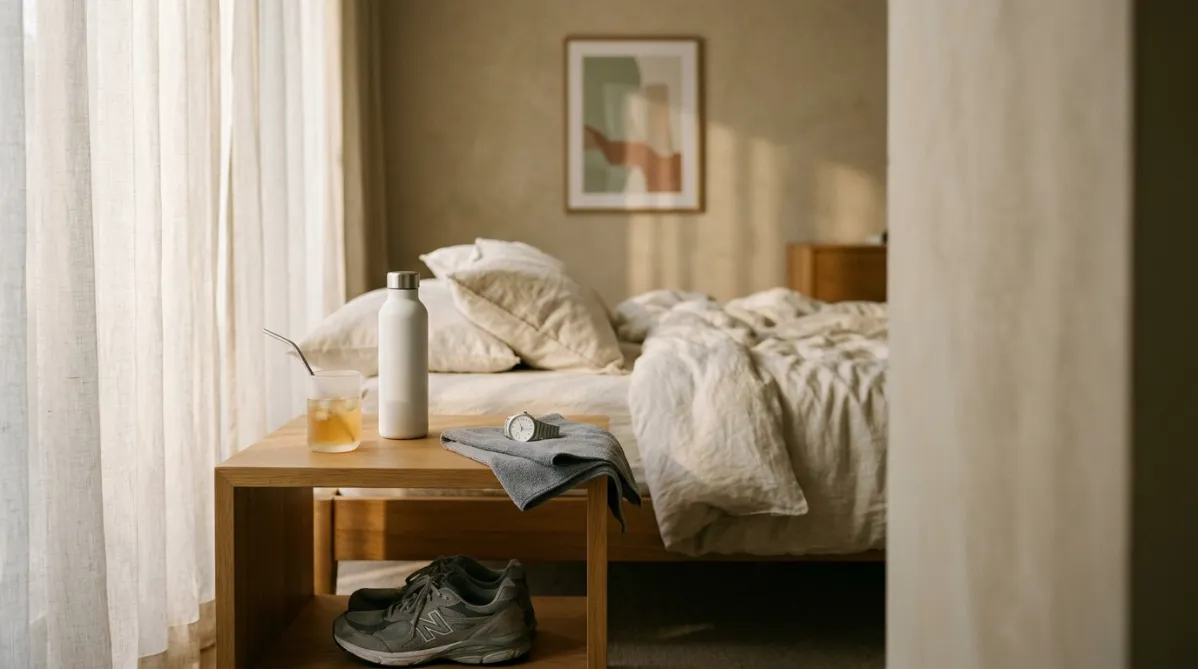
A calm, editorial-style landscape photograph of an athlete's bedroom at dawn, shot with soft natural light. In the foreground, a minimalist wooden bedside table holds a small frosted glass of pale amber drink beside a slim matte-white bottle with no label, a worn pair of running shoes tucked just beneath it. Soft morning light filters through sheer linen curtains, casting long, gentle gold and peach gradients across rumpled off-white bedding in the background, slightly out of focus. A folded gray training towel and a simple analog wristwatch rest on the table edge. On the wall above, a single abstract print in muted sage and terracotta tones adds a trendy, curated feel. The color palette is warm neutrals, oat, soft sage green, and dusty amber, with gentle shadows and a shallow depth of field. The composition uses generous negative space on the right third, ideal for headline overlay. The mood is quiet, restorative, and contemporary, like a lifestyle and wellness magazine cover. Fine film grain, natural textures of linen, oak, and glass, crisp but soft focus, high-end editorial photography.
Recovery

L'allenamento intenso riduce silenziosamente il sonno REM: una bevanda chetogenica lo ferma

Dr. Gymbro · · 5 min read

Puoi trascorrere ore perfette a letto e comunque perdere la parte del sonno che conta di più. Un nuovo studio pubblicato su Medicine & Science in Sports and Exercise suggerisce che un blocco di allenamento duro e progressivamente caricato può erodere il sonno REM, e che una bevanda a base di estere di chetone assunta dopo l'allenamento e prima di dormire può arrestare questo calo.

Il risultato è intrigante, ma proviene da una prova di piccola scala e l'abstract è prudente su ciò che dimostra e su ciò che non dimostra.

Cosa hanno fatto i ricercatori

Un team di KU Leuven e Hasselt University, guidato da Chiel Poffé, ha condotto uno studio randomizzato, in doppio cieco, su 24 atleti maschi allenati. Tutti hanno seguito un programma di allenamento di 7 settimane in cui il carico è aumentato gradualmente. Dodici atleti hanno ricevuto 25 g di una bevanda di controllo e altri dodici 25 g dell’estere di chetone mono‑ester (R)-3‑idrossibutil‑(R)-3‑idrossibutirrato.

La bevanda è stata assunta subito dopo ogni sessione di allenamento e 30 minuti prima di andare a letto. Il sonno è stato misurato con la polysomnografia – lo standard di laboratorio – all’inizio, a metà (settimana 3) e alla fine del periodo. Lo stress percepito e il recupero sono stati monitorati con il questionario REST‑Q. Nei giorni di test, la durata, l’intensità relativa e il timing dell’esercizio erano identici per tutti gli atleti.

Questo lavoro prosegue le ricerche precedenti dello stesso gruppo, che avevano dimostrato che una singola giornata di allenamento intenso compromette l’efficienza del sonno e il sonno REM, e che la supplementazione con estere di chetone contrastava tale effetto. Lo studio attuale indaga se l’effetto si mantiene su più settimane di carico crescente.

Cosa è successo a sonno e recupero

L’allenamento ha chiaramente influito sul benessere degli atleti. Il rapporto stress‑recupero percepito è calato in entrambi i gruppi, passando da 73 ± 21 all’inizio a 40 ± 37 alla fine (p < 0,001, effetto grande).

Il sonno ha raccontato una storia più sfumata:

  • Fase iniziale (dall’inizio alla settimana 3): l’efficienza del sonno è migliorata del 3 % in entrambi i gruppi, e il tempo di veglia dopo l’addormentamento è diminuito del 2 %. I chetoni non hanno apportato alcun beneficio aggiuntivo.
  • Fase finale (dall’inizio alla settimana 7): il sonno REM totale è diminuito del 2 % nel gruppo di controllo, ma è aumentato del 3 % nel gruppo che ha assunto l’estere di chetone (p = 0,002 per la differenza tra i gruppi, Hedges' g = 0,939, effetto grande).
  • Qualità del sonno percepita: non ha mostrato differenze tra i gruppi in nessun momento.

La conclusione degli autori è misurata. L’estere di chetone non ha potenziato i primi benefici sul sonno derivanti da un modesto aumento di carico, ma ha impedito il calo del REM quando il carico è salito ulteriormente.

Perché il REM è importante

L’abstract non approfondisce i meccanismi né le conseguenze a lungo termine della perdita di REM, quindi occorre trattare qualsiasi ipotesi al di là dei dati come semplice contesto, non come prova. Il REM è una delle componenti dell’architettura del sonno; una sua riduzione durante periodi di allenamento intenso suggerisce che lo stress corporeo può rimodellare il sonno anche quando il tempo totale a letto sembra adeguato. In questo studio, l’efficienza del sonno era migliorata nelle prime settimane, ma il REM è comunque diminuito successivamente, dimostrando che analizzare le fasi del sonno può rivelare più informazioni delle sole ore passate a letto.

A chi può interessare

Il pubblico più probabile è costituito da atleti allenati che stanno affrontando un blocco di sovraccarico o di alto volume, ad esempio le fasi di costruzione pre‑stagionale o le settimane di picco. Sono proprio queste le persone più suscettibili a una riduzione del REM al crescere di volume e intensità. Lo studio ha coinvolto soli uomini allenati, quindi i risultati si applicano direttamente a questa popolazione.

Il protocollo in sintesi

  • Dose: 25 g di estere di chetone mono‑ester per dose
  • Timing: subito dopo ogni sessione di allenamento e 30 minuti prima di dormire
  • Durata: 7 settimane, durante un aumento progressivo del carico di allenamento
  • Forma: (R)-3‑idrossibutil‑(R)-3‑idrossibutirrato, estere di chetone mono‑ester

Una nota di prudenza: l’abstract non specifica quante dosi giornaliere sono state effettivamente assunte né come gli atleti hanno tollerato la bevanda, e non menziona costi. Gli esteri di chetone sono tipicamente integratori di fascia alta; una dose notturna più le somministrazioni post‑allenamento per sette settimane possono risultare costose, anche se i prezzi variano. Verifica il testo completo prima di copiare il protocollo.

Limiti da tenere presente

  • Campione piccolo: 12 atleti per gruppo; la differenza di REM è di pochi punti percentuali, perciò è necessaria la replica.
  • Solo maschi: i risultati non possono essere automaticamente estesi a donne o a soggetti non‑atleti.
  • Nessun miglioramento percepito del recupero: i punteggi stress‑recupero sono calati in entrambi i gruppi e la qualità del sonno percepita non è cambiata. L’estere di chetone non ha reso gli atleti più “soddisfatti” del loro sonno.
  • Assenza di dati sulle prestazioni: l’abstract non indica se la protezione del REM si è tradotta in migliori adattamenti, performance o benefici per la salute.
  • Studio unico: si tratta di un trial randomizzato, in doppio cieco, su esseri umani – un punto di forza – ma con una popolazione ristretta.

Conclusioni pratiche

  1. Se aumenti il carico di allenamento, attenditi che il sonno possa mutare in modi che non percepisci. Il REM può diminuire anche quando l’efficienza del sonno sembra buona.
  2. L’estere di chetone è l’unica intervento testato; il suo effetto è specifico sul REM, non sulla qualità complessiva del sonno né sul recupero percepito.
  3. Non considerarlo un sostituto della gestione del carico: i punteggi stress‑recupero sono scesi in entrambi i gruppi indipendentemente dalla bevanda.
  4. Se sei curioso, usalo come strumento sperimentale per blocchi di allenamento molto intensi, non come integratore quotidiano, e valuta il costo rispetto a una evidenza ancora preliminare.

In sintesi

Lo studio fornisce un risultato chiaro e mirato: in atleti sottoposti a un blocco progressivo di 7 settimane, l’estere di chetone ha impedito il declino del sonno REM che invece si è verificato nel gruppo di controllo. È una pista interessante per chi si allena duramente, ma resta un trial di piccola dimensione e le grandi domande su performance e benefici concreti restano aperte.

Original study

Read the original research on pubmed.ncbi.nlm.nih.gov →

This article summarizes published research for general information. It is not medical advice.

DG

Written by

Dr. Gymbro

Dr. Gymbro writes for Dr. Gymbro: science-backed fitness, nutrition & performance.

Related Articles

A wide, editorial-style still life shot from a slightly elevated three-quarter angle on a pale oak gym bench, lit by soft morning window light. In the foreground sits a minimalist matte-white glass beaker of clear, faintly amber liquid, with a few condensation droplets on its surface. Beside it rests a small ceramic dish of white crystalline powder and a stainless steel scoop. In the middle ground, a chalk-dusted steel barbell with black bumper plates rests on the bench's edge. A pair of worn leather lifting straps and a small notebook with a pencil lie nearby, suggesting data logging. Behind them, softly blurred, is a bright, airy studio with concrete walls, a wooden plyo box, and a tall leafy plant catching the light.

The palette is warm and muted: cream, sand, soft sage green, and charcoal, with one small accent of burnt orange in the amber liquid and a terracotta towel draped over the bench. Fine chalk dust floats in sunbeams that cut diagonally across the frame. The shallow depth of field keeps the beaker and barbell sharp while the background melts into creamy bokeh. Composition follows the rule of thirds, with the beaker on the left third and generous negative space on the right for headline text. The mood is calm, premium, and contemporary, like a high-end wellness and sports-science magazine photograph with subtle film grain, natural shadows, and realistic textures.
nutrition

I chetoni hanno mantenuto una produzione di forza dell'8 % più elevata, ma i salti non hanno mostrato miglioramenti

BY DR. GYMBRO ·

Cinquanta grammi di un precursore di chetoni hanno mantenuto la velocità di sviluppo della forza dell'8 % più alta un'ora dopo l’ingestione in uno studio dell’Ohio State, ma non hanno influito sui salti con contramovimento. Lo studio crossover su 20 adulti attivi ha mostrato picchi di chetoni nel sangue intorno a 2,2 mM a 120 minuti, accompagnati da una riduzione della glicemia del 24 % e da un aumento di 13 bpm della frequenza cardiaca. L’integrazione può interessare chi esegue sforzi massimali ripetuti, ma resta un’indagine piccola e acuta.

A wide, editorial-style photograph of a runner's morning ritual on a quiet paved path at the edge of a park, shot in soft golden-hour light with a shallow depth of field. In the foreground, a small frosted glass bottle of pale amber liquid sits on a weathered wooden bench, beside a sleek analog stopwatch and a folded linen towel. Condensation beads on the glass and catches warm sunlight. The background melts into a creamy blur of a lone runner in a muted sage-green jacket and charcoal tights, mid-stride, heading away along a tree-lined track, with soft mist hovering above the grass.

The color palette is calm and modern: warm honey and amber tones, soft sage green, off-white, and touches of deep navy in the shadows. Subtle film grain and gentle natural contrast give it a contemporary lifestyle-magazine feel. Long, delicate shadows stretch across the path.

On the bench, a small open notebook with a loose hand-drawn sketch of a head profile and a simple line graph sits next to a pencil, hinting at cognition and measurement without any text legible. A few fallen autumn leaves add texture. The composition follows the rule of thirds, with the bottle and stopwatch on the left third, negative space on the right for headline overlay, and the runner small in the distance to suggest that speed is not the story.

The mood is thoughtful, clean, and quietly intelligent, evoking wellness science journalism: minimal, airy, organic, and refined. No futuristic elements, no neon, no digital effects, just natural light, tactile materials, and a considered, understated aesthetic.
supplements

L'estere cheto non ha reso i corridori più veloci, ma ha affinato le loro menti

BY DR. GYMBRO ·

Le bevande a base di estere cheto sono pubblicizzate come un modo rapido per correre più velocemente, ma uno studio di 31 giorni non ha mostrato miglioramenti sui 5 km. Ciò che è cambiato, invece, è stato sorprendente: risposte più rapide al test di Stroop e al task‑switching, glicemia diminuita del 15 % e un VO₂ più alto in un test progressivo anche dopo l’interruzione della supplementazione. Il limite principale è la dimensione dello studio, con soli 18 corridori amatoriali in un disegno single‑blind. Ecco cosa mostrano i dati, cosa non mostrano e chi dovrebbe evitare una dose di 90 g al giorno.

A wide, softly lit editorial still life on a warm off-white stone countertop. In the center sits a matte ceramic bowl of fine pale cream whey protein powder with a wooden scoop resting in it, a few fine grains dusted across the surface. To the left, a clear glass shaker bottle filled with a creamy, lightly frothy shake catches a gentle highlight. To the right, a minimalist arrangement of fresh produce and wellness cues: a halved lemon, a sprig of green rosemary, and a small folded sage-green linen towel. In the soft-focus background, a neatly rolled yoga mat and a pair of brushed-steel dumbbells rest on a pale oak floor beside a tall window. Morning sunlight streams in diagonally, creating long, gentle shadows and a luminous, airy atmosphere.

Subtle nods to the "liver" and "lab results" themes come through in tasteful, abstract ways: a small sheet of cream paper with a simple, hand-drawn downward-trending line graph in muted terracotta ink sits beside the bowl, with a slim brass pen laid across it. A delicate terracotta-colored ceramic dish nearby evokes organic form without being anatomical.

The color palette is calm and modern: warm creams, soft sand, sage green, muted terracotta, and touches of brushed brass. Shallow depth of field, crisp focus on the powder and scoop, with a creamy blurred background. Shot in a clean, contemporary magazine style with natural film-like grain, gentle contrast, and generous negative space on the left and right edges for headline overlay. Feels trustworthy, fresh, and approachable, like a trendy health and science journal cover.
supplements

Il Siero del Latte Danneggia il Tuo Fegato? 59 Atleti Dicono il Contrario

BY DR. GYMBRO ·

Pensate che le proteine del siero del latte possano danneggiare il fegato? Uno studio randomizzato, in doppio cieco, su 59 atleti allenati ha riscontrato l'esatto opposto: dopo 8 settimane di assunzione di 30 g al giorno, ALT, AST e CK sono diminuiti, mentre i gruppi placebo sono rimasti stabili o sono aumentati. Solo l'ALT ha mostrato una differenza significativa tra atleti di forza e di resistenza; il CRP ha evidenziato solo una tendenza intra‑gruppo. Scoprite cosa dimostra realmente lo studio, cosa i marcatori non possono provare e chi, comunque, dovrebbe procedere con cautela.

A softly lit bedroom nightstand scene in landscape format, photographed in a modern editorial lifestyle style. In the center of the frame sits a handmade ceramic mug in warm oatmeal tones, filled with a pale creamy drink. A thin wisp of steam rises from it. Beside the mug, a small wooden scoop rests on a matte linen-textured surface with a fine dusting of white collagen powder. A minimal amber glass jar with a cream label stands just behind, with no readable text. The nightstand is pale oak with subtle grain.

To the left, a neatly folded pair of gray cotton athletic socks and a worn leather-bound training journal with a pen on top hint at a lifter's routine. A small brass alarm clock reads about 9:30 and is slightly out of focus. On the right side, a sheer curtain filters the last blue-violet twilight from a window, while a warm bedside lamp with a linen shade casts a honey-colored glow across the scene. The glow contrasts gently with the cool dusk tones.

Behind the nightstand, the edge of a rumpled bed with soft white and sand-colored bedding is visible, with a dumbbell resting quietly on the floor in the soft-focus background to suggest recovery after training. The depth of field is shallow, with the mug and scoop in crisp focus and the background dissolving into creamy bokeh.

The palette is calm and earthy: warm beige, soft cream, muted terracotta, and dusk blue accents. The lighting is cinematic and low-key, with gentle highlights on the ceramic rim and a subtle rim light on the steam. The composition follows the rule of thirds, with the mug placed on the left third and generous negative space on the right for title overlay. The mood is serene, restorative, and quietly scientific without any clinical elements. The finish is clean, high-end, and magazine-worthy, with fine film grain and natural color grading, like a wellness feature in a contemporary online journal.
recovery

Il trucco del collagene da 15 g prima di dormire che riduce le sveglie notturne del 27 %

BY DR. GYMBRO ·

Svegliarsi più volte durante la notte può compromettere silenziosamente il recupero, anche quando allenamento e nutrizione sono al top. Una piccola sperimentazione ha scoperto che 15 g di peptidi di collagene assunti un'ora prima di coricarsi hanno ridotto gli eventi di risveglio registrati con polisonnografia da 29,3 a 21,3, ossia circa il 27 % in meno. I partecipanti hanno inoltre ottenuto risultati migliori al test Stroop mattutino. Tuttavia, la durata totale del sonno, la latenza e l’efficienza non sono cambiate, e lo studio ha coinvolto solo 13 uomini per 7 notti con un prodotto fornito dall’industria. Ecco cosa mostrano davvero i dati e come chi solleva pesi può testare questa strategia in sicurezza.

This page is available in