Dr. Gymbro
A wide, editorial-style still life photographed in soft natural window light on a pale oak gym bench. In the foreground, a small rustic ceramic bowl in warm sand tones holds a mound of fine golden-beige ashwagandha root powder, with a few dried gnarled ashwagandha roots and a sprig of green leaves with tiny orange-red berries resting beside it. A wooden scoop dusted with powder lies at an angle. Just behind, a matte black barbell with a single chalk-dusted steel plate sits slightly out of focus, a light haze of white chalk hanging in the air and catching the sunlight.

On the left side, a neat stack of printed research papers with a sharp black pen and a few muted sage-green sticky tabs. One page shows a simple, abstract forest-plot-style line graph with small squares and horizontal lines, subtly out of focus, hinting at statistics without legible text. A pair of minimal round reading glasses rests on the pages. A small linen gym towel is folded near the edge of the bench.

The palette is restrained and modern: warm cream, soft sage green, muted terracotta, charcoal black, and brushed steel highlights. The background is a softly blurred minimalist studio space with a pale plaster wall and a long soft shadow cast by a window frame, giving a calm, contemplative mood. Shallow depth of field, crisp detail on the powder and roots, gentle film-like grain, and generous negative space on the right third of the frame for a headline overlay. The overall look is a clean, trendy health-and-science journal cover, thoughtful and skeptical rather than promotional, balancing the natural herbal element against the discipline of strength training.
Nutrition

Ashwagandha per i sollevatori: potenziamento della forza o miraggio statistico?

Dr. Gymbro · · 4 min read

Ashwagandha per i sollevatori: potenziamento della forza o miraggio statistico?

L'ashwagandha è commercializzata ai sollevatori come un integratore capace di aumentare la panca, lo squat e la crescita muscolare. Una recente revisione sistematica e meta‑analisi pubblicata su Nutrients ha messo alla prova questa affermazione. I risultati apparenti sono incoraggianti; il vero valore, però, si nasconde nei dettagli.

La versione breve

I risultati aggregati hanno mostrato un beneficio dell’ashwagandha sul 1‑RM (massimale a una ripetizione) su panca, sul 1‑RM degli arti inferiori e sulla circonferenza toracica. Tuttavia, gli autori concludono che le prove “non stabiliscono” che l’ashwagandha migliori in modo significativo gli adattamenti all’allenamento di resistenza. Il campione è piccolo, le statistiche vacillano con test più severi e le valutazioni di certezza sono basse o molto basse.

Cosa hanno fatto i ricercatori

Il team ha interrogato dodici banche dati e due registri di trial, tra cui PubMed/MEDLINE, Europe PMC, OpenAlex, Cochrane CENTRAL, ClinicalTrials.gov e WHO ICTRP. Ha cercato studi randomizzati controllati (RCT) su adulti sani che abbiano combinato un estratto standardizzato di ashwagandha (radice o radice‑e‑foglia) con un programma strutturato di allenamento di resistenza. Le meta‑analisi precedenti mescolavano trial provenienti da contesti sportivi eterogenei; questa, invece, si è limitata a veri programmi di sollevamento.

Screening, estrazione dati e valutazione del rischio di bias sono state eseguite in duplice indipendenza. Gli autori hanno aggregato le differenze medie standardizzate dal baseline (Hedges g) con modelli a effetti casuali. Hanno aggiunto analisi di sensibilità leave‑one‑out e Hartung‑Knapp‑Sidik‑Jonkman (HKSJ), e hanno valutato la certezza con GRADE.

I numeri che attirano l’attenzione

Solo quattro RCT hanno soddisfatto i criteri di inclusione. Tre di essi, per un totale di 161 partecipanti, hanno fornito dati aggregabili. Il quarto, un preprint, è stato descritto solo a livello narrativo perché i valori di panca non erano riportati come carichi assoluti.

L’ashwagandha è stata associata a guadagni maggiori rispetto al placebo in:

  • 1‑RM panca: SMD 0,60 (IC 95 % 0,20–1,01)
  • 1‑RM arti inferiori: SMD 0,52 (IC 95 % 0,19–0,86)
  • Circonferenza toracica: SMD 0,86 (IC 95 % 0,41–1,31)

Il grasso corporeo non ha mostrato differenze chiare (SMD −0,32, IC 95 % −0,72 a 0,08). L’eterogeneità era bassa‑moderata (I² = 7–34 %), quindi i trial non erano in forte disaccordo.

Perché non correre subito all’acquisto del supplemento

Diverse criticità si celano dietro questi risultati:

  • La significatività non è sopravvissuta a un test più rigoroso. Con la correzione HKSJ, spesso più adeguata quando si aggregano pochi studi, entrambe le stime di forza hanno perso la significatività statistica.
  • Un unico studio sosteneva ciascun risultato. Le analisi leave‑one‑out hanno mostrato che ogni risultato di forza dipendeva da un singolo studio influente.
  • La circonferenza toracica si basa su due studi. Con k = 2, l’intervallo HKSJ era troppo impreciso per essere informativo.
  • Rischio di bias. Tutti e tre i trial aggregati presentavano almeno qualche dubbio secondo lo strumento RoB 2.
  • Bassa certezza. GRADE ha valutato le prove come Low per i due esiti di forza e il grasso corporeo, e Very Low per la circonferenza toracica.

La circonferenza toracica non è nemmeno una misura diretta della crescita muscolare; può variare per grasso, postura, respirazione e tecnica di misurazione. Gli autori la descrivono come indicatore indiretto del giro superiore e chiedono misure dirette di ipertrofia negli studi futuri.

Disegno dello studio, finanziamenti e conflitti

Si tratta di una revisione sistematica e meta‑analisi di RCT su adulti sani, non di uno studio su animali o cellule. Gli autori non dichiarano conflitti di interesse né finanziamenti esterni. Segnalano inoltre che la revisione non è stata registrata, quindi non c’era un protocollo pubblico da confrontare. Embase, Scopus, Web of Science e CINAHL non erano disponibili al team, sebbene i record derivati da Embase e CINAHL siano stati recuperati indirettamente tramite CENTRAL. Alcuni record pertinenti potrebbero quindi essere sfuggiti.

Le lezioni pratiche

Vale la pena per la forza? Forse, ma non è provato. Le stime puntuali sono moderate e positive, ed è per questo che la questione rimane aperta. Tratta qualsiasi beneficio come un “forse”, non una promessa.

Dosaggio e tempistica: L’abstract non riporta dosi, durata o protocolli di assunzione, quindi questa revisione non può indicarti quanto o quando prendere. I trial in questo ambito usano tipicamente estratti standardizzati di radice o radice‑e‑foglia; verifica cosa è stato realmente studiato prima di presumere che un prodotto da banco sia equivalente. Un prodotto che non indica tipo di estratto o standardizzazione è difficile da confrontare con la ricerca.

Chi potrebbe considerarlo: Adulti sani già impegnati in un programma strutturato di resistenza, curiosi e disposti a un ritorno incerto. Allenamento, apporto proteico, sonno e sovraccarico progressivo rimangono i veri fattori chiave.

Chi dovrebbe evitarlo o consultare un medico prima: Persone in gravidanza, con patologie tiroidee o autoimmuni, o che assumono farmaci con prescrizione, dovrebbero chiedere consiglio medico. Chi spera in una perdita di grasso dovrebbe guardare altrove, poiché l’analisi non ha trovato effetti affidabili sull’adiposità.

Cosa deve succedere ora

Gli autori chiedono RCT adeguatamente dimensionati, finanziati in modo indipendente, che utilizzino misure dirette di ipertrofia (come imaging o spessore muscolare) al posto di proxy basati su nastro metrico. Fino a quando non arriveranno, la reputazione dell’ashwagandha come potenziatore per il sollevamento supera le evidenze.

Conclusione

Il segnale è sufficientemente reale da mantenere l’interesse dei ricercatori, ma è fragile. Con tre trial aggregati, 161 partecipanti, valutazioni di certezza basse e risultati che svaniscono con statistiche più severe, l’ashwagandha resta un’aggiunta speculativa per i sollevatori, non un booster di forza o massa provato.
Original study

Read the original research on pubmed.ncbi.nlm.nih.gov →

This article summarizes published research for general information. It is not medical advice.

DG

Written by

Dr. Gymbro

Dr. Gymbro writes for Dr. Gymbro: science-backed fitness, nutrition & performance.

Related Articles

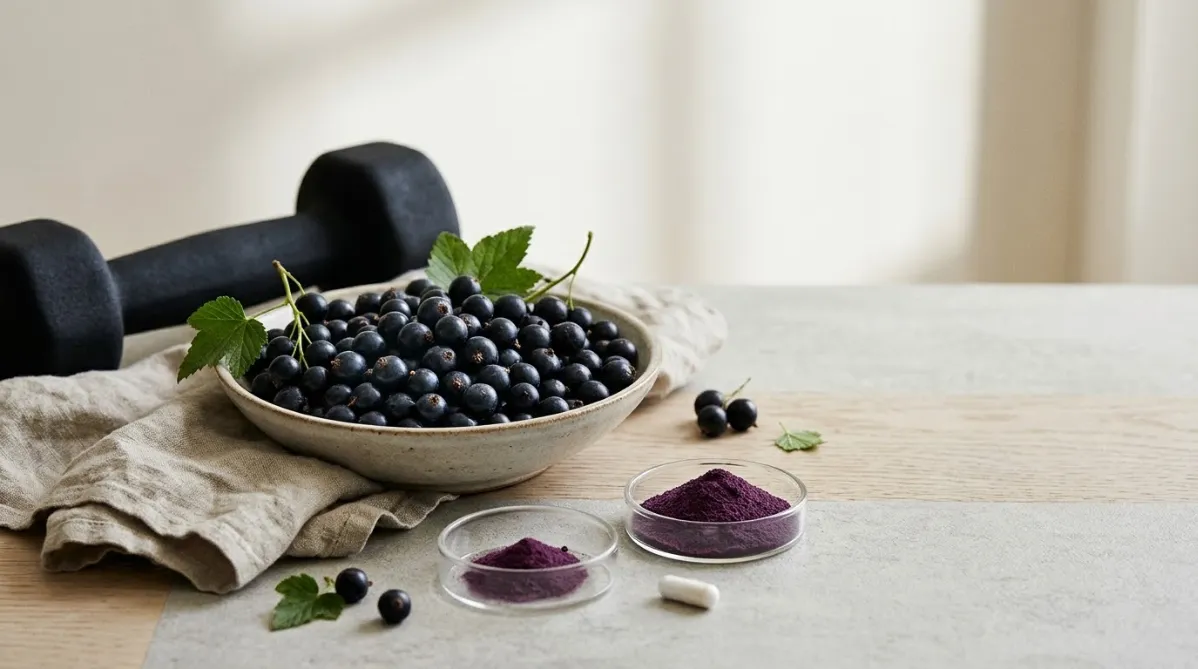
A wide, editorial-style still life photographed in soft natural window light on a pale oak or light grey concrete surface. In the center-left, a shallow ceramic bowl filled with plump, dusky blue-black blackcurrants, some with tiny glossy highlights and a few still attached to slender green stems with serrated leaves. Beside the bowl, a matte black dumbbell handle rests diagonally, partially in frame and slightly out of focus, suggesting strength training without a gym setting. In the foreground, two small minimalist glass dishes sit side by side: one holds a small pile of deep purple powder, the other a larger pile, a subtle visual nod to the low versus high dose. A few scattered berries add a natural touch. A folded linen cloth in muted oatmeal tone adds texture, and a single white capsule sits near the dishes for scale.

The background is a soft, creamy off-white wall with gentle shadow gradients from the window, leaving generous negative space on the right third of the frame for title overlay. The color palette is restrained and modern: deep indigo and violet from the berries, warm neutral beige, charcoal black, and touches of fresh leaf green. Shallow depth of field, crisp focus on the berries in the foreground, subtle film grain, and a calm, refined, contemporary magazine aesthetic like a wellness or sports science journal cover. Overhead angle tilted slightly to about 35 degrees, balanced composition, clean and uncluttered, with natural soft shadows and a premium, quietly athletic mood.
nutrition

Ribes Nero per Sollevatori: Perché la Bassa Dose Batte la Dose Alta

BY DR. GYMBRO ·

Un integratore di ribes nero assunto per una settimana ha aumentato il 1RM in panca nei sollevatori allenati; la dose più piccola (250 mg) ha spesso eguagliato o superato quella da 600 mg. La dose alta ha incrementato la potenza in panca di quasi 80 W rispetto al placebo, mentre la dose bassa ha migliorato i punteggi del test Stroop. Tuttavia anche il placebo ha superato il controllo senza capsule nella pressa per le gambe, perciò questi guadagni appariscenti vanno letti con cautela. Con soli 20 partecipanti e una durata di sette giorni, si tratta più di un segnale promettente che di un aiuto alla forza provato. Ecco cosa è risultato solido, cosa no e chi potrebbe voler provare questo integratore.

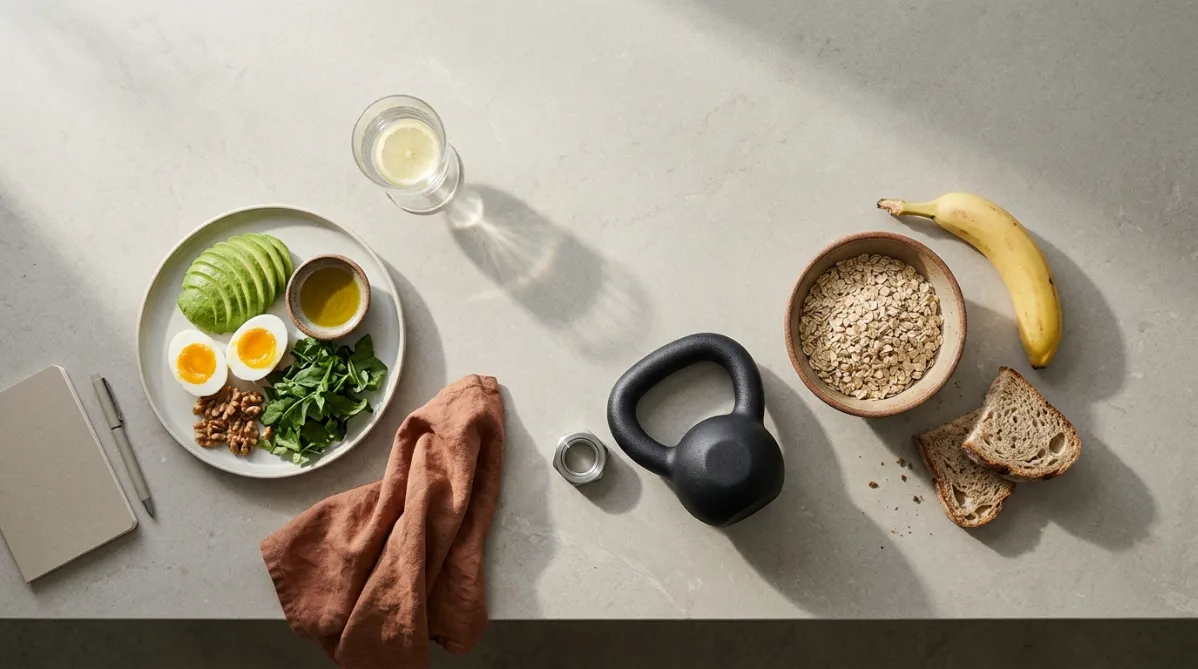
A wide, editorial-style flat lay photographed from above on a pale warm-gray stone countertop, bathed in soft natural window light with gentle long shadows. On the left half, a minimalist keto plate: sliced avocado fanned out in creamy green, two soft-boiled eggs halved to reveal golden yolks, a small pile of dark leafy greens, a few walnuts, and a glossy drizzle of olive oil in a small ceramic dish. On the right half, a contrasting arrangement of carbohydrates: a rustic bowl of oats, a ripe banana, and a few slices of sourdough, arranged with equal visual weight. Between the two sides, a matte black kettlebell sits at the center, and a slim brushed-steel barbell collar rests nearby, suggesting resistance training without a gym setting. A simple, elegant glass of water with a lemon slice catches the light and casts a delicate refracted glow, hinting at water weight and glycogen. A linen napkin and a small, neutral-toned notebook with a pen add a journal-like touch. The palette is muted and modern: sage green, cream, terracotta, charcoal, and soft butter yellow. The composition is clean and balanced with generous negative space across the top and bottom edges, suitable for headline overlay. The mood is calm, thoughtful, and science-informed, like a contemporary health and wellness magazine cover. Shallow depth of field, crisp textures on the food, subtle film-like grain, and high-end, trendy food photography styling.
nutrition

Keto per i sollevatori: il grasso diminuisce, ma la massa magra è inferiore di 1,4 kg

BY DR. GYMBRO ·

Una revisione basata su 50 studi ha dimostrato che le diete chetogeniche riducono il grasso e, in generale, mantengono la forza. Tuttavia, negli adulti allenati alla resistenza la massa magra risulta circa 1,37 kg più bassa rispetto a diete non chetogeniche. Gli autori valutano questa evidenza con bassa certezza e sottolineano che non indica una perdita di muscolo, poiché glicogeno e acqua possono spiegare gran parte del risultato. Le prestazioni ad alta intensità sono state più spesso invariate o compromesse. Scopri a chi può andare bene il keto per il cutting, chi dovrebbe evitarlo e come tutelare la massa magra.

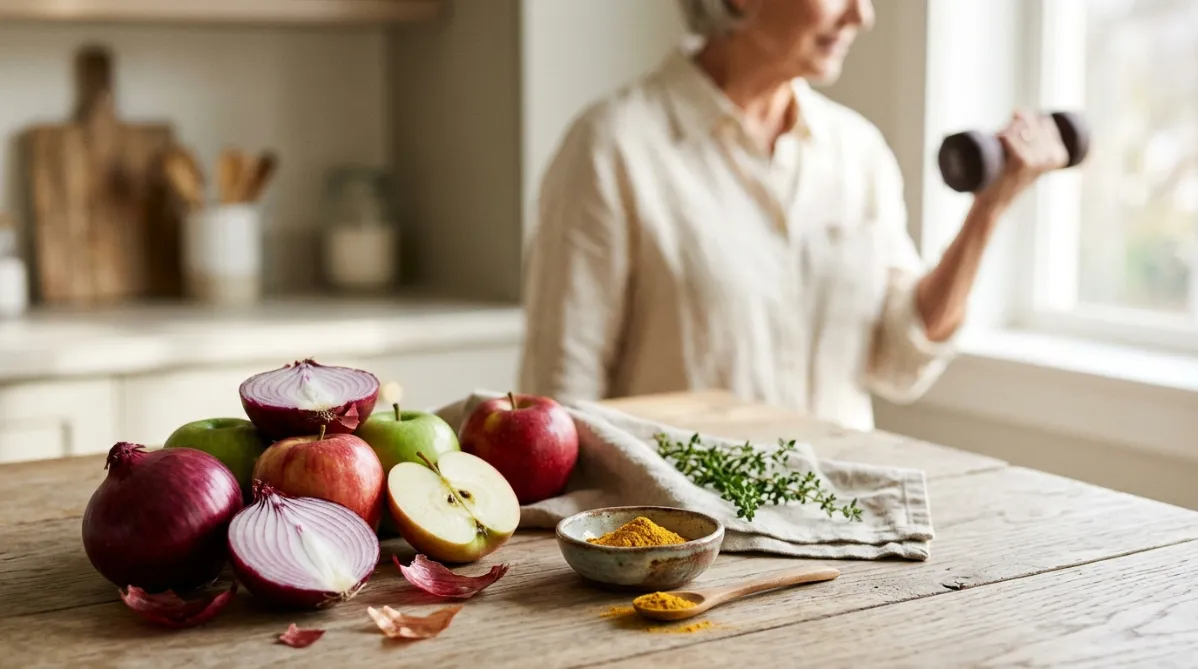
A landscape editorial photograph of a rustic kitchen table in soft morning window light. On a weathered light oak surface, a loose arrangement of fresh red onions, a few halved to show their purple-white rings, and crisp red and green apples, one sliced open to reveal pale flesh. A small ceramic bowl holds a pinch of golden-yellow quercetin powder, with a wooden spoon resting beside it. In the softly blurred background, an older woman in a cream linen shirt lifts a modest dumbbell near a sunlit window, her posture strong and relaxed. Her silhouette is out of focus, which keeps the produce as the main subject.

The palette is warm and natural: deep magenta onion skins, glossy apple reds, buttery yellow accents, and creamy neutrals. A gentle shallow depth of field gives creamy bokeh in the background. The light is diffused and golden, with delicate shadows and a few dried onion skin flakes scattered across the wood for texture. A folded linen napkin and a small sprig of thyme add a curated, modern lifestyle-magazine feel.

The composition follows the rule of thirds, with the produce at lower left and negative space on the right, where the blurred lifter and window glow provide balance. The overall look is clean, calm, and contemporary, like a premium health and wellness journal cover: natural, tactile, and optimistic, with fine film-like grain and true-to-life color.
nutrition

Quercetina triplica i guadagni di forza negli atleti anziani, senza aumentare la massa muscolare

BY DR. GYMBRO ·

Un flavonoide economico presente in cipolle e mele potrebbe aver incrementato notevolmente i guadagni di forza negli atleti più anziani, superando di gran lunga quello che l’allenamento da solo può offrire. In uno studio randomizzato, in doppio cieco, gli adulti anziani che hanno assunto 200 mg al giorno di quercetina glicoside hanno aumentato la forza del ginocchio di circa il 15 % in sei settimane, contro un 5 % nel gruppo placebo, senza alcun cambiamento della massa muscolare.

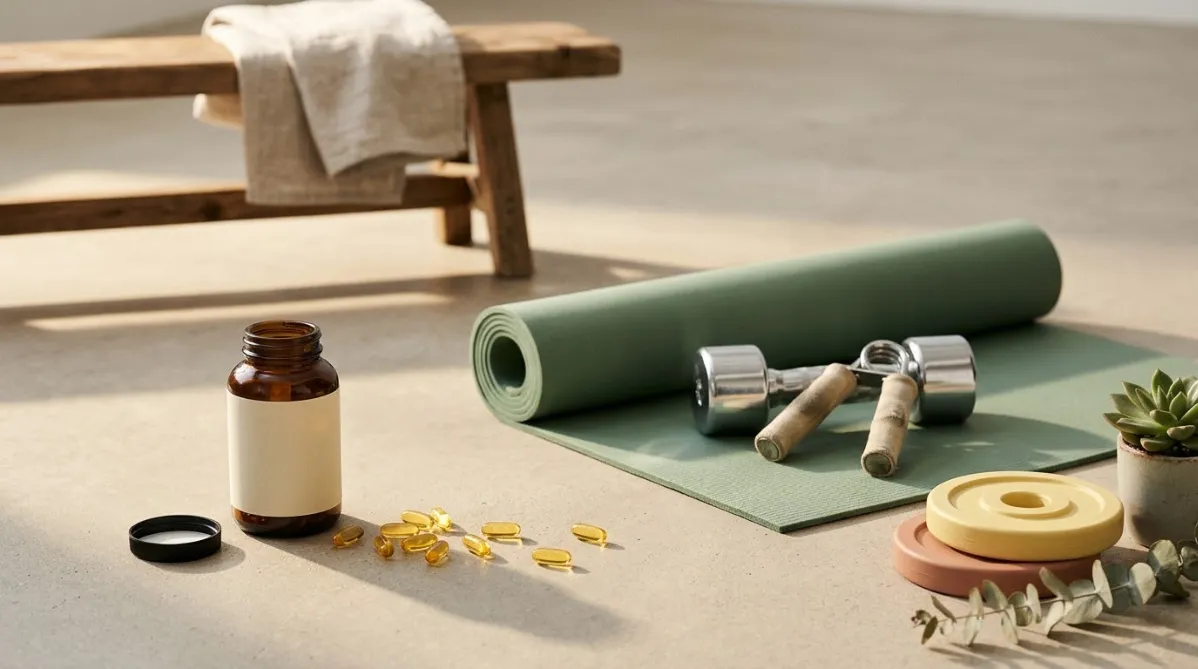
A soft-lit editorial still life on a pale warm-gray concrete surface, shot from a slightly elevated three-quarter angle in a wide landscape frame. On the left, a single amber glass supplement bottle with a minimalist cream label, its lid set beside it. A few golden-yellow softgel capsules are scattered in a loose arc across the surface, catching the light like small drops of honey. At the center-right, a matte sage-green yoga mat is partly unrolled, with a polished chrome dumbbell resting on it. Next to the dumbbell sits a worn canvas hand gripper, a nod to the handgrip finding. Behind them, a wooden gym bench is slightly out of focus, and a folded linen towel sits on top of it.

Warm morning sunlight enters from the upper left through a large window. It casts long, gentle diagonal shadows and a faint golden glow across the scene, a quiet reference to vitamin D and sunshine. A sprig of dried eucalyptus or a small potted succulent adds an organic touch near the bottom right. A small, neatly stacked pile of two or three matte pastel-toned weight plates in butter yellow and dusty terracotta adds color blocking.

The palette is muted and modern: butter yellow, sage, warm sand, soft terracotta, and off-white, with a single strong amber accent from the bottle. The depth of field is shallow, with crisp focus on the capsules and bottle and a creamy blur falling off toward the background. The negative space on the upper right is clean and uncluttered, which leaves room for a headline overlay. The overall feel is calm, minimalist, and contemporary, like a premium health and wellness magazine or a trendy online journal. The grain is subtle, the contrast gentle, and the textures tactile: brushed metal, frosted glass, linen, and concrete. There are no people, no text, and no futuristic elements.
science research

La vitamina D non ti farà dimagrire né aumentare la massa muscolare, con un'eccezione

BY DR. GYMBRO ·

Una nuova meta‑analisi dose‑risposta di 28 studi randomizzati su 1.675 adulti ha indagato se aggiungere vitamina D all’allenamento è più efficace dell’esercizio da solo. I livelli ematici di vitamina D sono aumentati di circa 34 nmol/L, ma peso corporeo, BMI, massa grassa, percentuale di grasso corporeo e massa magra non sono migliorati rispetto all’allenamento singolo. Nemmeno la forza alla pressa per le gambe è cambiata. L’eccezione: modesti guadagni nell’estensione del ginocchio (+4,36 kg) e miglioramenti della presa manuale negli adulti più anziani e con dosi più elevate. Ecco chi potrebbe trarne beneficio e cosa fare prima di acquistare un’altra bottiglia.

This page is available in