Dr. Gymbro
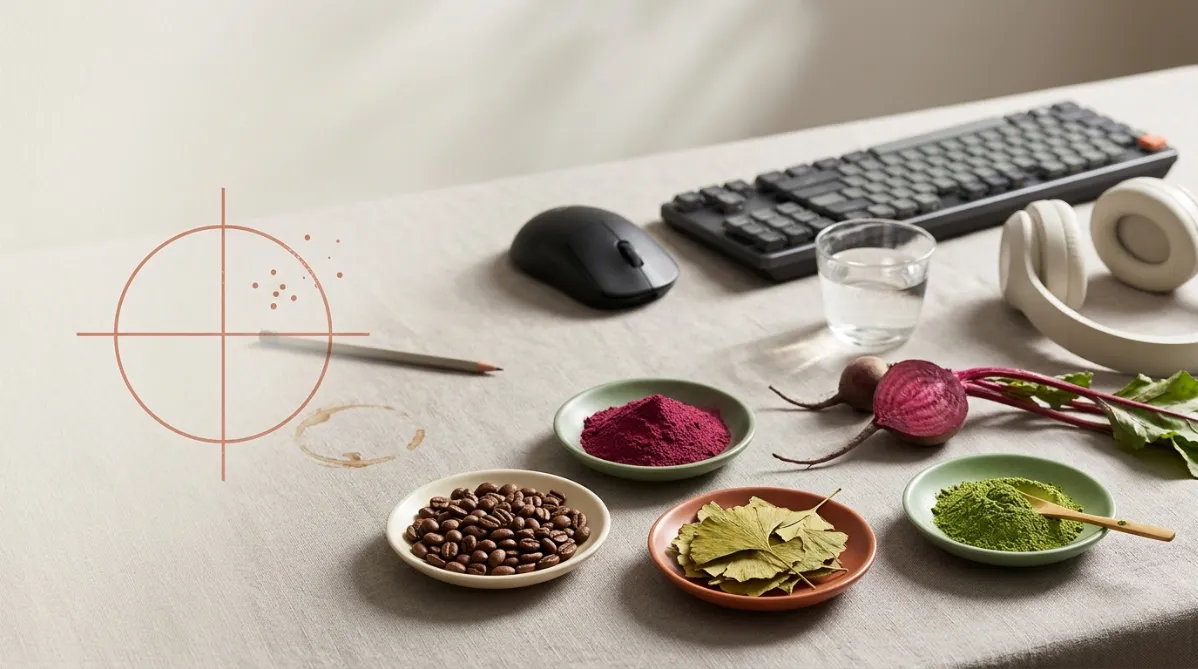
A landscape editorial still life on a softly textured warm-gray linen surface, shot from a slightly elevated three-quarter angle in diffused natural window light. In the foreground, four small ceramic dishes are arranged in a gentle arc. One holds roasted coffee beans, one holds deep magenta beetroot powder, one holds dried golden-green Ginkgo biloba leaves, and one holds bright jade matcha-style green tea powder with a tiny bamboo scoop. Each dish has a distinct, saturated color that stands out against the muted backdrop. Behind them, slightly out of focus, sits a minimalist matte-black gaming mouse beside a sleek, low-profile mechanical keyboard. A pair of matte off-white headphones rests on the right. A single fresh beetroot with its leafy stem and a halved beet showing concentric magenta rings lie casually near the dishes. A small glass of water catches the light, casting soft refracted highlights across the linen.

On the left, a clean, graphic crosshair motif is rendered as a thin circle and cross lines in soft terracotta ink, as if stamped on the paper surface, with a few tiny scattered dots clustered just off-center to hint at drifting aim. A subtle ring of coffee residue and a pencil lie near it, suggesting a researcher's desk. The color palette is warm and earthy: cream, sage green, terracotta, deep beet magenta, charcoal black, and touches of gold. The shallow depth of field gives creamy bokeh in the background, with soft shadows falling to the left. The mood is calm, modern, and intelligent, like a premium health and performance magazine cover, with generous negative space on the upper left for headline text. The composition is balanced and uncluttered, with crisp detail on the ingredients, fine natural textures like leaf veins and powder grain, and a refined, trendy editorial feel. There are no people, no text, and no futuristic elements.
Nutrition

Cervello fritto, mira imprecisa: quale integratore la ripristina davvero?

Dr. Gymbro · · 4 min read

Hai spinto per tre ore nelle classifiche. Il tuo mirino sembra pesante, i colpi atterrano qualche pixel fuori e il tracking diventa instabile. Non è un problema meccanico, ma di affaticamento mentale, e una nuova sperimentazione crossover dell'Università Sportiva di Wuhan suggerisce che alcuni integratori potrebbero aiutare nella ripresa. Lo studio indica anche che alcune cose che speri di sistemare con una capsula semplicemente non lo sono.

Cosa hanno realmente fatto i ricercatori

Lo studio, pubblicato sul Journal of the International Society of Sports Nutrition, ha reclutato 20 atleti di alto livello specializzati in sparatutto in prima persona. Ogni giocatore ha eseguito un compito Stroop, un classico test cognitivo che induce affaticamento mentale costringendo a sopprimere risposte automatiche. Successivamente ha assunto una delle cinque condizioni: caffeina, nitrato (il composto della barbabietola), estratto di Ginkgo biloba, catechine del tè verde o placebo. Dopo 60 minuti di riposo, i partecipanti sono stati testati sul trainer di mira KovaaK's per valutare accuratezza, stabilità, localizzazione spaziale e multitasking. È stata registrata la variabilità della frequenza cardiaca (HRV) per tutta la durata.

Il disegno randomizzato crossover è un punto di forza: ogni giocatore fungeva da proprio controllo, riducendo al minimo le variazioni dovute a differenze individuali di abilità e concentrazione di base.

I risultati, testa a testa

Accuratezza di tiro: tutti e quattro gli integratori hanno superato il placebo (p < 0,05). Non c’è stata alcuna differenza significativa tra loro: la caffeina non è stata superiore al nitrato, né il Ginkgo è risultato inferiore al tè verde.

Stabilità di tiro: caffeina, nitrato e catechine hanno prodotto un recupero significativo rispetto al placebo, ancora una volta senza differenze rilevanti tra loro. Il Ginkgo è stata l’unica eccezione e non ha migliorato la stabilità.

Localizzazione spaziale e multitasking: nessuno dei quattro integratori ha mostrato benefici superiori al placebo. I giocatori hanno migliorato entrambi gli aspetti dopo il periodo di riposo, ma gli autori attribuiscono questo al recupero naturale. Un’ora di pausa ha fatto il lavoro, non l’integratore.

HRV: indici come RMSSD e SDNN sono variati in alcune condizioni di integrazione. Gli autori ipotizzano che ciò possa riflettere cambiamenti nella regolazione autonoma durante il recupero, ma non traggono conclusioni definitive.

Cosa significa: la classifica è praticamente un pareggio

Il messaggio principale è che non c’è un vincitore netto. Se ti basi solo su questi dati, la domanda non è “qual è il miglior integratore”, ma “qual è quello che meglio si adatta alla tua tolleranza, al tuo programma e alle regole di gara”. Caffeina, nitrato e catechine formano un gruppo di tre che ha aiutato sia l’accuratezza sia la stabilità. Il Ginkgo ha migliorato solo l’accuratezza.

L’assenza di differenze tra i gruppi non dimostra nemmeno che gli integratori siano equivalenti. Con soli 20 partecipanti lo studio potrebbe non avere la potenza statistica necessaria a rilevare differenze modeste. “Nessuna differenza significativa” non è uguale a “identici”.

Consigli pratici per gamer e atleti di sport mentali

L’abstract non riporta le dosi esatte utilizzate, quindi i range indicati sotto provengono dalla letteratura più ampia sugli integratori, non da questo trial. Considerali punti di partenza generali e consulta un professionista sanitario se hai condizioni mediche o assumi farmaci.

  • Caffeina: tipicamente 3‑6 mg/kg negli studi sportivi, anche se molti funzionano bene con dosi più basse, soprattutto se sei sensibile. Gli effetti collaterali (tremori) possono compromettere la destrezza fine, quindi testala in allenamento, non in torneo.
  • Nitrato (barbabietola): gli studi usano circa 400‑800 mg di nitrato, equivalenti a uno o due shot concentrati di succo di barbabietola. È un’opzione solida senza caffeina, anche se può provocare fastidi gastrici e colorare temporaneamente l’urina di rosa.
  • Catechine del tè verde: estratti che forniscono qualche centinaio di milligrammi di EGCG sono tipici. Verifica se il prodotto contiene caffeina e evita dosi molto alte di estratti concentrati, associati a possibili problemi epatici.
  • Ginkgo biloba: 120‑240 mg di estratto standardizzato è comune. Può interagire con anticoagulanti, quindi occorre maggiore cautela. Dato che è stato il più debole in questo studio, ha la priorità più bassa.

Tempistica: il protocollo prevedeva 60 minuti di riposo dopo l’ingestione, quindi assumere l’integratore circa un’ora prima della partita è un approccio sensato. Non aspettarti un effetto immediato.

Alternative senza caffeina: se sei sensibile agli stimolanti, giochi in sessioni notturne o gareggi sotto regole restrittive, nitrato e catechine decaffeinate sono le opzioni supportate dai dati, poiché entrambe hanno migliorato accuratezza e stabilità.

Cosa nessun integratore può sistemare

I risultati su localizzazione spaziale e multitasking sono un utile richiamo alla realtà. Queste abilità sono tornate a livelli normali con il semplice riposo, indipendentemente da cosa i giocatori avessero assunto. Se il tuo senso di gioco, la consapevolezza della mappa o la capacità di gestire più informazioni è “fritta”, i dati suggeriscono che una pausa, non una capsula, è lo strumento principale. Sonno, interruzioni tra le sessioni e una programmazione ragionevole restano la base.

Limiti onesti

Si tratta di una piccola sperimentazione su 20 giocatori, testata su un unico trainer di mira con un unico protocollo di affaticamento. Il compito Stroop è una simulazione di laboratorio della fatica di una vera giornata di torneo, che comprende stress, lunghe ore, privazione del sonno e pressione sociale. I punteggi del trainer non si traducono necessariamente in performance reale. I risultati HRV sono esplorativi, e gli autori chiedono ulteriori ricerche. Vale anche la pena notare che il fatto che tutti e quattro gli integratori superino il placebo in un campione piccolo potrebbe riflettere in parte effetti di aspettativa, anche in un disegno placebo‑controllato, se i giocatori riuscivano a intuire quale pillola avessero preso, cosa plausibile con la caffeina.

Conclusione

Se la tua mira crolla quando il cervello è esausto, caffeina, nitrato e catechine del tè verde hanno mostrato segni di ripristinare sia accuratezza sia stabilità, mentre il Ginkgo ha aiutato solo l’accuratezza. Nessuno ha superato gli altri e nessuno ha risolto la consapevolezza spaziale o il multitasking oltre a quanto ha già fatto il riposo. Scegli in base alla tua tolleranza, testalo in allenamento, assumilo circa un’ora prima e considera i risultati promettenti ma preliminari.
Original study

Read the original research on pubmed.ncbi.nlm.nih.gov →

This article summarizes published research for general information. It is not medical advice.

DG

Written by

Dr. Gymbro

Dr. Gymbro writes for Dr. Gymbro: science-backed fitness, nutrition & performance.

Related Articles

A wide, editorial-style photograph of a professional soccer pitch at golden hour, shot from a low angle at the edge of the grass. In the foreground, slightly off-center to the left, a pair of worn leather cleats sits beside a scatter of three small matte ceramic dishes. One holds fine white taurine powder, one holds dark roasted coffee beans, and one holds pale cream-colored softgel capsules. Soft warm light catches the textures: the grain of the beans, the powder's fine crystalline sheen, the glossy curve of the capsules. A clean white sports towel and a brushed-steel water bottle rest nearby, with a small stopwatch lying on the turf, its face softly glowing.

Behind them, the field stretches into a gentle blur. A lone player in a muted navy training kit mid-sprint leaves a faint streak of motion across the frame, with painterly bokeh from stadium floodlights and distant stands. The grass is a rich, deep green with crisp white line markings curving across the midground and leading the eye toward the athlete. Long amber shadows stretch across the pitch, and a hazy peach and pale blue sky fills the upper right, leaving open negative space for a title overlay.

The palette is restrained and modern: deep green, warm cream, soft amber, charcoal, and a touch of muted coral. The depth of field is shallow, with sharp detail on the supplements and cleats. The mood is calm, premium, and scientific without feeling clinical, like a contemporary sports-science magazine or wellness journal cover. The lighting is natural and cinematic, with gentle film grain and a subtle vignette. The composition follows the rule of thirds, with clean lines and no text, logos, or clutter.
nutrition

Taurina, caffeina e PS: vantaggi per i calciatori professionisti. Il rovescio della medaglia?

BY DR. GYMBRO ·

I calciatori professionisti che hanno assunto taurina, caffeina e fosfatidilserina per 14 giorni hanno ottenuto risultati migliori negli sprint di 30 m, nei tempi di reazione e nei punteggi di affaticamento mentale rispetto al placebo, in uno studio randomizzato su 97 giocatori. Tuttavia, raddoppiare la dose di PS da 300 a 600 mg ha prodotto solo una differenza modesta e non costante. Gli autori sottolineano che i dati non dimostrano un miglioramento della resistenza alla fatica e che la PS non è mai stata testata da sola. Ecco cosa conteneva lo stack, cosa ha fatto e cosa non può dirti.

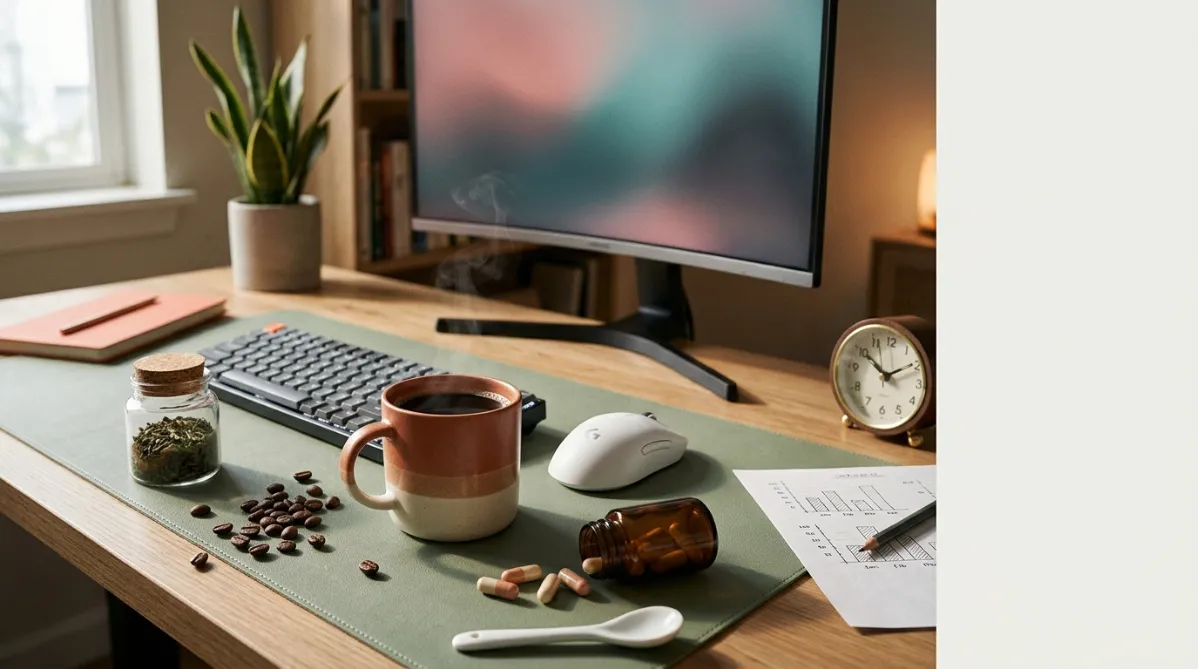
A landscape editorial still life on a softly lit desk, shot from a slightly elevated three-quarter angle with shallow depth of field. In the center sits a ceramic cup of black coffee with a thin curl of steam, on a matte sage-green desk mat. Beside it, a sleek white wireless gaming mouse and a minimal, low-profile keyboard are partly in focus. Scattered in the foreground are a few whole roasted coffee beans and a small glass jar of loose green tea leaves, as a quiet nod to caffeine sources. To the left, a few unlabeled supplement capsules in muted peach and cream spill from a small amber glass bottle onto the mat. Their blurred, ordinary look hints that they are less important than the coffee. In the background, a monitor glows with a soft, abstract, out-of-focus gradient of dusty rose and teal, with no readable game interface. A small analog alarm clock sits at the edge of the frame, its hands near late evening, suggesting sleep concerns. A sheet of paper with simple hand-drawn bar charts and a pencil rests near the cup, hinting at research and data without any legible text.

The palette is warm and modern: cream, sage, terracotta, charcoal, with a single accent of coral. Soft window light comes from the left, casting gentle long shadows and a subtle film-like grain. The composition is clean and uncluttered, with generous negative space on the right third for a title overlay. The look is contemporary and trendy, like a lifestyle-science magazine cover, calm, tactile, and sophisticated, with no sci-fi or neon cyberpunk elements.
supplements

Il supplemento per il gaming con prove reali non è quello che pubblicizzano

BY DR. GYMBRO ·

Le pubblicità dei supplementi per il gaming promettono concentrazione laser e riflessi fulminei, ma una nuova revisione sistematica di 13 studi randomizzati (466 giocatori) mostra che le evidenze riguardano quasi esclusivamente un solo ingrediente: la caffeina. Essa compare in 14 dei 18 protocolli testati ed è associata a una migliore attenzione, funzioni esecutive, umore, precisione di tiro e tempi di reazione. Sono stati valutati anche arginina‑silicato potenziata con inositolo, GABA e microalghe, ma con molto meno supporto. Gli autori avvertono che i campioni ridotti, i giocatori amatoriali e il rischio di bias rendono i risultati preliminari. Ecco cosa dimostra la ricerca, quali effetti collaterali tenere d'occhio e come usare la caffeina in modo sensato senza sacrificare il sonno.

A bright, editorial flat-lay photograph shot from slightly above on a pale oat-colored linen surface in soft natural window light. At the center, a small white ceramic cup of black coffee sits on a matte saucer, with a delicate curl of steam. To its left, a shallow wooden bowl holds glossy red coffee cherries, the fruit of the coffee plant, with a few scattered on the linen and one sliced open to show the pale seed inside. To the right, three identical small amber glass vials with minimalist cream labels stand in a row, and a few loose beige capsules and a small pile of fine tan powder rest on a speckled stone dish beside them. A few roasted coffee beans are scattered casually across the composition. A thin sprig of green coffee leaves with waxy, dark foliage arcs in from the top edge. A brass measuring spoon and a folded cream notepad with a pencil sit near the lower right, hinting at a lab-style comparison without any clinical equipment. The palette is warm and restrained: terracotta red, cream, espresso brown, soft sage green, and touches of amber and brushed brass. Shadows are gentle and diffuse, with shallow depth of field that softens the background edges. The composition leaves generous negative space on the left third for title text, and the whole scene feels calm, modern, and curated, like a lifestyle and wellness magazine cover. Fine film-like grain, true-to-life color, and crisp textures in the linen weave, the glossy cherry skins, and the glass vials. No text, no logos, no people, wide 16:9 landscape framing.
science research

Estratto di frutto di caffè deluso nella comparazione con 75 mg di caffeina in un nuovo studio

BY DR. GYMBRO ·

L'estratto di frutto di caffè è promosso come una spinta energetica più intelligente e delicata, ma un nuovo studio crossover in doppio cieco lo ha confrontato con la sola caffeina, mostrando una differenza sorprendente. Su 28 adulti, né 100 mg né 300 mg di estratto di coffeeberry hanno modificato l'attenzione, l'energia mentale, la fatica mentale o la performance in bici. Una dose moderata di 75 mg di caffeina, invece, ha migliorato l'attenzione e l'energia mentale per un breve periodo. Si tratta di uno studio acuto su dosi singole, quindi non è la conclusione definitiva.

A sunlit outdoor running track in late afternoon, shot from a low angle with shallow depth of field. In the foreground, a matte black bottle with a minimal off-white label sits on the edge of a warm terracotta-colored track lane, beside a folded white towel and a small glass of amber liquid catching golden light. Condensation beads on the bottle. A faint heat shimmer rises from the track surface and softens the background.

In the midground, slightly out of focus, a lean athlete in a sage-green tank top and charcoal shorts runs on a treadmill-like stretch of track, a thin sheen of sweat on their shoulders, their expression focused and calm. Their motion is gently blurred, suggesting endurance and rhythm. Long soft shadows stretch across the lane lines.

The background fades into hazy peach, apricot, and pale yellow tones, with the suggestion of tall trees and a distant stadium wall. Warm sun flare enters from the upper right, creating a subtle glow and a few soft light streaks across the frame.

Subtle editorial touches: a small notebook with a pencil and a stopwatch rest beside the bottle, hinting at data and timing without any text legible. The color palette is warm and muted, with terracotta, cream, sage, and charcoal accents, and a fine film-like grain. The composition leaves open negative space on the left third for a headline overlay. The overall mood is clean, modern, and health-journal inspired, natural and aspirational, with a calm scientific curiosity rather than hype.
nutrition

Bevande chetone al caldo: più resistenza e memoria più acuta?

BY DR. GYMBRO ·

Le bevande a base di chetoni sono spesso associate a biohacker che vogliono bruciare grassi, ma uno studio sullo stress termico suggerisce che potrebbero anche migliorare la capacità di sostenere uno sforzo intenso. In 17 uomini allenati, il mono‑ester di chetone combinato con caffeina ha prolungato il tempo fino all’esaurimento di 8,9 minuti contro 7,0 con carboidrati più caffeina, dopo 90 minuti di corsa su tapis‑roulant a 34 °C. Inoltre, l’accuratezza al test 1‑back è aumentata, mentre frequenza cardiaca e temperatura corporea non hanno mostrato differenze significative. I risultati, però, sono limitati da un campione piccolo, maschile e da una singola sessione. Ecco cosa dicono i dati e cosa resta incerto.

This page is available in