Dr. Gymbro
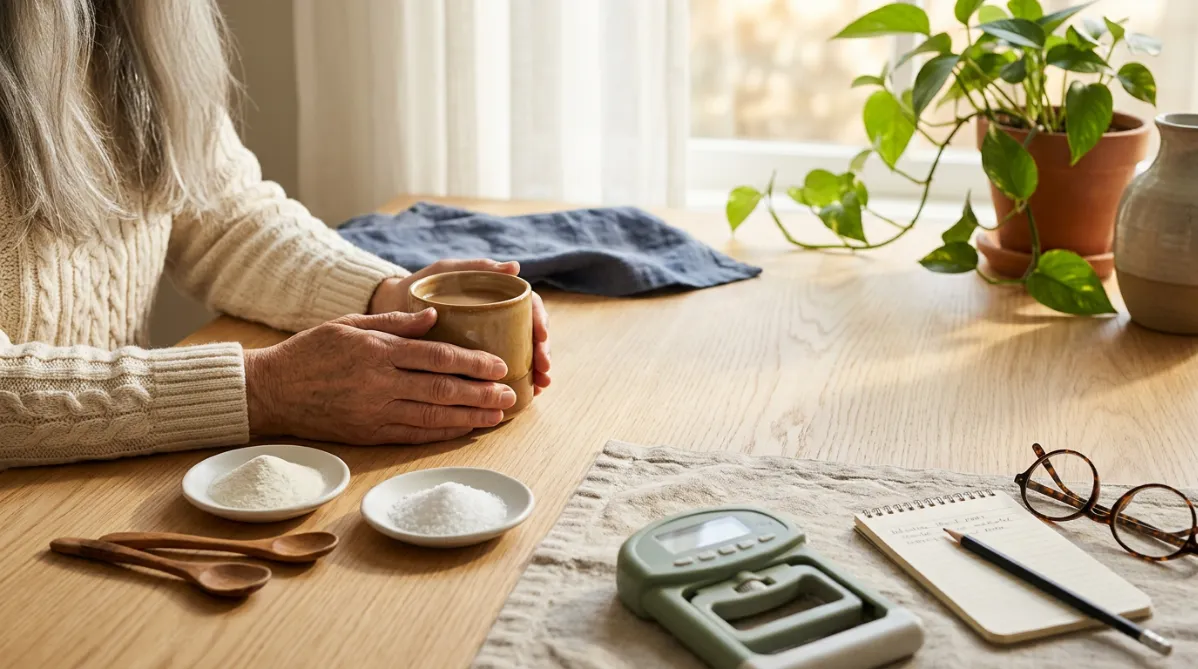
A landscape editorial photograph of a sunlit kitchen table in soft morning light. An older adult's hands, with silver hair and a cream knit sleeve just visible, rest around a ceramic mug. Beside the mug are two small matte white ceramic dishes. One holds a mound of fine white powder, and the other holds a slightly different crystalline white powder. Two wooden spoons lie next to them. A handheld hand-grip dynamometer in muted sage green sits on a linen placemat in the foreground, slightly out of focus. A small open notebook with a pencil and a pair of round tortoiseshell reading glasses sit nearby, with no legible text.

The tabletop is pale oak with a visible grain. Behind it, a window with sheer curtains lets in warm golden light, and the blurred shapes of a trailing green pothos plant and a pale terracotta vase show in the background. The color palette is warm cream, sage green, soft terracotta, and pale wood, with a touch of muted navy from a folded napkin. The mood is calm, thoughtful, and quietly scientific without any laboratory feel.

The composition follows the rule of thirds. The hands and dishes sit in the left-center, and generous negative space on the right is suitable for a title overlay. Shallow depth of field, 50mm lens look, gentle film grain, and soft shadows. Modern lifestyle-magazine and health-journal aesthetic, natural and unstaged, high-end editorial photography.
Nutrition

Il precursore della creatina supera la creatina nella forza di presa nei soggetti over 65

Dr. Gymbro · · 5 min read

Il precursore della creatina supera la creatina nella forza di presa nei soggetti over 65

Un “cugino” meno noto e più economico della creatina ha appena battuto lo standard d’oro degli integratori per la forza di presa in adulti over 65. Prima di rivedere la tua routine, leggi le clausole: si tratta di un piccolo pilota di otto settimane con 21 completatori, senza programma di esercizio, e con intervalli di confidenza che a malapena superano lo zero. È interessante e vale la pena seguirlo, ma non è una ragione per abbandonare la creatina monoidrato.

Che cos’è il GAA e perché confrontarlo con la creatina?

L’acido guanidinoacetico (GAA) è il precursore metabolico immediato della creatina. Nel corpo il GAA viene sintetizzato nei reni e poi metilato nel fegato per formare la creatina. Quest’ultima fase utilizza un gruppo metilico donato dalla S‑adenosilmetionina (SAMe).

Il ragionamento dei ricercatori è che l’invecchiamento possa ridurre la sintesi e il trasporto della creatina. Se fosse così, fornire il precursore potrebbe aggirare alcuni di questi colli di bottiglia e influenzare l’energia muscolare e il metabolismo proteico in modo diverso dalla creatina stessa. La creatina già aiuta gli anziani, soprattutto se associata ad allenamento di resistenza, ma i risultati senza esercizio sono meno coerenti. È proprio su questo vuoto che lo studio ha voluto intervenire.

Come è stato condotto lo studio

Lo studio, pubblicato sul Journal of Nutritional Science and Vitaminology (2026; 72 (4): 284‑290), proviene dal Applied Bioenergetics Lab di Ostojic e collaboratori. È stato randomizzato, in doppio cieco, e dichiarato esplicitamente come pilota esplorativo.

  • Partecipanti: 25 adulti apparentemente sani di 65 anni o più sono stati randomizzati; 21 hanno completato (GAA n=11, creatina n=10).
  • Intervento: 2,0 g al giorno di GAA versus una dose equimolare di creatina monoidrato per 8 settimane. Per i miei calcoli grossolani, corrisponde a circa 2,5 g di creatina monoidrato, poiché i due composti hanno pesi molecolari diversi.
  • Esercizio: nessun programma strutturato è stato previsto nel protocollo.
  • Outcome: forza di presa manuale, composizione corporea e compartimenti di fluidi tramite analisi bioelettrica a più frequenze (BIA), e marcatori ematici includendo miostatina, IGF‑1, mTOR, omocisteina totale, albumina e proteina totale.

La compliance è stata superiore al 97 % in entrambi i gruppi e non sono stati segnalati eventi avversi.

I risultati: forza di presa, massa muscolare, miostatina

Forza di presa. La presa è aumentata in modo significativo con il GAA (p = 0,01) ma non con la creatina. L’interazione tempo‑trattamento è risultata significativa (p = 0,04) e l’effetto tra i gruppi è stato grande a favore del GAA (g di Hedges = 0,91). L’intervallo di confidenza al 95 % andava da 0,00 a 1,81; il limite inferiore a zero indica che il reale vantaggio potrebbe variare da trascurabile a notevole.

Composizione corporea. Con la BIA, il gruppo GAA ha mostrato incrementi significativi intra‑gruppo di massa magra, massa cellulare corporea, massa muscolare e acqua corporea totale. Il gruppo creatina non ha evidenziato cambiamenti comparabili. Le dimensioni dell’effetto tendono a favore del GAA per la forza, gli indici muscolari e i compartimenti legati all’idratazione, sebbene con ampi intervalli di confidenza.

Miostatina. Entrambi gli integratori hanno diminuito la miostatina circolante, una proteina che frena la crescita muscolare, con una soppressione maggiore nel gruppo GAA. Se una variazione di miostatina nel sangue si traduce in cambiamenti muscolari rilevanti negli anziani resta ancora una questione aperta.

Altri marcatori. La creatina ha prodotto un lieve calo dell’albumina sierica, ma è rimasto entro i valori di riferimento. L’IGF‑1 sierico era al di sotto del limite di rilevamento per la maggior parte dei partecipanti, così l’asse GH‑IGF‑1 non è stato valutabile.

Avvertenze da non trascurare

  • Dimensione del pilota. Con 10‑11 persone per braccio, lo studio non ha la potenza statistica per dare conclusioni definitive. Gli stessi autori definiscono i risultati preliminari e generatori di ipotesi.
  • La BIA non è una scansione. L’impedenza bioelettrica stima la massa muscolare dalle proprietà elettriche e risulta sensibile all’idratazione. La creatina è nota per spostare l’acqua dentro i muscoli, e anche il gruppo GAA ha mostrato un aumento dell’acqua corporea totale. Pertanto, i guadagni di “massa muscolare” potrebbero riflettere in parte l’acqua. Il DXA o la risonanza magnetica fornirebbero una verifica più robusta.
  • Nessun esercizio. Lo studio ha testato che cosa fanno gli integratori da soli. Nella pratica, il maggior beneficio della creatina negli anziani emerge quando è associata ad allenamento di resistenza; quindi questi risultati potrebbero non essere trasferibili a chi solleva pesi.
  • La questione dell’omocisteina. Poiché la sintesi della creatina dal GAA consuma gruppi metilici, il GAA ha aumentato l’omocisteina in altri studi. L’omocisteina elevata è un fattore di rischio cardiovascolare e cognitivo. Questo trial ha misurato l’omocisteina totale, ma l’abstract non riporta un risultato di rilievo; occorre leggere l’articolo completo prima di trarre conclusioni. In pratica, chi lavora con il GAA suggerisce di garantire adeguati livelli di folato, B6, B12 e altri donatori di metili come la betaina, soprattutto negli anziani più soggetti a carenze di B12.
  • Breve durata e intervalli ampi. Otto settimane non dicono nulla sulla sicurezza a lungo termine o sulla persistenza dei benefici.

Punti pratici

  • Dose studiata: 2 g al giorno di GAA, contro una dose equimolare di creatina monoidrato (circa 2,5 g secondo i miei calcoli).
  • Chi potrebbe considerare il GAA: adulti più anziani che non rispondono alla creatina o che non si allenano. È comunque solo una speculazione per ora, da discutere con un professionista, soprattutto in presenza di rischi cardiovascolari, problemi renali o carenze di vitamine B.
  • Perché la creatina monoidrato resta la scelta di default: ha decenni di dati di sicurezza ed efficacia in molte popolazioni, è a buon mercato e i suoi benefici sono meglio documentati insieme all’allenamento di resistenza. Il GAA dispone di una porzione molto più piccola di evidenze e di un potenziale trade‑off sull’omocisteina.
  • Cosa potrebbe cambiare il quadro: studi più grandi e adeguatamente potenziati su persone con sarcopenia, usando DXA o MRI, con monitoraggio dell’omocisteina e dello stato delle vitamine B, e includendo bracci di esercizio.

Conclusioni

Questo pilota dà al GAA un vero, se ancora incerto, titolo: migliore forza di presa rispetto alla creatina in adulti over 65 dopo 8 settimane senza esercizio. Ma un intervallo di confidenza che tocca lo zero, 21 completatori e stime muscolari basate su BIA sono un segnale da tenere d’occhio, non una sentenza definitiva. Per ora, la creatina monoidrato più l’allenamento di resistenza resta la strategia comprovata, mentre il GAA è un’opzione da osservare.
Original study

Read the original research on pubmed.ncbi.nlm.nih.gov →

This article summarizes published research for general information. It is not medical advice.

DG

Written by

Dr. Gymbro

Dr. Gymbro writes for Dr. Gymbro: science-backed fitness, nutrition & performance.

Related Articles

A wide, editorial-style still life photographed from slightly above on a pale oat-colored linen surface, lit by soft morning window light from the left. In the center sits a small matte ceramic bowl holding a mound of fine white powder, with a minimalist wooden scoop resting beside it. Next to the bowl is an open amber glass supplement jar with a plain cream label, and a few white capsules spill across the linen in a loose arc.

To the right, a neatly arranged cluster of analog "study" objects suggests careful measurement: a vintage stopwatch with a clean white face, a slim notebook with a sage-green cover open to a hand-drawn bar chart (blurred, no legible text), and a mechanical pencil lying across the page. A small row of six identical ceramic dishes, each holding a pinch of powder, is lined up along the top edge of the frame to hint at the six-week trial. One dish is slightly out of alignment, a subtle visual cue for ambiguity.

A shallow glass of water and a single sprig of green eucalyptus add a calm, organic note in the foreground. Soft, long shadows fall across the textured linen, and the palette stays restrained: warm cream, soft sage, muted terracotta, pale gray, and touches of amber from the glass jar. A few translucent paper cutouts in two tones (sage and blush) overlap in the upper right corner as a modern graphic accent, evoking overlapping data points without showing any numbers.

Depth of field is shallow, with the bowl and stopwatch in crisp focus and the edges gently softened. The composition leaves generous negative space on the left third for title text overlay. The overall mood is thoughtful, balanced, and quietly skeptical, in the style of a contemporary wellness and science magazine: clean, tactile, minimal, with a subtle film-like grain and natural color grading. No people, no futuristic or sci-fi elements, no readable text or logos.
nutrition

GAA: potenziatore cerebrale? Il risultato della prova di 6 settimane è complesso

BY DR. GYMBRO ·

Il GAA, precursore della creatina commercializzato come potenziatore cerebrale, è stato testato in uno studio doppio cieco di sei settimane su 58 adulti sani. Sono emersi tempi di reazione più rapidi e lievi miglioramenti dell’umore, ma la maggior parte dei test cognitivi è rimasta invariata e molte conclusioni sono solo tendenze.

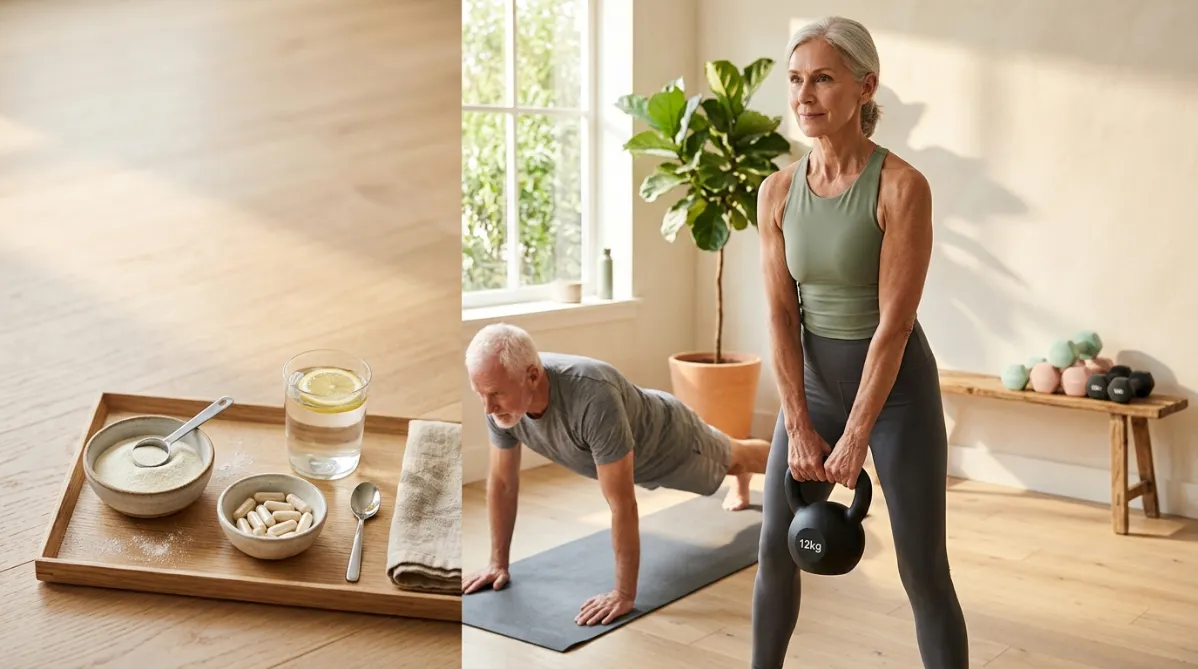
A warm, softly lit modern home gym or sunlit studio, photographed in a clean editorial style. In the center-right of the frame, a silver-haired woman in her mid-60s with a calm, confident expression grips a matte black kettlebell at hip height. She wears a fitted sage-green athletic top and charcoal leggings. Her forearms and shoulders show lean, defined strength rather than bulk. Beside her, slightly out of focus, a man in his late 60s with short white hair and a trim beard performs a controlled bodyweight plank on a pale oak floor.

In the foreground on the left, a minimalist wooden tray holds two small ceramic bowls. One contains fine white powder and the other holds a few cream-colored capsules. Next to them sit a glass of water with a lemon slice and a folded linen towel. A subtle scatter of powder dusts the tray. The foreground is shot with shallow depth of field and a creamy bokeh falloff.

Behind them, tall windows pour in golden morning light, with long soft shadows across the floor. A potted fiddle-leaf fig and a stacked set of pastel-toned dumbbells on a low wooden shelf add texture. The wall is warm off-white plaster with a hint of terracotta in the corner.

The palette is muted and modern: sage green, warm cream, soft terracotta, natural oak, and charcoal, with gentle highlights. The mood is quietly optimistic, focused, and grounded, suggesting strength, vitality, and measured scientific curiosity. The composition leaves clean negative space in the upper-left for a headline overlay. The look is a high-end wellness magazine cover with natural film-like grain, soft contrast, and crisp detail on the hands and kettlebell. There is no text, no logos, and no futuristic elements, only authentic, aspirational realism.
nutrition

Creatina + HMB rendono più forti gli over‑60 in 6 settimane, ma non più grandi

BY DR. GYMBRO ·

Un protocollo di sei settimane con creatina e HMB ha aumentato significativamente la forza di gambe, braccia, schiena e core in adulti attivi sopra i 60 anni, mentre la massa muscolare è rimasta quasi invariata. Lo studio, randomizzato, in doppio cieco e crossover su 30 soggetti, suggerisce che i guadagni di forza siano dovuti principalmente a meccanismi neuromuscolari, non a un accrescimento della massa. Attenzione però ai limiti: durata breve, campione ristretto e valutazione della composizione corporea tramite BIA.

A wide, softly lit editorial photograph of a rustic light-oak table by a sunny window. On it, a handful of dried brown kelp and wakame seaweed fronds spill from a handmade matte ceramic bowl in warm sand tones, their glossy, ruffled edges catching the light. Beside the bowl sits a small wooden scoop holding fine golden-beige powder, with a little of it dusted across the table. In the middle ground, an older adult's weathered but strong hand grips a smooth, rounded river stone, with the knuckles and tendons subtly emphasized to suggest strength and vitality. Only the hand and part of a forearm in a soft oatmeal linen sleeve are visible.

In the background, slightly out of focus, a pair of worn leather walking shoes rests on a windowsill next to a trailing green plant. Beyond the window, a blurred coastal path winds through dune grass toward a pale blue sea, hinting at walking and an active daily life. A simple analog wristwatch lies on the table's edge, a quiet nod to the twelve-week timeline.

The palette is muted and natural: sage green, warm sand, soft ocean teal, and creamy off-white, with deep olive-brown accents from the seaweed. Morning light streams in from the left, casting long, gentle shadows and a faint golden glow. The depth of field is shallow, with crisp focus on the hand and seaweed and a creamy bokeh background. The composition follows the rule of thirds, with the hand and bowl on the left and generous negative space on the right for headline text. The mood is calm and hopeful, with a clean, contemporary wellness-magazine feel. The image is shot as if on a 50mm lens with subtle film grain and a natural, uncluttered, tactile look.
science research

Il fucoidano estratto dalle alghe potenzia la forza di presa negli over 60 in 12 settimane

BY DR. GYMBRO ·

Perdere forza con l’età è una trasformazione comune ma poco discussa; l’allenamento con i pesi, però, non è alla portata di tutti. Uno studio randomizzato di 12 settimane ha mostrato che un fucoidano a bassa massa molecolare, assunto a 1 650 mg al giorno, aumenta significativamente la forza di presa e la distanza percorsa nel test della camminata di sei minuti negli adulti sopra i 60 anni. Sorprendentemente la massa muscolare non è cambiata, e l’aggiunta di BCAA e vitamina D non ha fornito benefici aggiuntivi.

A bright, airy editorial still life photographed from slightly above on a pale oat-colored linen surface, in soft natural window light with gentle long shadows. In the foreground, a rustic ceramic bowl holds halved and whole oranges, glossy red bell pepper slices, and a few kiwi halves with emerald flesh. Beside it sit loose strawberries and a small pile of bright yellow lemon wedges. Their colors pop against the muted neutral palette. A single clear glass of water with a slice of orange rests nearby, catching the light.

On the right side of the frame, a pair of well-worn but clean walking sneakers in sage green and cream sits casually on the surface, with one lace loosely trailing. Behind them, a simple wooden chair with a light ash finish is partly visible and slightly out of focus, a quiet nod to the sit-to-stand test. A small stainless-steel stopwatch lies next to the shoes, with a subtle reflective glint.

A minimalist ceramic dish holds a few small, round, pale-yellow vitamin capsules, kept understated. A sprig of green leaves and a folded cotton napkin in soft terracotta add a warm accent. A small open notebook with a pencil rests in the upper left, its page blank except for faint, abstract pencil lines suggesting a simple rising graph, with no legible text.

The composition leaves generous negative space on the left third for title overlay, with a soft cream-to-peach gradient background. The mood is fresh, healthy, and contemplative, like a modern wellness magazine or a trendy online journal. The color palette is warm citrus orange, sunny yellow, sage green, and soft cream, with gentle terracotta accents. The depth of field is shallow, with crisp focus on the fruit and shoes and a creamy blur in the background. The overall look is clean, natural, and editorial, with fine film-like grain, true-to-life color, and a calm, optimistic tone. Landscape 16:9 framing.
nutrition

La vitamina a buon mercato per gambe più forti con l’avanzare dell’età

BY DR. GYMBRO ·

Uno studio britannico su più di 5 000 adulti tra i 48 e i 92 anni ha scoperto che chi ha un livello di vitamina C nel sangue ottimale (≥ 50 µmol/L) cammina più velocemente e si alza da una sedia più rapidamente rispetto a chi ha valori più bassi. Nelle donne la stretta di mano è risultata più forte, anche dopo aver corretto per l’altezza; negli uomini non è emersa alcuna correlazione. L’assunzione di vitamina C attraverso la dieta è stata associata ai benefici solo nelle donne e senza un chiaro andamento. Lo studio è trasversale, perciò non dimostra causalità, ma i dati suggeriscono di tenere sotto controllo il proprio livello ematico.

This page is available in