Dr. Gymbro
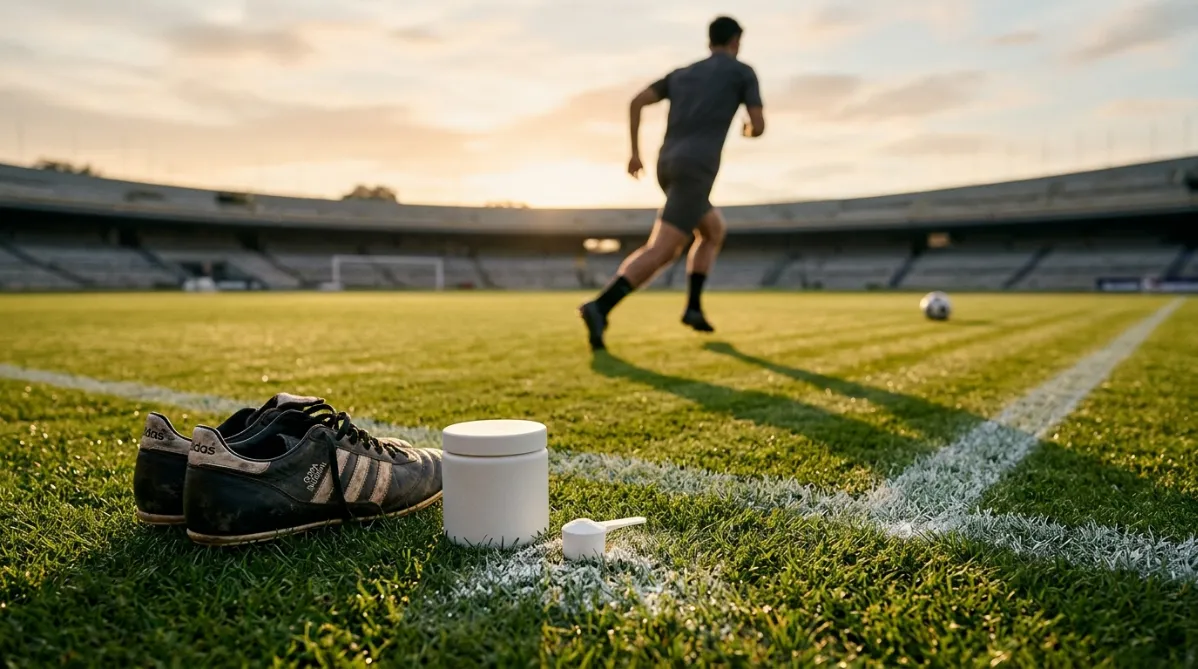
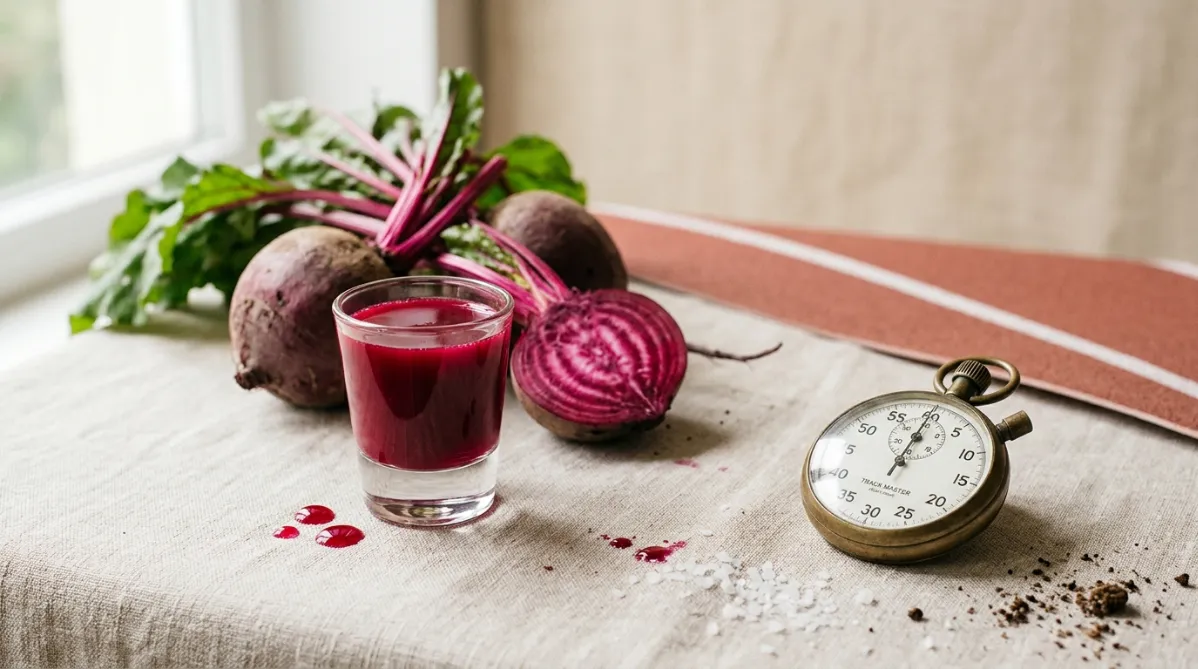
A wide editorial still life on a clean, pale oatmeal-colored linen surface, lit by soft natural window light from the left. In the center-left, a small clear glass shot glass filled with deep magenta-crimson beetroot juice catches a glowing highlight, with a few droplets beaded on the surface beside it. Behind it sit two whole beetroots with their leafy stems, the skins a dusty burgundy and the stems a vivid pink-red, and one beetroot sliced in half to reveal concentric rings of magenta and soft pink. To the right, a vintage-style brass stopwatch rests at an angle on the linen, its white face crisp and its hands frozen, slightly out of focus in the foreground edge. A faint curve of a sprinting track lane, in muted terracotta with thin white lines, sweeps diagonally across the blurred background, hinting at a running track without showing any people. Scattered across the surface are a few small, delicate beet-colored splashes and a light dusting of coarse sea salt. The palette is restrained and modern: warm cream, terracotta, dusty rose, deep magenta, and touches of sage green from the leaves. Shallow depth of field and a gentle film-like grain give it a contemporary lifestyle-magazine feel. The composition leaves generous negative space on the upper right for title overlay. Minimalist, tactile, calm, and sophisticated, in the style of a high-end health and science journal's editorial photography, 16:9 landscape.
Nutrition

Il succo di barbabietola ha aumentato il nitrito di 35 volte, ma gli sprinter non sono diventati più veloci

Dr. Gymbro · · 4 min read

Il succo di barbabietola è uno degli integratori naturali più pubblicizzati nello sport. Un nuovo studio ne ha appena testato gli effetti su atleti che, teoricamente, dovrebbero beneficiare di un impulso alle fibre a contrazione rapida; tuttavia, il cronometro non ha mostrato alcun cambiamento.

Il risultato principale: grande cambiamento biochimico, zero guadagno di velocità

Ricercatori in Spagna e nel Regno Unito hanno somministrato a sprinter maschi allenati una piccola dose di succo di barbabietola. Il succo ha agito come veicolo di trasporto per i nitrati. Il nitrato salivare è passato da circa 230 µM con il placebo a circa 6.164 µM con il succo. Il nitrito salivare, composto chiave della via dell’ossido nitrico, è aumentato da circa 130 µM a circa 4.509 µM, cioè circa 35 volte in più.

I tempi di gara sono cambiati a malapena. Lo sprint di 60 m è stato rispettivamente di 7,55 s con il succo e 7,58 s con il placebo; per i 100 m, 12,51 s contro 12,57 s. Nessuna differenza è risultata statisticamente significativa (p = 0,407 e p = 0,343). Il composto è arrivato nell’organismo, ma gli atleti non sono diventati più veloci.

Come è stato condotto lo studio

L’articolo, pubblicato su Journal of the International Society of Sports Nutrition, ha adottato un disegno randomizzato, in doppio cieco e controllato con placebo. Ogni atleta ha completato due prove, una con succo di barbabietola e una con placebo.

  • Dimensione del campione: 12 sprinter maschi allenati, età media 24,3 ± 4,8 anni
  • Dose di barbabietola: 70 mL di succo contenente 6,4 mmol di nitrato (circa 400 mg)
  • Placebo: 70 mL di una bevanda con solo 0,04 mmol di nitrato
  • Tempistica: i test di performance sono iniziati 150 minuti dopo l’ingestione
  • Test: salto in contropeso, salto squat, sprint di 60 m e sprint di 100 m
  • Valutazione muscolare: tensiomografia (misura non invasiva delle proprietà contractili muscolari) del retto femorale, del bicipite femorale e di entrambe le teste del gastrocnemio, effettuata prima e dopo i test

Gli autori hanno dichiarato di non avere conflitti di interesse finanziari.

Salti e funzione muscolare hanno raccontato la stessa storia

I dati sui salti hanno confermato i risultati degli sprint. L’altezza del salto controbilanciato è stata di circa 44,1 cm contro 43,6 cm (p = 0,400). L’altezza del salto squat è risultata praticamente identica, circa 42 cm (p = 0,911). Le dimensioni dell’effetto sono piccole, nell’intervallo da -0,25 a 0,29.

I risultati della tensiomiografia sono stati altrettanto piatti. Tra i muscoli e le variabili misurate, i valori p sono variati da 0,065 a 0,914. L’unica eccezione è il tempo di rilassamento del bicipite femorale (p = 0,047). Si tratta di un risultato marginale, e con un campione di sole 12 persone potrebbe facilmente derivare dal caso. Non è sufficiente per affermare che il succo di barbabietola modifichi la funzione dei tendini; la conclusione generale degli autori è che non ha migliorato la funzione neuromuscolare.

Perché potrebbe non aver funzionato?

Il riassunto dell’articolo non risolve la questione, quindi quanto segue è un’interpretazione, non una scoperta. L’integrazione di nitrato è solitamente discussa in relazione all’ossido nitrico, al flusso sanguigno e all’efficienza muscolare. Tali meccanismi sono più legati all’endurance e a sforzi ripetuti, piuttosto che a sprint brevi e massimali eseguiti da atleti già molto allenati. Inoltre, gli sprinter hanno poco margine di miglioramento. Un aumento del nitrito nella saliva non garantisce che la contrazione muscolare cambi in modo percepibile sulla pista.

Limiti da tenere in considerazione

  • Campione ridotto: Dodici atleti possono non essere sufficienti a rilevare effetti modesti. Un guadagno di qualche centesimo di secondo può fare la differenza per uno sprinter competitivo, e questo disegno non può escluderlo.
  • Solo maschi: I risultati non si applicano alle sprinter femminili.
  • Una dose, un unico tempo: È stata testata solo una dose di 70 mL (~6,4 mmol di nitrato) a 150 minuti dall’assunzione. Dosi più alte, tempistiche diverse o carichi plurigiornali non sono stati valutati.
  • Acuto soltanto: Lo studio ha osservato un singolo apporto, non un regime di integrazione prolungata.
  • Alta variabilità: Nitrato e nitrito salivari hanno mostrato deviazioni standard molto ampie, perciò le risposte individuali sono state molto eterogenee.
  • Registrazione: La sperimentazione è stata registrata retrospettivamente su ClinicalTrials.gov, un punto debole metodologico.

Insegnamenti pratici

Dose e tempistica usate nello studio: 70 mL di succo di barbabietola concentrato (~6,4 mmol di nitrato), assunti circa 2,5 ore prima dei test. Non hanno migliorato le prestazioni di sprint o salto.

Chi potrebbe ancora provarlo: Atleti di endurance e persone che apprezzano i prodotti a base di barbabietola possono comunque includerli nella dieta. Le evidenze a sostegno provengono da altri studi, non da questo lavoro.

Chi dovrebbe probabilmente evitarlo per questo scopo: Sprinter e atleti di potenza che sperano in un colpo di scena pre‑gara per ridurre i tempi sui 60 m o sui 100 m. Con le prove attuali è più sensato investire in sonno, proteine, creatina e allenamento di qualità.

Un approccio sensato se siete curiosi: Sperimentatelo in allenamento, non il giorno della gara. Registrate i vostri tempi nelle stesse condizioni con e senza il succo. Se assumete farmaci per la pressione o avete patologie (ad esempio problemi renali), consultate il medico prima di introdurre prodotti ricchi di nitrato.

La conclusione

Questo studio dimostra che aumentare i livelli di nitrato e nitrito non basta a rendere più veloci gli sprinter allenati, almeno con una singola dose acuta in 12 uomini. Non prova che il succo di barbabietola non possa mai aiutare nessuno, ma suggerisce che gli sprinter non dovrebbero aspettarsi un boost rapido da una sola iniezione di succo.
Original study

Read the original research on pubmed.ncbi.nlm.nih.gov →

This article summarizes published research for general information. It is not medical advice.

DG

Written by

Dr. Gymbro

Dr. Gymbro writes for Dr. Gymbro: science-backed fitness, nutrition & performance.

Related Articles

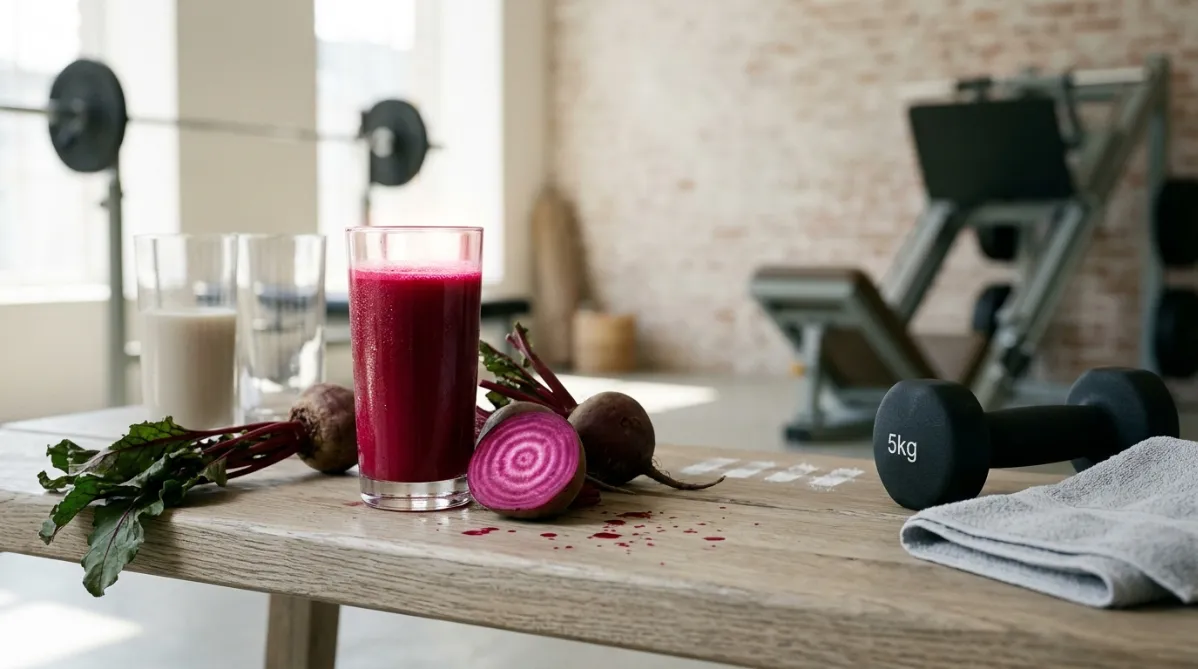
A wide, editorial-style still life photographed in soft natural window light, set on a pale oak gym bench or a light concrete surface. In the center foreground, a tall clear glass of deep magenta-crimson beetroot juice catches the light, with a faint luminous glow along its rim and condensation beading on the outside. Two other glasses sit slightly behind it, one holding a pale, neutral-colored liquid and one empty. They suggest the placebo and no-treatment conditions without any labels. Beside the glasses, a halved raw beetroot shows concentric rings of vivid fuchsia and violet. A few whole beets with their leafy stems and dark green and burgundy leaves are scattered casually nearby.

On the right side of the frame, slightly out of focus, a matte black women's-size dumbbell and a neatly folded light gray towel rest on the bench. Behind them, the soft blur of a minimalist, airy training space includes a barbell rack and a leg press machine in muted tones. The background is bright and neutral, in warm off-white, soft sand, and light gray, so the magenta of the juice is the dominant accent color.

A small, restrained motif of four evenly spaced chalk marks or four small round weight plates arranged in a neat row on the bench hints at the "four sets" of the trial. A few drops of beet juice have splashed onto the surface, forming a tasteful organic pattern.

The composition follows the rule of thirds, with the glass of juice on the left third and open negative space on the right for headline text. Shallow depth of field, crisp focus on the glass and beet, subtle film-like grain, and a calm, modern, trendy magazine aesthetic. The palette is magenta, deep burgundy, sage green, cream, and soft gray. The mood is quiet, skeptical, and scientific without any laboratory imagery, with clean lines and an elegant, minimal feel.
supplements

Il succo di barbabietola non aggiunge nemmeno una ripetizione alle donne allenate alla resistenza

BY DR. GYMBRO ·

Il succo di barbabietola è promosso come stimolatore naturale delle ripetizioni, ma uno studio doppio cieco su donne che praticano allenamento di resistenza non ha trovato alcun beneficio. Sedici partecipanti hanno bevuto succo ricco di nitrati (12,8 mmol), un placebo o niente prima di quattro serie di panca e leg press fino all'esaurimento. Il numero totale di ripetizioni, la percezione dello sforzo, la frequenza cardiaca, la pressione sanguigna e il lattato sono rimasti invariati. I risultati non mettono definitivamente a tacere la barbabietola, ma suggeriscono che l’effetto ergogenico dei nitrati sia limitato per questo gruppo e questo protocollo.

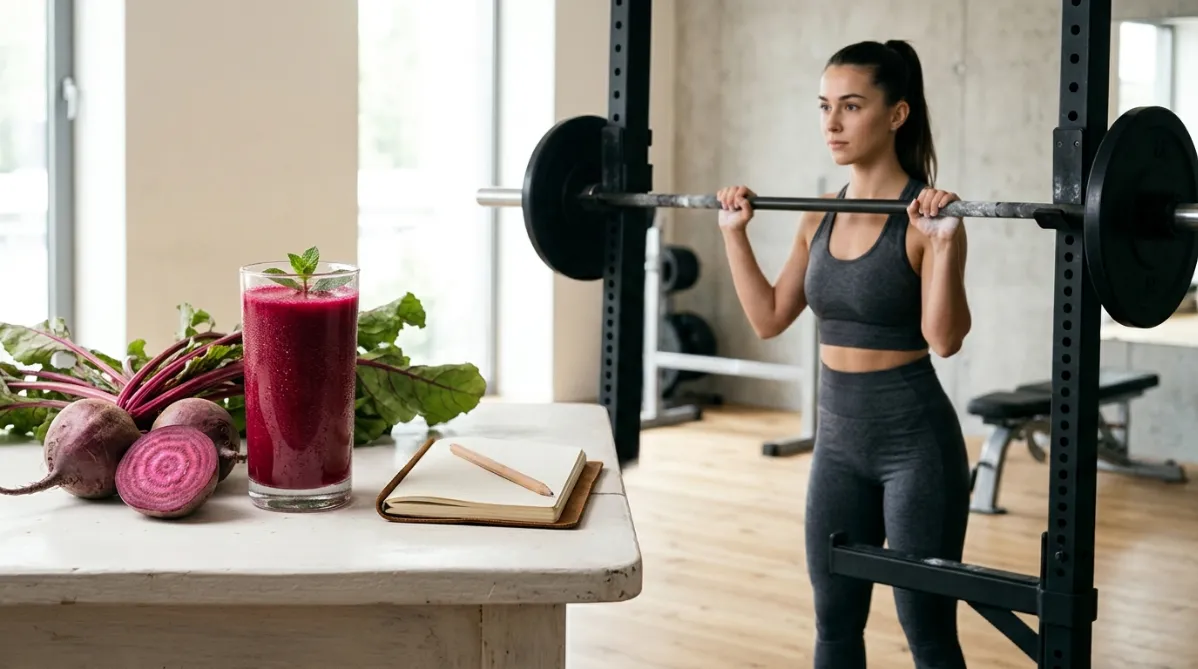
A wide, editorial-style photograph of a bright, modern gym corner softened by morning window light. In the foreground, a rustic matte-white ceramic table holds a tall clear glass of deep magenta beetroot juice, beads of condensation on the glass, a few fresh whole beetroots with leafy crimson-veined stems beside it, and one beetroot sliced in half to reveal its vivid concentric purple-pink rings. Next to the glass sits a small, neat notebook with a pencil, suggesting a research note, with no legible text. Behind the table, slightly out of focus, a young woman lifter with a tidy ponytail and a fitted charcoal training set stands at a barbell resting on a squat rack, chalk-dusted hands gripping the bar, calm and focused expression. A loaded bench with a bar is visible further back, with matte black plates and a light wooden floor. The palette is restrained and trendy: warm off-white, soft concrete gray, muted sage green accents from the beet leaves, and a bold beetroot magenta as the focal color. Shallow depth of field with a creamy bokeh background, natural side lighting casting long gentle shadows, subtle film grain. Composition follows the rule of thirds, with the juice and beets on the left third and the lifter on the right, leaving clean negative space in the upper area for a headline overlay. Mood is thoughtful, clean, and slightly skeptical, like a contemporary health and science journal cover. Realistic photography style, high-end magazine look, no text, no logos, no futuristic elements.
nutrition

Il succo di barbabietola delude le donne sollevatrici e rallenta anche la panca

BY DR. GYMBRO ·

Il succo di barbabietola è famoso come potenziatore naturale delle prestazioni, ma uno studio crossover su 18 donne allenate non ha mostrato alcun beneficio per lo squat. Ancora più strano, la potenza e la velocità della panca sono diminuite leggermente a un carico (60 % 1RM) dopo una dose di circa 6,7 mmol di nitrato assunta 2,5 ore prima dell’allenamento. Il calo è stato di circa 5 W e 0,02 m/s, con valori p al limite della soglia, quindi non è una conclusione definitiva. Ecco cosa ha testato lo studio, cosa non può dirci, e chi potrebbe ancora voler sperimentare con i nitrati.

A wide, editorial-style photograph of a soccer pitch at golden hour, shot from a low angle at the edge of the touchline. In the foreground, a pair of worn leather cleats sits beside a small, matte white scoop and a minimalist ceramic jar of fine white powder resting on the dewy grass. A few loose grains of powder dust the blades of grass and catch the warm light. The jar is unbranded, with a clean, modern look.

In the midground, slightly out of focus, a lone player in a plain charcoal training kit stands mid-stride on the pitch, caught in a sprint. The motion blur in the legs suggests speed, and long shadows stretch across the freshly mowed stripes of the turf. A soccer ball rests a few meters ahead of the player.

Behind them, the stadium stands curve softly into the distance, rendered in a hazy, muted gradient of peach, soft amber, and pale blue sky. The mowing pattern on the grass forms clean diagonal lines that lead the eye toward the horizon. A thin white chalk line cuts across the frame, adding a subtle graphic element.

The palette is warm and restrained: sage and deep green grass, cream white, soft apricot light, and touches of charcoal. The mood is calm, thoughtful, and slightly skeptical rather than hyped, like a magazine feature on sports science. Shallow depth of field with a creamy bokeh background, fine film grain, and gentle natural contrast. The composition follows the rule of thirds, with the jar and cleats in the lower left and open negative space in the upper right, which leaves room for a headline overlay. The look is contemporary and clean, like a premium health and performance journal.
nutrition

Creatina per il calcio: 41 studi, una scomoda verità sugli sprint

BY DR. GYMBRO ·

La creatina è ovunque, e le intense esigenze di sprint del calcio la fanno apparire come l’abbinamento ideale. Una nuova revisione sistematica di 41 studi ha messo alla prova questa idea, rivelando risultati più prudenti rispetto al marketing. Alcuni trial hanno mostrato benefici per sprint ripetuti, potenza anaerobica e forza, ma le prove sono incoerenti e di bassa certezza. Le affermazioni sul recupero hanno ricevuto poco supporto, e il peso corporeo è spesso aumentato senza chiari guadagni di massa magra. Ecco cosa emerge, chi può trarne vantaggio e chi dovrebbe riflettere prima di usarla.

A wide, editorial-style still life photographed on a pale warm-gray concrete surface in soft, diffused morning window light. On the left side, a tall clear glass filled with deep magenta-crimson beetroot juice sits beside two halved raw beetroots, their concentric rings of vivid fuchsia and purple clearly visible, with a few small green-and-red-veined leaves draped casually nearby. On the right side, a matching clear glass of cloudy white creatine solution rests next to a small matte ceramic bowl heaped with fine white powder and a minimal wooden scoop, a light dusting of powder scattered across the surface. In the center, between the two sides, a simple matte black barbell grip and a single chalk-dusted weight plate edge rise into the frame at a low angle, hinting at lifting without showing a person. The composition is split in a balanced, symmetrical way, with a subtle vertical shadow line dividing the saturated magenta tones on the left from cool, neutral whites and creams on the right. The background is softly blurred with a muted sage-green and oatmeal-toned wall, with plenty of negative space at the top for a headline overlay. Shallow depth of field, crisp focus on the glasses' condensation droplets and the textured beetroot flesh. The color palette is limited and refined: magenta, cream, charcoal, and soft sage. The mood is clean, modern, and health-journal chic, like a contemporary wellness magazine cover, with natural shadows, a tactile matte finish, and subtle film-like grain. No text, no logos, no futuristic elements.
nutrition

Succo di barbabietola vs creatina: chi vince nel sollevamento in 72 ore?

BY DR. GYMBRO ·

Un recente studio crossover randomizzato ha confrontato succo di barbabietola e creatina per circa 72 ore di integrazione su sollevatori principianti. La creatina ha garantito un maggior numero di ripetizioni nella panca al 80 % del 1RM, mentre il succo di barbabietola ha spiccato per velocità della barra, ossigenazione muscolare, frequenza cardiaca di picco e recupero HRV. L'abstract non indica né dosi né tempistiche, perciò segnaliamo queste lacune. Di seguito trovi la scheda completa e le indicazioni su chi dovrebbe scegliere quale integratore.

This page is available in