Dr. Gymbro
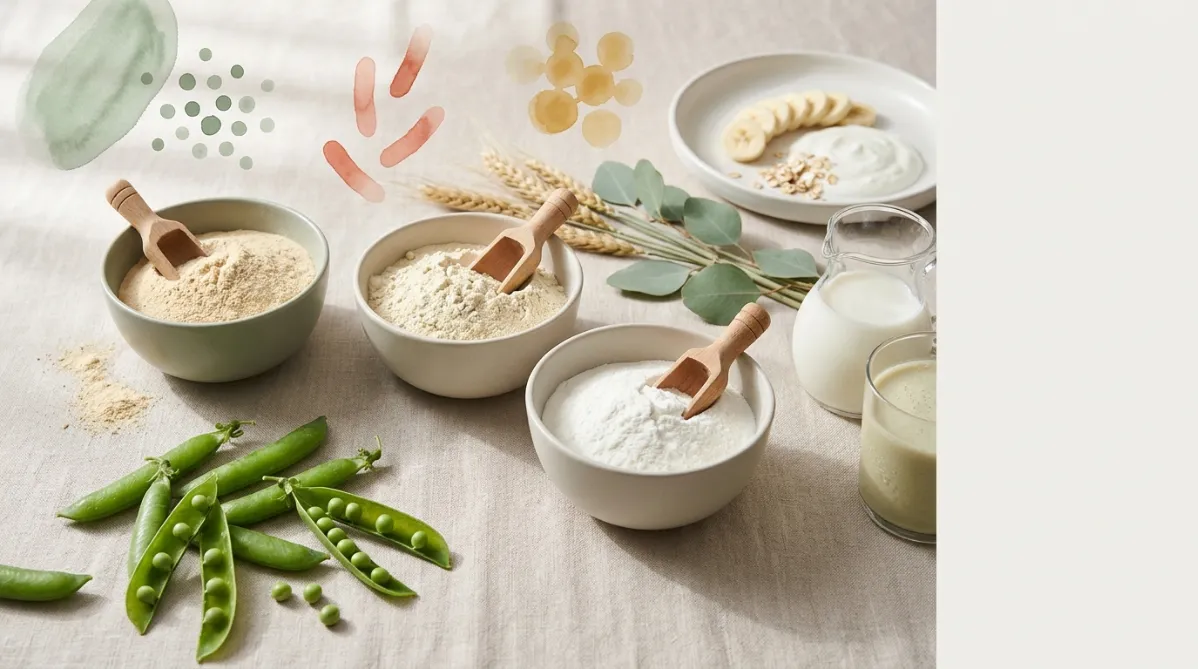
A wide, softly lit editorial flat-lay on a pale oat-colored linen surface, shot from slightly above. Three matte ceramic bowls sit in a loose diagonal across the frame. One holds fine, creamy beige pea protein concentrate, another holds paler, powdery pea protein isolate, and the third holds bright white whey protein isolate. Each bowl has a small wooden scoop resting beside it, with a few fine dustings of powder on the linen. Fresh green pea pods, split open to show round peas, spill naturally in the left foreground. A small glass pitcher of milk sits near the right edge, next to a half-full glass of a smooth, pale green-beige shake with condensation on the surface.

Behind the bowls, a few sprigs of dried wheat and soft eucalyptus leaves add organic texture. In the upper right, a shallow white ceramic plate holds a small arrangement of gut-friendly foods: sliced banana, a spoonful of plain yogurt, and a few oats. Delicate watercolor-style abstract shapes in sage green, warm coral, and soft mustard float subtly in the background. They suggest microscopic organisms, like loose dots, rods, and clustered circles, but stay painterly and minimal, not scientific or futuristic.

Natural window light enters from the left, casting long, gentle shadows and a warm, airy glow. The palette is muted and modern: sage green, cream, warm beige, blush, and touches of terracotta. The composition leaves generous clean negative space on the right third for a headline overlay. The depth of field is shallow, with the nearest pea pods and the front bowl crisp and the background softly blurred. The style is high-end wellness magazine photography with a subtle tactile, handmade feel, calm, fresh, and contemporary, in a 16:9 landscape format.
Science & Research

Quale proteina in polvere rimodella il tuo intestino? I piselli ce l’hanno fatta in 4 settimane

Dr. Gymbro · · 4 min read

Il tuo frullato proteico potrebbe fare più di nutrire i muscoli. Uno studio svedese, randomizzato e in doppio cieco, suggerisce che il tipo di proteina in polvere che scegli può modificare i batteri che popolano il tuo intestino in sole quattro settimane. Due forme di proteina di piselli hanno mostrato effetti, ognuna favorendo microbi diversi.

Lo studio: tre polveri, una dose, quattro settimane

I ricercatori dell'Università di Örebro hanno pubblicato lo studio su European Journal of Nutrition. Adulti sani hanno assunto uno dei tre integratori: concentrato di proteine di piselli (PPC), isolato di proteine di piselli (PPI) o isolato di proteine del siero (WPI). La dose era 0,5 g di proteine per kg di massa corporea al giorno, per quattro settimane.

L’endpoint principale era la composizione del microbiota intestinale. Il team ha raccolto settimanalmente campioni fecali e questionari sullo stile di vita, oltre a sangue a digiuno e urine delle 24 ore al basale, a metà intervento e al termine, per monitorare i marcatori metabolici. Si tratta di ricerca su soggetti umani, non di studi su topi o colture in vitro. La sperimentazione è stata registrata con il codice NCT05611138.

I ricercatori hanno effettuato due confronti: PPC vs PPI e PPI vs WPI. Questo ha permesso di osservare le differenze tra proteine vegetali e animali, e tra due proteine vegetali con matrici alimentari differenti.

Risultato principale: le proteine di piselli hanno modificato la diversità

Sia il PPC sia il PPI hanno prodotto cambiamenti misurabili. L’integrazione con entrambe le formulazioni ha ridotto significativamente la α‑diversità (varietà di specie all’interno dell’intestino di una persona) e ha aumentato la β‑diversità (differenza tra le comunità microbiche di campioni diversi). Gli autori notano che questi effetti sono stati in parte modulati dal BMI.

Una diminuzione della α‑diversità può sembrare allarmante, poiché una maggiore diversità è spesso considerata un indice di salute intestinale. L’abstract non specifica se il cambiamento sia positivo, negativo o neutro; gli autori sottolineano che le variazioni composizionali devono ancora essere collegate a una reale funzione microbica.

I batteri che sono aumentati

A livello di specie le due polveri di piselli si differenziano:

  • Concentrato di proteine di piselli (PPC): Anaerobutyricum hallii e Bifidobacterium longum sono aumentati in modo significativo.
  • Isolato di proteine di piselli (PPI): Lactobacillus crispatus e Limosilactobacillus frumenti sono aumentati in modo significativo.

Gli autori descrivono queste specie come benefiche e concludono che diverse proteine alimentari le modulano selettivamente. L’abstract non riporta quali specie siano cambiate nel gruppo whey, quindi non possiamo confrontare direttamente il siero a livello di specie. Il confronto PPI‑vs‑WPI era previsto nel disegno, ma l’abstract non fornisce dettagli a riguardo.

Ciò che non dimostra

Alcune precisazioni prima di cambiare la tua confezione di proteine:

  • Solo adulti sani. I risultati non sono estendibili a persone con patologie digestive.
  • Composizione, non funzione. Sono necessari studi ulteriori per capire come questi cambiamenti si traducano in benefici funzionali.
  • I marcatori metabolici non sono riportati nell’abstract. Sono stati raccolti sangue e urine, ma l’abstract non ne riporta i risultati.
  • Le risposte individuali contano. Il BMI ha parzialmente modulato gli effetti sulla diversità.
  • Quattro settimane sono poco. Non sappiamo se le variazioni persistano, aumentino o scompaiano nel tempo.

Indicazioni pratiche: come scegliere la tua polvere

Dosaggio. Lo studio ha usato 0,5 g/kg di massa corporea al giorno. Per una persona di 80 kg ciò corrisponde a 40 g di proteine al giorno dal supplemento. L’abstract non specifica il timing (pre‑allenamento, post‑allenamento o durante i pasti), quindi non ci sono consigli basati su evidenze temporali.

Concentrato di proteine di piselli. Nella sperimentazione il PPC è stato associato a un aumento di B. longum e A. hallii. Se il tuo obiettivo è una polvere a base vegetale e sei curioso degli effetti sull’intestino, questa è una opzione da valutare. I concentrati sono generalmente meno lavorati degli isolati, ma l’abstract non testa direttamente questa ipotesi.

Isolato di proteine di piselli. Il PPI ha mostrato incrementi di L. crispatus e L. frumenti. È la forma più purificata, preferita da molti atleti per l’elevata densità proteica.

Isolato di proteine del siero. Il WPI è stato il comparatore di origine animale. Nulla nell’abstract suggerisce che il siero sia dannoso; semplicemente non vengono riportati i guadagni batterici specifici, quindi non è possibile affermare un vantaggio intestinale rispetto alle altre polveri.

Chi dovrebbe prestarci attenzione

Atleti vegani traggono il beneficio più diretto. Se ti affidi al pisello per raggiungere il tuo fabbisogno proteico, questo studio indica che non è neutro per l’intestino: sposta la composizione batterica e la forma scelta può fare la differenza.

Persone con problemi gastrointestinali dovrebbero essere caute. I partecipanti erano tutti sani, quindi i risultati non sono applicabili a condizioni come IBS o IBD. Se il tuo intestino è già sensibile, prova qualsiasi nuova polvere gradualmente e consulta un medico o un dietista prima di apportare cambiamenti.

La conclusione

Quattro settimane di proteina di piselli, in qualsiasi forma, hanno rimodellato la comunità microbica intestinale di adulti sani. Concentrato e isolato hanno favorito specie benefiche diverse. La grande domanda rimasta è cosa significhino questi cambiamenti per la tua salute, e lo studio lascia questa risposta aperta. Per ora, considera la scelta della polvere proteica come un ulteriore input per il tuo ecosistema intestinale, non solo per i macro‑nutrienti.
Original study

Read the original research on pubmed.ncbi.nlm.nih.gov →

This article summarizes published research for general information. It is not medical advice.

DG

Written by

Dr. Gymbro

Dr. Gymbro writes for Dr. Gymbro: science-backed fitness, nutrition & performance.

Related Articles

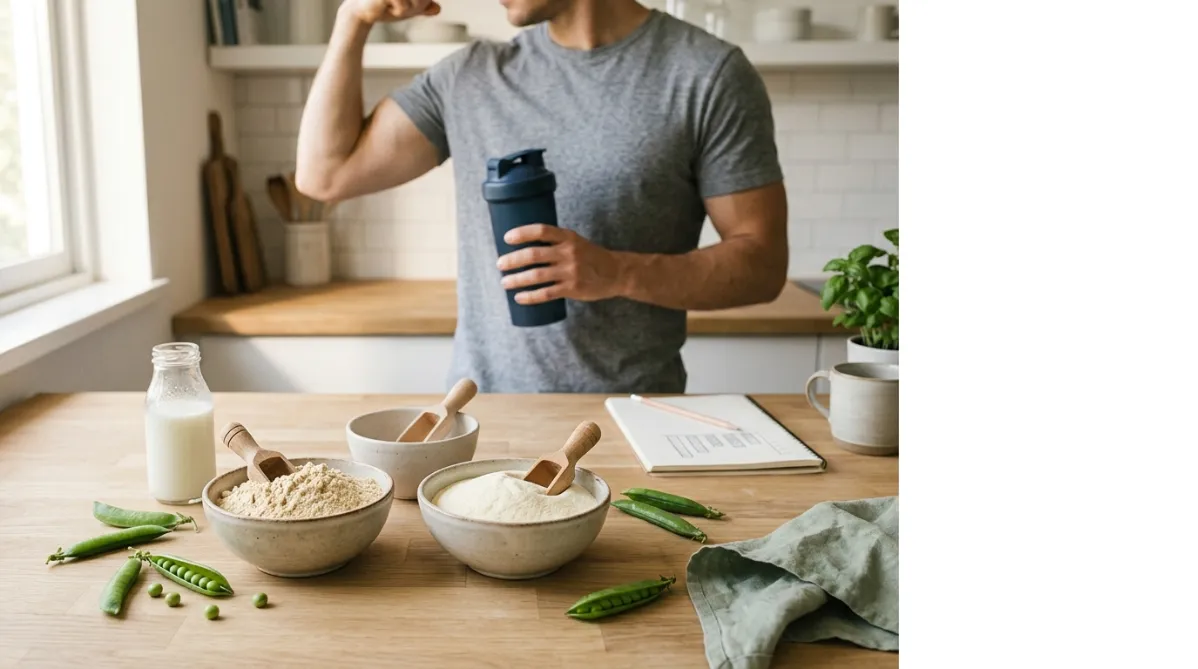
A bright, airy, minimalist kitchen counter in soft morning light, shot from a slightly elevated three-quarter angle in a wide landscape composition. Two matching ceramic bowls sit side by side on a pale oak butcher-block surface. The left bowl holds fine, creamy-beige pea protein powder with a small wooden scoop resting in it. The right bowl holds smooth, ivory-white whey powder with an identical scoop. Between and slightly behind them sits a third, smaller empty bowl with a plain scoop, hinting at the placebo. Scattered around the bowls are fresh green pea pods, some split open to reveal bright, round peas, and a small glass bottle of milk with delicate condensation. A sage-green linen napkin is folded loosely at the edge of the frame.

In the soft-focus background, a young man in a fitted heather-gray t-shirt is seen from the shoulders down, casually flexing one arm while holding a matte shaker bottle, the biceps subtly defined and the pose relaxed and natural. A minimalist notebook with a pencil and a simple hand-drawn bar chart lies open on the counter, suggesting analysis without legible text. A small potted herb plant and a ceramic mug add warmth.

The color palette is muted and editorial: warm cream, sage green, soft terracotta, pale wood, and touches of charcoal. Light streams in from a window on the left, casting gentle long shadows and a subtle golden glow across the powders so their textures look fine and tactile. Shallow depth of field keeps the bowls crisp while the background melts into a creamy blur. The look is modern lifestyle-magazine photography, clean and uncluttered, with generous negative space on the right third of the frame for headline overlay. It is natural, appetizing, and trustworthy, in the style of a contemporary wellness and nutrition journal.
nutrition

Proteine di pisello vs siero: il risultato sorprendente per i principianti

BY DR. GYMBRO ·

Può una proteina vegetale costruire muscoli così bene come il siero? Un trial di 12 settimane su 161 uomini ha messo a confronto proteina di pisello, siero e placebo; i risultati per i principianti hanno stupito: +20,2 % di spessore del bicipite per il pisello contro +8,6 % per il placebo. Tuttavia, la differenza complessiva tra i gruppi è stata solo una tendenza; il risultato più importante è emerso dall’analisi di sottogruppo. Scopriamo cosa ha dimostrato lo studio, cosa non ha provato e come gli atleti vegani o intolleranti al lattosio possono usarlo.

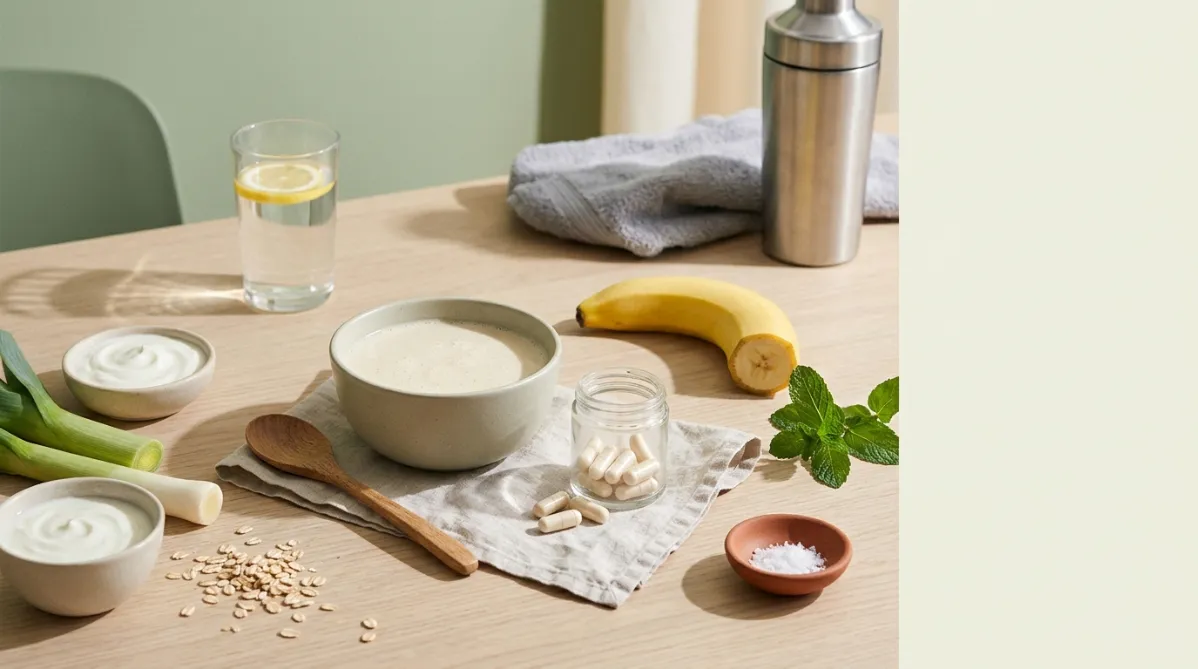
A bright, minimalist still life on a soft sage-green and warm cream backdrop, shot from a slightly elevated angle in natural morning window light. In the center sits a matte ceramic bowl of creamy vanilla protein shake with a wooden spoon resting beside it. Next to it, a small glass jar with a few off-white probiotic capsules spilling onto a pale linen napkin. Around them are fresh, gut-friendly foods arranged with editorial restraint: a halved ripe banana, a small bowl of plain yogurt with a swirl on top, a few stalks of leeks, a handful of oats scattered on the surface, and a sprig of fresh mint. A tall glass of water with a lemon slice catches the light and casts a delicate caustic shadow across the table.

In the background, slightly out of focus, a folded gray gym towel and a sleek stainless steel shaker bottle hint at an athletic lifestyle without dominating the scene. The surface is a pale oak tabletop with subtle grain. A soft diffused shadow falls to the left, giving gentle depth.

The palette is calm and modern: sage green, oatmeal, warm white, soft butter yellow, and touches of terracotta from a small clay dish holding a pinch of sea salt. The composition leaves generous negative space on the right third for headline overlay. The mood is clean, wellness-focused, and quietly editorial, like a feature in a contemporary health and science journal. Shallow depth of field, crisp focus on the capsules and bowl, subtle film grain, and natural color grading. No people, no text, no logos, no futuristic elements.
nutrition

Puzzetti di Proteine? Il Probiotico BB536 Riduce l'Odore, Ma Solo in Alcuni Intestini

BY DR. GYMBRO ·

Fastidi di gas e odori sgradevoli dovuti a tutto quel whey? Un nuovo studio ha testato il probiotico Bifidobacterium longum BB536 su atleti con diete ad alto contenuto proteico e ha rilevato una diminuzione di composti odorosi come il metilmercaptano e l'ammoniaca. Il problema: nel gruppo complessivo non c’è stata nessuna differenza significativa rispetto al placebo, e i risultati più promettenti provengono da sotto‑gruppi post‑hoc. Lo studio è piccolo, esplorativo e finanziato dal produttore del probiotico. Scopriamo cos’è il BB536, perché il tuo microbioma di base può decidere chi ne trae beneficio, e quali soluzioni più economiche provare prima.

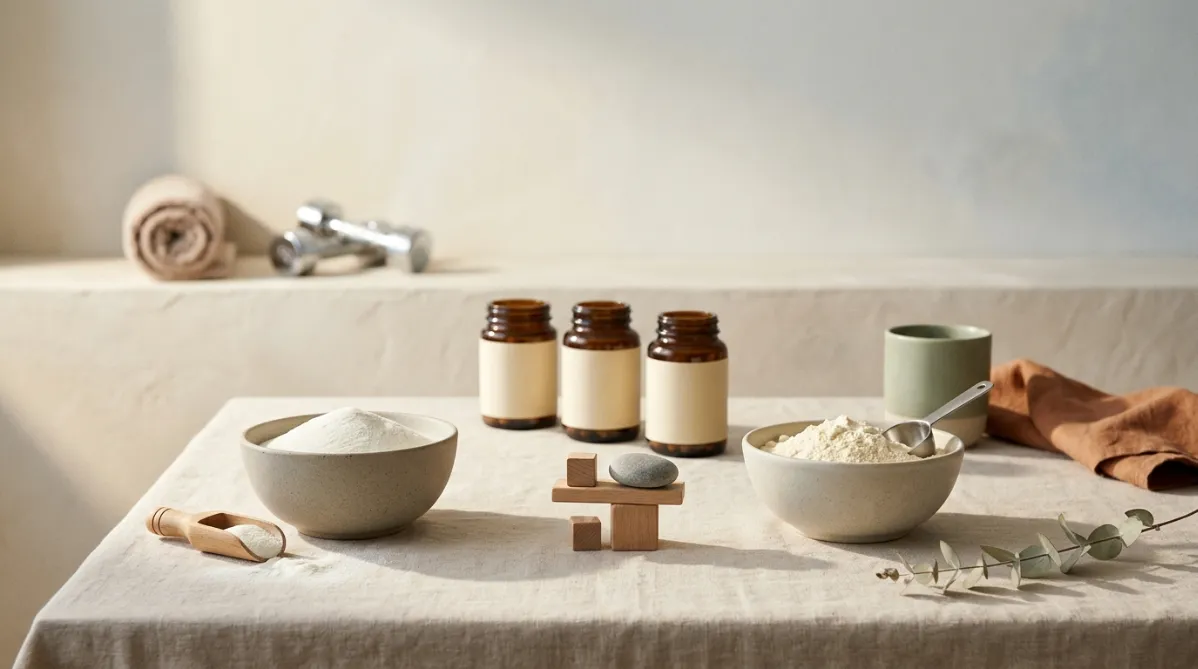
A bright, minimalist editorial still life on a pale oat-colored linen surface, shot from a slightly elevated three-quarter angle in soft natural window light. On the left, a matte ceramic bowl of fine white collagen powder with a wooden scoop resting beside it, a light dusting of powder spilling across the linen. On the right, a matching bowl of creamy off-white whey powder with a brushed-steel scoop. Between them sits a small, neatly balanced stack of simple geometric wooden blocks and a single smooth gray stone, hinting at a scale or comparison without showing a literal scale. Behind them, a lightly blurred row of three clean amber glass supplement jars with plain cream labels, unbranded. A single rolled yoga towel and a pair of small chrome dumbbells sit softly out of focus in the background on a pale plaster shelf. Accents of muted sage green and warm terracotta appear in a ceramic cup and a folded napkin, giving the palette a calm, contemporary wellness-magazine feel. A thin, elegant sprig of dried eucalyptus lies at the edge of the frame. Shadows are long, gentle, and slightly cool, with a creamy shallow depth of field and fine grain. The composition leaves generous negative space across the upper third for title overlay, with a subtle gradient from warm ivory to pale gray-blue in the background wall. The styling is clean and modern like a trendy health journal website, with a refined, tactile, editorial photography look, balanced symmetry, and no text, no people, no futuristic or laboratory elements.
nutrition

Collagene supera il siero nel muscolo in un'analisi di 78 studi?

BY DR. GYMBRO ·

Una meta‑analisi di rete del 2026 su 78 studi randomizzati con 4.755 partecipanti ha classificato il collagene al primo posto per guadagni di forza e massa magra, davanti al siero. Sorprendentemente, nessun altro integratore proteico ha superato il placebo. Il collagene è però una proteina incompleta e povera di leucina, con intervalli di confidenza ampi. Ecco cosa mostrano davvero i numeri, perché il risultato necessita di conferma diretta e cosa fare con il tuo stack di integratori nel frattempo.

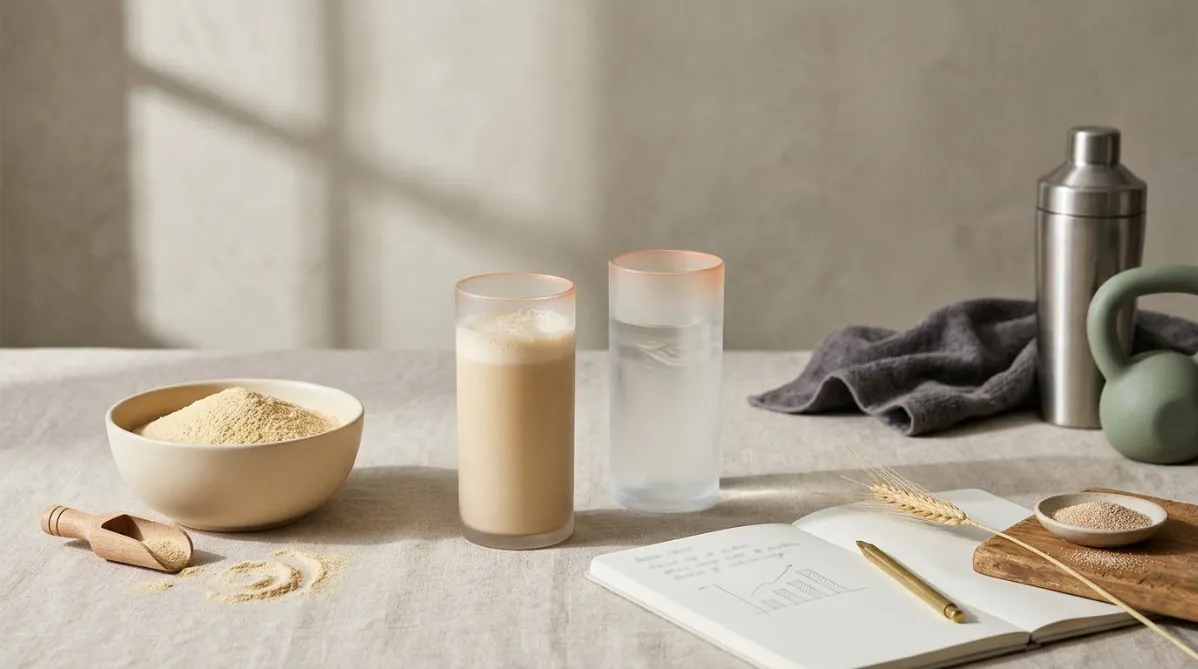
A wide, softly lit editorial still life on a pale oat-colored linen surface, shot from a slightly elevated three-quarter angle. On the left, a matte ceramic bowl in warm cream holds fine, pale golden-beige yeast protein powder, with a small wooden scoop resting beside it and a few loose dusty swirls on the linen. In the center, two tall frosted glass tumblers stand side by side. One holds a creamy, light tan shake with a delicate froth, and the other holds clear water with a faint ripple, creating a quiet visual contrast. On the right, a loosely folded charcoal gym towel, a brushed-steel shaker bottle, and a single small kettlebell in muted sage green sit slightly out of focus.

A few elements hint at the science without looking clinical. A minimalist matte-white notebook lies open with soft, blurred handwriting and a hand-drawn bar chart in thin pencil. Beside it rests a slim brass pen. A single sprig of dried wheat and a small dish of baker's yeast granules on a wooden board nod to the ingredient's fermentation origin.

Natural morning window light enters from the upper left, casting long, gentle shadows and a warm highlight along the glass rims. The palette is earthy and calm: oat, cream, soft terracotta, sage, and warm gray, with a subtle peachy glow in the background. The backdrop is a smooth plaster wall in muted putty tone, with a faint shadow of a window frame across it.

The composition leaves generous negative space in the upper third for a title overlay. Shallow depth of field keeps the glasses and bowl crisp while the gym props melt softly into the background. The overall mood is modern, wholesome, and trustworthy, with the feel of a contemporary health and nutrition magazine. The photograph has fine film-like grain and natural texture, and no text, logos, or labels appear anywhere.
recovery

La miscela di proteine di lievito sfida il whey per indolenzimento e CK: una riserva

BY DR. GYMBRO ·

Le proteine di lievito stanno comparendo sempre più negli integratori, presentate come alternativa sostenibile al whey. Uno studio randomizzato su atleti ben allenati ha confrontato una miscela di proteine di lievito‑whey con acqua dopo un intenso allenamento eccentrico. Rispetto all’acqua, la miscela ha ridotto la creatina chinasi e, negli uomini, l’indolenzimento muscolare, comportandosi in modo simile al whey puro. Tuttavia il gruppo di controllo era solo acqua, non caloricamente equivalente, e molti risultati sono stati considerati esplorativi. Ecco cosa mostrano i dati, cosa non dimostrano e a chi potrebbe interessare provarla.

This page is available in