Dr. Gymbro
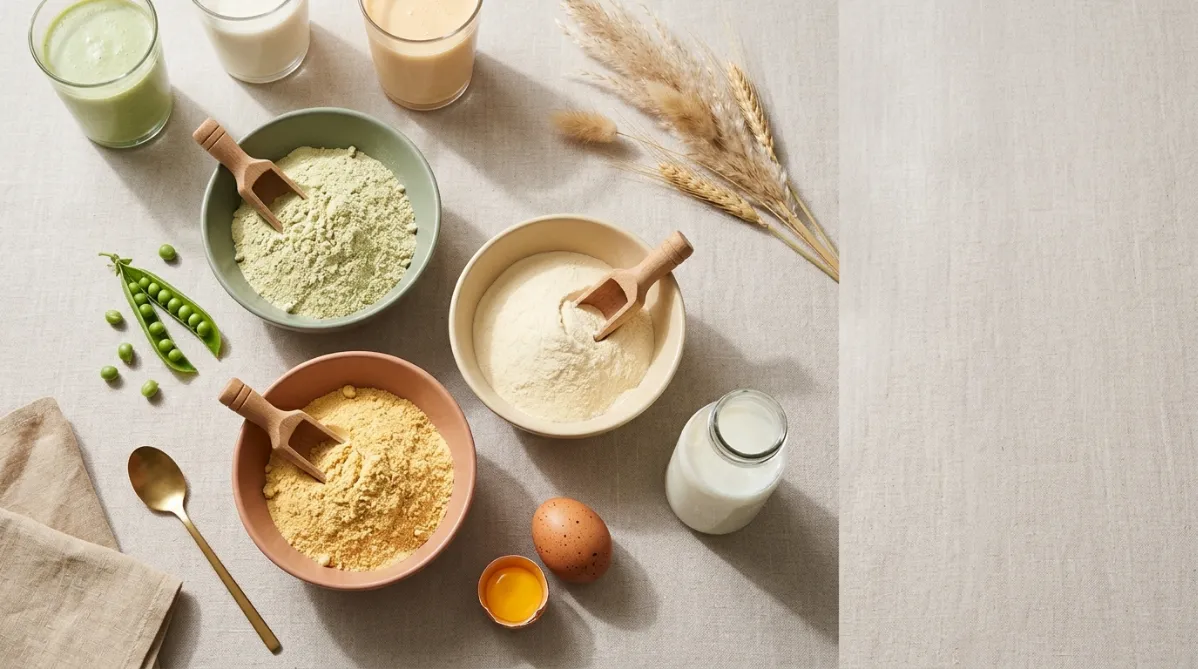
A overhead flat-lay photograph in a modern editorial style, shot on a pale oatmeal-colored linen surface with soft, diffused natural window light coming from the upper left, casting gentle, elongated shadows. Three ceramic bowls in matte, muted tones sit in a loose, balanced triangle composition: one in dusty sage green holding fine pale-green pea protein powder, one in warm cream holding silky ivory whey powder, and one in soft terracotta holding golden-yellow egg protein powder. Each bowl has a small wooden scoop resting against its rim, with a few powder specks scattered naturally across the linen.

Around the bowls, subtle ingredient cues add storytelling without clutter: a handful of fresh green peas in their open pod beside the sage bowl, a small glass bottle of milk with a faint condensation sheen near the cream bowl, and two brown speckled eggs, one whole and one cracked open to reveal a bright yolk, near the terracotta bowl. A sprig of dried wheat or pampas grass enters the frame from the top right corner for texture and height.

Three glass tumblers of smoothie-like shakes in slightly different hues, soft green, creamy white, and pale apricot, stand along the upper edge of the frame, slightly out of focus, creating depth and a gentle rhythm. A thin brass spoon and a folded sand-colored napkin add a refined touch in the lower left.

The palette is warm and earthy: sage, cream, terracotta, butter yellow, and soft beige, with tiny accents of brass. Negative space is left on the right third of the composition for possible title overlay, keeping the layout airy and uncluttered. The overall mood is calm, thoughtful, and approachable, like a contemporary wellness magazine or minimalist food journal, with crisp focus on the bowls, shallow depth of field toward the edges, subtle film-like grain, and a clean, sophisticated, slightly matte finish.
Fitness

Whey vs Pisello vs Uovo: 51 studi confrontano le proteine per la sintesi muscolare post‑allenamento

Coach Ryan · · 4 min read

La scoperta principale

Ti aspetti una sfida tra proteine del siero, pisello e uovo per decretare un vincitore netto. In questo caso non è successo, e la ragione è più intrigante di una semplice graduatoria.

Un team dell'Università di Vienna ha raggruppato 51 studi basati su traccianti per confrontare come diverse fonti proteiche stimolino la sintesi proteica muscolare (MPS) dopo l'allenamento di resistenza. Molte proteine — sia animali sia vegetali — si sono collocate vicine tra loro. Tuttavia solo una, il siero di latte standard, ha prodotto un effetto statisticamente significativo.

Come è stato costruito lo studio

L’articolo, pubblicato sul Journal of the International Society of Sports Nutrition (2026), è una revisione sistematica con meta‑analisi di rete sia standard sia dose‑response (NMA). Una meta‑analisi di rete consente ai ricercatori di confrontare trattamenti che non sono mai stati testati direttamente, mettendoli in relazione tramite comparatori comuni.

  • Banche dati interrogate: PubMed, EBSCOhost (MEDLINE, SPORTDiscus, CINAHL) e Scopus.
  • Partecipanti: adulti sani di 18 anni o più.
  • Protocollo: una singola sessione acuta di esercizio di resistenza seguita da una dose unica di proteina, senza alcun alimento aggiuntivo nel frattempo.
  • Misurazione: biopsie muscolari pre‑ e post‑allenamento, con tassi orari di MPS misurati mediante tecniche a traccianti.
  • Esclusioni: miscele proteiche e prodotti arricchiti con altri agenti anabolici.
  • Campione: 51 trial hanno soddisfatto i criteri di inclusione.

Gli autori non hanno dichiarato conflitti di interesse.

La classifica

Le proteine sono state ordinate secondo il P‑score, un valore compreso fra 0 e 1 che indica la probabilità stimata di posizionarsi in alto per la MPS oraria post‑allenamento:

Proteina P‑score Differenza media (%/h)
Siero nativo 0,81 0,05 [0,00; 0,10]
Pisello 0,77 0,05 [-0,02; 0,11]
Uovo intero 0,72 0,04 [-0,01; 0,09]
Micoproteina 0,66 0,03 [-0,02; 0,08]
Siero 0,58 0,02 [0,01; 0,04]

La certezza delle evidenze è stata valutata bassa‑media.

Perché la proteina più bassa è l’unica “significativa”

Ecco il colpo di scena. Il siero standard si è piazzato al quinto posto, ma è l’unico a presentare un intervallo di confidenza che esclude lo zero (0,01‑0,04). Siero nativo, pisello, uovo e micoproteina hanno tutti stime puntuali uguali o superiori, ma i loro intervalli includono zero o lo toccano.

La spiegazione più plausibile è la precisione statistica, non una superiorità biologica. Il siero è stato studiato intensamente fin dagli inizi, perciò la sua stima è più stretta. Pisello e micoproteina, al contrario, sono rappresentati da pochissimi trial, rendendo le loro stime più “offuscate”. Gli autori avvertono: le fonti supportate da pochi studi vanno interpretate con cautela.

I P‑score indicano solo il ranking, non la grandezza dell’effetto. Un P‑score di 0,77 per il pisello non significa che sia provato come efficace, ma solo che, con i dati disponibili, tende a collocarsi vicino alla vetta.

Il “punto dolce” della dose: 18‑25 g

L’analisi dose‑response ha individuato le risposte MPS più elevate a 18‑25 g per siero nativo, uovo intero, pisello e micoproteina. Sia le fonti animali sia quelle vegetali rientrano in questo intervallo, il che suggerisce che la quantità possa essere importante quanto la provenienza per la risposta acuta.

Cosa significa per te

  • Dose: punta a circa 18‑25 g di proteina in una singola porzione post‑allenamento. È lì che il modello prevede il picco di MPS per le fonti più performanti.
  • Tempistica: tutti i trial hanno testato una singola dose subito dopo l’esercizio di resistenza. Lo studio sostiene l’assunzione post‑allenamento, ma non definisce una “finestra anabolica” rigida; quindi non è necessario contare i minuti.

Suggerimenti pratici

  • Chi tollera i latticini: il siero ha le evidenze statisticamente più solide.
  • Chi segue una dieta vegana o è intollerante al latte: pisello e micoproteina mostrano un ranking competitivo e una risposta dose‑dose, anche se le prove sono più scarse.
  • Chi predilige le uova: l’uovo intero si posiziona al terzo posto e rientra nello stesso intervallo di dose.

Attenzioni:

  • Chi è allergico a latticini, uova o piselli deve ovviamente escludere quella fonte.
  • Persone con patologie renali o altre condizioni che influiscono sull’assunzione proteica dovrebbero consultare un medico prima di modificare la dieta.
  • Chi vuole usare questi dati per promuovere un marchio o una miscela specifica: le miscele sono state escluse dall’analisi, quindi i blend vegetali (es. pisello + riso) non sono stati valutati.

Limiti importanti

  • MPS acuta ≠ crescita muscolare. I trial hanno misurato i tassi di sintesi proteica a breve termine, non i guadagni di massa o forza nel tempo. Un valore MPS più alto per poche ore non garantisce più muscolo o forza a lungo termine; fattori come l’apporto proteico giornaliero totale, la qualità dell’allenamento, le calorie e il recupero restano determinanti.
  • Le differenze sono minime. Le variazioni medie oscillano fra 0,02 e 0,05 punti percentuali per ora. Si tratta di differenze statisticamente rilevanti, ma non necessariamente percepibili nella pratica quotidiana.
  • Qualità delle evidenze modesta. Una certezza da bassa a moderata implica che futuri trial potrebbero spostare le classifiche, soprattutto per le proteine meno studiate.

Conclusione

Nessuna proteina ha superato il siero, ma nessuna è stata esclusa. Il siero è l’unica fonte con un effetto statisticamente significativo in questa analisi, mentre pisello, micoproteina e uovo intero emergono come alternative credibili che necessitano di ulteriori ricerche. Se vuoi un piano semplice, assumi una porzione da 18‑25 g di proteina dopo l’allenamento, scegliendo una fonte che toleri e che ti piaccia, mantieni sotto controllo l’apporto proteico totale giornaliero e segui un allenamento costante: sono questi gli elementi che determinano i guadagni a lungo termine.
Original study

Read the original research on pubmed.ncbi.nlm.nih.gov →

This article summarizes published research for general information. It is not medical advice.

CR

Written by

Coach Ryan

Coach Ryan writes for Dr. Gymbro: science-backed fitness, nutrition & performance.

Related Articles

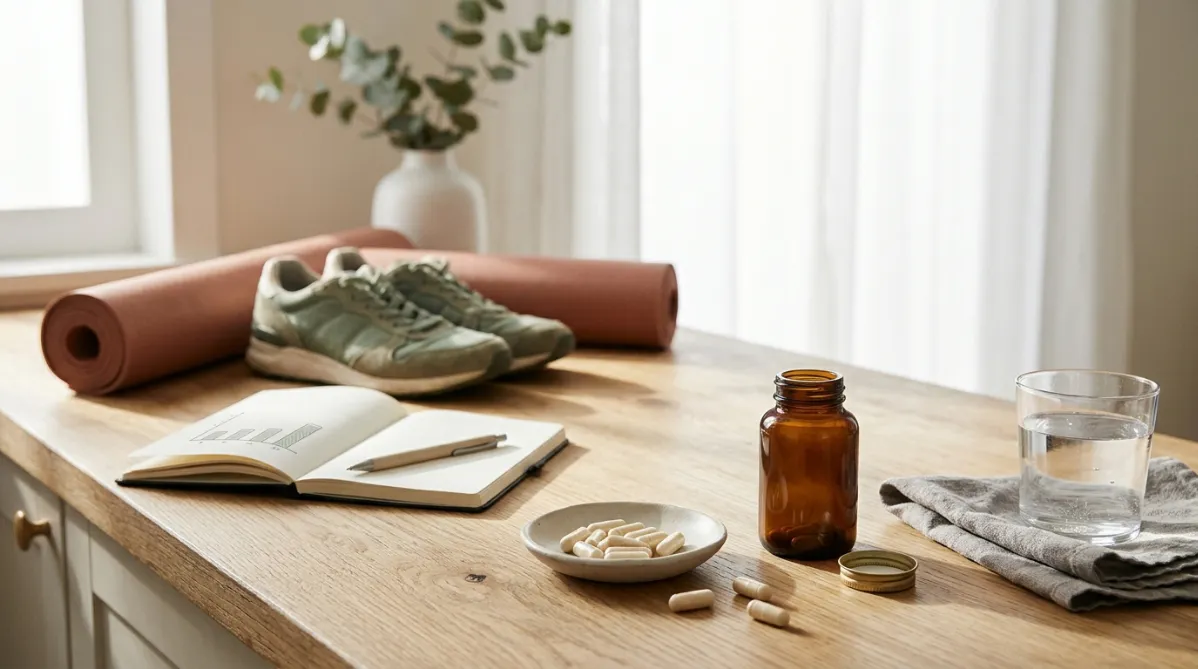
A wide landscape editorial photograph of a clean, sunlit kitchen counter in soft morning light, shot from a slightly elevated three-quarter angle with shallow depth of field. In the foreground, a small matte ceramic dish holds a handful of pale cream-colored supplement capsules, with a few spilled casually onto a pale oak surface. Beside them sits an unlabeled amber glass bottle with its cap off. A folded gray linen napkin and a glass of water with delicate condensation add a calm, everyday feel.

In the softly blurred midground, a pair of well-worn running shoes in muted sage green rests beside a rolled yoga mat in dusty terracotta. A small notebook lies open with a pencil resting across it, its pages showing faint hand-drawn bar charts that are nearly flat, with one or two slightly taller bars. The charts are suggestive rather than legible.

The background is a bright window with sheer white curtains, casting long, gentle shadows across the counter. A potted eucalyptus sprig in a simple white vase adds a touch of organic green.

The palette is restrained and modern: warm creams, soft sage, terracotta, muted oatmeal, and pale wood tones, with subtle highlights on the glass and ceramic. The mood is thoughtful, skeptical, and quietly informative, like a contemporary health and science magazine feature. Natural film-like grain, soft contrast, and generous negative space on the right third of the frame leave room for headline text. There are no people, no logos, no text, and no futuristic elements, only a minimalist, trendy, lifestyle-journal aesthetic.
fitness

2 g di Carnosina al giorno per 12 settimane: lo studio su 299 persone è per lo più inutile

BY IRON MARCUS ·

Le capsule di carnosina sono pubblicizzate come stimolatori della resistenza muscolare. Un nuovo studio randomizzato su 299 partecipanti, controllato con placebo, ha messo alla prova questa affermazione, rilevando per lo più risultati nulli. Sono emersi però un paio di segnali in sottogruppi, da considerare con cautela e senza esagerarne l'importanza.

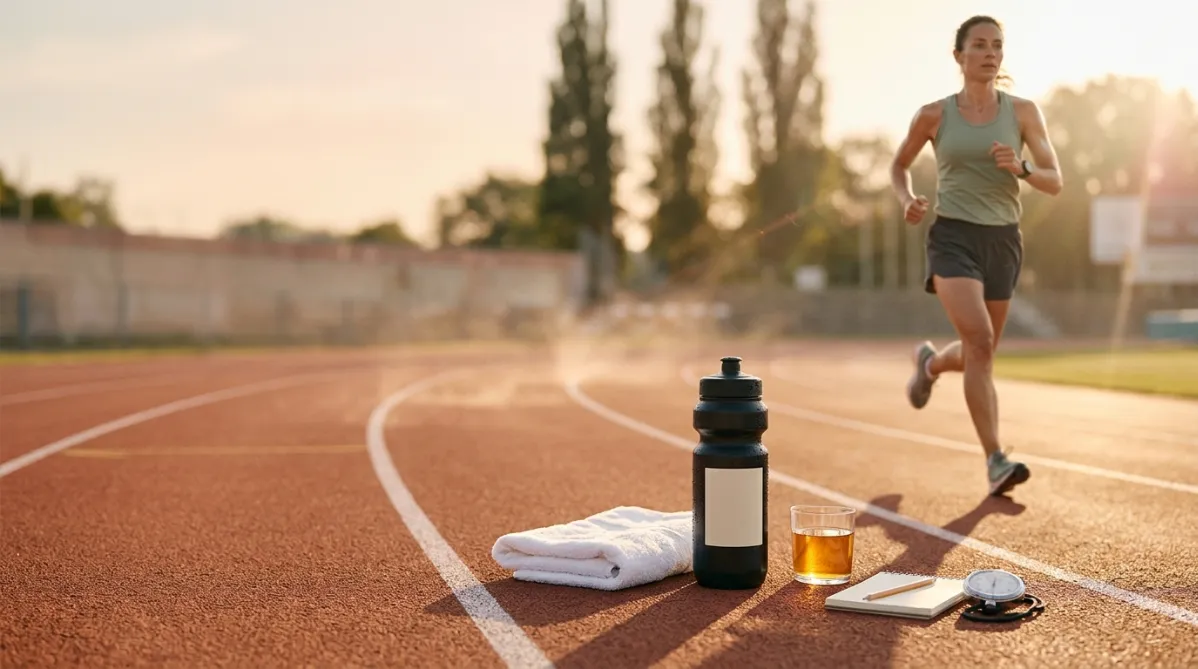
A sunlit outdoor running track in late afternoon, shot from a low angle with shallow depth of field. In the foreground, a matte black bottle with a minimal off-white label sits on the edge of a warm terracotta-colored track lane, beside a folded white towel and a small glass of amber liquid catching golden light. Condensation beads on the bottle. A faint heat shimmer rises from the track surface and softens the background.

In the midground, slightly out of focus, a lean athlete in a sage-green tank top and charcoal shorts runs on a treadmill-like stretch of track, a thin sheen of sweat on their shoulders, their expression focused and calm. Their motion is gently blurred, suggesting endurance and rhythm. Long soft shadows stretch across the lane lines.

The background fades into hazy peach, apricot, and pale yellow tones, with the suggestion of tall trees and a distant stadium wall. Warm sun flare enters from the upper right, creating a subtle glow and a few soft light streaks across the frame.

Subtle editorial touches: a small notebook with a pencil and a stopwatch rest beside the bottle, hinting at data and timing without any text legible. The color palette is warm and muted, with terracotta, cream, sage, and charcoal accents, and a fine film-like grain. The composition leaves open negative space on the left third for a headline overlay. The overall mood is clean, modern, and health-journal inspired, natural and aspirational, with a calm scientific curiosity rather than hype.
nutrition

Bevande chetone al caldo: più resistenza e memoria più acuta?

BY DR. GYMBRO ·

Le bevande a base di chetoni sono spesso associate a biohacker che vogliono bruciare grassi, ma uno studio sullo stress termico suggerisce che potrebbero anche migliorare la capacità di sostenere uno sforzo intenso. In 17 uomini allenati, il mono‑ester di chetone combinato con caffeina ha prolungato il tempo fino all’esaurimento di 8,9 minuti contro 7,0 con carboidrati più caffeina, dopo 90 minuti di corsa su tapis‑roulant a 34 °C. Inoltre, l’accuratezza al test 1‑back è aumentata, mentre frequenza cardiaca e temperatura corporea non hanno mostrato differenze significative. I risultati, però, sono limitati da un campione piccolo, maschile e da una singola sessione. Ecco cosa dicono i dati e cosa resta incerto.

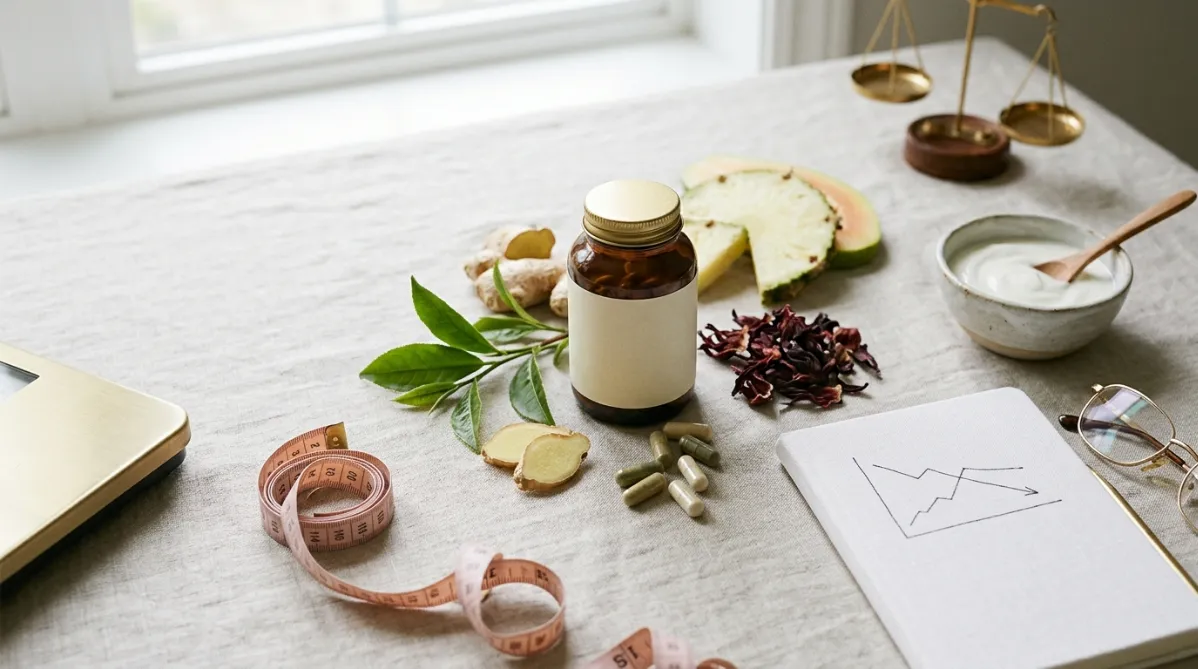
A clean, modern editorial flat-lay on a pale oat-colored linen surface, shot from slightly above in soft diffused natural window light. At the center sits an amber glass supplement bottle with a minimalist cream label, unbranded, with a few capsules spilling onto the fabric in soft greens and ivory tones. Around it are fresh botanical elements: a sprig of green tea leaves, sliced ginger root, a small bundle of dried hibiscus petals, and a few pale green pineapple and papaya slices hinting at digestive enzymes. A small ceramic bowl of creamy plain yogurt with a wooden spoon suggests probiotics. To the left, a flexible tailor's measuring tape in soft blush pink loosely curls across the linen, with a slim brushed-brass scale partly visible at the frame edge. On the right, a minimalist white notebook lies open with a hand-drawn simple line chart showing two diverging lines, one trending downward and one flat, with no readable text. A pair of reading glasses with thin gold frames rests beside it, and a tiny pair of balanced brass scales sits in the background, subtly suggesting weighing evidence and caution.

The palette is muted sage green, warm cream, soft terracotta, and touches of blush and brass. Shadows are gentle and long, the depth of field is shallow with a creamy blurred background, and the negative space on the left third of the frame leaves room for a headline overlay. The overall feel is a contemporary health and science journal, calm, trustworthy, and slightly skeptical, in the style of a premium wellness magazine photographed with a 50mm lens, with crisp texture on linen, glass, and botanicals.
nutrition

Il blend probiotico‑enzimatico SlimSEB supera il placebo—ma c’è un inconveniente

BY DR. GYMBRO ·

Un blend di probiotici, enzimi e ingredienti botanici chiamato SlimSEB ha superato il placebo in uno studio randomizzato di 12 settimane su 87 adulti a rischio di diabete di tipo 2. Gli obesi hanno perso in media 4,5 kg in più rispetto al placebo e hanno ridotto la circonferenza vita di 11 cm, mentre i livelli di colesterolo e la resistenza all’insulina sono migliorati. Tuttavia il prodotto è stato fornito dal suo produttore, lo studio era di piccole dimensioni e di breve durata, e la formula multicomponente non permette di attribuire l’effetto a un singolo ingrediente. Ecco cosa mostrano i dati, come si confrontano con i farmaci GLP‑1 e a chi conviene prestare maggiore attenzione.

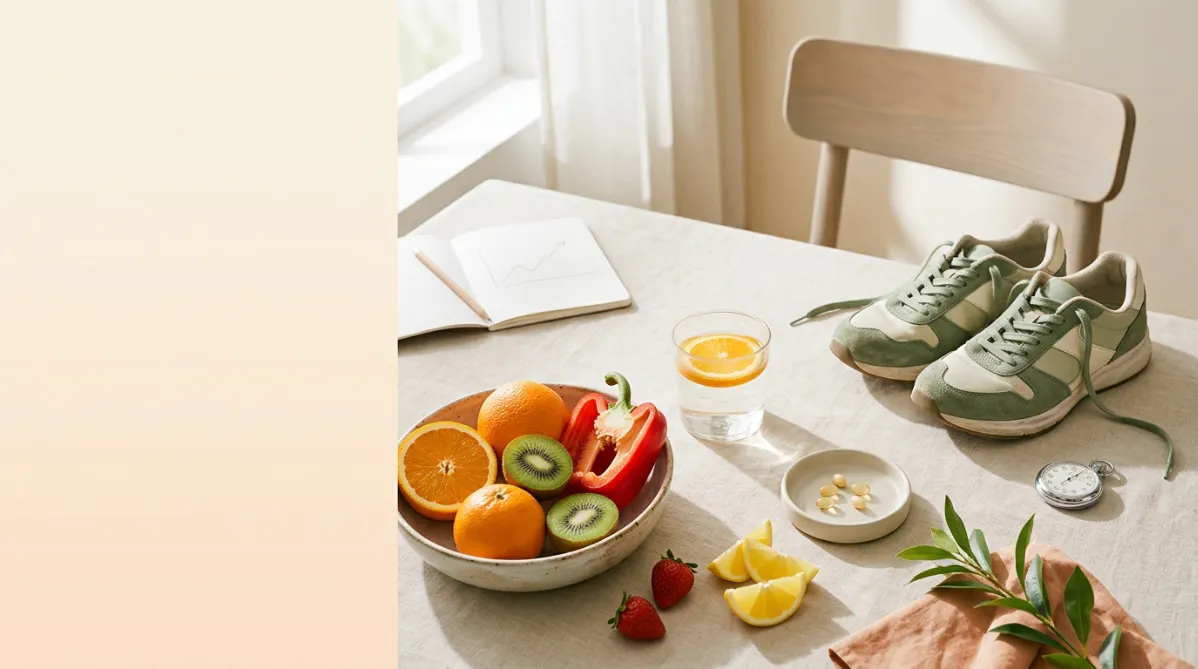
A bright, airy editorial still life photographed from slightly above on a pale oat-colored linen surface, in soft natural window light with gentle long shadows. In the foreground, a rustic ceramic bowl holds halved and whole oranges, glossy red bell pepper slices, and a few kiwi halves with emerald flesh. Beside it sit loose strawberries and a small pile of bright yellow lemon wedges. Their colors pop against the muted neutral palette. A single clear glass of water with a slice of orange rests nearby, catching the light.

On the right side of the frame, a pair of well-worn but clean walking sneakers in sage green and cream sits casually on the surface, with one lace loosely trailing. Behind them, a simple wooden chair with a light ash finish is partly visible and slightly out of focus, a quiet nod to the sit-to-stand test. A small stainless-steel stopwatch lies next to the shoes, with a subtle reflective glint.

A minimalist ceramic dish holds a few small, round, pale-yellow vitamin capsules, kept understated. A sprig of green leaves and a folded cotton napkin in soft terracotta add a warm accent. A small open notebook with a pencil rests in the upper left, its page blank except for faint, abstract pencil lines suggesting a simple rising graph, with no legible text.

The composition leaves generous negative space on the left third for title overlay, with a soft cream-to-peach gradient background. The mood is fresh, healthy, and contemplative, like a modern wellness magazine or a trendy online journal. The color palette is warm citrus orange, sunny yellow, sage green, and soft cream, with gentle terracotta accents. The depth of field is shallow, with crisp focus on the fruit and shoes and a creamy blur in the background. The overall look is clean, natural, and editorial, with fine film-like grain, true-to-life color, and a calm, optimistic tone. Landscape 16:9 framing.
nutrition

La vitamina a buon mercato per gambe più forti con l’avanzare dell’età

BY DR. GYMBRO ·

Uno studio britannico su più di 5 000 adulti tra i 48 e i 92 anni ha scoperto che chi ha un livello di vitamina C nel sangue ottimale (≥ 50 µmol/L) cammina più velocemente e si alza da una sedia più rapidamente rispetto a chi ha valori più bassi. Nelle donne la stretta di mano è risultata più forte, anche dopo aver corretto per l’altezza; negli uomini non è emersa alcuna correlazione. L’assunzione di vitamina C attraverso la dieta è stata associata ai benefici solo nelle donne e senza un chiaro andamento. Lo studio è trasversale, perciò non dimostra causalità, ma i dati suggeriscono di tenere sotto controllo il proprio livello ematico.

This page is available in