Dr. Gymbro
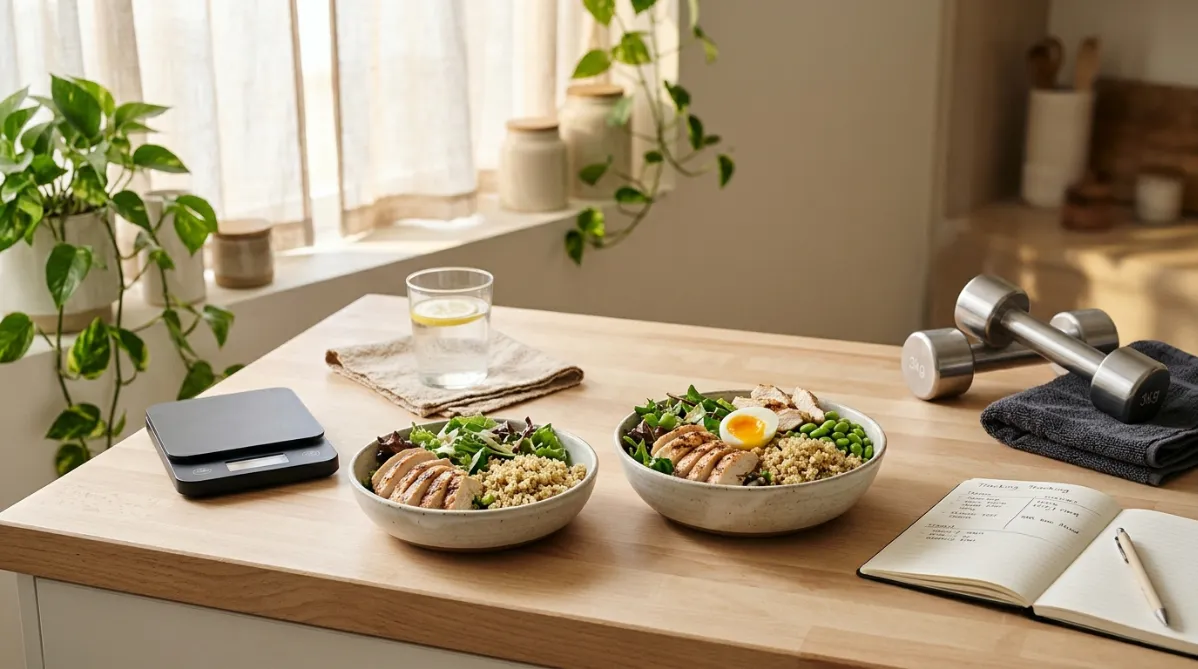
A wide landscape editorial photograph of a clean, sunlit kitchen counter in soft natural morning light, styled like a modern wellness journal cover. In the foreground, two matching ceramic bowls sit side by side on a pale oak butcher block. The left bowl holds a modest portion of sliced grilled chicken breast, quinoa, and greens. The right bowl holds a noticeably larger, double-sized portion of the same ingredients, with extra chicken, a soft-boiled egg, and edamame. The contrast in portion size is clear but elegant. Beside the bowls are a matte black digital kitchen scale, a tall glass of water with a lemon slice, and a small linen napkin in warm oatmeal tone. A pair of sleek brushed-steel dumbbells rests slightly out of focus on the counter's edge, and a folded charcoal gym towel sits next to them. In the soft-focus background, a large window with sheer curtains lets in diffused golden light, and a trailing green pothos plant adds an organic touch. A small, minimal notebook with a pen lies open to the side, suggesting careful tracking. The color palette is muted and cohesive: warm creams, sage green, soft terracotta, charcoal, and natural wood. Shallow depth of field, crisp focus on the bowls, gentle shadows, and subtle film-like grain. Composition follows the rule of thirds with generous negative space on the upper right for headline text. The mood is calm, thoughtful, and trustworthy, like a contemporary health and science magazine feature. There are no people, no text, and no futuristic elements.
Nutrition

3.2 g/kg のたんぱく質を16週間: リフターの腎臓に害はあるのか?

Dr. Gymbro · · 1 min read

ジムのあちこちで耳にしたことがあるだろう。「たんぱく質を食べすぎると腎臓が痛む」‑という警告だ。レジスタンストレーニングを行う男性を対象にした新しい 16 週間のランダム化試験では、標準的な摂取量の 2 倍に相当する量を投与した結果、単純な「はい」か「いいえ」で語れない興味深い結果が得られた。たんぱく質摂取量が中程度(1.6 g/kg)と高量(3.2 g/kg)で、腎機能マーカーに統計的に有意な差は認められなかったが、高たんぱく質群で見られた変化は決して無視できるものではなかった。

研究者が実際に検証したこと

Journal of the International Society of Sports Nutrition に掲載された本研究は、Reza Bagheri 氏らが率い、スポーツ栄養学者の Richard Kreider も共著者として参加した。レジスタンストレーニング経験者 48 名(平均年齢 26 歳、BMI 25.6)を 2 × 2 のファクトリアルデザインで無作為に割り付け、16 週間にわたり週 4 回のトレーニングを実施した。トレーニングはレジスタンス・トレーニング(RT)か、レジスタンス+有酸素(CT)かで分け、たんぱく質は 1.6 g/kg/日または 3.2 g/kg/日のいずれかを摂取させた。

体重 80 kg の男性で換算すると、約 128 g と 256 g のたんぱく質に相当する。後者は RDA(0.8 g/kg)の約 4 倍、筋肥大を目的とした多くのスポーツ栄養ガイドラインの上限の 2 倍に当たる。最終的に 44 名の参加者の前後データが完全に取得でき、解析対象となった。

研究者は空腹時血中尿素窒素(BUN)、BUN/クレアチニン比、シスタチン C、推定糸球体濾過率(eGFR)を測定した。eGFR は 3 つの式で算出した:クレアチニンベース(CKD‑EPI 2021)、シスタチン C ベース(2012)、および 2 つを組み合わせた式(2021)。3 種類の式を用いる意義は、クレアチニンは筋量や肉類摂取に影響を受けやすいのに対し、シスタチン C はそれらの影響が比較的少ないためである。

ヘッドライン的結果: 有意差なし

主要な統計検定は、時間経過による変化がたんぱく質量(Time × Protein)や、たんぱく質量とトレーニング形態(Time × Training × Protein)の組み合わせで異なるかどうかだった。いずれのバイオマーカーや eGFR の推定値についても、p 値はすべて 0.182 以上で有意差は認められなかった。平易に言えば、3.2 g/kg が 1.6 g/kg と比較して腎マーカーを「異なる」方向に変化させたという証拠は得られなかった。トレーニングがレジスタンスだけか、レジスタンス+有酸素かに関わらず同様である。

1.6 g/kg 群では、グループ内で有意な変化は全く見られなかった。これは、真面目なリフターが実際に採用している中程度~やや高めのたんぱく質摂取が、腎機能に対して安定的であることを示す安心材料となる。

クリックベイトが省く詳細

重要なのは、3.2 g/kg 群の両方で BUN とシスタチン C が上昇(p ≤ 0.017)し、eGFR 推定値が低下(p ≤ 0.009)した点だ。BUN/クレアチニン比は変化しなかった。著者らはこれらを「わずかな上昇・下降」と記述し、相互作用検定が有意でなかったため「記述的」な結果に留めていると強調している。

したがって結論は「高たんぱく質が安全であることが証明された」でも「高たんぱく質が腎臓にダメージを与える」でもない。BUN の上昇は、たんぱく質を多く摂取すると尿素産生が増えるため期待される現象だ。一方、シスタチン C と eGFR の変動は、濾過需要の増加といった適応的変化か、将来的に注意すべき早期サインか、現時点では判断できない。

知っておくべき限界点

  • サンプル数が小さい:解析対象は 44 名の男性。著者は臨床的に意味のある差を除外できない旨を明言している。
  • 対象は健康な若年男性のみ:結果は女性、老年者、腎機能が低下している人、糖尿病・高血圧患者には当てはまらない。
  • 代替マーカー:eGFR、BUN、シスタチン C は腎機能を間接的に評価する指標であり、実際の腎疾患診断やハードアウトカムは測定されていない。
  • 期間は 16 週間:数年単位の長期影響は不明。
  • 探索的デザイン:論文は本解析を「探索的」と位置付けているため、結果は仮説生成的に扱うべきである。

実践的なまとめ

摂取量:筋肥大に必要なたんぱく質は概ね 1.6 g/kg 以下で頭打ちになることが多く、3.2 g/kg には実証的根拠がない。本研究は筋肥大を測定していないが、余分なたんぱく質はコストと食事量を増やすだけで、腎マーカーに有意な利益は示さなかった。

タイミング:本試験は摂取タイミングを検証していないが、総量が多い場合は数回の食事に分散させるのが合理的である。

対象者:健康なレジスタンストレーニング成人で、1.6 g/kg 前後のたんぱく質摂取を行う人は、腎マーカーに有意な変化が見られないことから比較的安全だと言える。コンカレントトレーニングでも結果は変わらない。

高たんぱく質を避けるべき人:すでに腎疾患がある、eGFR が低め、家族に腎臓病の既往がある、糖尿病や高血圧を抱えている人は、標準的な推奨量を超える前に医師と相談すべきだ。また、NSAID を頻繁に使用している、クレアチンを大量に摂取している人も血液検査の解釈が難しくなるため注意が必要。

賢い対策:非常に高たんぱく質フェーズを試す場合は、開始前に基礎血液検査(クレアチニン、シスタチン C、eGFR)を実施し、途中で再検査することを推奨する。十分な水分摂取は常識だが、本研究では水分状態は検証されていない。

結論

44 名の健康なリフターを対象に、3.2 g/kg と 1.6 g/kg のたんぱく質摂取を 16 週間比較した結果、統計的に検出可能な腎機能の差は認められなかった。とはいえ、高たんぱく質群では BUN、シスタチン C、eGFR に小さな変動が見られ、これらは今後の大規模・長期試験で追跡すべき指標である。大多数のリフターにとって、エビデンスに基づいた最適量は極端な摂取量よりはるかに低く、そこが安全にトレーニングを続けられるラインと言える。
Original study

Read the original research on pubmed.ncbi.nlm.nih.gov →

This article summarizes published research for general information. It is not medical advice.

DG

Written by

Dr. Gymbro

Dr. Gymbro writes for Dr. Gymbro: science-backed fitness, nutrition & performance.

Related Articles

A wide, editorial flat-lay photograph shot from directly above on a pale warm-gray stone countertop, lit by soft natural morning window light with gentle diagonal shadows. On the left, a neatly arranged cluster of whole-food protein sources: two seared chicken breast slices with a golden crust, a small ceramic bowl of creamy Greek yogurt topped with blueberries, three halved soft-boiled eggs with jammy orange yolks, a handful of raw almonds, and a small pile of dried lentils scattered on a linen napkin. At the center, a matte white shaker bottle and a wooden scoop resting in a pile of fine vanilla-colored protein powder, a few grains dusted artfully across the surface. On the right, a minimalist kitchen scale in matte black displaying a portion of food, next to an open notebook with a hand-drawn curve that rises steeply and then flattens into a plateau, drawn in a deep terracotta ink pen, with a small dot marking the bend. A brass pen lies beside the notebook. A single dumbbell with a brushed steel finish sits partially in frame at the upper right corner, grounding the fitness theme without feeling gym-like. Color palette: warm cream, sage green, terracotta, soft charcoal, and butter yellow accents, with generous negative space along the top edge for title overlay. Shallow depth of field, crisp textures, subtle film grain, modern lifestyle magazine aesthetic, clean and calm composition, 16:9 landscape.
nutrition

実際に筋肉を最大化できるタンパク質量はどれくらい? 1.6 g/kg のプラトーを解説

BY DR. GYMBRO ·

1ポンド(約0.45 kg)あたり2 g以上のタンパク質が必要だと考えていませんか?49件の試験・1,863名の成人を対象としたメタ分析では、筋肉増強効果が体重1 kgあたり1.6 gで頭打ちになることが示されました。95%信頼区間の上限は約2.2 g/kg で、無制限に大量摂取すれば必ずしも効果が上がるわけではない実用的な範囲が示されています。トレーニング経験が豊富な人ほどサプリの効果が大きく、年齢が上がると効果はやや減少します。以下で、食事やプロテインシェイク、予算面での具体的な意味を見ていきましょう。

nutrition

トレーニング中に炭水化物を60 g摂取しても筋力は上がるのか?結論はまだ不明

BY DR. GYMBRO ·

インタートレーニング用の炭水化物ドリンクは身近にありますが、実際に筋力が向上するのでしょうか?15名のレジスタンストレーニング経験者を対象に、ランダム化・プラセボ対照・クロスオーバー方式のパイロット研究を実施し、作業量を同等にしたリフティングセッション中に60 gのマルトデキストリンを摂取させました。血糖は約19 mg/dL上昇したものの、乳酸や反応性パワー、握力には有意な変化が見られませんでした。炭水化物摂取群では膝伸展の失敗までのレップ数が約2.5回多くなりましたが、10名のデータに基づくもので統計的有意性はありませんでした。本稿では、今回の試験が示すこと、恩恵を受けられる可能性のある人、そしてなぜこの結果は仮説生成的で実践にすぐ移すべきでないかを解説します。

A bright, minimalist still life on a soft sage-green and warm cream backdrop, shot from a slightly elevated angle in natural morning window light. In the center sits a matte ceramic bowl of creamy vanilla protein shake with a wooden spoon resting beside it. Next to it, a small glass jar with a few off-white probiotic capsules spilling onto a pale linen napkin. Around them are fresh, gut-friendly foods arranged with editorial restraint: a halved ripe banana, a small bowl of plain yogurt with a swirl on top, a few stalks of leeks, a handful of oats scattered on the surface, and a sprig of fresh mint. A tall glass of water with a lemon slice catches the light and casts a delicate caustic shadow across the table.

In the background, slightly out of focus, a folded gray gym towel and a sleek stainless steel shaker bottle hint at an athletic lifestyle without dominating the scene. The surface is a pale oak tabletop with subtle grain. A soft diffused shadow falls to the left, giving gentle depth.

The palette is calm and modern: sage green, oatmeal, warm white, soft butter yellow, and touches of terracotta from a small clay dish holding a pinch of sea salt. The composition leaves generous negative space on the right third for headline overlay. The mood is clean, wellness-focused, and quietly editorial, like a feature in a contemporary health and science journal. Shallow depth of field, crisp focus on the capsules and bowl, subtle film grain, and natural color grading. No people, no text, no logos, no futuristic elements.
nutrition

プロテインおなら? プロバイオティックBB536が臭いを抑える、ただし一部の腸だけ

BY DR. GYMBRO ·

大量にホエイシェイクを飲むと腸内ガスが増えてにおいが強くなることがあります。小規模な臨床試験で、プロバイオティクス*Bifidobacterium longum* BB536 を摂取した高タンパク食のアスリートで、メチルメルカプタンやアンモニアといった悪臭成分が減少したと報告されましたが、全体ではプラセボとの差は有意ではなく、効果は特定の腸内タイプに限られると結論付けられました。製薬会社の協賛研究で、対象は若年男性に限られています。まずは食事の工夫で対策を試し、プロバイオティクスは実験的に取り入れる程度にしましょう。

A calm, modern editorial still life shot from a slightly elevated angle on a pale oak tabletop, bathed in soft natural window light from the left. At center sits a clear glass of water beside a small matte ceramic bowl holding a mound of fine white creatine powder, with a wooden scoop resting next to it and a few loose grains dusted across the surface. To the right, a neatly arranged printed lab report on cream paper, with blurred rows of numbers and a single line highlighted in soft coral pink marker, partially overlapped by a minimalist silver pen. A folded pair of thin-framed glasses sits at the edge of the paper. In the foreground, a small glass vial with a pale amber liquid sample and a second empty vial stand upright, suggesting blood and urine testing, with gentle refraction and soft caustic light on the wood. Behind them, a sprig of eucalyptus in a small stone vase adds a touch of green. The background is a softly blurred, warm off-white wall with a gentle gradient shadow and a hint of a window frame. The palette is muted and refined: warm creams, sage green, soft coral, pale amber, and light oak, with crisp whites in the powder. Shallow depth of field, with the powder bowl and highlighted lab line in sharp focus and the edges falling away into creamy blur. Generous negative space on the right third of the composition for text overlay. The overall feel is clean, trendy health-journal photography, tactile and editorial, with subtle film-like grain, natural shadows, and a quiet, reassuring mood. No people, no text legible, no futuristic elements.
supplements

クレアチンは26件の試験で腎マーカーを上昇させるが、実際の腎障害は認められない

BY DR. GYMBRO ·

クレアチンを摂り始めて血液検査を受けると、クレアチニンが上がりeGFRが低下したように見えることがあります。2026年のメタ解析(26件のランダム化比較試験、参加者1,036名)では、クレアチニンが0.14 mg/dL上昇し、クレアチニンベースのGFRが約10.75 mL/min低下したと報告されています。しかし、Cr‑EDTAで直接測定した腎濾過率ではその低下は見られず、尿素、アルブミン尿、タンパク尿も変化しませんでした。この記事では、検査数値が誤解を招く理由と医師への伝え方、そして腎臓専門医に相談すべき人について解説します。

This page is available in