Dr. Gymbro
←

#egfr

2 articles
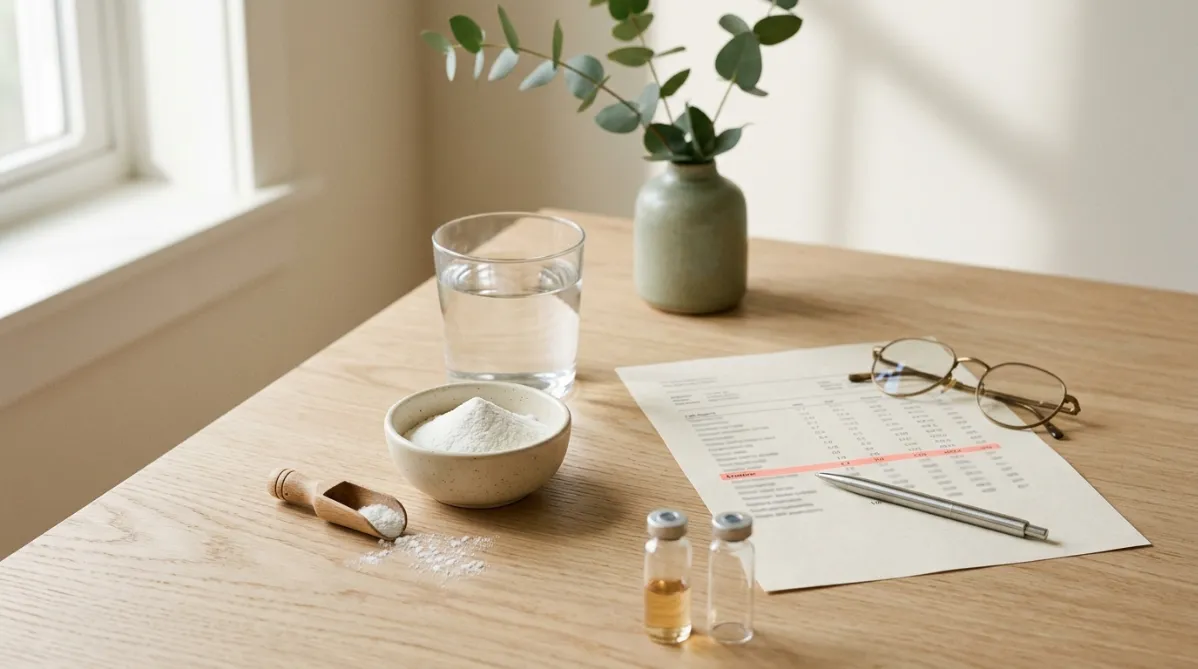
A calm, modern editorial still life shot from a slightly elevated angle on a pale oak tabletop, bathed in soft natural window light from the left. At center sits a clear glass of water beside a small matte ceramic bowl holding a mound of fine white creatine powder, with a wooden scoop resting next to it and a few loose grains dusted across the surface. To the right, a neatly arranged printed lab report on cream paper, with blurred rows of numbers and a single line highlighted in soft coral pink marker, partially overlapped by a minimalist silver pen. A folded pair of thin-framed glasses sits at the edge of the paper. In the foreground, a small glass vial with a pale amber liquid sample and a second empty vial stand upright, suggesting blood and urine testing, with gentle refraction and soft caustic light on the wood. Behind them, a sprig of eucalyptus in a small stone vase adds a touch of green. The background is a softly blurred, warm off-white wall with a gentle gradient shadow and a hint of a window frame. The palette is muted and refined: warm creams, sage green, soft coral, pale amber, and light oak, with crisp whites in the powder. Shallow depth of field, with the powder bowl and highlighted lab line in sharp focus and the edges falling away into creamy blur. Generous negative space on the right third of the composition for text overlay. The overall feel is clean, trendy health-journal photography, tactile and editorial, with subtle film-like grain, natural shadows, and a quiet, reassuring mood. No people, no text legible, no futuristic elements.
supplements

クレアチンは26件の試験で腎マーカーを上昇させるが、実際の腎障害は認められない

BY DR. GYMBRO ·

クレアチンを摂り始めて血液検査を受けると、クレアチニンが上がりeGFRが低下したように見えることがあります。2026年のメタ解析(26件のランダム化比較試験、参加者1,036名)では、クレアチニンが0.14 mg/dL上昇し、クレアチニンベースのGFRが約10.75 mL/min低下したと報告されています。しかし、Cr‑EDTAで直接測定した腎濾過率ではその低下は見られず、尿素、アルブミン尿、タンパク尿も変化しませんでした。この記事では、検査数値が誤解を招く理由と医師への伝え方、そして腎臓専門医に相談すべき人について解説します。
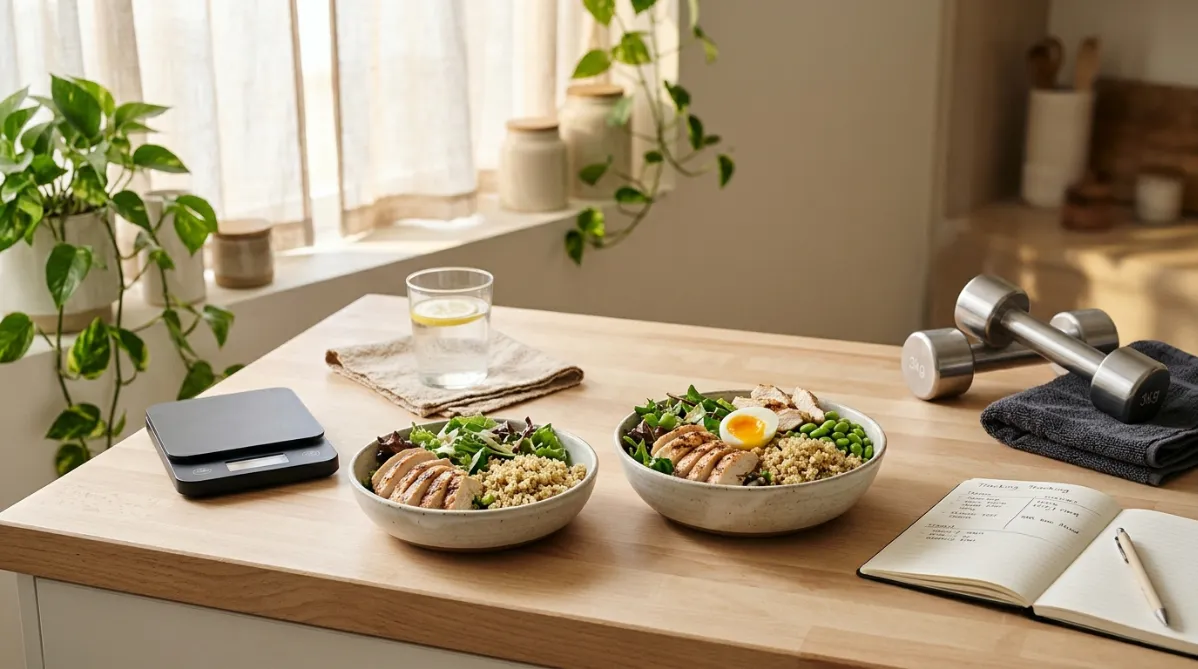
A wide landscape editorial photograph of a clean, sunlit kitchen counter in soft natural morning light, styled like a modern wellness journal cover. In the foreground, two matching ceramic bowls sit side by side on a pale oak butcher block. The left bowl holds a modest portion of sliced grilled chicken breast, quinoa, and greens. The right bowl holds a noticeably larger, double-sized portion of the same ingredients, with extra chicken, a soft-boiled egg, and edamame. The contrast in portion size is clear but elegant. Beside the bowls are a matte black digital kitchen scale, a tall glass of water with a lemon slice, and a small linen napkin in warm oatmeal tone. A pair of sleek brushed-steel dumbbells rests slightly out of focus on the counter's edge, and a folded charcoal gym towel sits next to them. In the soft-focus background, a large window with sheer curtains lets in diffused golden light, and a trailing green pothos plant adds an organic touch. A small, minimal notebook with a pen lies open to the side, suggesting careful tracking. The color palette is muted and cohesive: warm creams, sage green, soft terracotta, charcoal, and natural wood. Shallow depth of field, crisp focus on the bowls, gentle shadows, and subtle film-like grain. Composition follows the rule of thirds with generous negative space on the upper right for headline text. The mood is calm, thoughtful, and trustworthy, like a contemporary health and science magazine feature. There are no people, no text, and no futuristic elements.
nutrition

3.2 g/kg のたんぱく質を16週間: リフターの腎臓に害はあるのか?

BY DR. GYMBRO ·

ジムでよく耳にする「たんぱく質を食べすぎると腎臓が痛む」という警告は本当なのでしょうか? 44名のレジスタンストレーニング経験者を対象に、1.6 g/kg と 3.2 g/kg のたんぱく質摂取を 16 週間比較したランダム化試験では、腎機能指標に統計的有意差は見られませんでした。しかし、高たんぱく質群では BUN とシスタチン C がやや上昇し、eGFR がわずかに低下しています。これらは「記述的」な変化とされ、実際に腎障害につながるかは不明です。結果を踏まえて、どのような人がどの程度のたんぱく質摂取を控えるべきか整理しました。

This page is available in