Dr. Gymbro
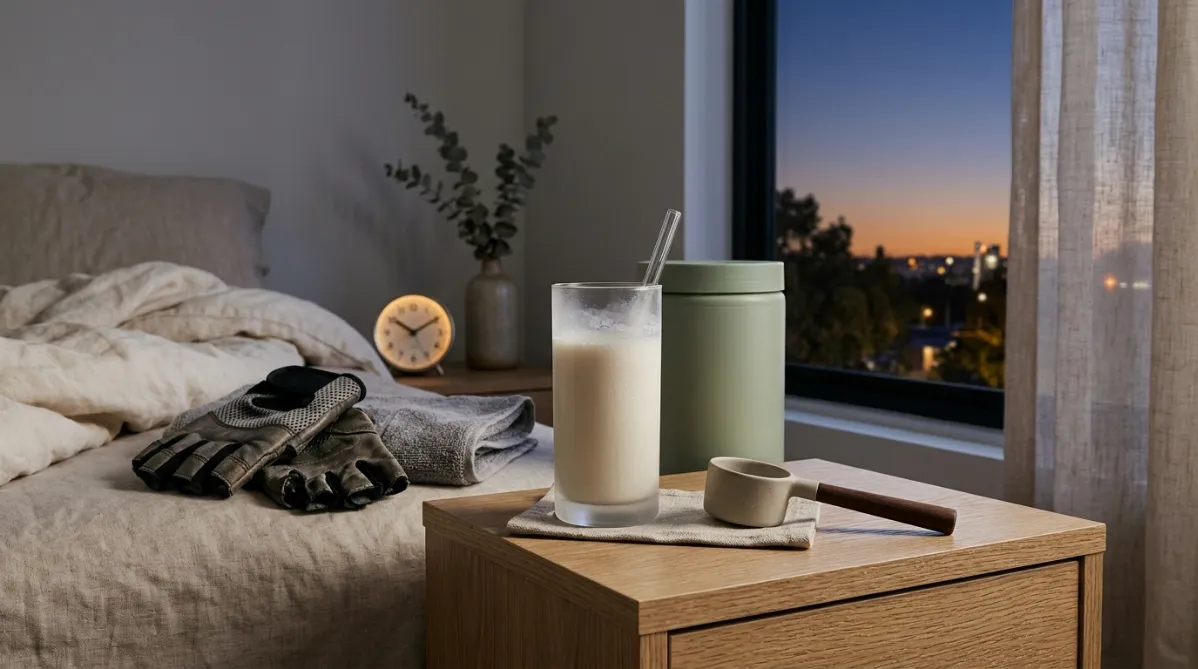
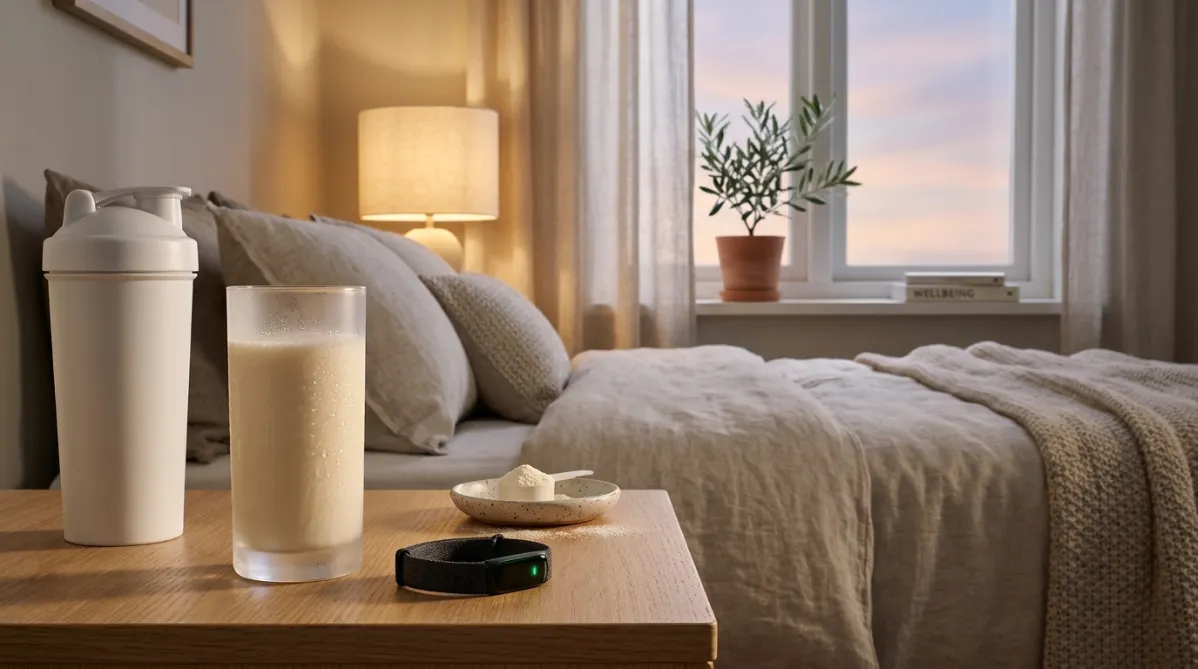
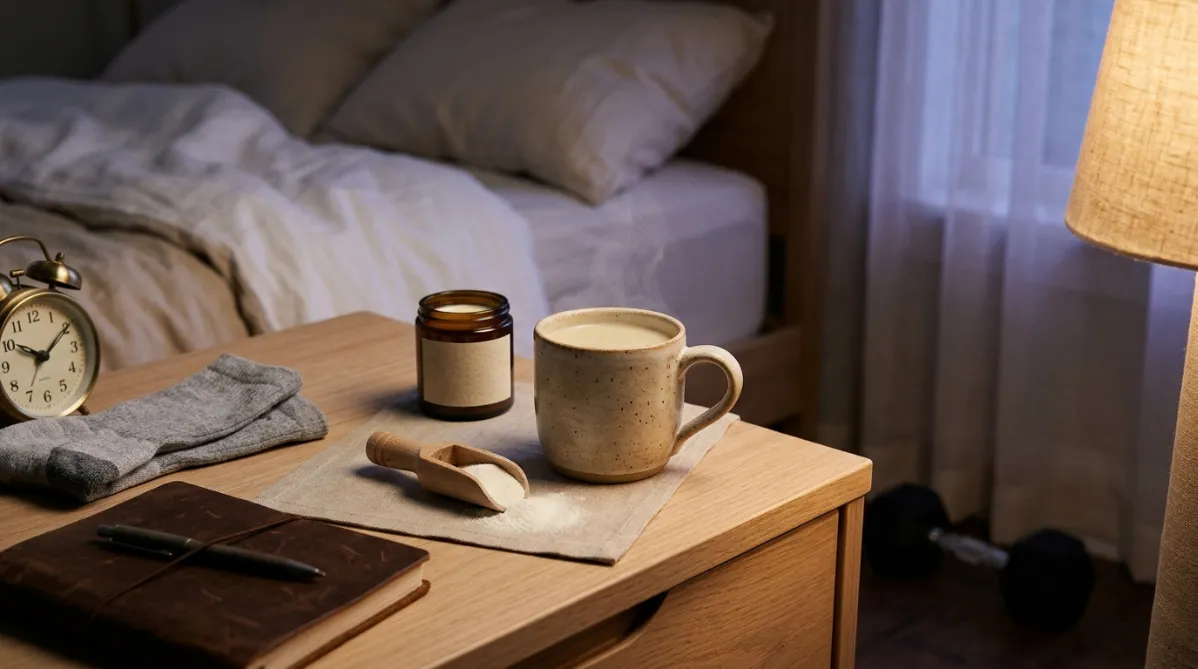
A softly lit bedside table in a calm, modern bedroom at dusk, photographed in wide landscape format with shallow depth of field. In the foreground, a matte white shaker bottle sits beside a tall frosted glass of creamy, pale vanilla-colored protein shake, with a few condensation droplets catching warm light. Next to the glass rests a slim fitness band on a dark charcoal fabric strap, its small LED glowing a gentle green, lying casually on a light oak wooden surface. A small scoop of fine white protein powder rests on a ceramic dish nearby, with a light dusting of powder on the wood.

In the soft-focus background, a neatly made bed with oatmeal-colored linen bedding and a textured knit throw blanket. A sheer curtain filters the last peach and lavender light of evening from a large window. A small potted olive branch in a terracotta vase and a closed paperback book add a quiet editorial touch. A bedside lamp with a warm, cream-colored shade casts a golden glow across the scene and creates gentle highlights on the glass.

The palette is muted and harmonious: warm cream, soft sand, oatmeal beige, faint sage green accents, and touches of dusty lavender in the window light. The mood is peaceful, reassuring, and clean, like a contemporary wellness magazine or a trendy health journal feature. Lighting is natural and cinematic, with soft shadows and a subtle film-like grain. The composition follows the rule of thirds, with the shake and band on the left third and open negative space on the right for headline overlay. Minimalist, Scandinavian-inspired styling, high-end lifestyle photography, crisp details, and a tranquil, premium editorial feel.
Recovery

就寝前にカゼインを摂っても睡眠は乱れない――WHOOP データが示す結果

Dr. Gymbro · · 1 min read

就寝前にカゼインを摂っても睡眠は乱れない――WHOOP データが示す結果

寝る直前に濃厚なプロテインシェイクを飲むと、寝つきが悪くなったり回復が妨げられるという声を耳にしたことがあるでしょう。フロリダ州立大学とサウスダコタ州立大学の研究チームは、女子エリートアスリートを対象に WHOOP ウェアラブルで実際に検証しました。結果は単純な「はい」・「いいえ」では語れません。シェイクは睡眠を台無しにしなかったものの、改善効果も見られませんでした。

神話の検証

就寝前の栄養補給は近年注目されているリカバリーメソッドです。カゼインのように消化が遅いタンパク質は、夜間にアミノ酸を供給できるとして定番視されています。一方で、夜遅くのカロリー摂取が睡眠を乱したり心拍数を上げたりしないかが懸念されています。

本研究チームはこの疑問に答えるべく、 ランダム化・二重盲検・クロスオーバー試験 を実施しました。国際スポーツ栄養学会ジャーナル (Paterson ら, 2026) に掲載された本稿では、エリート女子アスリートを対象とした就寝前マクロ栄養素比較の研究は未だ少ないと指摘しています。

研究デザイン

  • 対象:18〜25 歳の NCAA ディビジョンⅠ女子選手 25 名(うち 21 名が全プロトコルを完走)
  • 介入条件(各 3 夜、ランダム・二重盲・プラセボ対照クロスオーバー)
    • 40 g カゼイン(160 kcal)
    • 40 g アルファラクトアルブミン(乳清由来タンパク質、160 kcal)
    • 40 g 炭水化物(160 kcal)
    • 40 g プラセボ(約5 kcal)
  • 洗浄期間:各条件間に最低 3 日の洗浄期間
  • 摂取タイミング:最後の食事から約 2 時間後、就寝約 30 分前に摂取し、1日の最後のカロリーとした

測定項目

  • 客観的指標:WHOOP 4.0 バンドから取得した総睡眠時間、睡眠潜時、睡眠効率、安静時心拍数、心拍変動(HRV)
  • 主観的指標:毎朝の睡眠品質、眠りにつくまでの時間、回復感(アンケート)
  • 血糖:6 名の選手に対し、盲検化された連続血糖モニターで夜間血糖を測定

結果:ほぼ変化なし

すべての客観的睡眠・回復指標に有意差は認められませんでした(p > 0.05)。各条件の平均は以下の通りです。

  • 総睡眠時間:7.47〜7.62 時間
  • 睡眠効率:91.5%〜92.0%
  • 安静時心拍数:53.5〜54.1 bpm
  • HRV:98.2〜103.9 ms

主観的データも同様で、睡眠品質は 69〜75%、眠りにつくまでの時間は 16〜20 分、回復感は 61〜66%で、条件間に有意差はありませんでした。

血糖のサブ解析では、時間経過による変化は見られました(p = 0.008)が、条件間の差はなく(p = 0.187)、条件×時間の相互作用もありませんでした(p = 0.550)。

著者らは、3 夜にわたるカゼイン、アルファラクトアルブミン、炭水化物のいずれも、プラセボと比較して客観的・主観的睡眠や回復に影響を与えなかったと結論付けています。

意外な結果:睡眠改善もしなかった

「就寝前のタンパク質で睡眠が良くなる」というストーリーは、本研究では成立しませんでした。いずれの有効条件もプラセボを上回ることはありませんでした。筋タンパク質合成や日々のタンパク質目標達成のためにカゼインを摂取したいのであれば、睡眠への影響は心配しなくて良いということです。一方、睡眠補助を期待していた場合、この研究は根拠を提供しません。

なお、本研究は筋肉アウトカムやパフォーマンス、体組成を測定していないため、就寝前タンパク質が筋肉回復に寄与するかは不明です。

知っておくべき制限事項

  • 短期間の介入:各条件はたった 3 夜だけ。長期的な効果は不明です。
  • ウェアラブル睡眠データ:WHOOP は実用的ですが、睡眠段階のゴールドスタンダードであるポリソムノグラフィーではありません。
  • 対象が限定的:若くエリートな女子大学アスリートで、平均睡眠は 7.5 時間、効率は 91%以上とすでに良好。睡眠障害がある人や高齢者、男性、非アスリートへの一般化は注意が必要です。
  • 血糖モニタリングは少数:6 名だけなので予備的結果にすぎません。
  • サンプルサイズ:21 名の完了者は小規模で、微小効果を検出するには不十分です。
  • 利益相反:著者の一人が International Protein Board の無報酬メンバーであることが明記されています。

実務的なポイント

  • 投与量:本研究で使用されたのは 40 g のタンパク質または炭水化物(160 kcal)です。これがエビデンスに基づく量です。
  • 摂取タイミング:就寝約 30 分前、最後の食事から約 2 時間後に摂り、1日の最後のカロリーとしました。
  • 対象者:就寝前に栄養補給したいアスリートや活動的な成人。今回の若い女子アスリート群では、睡眠、HRV、安静時心拍数に悪影響は確認されませんでした。
  • 避けるべき/注意が必要な人
    • 乳アレルギーや乳タンパク質に耐性がない人(本研究で使われたタンパクは共に乳由来)
    • 夜食が自分の睡眠を妨げると実感している人。平均値はグループデータであり、個人差があります。
    • 余分なカロリーやタンパク質が不要な人。睡眠効果が示されていないので、睡眠目的だけで摂取する根拠はありません。

結論

就寝前のプロテインシェイクが睡眠を台無しにする、という主張は本試験では裏付けられませんでした。睡眠ハックとしてではなく、栄養ツールとして活用し、自身の WHOOP や睡眠データで反応を確認すると良いでしょう。
Original study

Read the original research on pubmed.ncbi.nlm.nih.gov →

This article summarizes published research for general information. It is not medical advice.

DG

Written by

Dr. Gymbro

Dr. Gymbro writes for Dr. Gymbro: science-backed fitness, nutrition & performance.

Related Articles

A landscape editorial still life shot from slightly above on a pale oat-colored linen surface, lit by soft morning window light with gentle long shadows. On the left, in warm golden sunlight, sits a small ceramic bowl of dried ashwagandha root pieces and a scatter of fine tan powder. Beside it are a few rough, rosy-gold slices of Rhodiola rosea root and a sprig of tiny succulent-like green leaves with yellow blossoms. A matte sand-colored stoneware mug of steaming tea and a simple glass of water stand nearby. A small amber glass bottle with a minimal unbranded label tips out two capsules.

The right side of the frame is cooler and bluer, as if dusk is arriving. It holds a muted indigo ceramic dish with a few pale capsules, a small bundle of dried chamomile flowers (the source of apigenin), and a few green tea leaves. A slim, unlit beeswax candle and a folded charcoal wool blanket suggest evening. The warm and cool halves meet softly in the center, where a rumpled white cotton napkin sits beneath a small brass spoon.

In the background, out of focus, a wooden shelf holds a worn paperback, a small potted plant, and the edge of a kettlebell in matte black, hinting at an active lifestyle. Subtle film grain, shallow depth of field, and a muted palette of cream, terracotta, sage green, and deep indigo give it a clean, modern wellness-magazine feel. Leave generous negative space in the upper third for a headline overlay. No text, no logos, no people.
recovery

アシュワガンダ+ロディオラは効果的だったが、夜の睡眠スタックは効果なし

BY DR. GYMBRO ·

最新の4群比較臨床試験(103名の健康なアクティブ成人)で、朝に600 mgのアシュワガンダと300 mgのロディオラ・ロゼアを摂取した群は、主観的ストレスの低減、睡眠の質向上、ポジティブ感情の増加といった効果が確認されました。一方、夜用として一般的に推奨されるマグネシウムL‑トレオネート・L‑テアニン・アピゲニンのスタックは有意な効果を示さず、両方を併用した場合はむしろ感情が低下する結果となりました。研究期間が2週間と短く、サンプル数も限られている点に留意が必要です。

A softly lit bedroom nightstand scene in landscape format, photographed in a modern editorial lifestyle style. In the center of the frame sits a handmade ceramic mug in warm oatmeal tones, filled with a pale creamy drink. A thin wisp of steam rises from it. Beside the mug, a small wooden scoop rests on a matte linen-textured surface with a fine dusting of white collagen powder. A minimal amber glass jar with a cream label stands just behind, with no readable text. The nightstand is pale oak with subtle grain.

To the left, a neatly folded pair of gray cotton athletic socks and a worn leather-bound training journal with a pen on top hint at a lifter's routine. A small brass alarm clock reads about 9:30 and is slightly out of focus. On the right side, a sheer curtain filters the last blue-violet twilight from a window, while a warm bedside lamp with a linen shade casts a honey-colored glow across the scene. The glow contrasts gently with the cool dusk tones.

Behind the nightstand, the edge of a rumpled bed with soft white and sand-colored bedding is visible, with a dumbbell resting quietly on the floor in the soft-focus background to suggest recovery after training. The depth of field is shallow, with the mug and scoop in crisp focus and the background dissolving into creamy bokeh.

The palette is calm and earthy: warm beige, soft cream, muted terracotta, and dusk blue accents. The lighting is cinematic and low-key, with gentle highlights on the ceramic rim and a subtle rim light on the steam. The composition follows the rule of thirds, with the mug placed on the left third and generous negative space on the right for title overlay. The mood is serene, restorative, and quietly scientific without any clinical elements. The finish is clean, high-end, and magazine-worthy, with fine film grain and natural color grading, like a wellness feature in a contemporary online journal.
recovery

15g就寝時コラーゲンで夜間覚醒が27%減少

BY DR. GYMBRO ·

夜中に何度も目が覚めると、トレーニングや栄養管理が完璧でも回復が妨げられます。2024 年に行われた小規模試験では、就寝 1 時間前に 15 g のコラーゲンペプチドを摂取すると、ポリソムノグラフィで記録された覚醒回数が 29.3 回から 21.3 回へと約 27%減少しました。参加者は朝の Stroop テストでも僅かながら成績が向上しましたが、総睡眠時間や睡眠潜時などは変化しませんでした。対象は 13 名の男性を 7 泊観察しただけで、製品は業界提供だった点に留意が必要です。

A quiet bedside scene at dusk, shot in soft natural light with a shallow depth of field. A tall frosted glass of creamy, pale-white shake sits on a light oak nightstand, with a thin film of condensation on the glass and a faint milky residue near the rim. Beside it, a matte ceramic scoop rests on a small linen coaster. A minimalist tub of unbranded protein powder in muted sage green sits slightly out of focus in the background.

To the left, a neatly made bed with oatmeal-colored linen sheets and a rumpled cream duvet. A pair of worn lifting gloves and a folded gray gym towel sit on the edge of the bed, suggesting an evening workout just finished. A small analog alarm clock reads about 10:30 PM, its soft face glowing faintly. A sprig of dried eucalyptus in a small stoneware bud vase adds an organic touch.

Through a large window on the right, deep indigo twilight fades into a warm amber horizon, and the last light spills across the wall in long, gentle gradients. A sheer curtain moves slightly. The palette is warm neutrals (cream, oak, sand, soft terracotta) with a few muted blue-violet accents from the evening sky.

The composition uses the rule of thirds, with the glass at the left-center foreground and generous negative space on the right, where headline text could sit. The mood is calm, restorative, and editorial, like a modern wellness and nutrition journal. The lighting is gentle and diffused, with subtle film grain and slightly lifted shadows. The textures of linen, wood, glass, and ceramic are crisp. The image is clean and uncluttered, with no text, logos, or people, and no futuristic or sci-fi elements.
nutrition

40gベッドタイムシェイク:就寝前のカゼインが夜間に果たす役割

BY DR. GYMBRO ·

夕方にトレーニングを終えてから食事を取らずに8時間の睡眠に入ると、回復はどうなるのでしょうか。2012 年の研究では、若い男性 16 名に寝る30分前にカゼイン 40 g を摂取させ、夜間の体内変化を追跡しました。その結果、タンパク質は睡眠中に消化・吸収され、全身のたんぱく質合成が上昇し、正味たんぱく質バランスが負から正へ転じました。筋肉たんぱく質合成は約 22% 増加しましたが、有意差は境界線でした。これらの結果が示す意味と、実際の活用法を解説します。

A sunlit, minimalist home gym corner photographed in soft golden morning light, with a young athletic man seated on a wooden bench, leaning forward with his elbows resting on his knees, catching his breath after a hard leg session. He wears a muted sage-green t-shirt and charcoal shorts, his face turned slightly away from the camera, calm and focused. A matte ceramic dish in the foreground holds a few small, translucent golden softgel capsules, with a glass of water beside it catching the light and casting a soft caustic shadow across a pale oak floor. Behind him, a loaded barbell rests on a squat rack, slightly out of focus, and a tall window pours warm sunlight diagonally across the scene, creating long gentle shadows and a hazy glow. A small potted green plant sits on a shelf at the edge of the frame. The color palette is warm and editorial: cream, soft gold, sage green, pale wood, and charcoal accents. Shallow depth of field, with crisp focus on the capsules and glass in the lower third and a creamy bokeh background. The composition leaves generous negative space on the right side for a headline overlay. The mood is clean, modern, and aspirational, like a high-end wellness magazine or a trendy health journal feature. Shot on a 50mm lens, natural light, fine film grain, subtle matte finish, landscape 16:9 framing.
recovery

ビタミンDが欠乏していない男性の筋力回復が加速

BY DR. GYMBRO ·

ビタミンD血中濃度が十分な男性に、1日4,000 IUのビタミンD3を35日間摂取させると、ハードな下半身トレーニング後の筋力回復が約8 %速くなることが分かりました。ALT・ASTといった筋損傷マーカーの上昇も抑えられましたが、筋肉痛(遅発性筋痛)の改善はみられませんでした。小規模なランダム化比較試験に基づく結果であり、長期的効果や女性への適用はまだ不明です。ビタミンDを回復サポートに使う際は、まず自身の血中濃度を測定し、医師と相談することが重要です。

This page is available in