Dr. Gymbro
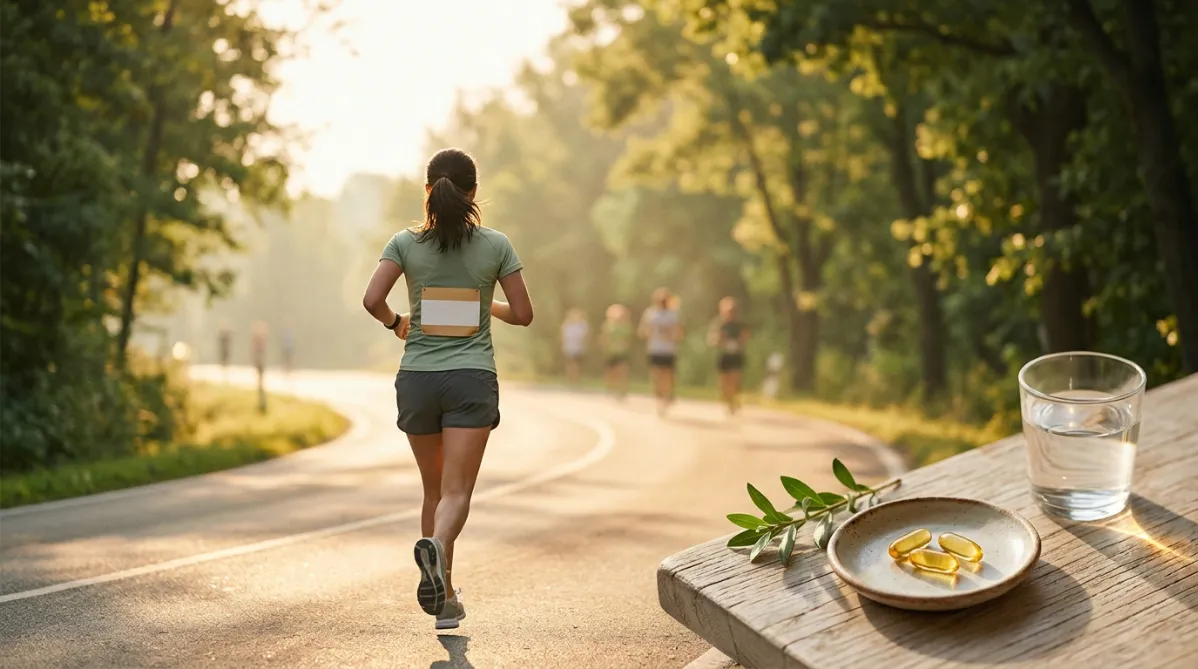
A wide, editorial-style photograph of a marathon runner seen from behind and slightly to the side, mid-stride on a quiet tree-lined road at early morning golden hour. The runner wears a fitted sage-green technical shirt and charcoal shorts, with a plain unnumbered bib pinned at the back. Soft sunlight filters through the leaves and creates long, gentle shadows and a warm amber glow on the asphalt. Behind the runner, other runners blur into a soft bokeh background of muted greens and warm light.

In the lower right foreground, slightly out of focus, a small ceramic dish on a weathered light-oak surface holds two golden, translucent softgel capsules. Beside it sits a simple glass of water with sunlight refracting through it, casting a tiny warm caustic on the wood. A sprig of green leaves adds a natural touch. The foreground and the runner are separated by a shallow depth of field, which suggests the link between supplementation and endurance without being literal.

The palette is warm and natural: soft yellows, sunlit gold, sage green, cream, and light wood tones. The mood is calm, health-focused, and contemporary, like a modern wellness or science journal feature. The composition uses generous negative space in the upper left sky area for title text overlay. The lighting is natural and soft with a subtle film-like grain, and the image is clean, minimal, and crisp. There are no text overlays, logos, or medical clichés such as hearts or graphs, and no futuristic elements.
Science & Research

ビタミンD3を摂取したランナーは42km走破後に心臓ストレス指標が低下

Dr. Gymbro · · 1 min read

8週間にわたって安価で入手しやすいビタミンD3を摂取しただけで、マラソンランナーの血中で起きる変化が変わる可能性が示唆されました。新たな臨床試験では、ビタミンD3を摂取したランナーは、プラセボ群に比べてレース終了後24時間時点でクレアチンキナーゼ(CK)とCK‑MBの数値が低いことが報告されています。ただし、実際にサプリをレース前のスタックに加える前に、この研究がどれほど小規模で制約が多いかを理解しておく必要があります。

ヘッドラインの結果

Weng らによるこの研究は、Journal of the International Society of Sports Nutrition(2026年)に掲載されています(DOI: 10.1080/15502783.2026.2657316/PubMed 41966073)。参加者は21名のアマチュアランナーで、8週間ビタミンD3またはプラセボのいずれかを投与されました。全員が公式フルマラソン(42.195km)に参戦し、レース前24時間からレース後24時間までの血液サンプルが採取されました。

著者らは、ビタミンD3摂取群はレース終了後24時間のCKおよびCK‑MBが低いと報告しています。CKは筋肉損傷の標準指標、CK‑MBは心臓ストレスのバイオマーカーとして広く用いられます。さらに、**タンパク質カルボニル(PC)**という酸化ストレス指標の上昇も抑制されました。

細部を読む重要性

ビタミンDが心臓を「マラソン耐性」にするわけではありません。以下が本研究で示されたこと、示されていないことです。

  • サンプル数が少ない:21名という規模では方向性は示せても因果関係を確定できません。
  • 単盲検設計:二重盲検ではないため、バイアスが入りやすいです。
  • 有意差が出た指標は限定的:著者は「選択されたバイオマーカー」のみで有意な群×時間交互作用を報告しています。
  • 酸化ストレス指標はPCだけ:TBARSや抗酸化酵素には有意な交互作用が見られませんでした。
  • CK‑MBはバイオマーカーであり、心臓損傷の証明ではない:マラソンは健康なランナーでも心筋・筋肉マーカーを上昇させますが、実際の心筋障害や臨床アウトカムを測定したわけではありません。
  • パフォーマンスへの影響はなし:抄録には完走タイムの改善は報告されていません。

免疫系の変化は?

マラソンは免疫系に大きな負荷をかけます。本研究でも、両群ともレース後に白血球(特に好中球)が増加し、リンパ球が0.5時間および2時間後に有意に減少することが確認されました。いくつかの免疫細胞サブセットの時間的変化も報告されていますが、群間の有意な交互作用は認められませんでした。著者は「記述的な」回復パターンの違いと、免疫細胞と生化学的指標との探索的相関を示唆しています。したがって、本試験はビタミンD3がマラソン後の免疫回復を改善したことを示す証拠にはなりません。

実務的なポイント

  1. まず自分のビタミンD状態を確認。本研究は「ビタミンD状態が回復に関わりうる」可能性を示唆していますが、補給前に25‑ヒドロキシビタミンD血中濃度を医師と共に測定するのが最も合理的です。多くの人は追加摂取が不要です。
  2. 用量は不明。抄録には投与量が記載されていません。全文(PMC13072698)で確認してください。一般的な公衆衛生指針では成人の推奨摂取量は1日600〜800 IU、上限は4,000 IUとされています。高用量は医師の管理下でのみ検討すべきです。
  3. 摂取タイミングは数週間前。本試験はレース開始8週間前からの継続投与でした。レース直前の「当日投与」は本研究の条件とは異なります。
  4. 脂肪と一緒に摂取。ビタミンDは脂溶性なので、食事中の脂肪とともに摂ると吸収が良くなります(本試験で検証されたわけではありません)。

ビタミンD補給で期待できる層

  • 血液検査でビタミンDが低い、または境界値の持久系アスリート
  • 主に屋内や早朝・夕方にトレーニングするランナー
  • 冬季に高緯度地域でトレーニングする人
  • 肌の色が濃く、日光浴が限られる人

補給を控えるべき、または医師と相談すべきケース

  • 既に十分なビタミンDレベルがある人
  • 検査なしで高用量サプリを摂取している人(過剰摂取は血中カルシウム上昇のリスク)
  • 腎疾患、血中カルシウム過剰、サルコイドーシス、あるいはビタミンDと相互作用する薬を服用している人
  • レース後に胸痛・動悸・異常症状があるランナー。サプリは診断の代替ではなく、CK‑MBが低いからといって安全が保証されたわけではありません。

結論

この小規模試験は、8週間のビタミンD3補給がマラソン後のCK、CK‑MB、タンパク質カルボニルの上昇を抑える可能性を示す興味深いデータ点です。しかし、サプリが心臓を保護したり回復を劇的に早めるという証拠には遠く及びません。賢い選択は、まず自分のビタミンD状態を把握し、欠乏があれば是正すること。今後、二重盲検・大規模な研究が出るまで、ビタミンD3を「マラソン回復の必須アイテム」とみなすのは時期尚早です。

出典: Weng PW, Nanda JD, Chien YH, Lin CF, Cheng SC, Yang MT. Effects of vitamin D3 supplementation on cardiac, muscle, and immune responses after a marathon race: a single‑blind, placebo‑controlled trial. J Int Soc Sports Nutr. 2026;23(1):2657316. doi: 10.1080/15502783.2026.2657316
Original study

Read the original research on pubmed.ncbi.nlm.nih.gov →

This article summarizes published research for general information. It is not medical advice.

DG

Written by

Dr. Gymbro

Dr. Gymbro writes for Dr. Gymbro: science-backed fitness, nutrition & performance.

Related Articles

A cyclist's legs mid-pedal on a stationary road bike, shot in a bright, airy, minimalist studio with a soft warm-grey backdrop. In the foreground on a pale oak table sits a small ceramic dish holding four deep coral-red softgel capsules, with a few translucent droplets of red-orange oil glistening beside them. Beside the dish is a sprig of dried red microalgae-toned seaweed and a halved wild salmon fillet, its coral flesh echoing the capsule color. Behind the table, slightly out of focus, a cyclist in a fitted charcoal jersey and matte black shorts rides a bike on an indoor trainer. Only the torso and legs are visible, with no face. A white towel hangs over the handlebars and a clear water bottle catches the light.

Soft diffused morning light streams from a large window on the left, creating long gentle shadows and a subtle golden-hour glow on the skin and the glossy capsules. The palette is restrained and editorial: warm cream, sand, soft grey and charcoal, with vivid coral-red as the single accent color. A minimalist analog stopwatch with a clean white face sits on the table, its hands near the 85-minute mark. A thin, elegant line-graph shape is subtly suggested by a curved strip of red ribbon lying on the table, rising from left to right to hint at the performance gain without any text.

The composition follows the rule of thirds, with the capsules and stopwatch in the lower left and the cyclist's motion-blurred legs sweeping across the right. Shallow depth of field, crisp macro detail on the capsules, and a fine film-like grain. The overall feel is a modern health and science magazine cover: clean, calm, sophisticated, and natural, with negative space in the upper area for a headline. There are no futuristic elements, no glowing effects, no laboratory equipment, and no text or logos. Landscape 16:9 format.
nutrition

4日間のアスタキサンチン投与でサイクリングの疲労限界時間が72分から85分に伸長―小規模試験の結果

BY DR. GYMBRO ·

28 mg/日を4日間摂取したところ、サイクリングの疲労限界時間が約72分から85分へと約18%伸びました。同じプロトコルでは、激しい75%VO2maxのライド後に筋肉損傷マーカー(CK・LDH)と脂質過酸化(MDA)の上昇が抑えられました。炎症マーカーやエネルギー利用は変化せず、メカニズムはまだ不明です。投与量は市販のソフトジェルが提供する量を上回っており、対象は10名の若年男性だけでした。以下に数値の詳細とエビデンスの限界を示します。

recovery

タートチェリーでマラソン後の炎症が37%低下、足の感覚に変化なし

BY DR. GYMBRO ·

マラソン実験で、タートチェリーパウダー摂取が炎症マーカーhs‑CRPを約37%低減させたことが分かりました。ただし、筋力回復やジャンプ性能、筋肉痛、筋肉損傷(CK)には差が見られませんでした。本研究はあまり知られていないVistula品種を用い、35名のレクリエーションランナーを対象に7日間のプロトコルで実施したものです。資金提供は原料供給者からで、サンプル数は小規模です。持久系アスリートにとって、炎症が下がっても足の感覚が変わらないという結果は何を示唆するのでしょうか。

A quiet, sunlit editorial still life on a pale oatmeal linen surface, shot from a slightly elevated three-quarter angle with soft morning window light raking in from the left. On the left side, a small matte ceramic dish holds a few white round tablets, next to a minimalist amber glass bottle with a blank cream label. In the center, a slim glass of water sits beside a handmade stoneware espresso cup filled with dark coffee, with a thin ribbon of steam curling upward. On the right, a pair of worn but clean sage-green running shoes rests on a pale wooden bench, with a folded charcoal athletic towel and a stainless steel stopwatch beside them. The background is softly blurred: a calm bedroom-to-morning transition, with the left third of the frame in cool, dusky blue-gray tones suggesting night, with rumpled white bedding and a small bedside lamp glowing dimly. The tones then blend gradually across the frame into warm golden peach morning light on the right, where a blurred indoor court or track line is faintly visible through a tall window. The color palette is muted and modern: warm cream, soft sage, dusty blue, terracotta accents, and hints of amber. Delicate shadows, shallow depth of field, fine natural film grain, and generous negative space across the top of the frame for headline text. The mood is calm, precise, and thoughtful, in the style of a contemporary wellness and science journal photograph, clean and minimalist with tactile textures of linen, ceramic, glass, and wood.
nutrition

メラトニンとカフェイン:併用したときだけ筋肉損傷マーカーが低下

BY DR. GYMBRO ·

カフェインはトレーニング済みの男性のシャトルテスト走行距離を伸ばしたが、メラトニンとカフェインの併用だけが筋肉損傷と炎症のマーカーも低下させた。プロトコルは就寝前に6 mgのメラトニン、テスト1時間前に体重1 kgあたり3 mgのカフェインを摂取したものだった。メラトニンは睡眠測定に変化をもたらさず、結果がさらに興味深い。研究は14名のトレーニング男性を対象とした小規模なクロスオーバー試験で、パフォーマンス測定は1回だけだった。以下で検証内容、対象となり得る人、そして証明できない点を解説する。

A wide landscape editorial photograph of a lone male distance runner, seen from behind in soft three-quarter profile, pausing on a red-clay outdoor running track at golden hour. He wears a minimalist charcoal singlet and fitted shorts, with a faint sheen of sweat on his calves and shoulders. His hands rest loosely on his hips as he catches his breath, and the white lane lines curve gracefully into the distance. Low amber sunlight rakes across the track and casts long, soft shadows. A hazy line of trees and a pale peach sky blur into creamy bokeh behind him.

In the lower foreground, slightly out of focus, a small matte ceramic dish holds a few pomegranate seeds and halved walnuts, a nod to the natural food sources of urolithin A. Beside it sits a minimalist amber glass supplement bottle with a plain cream label, and a stopwatch lies face-up on the track's edge. The stopwatch is blurred just enough to read as an object, not a number.

The palette is warm and earthy, with terracotta, burnt orange, soft cream, and muted sage green. The look is refined and contemporary, like a high-end wellness or sports-science magazine, with natural film-like grain, shallow depth of field, and gentle contrast. The composition follows the rule of thirds. The runner sits in the right third, the still life anchors the lower left, and open negative space in the upper left leaves room for a headline overlay. The mood is calm and thoughtful, suggesting recovery, measured results, and quiet scientific skepticism rather than hype. No text, no logos, no futuristic elements.
nutrition

ウロリチンAはエリートランナーの速度を上げなかった―しかし筋肉損傷は減少

BY DR. GYMBRO ·

ウロリチンAは「ミトコンドリアサプリ」として販売されており、研究者はVO2maxが約66 mL·kg⁻¹·min⁻¹のエリート男性ランナーに投与してテストしました。3000 mレースで速度は向上せず、筋肉損傷マーカーであるCKとレース後の主観的努力感は低下しました。UA群のVO2maxは5.4%上昇したものの、プラセボ群の3.6%上昇との差は統計的に有意ではありませんでした。サンプルサイズが小さいことと産業界との関係に留意が必要です。

This page is available in