Dr. Gymbro
←

#succinate

1 article
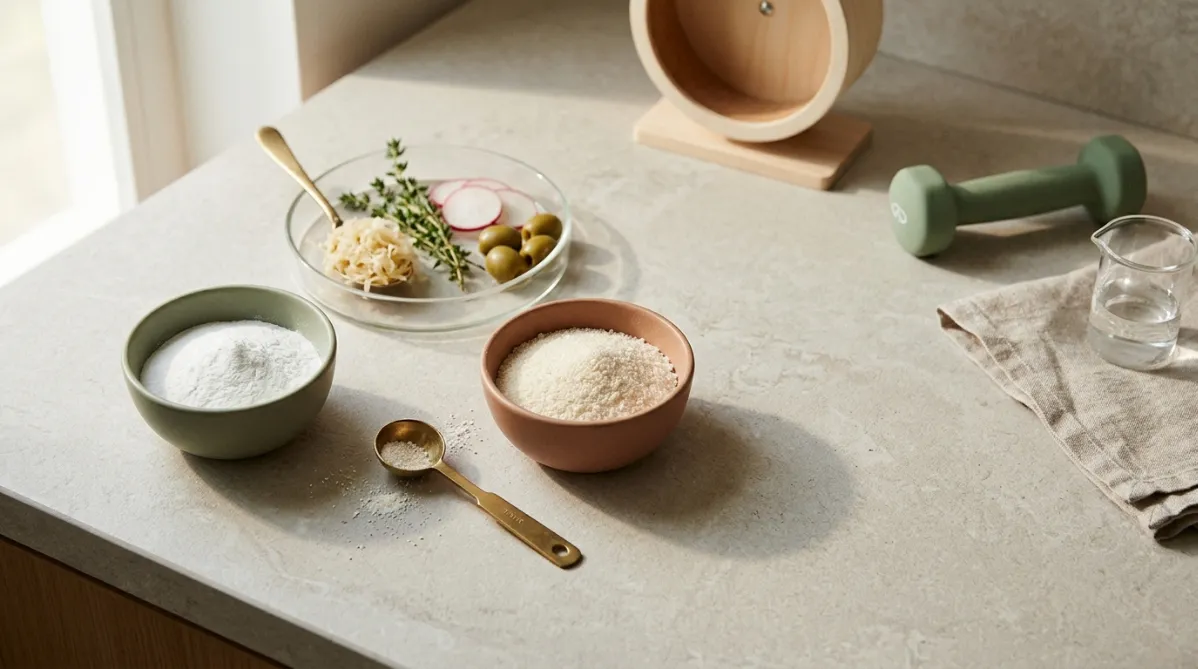
A wide editorial still life on a pale warm-gray stone countertop, lit by soft natural window light from the left. In the center, two small matte ceramic bowls sit side by side. One holds fine white creatine powder, and the other holds a slightly coarser, creamy off-white crystalline powder. Between them, a delicate brass measuring spoon rests at a slight angle, dusted with a few grains. Behind the bowls, a shallow glass dish holds a handful of whole food ingredients that suggest gut health: fermented sauerkraut, a few sprigs of fresh thyme, sliced radishes, and a small cluster of green olives. Their colors are soft and natural. To the right, a minimalist wooden mouse running wheel stands out of focus as a quiet visual nod to the exercise study. Beside it, a small, slim dumbbell in muted sage green rests on the counter. A folded linen napkin in oatmeal tone and a single glass beaker with clear water add a subtle lab-meets-kitchen feel without looking clinical. The palette is calm and modern: sage green, terracotta, cream, soft sand, and touches of warm brass. Shadows are gentle and elongated, with a shallow depth of field that keeps the powders crisp and the background creamy. The composition leaves generous negative space on the right third for title text. The overall mood is clean, thoughtful, and trendy, like a contemporary wellness and science magazine, with fine film-like grain, natural textures, and a refined editorial look.
science research

腸内細菌由来化合物PAS、マウスでクレアチンを上回る―ただし注意点あり

BY DR. GYMBRO ·

新しいマウス実験では、腸内細菌が産生するピペコリック酸とコハク酸(PAS)の組み合わせが、7週間の負荷付きホイール走行後の握力と筋力でクレアチン単水和物を上回ったと報告されています。驚くべきは、どちらの化合物も筋肉量や筋繊維のサイズは増やさなかった点で、効果はサイズではなく機能に現れました。両サプリは対照群に比べて走行性能を改善しましたが、これはマウスのみでの探索的研究であり、人への用量や安全性データはありません。この記事では研究結果と、そこから導き出すべきこと・すべきでないことを解説します。

This page is available in