Dr. Gymbro
A wide landscape editorial photograph of a sunlit minimalist gym corner with warm, natural morning light streaming through tall windows. In the foreground on a light oak wooden bench sits a small matte ceramic dish holding a few translucent amber softgel capsules, next to a brushed steel shaker bottle and a folded charcoal gray towel. The capsules catch the light with a soft golden glow, shallow depth of field blurring them slightly against the background.

In the softly blurred midground, a barbell loaded with black plates rests on a squat rack, with chalk dust lightly floating in the sunbeams. The walls are textured off-white plaster, and the floor is pale polished concrete. A potted green plant adds a touch of organic color near the window.

Laid casually beside the dish is an open notebook with a clean, hand-drawn bar chart in black ink: two bars of slightly different heights, one marked with a small question mark, suggesting uncertainty and interpretation. A slim pencil rests across the page. No readable text beyond simple marks.

The color palette is muted and modern: cream, warm beige, soft amber, charcoal, and sage green accents. The composition follows the rule of thirds, with the capsules and notebook in the lower left third and open negative space toward the upper right, ideal for headline overlay. Soft shadows, subtle film grain, and a calm, contemplative mood reminiscent of a contemporary health and science magazine. Shot as if with a 50mm lens at f/2.0, high-end lifestyle editorial aesthetic, clean and trendy, with no futuristic or sci-fi elements.
Science & Research

750 mg PA leverde 2,6 % extra spiermassa op in 8 weken — maar er is een addertje onder het gras

Dr. Gymbro · · 3 min read

Het cijfer dat iedereen aandacht kreeg

In een pilotstudie van acht weken behaalden getrainde mannen die fosfatidinezuur (PA) innamen 2,6 % magere lichaamsmassa. De placebogroep kwam uit op 0,1 %. Dat verschil verklaart waarom PA steeds weer opduikt in pre‑workout‑stacks en op spieropbouw‑forums.

Maar de eigen statistieken van de studie ondersteunen het kopnummer niet op de manier die supplement‑marketing graag ziet. Hieronder vind je wat de onderzoekers wel en niet vonden.

Wat is fosfatidinezuur en waarom zou het spiergroei bevorderen?

Fosfatidinezuur is een fosfolipide die als signaalmolecuul in cellen fungeert. Het argument om het als supplement te gebruiken berust op het mammalian target of rapamycin (mTOR)‑pad, een centrale schakel voor spiereiwitsynthese. Er is aangetoond dat PA mTOR‑signalering activeert, waardoor men dacht dat orale inname de anabole respons op krachttraining zou kunnen versterken.

Dat mechanisme is plausibel, maar nog niet overtuigend bij mensen. Hoffman en collega’s ontwierpen deze studie om te onderzoeken of het idee standhoudt bij echte lifters.

De opzet: wie, hoeveel, hoe lang?

De publicatie uit 2012 in het Journal of the International Society of Sports Nutrition werd expliciet aangeduid als pilotstudie. De belangrijkste details:

  • Deelnemers: 16 kracht‑getrainde mannen, gemiddeld 23 jaar oud
  • PA‑groep: 7 mannen die 750 mg PA per dag innamen
  • Placebo‑groep: 9 mannen
  • Training: vierdaags per week weerstandstraining gedurende acht weken
  • Meetpunten: 1‑RM bench press en squat, lichaamssamenstelling, en dikte‑ en pennate‑hoek van de vastus lateralis

De dagelijkse dosis van 750 mg is het getal dat men nu vaak noemt als “de studiedosis” bij PA‑producten.

De resultaten: grotere winst op papier

Op het eerste gezicht leek de PA‑groep beter te presteren:

  • Squat 1‑RM: +12,7 % met PA vs. +9,3 % met placebo
  • Magere lichaamsmassa: +2,6 % met PA vs. +0,1 % met placebo

Beide groepen werden sterker – een verwacht resultaat na acht weken gestructureerde training. Het verschil lag vooral in de extra winst die de PA‑groep leek te boeken, met name in magere massa.

Het addertje: geen statistisch significante verschillen

De auteurs concluderen dat parametrische analyse geen significante verschillen tussen de groepen aantoont. Met de conventionele statistische normen liet de studie dus niet zien dat PA beter presteert dan placebo.

In plaats daarvan maakten ze gebruik van magnitude‑based inferentie, een methode die de waarschijnlijkheid inschat dat een effect betekenisvol is. Met die benadering:

  • Verbeteringen in squat‑kracht toonden een “waarschijnlijk” voordeel van PA
  • Toename in magere massa toonde een “zeer waarschijnlijk” voordeel

Magnitude‑based inferentie is minder streng dan de standaard significantietoetsen en krijgt kritiek binnen de sportwetenschap. Het wordt vaak toegepast in kleine onderzoeken waar conventionele tests onvoldoende power hebben. Het kan veelbelovende signalen aanwijzen, maar levert geen sluitend bewijs.

Beperkingen die je moet weten

  • Kleine steekproef: 7 versus 9 deelnemers. Een paar uitschieters kunnen de groepsgemiddelden sterk beïnvloeden.
  • Geen significante verschillen volgens de standaardanalyse.
  • Korte duur: acht weken zegt niets over langetermijneffecten.
  • Beperkte populatie: jonge, kracht‑getrainde mannen; resultaten zijn mogelijk niet toepasbaar op vrouwen, ouderen of beginners.
  • Pilot‑ontwerp: de auteurs presenteren de studie als een eerste stap, bedoeld om hypotheses te genereren, niet om ze definitief te bevestigen.
  • Basisverschillen: bij zo’n kleine groep kunnen start‑lichaamssamenstelling en trainingsrespons sterk variëren tussen individuen.

Praktische adviezen

Als je nieuwsgierig bent naar PA, dan kun je de volgende richtlijnen meenemen:

  1. Dosis: De studie gebruikte 750 mg per dag, gespreid over de dag naast de training. Er is geen bewijs dat een hogere dosis beter werkt.
  2. Timing: Het abstract vermeldt alleen ‘dagelijkse inname’; er wordt niet gespecificeerd of dit vóór of na de training moet gebeuren. Raadpleeg de volledige tekst voordat je een pre‑ of post‑workout‑protocol als evidence‑based claim presenteert.
  3. Training gaat voor: Beide groepen trainden vier dagen per week en beide verbeterden. Het supplement was een toevoeging aan een degelijke trainingsroutine, geen vervanging.
  4. Verwacht een bescheiden, onzeker effect: In het beste geval suggereert deze pilot een mogelijk voordeel in magere massa en onderlichaam‑kracht, maar het garandeert niets.
  5. Sla de basis niet over: Eiwitinname, totale calorie‑inname, progressieve overload en voldoende slaap leveren veel meer op dan elk enkel supplement.

Conclusie

De studie biedt PA een redelijk uitgangspunt: een plausibel mechanisme, een praktische dosis en gunstige trends in squat‑kracht en magere massa. Maar met slechts zestien proefpersonen, geen conventionele statistische significantie en een onderzoekstermijn van acht weken blijft het een pilotstudie, geen sluitend bewijs. Als je PA wilt uitproberen, behandel het dan als een experiment, houd je eigen voortgang bij en houd je verwachtingen realistisch. Grotere, langere en onafhankelijk gerepliceerde onderzoeken zijn nodig om een veelbelovend signaal om te zetten in een vastgesteld resultaat.
Original study

Read the original research on pubmed.ncbi.nlm.nih.gov →

This article summarizes published research for general information. It is not medical advice.

DG

Written by

Dr. Gymbro

Dr. Gymbro writes for Dr. Gymbro: science-backed fitness, nutrition & performance.

Related Articles

A wide editorial still life on a pale, warm-gray stone surface lit by soft morning window light from the left. In the foreground, a rustic ceramic bowl in matte oatmeal glaze holds dried ashwagandha roots, pale tan and gnarled, with a few scattered beside it. A small wooden scoop dusted with fine golden-beige powder rests next to the bowl. Behind them, a few olive-green ashwagandha sprigs with small orange-red berries in papery husks arc across the frame, adding a quiet pop of color.

Midground right: a matte black chalk-dusted dumbbell handle and a single brushed-steel weight plate lean casually against a linen-textured backdrop in muted sage. A folded cream cotton towel and a slim notebook with a pencil suggest a training log. The notebook is open to blank, softly lined pages with no legible text.

The background fades into a gentle blur of neutral beige and soft terracotta tones, with a hint of a plant shadow cast across the wall in dappled light. Fine dust and powder particles float in the light beams, giving a tactile, organic feel.

The composition follows the rule of thirds: botanical elements on the left and center, gym elements on the right, and negative space in the upper right for headline overlay. Shallow depth of field, crisp focus on the roots and powder, creamy bokeh behind. Color palette: sage green, warm sand, terracotta, charcoal black, and a touch of burnt orange. The mood is calm, modern, and trustworthy, like a premium wellness and science magazine. Photographed on a 50mm lens, natural grain, subtle film-like contrast, clean minimalist styling, high-end editorial photography.
nutrition

Het oude kruid dat placebo versloeg in een 8‑week krachttrainingsstudie: kracht, spiergroei en testosteron

BY DR. GYMBRO ·

Kan een eeuwenoude ayurvedische wortel echt een placebo overtreffen? In een gerandomiseerde proef van acht weken met 57 beginnende lifters kregen mannen die tweemaal daags 300 mg ashwagandha‑extract innamen meer bench‑presskracht, een grotere arm‑ en borstomtrek en een sterkere stijging van het testosteron dan de placebogroep. Zij verloren ook meer lichaamsvet. Het nadeel is dat de studie klein, kort en beperkt is tot beginnende mannen. Hieronder vind je de resultaten, de dosering, voor wie het interessant kan zijn en waarom je kritisch moet blijven.

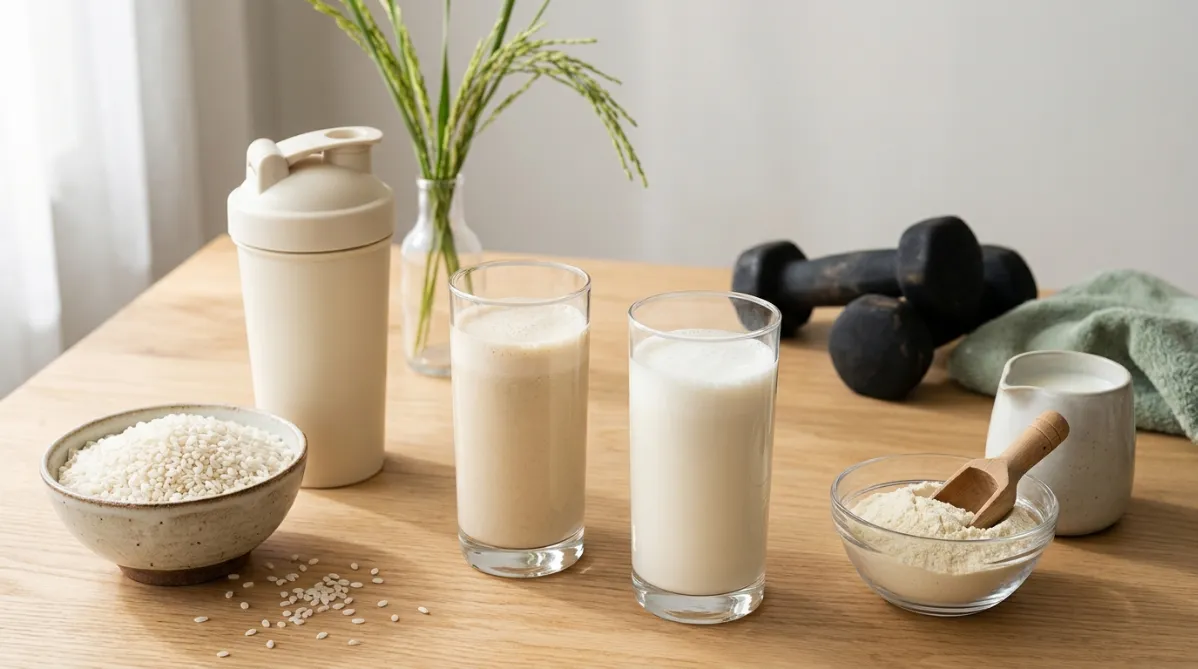
A bright, minimalist editorial still life on a pale oak table, shot from a slightly elevated three-quarter angle in soft natural window light. On the left sits a rustic ceramic bowl of uncooked short-grain white rice, with a few grains scattered across the wood. Beside it is a matte cream-colored shaker bottle. On the right is a small glass bowl of fine ivory whey powder with a wooden scoop resting in it, and a small pitcher of milk behind it. Two identical tall glasses of creamy, lightly frothed shake stand side by side in the center, one a touch warmer beige and the other a soft white. They suggest equal outcomes without any text or labels. A pair of worn black neoprene-coated dumbbells and a folded sage-green gym towel sit slightly out of focus in the background. A sprig of green rice stalks in a slim vase adds a fresh, natural accent.

The palette is warm neutrals: cream, oatmeal, soft sage, and muted terracotta, with gentle shadows and a shallow depth of field. The surface has subtle grain, and fine powder dust is caught in the light. The composition is clean and balanced, with generous negative space on the upper right for a headline overlay. The mood is calm, modern, and health-forward, like a contemporary nutrition magazine or wellness journal. Photorealistic, crisp detail, creamy bokeh, and a gentle matte film-like finish.
nutrition

48 g rijstproteïne evenaarde whey voor spier en kracht in 8 weken

BY DR. GYMBRO ·

Een studie uit 2013 liet zien dat 48 g rijstproteïne‑isolaat bij 24 getrainde mannen evenveel toename in magere massa, spierdikte, kracht en vermogen opleverde als 48 g whey‑isolaat gedurende acht weken. De hoge dosis lijkt het ‘leucine‑gat’ van rijst te dichten. De resultaten gelden vooral voor veganisten en zuivelintolerante sporters; kleinere porties of andere populaties kunnen andere uitkomsten geven.

A wide, landscape editorial photograph shot from slightly above, showing a rustic matte-white ceramic bowl of dried tribulus terrestris, spiky star-shaped seed pods in warm tan and khaki tones, with a few fresh green trailing vines and tiny yellow flowers draped beside it. The bowl sits at the left third of the frame on a pale ash-wood table. Scattered nearby are two identical sets of plain, unlabeled amber supplement capsules, one pile slightly apart from the other, hinting at a placebo comparison. To the right, slightly out of focus, a worn leather rugby ball rests next to a chalk-dusted steel barbell plate and a folded charcoal-gray athletic towel.

Soft diffused natural light streams in from a window on the left, creating gentle long shadows and a calm, clean atmosphere. The background is a muted sage-green and cream gradient with a shallow depth of field, leaving generous negative space on the right side for title overlay. A small, minimal notebook with a pencil and a simple balance scale made of brushed brass sits subtly in the midground, suggesting scientific scrutiny without any laboratory clutter.

The color palette is earthy and refined: sage green, sand, warm amber, charcoal, and off-white. The style is modern lifestyle-magazine photography, crisp textures, subtle film grain, and a high-end wellness journal feel. The composition is balanced, uncluttered, and minimalist, with a quiet, thoughtful mood that conveys skepticism and evidence-based inquiry. No text, no logos, no people, no futuristic or sci-fi elements.
science research

Tribulus terrestris faalde bij elite rugby‑spelers: 5‑weekse proef

BY DR. GYMBRO ·

Tribulus terrestris wordt aangeprezen als een natuurlijke testosteronverhoger die binnen een maand spiermassa zou opbouwen. Daarom testten onderzoekers het bij elite rugby‑league‑spelers in een dubbelblinde proef. Iedereen werd sterker en kreeg meer vetvrije massa, maar de placebogroep presteerde even goed. Het supplement beïnvloedde bovendien de urine‑T/E‑ratio niet. Hieronder lees je wat de studie aantoonde, welke beperkingen er zijn en waar je je geld beter aan kunt uitgeven.

A modern editorial still life photographed from a slightly elevated angle on a pale, matte stone surface in soft natural window light. On the left, a heaping mound of fine white creatine monohydrate powder spills from a matte ceramic scoop, with a few crisp grains scattered across the surface. In the center, a small, minimalist amber glass capsule bottle sits tipped on its side, with a handful of off-white capsules spilling out. The label is blank and clean. On the right, a neat row of three clear glass lab-style vials rests on a slim oak tray. The vials hold different amounts of white powder: the first nearly empty, the second slightly fuller, the third filled almost to the brim. This quietly suggests the difference in dose and result. Beside the tray lies a simple stainless steel measuring spoon and a folded sheet of cream paper with soft, abstract bar-chart lines in muted sage green and terracotta. The lines are hand-drawn and unlabeled.

Behind the objects, slightly out of focus, a lean athletic forearm in a gray linen sleeve rests on the edge of the surface, one hand loosely holding a matte shaker bottle. This hints at a training context without showing a face. A single sprig of eucalyptus in the corner adds a soft organic touch.

The palette is warm neutral: bone white, oatmeal, soft sage, muted terracotta, and touches of amber. Shadows are gentle and long, with a shallow depth of field that gives creamy bokeh in the background. The mood is calm, clean, and trustworthy, like a premium health and science journal's feature spread, with generous negative space at the top and right for headline overlay. The composition is wide, balanced, and uncluttered, with subtle film-like grain and a natural, true-to-life color grade. No text, no logos, no futuristic elements.
nutrition

Labeldosering van Kre‑Alkalyn verhoogt spiercreatine niet, blijkt uit biopsieën

BY DR. GYMBRO ·

Gebufferde creatine, zoals Kre‑Alkalyn, belooft een betere opname, lagere doseringen en minder opgeblazen gevoel. Een dubbelblinde studie van Texas A&M heeft dit getest met echte spierbiopsieën bij 36 getrainde lifters gedurende 28 dagen. Bij de door de fabrikant aanbevolen dosis van 1,5 g per dag steeg de spiercreatine nauwelijks, terwijl creatine monohydraat duidelijk meer toenam. Kracht, lichaamssamenstelling en bijwerkingen lieten geen enkel voordeel van het gebufferde product zien. Hieronder staan de cijfers en hoe je creatine op de juiste manier doseert.

This page is available in