Dr. Gymbro
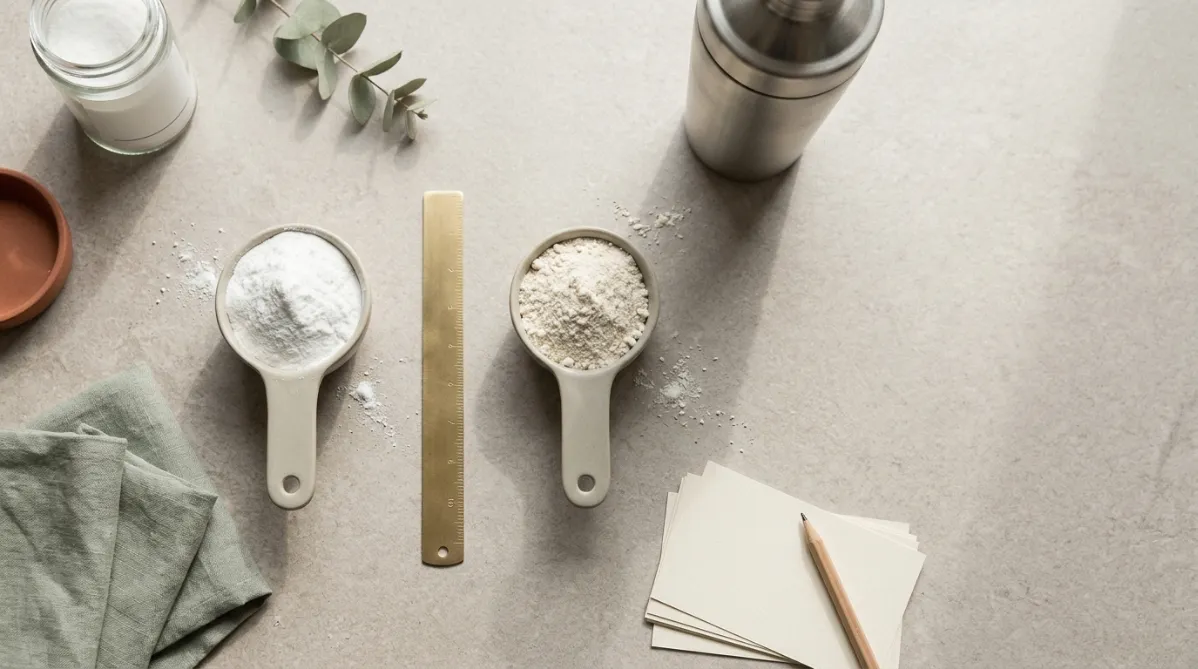
A bright, minimalist flat-lay photograph of two supplement scoops on a pale warm-gray stone surface, shot from directly above in soft natural window light. On the left, a matte ceramic scoop holds fine white creatine monohydrate powder, heaped in a clean mound. On the right, a second scoop of the same shape holds slightly coarser off-white beta-alanine powder, with a small, deliberate gap between the two. Each scoop sits in its own soft shadow, which suggests separation rather than combination. Between them, a thin brushed-brass ruler or a single slim line of fine powder runs across the surface and subtly divides the composition.

Around the scoops, a few restrained props in a muted editorial palette of sage green, cream, terracotta, and soft charcoal: a small glass jar with a minimalist label that has no readable text, a folded linen napkin, a single sprig of eucalyptus, and a stainless-steel shaker bottle softly out of focus in the upper corner. A few loose powder grains are scattered naturally across the stone. A small stack of blank cream index cards with a pencil rests in the lower right, hinting at research and note-taking without any legible writing.

The composition follows a clean rule-of-thirds layout, with generous negative space on the right third for headline overlay. The lighting is gentle and diffused, with long, soft shadows falling to the lower left. The color grading is calm and slightly desaturated, with creamy highlights and a subtle film-like grain. The overall look is a modern wellness and science journal cover, with an airy, trustworthy, contemporary editorial feel, shallow depth of field, and crisp detail on the powders.
Nutrition

Creatine + beta‑alanine: de vermeende stack‑bonus die onderzoekers niet vonden

Dr. Gymbro · · 4 min read

Creatine + beta‑alanine: de vermeende stack‑bonus die onderzoekers niet vonden

Je ziet ze overal: de bakjes, de pre‑workout‑etiketten en de ‘ultieme performance‑stack’. Creatine gecombineerd met beta‑alanine wordt vaak als een bundel verkocht, alsof het ene het andere versterkt. Een recente systematische review en netwerk‑meta‑analyse, gepubliceerd in Journal of the International Society of Sports Nutrition, testte dit idee en concludeerde dat creatine het zware werk deed, terwijl de combinatie geen meetbaar extra effect opleverde.

Wat de onderzoekers daadwerkelijk hebben gedaan

Bai en Xu, van de Jiangxi University of Science and Technology in China, volgden de PRISMA‑richtlijnen. Ze doorzochten PubMed, Scopus en Web of Science tot augustus 2025 en selecteerden gerandomiseerde gecontroleerde trials waarbij creatine, beta‑alanine of beide werden onderzocht, met een minimale interventieduur van twee weken en uitgevoerd bij gezonde volwassen atleten.

Véén‑en‑vijftig RCT’s, allemaal met een PEDro‑score van 6 of hoger, werden opgenomen. Een netwerk‑meta‑analyse maakt het mogelijk om meerdere interventies tegelijk te vergelijken, ook wanneer die nooit direct met elkaar zijn vergeleken. In dit onderzoek werden vier groepen geanalyseerd: creatine alleen, beta‑alanine alleen, de combinatie en placebo. De uitkomsten waren sprint, sprong, behendigheid, boven‑ en onderlichaam‑musculaire uithoudingsvermogen en herhaalde‑sprint‑capaciteit (RSA).

De kop: creatine leverde, de stack niet

Vergeleken met placebo leverde creatine alleen significante verbeteringen op:

  • Sprintprestaties: SMD = ‑0,64 (p = 0,04). Het negatieve teken betekent snellere tijden.
  • Sprongprestaties: SMD = 0,33 (p = 0,002).
  • Herhaalde sprints (RSA): SMD = ‑0,78 (p = 0,01).
  • Bovenlichaam‑uithoudingsvermogen: SMD = 0,43 (p = 0,01).

De P‑scores voor creatine – een rangschikkingsmaat in een netwerk‑meta‑analyse – lagen op 0,90 of hoger, wat aangeeft dat creatine consistent bovenaan de ranglijst staat.

Beta‑alanine leverde niet‑significante of context‑specifieke effecten op. De combinatie vertoonde geen synergistische voordelen. De auteurs concludeerden dat co‑suppletie geen extra voordeel biedt ten opzichte van creatine alleen.

Waarom de logica van "twee wegen" niet hield

Op papier klinkt de combinatie logisch. Creatine ondersteunt de heropbouw van fosfocreatine en de snelle ATP‑productie, terwijl beta‑alanine de spiercarnosine‑concentratie verhoogt, wat helpt bij het bufferen van zuurgraad. Deze verschillende werkingsmechanismen suggereren een additief effect.

De samengevoegde data lieten echter geen synergie zien. De auteurs stellen dat het buffer‑voordeel van beta‑alanine taak‑specifiek is en niet voldoende om het effect van creatine te versterken. Volgens hen is de consistentie van creatine te danken aan een beter fosfocreatine‑herstel en een verhoogde neuromusculaire output, die cruciaal zijn voor sprints, sprongen en herhaalde inspanningen.

Wat niet beweegt

Creatine had geen significante invloed op behendigheid of onderlichaam‑uithoudingsvermogen (beide p > 0,05). Creatine is geen wondermiddel; de data tonen niet dat je in elke prestatietest winst maakt.

Hoe sterk is dit bewijs?

Het onderzoek heeft diverse sterke punten. Het omvat uitsluitend gerandomiseerde trials met een PEDro‑score van 6 of hoger, en de auteurs rapporteren geen opvallende inconsistenties of substantiële publicatie‑bias.

Er zijn echter ook enkele beperkingen:

  • Heterogeniteit: De I²‑waarde varieerde van 0 % tot 73 %, wat betekent dat sommige uitkomsten uit redelijk inconsistente trials komen.
  • Populatie: De review richt zich op gezonde volwassen atleten; de resultaten zijn mogelijk niet generaliseerbaar naar ouderen, klinische populaties of ongetrainde beginners.
  • Geslacht‑ en sportverschillen: Meer onderzoek is nodig naar geslacht‑ en sport‑specifieke responsen; gemiddelde effectgroottes kunnen subgroepverschillen maskeren.
  • Duur en opzet: Er is behoefte aan gestandaardiseerde, langdurige multi‑arm RCT’s om mogelijke interacties te verduidelijken. Het huidige bewijs is dus nog niet definitief over eventuele synergie.
  • Beta‑alanine is niet “nutteloos”. De conclusie is dat het in deze analyse niet‑significant of alleen context‑specifiek was en creatine niet aantoonde te versterken.
  • Abstract‑niveau details: Het abstract vermeldt geen totaal aantal deelnemers of per‑arm aantallen; raadpleeg het volledige artikel voor gedetailleerde conclusies.

Praktische lessen

Dosis en timing: Het abstract noemt geen specifieke doseringen of timing‑protocollen, dus dit onderzoek kan geen richtlijn geven. In de bredere literatuur wordt doorgaans 3‑5 g creatine‑monohydraat per dag aanbevolen, consistent ingenomen. De analyse omvatte studies met een minimale supplementatieduur van twee weken; geef het dus voldoende tijd voordat je een oordeel vormt.

Voor wie het is: Op basis van deze resultaten is creatine geschikt voor atleten waarvan de prestatie afhankelijk is van sprinten, springen, herhaalde hoge‑intensiteit inspanningen of bovenlichaam‑uithoudingsvermogen. Denk aan teamsporters, sprinters en gewichtheffers.

Voor wie de stack kan overslaan: Als je hoofddoel de extra boost van ‘stacken’ is, biedt deze analyse weinig aanleiding om extra te betalen voor de combinatie. Indien je al beta‑alanine gebruikt en er tevreden over bent, bewijst dit onderzoek niet dat het schadelijk is; het laat alleen zien dat het de werking van creatine niet versterkt in de gepoolde data.

Voor wie voorzichtig moet zijn: De review betreft gezonde volwassen atleten. Iedereen met een medische aandoening, vooral nierproblemen, of die zwanger is of medicatie gebruikt, moet een arts raadplegen vóór het starten van supplementen. Dit advies is algemeen en niet een directe bevinding uit dit artikel.

Conclusie

Als je beslist waar je supplementenbudget naartoe gaat, laat deze netwerk‑meta‑analyse van 52 RCT’s zien dat creatine de consistente winnaar is voor hoge‑intensiteit en anaerobe inspanningen. Beta‑alanine kan in specifieke contexten nuttig zijn, maar het versterkt de werking van creatine niet. Langere, beter ontworpen multi‑arm trials kunnen het beeld verfijnen, maar voorlopig heeft de stack zijn premiumprijs nog niet verdiend.
Original study

Read the original research on pubmed.ncbi.nlm.nih.gov →

This article summarizes published research for general information. It is not medical advice.

DG

Written by

Dr. Gymbro

Dr. Gymbro writes for Dr. Gymbro: science-backed fitness, nutrition & performance.

Related Articles

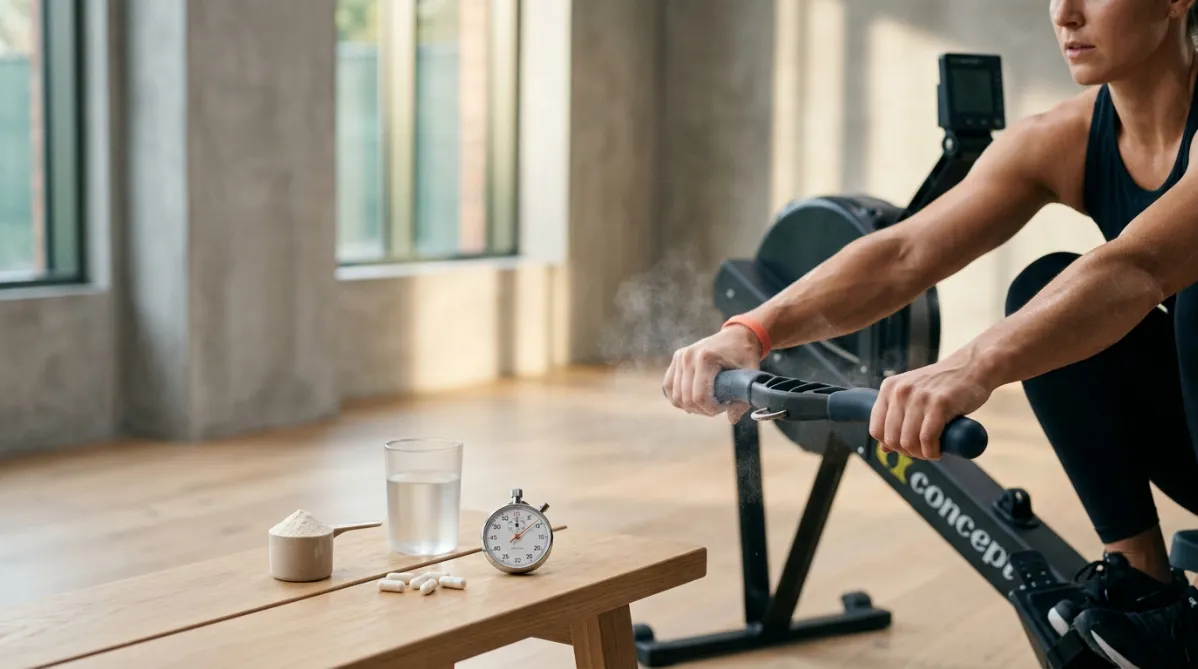
A wide, minimalist editorial scene of an athlete's hands and forearms gripping the handles of a rowing ergometer, shot in soft natural light from a large window in a clean, airy training studio. The athlete is mid-pull, forearm muscles subtly defined, a light sheen of sweat on the skin, chalk dust floating in the air. In the foreground on a pale oak bench sits a small ceramic scoop of fine white powder beside a matte glass of water, with a few loose white capsules arranged neatly in a gentle curve. A minimalist analog stopwatch with a clean white face lies next to them, its hand paused near the two-minute mark.

The color palette is calm and modern: warm off-white, soft sand, muted sage green, and a single accent of coral orange in the stopwatch hand and the rower's wristband. The background is softly blurred concrete and pale wood with long, gentle shadows stretching across the floor. Shallow depth of field keeps the hands, powder, and stopwatch crisp while the rest dissolves into creamy bokeh.

Composition follows the rule of thirds: the rowing handles and hands occupy the right third, the bench still life sits in the lower left, and open negative space in the upper left leaves room for a title overlay. The mood is focused, quiet, and intentional, like a high-end health and science journal feature. Fine film grain, subtle matte finish, editorial photography style, natural color grading, and no text or logos.
nutrition

Werkt beta‑alanine? Een meta‑analyse bevestigt effect voor inspanningen van 60–240 seconden

BY DR. GYMBRO ·

Beta‑alanine wordt al lang aangeprezen als middel tegen de branderigheid van zware inspanning, maar levert het echt iets op? Een meta‑analyse van 15 onderzoeken met 360 deelnemers toonde een reëel, maar bescheiden effect aan: een geschatte mediane winst van 2,85 %. Het voordeel was het duidelijkst voor inspanningen van 60–240 seconden, klein bij inspanningen langer dan vier minuten en afwezig voor sprints onder een minuut. Het artikel bespreekt tevens de gangbare laadstrategie van 3,2–6,4 g per dag gedurende vier of meer weken, hoe doseerspreiding tintelingen kan verminderen en welke sporters er het meeste aan hebben.

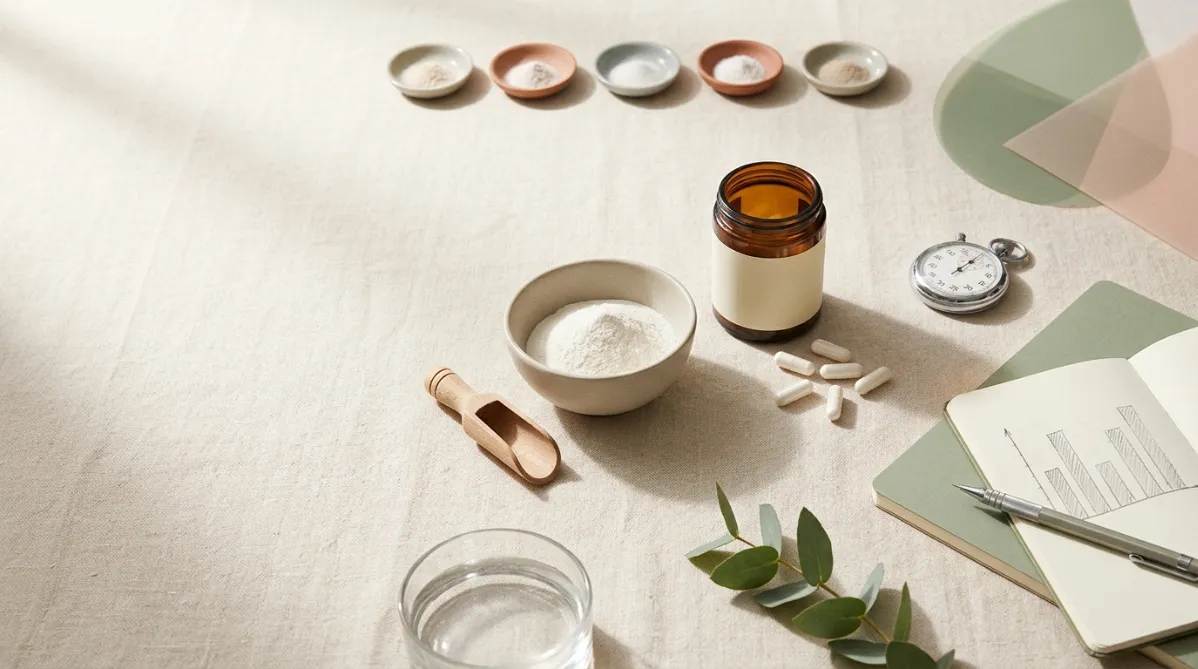
A wide, editorial-style still life photographed from slightly above on a pale oat-colored linen surface, lit by soft morning window light from the left. In the center sits a small matte ceramic bowl holding a mound of fine white powder, with a minimalist wooden scoop resting beside it. Next to the bowl is an open amber glass supplement jar with a plain cream label, and a few white capsules spill across the linen in a loose arc.

To the right, a neatly arranged cluster of analog "study" objects suggests careful measurement: a vintage stopwatch with a clean white face, a slim notebook with a sage-green cover open to a hand-drawn bar chart (blurred, no legible text), and a mechanical pencil lying across the page. A small row of six identical ceramic dishes, each holding a pinch of powder, is lined up along the top edge of the frame to hint at the six-week trial. One dish is slightly out of alignment, a subtle visual cue for ambiguity.

A shallow glass of water and a single sprig of green eucalyptus add a calm, organic note in the foreground. Soft, long shadows fall across the textured linen, and the palette stays restrained: warm cream, soft sage, muted terracotta, pale gray, and touches of amber from the glass jar. A few translucent paper cutouts in two tones (sage and blush) overlap in the upper right corner as a modern graphic accent, evoking overlapping data points without showing any numbers.

Depth of field is shallow, with the bowl and stopwatch in crisp focus and the edges gently softened. The composition leaves generous negative space on the left third for title text overlay. The overall mood is thoughtful, balanced, and quietly skeptical, in the style of a contemporary wellness and science magazine: clean, tactile, minimal, with a subtle film-like grain and natural color grading. No people, no futuristic or sci-fi elements, no readable text or logos.
nutrition

GAA‑breinbooster? De resultaten van de 6‑weekse proef zijn gemengd

BY DR. GYMBRO ·

GAA, de creatine‑voorloper die als breinbooster wordt aangeprezen, heeft nu zijn eerste serieuze onderzoek bij mensen ondergaan. In een dubbelblind, placebo‑gecontroleerd onderzoek van zes weken met 58 gezonde volwassenen leverde GAA iets snellere reactietijden op en een bont palet aan stemmings‑ en stresssignalen. De meeste cognitieve tests toonden echter geen effect en veel opvallende bevindingen waren slechts trends. Veiligheidsmarkers waren ongestoord, maar de studie was klein, verkennend en miste een zuivere creatine‑controlergroep. Hieronder lees je wat de resultaten echt betekenen, voor wie ze interessant kunnen zijn en waarom het oordeel gemengd is.

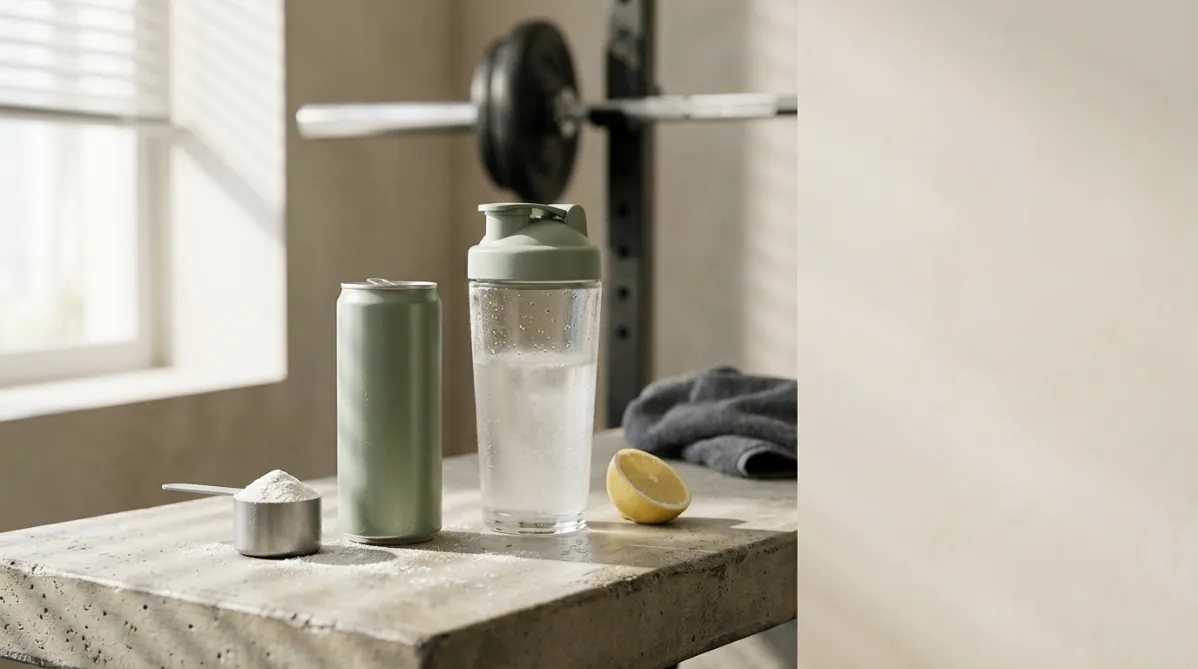
A sleek aluminum energy drink can and a matte scoop of white pre-workout powder sit side by side on a pale concrete gym bench, lit by soft morning window light. The can is slim and minimalist, with a muted sage green label and no legible text. Beside it is a clear glass shaker half full of cloudy, lightly frothy liquid with condensation beading on its surface. A few fine grains of powder are scattered across the bench, catching the light. Behind them, slightly out of focus, a stainless steel barbell rests on a rack, and a folded charcoal gym towel sits at the edge of the frame.

The color palette is warm neutral: oatmeal, soft gray, and sage, with a single accent of pale citrus yellow from a halved lemon wedge placed near the glass. A thin, elegant shadow from the window blinds falls diagonally across the scene, giving it an editorial, magazine-style rhythm. The composition leaves generous negative space on the right third of the frame, a smooth blurred wall in warm off-white, suitable for headline text overlay.

The shot is a low-angle, shallow depth-of-field product-style photograph, as if taken with an 85mm lens at f/2. The foreground objects are tack sharp and the background melts into creamy blur. The mood is calm, clean, and modern, like a wellness or science journal feature. Subtle film grain and gentle contrast add a tactile, contemporary lifestyle feel. There are no people, no logos, and no futuristic or sci-fi elements, just a quiet, considered still life that suggests the choice between a canned drink and a scooped supplement.
nutrition

Je energiedrank werkt misschien als pre‑workout — met één kanttekening

BY DR. GYMBRO ·

Cafeïne en taurine staan vaak naast elkaar in energiedranken en pre‑workouts, maar levert dat echt een prestatie‑boost op? Een nieuwe meta‑analyse van 11 gerandomiseerde studies (234 deelnemers) toonde een bescheiden verbetering in piekvermogen en tijd tot uitputting, plus een lager ervaren inspanningsniveau. De hartslag bleef onveranderd en het resultaat voor reactietijd was te inconsistent om te vertrouwen. Het grote probleem: de onderzoeken waren klein en kunnen niet aantonen of taurine iets extra’s biedt bovenop cafeïne.

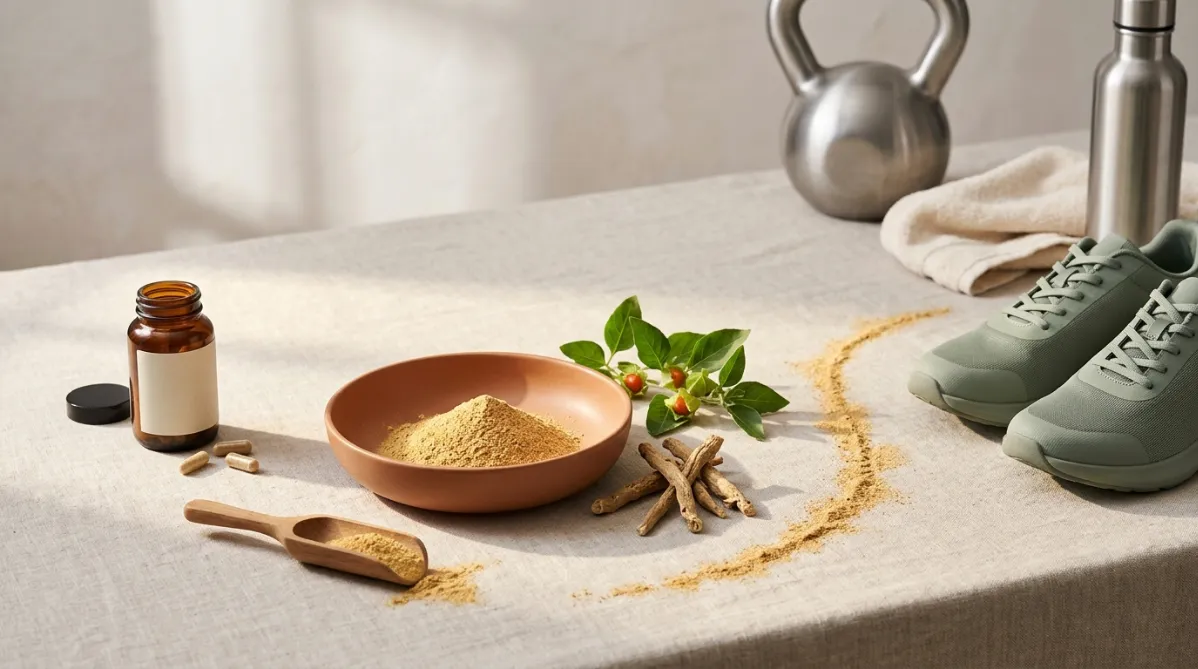
A wide, editorial-style still life shot from a slightly elevated angle on a pale oatmeal-colored linen surface in soft, diffused morning light. At the center, a shallow matte ceramic bowl in warm terracotta holds a small mound of fine, golden-tan ashwagandha root powder. Beside it lie a few gnarled, dried ashwagandha roots and a sprig of green leaves with tiny orange-red berries in their papery husks. To the left, a minimalist amber glass supplement bottle sits with a few capsules spilled beside it, label blank and clean. A wooden scoop rests on the surface, dusted with powder.

On the right side of the frame, a pair of sleek, muted sage-green running shoes sits slightly off-center. A folded cream towel and a stainless steel water bottle sit just behind them, with a single brushed-steel kettlebell partly out of focus in the background to hint at strength training without dominating the scene. The running shoes and the botanical elements share equal visual weight, suggesting the endurance theme.

A thin, curved line of scattered powder sweeps across the linen from the bowl toward the shoes, like a gentle path or track. Soft shadows fall to the left, and a warm sunbeam crosses the surface and picks out the texture of the powder and the roots.

The palette is restrained and modern: warm terracotta, sage green, cream, soft gold, and touches of charcoal. The background is a blurred pale plaster wall with a hint of a window shadow. Shallow depth of field, crisp focus on the bowl and roots, and generous negative space in the upper left for a headline. Contemporary wellness magazine aesthetic, calm, natural, tactile, high-end lifestyle photography, no text, no people, no futuristic elements.
science research

Ashwagandha‑verrassing: verbetert uithoudingsvermogen meer dan kracht

BY DR. GYMBRO ·

Ashwagandha wordt vaak aangeprezen als een supplement voor meer kracht en spiergroei, maar een nieuwe meta‑analyse wijst op een ander effect: een verbetering van het aerobe uithoudingsvermogen. De studie, waarin 13 gerandomiseerde onderzoeken met in totaal 599 deelnemers werden samengevoegd, vond een gemiddeld effect van g = 0,54 voor uithoudingsvermogen. Het optimale doseringsbereik lijkt rond de 500‑600 mg per dag te liggen, maar er zijn belangrijke kanttekeningen, zoals een breed voorspellingsinterval dat ook nul omvat. Deze samenvatting geeft een overzicht van wat de data ondersteunen, voor wie het interessant kan zijn, en voor wie het beter is om te wachten.

This page is available in