Dr. Gymbro
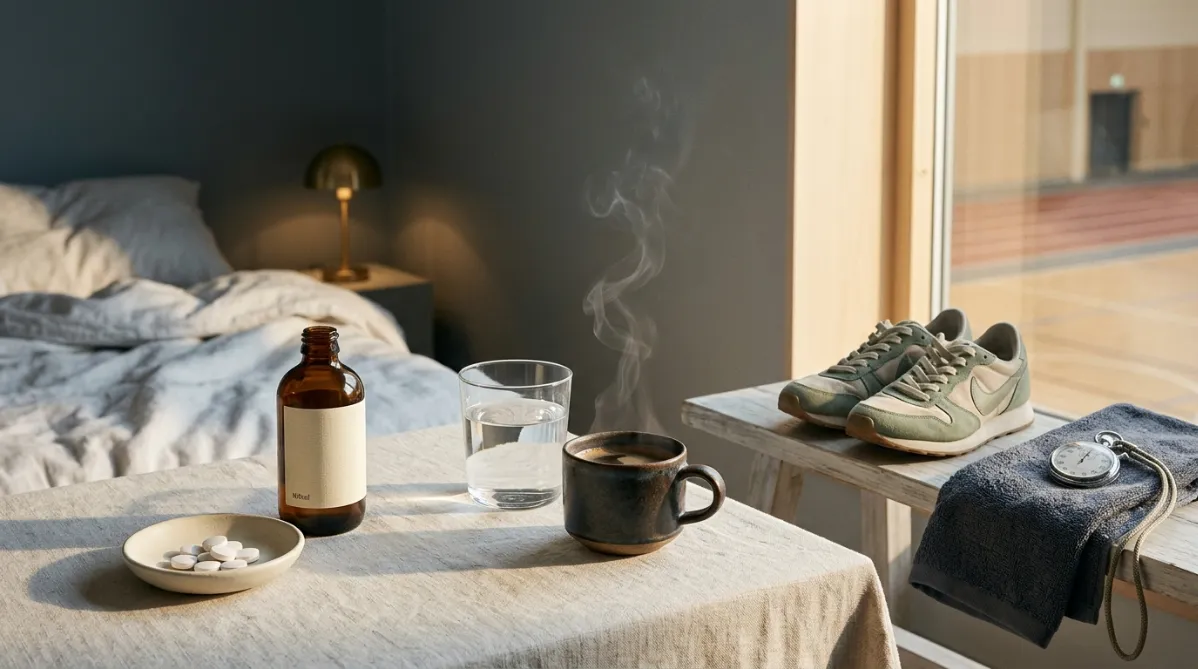
A quiet, sunlit editorial still life on a pale oatmeal linen surface, shot from a slightly elevated three-quarter angle with soft morning window light raking in from the left. On the left side, a small matte ceramic dish holds a few white round tablets, next to a minimalist amber glass bottle with a blank cream label. In the center, a slim glass of water sits beside a handmade stoneware espresso cup filled with dark coffee, with a thin ribbon of steam curling upward. On the right, a pair of worn but clean sage-green running shoes rests on a pale wooden bench, with a folded charcoal athletic towel and a stainless steel stopwatch beside them. The background is softly blurred: a calm bedroom-to-morning transition, with the left third of the frame in cool, dusky blue-gray tones suggesting night, with rumpled white bedding and a small bedside lamp glowing dimly. The tones then blend gradually across the frame into warm golden peach morning light on the right, where a blurred indoor court or track line is faintly visible through a tall window. The color palette is muted and modern: warm cream, soft sage, dusty blue, terracotta accents, and hints of amber. Delicate shadows, shallow depth of field, fine natural film grain, and generous negative space across the top of the frame for headline text. The mood is calm, precise, and thoughtful, in the style of a contemporary wellness and science journal photograph, clean and minimalist with tactile textures of linen, ceramic, glass, and wood.
Nutrition

Melatonina najpierw, kofeina potem: jedynie połączenie obniża markery uszkodzeń mięśni

Dr. Gymbro · · 3 min read

Kofeina sprawiła, że wytrenowani mężczyźni przebiegli dalej w teście szutrowym – nie jest to zaskoczeniem. Najciekawszy jednak był wniosek z nowego badania crossover: jedynie stos melatoniny wieczorem i kofeiny rano zmniejszył poziom markerów uszkodzeń mięśni oraz zapalenia. Kofeina sama w sobie ani melatonina nie wywołały takiego efektu, a znany z działania uspokajającego wpływ melatoniny na sen nie został wykryty.

Schemat badania w jednej linii

Protokół był prosty: 6 mg melatoniny przed snem, a następnie 3 mg/kg kofeiny rano, po czym po godzinie od przyjęcia kofeiny uczestnicy przystąpili do 5‑metrowego testu szutrowego. Badanie, opublikowane w Nutrients w 2026 roku przez zespół z Tunezji, Hiszpanii i Norwegii, miało sprawdzić interakcję, którą sportowcy mogą już nieświadomie wywoływać, łącząc suplementację przed snem i przed treningiem.

Jak przeprowadzono eksperyment

Czternastu wytrenowanych mężczyzn (średni wiek 22,4 ± 2,9 lat) przeszło cztery warunki w randomizowanym, podwójnie ślepym, placebo‑kontrolowanym projekcie crossover:

  • PLA + PLA: placebo w nocy i rano
  • PLA + CAF: placebo w nocy, 3 mg/kg kofeiny rano
  • MEL + PLA: 6 mg melatoniny w nocy, placebo rano
  • MEL + CAF: melatonina w nocy, kofeina rano

Przed i po wysiłku pobrano krew w celu oznaczenia kinazy kreatynowej (CK), dehydrogenazy mleczanowej (LDH), aminotransferazy asparaginianowej (AST) i alaninowej (ALT) – czyli markerów uszkodzeń mięśni – oraz białka C‑reaktywnego (CRP) jako wskaźnika zapalenia. Rejestrowano także maksymalne tętno oraz odczuwalny wysiłek (RPE). Sen oceniano wyłącznie w nocy po przyjęciu melatoniny lub placebo.

Wynik 1: Kofeina zwiększyła dystans, zarówno z melatoniną, jak i bez niej

Całkowity przebyty dystans w teście szutrowym wzrósł zarówno w warunkach MEL + CAF, jak i PLA + CAF w porównaniu z podwójnym placebo. Melatonina sama nie podniosła dystansu. W praktyce oznacza to typowy efekt kofeiny. Dawka 3 mg/kg jest umiarkowana i szeroko badana, a wynik wpisuje się w długą historię dowodów na pozytywny wpływ kofeiny na powtarzalne, intensywne wysiłki.

Wynik 2: Tylko połączenie obniżyło markery uszkodzeń i zapalenia

To najważniejsze odkrycie. MEL + CAF spowodowało istotne (p < 0,05) zmniejszenie poziomów wszystkich badanych markerów w porównaniu z pozostałymi trzema warunkami (PLA + PLA, MEL + PLA, PLA + CAF). Żaden z podków nie wywołał takiego spadku samodzielnie. Wzorzec sugeruje interakcję, choć badanie nie wyjaśnia mechanizmu. Melatonina posiada właściwości antyoksydacyjne i przeciwzapalne, a autorzy postrzegają oba suplementy jako uzupełniające się – jeden wspomaga wydajność, drugi regenerację. To hipoteza, a nie udowodniony fakt.

Wynik 3: Brak zmian w parametrach snu

Melatonina jest powszechnie sprzedawana jako środek nasypujący, więc brak efektu może być zaskakujący. Nie zaobserwowano różnic w parametrach snu między warunkami (p > 0,05). Młodzi, zdrowi i dobrze wytrenowani mężczyźni mają niewielki margines do poprawy jakości snu. Dodatkowo sen mierzono tylko w jedną noc po podaniu suplementu, więc ewentualne długoterminowe korzyści nie zostały uchwycone.

Praktyczny protokół (oparty na warunkach badania)

  • Wieczór: 6 mg melatoniny przyjmowane na około 30 min przed pójściem spać
  • Poranek: kofeina w dawce 3 mg/kg masy ciała (np. sportowiec ważący 70 kg przyjmie ok. 210 mg)
  • Czas testu: wydolnościowy test szutrowy rozpoczął się godzinę po przyjęciu kofeiny
  • Kto może skorzystać: sportowcy trenujący lub rywalizujący rano oraz zawodnicy sportów zespołowych, w których sesje obejmują powtarzalne sprinty (modelowy test 5‑m szutrowego biegu)

To jedyne warunki, które zostały przetestowane. Inne dawki, terminy przyjmowania czy grupy sportowców nie zostały jeszcze zweryfikowane. Tolerancja na kofeinę jest indywidualna, a osoby wrażliwe mogą nie odczuwać podobnych korzyści. Zarówno melatonina, jak i kofeina są suplementami – przed ich stosowaniem osoby z chorobami przewlekłymi lub przyjmujące leki powinny skonsultować się z lekarzem.

Zastrzeżenia, których nie należy pomijać

  • Mała próba. Czternastu wytrenowanych młodych mężczyzn to niewielka grupa; wyniki mogą nie mieć zastosowania do kobiet, osób starszych czy sportowców elitarnych.
  • Jednorazowy test. Wydajność mierzono jednym testem (5‑m szutrowy bieg). Autorzy podkreślają, że obserwowana poprawa dotyczy wybranych wysokointensywnych wysiłków.
  • Markery krwi nie są równoważne wydajności. Obniżenie CK czy CRP po treningu jest interesujące, ale nie dowodzi szybszej regeneracji, mniejszej liczby kontuzji ani lepszej adaptacji treningowej. Badanie nie obserwowało sportowców w kolejnych dniach czy tygodniach.
  • Brak dodatkowego zysku wydajności z melatoniny. W kontekście przebiegu dystansu połączenie nie przewyższyło wyraźnie samej kofeiny.
  • Mechanizm nieznany. Badanie wykazuje jedynie skojarzenie w jednej sesji, nie wyjaśniając przyczyny.

Podsumowanie

Jeśli już stosujesz kofeinę przed porannymi sesjami treningowymi, to badanie nie daje powodów, by oczekiwać dodatkowego wzrostu dystansu dzięki melatoninie. Sugeruje jednak, że para może wpływać na markery uszkodzeń mięśni i stany zapalne w sposób, którego żadna ze substancji nie osiąga samodzielnie. Warto więc przeprowadzić dalsze badania na większych próbach, w dłuższym okresie i z oceną praktycznych efektów regeneracji. Na razie traktuj tę kombinację jako ciekawą sugestię, a nie potwierdzony „hack” regeneracyjny.
Original study

Read the original research on pubmed.ncbi.nlm.nih.gov →

This article summarizes published research for general information. It is not medical advice.

DG

Written by

Dr. Gymbro

Dr. Gymbro writes for Dr. Gymbro: science-backed fitness, nutrition & performance.

Related Articles

A wide, editorial-style photograph of a competition swimming pool lane seen from just above the water line at the starting end, in soft morning light. In the foreground, on the pool deck, a white ceramic espresso cup sits on the edge of a blue-gray starting block, a thin curl of steam rising from it. The cup is in crisp focus, with a few droplets of water on the textured non-slip deck around it. Behind it, the pool stretches into the distance as a series of calm lanes divided by red and white lane ropes. The turquoise water glints with gentle ripples and long, shimmering reflections. At the far end, a lone swimmer in a dark cap and goggles is mid-stroke, caught in a small burst of white splash, and slightly out of focus because of the shallow depth of field.

Large windows along the side wall let in pale golden sunlight, which throws soft diagonal light across the water and the deck. The palette is clean and modern: aqua, deep teal, warm cream and a small accent of coffee brown. The cup's warm tones stand out against the cool blues. The composition follows the rule of thirds, with the cup in the lower left third and open negative space of water and light on the right, leaving room for headline text. The look is minimal, airy and contemporary, like a high-end sports and science magazine, with subtle film grain, natural color grading, and a slightly desaturated, calm mood. Faint stopwatch-like details appear only as a thin black timing pad edge on the starting block, with no text or numbers visible. The overall feel is quiet anticipation just before a race, precise and fresh, with a sense of small margins and measured performance.
nutrition

Kofeina przyspiesza pływaków, ale mniej niż się wydaje

BY DR. GYMBRO ·

Pływacy od lat sięgają po kawę przed zawodami, ale czy naprawdę przyspiesza ich to w wodzie? Metaanaliza 13 badań typu cross‑over szacuje zysk na około 1,7 % – przewagę, która w pływaniu rozstrzyga setne części sekundy. Największy efekt pojawia się przy dawce ≥ 6 mg/kg, natomiast niższe dawki nie wykazują wyraźnego działania. Kofeina podnosi także poziom mleczanu po wyścigu, a wyniki różnią się znacznie między badaniami. Oto, co mówią dowody i co wciąż pozostaje niejasne.

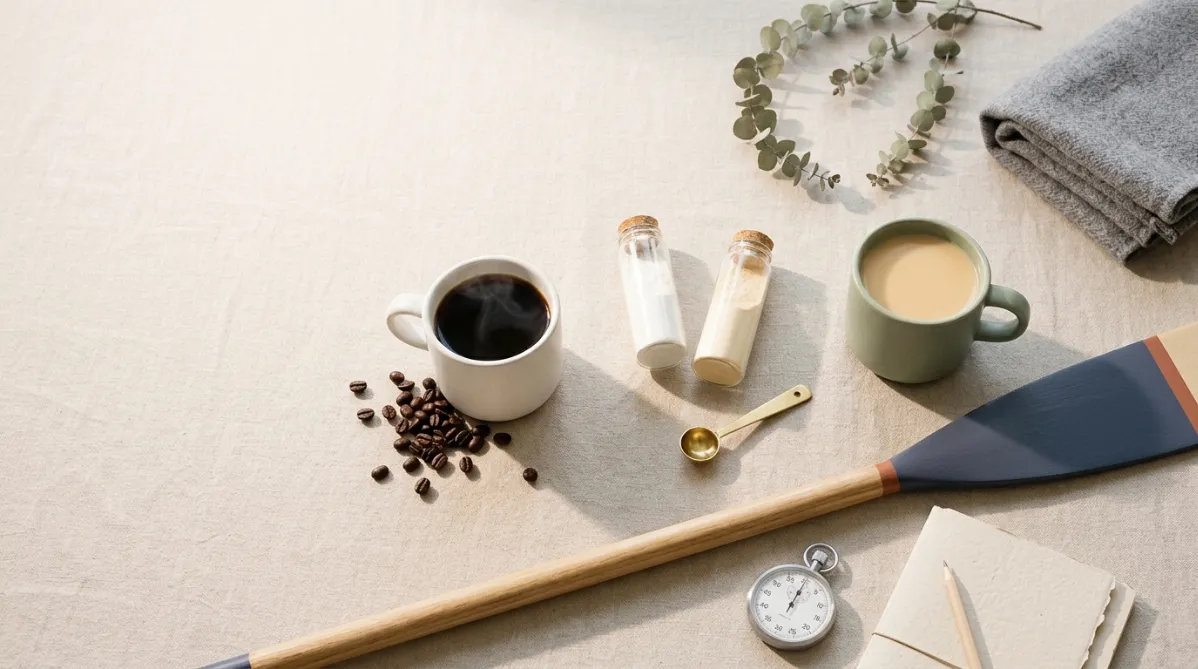
A wide, editorial-style flat lay photographed from above on a pale oat-colored linen surface in soft morning window light. On the left, a small matte white ceramic cup of black coffee with a delicate swirl of steam, beside a few scattered roasted coffee beans. On the right, a second matte sage-green ceramic cup holding a pale, creamy golden tea-like drink, mirroring the first. Between them, two small glass vials with cork stoppers sit side by side: one holding fine white powder, the other holding slightly warmer cream-colored powder, with a tiny brass measuring spoon resting nearby. In the lower foreground, a slim wooden rowing oar lies diagonally across the frame, its blade edge softly entering from the right, painted a muted navy with a thin terracotta stripe. A minimalist analog stopwatch with a brushed-steel case rests near the oar, and a folded cream notebook with a thin pencil suggests data-taking. In the upper corner, a crescent-shaped dried eucalyptus sprig and a small folded gray wool throw hint at sleep and calm without being literal. The palette is warm and restrained: oat, cream, sage, soft navy, terracotta, and espresso brown. Shadows are long and gentle, with shallow depth of field and subtle film grain, giving a refined, modern wellness-magazine feel. Generous negative space on the left third of the composition leaves room for a headline overlay. Clean, calm, tactile, and contemporary, with no text, logos, or futuristic elements.
science research

Paraksantyna kontra kofeina: zwycięska kombinacja i ratunek dla snu

BY DR. GYMBRO ·

Paraksantyna, główny metabolit kofeiny, zmierzyła się z kofeiną w badaniu 14 wioślarzy. Połączenie po 200 mg każdego związku przewyższyło placebo w teście na dystansie 2000 m, choć efekt był niewielki (d = 0,30). Samo spożycie któregokolwiek z tych składników nie przyniosło wyraźnej poprawy wydajności, ale paraksantyna okazała się łagodniejsza dla jakości snu. Oto wyniki, ich ograniczenia i grupa, która może z nich najwięcej skorzystać.

A wide, softly lit editorial flat-lay on a pale warm-gray stone countertop, shot from slightly above. On the left, a small rustic ceramic bowl in matte cream holds a handful of dried guarana seeds, dark glossy brown with pale cream arils, a few spilling onto the surface. Beside it sits a halved fresh guarana fruit in vivid red-orange, split open to show the white flesh and black seed inside, looking like a tiny eye. On the right, two open clear capsules rest side by side. One is filled with fine white caffeine powder, the other with a fine earthy brown guarana powder, and a little of each dusts the stone in delicate, deliberate lines. Between them, a minimalist matte-black espresso cup with a thin ribbon of steam rises on the right edge of the frame. A brushed-steel stopwatch and a slim dark-green linen notebook with a pencil sit in the upper background, slightly out of focus, to hint at performance testing without clutter. A few green leaves of a guarana vine curve in from the top-left corner, catching soft light.

The lighting is natural window light from the left, with gentle long shadows and a subtle warm highlight on the seeds. The palette is muted and modern: warm creams, terracotta red, deep espresso brown, sage green, and charcoal accents. The background is clean with generous negative space on the upper right for headline text. Shallow depth of field, crisp focus on the seeds and capsules, fine grain, and a calm premium magazine look like a contemporary wellness and sports-science journal. No people, no text, no logos, no futuristic elements.
science research

Guarana vs kofeina: przy tej samej dawce tylko guarana zwiększyła maksymalną moc

BY DR. GYMBRO ·

Ta sama dawka kofeiny, inna kapsułka – i jedynie guarana wywołała statystycznie istotny wzrost maksymalnej mocy. W randomizowanym badaniu typu crossover z 18 aktywnymi mężczyznami guarana zwiększyła maksymalny wydatek mocy o 4 % w porównaniu z placebo, podczas gdy kofeina bezwodna nie osiągnęła istotności. Jednak guarana nie przewyższyła kofeiny w bezpośrednim porównaniu, a różnice między nimi były jedynie opisowe. Poniżej znajdziesz, co mówią liczby, jakie są ograniczenia badania i jak dawkować guaranę w oparciu o zawartość kofeiny.

A cyclist's legs mid-pedal on a stationary road bike, shot in a bright, airy, minimalist studio with a soft warm-grey backdrop. In the foreground on a pale oak table sits a small ceramic dish holding four deep coral-red softgel capsules, with a few translucent droplets of red-orange oil glistening beside them. Beside the dish is a sprig of dried red microalgae-toned seaweed and a halved wild salmon fillet, its coral flesh echoing the capsule color. Behind the table, slightly out of focus, a cyclist in a fitted charcoal jersey and matte black shorts rides a bike on an indoor trainer. Only the torso and legs are visible, with no face. A white towel hangs over the handlebars and a clear water bottle catches the light.

Soft diffused morning light streams from a large window on the left, creating long gentle shadows and a subtle golden-hour glow on the skin and the glossy capsules. The palette is restrained and editorial: warm cream, sand, soft grey and charcoal, with vivid coral-red as the single accent color. A minimalist analog stopwatch with a clean white face sits on the table, its hands near the 85-minute mark. A thin, elegant line-graph shape is subtly suggested by a curved strip of red ribbon lying on the table, rising from left to right to hint at the performance gain without any text.

The composition follows the rule of thirds, with the capsules and stopwatch in the lower left and the cyclist's motion-blurred legs sweeping across the right. Shallow depth of field, crisp macro detail on the capsules, and a fine film-like grain. The overall feel is a modern health and science magazine cover: clean, calm, sophisticated, and natural, with negative space in the upper area for a headline. There are no futuristic elements, no glowing effects, no laboratory equipment, and no text or logos. Landscape 16:9 format.
nutrition

Astaksantyna przyjmowana przez 4 dni wydłużyła czas wyczerpania podczas jazdy na rowerze z 72 do 85 minut w małym badaniu

BY DR. GYMBRO ·

Cztery dni suplementacji astaksantyną (28 mg / dzień) przedłużyły czas do wyczerpania przy intensywnej jeździe rowerem z ok. 72 do 85 minut w małym, randomizowanym badaniu – wzrost o około 18 %. Ten sam protokół zmniejszył wzrost markerów uszkodzenia mięśni (CK, LDH) oraz peroksydacji lipidów (MDA) po wysiłku równym 75 % VO₂max. Poziomy markerów zapalnych i zużycie paliw nie uległy zmianie, więc mechanizm pozostaje niejasny. Dawkowanie jest wyższe niż w większości dostępnych suplementów, a badanie obejmowało jedynie dziesięciu młodych mężczyzn. Oto, co mówią liczby i gdzie kończy się dowód.

This page is available in