
Dr. Gymbro
←

#meta-analysis

3 articles
A wide, editorial flat-lay photograph shot from directly above on a pale warm-gray stone countertop, lit by soft natural morning window light with gentle diagonal shadows. On the left, a neatly arranged cluster of whole-food protein sources: two seared chicken breast slices with a golden crust, a small ceramic bowl of creamy Greek yogurt topped with blueberries, three halved soft-boiled eggs with jammy orange yolks, a handful of raw almonds, and a small pile of dried lentils scattered on a linen napkin. At the center, a matte white shaker bottle and a wooden scoop resting in a pile of fine vanilla-colored protein powder, a few grains dusted artfully across the surface. On the right, a minimalist kitchen scale in matte black displaying a portion of food, next to an open notebook with a hand-drawn curve that rises steeply and then flattens into a plateau, drawn in a deep terracotta ink pen, with a small dot marking the bend. A brass pen lies beside the notebook. A single dumbbell with a brushed steel finish sits partially in frame at the upper right corner, grounding the fitness theme without feeling gym-like. Color palette: warm cream, sage green, terracotta, soft charcoal, and butter yellow accents, with generous negative space along the top edge for title overlay. Shallow depth of field, crisp textures, subtle film grain, modern lifestyle magazine aesthetic, clean and calm composition, 16:9 landscape.
general

Ile białka naprawdę maksymalizuje przyrost mięśni? Plateau 1,6 g/kg wyjaśnione

BY DR. GYMBRO ·

Myślisz, że aby przybrać na masie, potrzebujesz ponad 2 gramy białka na funt? Meta‑analiza 49 badań i 1 863 dorosłych wykazała, że korzyści z budowania mięśni wyraźnie spadają już przy ok. 1,6 g/kg dziennie. Górny kres przedziału ufności wynosił około 2,2 g/kg, co daje podnoszącym ciężary praktyczny zakres zamiast arbitralnej „mega‑dawki”. Najwięcej korzyści z suplementacji odnotowali doświadczeni kulturzyści, a efekt malał wraz z wiekiem. Oto co te liczby znaczą dla Twojego talerza, shakera i portfela.
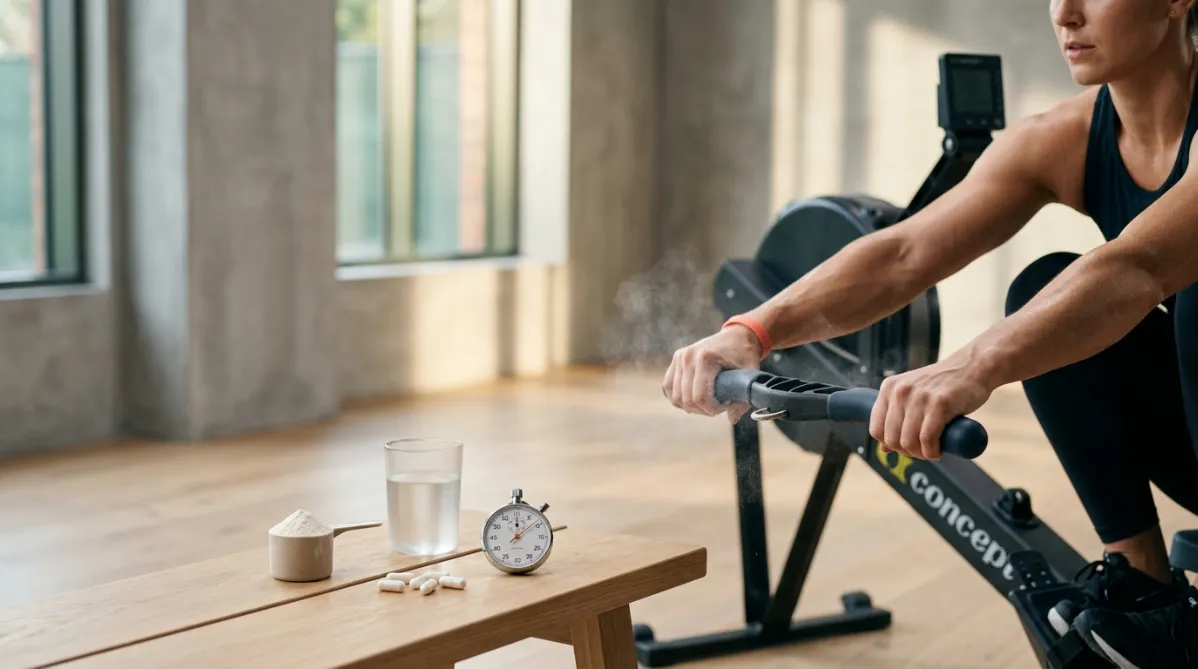
A wide, minimalist editorial scene of an athlete's hands and forearms gripping the handles of a rowing ergometer, shot in soft natural light from a large window in a clean, airy training studio. The athlete is mid-pull, forearm muscles subtly defined, a light sheen of sweat on the skin, chalk dust floating in the air. In the foreground on a pale oak bench sits a small ceramic scoop of fine white powder beside a matte glass of water, with a few loose white capsules arranged neatly in a gentle curve. A minimalist analog stopwatch with a clean white face lies next to them, its hand paused near the two-minute mark.

The color palette is calm and modern: warm off-white, soft sand, muted sage green, and a single accent of coral orange in the stopwatch hand and the rower's wristband. The background is softly blurred concrete and pale wood with long, gentle shadows stretching across the floor. Shallow depth of field keeps the hands, powder, and stopwatch crisp while the rest dissolves into creamy bokeh.

Composition follows the rule of thirds: the rowing handles and hands occupy the right third, the bench still life sits in the lower left, and open negative space in the upper left leaves room for a title overlay. The mood is focused, quiet, and intentional, like a high-end health and science journal feature. Fine film grain, subtle matte finish, editorial photography style, natural color grading, and no text or logos.
general

Czy beta‑alanina działa? Metaanaliza potwierdza korzyści przy wysiłkach trwających od 60 do 240 sekund

BY DR. GYMBRO ·

Beta‑alanina od dawna jest reklamowana jako środek łagodzący pieczenie mięśni podczas intensywnego treningu, ale czy naprawdę działa? Metaanaliza obejmująca 15 badań i 360 uczestników wykazała rzeczywistą, choć umiarkowaną korzyść – średni przyrost wyniósł 2,85 %. Efekt był najbardziej widoczny przy wysiłkach trwających 60–240 sekund, mniejszy po czterech minutach i nie wystąpił przy sprintach krótszych niż minuta. Artykuł opisuje także powszechnie stosowaną strategię ładowania 3,2–6,4 g dziennie przez co najmniej cztery tygodnie, sposób podziału dawek zmniejszający mrowienie oraz grupy sportowców, które mogą zyskać najwięcej.
A sleek, modern gym interior with warm natural lighting streaming through large windows, featuring a minimalist weight training area with polished concrete floors and exposed brick walls. In the foreground, a single chrome barbell rests on a clean wooden bench, with perfectly organized dumbbells arranged on a contemporary rack in soft focus behind it. The scene captures a peaceful, contemplative moment with subtle shadows creating depth and visual interest. The color palette consists of warm grays, natural wood tones, and soft whites, with subtle amber lighting that creates an inviting, professional atmosphere perfect for serious training.
general

Czy wolne powtórzenia budują więcej mięśni? Rewolucyjna meta‑analiza odsłania prawdę o tempie treningu

BY DR. GYMBRO ·

Rewolucyjna meta‑analiza wreszcie rozwiewa wątpliwości dotyczące tempa powtórzeń i przyrostu masy mięśniowej. Badacze przeanalizowali dziesiątki badań z udziałem zdrowych dorosłych mężczyzn, aby sprawdzić, czy wolniejsze serie rzeczywiście przynoszą lepsze efekty niż szybkie. Wyniki wykazały, że umiarkowane tempo (2‑4 sekundy na powtórzenie) połączone z większą objętością treningową daje najlepsze rezultaty, podważając powszechnie przyjęte przekonania w świecie fitnessu.

This page is available in