Dr. Gymbro
A wide landscape editorial photograph of a sunlit minimalist gym corner with warm, natural morning light streaming through tall windows. In the foreground on a light oak wooden bench sits a small matte ceramic dish holding a few translucent amber softgel capsules, next to a brushed steel shaker bottle and a folded charcoal gray towel. The capsules catch the light with a soft golden glow, shallow depth of field blurring them slightly against the background.

In the softly blurred midground, a barbell loaded with black plates rests on a squat rack, with chalk dust lightly floating in the sunbeams. The walls are textured off-white plaster, and the floor is pale polished concrete. A potted green plant adds a touch of organic color near the window.

Laid casually beside the dish is an open notebook with a clean, hand-drawn bar chart in black ink: two bars of slightly different heights, one marked with a small question mark, suggesting uncertainty and interpretation. A slim pencil rests across the page. No readable text beyond simple marks.

The color palette is muted and modern: cream, warm beige, soft amber, charcoal, and sage green accents. The composition follows the rule of thirds, with the capsules and notebook in the lower left third and open negative space toward the upper right, ideal for headline overlay. Soft shadows, subtle film grain, and a calm, contemplative mood reminiscent of a contemporary health and science magazine. Shot as if with a 50mm lens at f/2.0, high-end lifestyle editorial aesthetic, clean and trendy, with no futuristic or sci-fi elements.
Science & Research

750 mg de PA adicionaram 2,6 % de massa magra em 8 semanas — mas há um detalhe

Dr. Gymbro · · 4 min read

O número que chamou a atenção de todos

Em um estudo piloto de 8 semanas, homens treinados que tomaram ácido fosfatídico (PA) ganharam 2,6 % de massa magra. O grupo placebo ganhou 0,1 %. Essa diferença é a razão pela qual o PA continua aparecendo em combinações de pré‑treino e em fóruns de ganho muscular.

Mas as próprias estatísticas do estudo não sustentam o número de manchete da forma que o marketing de suplementos gostaria. Veja o que a pesquisa realmente encontrou – e o que não encontrou.

O que é ácido fosfatídico e por que ele poderia construir músculo?

O ácido fosfatídico é um fosfolipídio que funciona como molécula de sinalização nas células. O racional para suplementá‑lo está na via mTOR (alvo da rapamicina em mamíferos), um interruptor central para a síntese de proteína muscular. Relatos indicam que o PA pode ativar a sinalização do mTOR, então os pesquisadores hipotetizaram que sua ingestão oral poderia amplificar a resposta anabólica ao treinamento de resistência.

É um mecanismo plausível, embora ainda não comprovado em humanos. Hoffman e colegas desenharam este estudo para ver se a ideia se sustenta em levantadores reais.

O desenho: quem, quanto, por quanto tempo

O estudo de 2012, publicado no Journal of the International Society of Sports Nutrition, foi explicitamente rotulado como estudo piloto. Os detalhes:

  • Participantes: 16 homens treinados em resistência, idade média de cerca de 23 anos
  • Grupo PA: 7 homens consumindo 750 mg de PA por dia
  • Grupo placebo: 9 homens
  • Treinamento: programa de resistência de 4 dias por semana durante 8 semanas
  • Medições: 1‑RM de supino e agachamento, composição corporal e espessura e ângulo de pennation do vasto lateral

A dose de 750 mg por dia é o número que fica na memória; é a "dose típica de estudo" que muitas pessoas citam ao procurar produtos de PA.

Resultados: ganhos maiores no papel

À primeira vista, o grupo PA saiu na frente:

  • Agachamento 1‑RM: +12,7 % com PA vs. +9,3 % com placebo
  • Massa magra: +2,6 % com PA vs. +0,1 % com placebo

Ambos os grupos ficaram mais fortes, o que é esperado após oito semanas de treinamento estruturado. A diferença estava no quanto a mais o grupo PA parecia ganhar, sobretudo em massa magra.

O detalhe: nenhuma diferença estatisticamente significativa

Os autores afirmam que a análise paramétrica não conseguiu demonstrar diferenças significativas entre os grupos. Segundo os padrões convencionais, o estudo não mostrou que o PA superou o placebo.

Em vez disso, os pesquisadores usaram inferências baseadas em magnitude, que estimam a probabilidade de que um efeito seja relevante. Por esse método:

  • Os ganhos de força no agachamento mostraram um benefício "provável" do PA
  • A massa magra apresentou um benefício "muito provável"

A inferência baseada em magnitude é uma abordagem mais permissiva que o teste de significância padrão e tem sido alvo de críticas na comunidade de ciência esportiva. É frequentemente usada em estudos pequenos, onde os testes convencionais não têm poder suficiente para detectar diferenças. Pode indicar sinais promissores, mas não equivale a confirmação.

Limitações que você deve conhecer

É aqui que a leitura responsável faz a diferença:

  • Amostra diminuta: 7 vs. 9 participantes. Alguns outliers podem mudar drasticamente as médias dos grupos.
  • Nenhuma diferença significativa sob análise estatística padrão.
  • Curto período: 8 semanas não dizem nada sobre efeitos a longo prazo.
  • População restrita: homens jovens e treinados. Os resultados podem não se aplicar a mulheres, idosos ou iniciantes.
  • Desenho piloto: os autores o enquadram como preliminar. Gera hipóteses, não conclusões definitivas.
  • Diferenças de linha de base: com grupos tão pequenos, a composição corporal inicial e a responsividade ao treino podem variar bastante entre indivíduos.

Dicas práticas

Se você tem curiosidade sobre o PA, veja o que este estudo realmente suporta:

  1. Dose: O estudo utilizou 750 mg por dia, tomados diariamente junto ao treinamento. Não há evidência aqui de que mais seja melhor.
  2. Momento da ingestão: O resumo menciona ingestão diária, mas não especifica o timing em relação ao treino. Consulte o texto completo antes de afirmar que há um protocolo pré‑ ou pós‑treino respaldado.
  3. Treino vem primeiro: Ambos os grupos treinaram quatro dias por semana e melhoraram. O suplemento foi um acréscimo a um programa sólido, não um substituto.
  4. Espere efeitos modestos e incertos: No melhor dos casos, o estudo sugere uma vantagem possível em massa magra e força de membros inferiores. Não há garantia.
  5. Não ignore o básico: Ingestão adequada de proteína, calorias totais, sobrecarga progressiva e sono farão muito mais por você do que qualquer suplemento isolado.

Conclusão

O estudo oferece ao PA um caso de partida razoável: mecanismo plausível, dose prática e tendências favoráveis na força de agachamento e na massa magra. Contudo, com apenas 16 participantes, sem significância estatística convencional e um intervalo de 8 semanas, trata‑se de um estudo piloto, não de prova. Se você experimentar PA, encare como um experimento, registre seu próprio progresso e mantenha expectativas realistas. Estudos maiores, mais longos e replicados independentemente são necessários para transformar um sinal promissor em um resultado estabelecido.
Original study

Read the original research on pubmed.ncbi.nlm.nih.gov →

This article summarizes published research for general information. It is not medical advice.

DG

Written by

Dr. Gymbro

Dr. Gymbro writes for Dr. Gymbro: science-backed fitness, nutrition & performance.

Related Articles

A wide editorial still life on a pale, warm-gray stone surface lit by soft morning window light from the left. In the foreground, a rustic ceramic bowl in matte oatmeal glaze holds dried ashwagandha roots, pale tan and gnarled, with a few scattered beside it. A small wooden scoop dusted with fine golden-beige powder rests next to the bowl. Behind them, a few olive-green ashwagandha sprigs with small orange-red berries in papery husks arc across the frame, adding a quiet pop of color.

Midground right: a matte black chalk-dusted dumbbell handle and a single brushed-steel weight plate lean casually against a linen-textured backdrop in muted sage. A folded cream cotton towel and a slim notebook with a pencil suggest a training log. The notebook is open to blank, softly lined pages with no legible text.

The background fades into a gentle blur of neutral beige and soft terracotta tones, with a hint of a plant shadow cast across the wall in dappled light. Fine dust and powder particles float in the light beams, giving a tactile, organic feel.

The composition follows the rule of thirds: botanical elements on the left and center, gym elements on the right, and negative space in the upper right for headline overlay. Shallow depth of field, crisp focus on the roots and powder, creamy bokeh behind. Color palette: sage green, warm sand, terracotta, charcoal black, and a touch of burnt orange. The mood is calm, modern, and trustworthy, like a premium wellness and science magazine. Photographed on a 50mm lens, natural grain, subtle film-like contrast, clean minimalist styling, high-end editorial photography.
nutrition

A Erva Milenar que Superou o Placebo em um Estudo de 8 Semanas: Força, Massa Muscular e Testosterona

BY DR. GYMBRO ·

Será que uma raiz ayurvédica de séculos atrás realmente supera um placebo? Em um ensaio randomizado de 8 semanas com 57 iniciantes em musculação, os homens que tomaram 300 mg de extrato de ashwagandha duas vezes ao dia ganharam mais força no supino, maior volume nos braços e no peito e apresentaram um aumento mais acentuado de testosterona que o grupo placebo. Eles também perderam mais gordura corporal. O problema é que o estudo foi pequeno, curto e limitado a homens iniciantes. Veja o que os dados revelam, como foi a dosagem, quem pode se beneficiar e por que é preciso manter o ceticismo.

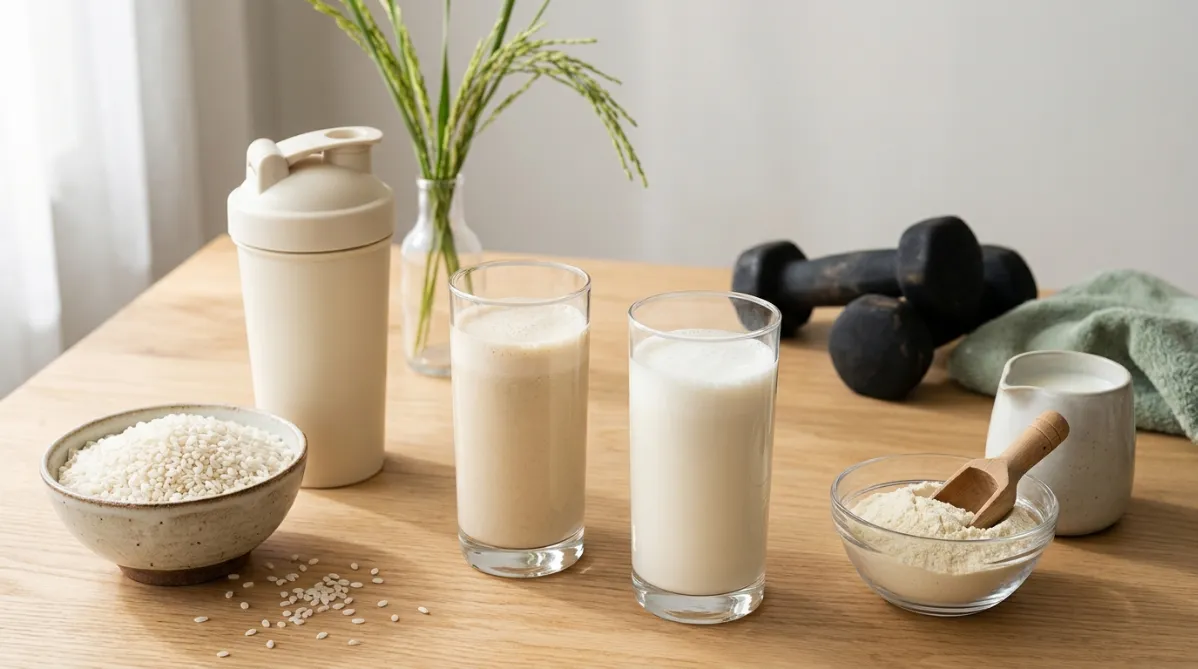
A bright, minimalist editorial still life on a pale oak table, shot from a slightly elevated three-quarter angle in soft natural window light. On the left sits a rustic ceramic bowl of uncooked short-grain white rice, with a few grains scattered across the wood. Beside it is a matte cream-colored shaker bottle. On the right is a small glass bowl of fine ivory whey powder with a wooden scoop resting in it, and a small pitcher of milk behind it. Two identical tall glasses of creamy, lightly frothed shake stand side by side in the center, one a touch warmer beige and the other a soft white. They suggest equal outcomes without any text or labels. A pair of worn black neoprene-coated dumbbells and a folded sage-green gym towel sit slightly out of focus in the background. A sprig of green rice stalks in a slim vase adds a fresh, natural accent.

The palette is warm neutrals: cream, oatmeal, soft sage, and muted terracotta, with gentle shadows and a shallow depth of field. The surface has subtle grain, and fine powder dust is caught in the light. The composition is clean and balanced, with generous negative space on the upper right for a headline overlay. The mood is calm, modern, and health-forward, like a contemporary nutrition magazine or wellness journal. Photorealistic, crisp detail, creamy bokeh, and a gentle matte film-like finish.
nutrition

48 g de proteína de arroz equivalem ao whey em massa muscular e força em 8 semanas

BY DR. GYMBRO ·

A proteína vegetal costuma ser vista como inferior ao whey, mas um estudo de 2013 com homens treinados mostrou o contrário quando a dose é alta. Em 24 atletas de musculação, 48 g de isolado de proteína de arroz consumidos após o treino geraram os mesmos ganhos em massa magra, espessura muscular, força e potência que 48 g de whey ao longo de oito semanas. Por que o arroz conseguiu acompanhar? A alta dose provavelmente supriu a diferença de leucina. A seguir, veja o que a pesquisa revelou, suas limitações e como veganos e intolerantes à lactose podem aplicá‑la.

A wide, landscape editorial photograph shot from slightly above, showing a rustic matte-white ceramic bowl of dried tribulus terrestris, spiky star-shaped seed pods in warm tan and khaki tones, with a few fresh green trailing vines and tiny yellow flowers draped beside it. The bowl sits at the left third of the frame on a pale ash-wood table. Scattered nearby are two identical sets of plain, unlabeled amber supplement capsules, one pile slightly apart from the other, hinting at a placebo comparison. To the right, slightly out of focus, a worn leather rugby ball rests next to a chalk-dusted steel barbell plate and a folded charcoal-gray athletic towel.

Soft diffused natural light streams in from a window on the left, creating gentle long shadows and a calm, clean atmosphere. The background is a muted sage-green and cream gradient with a shallow depth of field, leaving generous negative space on the right side for title overlay. A small, minimal notebook with a pencil and a simple balance scale made of brushed brass sits subtly in the midground, suggesting scientific scrutiny without any laboratory clutter.

The color palette is earthy and refined: sage green, sand, warm amber, charcoal, and off-white. The style is modern lifestyle-magazine photography, crisp textures, subtle film grain, and a high-end wellness journal feel. The composition is balanced, uncluttered, and minimalist, with a quiet, thoughtful mood that conveys skepticism and evidence-based inquiry. No text, no logos, no people, no futuristic or sci-fi elements.
science research

Tribulus Terrestris falha em jogadores de rugby de elite: ensaio de 5 semanas

BY DR. GYMBRO ·

Tribulus terrestris é anunciado como um impulsionador natural de testosterona que promove aumento de massa muscular em menos de um mês. Por isso, pesquisadores o testaram em jogadores de elite de rugby league em um ensaio duplo‑cego. Todos ficaram mais fortes e ganharam massa magra, mas o grupo placebo apresentou os mesmos resultados. O suplemento também não alterou a relação urinária testosterona/epitestosterona (T/E). Veja o que o estudo revelou, suas limitações e onde seu dinheiro rende mais.

A modern editorial still life photographed from a slightly elevated angle on a pale, matte stone surface in soft natural window light. On the left, a heaping mound of fine white creatine monohydrate powder spills from a matte ceramic scoop, with a few crisp grains scattered across the surface. In the center, a small, minimalist amber glass capsule bottle sits tipped on its side, with a handful of off-white capsules spilling out. The label is blank and clean. On the right, a neat row of three clear glass lab-style vials rests on a slim oak tray. The vials hold different amounts of white powder: the first nearly empty, the second slightly fuller, the third filled almost to the brim. This quietly suggests the difference in dose and result. Beside the tray lies a simple stainless steel measuring spoon and a folded sheet of cream paper with soft, abstract bar-chart lines in muted sage green and terracotta. The lines are hand-drawn and unlabeled.

Behind the objects, slightly out of focus, a lean athletic forearm in a gray linen sleeve rests on the edge of the surface, one hand loosely holding a matte shaker bottle. This hints at a training context without showing a face. A single sprig of eucalyptus in the corner adds a soft organic touch.

The palette is warm neutral: bone white, oatmeal, soft sage, muted terracotta, and touches of amber. Shadows are gentle and long, with a shallow depth of field that gives creamy bokeh in the background. The mood is calm, clean, and trustworthy, like a premium health and science journal's feature spread, with generous negative space at the top and right for headline overlay. The composition is wide, balanced, and uncluttered, with subtle film-like grain and a natural, true-to-life color grade. No text, no logos, no futuristic elements.
nutrition

Dose de Rótulo do Kre‑Alkalyn Não Aumentou a Creatina Muscular, Revelam Biópsias

BY DR. GYMBRO ·

A creatina tamponada Kre‑Alkalyn é divulgada como mais absorvível, exigindo doses menores e provocando menos inchaço. Um estudo duplo‑cego da Texas A&M, com 36 praticantes durante 28 dias, analisou biópsias musculares. Na dose recomendada de 1,5 g/dia, a creatina muscular praticamente não mudou, enquanto a monohidratada aumentou de forma clara. Não houve diferença em força, composição corporal ou efeitos colaterais. Veja os números e a dosagem correta da creatina.

This page is available in