Dr. Gymbro
←

#recovery

14 articles
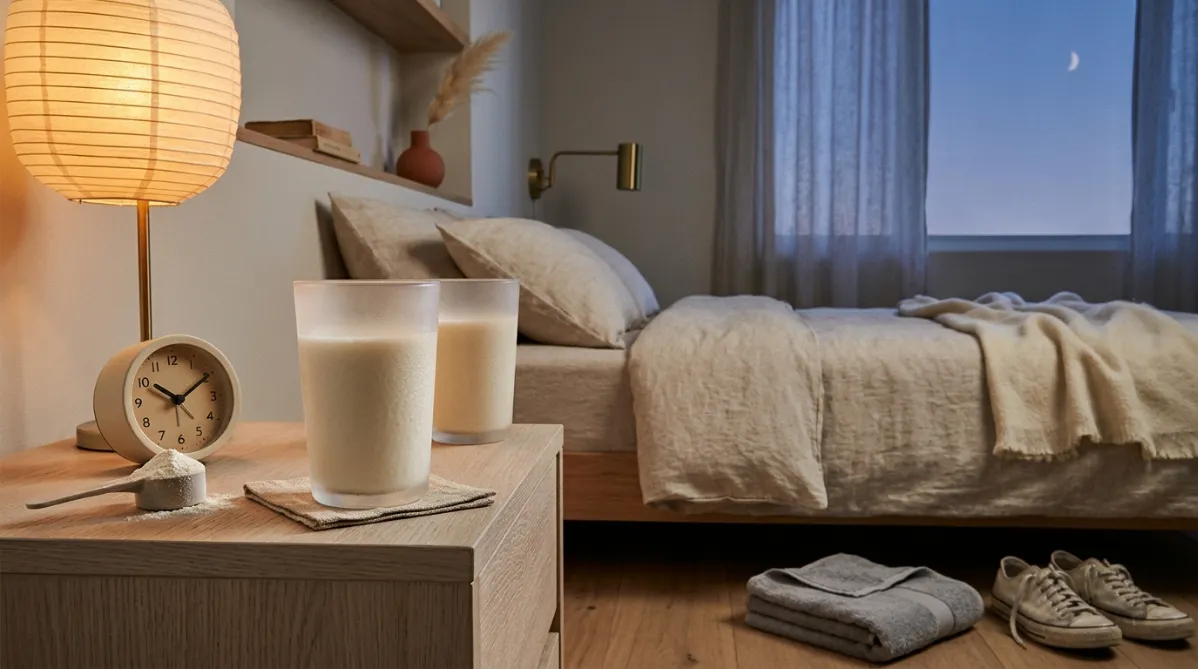
A serene, softly lit bedside scene in a modern minimalist bedroom, photographed in a warm editorial style. On a pale oak nightstand sit two matching frosted glass tumblers of creamy white protein shake, one slightly closer to the camera in sharp focus, the other gently blurred behind it. Beside them rests a small analog alarm clock with a matte cream face, its hands showing a late-evening hour, and a single ceramic scoop dusted with fine white powder on a linen coaster. A folded gray gym towel and a pair of worn sneakers are tucked at the edge of the frame, hinting at an earlier workout.

In the background, a neatly made bed with textured oatmeal linen bedding and a rumpled cream throw blanket glows under the amber light of a small paper-shade lamp. A sheer curtain filters deep indigo twilight from a window, with a faint crescent moon visible. The palette is muted and calming: warm cream, soft sand, dusty blue, and touches of terracotta from a small clay vase holding a dried pampas stem.

Shallow depth of field, gentle film-like grain, soft window light mixing with the warm lamp glow, long soft shadows across the wood grain. Composition follows the rule of thirds with the glasses on the left third and open negative space on the right, suitable for headline overlay. The mood is quiet, thoughtful, and contemporary, like a lifestyle and science feature in a trendy wellness journal. Clean, natural, tactile, with no text, no people, and no futuristic elements.
nutrition

Whey antes de dormir reduziu pela metade o tempo para adormecer; caseína não

BY DR. GYMBRO ·

Todo mundo diz que a caseína é a proteína ideal para a hora de dormir, mas um novo ensaio clínico randomizado, duplo‑cego e cruzado em humanos encontrou algo inesperado. Depois de um treino de resistência, 40 g de whey consumidos 30 minutos antes de se deitar diminuíram o tempo médio até adormecer para 9 minutos, contra 19 minutos com um controle de carboidrato, além de reduzir a dor muscular no dia seguinte. A caseína não foi significativamente melhor que o controle. O estudo contou apenas nove participantes, e o whey não foi estatisticamente superior à caseína em comparação direta. Aqui estão os números e o que eles ainda não comprovam.
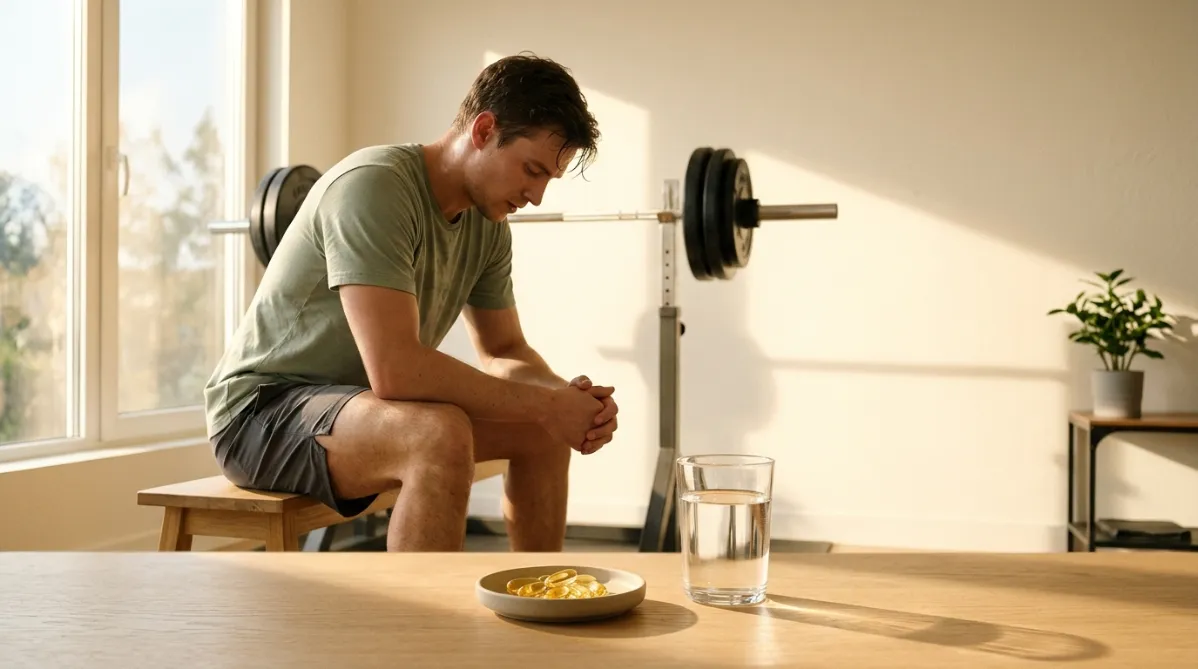
A sunlit, minimalist home gym corner photographed in soft golden morning light, with a young athletic man seated on a wooden bench, leaning forward with his elbows resting on his knees, catching his breath after a hard leg session. He wears a muted sage-green t-shirt and charcoal shorts, his face turned slightly away from the camera, calm and focused. A matte ceramic dish in the foreground holds a few small, translucent golden softgel capsules, with a glass of water beside it catching the light and casting a soft caustic shadow across a pale oak floor. Behind him, a loaded barbell rests on a squat rack, slightly out of focus, and a tall window pours warm sunlight diagonally across the scene, creating long gentle shadows and a hazy glow. A small potted green plant sits on a shelf at the edge of the frame. The color palette is warm and editorial: cream, soft gold, sage green, pale wood, and charcoal accents. Shallow depth of field, with crisp focus on the capsules and glass in the lower third and a creamy bokeh background. The composition leaves generous negative space on the right side for a headline overlay. The mood is clean, modern, and aspirational, like a high-end wellness magazine or a trendy health journal feature. Shot on a 50mm lens, natural light, fine film grain, subtle matte finish, landscape 16:9 framing.
recovery

Vitamina D acelera a recuperação de força em homens que não eram deficientes

BY DR. GYMBRO ·

Homens com níveis perfeitamente normais de vitamina D ainda recuperaram a força mais rapidamente após um treino de pernas intenso ao tomarem 4.000 UI por dia. Em um ensaio randomizado, controlado por placebo, com 28 homens ativos, a força isométrica máxima retornou cerca de 8 % melhor em 24 h. Os marcadores de dano muscular ALT e AST também aumentaram menos. Contudo, a dor muscular não melhorou. Veja o que o estudo encontrou, suas limitações e quem realmente pode se interessar.
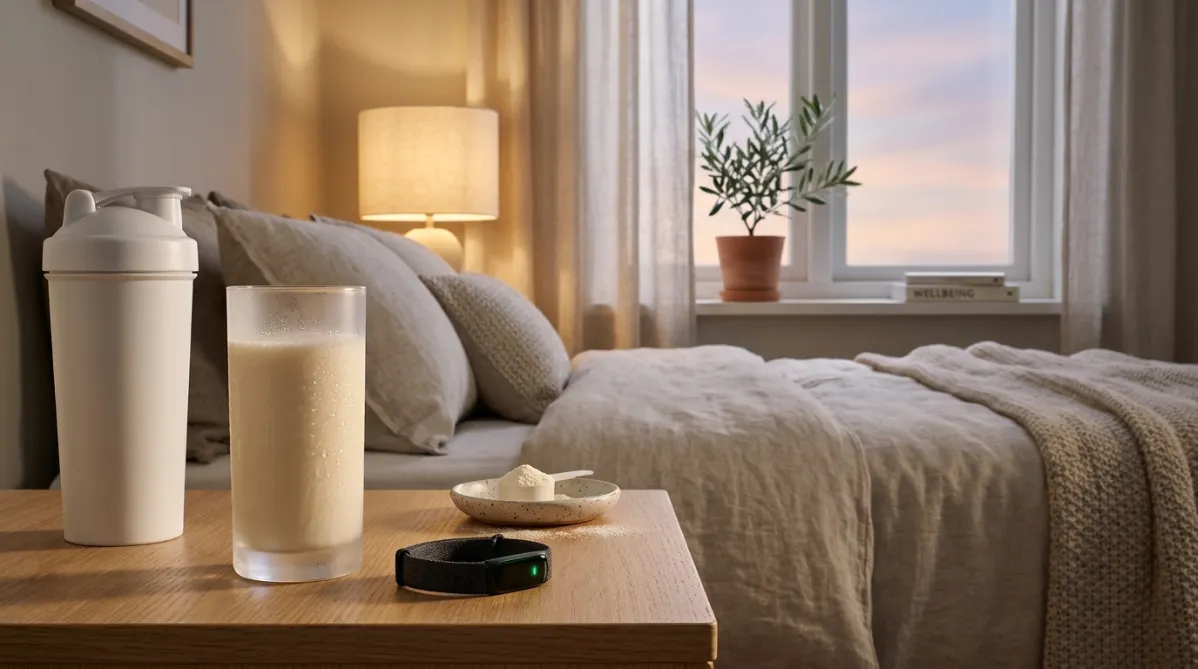
A softly lit bedside table in a calm, modern bedroom at dusk, photographed in wide landscape format with shallow depth of field. In the foreground, a matte white shaker bottle sits beside a tall frosted glass of creamy, pale vanilla-colored protein shake, with a few condensation droplets catching warm light. Next to the glass rests a slim fitness band on a dark charcoal fabric strap, its small LED glowing a gentle green, lying casually on a light oak wooden surface. A small scoop of fine white protein powder rests on a ceramic dish nearby, with a light dusting of powder on the wood.

In the soft-focus background, a neatly made bed with oatmeal-colored linen bedding and a textured knit throw blanket. A sheer curtain filters the last peach and lavender light of evening from a large window. A small potted olive branch in a terracotta vase and a closed paperback book add a quiet editorial touch. A bedside lamp with a warm, cream-colored shade casts a golden glow across the scene and creates gentle highlights on the glass.

The palette is muted and harmonious: warm cream, soft sand, oatmeal beige, faint sage green accents, and touches of dusty lavender in the window light. The mood is peaceful, reassuring, and clean, like a contemporary wellness magazine or a trendy health journal feature. Lighting is natural and cinematic, with soft shadows and a subtle film-like grain. The composition follows the rule of thirds, with the shake and band on the left third and open negative space on the right for headline overlay. Minimalist, Scandinavian-inspired styling, high-end lifestyle photography, crisp details, and a tranquil, premium editorial feel.
recovery

Caseína antes de dormir não prejudica o sono, dados da WHOOP mostram

BY DR. GYMBRO ·

Já ouviu dizer que um shake de proteína pesado antes de deitar atrapalha o sono e impede a recuperação? Um estudo randomizado com 21 atletas universitárias de alto nível, monitoradas por pulseiras WHOOP 4.0, não encontrou efeitos negativos na duração, eficiência, frequência cardíaca de repouso ou HRV. Alfa‑lactalbumina e carboidrato apresentaram resultados equivalentes, mas nenhum dos suplementos melhorou o sono. Confira o que os dados revelam, as limitações do estudo e quem ainda deve evitar o shake noturno.
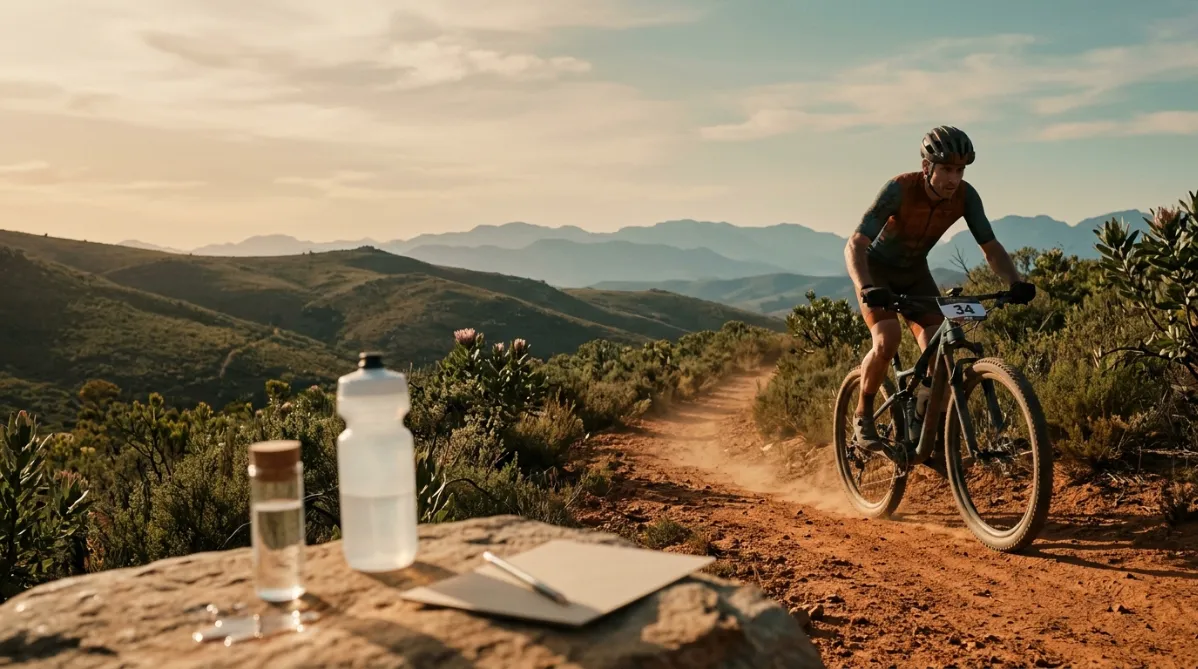
Wide landscape editorial photograph of a mountain biker mid-ride on a dusty red-orange singletrack trail in the South African Western Cape, golden hour light raking across the scene. The rider is in sharp focus on the right third of the frame, wearing a weathered cycling kit with a race number plate on the handlebars, dust kicking up from the rear tire. Behind them, rolling hills covered in fynbos shrubland and silhouetted protea plants fade into soft, hazy blue mountains. Warm amber sunlight creates long shadows and a soft rim light around the rider and bike.

In the lower left foreground, slightly out of focus, a small minimalist glass vial and a clear water bottle sit on a flat sun-bleached rock, with a few drops of liquid catching the light. Next to them, a simple matte paper notecard and a pencil suggest data collection, with no legible text. The vial and bottle are clean, understated, and modern, with no branding.

The color palette is earthy and refined: terracotta, ochre, sage green, dusty teal sky, and cream highlights. The composition uses shallow depth of field, a generous negative space in the upper left sky for headline overlay, and subtle film grain. The mood is contemplative, skeptical, and quietly sophisticated, like a feature photograph from a high-end outdoor sports and science magazine. Natural, candid, cinematic, shot on a 50mm lens with soft contrast and muted saturation. No futuristic elements, no glowing effects, no molecular graphics, no text.
science research

Ketone IQ aumentou as cetonas no Cape Epic, mas não fez mais nada

BY DR. GYMBRO ·

Ciclistas na prova de 8 dias Cape Epic tomaram Ketone IQ duas vezes ao dia e atingiram cerca de 1 mM de cetonas sanguíneas, mas seu cansaço, frequência cardíaca, tempo de reação e recuperação foram indistinguíveis dos que receberam placebo. O estudo duplo‑cego avaliou o R‑1,3‑butanodiol em condições reais de corrida, ao invés de laboratório. Os autores concluíram que a cetose moderada não trouxe benefícios e que o butanodiol não deve ser confundido com ésteres de cetona. Com apenas 18 participantes, o estudo tem limitações, mas oferece um ponto de dados importante para quem pensa em investir em bebidas de cetona caras para recuperação.
A wide, editorial-style still life photographed in soft natural window light, set on a pale oak gym bench or light wooden table. In the foreground, a matte ceramic scoop rests in a small mound of fine white creatine powder, with a few loose grains scattered across the surface. Next to it sits a minimalist frosted glass jar with a plain unbranded label. Beside the jar is a clear glass of water with delicate condensation. A pair of worn chalk-dusted hands is out of focus in the background, wrapping a lifting strap around a barbell. The barbell is a brushed steel bar with a few muted sage-green and warm gray bumper plates.

On the right side of the frame, a small stack of three different supplement capsules and tablets in neutral cream, terracotta, and soft blue sits next to a single clean white scoop of powder. This subtly contrasts the "stack" with the "plain" option. A folded linen towel in oatmeal beige drapes over the end of the bench. A small leather-bound notebook lies open, with a simple hand-drawn line graph showing two lines, one rising steadily and one flat, in pencil.

The background is softly blurred and shows a bright, airy, modern home gym with large windows, pale plaster walls, and a few green plants. Warm morning sunlight casts long, gentle shadows diagonally across the scene. The color palette is muted and sophisticated: cream, warm white, sage green, soft terracotta, and charcoal accents. Shallow depth of field with a crisp focus on the powder and scoop. Generous negative space on the left third for headline overlay. The mood is calm, thoughtful, and trustworthy, like a high-end health and science magazine cover, with subtle film grain and natural textures. No text, no logos, no futuristic elements.
nutrition

Stack de Creatina Aumentou Massa Muscular em Iniciantes — Mas Não a Força. Por quê?

BY DR. GYMBRO ·

Um ensaio randomizado com levantadores iniciantes recebeu um blend de creatina por quatro semanas, resultando em maior massa muscular, padrão hormonal mais favorável e melhor recuperação, porém o 1RM no leg press não superou o placebo. Possíveis explicações incluem adaptações neurais iniciais, curta duração do estudo e retenção de água. Marcadores renais permaneceram normais, mas o estudo foi pequeno, exclusivo para homens, financiado pela indústria e não detalhou a fórmula completa. Para iniciantes, a creatina monohidratada pura ainda é a opção mais segura baseada em evidências.
A landscape editorial still life shot from slightly above on a pale oat-colored linen surface, lit by soft morning window light with gentle long shadows. On the left, in warm golden sunlight, sits a small ceramic bowl of dried ashwagandha root pieces and a scatter of fine tan powder. Beside it are a few rough, rosy-gold slices of Rhodiola rosea root and a sprig of tiny succulent-like green leaves with yellow blossoms. A matte sand-colored stoneware mug of steaming tea and a simple glass of water stand nearby. A small amber glass bottle with a minimal unbranded label tips out two capsules.

The right side of the frame is cooler and bluer, as if dusk is arriving. It holds a muted indigo ceramic dish with a few pale capsules, a small bundle of dried chamomile flowers (the source of apigenin), and a few green tea leaves. A slim, unlit beeswax candle and a folded charcoal wool blanket suggest evening. The warm and cool halves meet softly in the center, where a rumpled white cotton napkin sits beneath a small brass spoon.

In the background, out of focus, a wooden shelf holds a worn paperback, a small potted plant, and the edge of a kettlebell in matte black, hinting at an active lifestyle. Subtle film grain, shallow depth of field, and a muted palette of cream, terracotta, sage green, and deep indigo give it a clean, modern wellness-magazine feel. Leave generous negative space in the upper third for a headline overlay. No text, no logos, no people.
recovery

Ashwagandha + Rhodiola funcionou. O combo noturno de sono não.

BY DR. GYMBRO ·

Um novo ensaio de quatro braços surpreendeu a comunidade de combinações de suplementos. Em 103 adultos saudáveis e ativos, a combinação matinal de 600 mg de ashwagandha e 300 mg de Rhodiola rosea esteve associada a menor estresse percebido, melhor qualidade do sono e humor mais positivo. O popular combo noturno de magnésio L‑trionato, L‑teanina e apigenina não trouxe nenhum ganho adicional, e usar ambos pareceu piorar um parâmetro de afeto positivo. O estudo durou apenas duas semanas e teve grupos pequenos, então os resultados devem ser interpretados com cautela.
A softly lit bedroom nightstand scene in landscape format, photographed in a modern editorial lifestyle style. In the center of the frame sits a handmade ceramic mug in warm oatmeal tones, filled with a pale creamy drink. A thin wisp of steam rises from it. Beside the mug, a small wooden scoop rests on a matte linen-textured surface with a fine dusting of white collagen powder. A minimal amber glass jar with a cream label stands just behind, with no readable text. The nightstand is pale oak with subtle grain.

To the left, a neatly folded pair of gray cotton athletic socks and a worn leather-bound training journal with a pen on top hint at a lifter's routine. A small brass alarm clock reads about 9:30 and is slightly out of focus. On the right side, a sheer curtain filters the last blue-violet twilight from a window, while a warm bedside lamp with a linen shade casts a honey-colored glow across the scene. The glow contrasts gently with the cool dusk tones.

Behind the nightstand, the edge of a rumpled bed with soft white and sand-colored bedding is visible, with a dumbbell resting quietly on the floor in the soft-focus background to suggest recovery after training. The depth of field is shallow, with the mug and scoop in crisp focus and the background dissolving into creamy bokeh.

The palette is calm and earthy: warm beige, soft cream, muted terracotta, and dusk blue accents. The lighting is cinematic and low-key, with gentle highlights on the ceramic rim and a subtle rim light on the steam. The composition follows the rule of thirds, with the mug placed on the left third and generous negative space on the right for title overlay. The mood is serene, restorative, and quietly scientific without any clinical elements. The finish is clean, high-end, and magazine-worthy, with fine film grain and natural color grading, like a wellness feature in a contemporary online journal.
recovery

O truque do colágeno de 15 g antes de dormir que reduziu os despertares noturnos em 27 %

BY DR. GYMBRO ·

Acordar repetidamente durante a noite pode sabotar silenciosamente sua recuperação, mesmo quando treino e nutrição estão alinhados. Um pequeno ensaio revelou que 15 g de peptídeos de colágeno consumidos uma hora antes de deitar reduziram os despertares registrados por polisomnografia de 29,3 para 21,3, cerca de 27 % a menos. Os participantes também tiveram desempenho melhor no teste Stroop matinal. Contudo, o tempo total de sono, a latência e a eficiência do sono não mudaram, e o estudo contou apenas com 13 homens durante 7 noites, usando um produto fornecido pela indústria. Veja o que os dados realmente mostram e como os praticantes de musculação podem testá‑lo com segurança.
A wide, softly lit editorial still life on a pale oatmeal-colored linen surface, shot from a slightly elevated three-quarter angle. In the center-left, a small matte ceramic dish holds a tiny pile of fine white powder, with a single minuscule measuring spoon resting beside it. To the right, a much larger wooden scoop is heaped high with the same pale powder, spilling gently onto the linen, creating a striking visual contrast of tiny versus large quantity. Behind them, a cream-colored supplement tub with a blank, minimalist label sits slightly out of focus, along with a few amber glass capsules scattered casually.

In the soft-focus background, a runner's well-worn sneaker and a chalk-dusted, wrapped knee sleeve rest on a light ash-wood bench, hinting at gym and road without showing a person. A thin brushed-steel stopwatch lies in the foreground, its hands paused, subtly suggesting timing and endurance. A sprig of dried eucalyptus and a folded sheet of paper with out-of-focus handwritten notes add a quiet, editorial research feel.

Natural morning light streams in from the left through a sheer curtain, casting long, gentle shadows and a warm, creamy glow. The palette is restrained and modern: warm ivory, sand, soft sage green, muted terracotta, and touches of brushed silver. Shallow depth of field with crisp detail on the powders and stopwatch, creamy bokeh in the background. The composition leaves open negative space on the right third for headline text. The overall mood is calm, trustworthy, and contemporary, like a premium health and wellness journal cover, with fine film-like grain and clean, minimalist styling.
recovery

Uma dose de 40 mg de colágeno dobra o tempo até a dor no joelho: o que isso significa

BY DR. GYMBRO ·

Os joelhos doem na barra ou na pista? Um ensaio randomizado mostrou que apenas 40 mg diários de colágeno tipo II não desnaturado (UC‑II) atrasaram o início da dor, de 1,4 para 2,8 minutos, e melhoraram a extensão do joelho. Isso equivale a cerca de 250 vezes menos que o típico scoop de 10 g de colágeno hidrolisado, e trata‑se de um produto completamente diferente. Porém o estudo foi pequeno, financiado pela indústria e realizado em pessoas saudáveis, não em pacientes com artrite. Veja o que os dados realmente indicam, o contexto por trás da manchete e como interpretar rótulos.
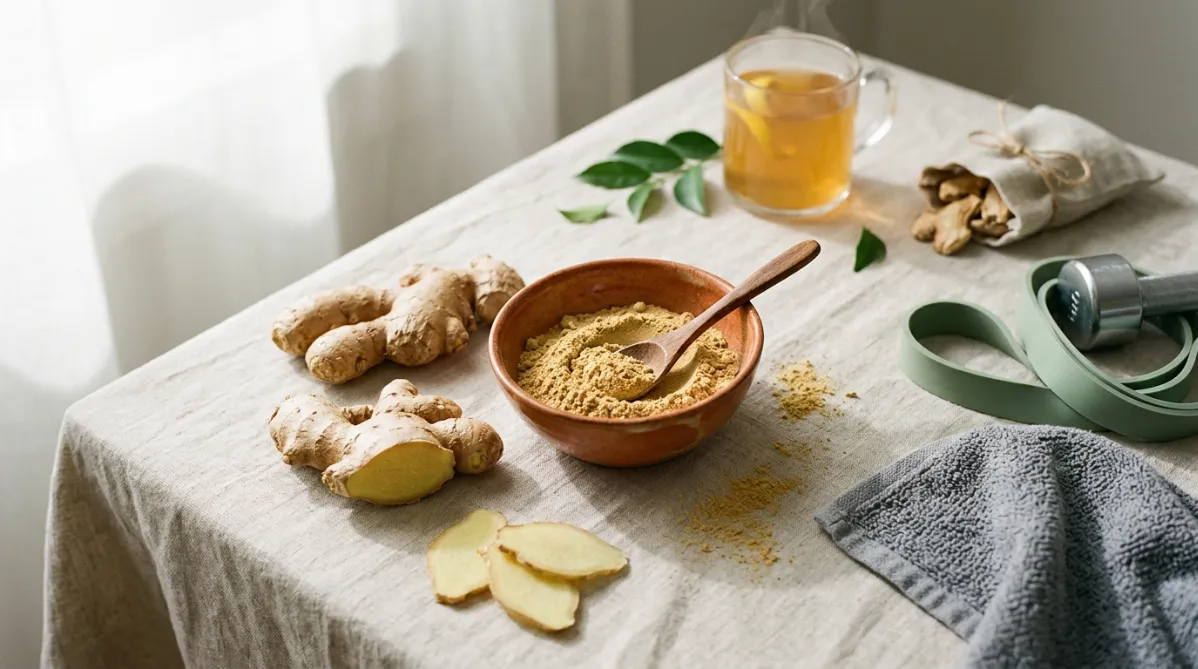
A wide, editorial-style still life photographed from slightly above on a pale oat-colored linen surface, lit by soft natural window light from the left. At the center sits a rustic ceramic bowl of finely ground golden-tan ginger powder, with a small wooden spoon resting in it and a light dusting of spice across the cloth. Beside it lie several whole ginger rhizomes, knobby and honey-brown. One is sliced open to show its pale yellow, fibrous interior, and a few paper-thin slices fan out in the foreground. On the right, a folded heather-gray gym towel, a matte sage-green resistance band coiled loosely, and a single brushed-steel dumbbell sit just inside the frame, softly out of focus. A glass of warm amber ginger tea steams faintly near the upper right, with a thin curl of lemon peel inside. A few fresh green leaves and a small linen pouch of dried ginger add texture. The palette is warm and muted: cream, soft gold, sage, terracotta, and charcoal accents. The shallow depth of field keeps the ginger bowl and sliced root crisp while the gym elements melt into a gentle blur. Shadows are long and soft, and the negative space on the upper left leaves room for a headline. The mood is calm, clean, and modern, like a contemporary wellness or science journal cover. It is a natural, tactile, high-resolution photograph with subtle film grain and no text, no people, and no futuristic elements.
recovery

2 g de Gengibre Reduzem a Dor Muscular no Dia Seguinte em Cerca de 25 % em Dois Estudos

BY DR. GYMBRO ·

Um tempero comum da cozinha acabou de ser comparado a uma das queixas mais frequentes da academia: a dor muscular do dia seguinte. Em dois ensaios duplo‑cegos, quem tomou 2 g de gengibre por dia durante 11 dias sentiu cerca de 25 % menos dor 24 h após um treino excêntrico intenso. O gengibre, porém, não melhorou de forma clara a força ou o inchaço, e ninguém o comparou ao ibuprofeno. Vejamos o que a pesquisa mostra, por que pode funcionar, as limitações dos dados e quem pode considerar experimentar.
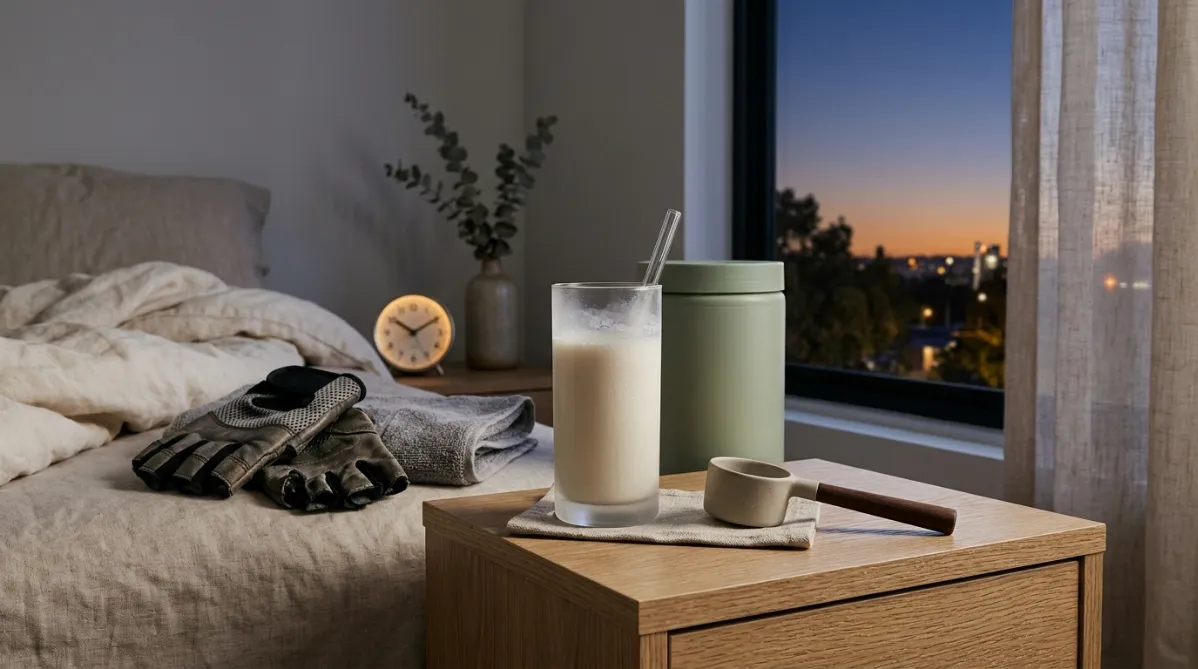
A quiet bedside scene at dusk, shot in soft natural light with a shallow depth of field. A tall frosted glass of creamy, pale-white shake sits on a light oak nightstand, with a thin film of condensation on the glass and a faint milky residue near the rim. Beside it, a matte ceramic scoop rests on a small linen coaster. A minimalist tub of unbranded protein powder in muted sage green sits slightly out of focus in the background.

To the left, a neatly made bed with oatmeal-colored linen sheets and a rumpled cream duvet. A pair of worn lifting gloves and a folded gray gym towel sit on the edge of the bed, suggesting an evening workout just finished. A small analog alarm clock reads about 10:30 PM, its soft face glowing faintly. A sprig of dried eucalyptus in a small stoneware bud vase adds an organic touch.

Through a large window on the right, deep indigo twilight fades into a warm amber horizon, and the last light spills across the wall in long, gentle gradients. A sheer curtain moves slightly. The palette is warm neutrals (cream, oak, sand, soft terracotta) with a few muted blue-violet accents from the evening sky.

The composition uses the rule of thirds, with the glass at the left-center foreground and generous negative space on the right, where headline text could sit. The mood is calm, restorative, and editorial, like a modern wellness and nutrition journal. The lighting is gentle and diffused, with subtle film grain and slightly lifted shadows. The textures of linen, wood, glass, and ceramic are crisp. The image is clean and uncluttered, with no text, logos, or people, and no futuristic or sci-fi elements.
nutrition

O shake de 40 g antes de dormir: o que a caseína pré‑sono faz durante a noite

BY DR. GYMBRO ·

Treinar à noite e ficar oito horas sem comer atrapalha a recuperação? Um estudo de 2012 administrou 40 g de caseína a 16 homens jovens, 30 minutos antes de dormir, e acompanhou o que aconteceu durante a noite. A proteína foi digerida e absorvida enquanto dormiam, a síntese proteica total aumentou (311 vs 246 µmol/kg) e o balanço proteico passou de negativo para positivo. A síntese de proteína muscular ficou cerca de 22 % maior, embora apenas marginalmente significativa. A seguir, explicamos o que esses resultados realmente significam, o que não significam e como utilizá‑los.
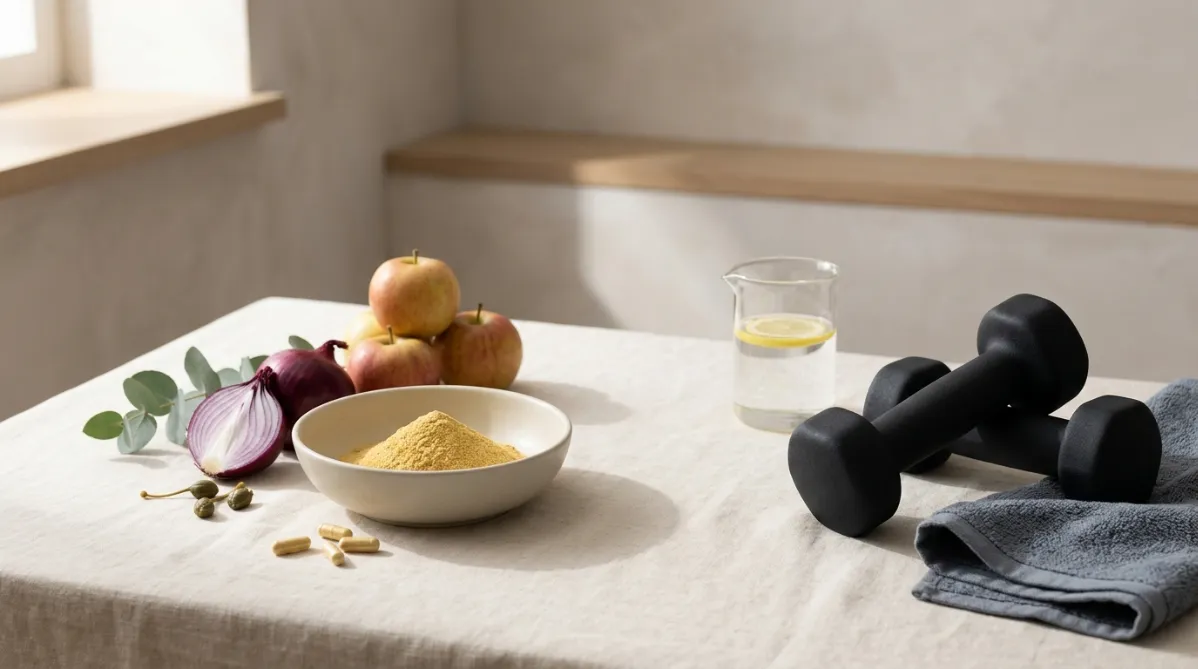
A wide, softly lit editorial still life on a warm off-white linen surface. At the center-left, a matte ceramic bowl holds a small mound of fine golden-yellow quercetin powder, with a few scattered capsules beside it. Next to the bowl sit fresh red onions (one halved to show its translucent purple layers), a few capers, and a small cluster of ripe apples with the skin on, all natural quercetin sources. On the right side of the frame, a sleek matte-black dumbbell rests at an angle beside a folded slate-gray gym towel. A minimalist glass beaker of water with a thin lemon slice sits just behind it.

Soft diffused morning window light enters from the upper left, casting gentle long shadows and subtle highlights on the powder and glossy onion skin. The color palette is muted and sophisticated: butter yellow, deep plum, warm cream, charcoal, with small touches of sage green from a single eucalyptus sprig. A subtle, out-of-focus background of pale plaster wall and a wooden shelf adds depth.

Shallow depth of field, shot from a slightly elevated three-quarter angle with a 50mm lens feel. Generous negative space in the upper right for a title overlay. The mood is clean, calm, and modern, like a premium wellness and science journal feature: tactile textures, natural materials, restrained composition, high-end editorial photography, and no text or logos.
science research

1 g/dia de quercetina antes de roscas excêntricas: o giro do IGF

BY DR. GYMBRO ·

O que acontece quando você faz carga de 1 g/dia de quercetina durante 14 dias antes de atacar os bíceps com trabalho excêntrico? Em um pequeno estudo cruzado controlado por placebo, marcadores de dano muscular como CK, LDH e mioglobina diminuíram, assim como o IL‑6. Curiosamente, a resposta do IGF‑I aumentou e o pico de IGF‑II apareceu dias antes do usual. Contudo, com apenas doze homens e sem dados de hipertrofia, isso indica um sinal promissor de recuperação, não garantia de crescimento muscular. Aqui está o que o estudo encontrou e como usar a informação com prudência.
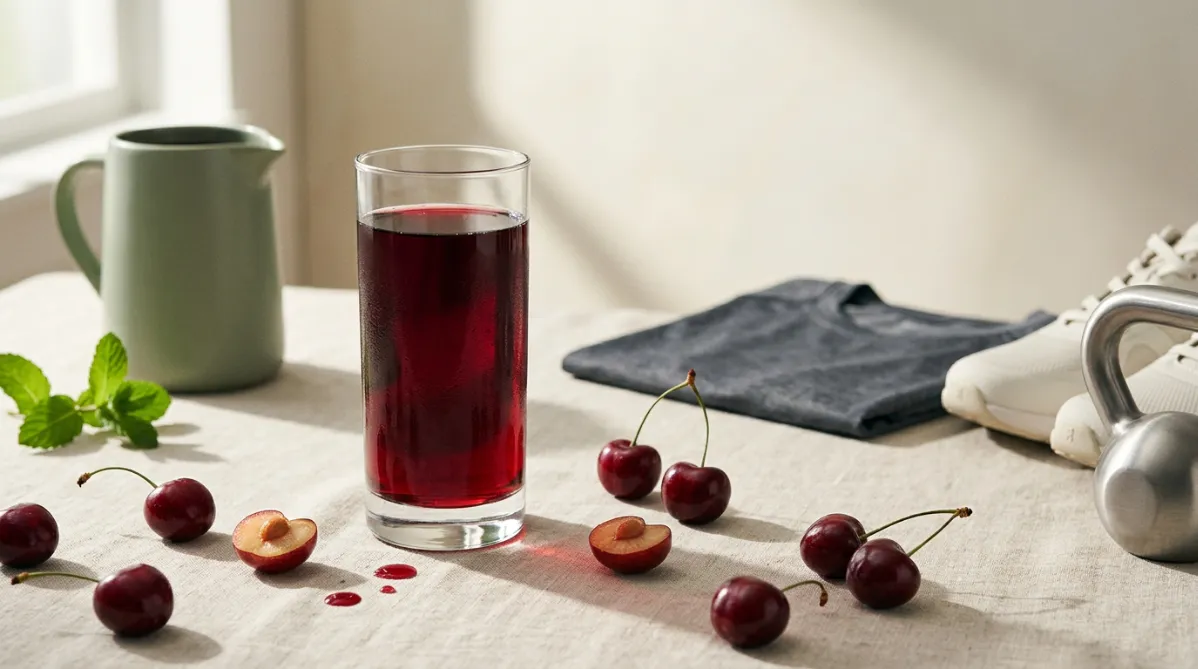
A wide, softly lit editorial still life on a pale oatmeal linen surface. In the center sits a tall, clear glass filled with deep garnet-red tart cherry juice, with condensation beading on the outside and a faint ruby glow where light passes through it. Around it are a scattering of fresh Montmorency cherries, some with stems and some halved to show pale amber flesh and a single pit. A few drops of juice have splashed onto the linen, leaving small crimson stains. To the right, slightly out of focus, lies a folded charcoal-gray running shirt, a pair of minimalist off-white running shoes, and a small brushed-steel kettlebell, suggesting both endurance and strength training without a gym in view. On the left, a ceramic pitcher in matte sage green holds more juice, and a sprig of fresh mint adds a small contrast.

Window light comes from the upper left, casting long, gentle shadows and creating a warm morning feel. The palette is restrained and modern: deep burgundy, cream, sage, and soft slate, with plenty of negative space in the upper right for headline text. The camera angle is a shallow three-quarter view from slightly above, with a shallow depth of field. The foreground cherries are razor sharp and the background melts into a creamy blur. Subtle film grain, natural color grading, and a clean, minimalist composition give it the polished feel of a contemporary health and science magazine. No text, no logos, no people, and no futuristic elements. The overall mood is calm, fresh, and restorative, hinting at recovery and balance.
recovery

Truque do Suco de Cereja Ácida: Recuperação de Força Mais Rápida e Redução do IL‑6

BY DR. GYMBRO ·

Maratonistas e praticantes de musculação juram pelo suco de cereja ácida para a recuperação. Um estudo controlado por placebo, envolvendo 20 corredores, mostrou que a força isométrica se recuperou mais rápido (P = 0,024) e que os marcadores inflamatórios – IL‑6, CRP e ácido úrico – diminuíram, enquanto o status antioxidante aumentou cerca de 10 %. Entretanto, creatina quinase, LDH e a percepção de dor muscular não apresentaram diferenças significativas, indicando que os resultados são mais complexos que o hype.
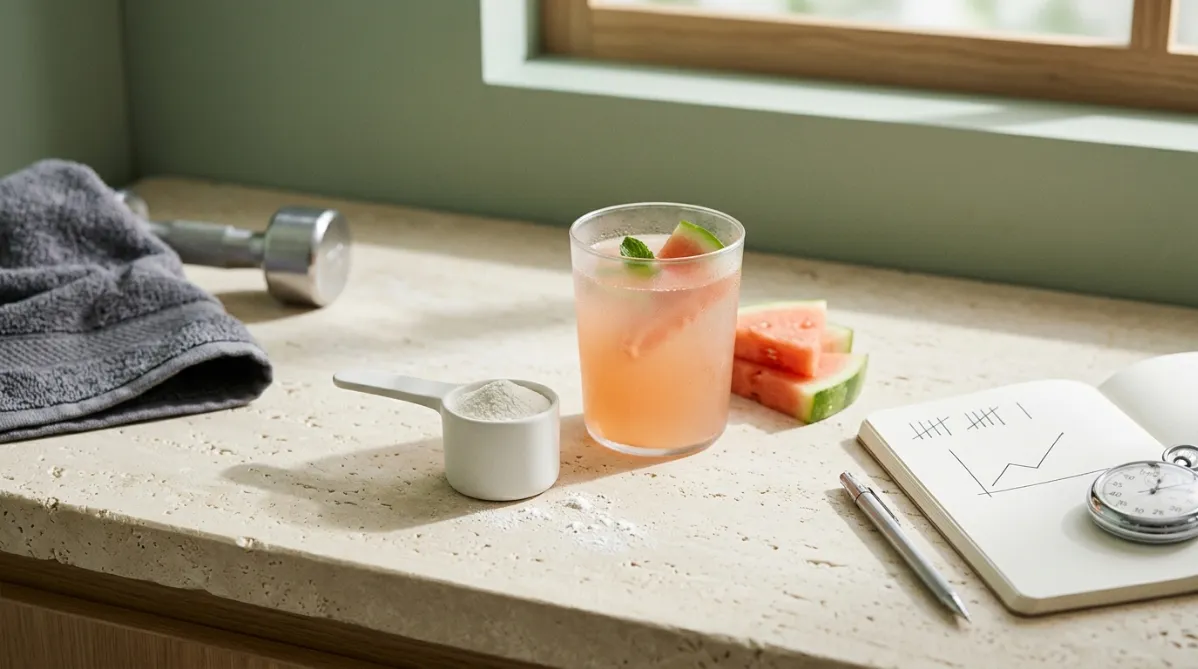
A wide, editorial-style still life photographed on a pale limestone countertop in soft morning window light. At the center sits a matte white scoop of fine white powder resting beside a frosted glass tumbler of cloudy, pale pink-orange water, with a few watermelon slices and a halved wedge showing glossy coral flesh and thin green rind, a nod to citrulline's natural source. To the left, a neatly folded charcoal gym towel and a brushed steel dumbbell rest at the edge of the frame, slightly out of focus. To the right, a minimalist open notebook with a few hand-drawn tally marks and a simple line graph sketched in black ink rises toward the right edge, next to a slim mechanical pencil and a small analog stopwatch with a clean white face. A few loose grains of powder are scattered across the stone, catching the light. Soft diagonal shadows fall across the surface from a nearby window, and a gentle sage-green wall in the background adds calm contrast. The palette is warm cream, watermelon coral, sage green, and soft graphite gray, with plenty of negative space on the upper left for headline overlay. Shallow depth of field, crisp focus on the powder scoop and watermelon, subtle film grain, natural tones, and a clean, modern wellness-journal aesthetic. Shot at eye level with a slight downward angle, like a contemporary health and science magazine cover. No text, no logos, no people.
nutrition

8 g de Citrulina Malato = 53 % Mais Repetições e 40 % Menos Dor Muscular? O Que o Estudo Revela

BY DR. GYMBRO ·

Um ensaio cruzado de 2010 constatou que 8 g de citrulina malato foram associados a cerca de 53 % a mais de repetições no supino na última série avaliada e aproximadamente 40 % menos de dor muscular 24 h e 48 h depois. O detalhe importante é que o maior ganho de repetições apareceu apenas nas fases finais da sessão, quando a fadiga já estava instalada. A seguir, explicamos o que realmente foi testado, como usar a dose e o timing de forma sensata, quem pode se beneficiar e por que a taxa de 14,63 % de desconforto gastrointestinal e as limitações do estudo merecem atenção.
A close-up, golden honey drop suspended mid-air, crystalline and luminous, falling toward a background of defined human muscle fibers rendered in anatomical detail. The muscle tissue glows with a subtle protective golden aura where the honey makes contact. In the background, abstract representations of antioxidant molecules and anti-inflammatory compounds float like microscopic shields around the muscle strands. The scene has a scientific yet warm aesthetic, with honeycomb hexagonal patterns subtly integrated into the composition. Soft, amber lighting bathes the entire image, creating depth and highlighting the honey's natural transparency and the muscle's healthy pink-red tones. Small particles of pollen and natural honey crystals drift through the frame, emphasizing the organic nature of this protective relationship between honey and muscle tissue.
general

Estudo revolucionário revela como o mel protege os músculos durante o overtraining

BY DR. GYMBRO ·

Um estudo inovador iraniano mostrou que a suplementação com mel pode proteger os músculos da degradação provocada pelo overtraining, oferecendo aos atletas uma solução natural para um dos problemas mais persistentes do esporte. A pesquisa demonstra como a combinação singular de antioxidantes, compostos anti‑inflamatórios e carboidratos do mel cria uma barreira protetora contra os danos musculares induzidos pelo exercício. Os achados sugerem que essa intervenção simples e acessível pode revolucionar os protocolos de recuperação, tanto para atletas de elite quanto para praticantes ocasionais.

This page is available in