Dr. Gymbro
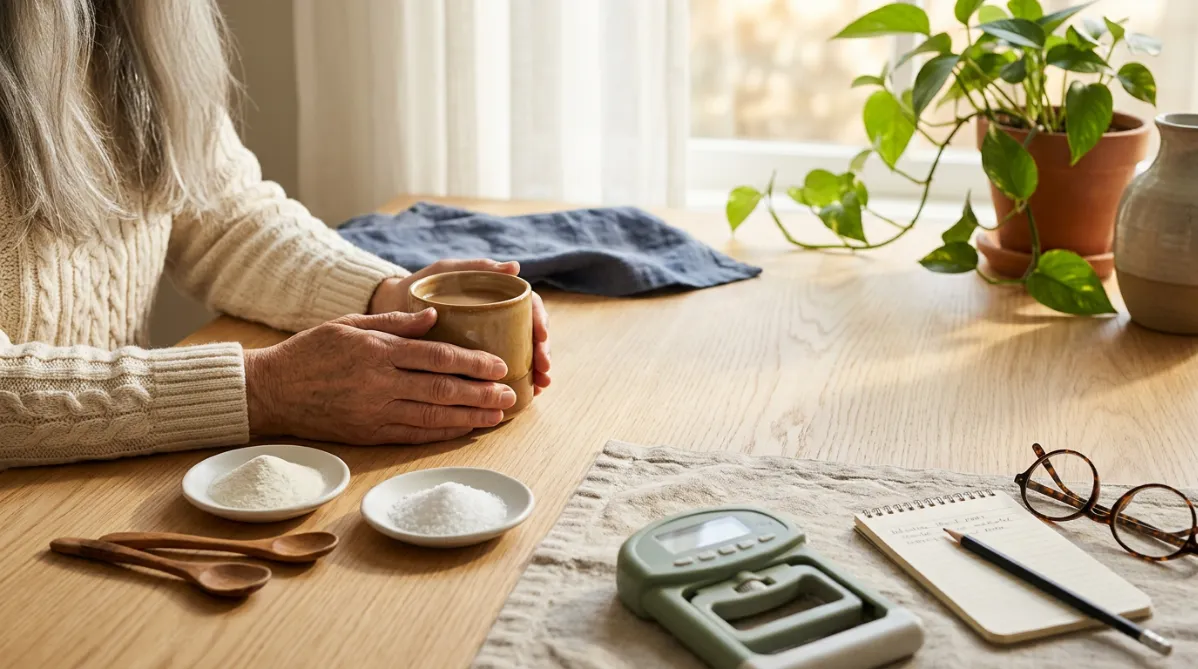
A bright, airy editorial still life photographed from slightly above on a pale oat-colored linen surface, in soft natural window light with gentle long shadows. In the foreground, a rustic ceramic bowl holds halved and whole oranges, glossy red bell pepper slices, and a few kiwi halves with emerald flesh. Beside it sit loose strawberries and a small pile of bright yellow lemon wedges. Their colors pop against the muted neutral palette. A single clear glass of water with a slice of orange rests nearby, catching the light.

On the right side of the frame, a pair of well-worn but clean walking sneakers in sage green and cream sits casually on the surface, with one lace loosely trailing. Behind them, a simple wooden chair with a light ash finish is partly visible and slightly out of focus, a quiet nod to the sit-to-stand test. A small stainless-steel stopwatch lies next to the shoes, with a subtle reflective glint.

A minimalist ceramic dish holds a few small, round, pale-yellow vitamin capsules, kept understated. A sprig of green leaves and a folded cotton napkin in soft terracotta add a warm accent. A small open notebook with a pencil rests in the upper left, its page blank except for faint, abstract pencil lines suggesting a simple rising graph, with no legible text.

The composition leaves generous negative space on the left third for title overlay, with a soft cream-to-peach gradient background. The mood is fresh, healthy, and contemplative, like a modern wellness magazine or a trendy online journal. The color palette is warm citrus orange, sunny yellow, sage green, and soft cream, with gentle terracotta accents. The depth of field is shallow, with crisp focus on the fruit and shoes and a creamy blur in the background. The overall look is clean, natural, and editorial, with fine film-like grain, true-to-life color, and a calm, optimistic tone. Landscape 16:9 framing.
Nutrition

Vitamina C barata associada a pernas mais fortes à medida que você envelhece

Dr. Gymbro · · 4 min read

Todo mundo fala de proteína e creatina para músculos envelhecidos. Um novo estudo do Reino Unido aponta para algo muito mais barato e menos glamouroso: o nível de vitamina C no sangue.

Em mais de 5 000 adultos de meia‑idade e idosos, aqueles com nível plasmático ótimo de vitamina C caminhavam mais rápido e se levantavam de uma cadeira com mais rapidez do que os que apresentavam níveis baixos. Trata‑se de uma associação, não de prova de causa‑efeito, mas vale a pena conhecer seu número.

O que os pesquisadores realmente fizeram

O artigo, publicado na Calcified Tissue International por Scott, Cameron, Yates e Welch, analisou dados da coorte EPIC‑Norfolk, um grande estudo populacional britânico com participantes entre 48 e 92 anos. O desenho foi transversal, ou seja, um instantâneo no tempo, sem acompanhamento longitudinal.

Ao contrário de grande parte da literatura anterior, que se baseava apenas em relatos dietéticos, esta equipe mediu vitamina C plasmática, refletindo o status real do organismo. Os participantes foram divididos em três categorias:

  • Baixo: < 25 µmol/L
  • Subótimo: 25 – < 50 µmol/L
  • Ótimo: ≥ 50 µmol/L

Em seguida compararam a força de preensão manual (ajustada pela altura), a velocidade de marcha e o tempo para completar cinco levantamentos de cadeira, ajustando os modelos para fatores de estilo de vida, biológicos, médicos e dietéticos.

Os números principais

Mulheres com vitamina C plasmática ótima versus baixa apresentaram:

  • Maior força de preensão ajustada à altura (+0,54 kg/m², p = 0,009)
  • Velocidade de marcha mais rápida (+0,11 m/s, p < 0,001)
  • Tempo de cinco levantamentos de cadeira menor (cerca de 1,03 s a menos, p = 0,028)

Homens com vitamina C plasmática ótima versus baixa apresentaram:

  • Velocidade de marcha mais rápida (+0,05 m/s, p = 0,01)
  • Tempo de levantamento de cadeira menor (cerca de 0,71 s a menos, p = 0,026)

Nos homens não houve associação com a força de preensão, indicando que a vantagem nas “pernas mais fortes” se limita mais à velocidade e agilidade do que à força geral.

E a vitamina C dos alimentos?

Os dados dietéticos foram menos consistentes. Em mulheres, alguns quintis de maior ingestão mostraram desempenho melhor que o quintil mais baixo: os quintis 2 e 5 tiveram velocidade de marcha mais rápida (+0,04 m/s) e os quintis 4 e 5 apresentaram tempos de levantamento de cadeira mais curtos (≈ 0,67 s e 0,57 s a menos, respectivamente). Não houve um padrão linear de melhora a cada quintil. Nos homens, não foram encontradas associações significativas entre ingestão dietética de vitamina C e os desfechos avaliados.

Essa divergência destaca que níveis sanguíneos refletem o que realmente está disponível ao organismo, enquanto o questionário alimentar oferece apenas uma estimativa.

Por que a vitamina C pode ser importante para o músculo?

A vitamina C participa da síntese de colágeno, a proteína que forma a matriz do tecido conjuntivo que envolve fibras musculares e tendões. Além disso, ela integra o sistema antioxidante do corpo, essencial para proteger os músculos do estresse oxidativo típico da terceira idade. Esses mecanismos fornecem a base biológica para a hipótese de que deficiência de vitamina C poderia contribuir para a sarcopenia – a perda de massa e função muscular relacionada à idade. O estudo, porém, não testou esses caminhos; apenas correlacionou níveis sanguíneos com desempenho funcional.

Limitações que você precisa saber

É aqui que o click‑bait termina e a honestidade começa:

  • Observacional e transversal. Não demonstra que a vitamina C cause melhora no desempenho. Pessoas mais ativas podem simplesmente consumir mais frutas e vegetais, e a vitamina C plasmática seria um marcador de um estilo de vida mais saudável.
  • Direção incerta. Quem se movimenta menos ou sente fraqueza pode reduzir a ingestão de frutas, invertendo a causalidade.
  • Nenhum ensaio de suplementação. Nenhum participante recebeu vitamina C em dose controlada para testar o efeito.
  • Efeitos modestos e diferentes entre os sexos e as medidas avaliadas.

Os autores concluem que níveis ótimos de vitamina C plasmática "poderiam ser importantes" para a função física e pedem estudos longitudinais e de intervenção para confirmar a hipótese.

Dicas práticas

Meta: No estudo, a categoria associada a benefício foi vitamina C plasmática ≥ 50 µmol/L. Se quiser saber onde você está, converse com seu médico sobre a possibilidade de medir esse parâmetro.

Dose: O estudo não testou dose alguma, portanto não há recomendação de suplementação baseada em evidência. O que se reforça é a importância do status sanguíneo. Frutas, legumes ou um suplemento podem ser caminhos para alcançar níveis adequados, mas ensaios controlados ainda são necessários para provar que elevar níveis baixos melhora força ou mobilidade.

Horário: Não investigado. Não há evidência de que o momento da ingestão influencie o efeito.

Para quem é mais relevante: Adultos de meia‑idade e idosos, sobretudo aqueles que consomem poucas frutas e vegetais e se preocupam com velocidade de caminhada, capacidade de levantar de cadeiras ou risco de sarcopenia.

Quem deve ter cautela: Pessoas que consideram suplementos em altas doses, especialmente quem tem problemas renais, histórico de cálculos renais ou faz uso crônico de medicamentos. Essas precauções são gerais da prática médica, não específicas deste estudo; consulte um profissional de saúde antes de iniciar suplementação.

O que não substitui: Treinamento de resistência e ingestão adequada de proteína continuam sendo as estratégias comprovadas para preservar a massa muscular. O status de vitamina C, na melhor das hipóteses, é apenas um apoio potencial.

Conclusão

A constatação é simples e encorajadora: em uma grande coorte britânica, adultos com vitamina C sanguínea ótima tendem a se mover mais rápido. É barato verificar e, para a maioria, barato melhorar por meio da alimentação. Contudo, até que ensaios randomizados mostrem que elevar a vitamina C realmente aprimora a função muscular, encare isso como um sinal promissor, não como prescrição definitiva.
Original study

Read the original research on pubmed.ncbi.nlm.nih.gov →

This article summarizes published research for general information. It is not medical advice.

DG

Written by

Dr. Gymbro

Dr. Gymbro writes for Dr. Gymbro: science-backed fitness, nutrition & performance.

Related Articles

A wide, softly lit editorial photograph of a rustic light-oak table by a sunny window. On it, a handful of dried brown kelp and wakame seaweed fronds spill from a handmade matte ceramic bowl in warm sand tones, their glossy, ruffled edges catching the light. Beside the bowl sits a small wooden scoop holding fine golden-beige powder, with a little of it dusted across the table. In the middle ground, an older adult's weathered but strong hand grips a smooth, rounded river stone, with the knuckles and tendons subtly emphasized to suggest strength and vitality. Only the hand and part of a forearm in a soft oatmeal linen sleeve are visible.

In the background, slightly out of focus, a pair of worn leather walking shoes rests on a windowsill next to a trailing green plant. Beyond the window, a blurred coastal path winds through dune grass toward a pale blue sea, hinting at walking and an active daily life. A simple analog wristwatch lies on the table's edge, a quiet nod to the twelve-week timeline.

The palette is muted and natural: sage green, warm sand, soft ocean teal, and creamy off-white, with deep olive-brown accents from the seaweed. Morning light streams in from the left, casting long, gentle shadows and a faint golden glow. The depth of field is shallow, with crisp focus on the hand and seaweed and a creamy bokeh background. The composition follows the rule of thirds, with the hand and bowl on the left and generous negative space on the right for headline text. The mood is calm and hopeful, with a clean, contemporary wellness-magazine feel. The image is shot as if on a 50mm lens with subtle film grain and a natural, uncluttered, tactile look.
science research

Fucoidana de Alga Marinha Aumenta a Força de Preensão em Pessoas com Mais de 60 Anos em 12 Semanas

BY DR. GYMBRO ·

Perder força com a idade é uma mudança comum e pouco discutida, e o treinamento de resistência nem sempre é viável. Um ensaio randomizado de 12 semanas mostrou que fucoidana de alga marinha de baixo peso molecular, consumida a 1 650 mg/dia, aumentou significativamente a força de preensão e o desempenho na caminhada de seis minutos em adultos com mais de 60 anos. Surpreendentemente, a massa muscular não mudou e a combinação com BCAAs e vitamina D não trouxe benefício adicional. O estudo é pequeno e testou um único produto de marca, sendo um indício promissor, mas não uma conclusão definitiva. Veja o que a pesquisa revelou e o que isso significa na prática.

A softly lit editorial still life on a pale oatmeal-colored linen surface, shot from a slightly elevated three-quarter angle with a shallow depth of field. In the left foreground, a small ceramic dish holds several translucent golden-amber fish oil softgel capsules, glowing as if lit from within by warm morning window light. A few capsules are scattered casually beside it, catching crisp highlights. Just behind them, a sliced fresh salmon fillet with vivid coral-orange flesh rests on a matte slate board next to a sprig of dill, a halved lemon, and a small glass dropper bottle of golden oil.

In the soft-focus midground, a pair of weathered, capable older adult hands rests on the edge of the table, gently holding a pale sage-green resistance band, a hint of an active lifestyle. Beside them sits a modest set of brushed-steel dumbbells and a folded heather-gray towel. Subtle natural details add warmth: a glass of water, a small ceramic mug, and a sprig of eucalyptus in a bud vase.

On the right side, a tidy stack of printed research papers with a few pastel sticky tabs and a pair of thin tortoiseshell reading glasses sits on top, suggesting scholarly review. A fountain pen lies across the pages, with a few abstract handwritten notes and a simple hand-drawn bar chart visible but unreadable.

The palette is warm and calming: cream, soft sage, terracotta, honey gold, and coral accents against muted neutral tones. Window light enters from the left, producing long gentle shadows and a faint dappled leaf-shadow pattern across the linen. The background fades into a creamy blur of pale wall and a hint of a wooden shelf.

The composition leaves clean negative space across the upper right third for headline text overlay. The mood is trustworthy, health-forward, and modern, reminiscent of a contemporary wellness and science journal's photography. Fine film-like grain, natural color grading, high-resolution editorial photography, 16:9 landscape format.
nutrition

Óleo de Peixe para Músculos Envelhecidos: O que 14 Estudos Realmente Mostram

BY DR. GYMBRO ·

O óleo de peixe tem sido anunciado como proteção para músculos que envelhecem, mas o que a evidência realmente indica? Uma revisão abrangente de 2026 reuniu sete ensaios controlados randomizados e sete meta‑análises em adultos com 55 anos ou mais. Ela encontrou ganhos modestos, porém mensuráveis, em força, com efeitos mais claros nos membros inferiores. A considerável sobreposição entre os estudos torna a evidência mais frágil do que aparenta. Veja o que isso significa, quem pode se beneficiar e quem deve consultar um médico antes de usar.

A landscape editorial photograph of a sunlit kitchen table in soft morning light. An older adult's hands, with silver hair and a cream knit sleeve just visible, rest around a ceramic mug. Beside the mug are two small matte white ceramic dishes. One holds a mound of fine white powder, and the other holds a slightly different crystalline white powder. Two wooden spoons lie next to them. A handheld hand-grip dynamometer in muted sage green sits on a linen placemat in the foreground, slightly out of focus. A small open notebook with a pencil and a pair of round tortoiseshell reading glasses sit nearby, with no legible text.

The tabletop is pale oak with a visible grain. Behind it, a window with sheer curtains lets in warm golden light, and the blurred shapes of a trailing green pothos plant and a pale terracotta vase show in the background. The color palette is warm cream, sage green, soft terracotta, and pale wood, with a touch of muted navy from a folded napkin. The mood is calm, thoughtful, and quietly scientific without any laboratory feel.

The composition follows the rule of thirds. The hands and dishes sit in the left-center, and generous negative space on the right is suitable for a title overlay. Shallow depth of field, 50mm lens look, gentle film grain, and soft shadows. Modern lifestyle-magazine and health-journal aesthetic, natural and unstaged, high-end editorial photography.
nutrition

Precursor da Creatina supera a creatina monohidratada na força de preensão em maiores de 65 anos

BY DR. GYMBRO ·

Um pequeno estudo com adultos acima de 65 anos constatou que o ácido guanidinoacetato (GAA), precursor direto da creatina, melhorou a força de preensão mais do que a creatina monohidratada. Contudo, trata‑se de um ensaio piloto de 8 semanas, com apenas 21 participantes que concluíram o protocolo, sem programa de exercícios, e com intervalo de confiança que mal ultrapassa o zero. O GAA também promoveu maior supressão da miostatina e ganhos nos índices musculares medidos por BIA, embora parte desses valores possa refletir retenção hídrica. A homocisteína é a principal questão de segurança, já que a síntese de creatina a partir do GAA consome grupos metil e pode elevá‑la. A seguir, veja o que o estudo encontrou, o que ele não pode nos dizer e por que a creatina monohidratada continua sendo a escolha comprovada.

A wide landscape editorial photograph of a bright, airy sunlit living room with pale oak floors and a large window with sheer linen curtains. In the center, a woman in her late 50s with silver-streaked hair, wearing soft sage-green athletic wear, rises from a simple wooden chair, caught mid-motion with a calm, determined expression. Her hands are lightly extended forward for balance. Beside her on a small round oak side table sits a ceramic mug of tea, a glass of water, and a small matte white jar with a wooden scoop resting beside it, a few fine white crystalline grains scattered on the tabletop. In the soft-focus foreground, a pair of light-gray dumbbells and a rolled terracotta-colored yoga mat rest on the floor. A trailing green pothos plant spills from a shelf in the background, with a stack of books and a small analog kitchen timer nearby.

The color palette is warm and muted: cream, sage green, soft terracotta, natural wood, and gentle morning-gold light. Light streams diagonally across the scene, creating long soft shadows and a subtle glow on the woman's shoulders. Shallow depth of field blurs the background gently, while the woman and the table remain crisp. The composition follows the rule of thirds, with the woman on the right and generous negative space on the left, suited for headline overlay. The mood is hopeful, grounded, and modern, like a high-end wellness magazine or a trendy health journal. Natural film-like grain, soft contrast, and a slight matte finish give it a contemporary lifestyle photography feel. There are no futuristic elements, no digital overlays, and no text.
science research

Creatina ajuda mulheres com joelho comprometido a levantar‑se melhor – mas não da forma que você imagina

BY DR. GYMBRO ·

A creatina costuma ser associada a jovens levantadores, mas um ensaio randomizado, duplo‑cego, avaliou seu efeito em mulheres pós‑menopáusicas com osteoartrite de joelho. Após 12 semanas de treino de pernas, o escore do teste de ficar em pé cronometrado do grupo que recebeu creatina subiu de 15,7 para 18,1, enquanto o placebo praticamente não mudou (15,0 para 15,2). A creatina também melhorou rigidez, massa magra e qualidade de vida, mas alívio da dor e força máxima no leg press não foram superiores ao placebo. Veja o que os números realmente indicam e quem pode se beneficiar.

This page is available in