Dr. Gymbro
A wide, minimalist editorial scene of an athlete's hands and forearms gripping the handles of a rowing ergometer, shot in soft natural light from a large window in a clean, airy training studio. The athlete is mid-pull, forearm muscles subtly defined, a light sheen of sweat on the skin, chalk dust floating in the air. In the foreground on a pale oak bench sits a small ceramic scoop of fine white powder beside a matte glass of water, with a few loose white capsules arranged neatly in a gentle curve. A minimalist analog stopwatch with a clean white face lies next to them, its hand paused near the two-minute mark.

The color palette is calm and modern: warm off-white, soft sand, muted sage green, and a single accent of coral orange in the stopwatch hand and the rower's wristband. The background is softly blurred concrete and pale wood with long, gentle shadows stretching across the floor. Shallow depth of field keeps the hands, powder, and stopwatch crisp while the rest dissolves into creamy bokeh.

Composition follows the rule of thirds: the rowing handles and hands occupy the right third, the bench still life sits in the lower left, and open negative space in the upper left leaves room for a title overlay. The mood is focused, quiet, and intentional, like a high-end health and science journal feature. Fine film grain, subtle matte finish, editorial photography style, natural color grading, and no text or logos.
Nutrition

Beta‑alanina funciona? Uma meta‑análise diz que sim para esforços de 60–240 segundos

Dr. Gymbro · · 4 min read

Beta‑alanina é um dos suplementos esportivos mais utilizados e, ao mesmo tempo, um dos mais debatidos. O raciocínio é simples: ela eleva a concentração de carnosina muscular, que ajuda a amortizar os íons de hidrogênio que se acumulam durante o exercício intenso. Uma meta‑análise publicada em 2012 na revista Amino Acids, conduzida por um grupo da Nottingham Trent University, tentou quantificar essa afirmação. Os resultados são mais precisos do que um simples "funciona" ou "não funciona". A beta‑alanina parece trazer benefícios apenas dentro de uma janela específica de esforço, e o tamanho desse benefício é modesto.

O que os pesquisadores realmente fizeram

A equipe pesquisou a literatura em busca de todos os ensaios elegíveis sobre beta‑alanina, aplicando critérios rigorosos de exclusão. Quinze artigos publicados passaram pelos filtros, reportando 57 variáveis de resultado em 23 testes de exercício, distribuídos em 18 protocolos diferentes de suplementação. Ao todo, foram analisados 360 participantes: 174 receberam beta‑alanina e 186 receberam placebo.

Como os estudos eram bastante heterogêneos, os autores descreveram o trabalho como uma revisão quantitativa preliminar. Essa ressalva é importante: a meta‑análise reúne inúmeros protocolos, doses e tipos de exercício, de forma que seus achados refletem um padrão geral, e não uma previsão precisa para um atleta específico.

O resultado principal

A beta‑alanina melhorou os resultados de exercício em comparação ao placebo (P = 0,002). O tamanho do efeito mediano foi de 0,374 (IC interquartílico 0,140–0,747) para a beta‑alanina, enquanto para o placebo foi de 0,108 (‑0,019 a 0,487). Os grupos placebo também apresentaram pequenas melhorias, evidenciando a influência da familiarização com o teste e das expectativas dos participantes.

Em termos práticos, a melhoria mediana foi de 2,85 % na medida de desempenho, embora o intervalo de confiança fosse de –0,37 % a 10,49 %. Essa amplitude mostra que alguns estudos não encontraram diferença, enquanto outros registraram ganhos suficientemente grandes para influenciar a competição. A dose total mediana nos estudos incluídos foi de 179 g de beta‑alanina ao longo do período de suplementação.

Capacidade versus desempenho

A análise distinguiu capacidade (por exemplo, tempo até a exaustão ou trabalho total realizado) de desempenho (por exemplo, tempo cronometrado ou esforço em distância fixa). A capacidade aumentou significativamente com beta‑alanina (P = 0,013), enquanto o desempenho não mostrou diferença (P = 0,204). Assim, parte do efeito geral pode vir de atletas que permanecem mais tempo em testes de término aberto – algo distinto de correr mais rápido em uma prova.

O ponto ideal de duração

A descoberta mais útil refere‑se ao tempo de esforço, e está totalmente alinhada com o mecanismo proposto:

  • Menos de 60 segundos: sem benefício (P = 0,312). Sprints curtos dependem principalmente do sistema de fosfocreatina e da glicólise inicial, de modo que o tamponamento de ácido não é o limitador principal.
  • 60–240 segundos: melhora clara (P = 0,001). Nessa faixa a acidose da glicólise começa a limitar o desempenho, e o excesso de carnosina pode atuar como amortecedor.
  • Acima de 240 segundos: melhora menor, porém ainda significativa (P = 0,046). Eventos mais longos dependem mais do metabolismo aeróbico, mas picos de esforço e o sprint final ainda geram acidez.

Esse padrão é o argumento mais forte de que o efeito é real e não apenas um artefato placebo, pois corresponde à bioquímica. Exemplos de provas na faixa de 1 a 4 minutos incluem corridas de 400‑1500 m, natação de 100‑200 m, provas de remo, perseguições no ciclismo de pista e intervalos de alta intensidade repetidos em esportes coletivos e de combate.

Dicas práticas: dose, duração e formigamento

A meta‑análise corrobora o conceito, mas o protocolo cotidiano vem da literatura mais ampla sobre beta‑alanina. A faixa geralmente recomendada é 3,2–6,4 g por dia, ingerida por pelo menos quatro semanas. A carnosina muscular se acumula lentamente, de modo que a beta‑alanina funciona como um suplemento de carregamento, e não como a cafeína. Pular dias ou interromper após uma semana provavelmente desperdiçará o investimento. A dose total mediana de 179 g na análise corresponde a cerca de quatro semanas nas doses diárias típicas.

O efeito colateral mais conhecido é a parestesia – um formigamento inofensivo na pele, geralmente no rosto, pescoço e mãos. Ela costuma aparecer logo após uma dose única grande. A solução usual é dividir a dose diária em porções menores (cerca de 0,8–1,6 g) distribuídas ao longo do dia, ou usar uma formulação de liberação sustentada. Doses individuais menores reduzem a sensação sem comprometer o objetivo, pois o que importa é o carregamento cumulativo de carnosina, não um pico sanguíneo.

Quem tem mais chance de se beneficiar?

As evidências apontam para atletas cujos esforços‑chave caem na faixa de 1–4 minutos, ou que repetem esforços intensos com curta recuperação. Corredores de meio‑distância, nadadores, remadores, ciclistas de pista e lutadores em lutas de múltiplos rounds encaixam‑se nesse perfil. Atletas de potência pura e levantadores que trabalham com carga única de poucos segundos têm pouca razão para esperar benefício segundo esta análise. Atletas de resistência podem observar ganhos menores, principalmente nos trechos de alta intensidade.

Limitações e ressalvas

Os autores foram transparentes quanto ao caráter preliminar do trabalho. Misturar diferentes protocolos, populações e medidas de resultado torna a estimativa combinada mais grosseira. A ampla variação ao redor da mediana de 2,85 % também indica que os resultados individuais irão variar. Níveis basais de carnosina, estado de treinamento e dieta podem influenciar a resposta. Beta‑alanina não substitui treinamento, e seu efeito é pequeno comparado ao que um programa de treinamento bem estruturado produz. Para atletas que competem nos eventos corretos e que estejam dispostos a fazer o carregamento consistente por um mês ou mais, porém, continua sendo um dos poucos suplementos com mecanismo coerente e evidência meta‑analítica de apoio.
Original study

Read the original research on doi.org →

This article summarizes published research for general information. It is not medical advice.

DG

Written by

Dr. Gymbro

Dr. Gymbro writes for Dr. Gymbro: science-backed fitness, nutrition & performance.

Related Articles

A wide, editorial-style still life photographed on a pale warm-gray concrete surface in soft morning window light. In the center sits an open, matte white supplement tub with a scoop resting beside it, a small mound of fine white powder spilling onto the surface. Next to it is a clear glass of water with a faint cloudy swirl of dissolved powder. A few loose capsules in muted coral and cream tones are scattered casually in the foreground. Behind them, slightly out of focus, is a clean running track lane in terracotta red with crisp white lines curving across the background. A pair of minimalist off-white sprint spikes rests on the edge of the track, laces loosely undone. A stopwatch with a brushed metal casing lies partially in frame at the right, its face reading a blurred, indistinct time.

The composition uses generous negative space on the left third, leaving a calm area of soft gray and cream for headline text. Shadows are long, gentle, and slightly cool, contrasting with the warm terracotta of the track. The palette is restrained: terracotta, bone white, soft sage green accents from a small leaf sprig tucked near the tub, and charcoal gray details. Shallow depth of field with a crisp focus on the scoop and powder, creamy bokeh behind. The mood is thoughtful, skeptical, and calm, like a modern wellness or science journal cover. Subtle film grain, natural color grading, and a tactile, tangible feel, with no text, no logos, and no futuristic elements.
nutrition

Beta‑alanina está em quase todos os pré‑treinos; dados de sprints sugerem que pode não funcionar

BY DR. GYMBRO ·

A beta‑alanina está presente em quase todos os suplementos pré‑treino, e o formigamento que provoca costuma nos levar a crer que está funcionando. Contudo, uma meta‑análise multilevel de 2026 que reuniu 17 ensaios controlados randomizados não encontrou benefício algum para a capacidade de sprint repetido, seja medindo desempenho médio, pico ou declínio de fadiga. Dose, duração e nível de treinamento não alteraram esse panorama. Os autores sugerem que a limitação nos sprints repetidos está mais relacionada à recuperação de fosfocreatina do que à acidose, alvo da beta‑alanina. Veja quem ainda pode se beneficiar, quem pode dispensar o suplemento e o que o estudo não pode nos dizer.

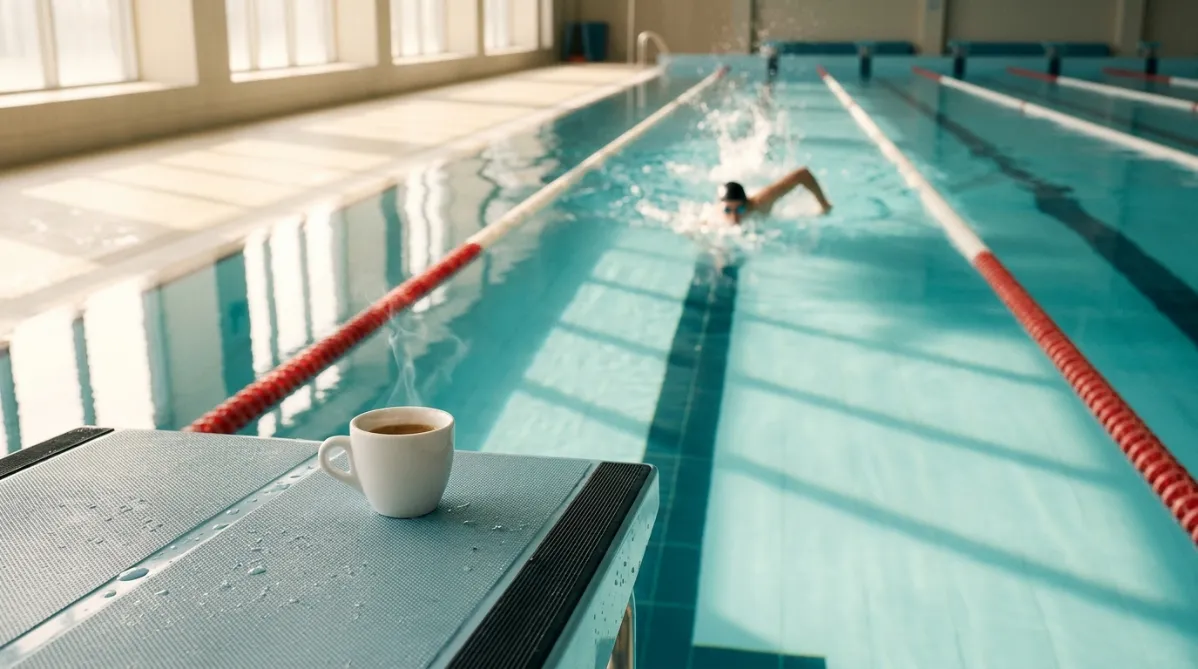
A wide, editorial-style photograph of a competition swimming pool lane seen from just above the water line at the starting end, in soft morning light. In the foreground, on the pool deck, a white ceramic espresso cup sits on the edge of a blue-gray starting block, a thin curl of steam rising from it. The cup is in crisp focus, with a few droplets of water on the textured non-slip deck around it. Behind it, the pool stretches into the distance as a series of calm lanes divided by red and white lane ropes. The turquoise water glints with gentle ripples and long, shimmering reflections. At the far end, a lone swimmer in a dark cap and goggles is mid-stroke, caught in a small burst of white splash, and slightly out of focus because of the shallow depth of field.

Large windows along the side wall let in pale golden sunlight, which throws soft diagonal light across the water and the deck. The palette is clean and modern: aqua, deep teal, warm cream and a small accent of coffee brown. The cup's warm tones stand out against the cool blues. The composition follows the rule of thirds, with the cup in the lower left third and open negative space of water and light on the right, leaving room for headline text. The look is minimal, airy and contemporary, like a high-end sports and science magazine, with subtle film grain, natural color grading, and a slightly desaturated, calm mood. Faint stopwatch-like details appear only as a thin black timing pad edge on the starting block, with no text or numbers visible. The overall feel is quiet anticipation just before a race, precise and fresh, with a sense of small margins and measured performance.
nutrition

Cafeína faz nadadores mais rápidos, mas menos do que você imagina

BY DR. GYMBRO ·

Nadadores tomam café antes das provas há décadas, mas será que isso realmente melhora o desempenho? Uma meta‑análise de 13 ensaios cruzados aponta um ganho médio de cerca de 1,7 %, o que pode ser decisivo em um esporte que se resolve em centésimos de segundo. O efeito mais evidente aparece com doses de 6 mg/kg ou mais; doses menores não mostraram benefício claro. A cafeína também elevou o lactato sanguíneo pós‑prova, e os resultados variaram bastante entre os estudos. Veja o que a evidência confirma e o que ainda está em aberto.

A bright, minimalist flat-lay photograph of two supplement scoops on a pale warm-gray stone surface, shot from directly above in soft natural window light. On the left, a matte ceramic scoop holds fine white creatine monohydrate powder, heaped in a clean mound. On the right, a second scoop of the same shape holds slightly coarser off-white beta-alanine powder, with a small, deliberate gap between the two. Each scoop sits in its own soft shadow, which suggests separation rather than combination. Between them, a thin brushed-brass ruler or a single slim line of fine powder runs across the surface and subtly divides the composition.

Around the scoops, a few restrained props in a muted editorial palette of sage green, cream, terracotta, and soft charcoal: a small glass jar with a minimalist label that has no readable text, a folded linen napkin, a single sprig of eucalyptus, and a stainless-steel shaker bottle softly out of focus in the upper corner. A few loose powder grains are scattered naturally across the stone. A small stack of blank cream index cards with a pencil rests in the lower right, hinting at research and note-taking without any legible writing.

The composition follows a clean rule-of-thirds layout, with generous negative space on the right third for headline overlay. The lighting is gentle and diffused, with long, soft shadows falling to the lower left. The color grading is calm and slightly desaturated, with creamy highlights and a subtle film-like grain. The overall look is a modern wellness and science journal cover, with an airy, trustworthy, contemporary editorial feel, shallow depth of field, and crisp detail on the powders.
nutrition

Creatina + Beta‑Alanina: O Bônus de Combinação que os Pesquisadores Não Encontraram

BY DR. GYMBRO ·

A combinação de creatina e beta‑alanina é divulgada como o casal‑potência para a performance, mas uma nova meta‑análise de rede com 52 ensaios randomizados não encontrou sinergia entre elas. A creatina, isolada, melhorou significativamente sprint, salto, sprints repetidos e resistência muscular da parte superior em comparação ao placebo. Os efeitos da beta‑alanina foram não significativos ou dependentes do contexto, e a combinação não acrescentou nada além da criatina. Veja o que o estudo fez, suas limitações e o que isso significa para o seu orçamento de suplementos.

A landscape editorial photograph with a clean, modern magazine feel. On a pale concrete bench in a softly lit locker room, a single small glass shot of deep magenta-red beetroot juice sits in the left third of the frame. It is slightly out of focus in the foreground, with condensation beading on the glass and a faint ruby glow cast on the surface beneath it. Behind it, in crisp focus, is a neat row of seven identical small glass bottles of the same vivid juice, lined up like a weekly calendar. The bottles suggest multi-day loading, and the last one is subtly set apart from the others, with a simple analog wall clock blurred in the background.

Around the bottles are a few styled props: a halved raw beetroot showing concentric pink and crimson rings, a few small green-stemmed beet leaves, and a folded charcoal athletic towel. A pair of worn white and gray football cleats rests at the edge of the frame, with a hint of turf on the soles. A mesh-fabric team jersey in muted navy hangs on a wooden locker door in the soft background.

The lighting is natural window light from the right, with soft diffused shadows, warm highlights, and a gentle morning feel. The color palette is restrained and contemporary: deep beet magenta, warm off-white, slate gray, light oak, and touches of fresh leaf green. The composition has generous negative space on the right side, where the light falls across the empty bench, so there is room for a headline overlay. Shallow depth of field, a 35mm lens look, fine film-like grain, and a minimalist, high-end lifestyle-journal aesthetic. No people's faces, no text, no futuristic elements.
nutrition

Suco de beterraba para esportes de equipe: por que uma dose pré‑jogo não funciona

BY DR. GYMBRO ·

Aquela dose vermelha no vestiário pode não estar fazendo o que você imagina. Uma meta‑análise recente de 24 estudos com atletas de esportes coletivos mostrou que o suco de beterraba e o nitrato dietético trazem benefícios pequenos, porém reais, principalmente em tarefas específicas de equipe (g = 0,143, certeza moderada). A estratégia mais eficaz é a carga de vários dias com uma dose final 2‑3 horas antes do exercício; doses únicas antes da partida não apresentaram efeito claro. Sprints isolados, a maioria dos marcadores metabólicos e as respostas cardiorrespiratórias não melhoraram, e não houve um padrão de dose‑resposta evidente.

This page is available in